"Should I stay or should I go?" - Paper Planners
Tips for analog organization
All of my blog posts, newsletters, and 1-1 emails are written by me — em dashes and all! If you wanna know how I use AI in my business, click here.
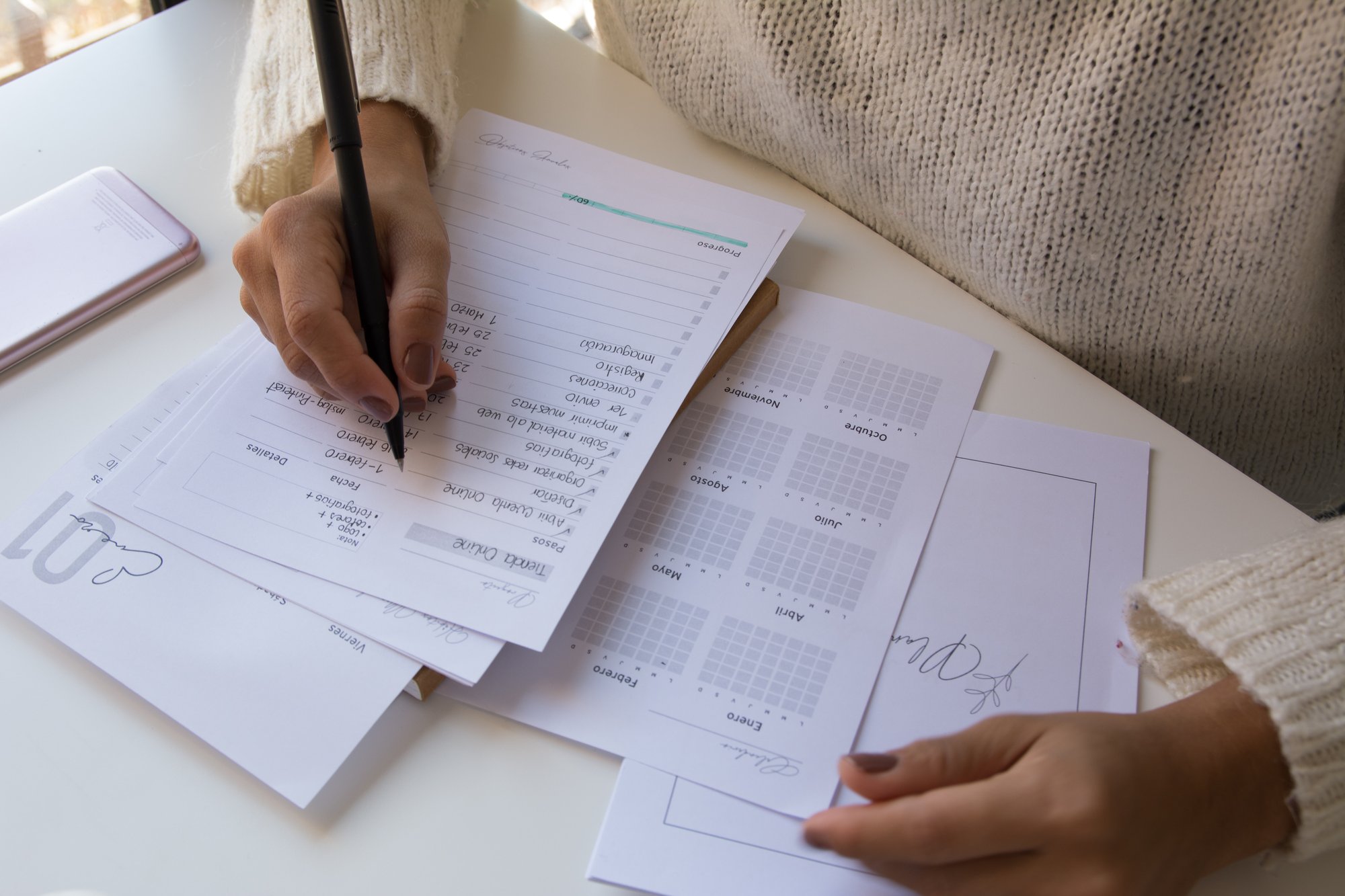
Photo by Paico Oficial on Unsplash
One of my favorite parts of owning a business like Type C Creative is learning how other people stay organized.
I’m platform and productivity method neutral. Meaning, I don’t subscribe to the idea that one method works for everyone, or that one method will always work for one person consistently.
When I work 1:1 with people, I like to get to the bottom of what’s already working and why. The “why” behind some of their methods may be as simple as, I just like doing it this way.
Many of my clients still use and appreciate having a paper planner or notebook to organize their tasks and appointments. Some even noted they were nervous I’d make them give it up for more “efficient” pastures.
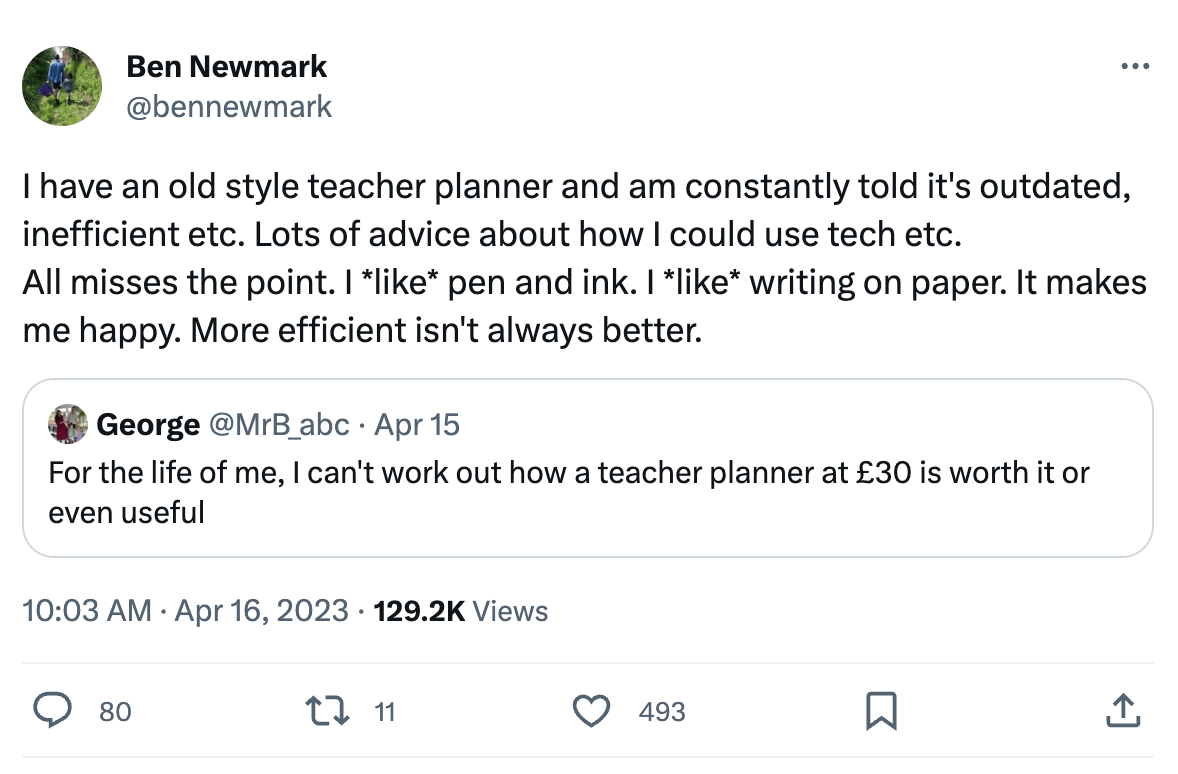
Personally, I love a pen to paper situation. Despite being mostly-digital when it comes to project and task management, I find it helpful to plan out my day-to-day in a big dotted notebook. I use it to fill out my Chill Prioritization Matrix, take notes, write down ideas, and map out projects. It’s just easier for my brain.
👎 The downsides of paper
I think the main reason people feel less organized when using paper methods is because they haven’t thought through the purpose of the tool and where it fits into their already-existing system.
There are some downsides to consider:
Digital travels better. I always have my phone on me, but rarely have my notebook handy unless I’m sitting at my desk.
Digital consolidates easier. I have multiple notebooks for different purposes. I’m also a sticky note user (potentially an abuser); when I have an idea, it’s instinctual to grab whatever piece of paper or sticky-note pad is closest to me. Having notes and tasks in multiple places makes it a lot easier for me to misplace or forget things (like I need any extra help losing track of my thoughts).
Digital saves paper. Many choose to forego paper planners and notebook for environmental reasons. (Side note: These spiral notebooks feature 100% post-consumer-waste recycled paper and are printed with soy ink.)(Additional side note, digital activity leaves a footprint too.)
👍 The case for paper
Despite the ease and popularity of digital productivity, people still love their physical notebooks and planners. I am people!
✍️ Here are some simple ways my fellow analog lovers can stay organized without giving up their paper and pen:
Try a digital-first model. This is what I use. All of my appointments and tasks get added to my digital to-do list before it goes in my notebook. Of course, there are times when I write tasks down in my notebook before putting them into Google Tasks, but because I’ve gotten used to digital-first, I’m more likely to add them to my digital task list as soon as the meeting or brainstorming session is over. See item #3 for more on this habit.
Simplify your paper stack. Just like digital tools, it’s important to streamline / keep things in the same place. If you store files in iCloud, Google Drive, and Dropbox, it’ll make things harder to find vs. if you choose one platform and stick to it. It’s the same with notebooks. Choose one notebook that’s going to be your go-to. If you too have a graveyard of half-used planners and notebooks, I know how hard this may be. But your brain will thank you for it.
⭐️ Tip: If you’re worried about having personal and work things in one notebook, you can either choose one personal notebook and one work notebook, or keep it all together and choose a fun highlighter color for each; highlight page headings or dates with the appropriate color for quick reference when searching for something.
Schedule time for consolidation. At the end of every day, or every week, make a reminder on your calendar to consolidate notes and to-dos into one singular place. Go through your notes from that day or week and scan for anything that may need a deadline or follow up.
One thing that’s helped me is highlighting tasks in bright yellow so I can easily see what needs action when scanning through past notes. This should take less than 10 minutes and can be done at the end of each day or the end of your work week. I personally transfer these tasks over to my digital task list, where all my deadlines are.
⭐️ Tip: If you want to keep your to-dos in your notebook or planner vs. a digital task list with deadlines, try to keep them all in one place, consolidating the week’s tasks on one page. I have also used sticky notes to mark pages with tasks or ideas I don’t want to forget exist. You’ll just have to remember to check in to make sure you don’t miss something.
Keep it undated, I beg of you! If you also have ADHD, please do not kid yourself by buying a dated planner. I say this with love, I’ve been there too. Buying a bullet journal or more flexible, undated planner will save you a lot of money and regret. (This one is my personal favorite — I filled up two before switching back to a bullet journal.) The end of December “I only used this planner for 3 weeks” doom spiral is so real.
Remember: Buying a new notebook or paper planner won’t automatically make you feel more organized (trust me, I’ve tried — many times). Paper products may require a bit more intention in order to make it work well for you.
Peace, love and workflows,
Andrea
Did ya enjoy this post? Here’s how you can support my work:
✨ Like, comment, share + subscribe for free
💸 Become a paid subscriber for extra posts + perks

Enjoy this post?
Consider buying me a cup of tea, which I’ll sip while creating more rebellious content for you 🤘☕️
My name is Andrea (On-Dray-Uh) Reeves (she/her), I’m the founder and systems strategist behind Type C Creative.
I’m a biracial, Black, aroace woman with ADHD and OCD. I’m an unapologetically atypical human who runs my own business on vibes, values, and good systems that meet me where I am.
I work with fellow neurodivergent, queer, and creative solopreneurs who are ready to find simpler, more compassionate and intuitive ways of running their businesses.