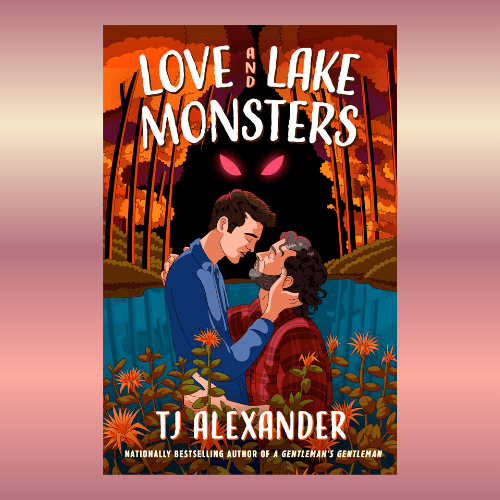
Be gay. Your time starts now.

Hello darlings, and happy Pride. If you are queer, I hope you have a fulfilling month filled with equal parts cup-filling and galvanization. If you are heterosexual, I hope you give us some support this month and every month.
USian political update:
HR 7661 (the nationwide ban on trans books in school libraries which I have mentioned before) is still awaiting a vote in the House. HR 8705 is even newer and would withhold funding from schools that teach “equity ideology” (which is just fancy talk for anti-racism) or “gender ideology” (which is just fancy talk for acknowledging trans people). Both would result in book bans. Call your representatives to oppose them both.
HR 2616, a newer, consolidated bill which would essentially ban any mention of transgender people in schools and out trans kids to their parents, has passed the House and is going to the Senate. Conservatives seem to be concentrating on this bill, since it would ban books AND make life hell for trans students and teachers. Book Riot has a good article on suggested actions you can take, but very basically: call your senators.
I know it’s hard to keep up with all this bullshit. Believe me, I would rather be doing anything else. But this is one of the ways fascism tries to win: by wearing you down and throwing one flaming bag of shit after another at you. These bills are unpopular which is why they’re flooding congress with so many similar ones. They’re simply hoping one will fly under the collective radar. Unfortunately, darlings, we have to be more resilient than them.
Now I’d like to talk to you about daydreaming and play. Mostly I’d like to talk to you about my new comfort watch, Taskmaster, the UK show where comedians compete in a series of bizarre, borderline kinky games hosted by a pair of middle aged men who perform increasingly homoerotic displays with each other as the show progresses. The contestants are filmed doing most of these tasks in advance on their own, then the footage is reviewed and judged in front of a live audience, so they often don’t know until much later how well or poorly they actually did. You can watch it on YouTube. Fair warning, the British sensibility can take some time to get used to. I’m not saying the US has a sophisticated sense of humor or anything, god no, but if you’re the sort of person who cannot stand a little goober, a silly little shit, maybe skip it. Me, I love goobers. Harmless inanity rules, I think.
But let me start at the top.
I was wandering around New York a few weeks ago, slightly stoned and enjoying the unseasonably cool spring weather, when I caught myself having a little daydream. I don’t remember what I was daydreaming about, probably because as soon as I realized what I was doing, I started over-analyzing it. Look at that, I thought, a nice slice of daydream. Been awhile. I wonder why.
And it struck me, as much as anything can in that state, that I used to have pockets of time in which to daydream on a regular basis. In my old life, when I worked in an office, though the job sucked absolute shit, I at least had time to daydream. There was the commute, which is a solid two hours a day, plus any time I could snatch at my desk, looking like I was poring over paperwork when I was really thinking about fuck all.
And then, of course, there was childhood. Peak daydream time. Oodles of hours with nothing to do, especially in the ‘80s when Gameboy batteries would die after about 7 minutes of play. There were long car rides in the backseat, and waiting in parking lots for moms to finish shopping. You’d get dragged along on hours-long errands with maybe an Encyclopedia Brown paperback if you were lucky, but often just your imagination. As adults, though, we lose all that time and opportunity. In our defense, we have to start worrying about things like our elected representatives pretending that racial discrimination, trans people, climate change, the possibility of taxing the rich, etc., don’t exist, so our time really does get eaten up.
I write for a living, so I should have more time than the average person to do this, and yet! The laundry. The dishes. Dinner. Errands. Doctors’ appointments. The gym. Reading things for work. Reading things for friends. Reading my own stuff. Emails. EMAILS. If any writing ever gets done, it feels like a miracle, and it almost always gets planned out in a bloodless way, with outlines and editor-approved beats baked in from the start. It’s work, far removed from daydreaming. And yet what bits of daydreaming I do manage to get in are inevitably where the best inspiration comes from. And even if daydreaming wasn’t useful to my work, I’d still want to do it because I think our brains need to run wild every so often in order to function.
So I’ve been trying to carve out time for daydreaming, a few minutes every day, and treating it almost like meditation. The very first day I consciously tried this, within 5 minutes I had gotten a great idea for a tricky rewrite I’m working on currently.
I’m not the only one trying this stuff. I once saw the excellent author Akwaeke Emezi give a talk where they said they use a technique called dreamstorming, which is a bit of a hybrid of daydreaming and napping. I’d been doing that my whole life, telling myself stories while I drifted in bed, without knowing that it was a thing other people did. Dreamstorming has served me well in the past, but now that I’m older, sleep has become a bit more necessary. If I’m getting in bed, I’m trying to get straight through REM to deep state, do not pass Go, do not tempt fate by staring at the ceiling until 4am. So daydreaming it is.
Daydreaming is a skill, and every skill needs practice to improve, but it also needs structure. There has to be thoughtful philosophy behind your practice or else you’re just doing things by rote, which lands you back where you started.
Which brings me to improv.
If you’re unfamiliar, improv (improvisation) is an art form wherein the performer produces art extemporaneously, off the cuff. Ad-libbed, to put it another way. Musicians and poets have done this for ages, but for my purposes, I’ve been thinking a lot about improv comedy.
I grew up watching Whose Line, of course. (Fun fact: Whose Line alum Colin Mochrie is a real peach, which is a term I just made up for proud fathers of dolls.) I also have a vivid memory of watching our university improv troupe perform when I was in college. I remember thinking, god, thery’re kind of shit, aren’t they? Improv is a low-hanging fruit on which haters often snack, but that’s only because it’s one of the few art forms you can’t practice in isolation. It requires an audience even to practice, even if it’s only your own fellow troupe members. So of course the 19-year-old hipsters at FSU seemed lacking. I only had veteran performers on TV to compare them to. (If you were in the Florida State improv troupe in the early aughts, sorry to be dragging you like this. I enjoyed the Harriet Tubman gag. I still think about it from time to time. I hope you’re still making people laugh somewhere, somehow.)
Subscribe nowMore recently, though, I’ve gotten a bit obsessed with shows that rely on improv, like Taskmaster and Game Changer. There’s something wonderful about watching comedians attempt to do weird things. You truly get a peak into the human psyche. Some people will give it a serious best try; some will dig in their heels and complain; some will get clever with loopholes and hope it works out; some will decide, fuck it, I’m going to try to make this as funny as possible because I don’t know what’s going on. Interestingly, on Taskmaster, when the contestants watch the footage of themselves doing the task, many of them will start crying. Some tears of laughter, sure, but I suspect the body reacts in all sorts of ways to seeing itself struggle on the big screen. That’s not something we’re normally forced to endure. (I’m not SAYING it’s a kink. But I think it could be a kink? Look, I’m not anyone’s priest. It’s none of my business.)
Improv, as far as I understand it in my completely non-professional way, provides performers with a groundwork so that when you are faced with a situation no human has ever found themselves in before, you at least have some skills in your toolbox that will inform your decision-making. It may not be the “correct” decision, but at least it’s something. Better that than a blank page, right? I’d take a reaction of any kind over freezing in fear in a performance setting.
Which brings me to ways in which I’ve been thinking about my writing as it relates to all this. The principles of improv—controlling your fear response, trusting yourself and your fellow performers, committing to your ideas, developing a swiftness, giving your imagination the freedom it needs—those are all things writers struggle with, too. Of course, writing a novel isn’t the same as performing without a script. The editorial process gives us plenty of time to change and improve things. But writing, especially drafting, requires a certain level of trust in yourself, that you will stick the landing even if you’re slogging through a paragraph that isn’t doing what it’s supposed to do. It requires you to make a decision with every keystroke.
Sure, you have time to fix things later, but that time is not unlimited. God willing, you have a deadline. But even if you don’t, death, the Ultimate Deadline, comes for us all. Sorry to make it sound so dire, but it’s true. I think about this a lot. If I’m going to make the best art I can, I need to be aware of all the constraints, and one of them is my own mortality. And let’s be honest: writers who can write faster can write more, which means their chances of earning money are higher than the ones who keep dithering. And money will allow you to keep making more art, unfair though that may be. I dithered much of last year and I would like to pick up the pace going forward, and I’m trying to apply these principles to get there.
I’m sure a lot of authors do not think about their work in academic terms like this. That’s all right; we don’t have to have the same approach. But for me, chewing on these ideas has, I hope, gotten my writing to places I’ve wanted to push it.
I’m not a professional performer by any means, but as an author I am often invited to speak on panels and at bookstores. This, too, is a form of improv. Even the most rigid book event where the format is set in stone and the questions are furnished ahead of time has an element of ad-libbing. Humans are not robots, thank Christ, and when we talk in front of a crowd, weird things tend to happen. And every Q&A section is an opportunity for you to be asked something absolutely bonkers. I personally enjoy when things are looser and more off the cuff simply (& selfishly) because I think I’m pretty good at that now that I’ve had a few years of practice. Some people might call this skill—making up answers on the fly—bullshitting, and it is, kind of. But in order for it to be effective and entertaining, I need to be speaking from a place of real belief. It’s a performance, but it’s still me. I need to present a version of myself that can respond in a compelling manner, and that doesn’t happen naturally for most people. That’s why practice is important.
And no matter how much practice you get, there’s always the chance you might bomb. And OH have I bombed. Maybe in a future paid newsletter, I’ll tell the true believers all about those cringey moments. It’s a good thing I’ve learned to not dwell on these things once they’re over or else I’d never sleep again.
But for now I’m going to try honing this skill to get better at daydreaming and improvising. I’ve recently joined some friends of mine in their long-running Dungeons & Dragons game and I am loving it. I can control my character’s choices but not his circumstances, and that gives me a lot of great practice in making swift decisions while trying to tell a story with my friends. Also I get to make them laugh if I’m lucky.
And not to get too deep in the weeds about it, but right now life itself feels very much ad-libbed. Politically and personally, I don’t feel like I can rely on anything to be the way it should. That’s terrifying, certainly, but it’s also a bit freeing. Maybe I’m just trying to self-soothe by framing it a different way, and maybe it’s this rewrite I’m working on right now influencing me, but I think control is largely an illusion. Or at least, it’s never guaranteed. So why not learn to roll with the punches?
To me, ad-libbing is the practice of knowing yourself enough to go into the unknown with something like confidence. And daydreaming is the fuel you need to know yourself more thoroughly.
If you’d like to join me in a daily daydream, pick a time every day, set an alarm for 5 minutes, and just sit with yourself. Let yourself think of whatever you’re working on, or nothing at all. If your brain isn’t giving you anything, don’t rush it. If all you do in the 5 minutes is breathe, that’s not so bad. And if you can combine it with a little walk around, say, the greatest city in the world, then the benefits abound.
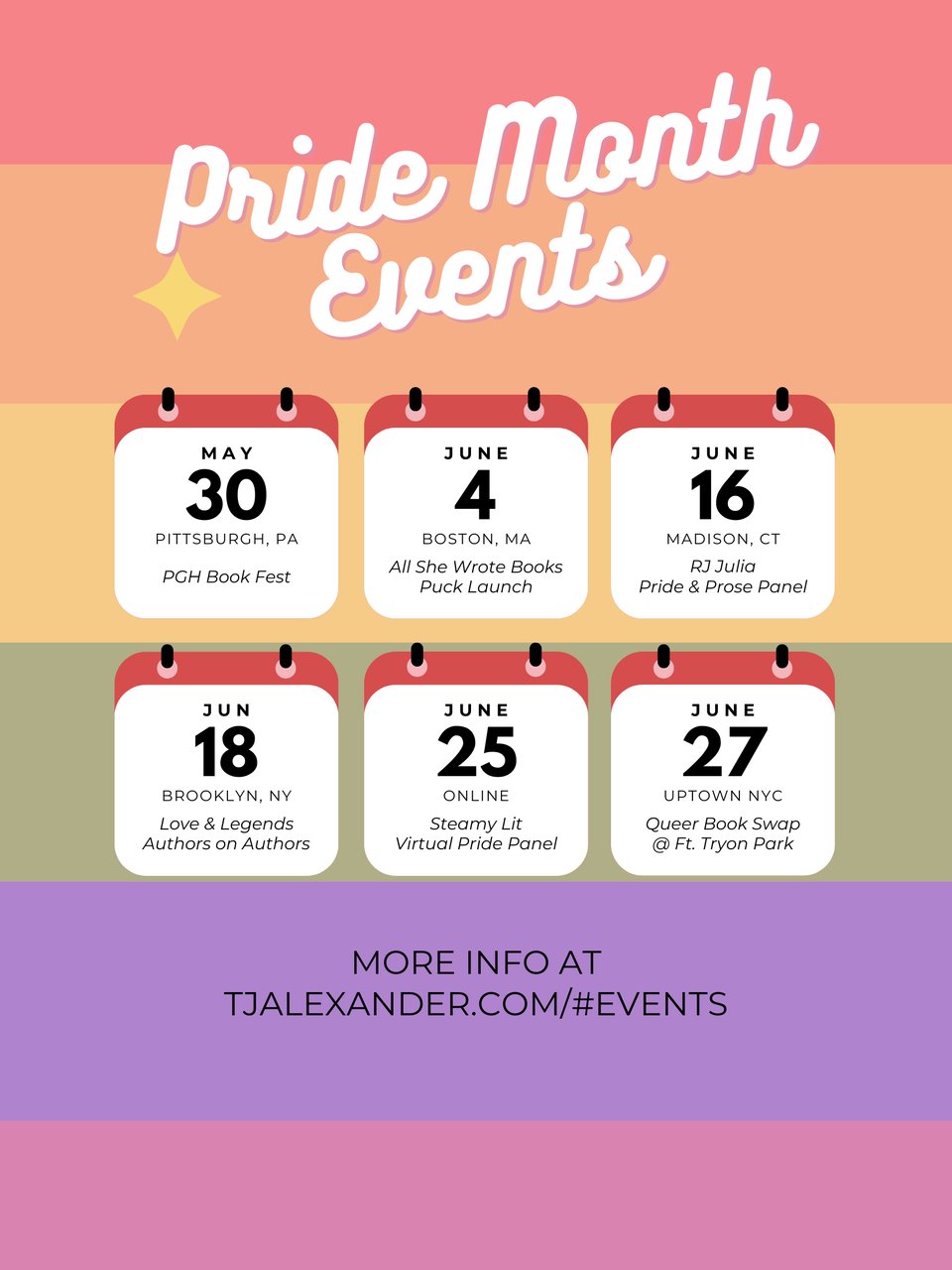
Have you been thinking of upgrading to my paid newsletter? I’m now offering a discount for annual subscriptions. Get 2 months free when you sign up for 12.
Get Yourself an Annual Subscription
Prideful links for you:
rip to My Watson, David Burke, the best to ever do it
microplastics might be less prevalent than we thought yay
tag yourself i’m the guy with the mannequin arm
