
Bringing Russia Back Into the Olympic Fold
The uncomfortable tensions between athletes' rights and state propaganda.
By Stella Horns
The specter of Russia has haunted international sports ever since its swift exile in late February 2022 following the invasion of Ukraine. The Russian Olympic Committee (ROC), already suspended due to systemic doping violations, was slapped with an additional wave of sanctions for breaking the Olympic Truce, which forbids aggression or warfare against any other participating countries for seven days before or after the Games. Most international sporting federations quickly followed suit, banning or suspending their Russian federations, and some restricting Russian athletes from international competition entirely.
Some select Russians and Belarussians were allowed to compete at the 2024 Olympics and Paralympics as individual neutral athletes, after careful vetting confirmed that they had not publicly supported the war. The Russian anthem was not played and its flag was not displayed. In 2025, the International Paralympic Committee fully reinstated both groups, allowing them to compete at its 2026 Winter Games.
Now, the International Olympic Committee (IOC) has also provisionally lifted its suspension of the ROC, though it declined to rule on the presence of government officials or the Russian flag, colors, or anthem at the 2028 Games. There will also be heightened scrutiny on Russian athletes’ doping tests. The IOC’s stated reasoning for its decision is that the ROC had distanced itself from all member federations that governed the contested territories of Luhansk, Donetsk, Kherson and Zaporizhzhia. The National Olympic Committee of Ukraine has appealed the ruling, arguing it was made “based solely on statements made by the Russian side” despite the “compelling evidence” of continued violations the Ukrainian Committee had “repeatedly submitted.”
This decision has elicited considerable backlash, at least from those paying attention. It’s surely not an accident that this news came in the middle of the sporting news dead zone that is the summer, and a year after the Paralympics had already tested the waters.
So why did the IOC decide to bring Russia back into the Olympic fold? And why did this decision go over so badly with the public? The answer lies in the two sides of the Olympics, both as the world’s most prestigious sporting event and the world’s biggest nationalist media spectacle – and the question of which one the IOC owes more care and responsibility towards.
Whatever is Best for the Athlete
Russian athletes can’t control what their government does, and therefore, IOC president Kirsty Coventry argues, it’s unfair to punish them by excluding them from international competition: “We wanted to ensure all athletes have the possibility to compete at the Olympic Games and not be held responsible for their governments’ actions.”
In the intervening years since the war started, there has been a patchwork of different rules for Russian athletes, depending on their sport. Some individual athletes like fencers and weightlifters have been allowed to compete as normal, considered relatively unaffiliated with their country. Athletes on team sports have also continued to be able to seek their fortunes abroad, including a few WNBA, PHWL and NBA players, and of course the many Russian hockey players in the NHL (though they’ve been absent at national team-based tournaments). A select few individual athletes whose international federations did not allow them to compete chose to change national affiliation entirely, like pairs skater Diana Davis who made the move and now competes for Georgia instead.
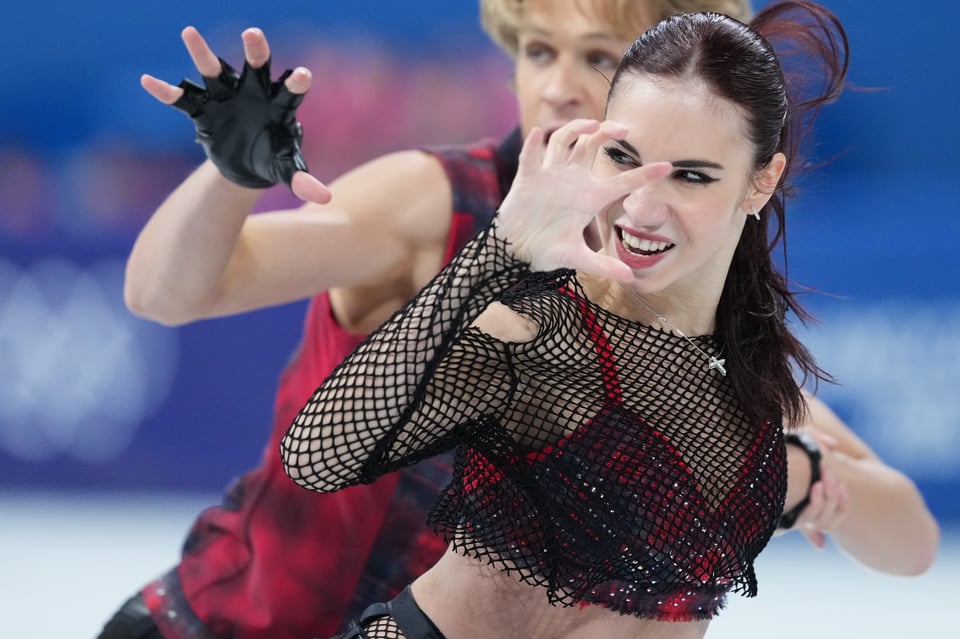
But many other elite Russian athletes have been in a rough situation, cast out entirely from international competition. The highest achievements in their sport – the Olympics, world titles, or even regional ones – were now entirely unreachable. Losing access to that goal can be devastating, especially if it’s what you’ve been working towards all your life. For many, the lack of access to those stages, that publicity, ended potential professional sporting careers before they could even begin. Even missing only a few years of high-profile competition can be incredibly monetarily damaging, especially in those sports where athletes peak young and decline quickly. These are the athletes whose arguably unfair exclusion the decision seeks to remedy.
Only 32 athletes from Russia competed at the Paris Olympics 2024 as independent neutral athletes, a delegation about a tenth the size of the one sent to Tokyo in 2021. So when Coventry speaks about all Russian athletes not being held responsible for their government’s actions, she’s not just speaking about perfect silent victims of circumstance. Opening the door to all Russian Olympians will include people like Angelina Melinkova, who won multiple gymnastics medals at the Tokyo Olympics, and then posted photos of herself on social media posing with the pro-war “Z” symbol at the 2022 Victory Day Parade in Moscow, which traditionally commemorates the end of World War II, but that year doubled as a military rally. One of her captions described the symbol as part of a movement “for those who are not ashamed to be Russian.”
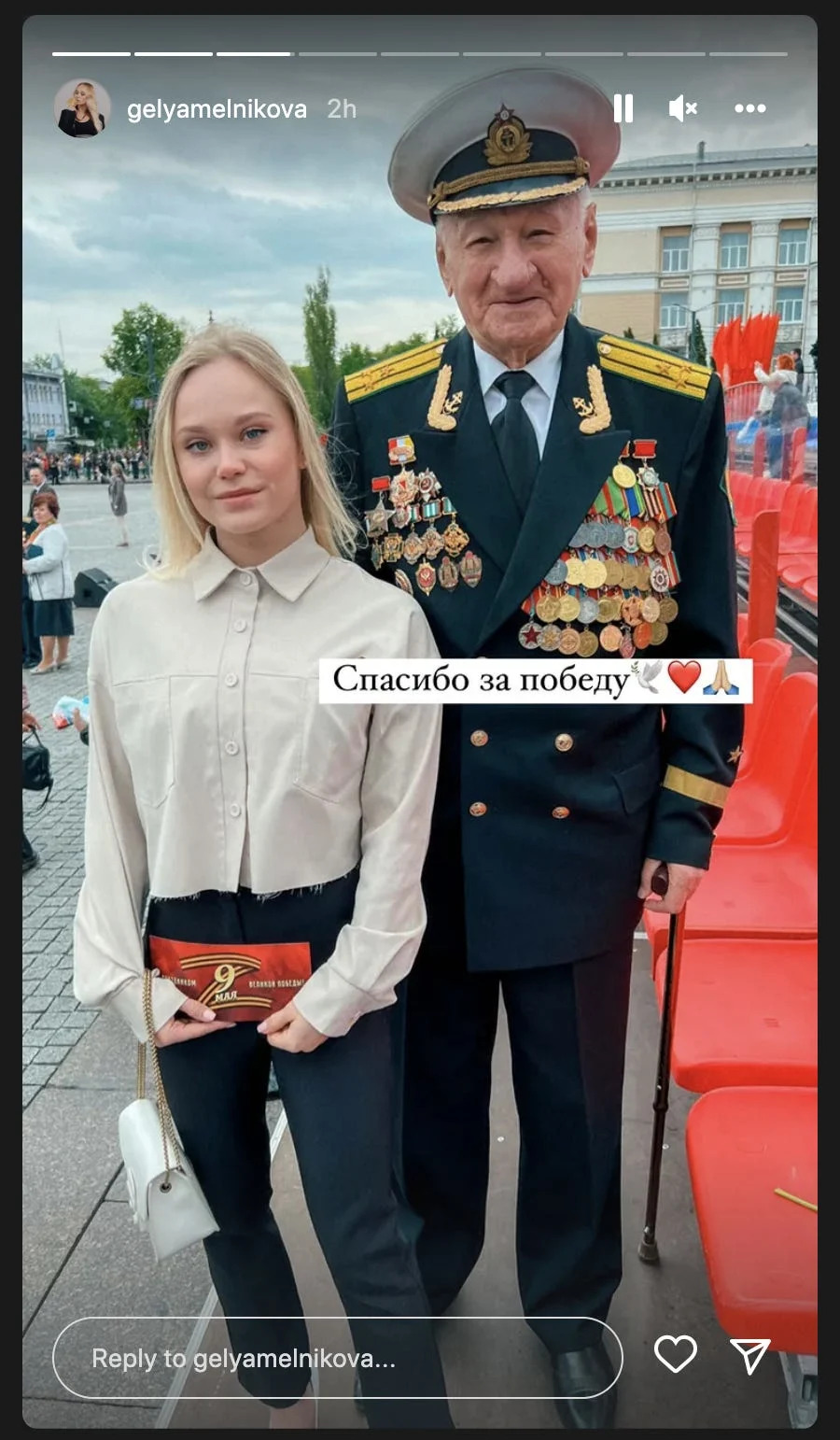
The Russian athletes this move brings back into the Olympic movement are specifically the ones who are not squeaky clean. Is there a place at the Olympics for these athletes? Do they still have the right to an opportunity to compete? Or do they deserve to be excluded based on their political speech?
On the other hand, the impact the war has had on Ukrainian athletes is incomparable. Between the rubble of collapsed buildings, in the cold and dark of winter and intermittent blackouts that are now standard in Kyiv, Ukrainian athletes like Olympic skeleton racer Vladyslav Heraskevych train when they can. But since drone and missile attacks are frequent and random, their sessions are constantly interrupted, as is their sleep.
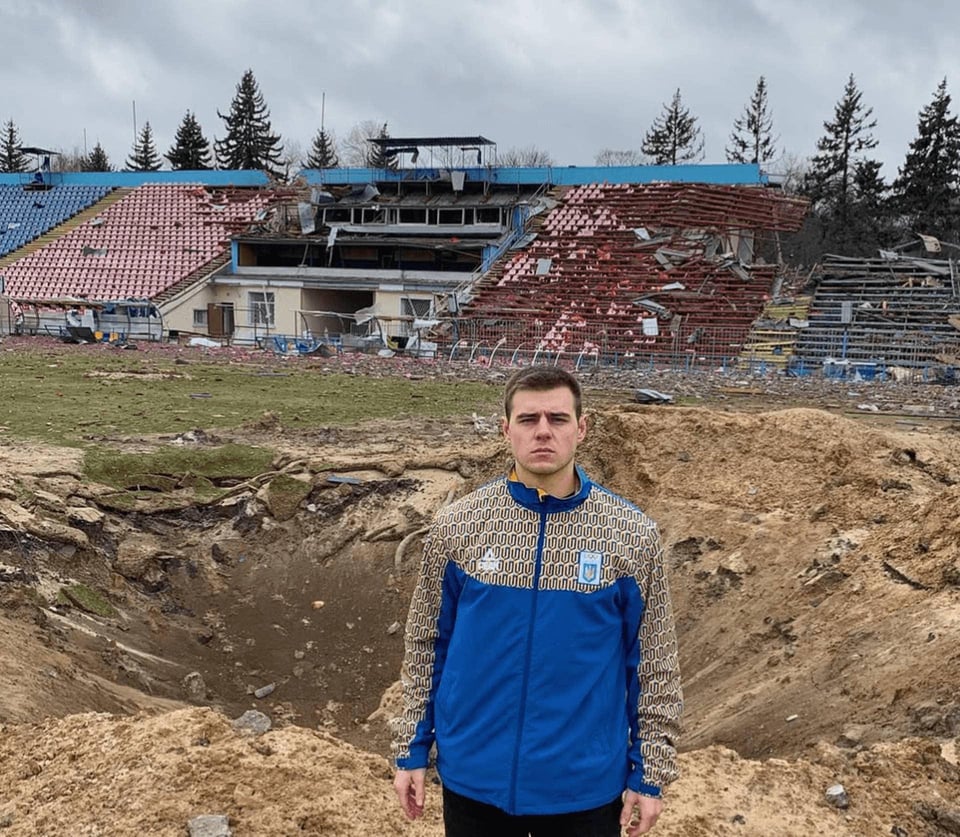
Only weeks after he competed in the 2022 Olympics, where he drew press attention for holding up a “No war in Ukraine” sign after his run, Heraskevych was distributing food and medical supplies in the first waves of the war. Since then, he’s struggled to balance maintaining his elite skeleton performance and helping in the war effort.
“It’s very hard to be concentrated 100 percent on the competitions and to give all [of] yourself for the competitions when you know at home your friends are dying, or like your home district is being bombed,” he said to The Athletic. “It’s really hard to be fully committed to the sport at this time. … Mentally, people are very tired.” He eventually relocated to Germany to be able to train consistently.
The National Olympic Committee of Ukraine reports that hundreds of sports venues and facilities have been damaged or completely destroyed, and more than 600 athletes, coaches, and other members of the sporting community have been killed in the war. If athletes are the priority, shouldn’t Ukrainians be at the top of the list?
The IOC points out that it actually has been supporting Ukrainian athletes since 2022. It did immediately speak out against the invasion and affirms now that “this position remains unchanged,” and that “more broadly, the IOC condemns wars, armed conflicts and violence that cause human suffering wherever they occur.” The statement then mentions the Solidarity Fund for Ukraine, an initiative totaling at $7.5 million to help Ukrainian athletes overcome the obstacles created by the war.
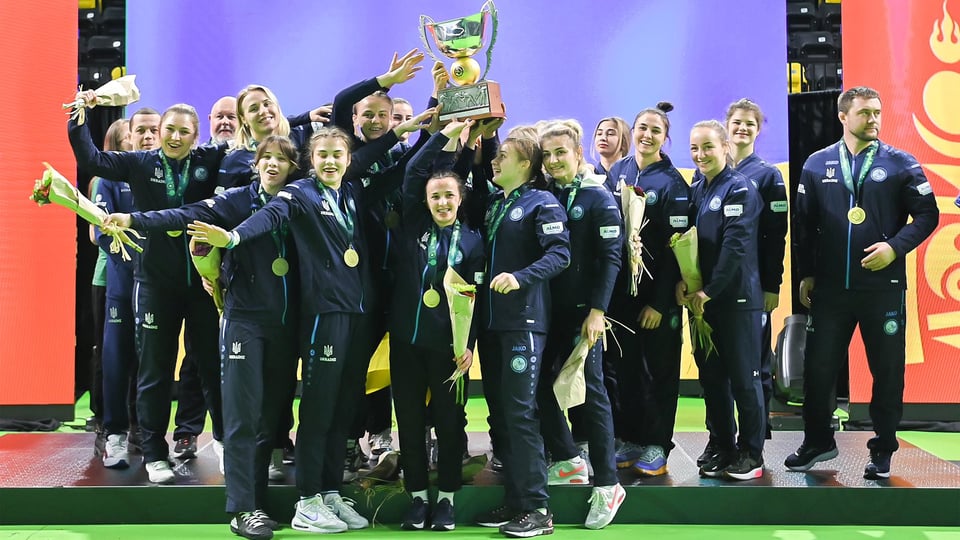
Across two articles on its website, the IOC describes in glowing terms numerous anecdotes from the 3,000 athletes it has supported across the 115 fulfilled funding request. A freestyle wrestling team that won its first Women’s World Cup title in December 2022; a one-month artistic swimming training camp in Turkey; an aerials training camp in Utah; an athletics training camp in Oregon. The IOC’s articles were published in February and August 2023 and are the IOC’s most recent updates on the state of the fund. Interestingly, they both list the “3,000 athletes helped” and “115 requests fulfilled” numbers, despite being published a full 6 months apart.
It is unclear how much of the money has been distributed. Ukrainian Sports Minister Vadym Gutzeit said in June 2023 that about $1.5 million had been received by the federation and athletes and that it was “difficult to say that this is the support of 3,000 athletes, because it is not enough.” As of February 2025, there is evidence that the Solidarity Fund was still fulfilling requests, delivering volleyball equipment to children in Borodyanka, a community in the outskirts of Kyiv. The IOC has not responded to my request for comment.
The Solidarity Fund at least attempts to mitigate the massive differences between the experiences of those on either side of the war. War is bad for all, but far worse for the invaded than the invaders. I understand why the IOC referenced it in their statement, but the good deed feels undercut by the fact that there are no accessible records or reports and they haven’t seen fit to keep the public updated on its status at any other point within the last three years.
Vladyslav Heraskevych was able to keep up his training enough to qualify for the 2026 Milano-Cortina Olympics, where he was a serious podium contender in skeleton. He was Ukraine’s flag bearer for the opening ceremony.
Then, on the morning of his event, he was disqualified. The IOC ruled that his helmet, bearing photographs of more than 20 athletes who had been killed during the war, some his personal friends, violated the IOC’s Athlete Expression Guidelines as a political message during competition. Heraskevych refused to take off the helmet or accept any compromise, posting on X, “This is the price of our dignity.” He later shared another message asking the IOC to “provide electric generators for Ukrainian sports facilities that are suffering from daily shellings,” calling further attention to the impact the war had on Ukrainian athletes.
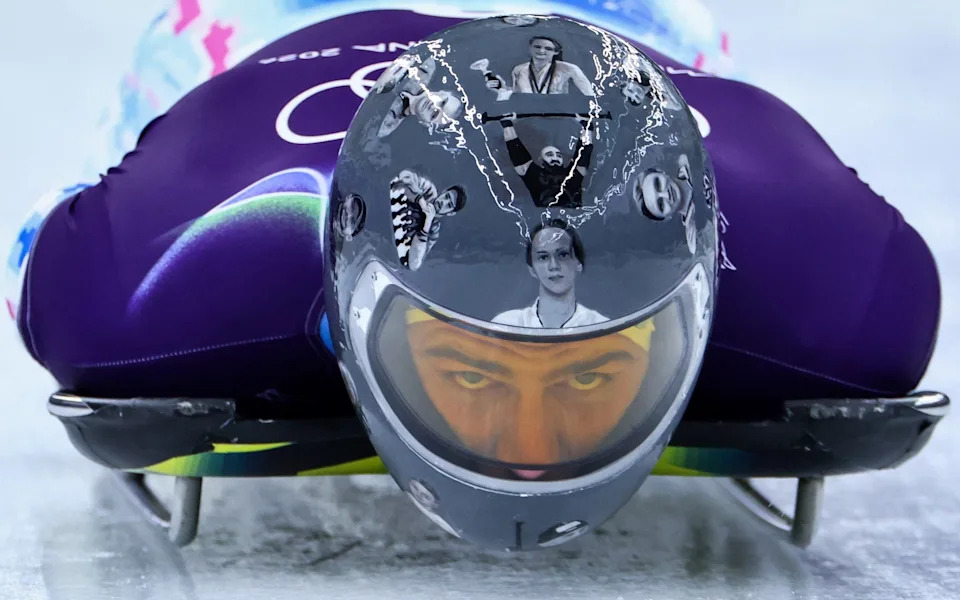
Heraskevych described his meeting with Kirsty Coventry, who later cried at the press conference discussing his ban, “She was telling me that she really wants me to compete. But at the same time, she couldn't explain to me what is the difference between my case and [the] case[s] of others?" For more on this situation and what counts as “political” conduct at the Olympics, read here. Heraskevych appealed the decision through the Court of Arbitration for Sport and lost. He was not allowed to compete. The IOC considered wearing a helmet with photos of the athletes that had died in his country since the last Olympics a form of political propaganda.
The Symbolic Side of the Olympics
Here is where we run into the problem with being solely athlete-focused in this situation. The Olympics are absolutely not an apolitical event, and so apolitical solutions are not going to make sense. While the modern Olympic movement was founded under the ideals of internationalism and world peace, the geniuses at the decisionmaking table (read: mostly European aristocrats) thought that the best way to make that happen was for every athlete to compete on behalf of their country. What could go wrong?
As the Olympics became a mass media spectacle throughout the second half of the 20th century, the vast majority of viewers began to participate as casual fans that root for whoever’s name is next to their favored flag, knowing literally nothing else about the person on the screen. For the athletes in the village, the experience may still be one of international friendship and togetherness, but a lot of this is lost in transmission to the rest of the world.
Watchers instead view the Olympics as an entertainment event with symbolic geopolitical implications. And as a necessary cost of that, they see the athletes primarily as avatars of their respective countries, rather than as relatively normal people, who have full lives outside of this context, and more than likely do not make a living from their sport. Viewers who see a Russian athlete on their screen do not see a person who happens to be from Russia, they see a representative, or even a representation, of the Russian Federation.
On the other hand, the IOC is filled with sports administrators, many of whom, like Coventry, are former elite athletes. They are inside the Games; they actually know these people. In a series of consultations on the topic “Fit for the Future” throughout the year 2025, the IOC concluded that “athletes have a fundamental right to access sport across the world, and to compete free from political interference or pressure from governmental organisations.”
It makes perfect sense that these two groups would have vastly different conceptions of this issue and how to appropriately solve it.
But is that even realistic? “I don’t really believe that it’s possible to separate athletes from politics, especially in Russia,” Heraskevych says, who called the IOC’s recent decision “absolutely shameful” and urged the forming of a coalition of national committees.
From the very beginning in 1952, the USSR joined the Olympics with the intent of using it as a propaganda platform to demonstrate the superiority of its economic and political system. As the Cold War hardened, the Olympics were a premier arena for competition between the US and USSR, one marked by various levels of “cheating” on both sides, including state amateurism, college scholarships, under the table sponsorships, and copious amounts of performance enhancing substances.
Beyond the external propagandistic effect, Olympic glory also served as an internal uniting force for the Socialist Republics. Sports academics Lincoln Allison and Terry Monnington write that Georgian Olympic medalists testified that, “though they regret it now, the sight of three Soviet athletes, complete with flag and anthem, standing triumphantly on an Olympic podium did make them feel more proud to be associated with the ‘Soviet Motherland.’” This effect gives a hint as to why today’s ROC might be eager to operate in the contested Ukrainian territories.
Russia and its satellite republics built extremely efficient, centralized, and top-down elite sports development and training structures that allowed them to reliably produce Olympic champions. They invested state funds into this objective, scouted young talents and sent them to specialized boarding schools, and later paid them to train full-time, while disguising them as workers that were incidentally also members of their trade union’s sports team.
After the collapse of the USSR and the floundering of the 1990s, sporting glory soon became symbolically associated with the new strongman leader who promised to bring Russia back to its former glory: Vladimir Putin. He credited sambo and judo with getting him off the path of street hooliganism in his youth, avoided drinking or smoking heavily for his training, seemingly eschewing the corrupting vices that had doomed the previous decadent political generation. Putin rode horses shirtless in the Russian steppe, skied vigorously, and even learned to play hockey in his 50s.
Putin also directly associated himself with elite athletes. Just like the US president generally invites championship-winning teams to the White House, Putin consistently puts on similar ceremonies and photo ops. But he also builds deeper relationships with certain stars like Alexander Ovechkin.
The ice hockey legend began his professional career for Dynamo Moscow before moving to play for the Washington Capitals of the NHL, where he now leads the league in all-time goals scored across his storied career, breaking Wayne Gretzky’s record in 2025.
Ovechkin met Putin for the first time in May 2007 after winning bronze at the World Championships with the Russian national team. By the 2014 Sochi Olympics, he helped carry the Olympic torch on its way from Greece to Moscow. Despite a disappointing performance at those Games, a subsequent gold medal at the World Championships saw Putin partying in the locker room with the team, Ovechkin even pouring him champagne to drink out of the trophy. The hockey player then asked Putin to give his teammates new cars–which they would have received if they’d won the Olympics–a request that Putin honored. When Ovechkin got married in 2016, Putin sent a tea set as a wedding gift. Rumor has it that Ovechkin has his personal cell phone number.
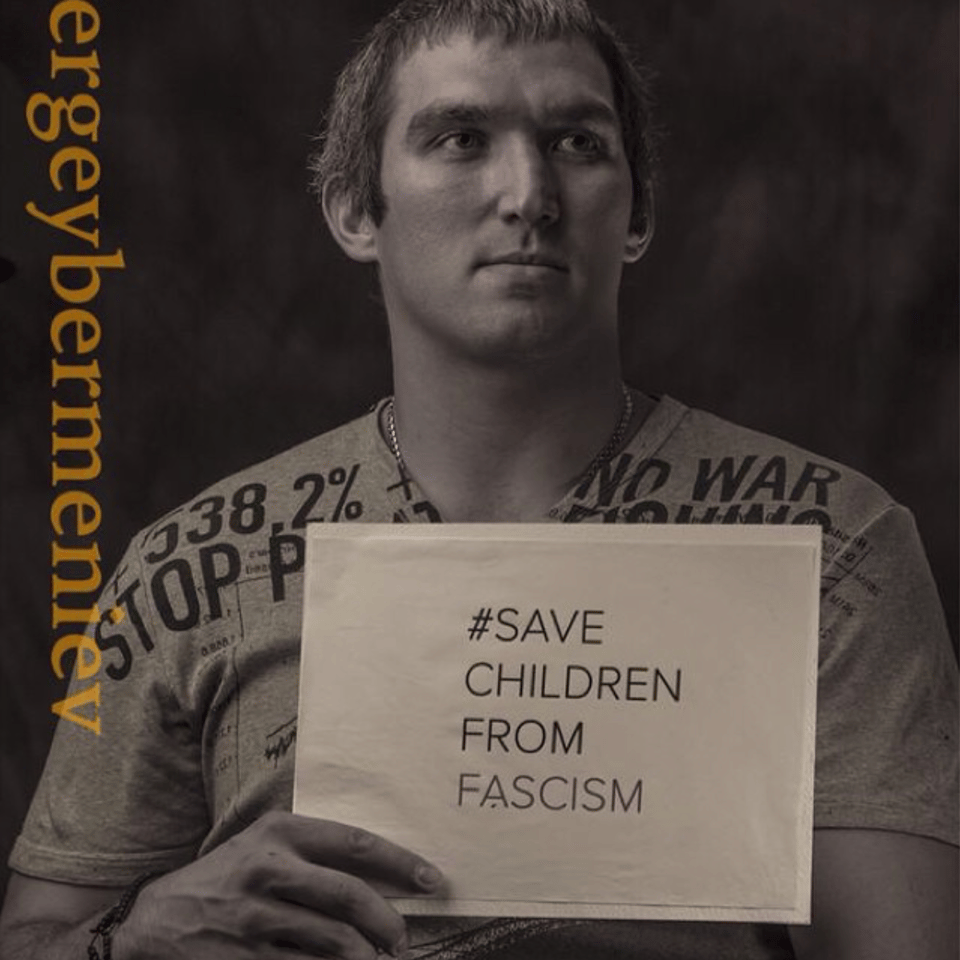
In August 2014, Ovechkin posted a photo of himself on Instagram holding a sign with the slogan #savechildrenfromfascism, a sentiment used to justify the Russian invasion of Crimea. “I don’t try to make a statement,” he then told ESPN, despite the obvious political statement he’d just made, “I have lots of friends from Ukraine. I just don’t want a war. Nobody wants a war. Especially when people are so close. It’s hard to see especially when you live so close to Ukraine. It’s hard and it’s dangerous. People die.”
In 2017, Ovechkin announced the creation of Putin Team via his Instagram account, which he described as “a social movement” in support of the Russian president in the run-up to the 2018 election. A Putin Team website was quickly launched, and prominent Russians including hockey players Evgeni Malkin, Ilya Kovalchuk, and Pavel Bure soon joined. In an interview, Ovechkin said, “If somebody asks me to do something for my country, I will…If there’s a world championship, I go. So it’s that kind of situation.” He quickly clarified that the campaign was entirely his idea and that he was not asked by anyone to launch it, though reporting by Russian financial newspaper Vedomosti uncovered that a Moscow-based agency called IMA-Consulting, which held a $600,000 contract to promote the Russian election, was behind the stunt.
In 2022, asked about his thoughts on the invasion of Ukraine, Ovechkin said he had “lots of friends in Russia and Ukraine” and that he hoped “soon it’s going to be over and there’s going to be peace in the whole world.” Of Putin, he said, “Well, he is my president, but I am not in politics. I am an athlete…I’m not in control of this situation.” His Instagram profile photo is still of him with Putin.
In this way, Putin uses the endorsements of famous Russian athletes to promote himself, often tarnishing their reputations in the process of laundering his own. But the flipside is also true.
In February 2021, Russian tabloids published allegations that New York Rangers player Artemi Panarin had assaulted a woman in a bar almost ten years previously. A Rangers PR statement said he denied the allegations “vehemently and unequivocally” and said the story was “fabricated,” “clearly an intimidation tactic being used against him for being outspoken on recent political events.” The Associated Press also later reported that Andrei Nazarov, Panarin’s former coach who had made the allegation, “said he was motivated to speak about the alleged incident because he disagreed with Panarin’s repeated criticism of the Russian government.” Panarin publicly supported Russian opposition leader Alexei Navalny, posting a photo to his Instagram feed with the Russian caption, “#FreedomforNavalny.”
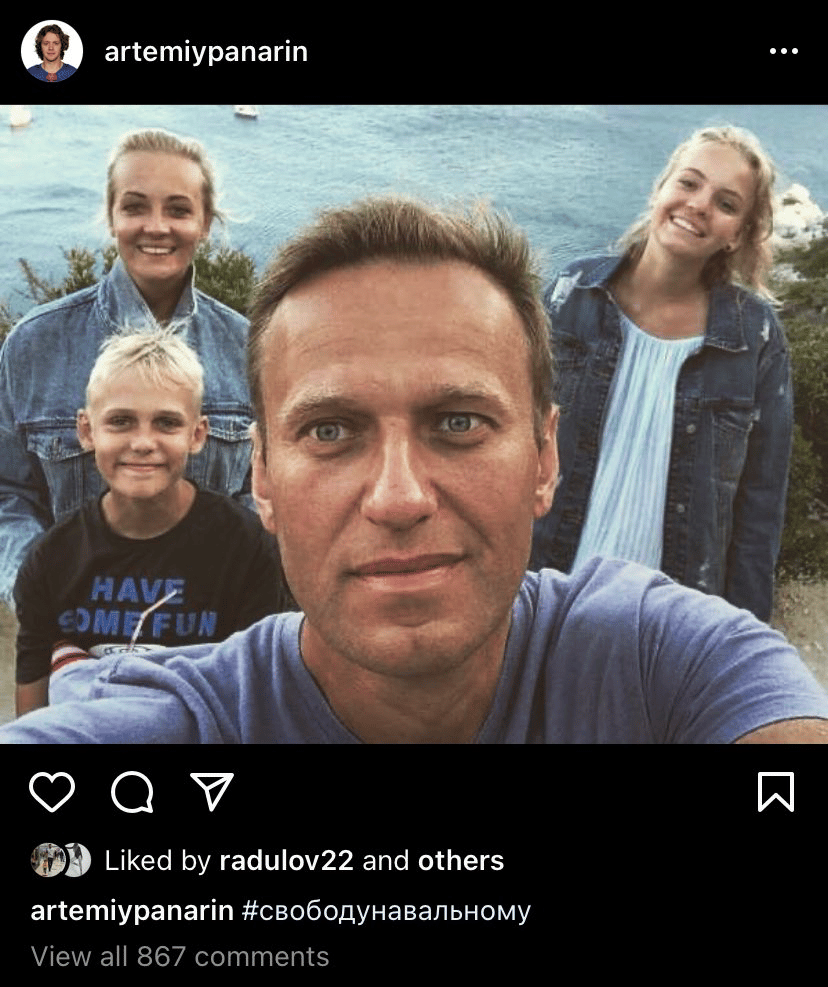
Though more recent sexual assault allegations against Panarin certainly call his character into question, they do not change the fact that for Russian athletes, speaking out against Putin or publicly supporting another political candidate comes with significant personal risk. Anonymous sources cited in the Washington Post say that “many Russian celebrities can face pressures both overt and indirect to take part in a Russian political campaign. For many, an endorsement might protect their families or help secure government funding for their projects.” But someone as rich, powerful, and famous as Ovechkin, they mostly agree, is “probably above such pressures.”
When most Olympic athletes have nowhere near the amount of wealth and power as either Ovechkin or Panarin, it’s worth questioning how the IOC can believe its ruling provides a path for Russian athletes to compete “free from political interference or governmental pressure.”
It’s important to keep all of this in mind when assessing whether it’s possible to separate the politics from Russian international sports. Even throughout the time when Russians competed as individual neutral athletes at the Olympics, they were still internationally recognizable as Russians, competing under a flag that bore the Russian colors together with only other Russian athletes. After they won their medals, they were invited to the Kremlin to be congratulated by and photographed with Putin. Figure skater Kamila Valieva, who went through a doping scandal at the 2022 Olympics at just 15 years old, was able to become a viral lightning rod of Russian nationalism even while competing as an ostensibly neutral athlete.
How has the IOC handled countries with bad politics in the past?
The first and most obvious comparable event is the 1936 Olympics in Hitler’s Berlin. The city had been selected before the Nazis’ rise to power, and the Germany government assuaged the IOC’s worries, assuring its members that Jewish athletes would not be discriminated against.
Even once the Games were set to commence, significant boycott campaigns developed across Europe and, most intensely, in the United States. American Athletic Union (AAU) president and United States Olympic Committee (USOC) member Judge Jeremiah T. Mahomey headed one faction, his lifelong friend USOC president and former AAU president Avery Brundage the other. Mahomey wrote an open letter in 1935 titled, “Germany Has Violated the Olympic Code,” which accused the state of “racism, brutality, and genocide” and supported a boycott of the event. Brundage, on the other hand, gave a glowing report after his trip to Germany to investigate claims of antisemitism (where he spoke to the one Jewish man he was shown by authorities and said that his gym in Chicago didn’t allow Jewish athletes either), and made it clear that there was no reason to worry–or boycott.
The AAU’s final vote was very close, 58-55, to attend.
The 1936 Berlin Olympics were a success, a massive PR victory for Hitler and the Nazi Party on the world stage, made possible by the hard work of Brundage and the IOC. During the Games, Brundage was elected into the IOC to replace Ernest Lee Jahncke, an American IOC member who had stayed home in observance of the boycott. By 1952, Brundage had worked his way up to the position of IOC president.
It’s probably unsurprising, then, that the IOC under Brundage’s leadership resisted calls to expel South Africa’s whites-only sporting federation (which changed names many times), considering it an internal matter and ruling that the non-discrimination portions of the Olympic Charter only applied to international competition, not domestic. He considered allowing South Africa to ban non-white athletes to be “keeping politics separate from sport.”
But a combination of ongoing external protests and internal member discord was finally able to overcome Brundage’s proclivities. After not participating in the 1964 Olympics due to national laws banning South Africans from participating in mixed-race competitions, the announcement of South African participation in the 1968 Mexico City Olympics was controversial to say the least. Member countries of the Supreme Council for Sport in Africa withdrew from the Games; countries throughout Africa, Asia, and the Caribbean threatened to boycott. Fearing the event would fail, the organizing committee begged the IOC to reconsider, and so South Africa was out. After an investigation that found 7 counts of discrimination as well as an unauthorized use of the Olympic rings logo, the IOC voted to expel the South African National Olympic Committee, 35-28.
Difficult Choices
In both cases, the votes I’ve cited are very close, with the winning sides securing 51.3% and 55.6% of ballots cast. Balancing the interests of athletes with geopolitics is a complex feat, and though in the end, one unified decision comes out of the process, it usually results from close calls with narrow margins. Sports federations are only made up of people generally trying to do what they believe is best–though perhaps completely out of touch with the priorities you may find important, using imperfect minds filled with incomplete information.
Similarly, today’s IOC had a difficult choice to make in balancing the rights of Russian athletes to participation against the rights of Ukrainian athletes to…what? To not have their homes invaded? The International Olympic Committee cannot do that anymore than the Russian athletes can. To not watch Russian athletic success further bolster Putin’s regime? That’s certainly a more compelling argument, as I’ve explained. But these soft power publicity impacts are hard to measure, and therefore hard to justify building exclusionary policies upon. And it’s not as if the ROC’s 2022 suspension was just a general punishment for invading Ukraine; it was only ever a timing-based offense, because the proximity of the invasion to the Beijing Games broke the Olympic Truce.
The IOC has not always handled its geopolitical crises well. At least it acknowledges now that international politics are important dynamics that it has to navigate, as opposed to the “sports and politics have absolutely nothing to do with each other” era. But Heraskevych’s 2026 disqualification, the lack of acknowledgement that Russian athletes are routinely co-opted by the Russian state, and now the choice to welcome non-neutral athletes in while leaving the door open to displaying the Russian colors, flag, and anthem, at the 2028 Games shows that the Committee is still—in spite of all evidence—thinks that the field of play can be an apolitical space.