
Notable Sandwiches #151: Pebete

Welcome back to Notable Sandwiches, the feature where my editor David Swanson and I eat our way through Wikipedia’s List of Notable Sandwiches. This week, David goes deep on a staple from Argentina, by way of the 1873 Vienna World’s Fair: pebete.
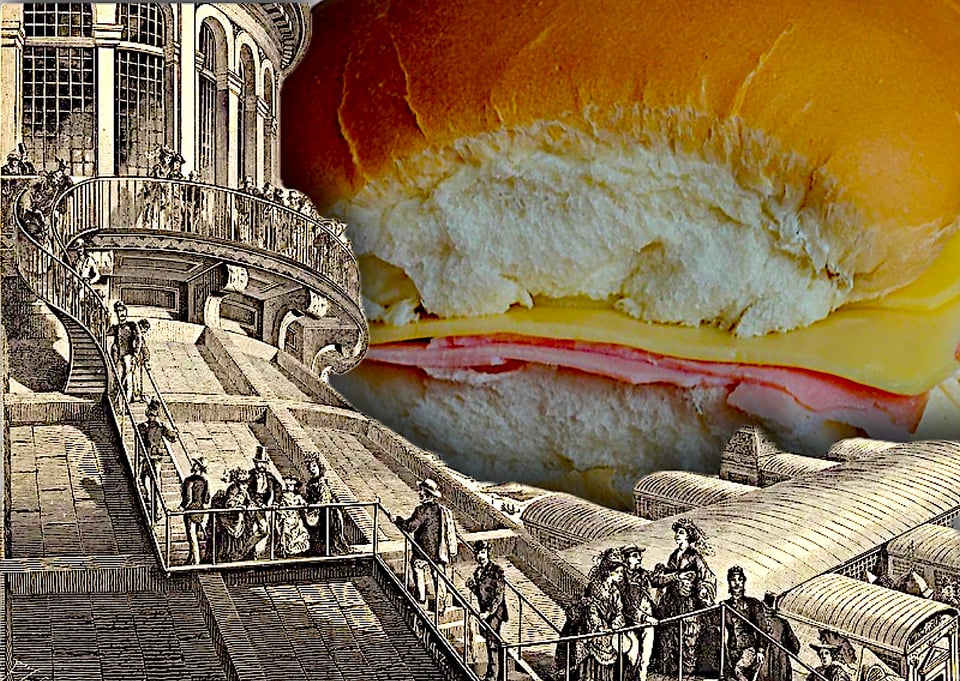
It was the spring of 1873, and Vienna was throwing itself a party. Emperor Franz Joseph had inherited the Austro-Hungarian crown twenty-five years earlier, an anniversary that demanded a celebration. A quarter century into his reign, the emperor presided over a capital in the midst of transformation. Just a few years before, the city’s medieval walls had been demolished and replaced by the modern Ringstrasse, a grand boulevard lined with palaces, ministries, museums, and hotels. Now Vienna had the perfect opportunity to introduce itself to the international community: a coming out party. A World’s Fair.
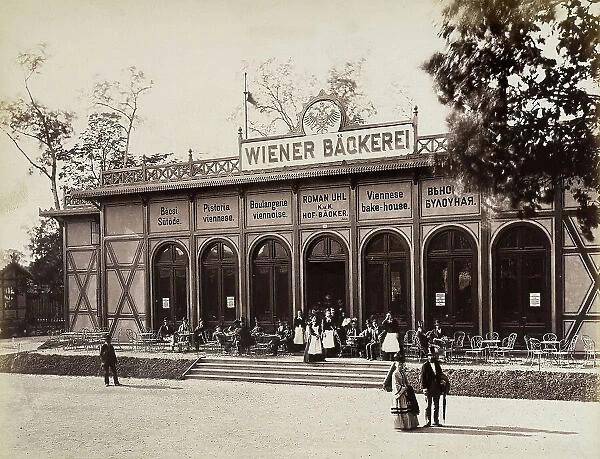
So, on May 1, Franz Joseph traveled to the Prater, the former imperial hunting ground, to open the “Weltausstellung 1873 Wien” before a crowd of dignitaries, including the crown princes of Prussia, Denmark, and the British Empire. In the months that followed, kings, emperors, and the Shah of Persia would make appearances; Franz Joseph himself returned forty-eight times. The scale of the thing was staggering. Under the shadow of a vast rotunda, the fairgrounds covered a sprawling 576 acres—five times the size of the Paris Exposition of 1867 and, according to one contemporary account, larger than all previous world’s fairs combined. There were 35 countries represented, roughly 53,000 exhibitors, and 194 pavilions, along with authentic residences and farmhouses, ethnic restaurants, food stalls, coffeehouses, and even a working bakery. It was there that the world encountered the small, ovular roll that would eventually give its name to this week’s sandwich.
Vienna’s bakers were understandably eager to take advantage of the Fair to demonstrate their wares. In 1875’s “Report on Vienna Bread,” American agricultural chemist Eben Norton Horsford reported that “they caused a comprehensive bakery, with all needed appliances, to be set up within the grounds of the Exposition, and maintained in full operation from the opening to the close.” Visitors could watch as the bakers transformed flour, yeast, and water into bread in real time: semmel—the crisp, pale table rolls for which Vienna was famous—along with loaves of wheat and rye, and a wide range of biscuits, pastries, cakes, and confections (aka. viennoiserie).
“Foreigners visiting the Austrian capital find at every hotel and restaurant… a smooth, irregularly-rounded, small, wheaten-flour loaf, or roll, of uniform weight,” wrote Horsford. “It presents a rich, reddish-brown crust, and a delicately-shaded, yellowish, almost white, interior. It is always light, evenly porous, free from acidity in taste or aroma, faintly sweet without addition of saccharine matter to the flour or dough, slightly and pleasantly fragrant.” According to Horsford, when the Austrian bakers were asked about their secret, “they replied: ‘We have none; we use Hungarian flour and press-yeast, and these constituents are manipulated with cleanliness, care and intelligence.’ The uniformity of the product demonstrates that the problem of making good bread has been solved. One wonders why such bread cannot be elsewhere obtained.”
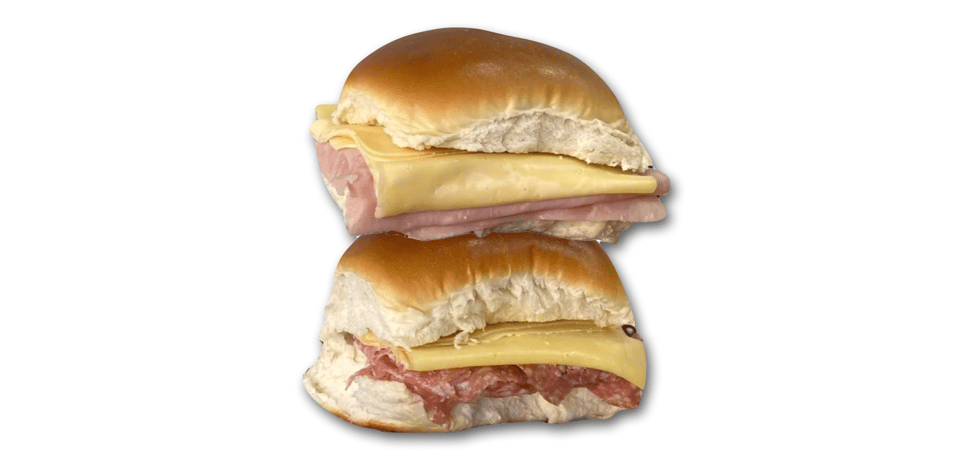
Spanish speakers would call this bread “Pan de Viena”, or “pebete.” As a sandwich it’s a (really pretty basic-sounding) South American staple featuring ham or salami and cheese, with maybe a swipe of mayo. What distinguishes it from your garden-variety ham-and-cheese is the bread.
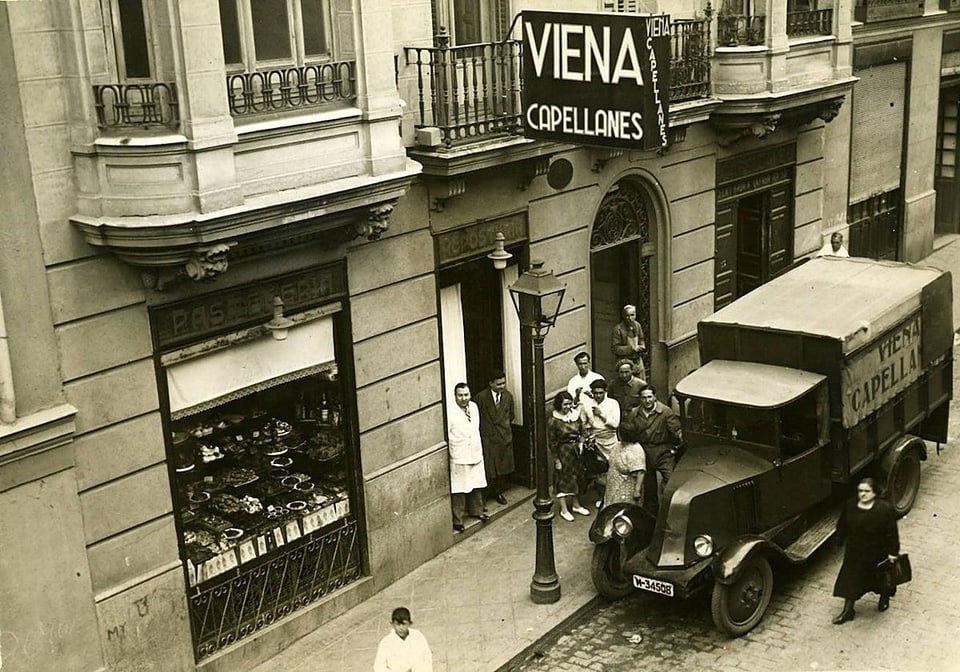
According to legend, a Spanish physician named Dr. Martí was visiting the 1873 fair when he encountered the mild-flavored white rolls, procured the recipe, and returned to Spain determined to spread the wonders of pan de Viena. In Madrid, he crossed paths with a rakish industrialist named Matías Lacasa, and the two set out to introduce the bread to the local populace. The Spanish author Pío Baroja—who worked at his family’s bakery as a young man—recounted the story in his 1917 autobiographical collection, Juventud, Egolatría. “A physician from Valencia by the name of Martí, who had visited Vienna, gave [Lacasa] an account of the bread they make there, and of the yeast they use to raise it,” wrote Baroja. “Martí set up ovens in the old building by the Church of the Descalzas, and the business began to yield fabulous profits.” Lacasa, meanwhile, secured an exclusive ten-year patent to manufacture the bread in Madrid. At his bakery, the still-operating Viena Capellanes, the bread developed a devoted following. And once the period of exclusivity expired, the recipe spread throughout Spain, and beyond.
How pan de Viena reached Argentina and its neighbors is harder to pinpoint. The likeliest explanation is immigration: for decades, Spanish immigrants played a leading role in the region’s food trade. As for the origins of the name, one theory holds that pebete began as the acronym P.B.T.: pan blanco tostado, or “toasted white bread.” Another traces it to the Lunfardo argot that was common in Buenos Aires and the Río de la Plata underworld in the late nineteenth century, in which the word “pebete” meant a boy or young person. According to this theory, the bread took its name from the children who craved it.
To find out how advancements in Austro-Hungarian agronomy led to a South American sandwich, a closer look at the history of the World’s Fair is in order. If you’ve been reading this series long enough you’ll have noticed the astounding number of foodstuffs whose modern ubiquity we can attribute to these international extravaganzas. To wit: At 1893’s Chicago Columbian Exposition, diners got their first taste of Juicy Fruit gum, Aunt Jemima pancake mix, Cracker Jack, and Shredded Wheat. In Beyond the Ice Cream Cone: The Whole Scoop on Food at the 1904 World's Fair, Pamela J. Vaccaro notes that the exposition in St. Louis that year introduced hamburgers, hot dogs, cotton candy, Dr. Pepper, and the ice cream to global audiences. That a sandwich favored by children can trace its origin to a world’s fair is not so surprising. (A note on nomenclature, from The Encyclopedia of World's Fairs and Expositions: These various international events “are commonly called ‘world's fairs’ in the United States, ‘exhibitions’ in Great Britain and the Commonwealth, and ‘expositions’ in France and other countries.”)
The Sword and the Sandwich is a newsletter about serious extremism and equally serious sandwiches. Please consider supporting this work with a paid subscription:
Although the modern iteration of the World’s Fair dates to The Great Exhibition in London in 1851—famous for its glittering Crystal Palace—the essential elements, in microcosm, are ancient: Roman festivals brought together religion, entertainment, and trade, while medieval Europe developed fairs where merchants, performers, and travelers mingled. But until the mid-19th century these were all decidedly national, or even local, endeavors. What set the World’s Fair apart was its international scope. (From the outset, the primary focus was industrial: At London’s fairs in 1851 and 1862 visitors encountered British machinery and Bessemer steel. This trend continued at Paris in 1867, with German gasoline engines and aluminum; at Philadelphia in 1876, with the telephone and typewriter. Paris in 1878 brought electricity and refrigeration, Chicago in 1893 alternating current and the electric light.)
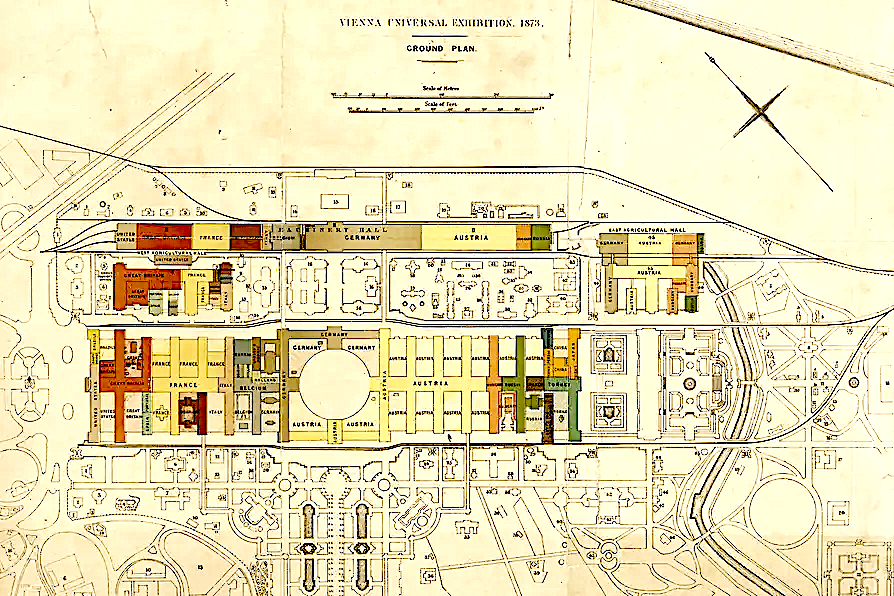
But with Vienna the aperture widened, turning the World’s Fair into something more than a mere showcase for the latest technology. “The Vienna world's fair of 1873 marks a turning point in the history of the world's expositions.” writes Nadine Rottau in the Encyclopedia of World's Fairs and Expositions. “The Austro-Hungarian Empire organized an event that moved the focus away from an industrial and technical orientated presentation to a more entertaining and diverting experience for a broad audience.” As Reid Badger writes in The Great American Fair, “as the nonmanufacturing exhibits gained greater prominence in the fairs following London in 1851, the idea that a world's fair should also concentrate and express the progress of mankind in his intellectual, moral, and spiritual existence began receiving increasing support.”
By the second half of the nineteenth century, the world’s fair had become the latest instrument of soft power. “People wanted to travel the world in one day, become acquainted with exotic cultures and see foreign handicrafts and resources in authentic surroundings,” writes Rottau. “Taking this development into account, the concept of fairs was transformed, starting in Vienna.” One of the 1873 fair’s biggest attractions was the ethnic village, a meticulously staged tour of traditional life in the Empire’s southeastern territories of Hungary, Croatia, Romania, and Transylvania. There was also an “Oriental” quarter, complete with palaces, pagodas, workshops, a mosque, and a bazaar. By giving pride of place to the Orient, the Far East, and the Balkans, the Austrian organizers were presenting the empire as a bridge between East and West.
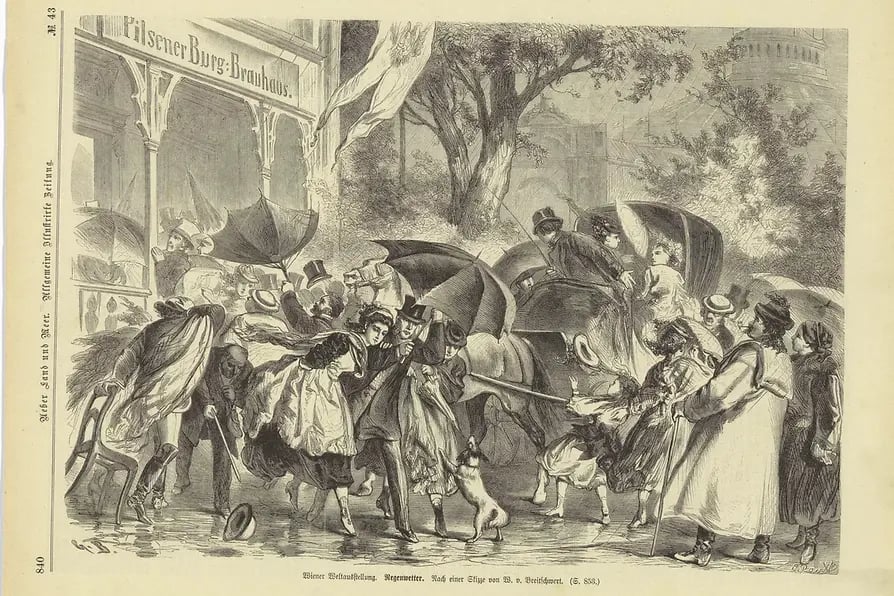
The intentions were noble enough, but ultimately, the Vienna World’s Fair was a bit of a boondoggle. At the opening, several pavilions remained unfinished, and torrential rains flooded the fairgrounds. Then, days later, the Vienna stock market collapsed, puncturing the speculative boom that had driven the city’s transformation, and setting off the Long Depression that crippled the global economy for decades to come. Next came disease: a cholera outbreak frightened away many prospective visitors. The epidemic ultimately killed 3000.
In the end, the Fair attracted less than half the expected number of visitors, and lost a fortune. But not all was doom and gloom. “Although the Weltausstellung had to cope with a lack of visitors, bad weather, a stock market crash, a cholera epidemic, and a huge deficit,” writes Rottau, “it managed to transform the Austrian capital from a rather underdeveloped medieval city into a cosmopolitan national capital.” It also set in motion a virtual Rube Goldberg machine of cause and effect, which turned Hungarian wheat into an iconic South American sandwich. As the “Weltausstellung 1873 Wien” showed, the world is both big and strange—stranger than you’d think, with connections that spark unexpectedly, for the bad and for the good. When the world comes together you get unpredictable weather, a plague, and a depression, but also a bridge between East and West, a bridge between the past and the future, soft bread as soft power, and a sandwich beloved by children half a world away.

Add a comment: