
Notable Sandwiches #150: Xis Gaúcho

Welcome back to Notable Sandwiches, the feature where my editor David Swanson and I eat our way through Wikipedia’s List of Notable Sandwiches. This week, straight from the rolling pampas of South America: xis gaúcho.
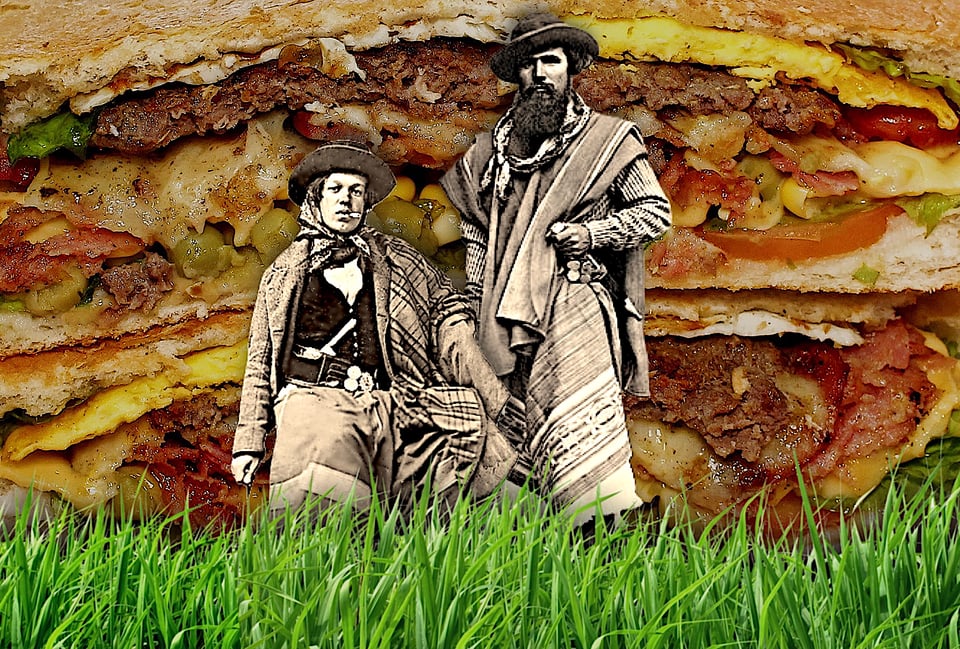
It was greed that brought cattle to Brazil—the insatiable greed of exploration and colonization; and like so many other violent reshapings of the world it started with Christopher Columbus. The eager taking and reluctant bestowal of animals, plants, diseases, and culture from America to Eurasia and vice versa is often given the quaint name “the Columbian Interchange”—an innocuous term for something that killed civilizations. The European benefits from the Columbian interchange are well known: without it, Italy would have no tomatoes, Belgium would have no potatoes to fry, Hungary would have no paprika.
But alongside mass death, enslavement, and pestilence, imports from Europe shaped the Americas too: horses to ride the plains; cattle, descended from the Eurasian aurochs, to graze the broad fields; the very apples that make up the filling of American apple pie (apples originated in today’s Kazakhstan). Five centuries later, cows in the Americas still carry the genetic imprint of their Iberian forebears. From there the animals were dispersed throughout the Americas, accompanying colonists; as native peoples were felled by disease and subjugated in grinding, attritive warfare, the cattle herds swelled and grew on sweet grass.
As the writer Maciej Ceglowski put it in his magnificent, funny essay Argentina on Two Steaks A Day,
“This most docile, placid, and passive of large herbivores stepped off the boat, took one nibble at the pampas and made a run for it. It knew that it wanted to spend the rest of its life eating the pampas grass, without outside interference. And the settlers, once they caught some of the early escapees, began to feel the same way about the beef.”
Though the pampas grasslands extend no further north than Brazil’s southernmost state, Rio Grande do Sul, the country is the world’s largest exporter of beef, and its second largest producer; while Brazil has a large population, 212 million, there are a million and a half more cows than people, grazing and dying for the world’s pleasure. Altogether, the pampas extend in their fertile, low waves throughout some 460,000 square miles of southern South America, covering a swathe of Argentina and all of Uruguay.
And it was here that a unique culture was born—one that eventually lent its name to the robust Brazilian sandwich known as the xis gaúcho, a humble beef patty on an overlarge bun, served with the cheese that makes its name, plus corn, lettuce, and mayo, in an homage to the American cheeseburger. It’s named the xis gaúcho because it’s impossible to separate the figure of the gaucho from the cattle that were their livelihoods.
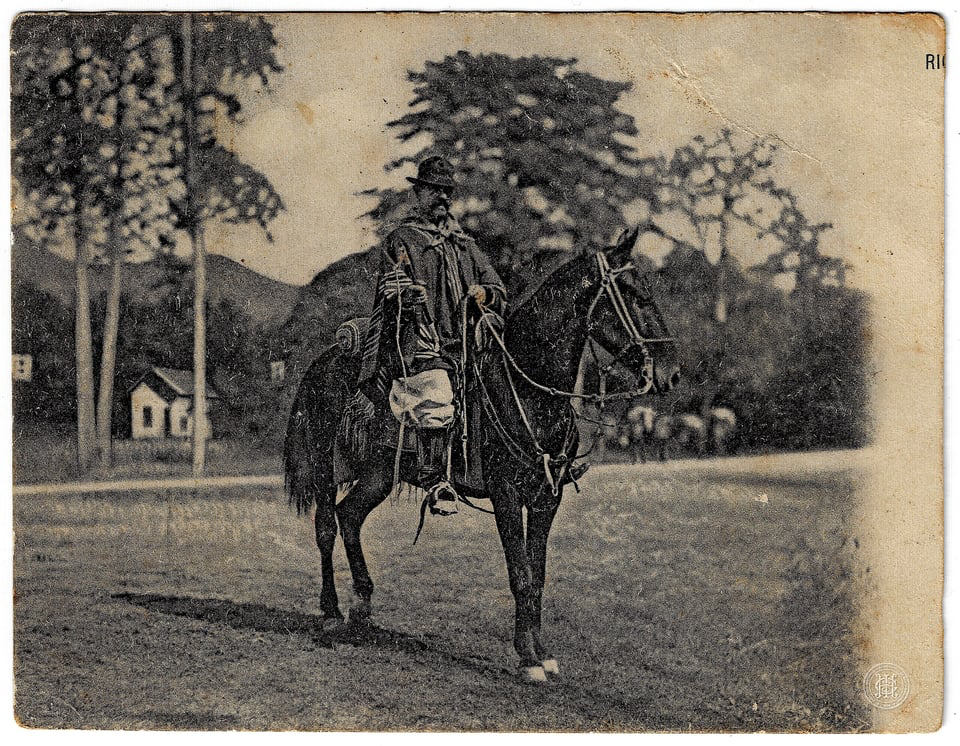
“Gaucho” has a number of colloquial meanings, from any member of the rural poor to a demonym for all inhabitants of the Brazilian state of Rio Grande do Sul. But principally it refers to a class of whip-toting, cattle-wrangling horsemen who roamed the pampas of colonial Latin America, iconic figures that left a permanent stamp on the literature and culture of the societies they inhabited. Much like the cowboys of the Old West, gauchos existed at the outer edges of polite society—sometimes living as outlaws, sometimes serving colonial ambitions, and becoming, long after their heyday, figures of romantic imagination.
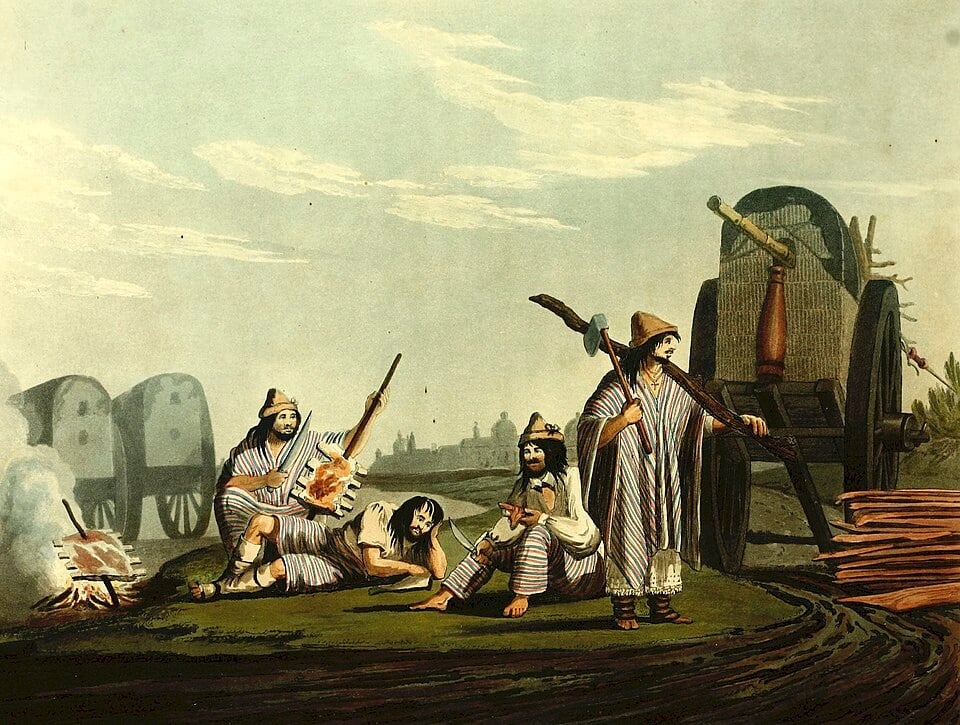
In reality, gauchos served as intensely physical liaisons between Spanish colonial ranchers—owners of sprawling estancias—and the vast, milling herds of cattle turned loose on the pampas. The job of the gaucho was to wrangle the wild animals: initially, in the 18th century, they set out into the plains to harvest the tallow and hides that formed colonial tribute to Spain, living off fresh-slaughtered beef, rock salt they carried in pouches, and countless cups of potently caffeinated yerba maté. Later, they branded herds for the estancia owners, tamed and trained wild horses, camped out under the open sky, trafficked in the illicit hide trade, and developed a reputation for outlaw behavior.
The Sword and the Sandwich is a newsletter about serious extremism and equally serious sandwiches. Please consider supporting this work with a paid subscription:
Gauchos had distinctive garb and gear that marked their caste and profession: gaucho pants—loose trousers ideal for quick maneuvering on horseback; colorful ponchos, for protection against the elements, and occasionally as extra padding during knife fights; and an iconic hat with a wide, flat brim. Their tools: the facón, a wicked dagger with which to engage in duels; a lariat; bolas, rocks tied together with leather straps whirled at speed; and a large leather whip known as the rebenque.
“Life in the open made these men as lithe as pumas, strong as bulls, tough as hickory,” wrote the scholar Edward Laroque Tinker in his 1947 essay The Cult of the Gaucho and the Creation of a Literature. “Meat and maté (tea of Ilex leaves) was their sole diet, their saddle their pillow, and their poncho their blanket. With no more than this they traveled far and fast over their seas of grass, for they knew every trail and swale as intimately as a market gardener his acre plot.” They were expert equestrians, as necessary to herd and slaughter wild cattle, and eventually served as legendary cavalrymen in several Latin American battles for independence.
In the latter decades of the nineteenth century, the gaucho became a figure of romantic literature, and a means of defining national postcolonial identity. Poems and novels romanticize the gaucho as a figure of a lost manhood, very much in the way cowboys and the Old West gave birth to the genre of Westerns—and just as integrally connected to beef, horses, and a troubled relationship to the law.
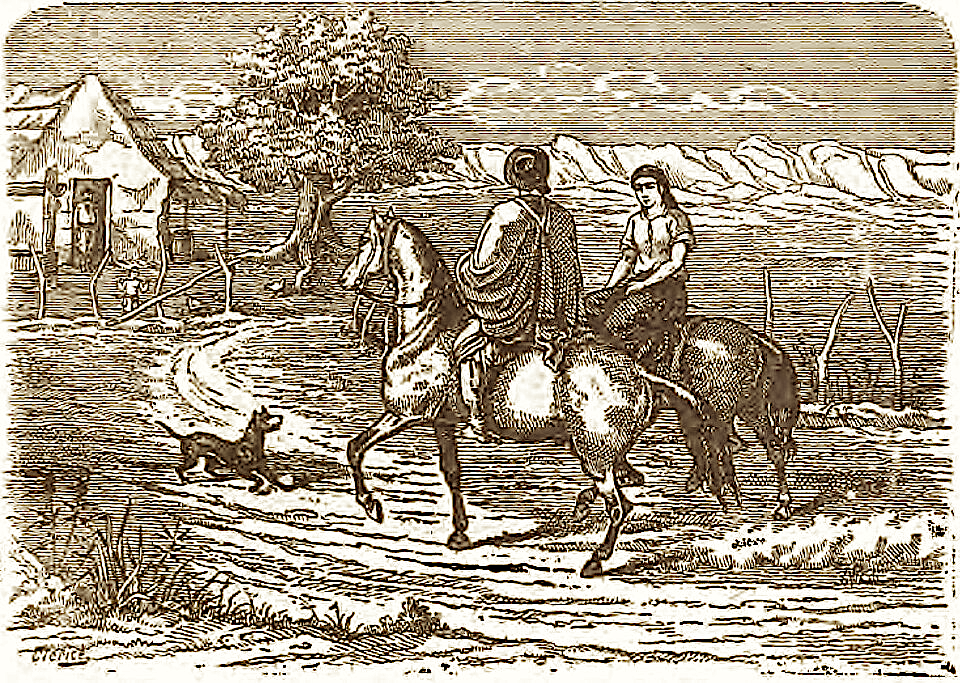
In 1871, Jose Hernandez, a poet of such renown his birth is celebrated as a national holiday in Argentina, published the first part of his epic poem of the ferocious masculinity of the pampas, Martín Fierro. Perhaps the epitome of the movement known as la literatura gauchesca, which celebrated the down-at-heel, knife-bearing, poncho-clad ramblers of the grasslands, the poem reads like outlaw country written on the pampas. Gauchesca literature is fundamentally conservative in that it embraces a culture whose heyday had already passed by the time writers set it down in poems and novels. But the dream is that of the downtrodden man whose poverty becomes a defiant form of freedom, an unshackling of societal conventions in favor of a purer and more sensuous life. In the hands of the skilled Argentine-Scottish translator Walter Owen, Martín Fierro is a galloping song of the lonely triumph of the gaucho:
A son am I of the rolling plain,
A gaucho born and bred;For me the whole great world is small,
Believe me, my heart can hold it all;The snake strikes not at my passing foot, The sun burns not my head.
I was born on the mighty Pampas’ breast,
As the fish is born in the sea;Here was I born and here I live,
And what seemed good to God to give,When I came to the world; it will please him too,
That I take away with me.And this is my pride: to live as free
As the bird that cleaves the sky;I build no nest on this careworn earth,
Where sorrow is long, and short is mirth,And when I am gone none will grieve for me,
And none care where I lie.
In Argentine literature in particular, the gaucho is a figure of magnetic virility, a nomadic man of violence and action whose existence is shaped by the open plains. In Ricardo Güiraldes’s 1926 novel Don Segundo Sombra, the titular gaucho swaggers into the town in which our nameless narrator—a motherless boy in the unhappy care of cruel aunts—resides; the adolescent on the cusp of manhood falls into an instant kind of love. In a bar, a crude drunk lobs racist insults at Don Segundo (reflecting the often mixed heritage of gauchos in general). “I’m a busy man and can’t take care of you now. When you want to fight me with me, let me know at least three days in advance,” Don Segundo replies, with charming insouciance. He embodies a masculine mystique that leaves the nameless narrator in awe:
“He was not really so big. What made him seem so, as he appears to me even today, was the sense of power flowing from his body… Again he began to grow in my imagination. He was the ‘masked man,’ the ‘mystery man,’ the man of silence, who inspires a wondering admiration in the pampas.”
The novel is a peripatetic bildungsroman, as the waif, with Don Segundo’s guidance, crosses Argentina on cattle drives, encountering horse races, cockfights, and gaucho tales across the campfire.
The story, though, is just as much about Don Segundo’s sombra—his shadow, and, metonymically, the shadow of the gaucho cast over Argentina’s history and culture. The figure of the macho nomad, living off beef and maté, is both a symbol of freedom and of its loss: the pampas are enclosed now, the wild herds tamed. But throughout the grasslands of South America, beef—and the xis gaúcho named for those who once procured it by means fair and foul—retains its pride of place on the plate. Sorrow may be long, and mirth short, but a beef patty served on a bun will rarely disappoint you—particularly when its very name evokes a long, long dream of hoofbeats ringing across the open plains.

-
Fascinating, especially when considered as the cultural precursor to the equally romanticized American cowboy.
Add a comment: