After missing the inaugural DotB in 2024, I made up for it in 2025 and vowed to return in 2026.
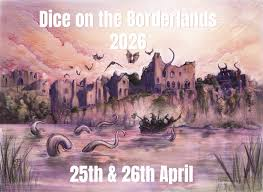
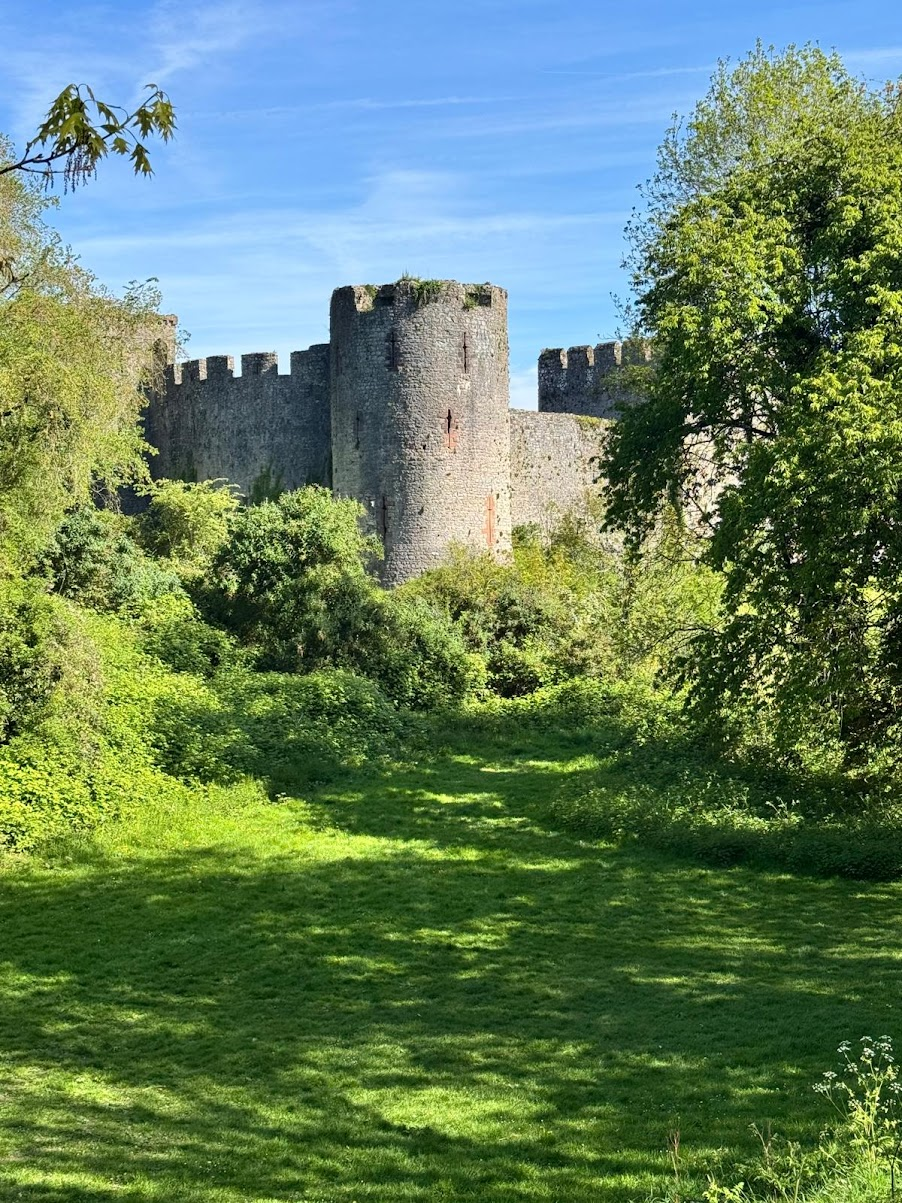
To summarise, it’s rolling dice in a real castle, Chepstow Castle and the weather is ALWAYS guaranteed to be sunny with blue skies, don’t listen to what the amazing organiser Cris Bonhomie says, it’s definitely always sunny in Wales.
It’s a compact & bijou affair, limited to only seven tables, 30-40 attendees, but that is part of its charm, as is the location and Chepstow itself. A variety of games this year across three sessions, including:
Call of Cthulhu
Daggerheart
Dragonbane
Dungeons and Dragons 5e & 5.1
Ecochurs
Liminal
Pathfinder
Romance of the Perilous Land
Shiver
Starfinder
The Black Hack
The Code of Class and Catastrophe
Trophy Gold
Vaesen
Saturday am - Daggerheart
The Lost Heir of Mad King Vonburg, GM: Lloyd Gyan
A smooth drive with fellow gamers Fabio and Annabel and my SO up the M4 and across the Severn, saw us arrive with time to spare and dive into game one. Daggerheart is from the publishing arm of Critical Role, the phenomenally successful actual play that, like it or loathe it, has given a big shot of adrenaline into the comatose patient that is D&D. I’d been repelled and repulsed in equal measure from what I’d watched of Critical Role; I knew it wasn’t for me, but then it probably makes no bones about not being for me and I’m likely in a minority given how popular it is. But I was intrigued: what had made Daggerheart so successful? What had they done to make it attractive to D&D5e players and b. attractive to those interested in their actual play and c. those that are looking for something other than D&D5e. That felt like a mix destined for disaster.
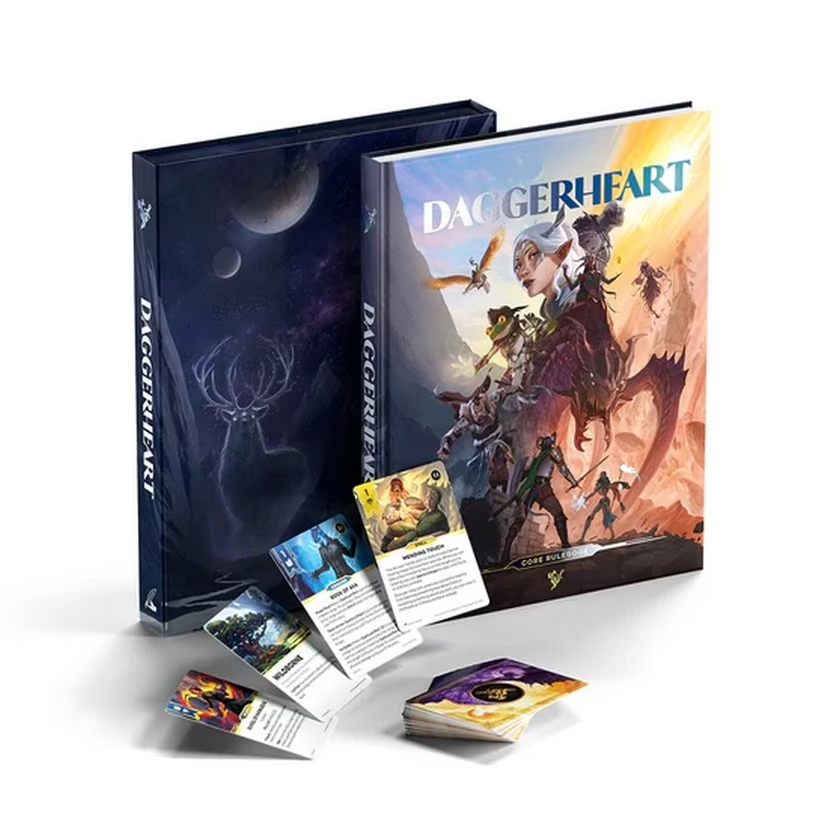
Luckily, there was a secret weapon, Lloyd Gyan. This GM extraordinaire and TTRPG industry stalwart, threw us into the initial scene and gently, violently and always entertainingly introduced us to Daggerheart.
At its heart, you roll two twelve-sided dice and add them up to hit a target number. Done. But the dice are different; one is nominated Hope, the other Fear. The dice that is the highest matters. So you have a lot of variations on a success, but fear is the high dice, on a failure, but Hope is the high dice, etc. Oh, and if the dice values are the same, it’s a critical (success or failure).
I was surprised how much these led to interesting and fun situations as we and the GM narrated the outcomes.
The scenario followed a simple premise: we had a young girl, Olivia, who was to inherit the kingdom if she could get to a far-flung castle. We had pledged to help her.
The GM gave us good choices on how to get there: a bridge, a waterfall, the Condors. The Condors won by a single vote, so we ascended to meet them. Obviously, this was a trap, but through some wondrous combat manoeuvres, we managed to defeat the Condors, steal their mechanical flying chicken thing and make it to the castle.
Things then went wrong as my shadow rogue rolled double ones; the GM fairly said that I would now only exist in the shadow realm, but I had time to perform a few heroic actions.
A few more twists and turns, before we had put Olivia’s guardian, a demon, onto the throne. I know, I know, that’s not what we’d agreed at the start, but it seemed the best of all outcomes, and again, the saner members of the party were outvoted.
We narrated our final scenes, I suggested that Nittle, my rogue, would hang around with the group in the shadows, and as a consequence, the other party members always kept the bedroom, bathroom and toilet at their abodes well lit!
A fantastic and entertaining group, GM and system, very impressed with all that Daggerheart promises and delivers.
Saturday pm - Liminal
Liminal ‘66: Jules Rimet still bleeding, GM: Mark Willoughby
The sun was out, the sky was blue, so sitting on the grounds of the inner courtyard for lunch was a fine way to decompress.
I browsed the library of games from the Mike Hobbs Memorial Fund, picking up First Responders after Paul Baldowski had run it for The Raspy Raven Supers Season and sending through a donation. The fund raises money to help buy games for new gaming clubs, schools and youth clubs, but also puts popular and “esoteric” games from the late Mike and Andrew Jones into the hands of gamers. If you wish, you can donate by sending a donation via PayPal friends and family to [email protected].
Back into the Earl’s Chamber for the afternoon game of Liminal, a personal favourite, written and designed by Paul Mitchener with the amazing art of Jason Behnke. A bonus was that Mark Willoughby was running this homebrew scenario, and I know he’d written a fair few con scenarios that many had loved.
The setting, the 1966 World Cup year. The problem, the Jules Rimet trophy has been stolen. We played members of P-Division, a part of the force that delved into the Hidden World. I was a Hungarian orphan who grew up in England, imbued with super strength and fast reflexes, unaware of how I gained these feats, given that my parents were unknown. Others included a changeling, a magician, but all hell-bent on getting the trophy back and ensuring England beat the Germans 4-2, and yes, it was over the line.
Mark had sensibly, for a con, given us a list of three to four sources of clues. We tried to link together exsanguinated corpses, a ventriloquist’s dummy and the shady world of watermen, wharfingers and stevedores. All great fun, chatting to these wonderful characters and locations.
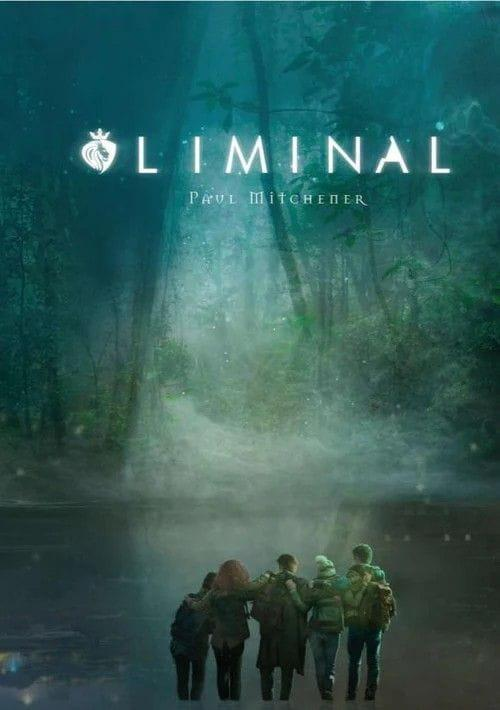
Eventually, the mists off the River Thames parted, and a popular beat pop combo attracted our attention. A pitched battle between us, revenants, zombies and… other undead. We may have, unwisely, thrown the kitchen sink into taking out the big bad, which could have gone spectacularly wrong, but we sort of prevailed. Enough of a win to get the trophy back and avert an infinite number of years of hurt, rather than the current sixty years.
Kudos to Mark for a wonderfully involving game, the lovely imagery and maps. It is what makes Liminal so great, in placing these fantastical stories in known places and interweaving real people and history to tell a story.
We left with a smile on our faces and shivers running down our spines as we headed out into the sun and off for dinner and drinks at The Boat Inn.
Sunday am - Trophy Gold
Hester’s Mill, GM: Jim McCarthy
An early start as I walked our dog around the grounds of Chepstow Castle and then back for breakfast, packing and up and in front of the Castle gates by 9.30 am.
It was a little quieter in the Earl’s chamber, with fewer tables as some had headed home after Saturday, but I spotted games of Daggerheart, Call of Cthulhu, Starfinder and D&D5e. I had chosen Trophy Gold, and Cris had generously allowed me to keep to a lower player count to manage the highly narrative focus that stretches out the game, just three folks: Paul, Callan and Joseph. Very impressed that they still brought loads of energy to the table, as Trophy games require a lot of player ideas and interaction.
I’d chosen Hester’s Mill, in the main, because a. I’d listened to the podcast from Jason Cordova and b. I’d run it successfully and unsuccessfully in the past, so I had both familiarity and wrongs to be righted. Mainly, though, I was super excited to use the Trophy bling that I’d unwisely picked up on a whim and then kept avoiding its eye as it sat on my shelf. Judging me.
The Trophy Bling consists of illustrated cards with questions and details for:
54 Occupations
54 Backgrounds
54 Drives
54 Equipments
54 Rituals
Along with this are light dice, dark dice, gold dice and the ultimate bling, gold hunt tokens!
It is, in fact, a neat and practical way to create characters and, I think, helped get us immersed in Trophy lore and ideas.
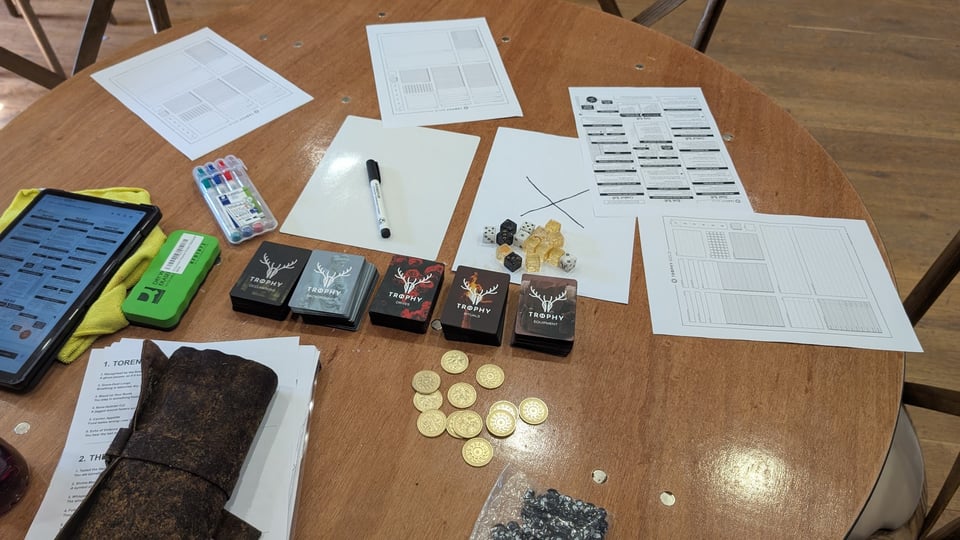
I’d prepared for this by having a timeline of where I should be across the three hours and having a series of Devil’s Bargains for each Set aka scene. A Devil’s Bargain is something you offer to a player for an extra light dice. It’s something detrimental or weird that will definitely happen to their character, whatever the outcome of the roll.
Trophy Gold consists of a series of investigations into achieving a goal, which are called Hunt rolls. If successful, then the player receives a Hunt token and can trade three of these in to achieve their goal. A success is just a six on one of the dice you roll, with even a four or five being a success, though with something horrible happening.
This can be a bit unnatural and meta-gamey, and there were times it felt like I confused the players, or maybe restricted them, but we got over this and found our way to the valley that is Hester’s Mill. They quickly defeated ghouls, poked a werewolf in the eye and found out the dread secret of this place. Only one thing for it, burn down the village… with fire. This was done, though the big bad momentarily appeared, frightened the bejesus out of the group, who fled to a seemingly safe farmhouse to the north.
Rested and ready to cleanse the village, they headed back along with an arts and crafts scarecrow they’d conjured up through a ritual. Combining the raving scarecrow, with some excellent harpoon throwing and more poking out of eyes, the demon was vanquished, and the party searched the area for more treasure. Gold, silver cufflinks and access to a bank vault in Ambarat were more than their drives and dreams could have imagined.
A lovely group and a fitting finale to dice in the castle. We met up with my SO, who’d been enjoying the delights of the Artisan market; soap, sausage rolls, quiche, and pastel de nata were all appreciated. Another uninterrupted trip home, but already thinking of what I can run in 2027.
A massive thanks to Cris, his fellow organiser, Nik, for tea and coffee, our GMs Lloyd and Mark, wonderful fellow players and JimJim for finding my hat… my hair, what I have of it, has not yet turned ginger.
You just read issue #158 of The Raspy Raven Rag. You can also browse the full archives of this newsletter.
