As part of The Grognard Files Book Club, I’d re-jigged my schedule to line up this book with that meeting. If you’re interested, you can join too. Click the link; it takes place on the first Sunday of each month and is currently a mix of sci-fi and detective novels. It’s relaxed and friendly, and always has a strong bent to how to leverage a book and its ideas for TTRPG purposes.
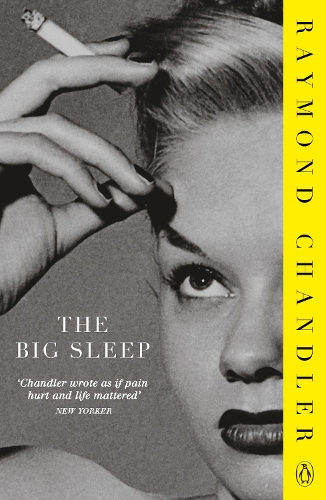
The Big Sleep is set in a decaying, rain-slick, humid Los Angeles of the 1930s, populated by the desperate, damaged and beautiful. It is more of a series of characters pinballing against each other than a strictly plot-driven story. There is a plot, it is labyrinthine and seemingly unknowable, but then that’s because we are alongside Marlowe, down in the dirt, rifling through it and picking out a single nugget of information amongst the detritus. Oh, for a lovely, clean birds-eye view of what is going on, but life doesn’t work that way.
As Kenneth Hite would have it, this is an Ocean of Clues mystery structure. The Big Sleep functions as an ocean of clues because its investigative progress does not depend on any single clue and is instead driven by overlapping, redundant, and often ambiguous information.
This could feel frustrating, if it wasn’t for the snappy, sparky prose. Characters come to life in just a few well-chosen phrases and are further deepened as they trade verbal swords with Marlowe and others.
Marlowe himself is a classic anti-hero; he’s cynical, detached, but this conflicts at times with a private moral and ethical code, known only to himself and an underlying empathy that surfaces a few times in the story. Marlowe’s name is perfect, suggesting literary allusions, something almost regal and above the squalor of the underworld he wanders through.
Should I attempt to describe the plot? It starts straightforwardly; a rich man wants a Shamus to investigate a request to settle his daughter’s gambling debts and determine if that is real or not, and to “put an end to it”. No police are involved because the rich man wants to avoid any scandal. The investigator is given a name and an address.
So how does he end up involved or aware of six deaths, blackmail, pornography, extortion, gambling rackets and organised crime? This is the descent, each question asked, person met, and clue uncovered makes things messier and lines up increasingly difficult moral choices. Not all of this path down makes a great deal of sense - Who killed the chauffeur? - but that is where the characters, the writing, all make up for it, the precision and charm of Marlowe’s voice is all you need to keep going.
Those characters do a lot of heavy lifting. I’m particularly drawn to the child-like Carmen Sternwood, who enjoys “pulling the wings off flies”; she’s central to the book, turns up left, right and centre and feels like the perfect NPC to drop into a group of nervous PCs. She has minimal talk, but, looking back, once you get to the conclusion, some rather shiver-inducing phrases, “You’re cute. I’m cute.”
Overall, this book brought back happy memories of spending too much time in Murder One, a sadly defunct rare crime bookshop on Charing Cross, picking up a new gem and taking it home to dabble in the classic and crappiest of Crime Noir, an imaginary cigarette in the corner of my mouth.
I gave The Big Sleep 9.0 out of 10.
TTRPG Thoughts:
Much thanks to Chris, aka Dirk and The Grognard Files Book Club for supplying much of the ammunition for this part.
There is so much that this could be ten times longer than the above micro review, so I’ll focus on three points, but check out games such as Trail of Cthulhu, Blade Runner, Hard City.
Social Investigation - Marlowe excels at getting information out of people through a variety of means. This fits perfectly into the various Gumshoe interpersonal Investigative Abilities: Intimidation, Reassurance, Bureaucracy, Cop Talk, Streetwise, and High Society. It’s a master class for GM and Player in how best to roleplay these scenes, but also to bear in mind that getting information out of NPCs doesn’t mean you always succeed, even if you “roll a critical”. NPCs have their own agendas and drives; they may want something in return, or it may break them to hand over that thing you want.
A great example was a recent Tales of the Old West session, where the players were trying to convince a desperado to give themselves up and come back to town to face justice. The hombre knew he was destined for the noose, and so, even though the players all rolled well to persuade him to give up, Tales of the Old West allows an NPC to refuse to comply with something that conflicts with their drives, but they then take a “hit”, they reduce their Docity and Cunning, essentially the more interpersonal attributes. This went on through a series of tense conversations until one of the attributes hit zero. They were broken; they had the choice: curl up in a ball or do something where they lost all self-control, so they ran forward, all guns blazing, nearly killing one of the PCs, until they were taken down. As in real life, saying the wrong thing or pushing someone too far has consequences.
Timelines & Events - We discussed the importance of NPCs continuing to push forward their own agenda. Many times in The Big Sleep, Marlowe is interrupted from pondering the case by someone turning up on his doorstep. Likewise, as he moves around the LA locations, things change as the antagonists put their plans into motion. A great example is when Marlowe returns to the scene of a crime and finds a body removed. Gumshoe players and GMs may find this a tricky one to picture, as it is rare for players to return to a scene they’ve investigated. In Cork Bord, it is part of the mechanics that a scene left and returned to, may have become more complicated to figure out what has happened, the Complication rating of the scene is refreshed or increased, and has to be fought/investigated again.
A Big Sleep Mystery - We talked previously about the Ocean of Clues from Ken Hite, but as Tom on the Book Club suggested, a series of Bangs, in-game GM events, plus a cast of grotesques (and beauties) and a timeline of events driven by the cast is maybe all you need. I wonder if a depth crawl would work, floating around satellite scenes, each location visited or suspect interviewed, will allow random but also deeper areas of the mystery to be uncovered. Somewhat like a Carved from Brindlewood-style game, random items allow the mystery to coalesce, and the GM and players shape the path of the investigation - perhaps there is a Lvl 20, very specific uncovering of the mystery, the GM and players work through new scenes and repeating/changed scenes to get down to this level.
You just read issue #160 of The Raspy Raven Rag. You can also browse the full archives of this newsletter.
