
I got to Graham Greene’s book via Tim Butcher’s Blood River; he’d mentioned it as inspiration, and I’d been so immersed in Blood River that I picked it up almost immediately. That was a good few years ago; ten, fifteen? Better late than never.
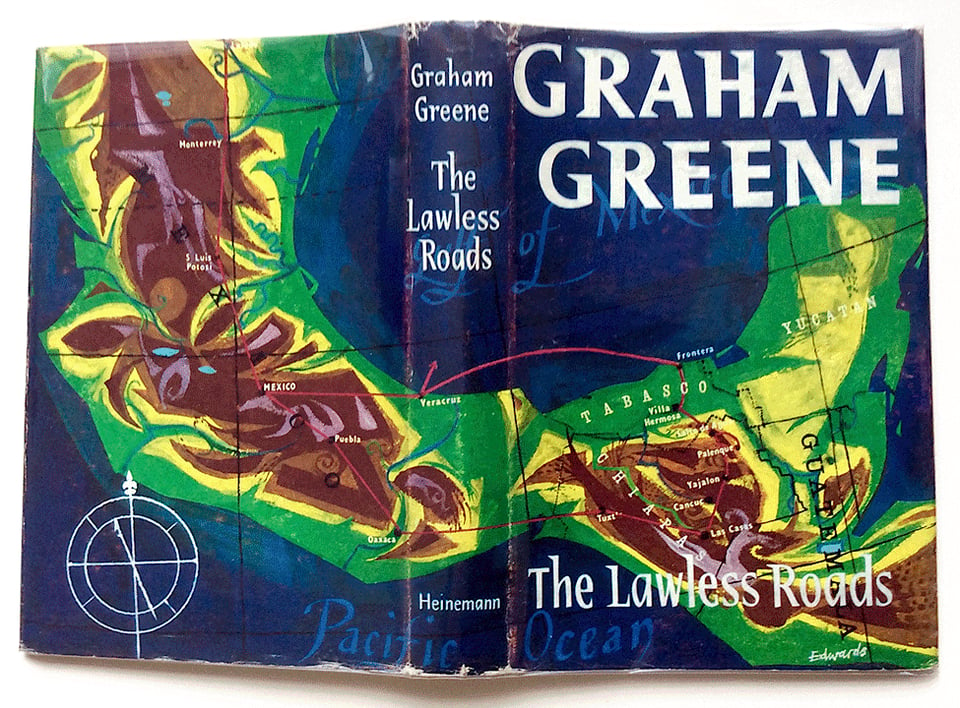
I didn’t quite know what to expect. I knew it was a 1938 travelogue and that it was commissioned to find out the effect of the Catholic persecution by the Mexican government in the 1920s.
As part of another book club, I’d enjoyed Graham Greene’s The Human Factor, feeling he inhabited the emotions and turmoil of his characters. This was a very different beast. Greene is a moaner, but one of life’s best moaners. His complaints were eloquent, witty, and, at times, cruel. Take this example of his conversation with a retired US Police Commissioner, “The old gentleman talked at breakfast about his bowels. He said, ‘When I kept you waiting, I thought I only had to do one, but I found I had to do both. It’s eating cereals. They keep your bowels good.’ He ran happily on; it might have been a dog speaking.”
There’s an element of Heart of Darkness in this book; the state of Greene is pretty awful by the end of it, exhausted, angry, seemingly unable to find any spark of spirituality and laid low almost to the point of hospitalisation by dysentery. There are a few happy moments, but on the whole, this is the equivalent of putting on a hair shirt or treating yourself to fifty lashes with a cat o' nine tails.
Greene rebuffed claims that he despised his time in Mexico and failed to show anything beyond the terrible treatment of the Catholic church and it’s congreation, by saying that was what he was being paid to do and that there were lighter moments and wonderful sights to see.
Overall, the book is entertaining and enlightening; it makes you want to follow in his footsteps, immerse oneself in the culture, the dirt and the desperation of the land, and I can see precisely what inspired Tim Butcher to tread a similar path on a different continent, sixty-six years later.
I gave the book 8.0 out of 10.
TTRPG Thoughts:
I have ingrained in my head a road movie RPG after playing The Electric State. The trials of trekking through Tabasco and similar areas in the 1930s would give great source material. There is also a lot to be developed between the Mexican and Indian populations, their various approaches to worshipping the old and the new, the way they interact and especially the saints that the hidden Catholic population keep secret in little boxes. Hidden worship also recalls Call of Cthulhu, and you can imagine a group of soldiers being sent into the hills to root out and destroy a rumoured Catholic church and village, only to discover it is more esoteric flavours the worshippers have in mind.
You just read issue #157 of The Raspy Raven Rag. You can also browse the full archives of this newsletter.
