I’m glad I read Ice. I’m not entirely sure I enjoyed reading Ice.
Massive thanks to The Grognard Files Bookclub and its members for an entertaining morning discussing this, from which I took a lot of inspiration for this review.
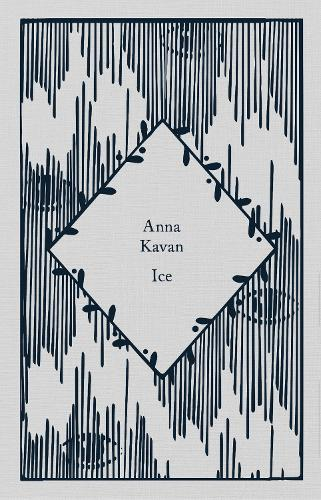
Anna Kavan’s 1967 novel is one of those books that feels less like a story being told to you and more like a dream or nightmare experienced.
An unnamed narrator pursues an unknown girl (woman) across a world that is being encompassed by walls of ice, while a powerful man, the Warden, also attempts to possess the girl. Countries blur into one another, journeys seem to happen without clear geography, characters disappear and reappear or even merge into one, and reality regularly gives way to fantasy without warning.
It is deeply disjointed, oppressive and dreamlike. Sometimes deliberately so, sometimes to the point where I found myself wondering if a page had dropped out onto the floor, or turned itself into a penguin and waddled off into a blizzard.
And yet there are passages I really loved.
Kavan can make the apocalypse sound horribly beautiful:
“Ice walls loomed and thundered, smooth, shining, unearthly, a glacial nightmare…”
There are similarly short, exacting lines that seem to encapsulate the whole book:
“Fear was the climate she lived in.”
That word climate does an awful lot of work. The world is freezing, but so too are the relationships within it. The girl is trapped between men who claim to love, rescue or protect her but continually reduce her to some fragile object that can be owned or abused.
The narrator admits as much:
“I treated her like a glass girl; at times she seemed hardly real.”
Which rather sums up one of the most deeply uncomfortable things about Ice. On the surface it is horribly misogynistic: the woman is repeatedly objectified, threatened, pursued, abused and deprived of agency. But Kavan seems much more interested in making us inhabit the warped worldview of the men doing the pursuing than in endorsing it. The narrator and the Warden increasingly start to look like variations on the same person. The girl is unknowable, her motivations or actions unexplained or unimportant, as we see all through the eyes of the men.
Meanwhile, the walls of ice steadily grind across the landscape.
Is it climate catastrophe? Nuclear winter? Addiction? Depression? Death? The narrator’s psyche made physical?
Probably all of them, and probably none of them.
Phew. This is bleak.
The book gets weaker, for me, whenever I try too hard to make it add up. It works better as a nightmare: images reoccur, people and personalities merge into one another, and the geography makes emotional rather than any literal sense.
And then there are the lemurs.
The narrator is fascinated by indris. They may represent gentleness, innocence or an alternative to the violent human world.
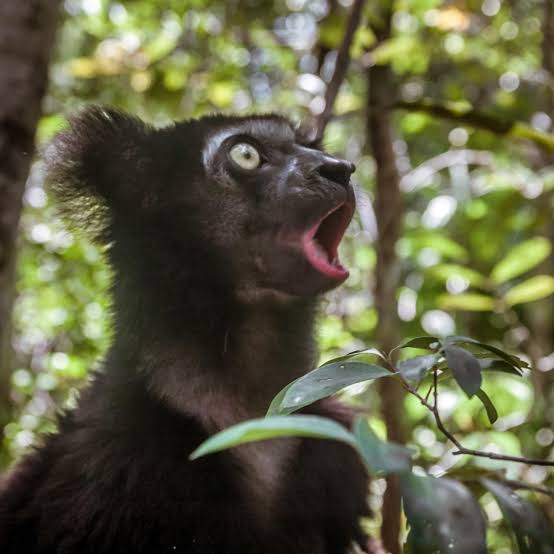
Or possibly Anna Kavan just really liked lemurs, coming across them on her extensive world travels.
Either way, several days later I’m still asking: why did we go from ice-cold highways to a jungle and lemurs? Also, why were extraterrestrials offering a dimensional doorway off of Earth? And why the hell did the narrator decide against this?!
So: 7/10.
Not always enjoyable. Frequently frustrating. Often horrible. Sometimes quite beautiful.
But definitely one of those books where “I’m glad I read it” matters rather more than “I liked it.”
And I suspect I’ll remember those walls of ice, and the lemurs, considerably longer than I remember plenty of books I’ve given a higher rating to.
Update: I’ve just ordered a collection of Anna Kavan’s writing, Machines in the Head; I can only imagine what Stef would say!
Check out a couple of great reviews of Ice from David H, see The Grognard Files Discord, and listen to the Fictoplasm podcast from Ralph Lovegrove.
TTRPG Thoughts
I’m not sure I’d want to adapt Ice directly into an RPG, but it immediately made me think about games built around collapsing worlds and uncertain reality.
The Electric State feels like an obvious touchstone: an endless journey through a dying landscape where the environment itself tells you something has gone terribly wrong. The sequence of The Electric State is: drive to a place, during the drive engage with each other, resolve or escalate differences. Arrive at said place, solve mysteries, overcome challenges, drive on. Repeat. Now the difference in the Ice version is that the locations are a surrealist nightmare, and you end up leaving it and returning to the same situation with a slight change of colour, a never-ending circle. Fun!
There’s also something very Desperation about it: people continuing with their tiny human obsessions while an overwhelming catastrophe closes in around them. And talking about it, there’s a lot of talking and thinking in Ice.
Desperation consists of 65 cards; I’ve suggested breaking them down as follows:
10 Locations - Successive, half-real places where the cycle repeats
12 People - The Girl, Narrator, Warden, lemurs and figures who block or complicate the journey
Act I – 12 Events - Search / Encounter / Conflict / Separation
Transition I to II - The pattern emerges
Act II – 12 Events - Search / Rescue / Rejection / Flight, with escalating violence of the people and landscape
Transition II to III - Narrator and Warden begin to merge
Act III – 16 Events - The cycle breaks down completely; scenes reoccur, identities blur, ice closes in, a surrealist movie
End Game - One final journey south / one final attempt to possess or escape
It is quite possible to create this game; go on, you know you want to, given the Desperation DIY Licence and SRD.
And, during our Book Club on ICE for The Grognard Files, others offered up a Borg, Ice Borg or Ice Børg. Or possibly ICE BERG.
A MÖRK BORG adjacent game in which advancing walls of supernatural ice consume the world. Settlements vanish between sessions. Roads close. Refugees head south. Nobody knows whether the ice is climatic, divine, or the dream of something beneath the glaciers. Characters are desperately trying to reach somewhere that may already have disappeared.
Every session starts with another degree of temperature lost.
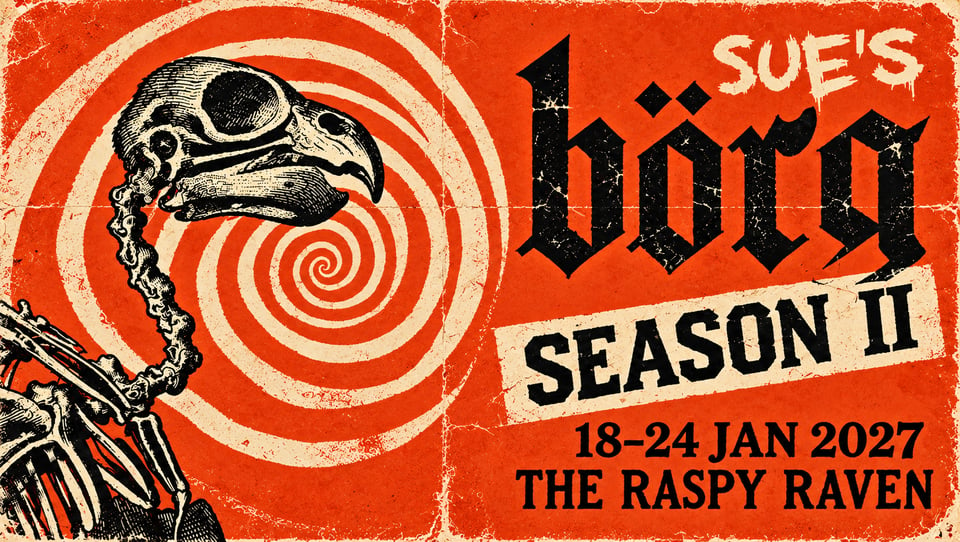
Who’s going to make that and then run it in Sue’s Borg II Season on The Raspy Raven?!
You just read issue #210 of The Raspy Raven Rag. You can also browse the full archives of this newsletter.
