
Do you like slime molds? What about ancient Rome? My new sci-fi novel has a lot of both, and it’s coming out on October 6 — just a few weeks from now! It’s called A WALL IS ALSO A ROAD, and it’s about the first person in the galaxy to discover Earth. At least, the first real person. Maybe the life forms on Earth think of themselves as people, but what do they know? They’re multicellular, after all.
Side note: Did you know that pre-ordering a book is cool and fun and helps the author a lot? Give it a try! But wait, do you want a FREE book? Read to the end of this email to find out more.
Gardenpath is a single-celled slime mold who lives in the circumgalactic medium, a massive gas cloud that surrounds our galaxy. They’re also a graduate student who has a secret. While doing a sky survey with a powerful telescope, they found signs of life on a weird planet in a remote part of the galaxy. The problem is that none of their professors believe life could evolve in the galactic plane, because the gravity well is so intense and the place seethes radiation from millions of stars. But Gardenpath is willing to risk their future career — and their life — to prove them wrong. Only one person truly believes in them: their best friend, Oriel.
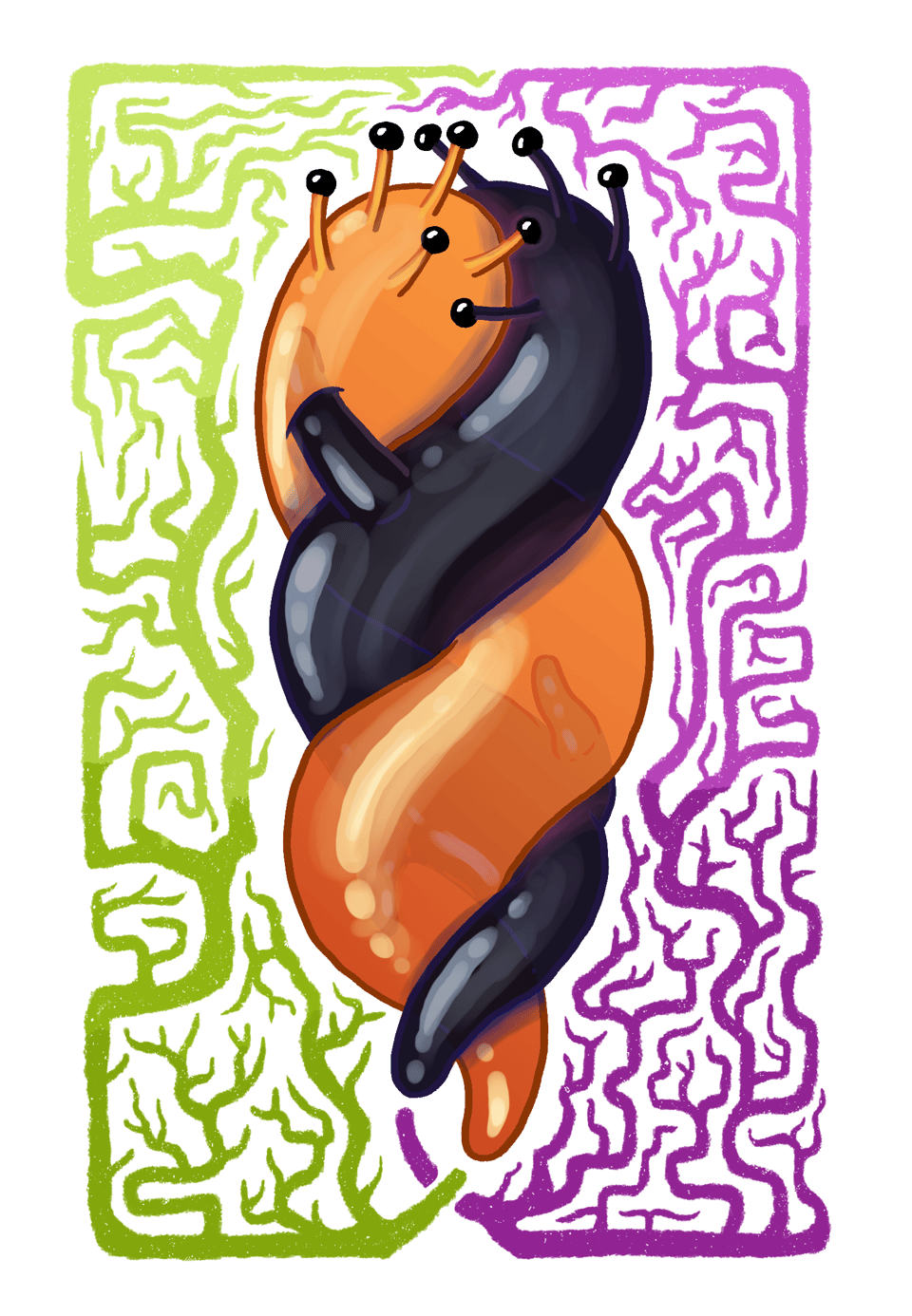
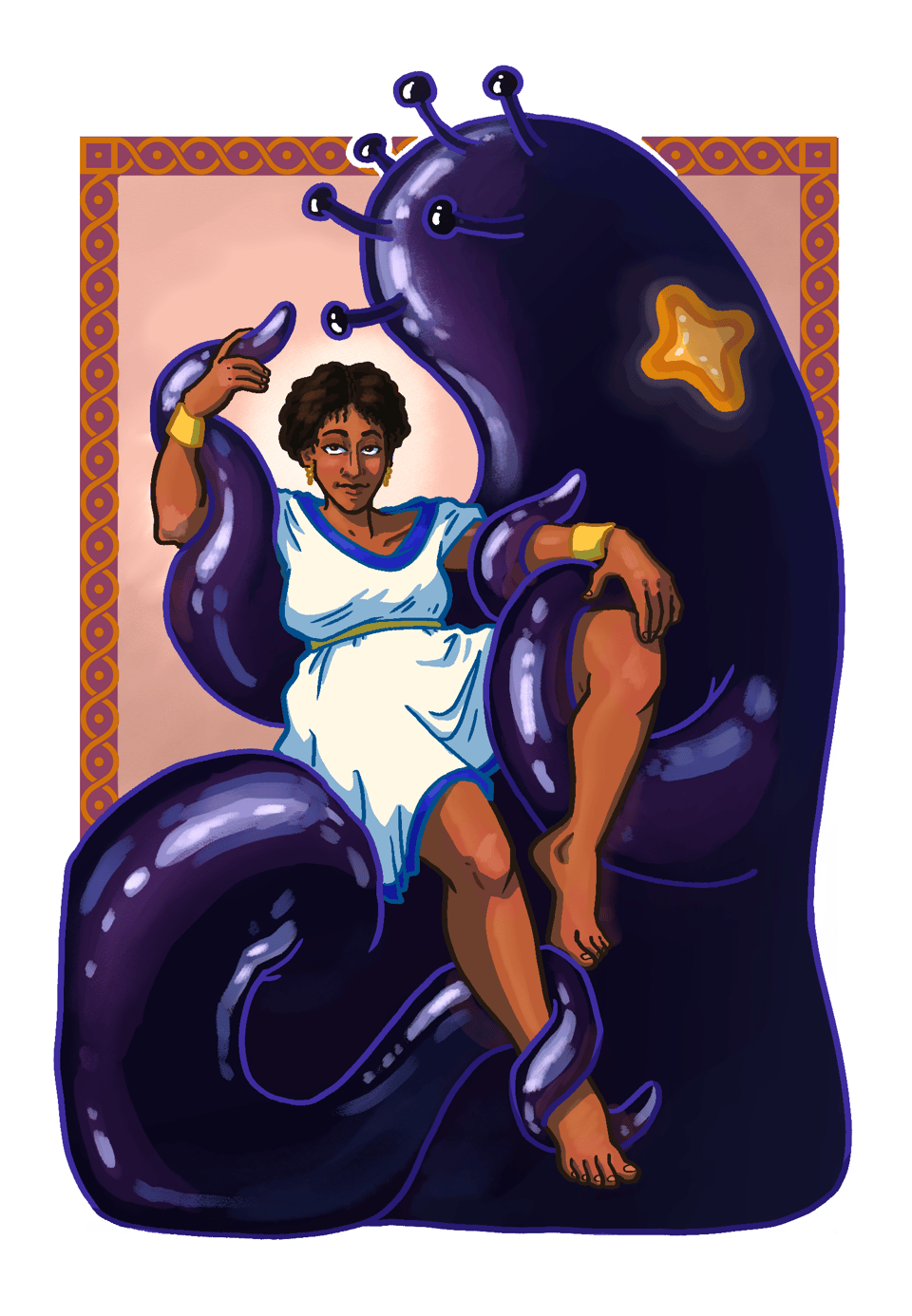
With only a galaxysuit to protect them, Gardenpath lands on Earth with no clue what to expect. They survive the scalding radiation of Earth’s star, try to talk to bacteria, and marvel at the planet’s multicellular animals who communicate by emitting sound waves. When they begin to suspect that these animals are using language, Gardenpath disguises themself as one of them and sneaks inside a city called Pompeii. There, they meet a woman named Murtis who works in the city’s lupanar, or brothel. She takes a shine to the stranger from beyond the stars, and Gardenpath starts to have feelings for this alien creature that they’ve never had before. Yes, dear reader, there will be tentacles.
As if that weren’t enough, Gardenpath also has to pass their exams, deal with an abusive academic adviser, and figure out why the university is making weapons to aid the aggressors in a distant war. Grad school is complicated.
A lot of people have asked me about the book’s title, so I wanted to say a couple of things about how it came about. It’s both a literal and figurative phrase, but it started as a very concrete observation. I was talking to Eric Poehler, an archaeologist at the University of Massachusetts at Amherst, who has spent years studying Pompeii’s street grid. At one point he explained to me that there would have been a road that followed the walls around Pompeii. And it struck me that this is a fundamental paradox in human architecture: We often build roads next to walls, even though they’re basically infrastructural adversaries. One leads you in; one keeps you out.
So, I thought to myself, what if there were a civilization where walls actually were roads? And that question deeply influenced the worldbuilding for Gardenpath’s people, who can climb vertical surfaces easily, and often take long strolls through the gorgeous gardens planted on the walls of their buildings. One of the first things that Gardenpath notices about human walls is that they seem barren, with no pathways or flowerbeds.
That said, obviously the phrase also has a figurative meaning, which is that we can always find a way through seemingly insurmountable cultural or political obstacles. Gardenpath and Murtis are both struggling to find freedom in very different worlds, and with the help of their friends, they figure out creative ways to slip around the barriers of social caste.
I open the novel with an epigram from one of my favorite poems, “The Canonization” by John Donne. When Donne was writing in the 17th century, poets often deployed a literary device called a “conceit,” which is an extended metaphor that morphs over the course of a poem until it becomes something totally wild and unexpected. I think of “a wall is also a road” as a conceit. Roads and walls come to signify increasingly unexpected things in this novel, and (hopefully) become more meaningful along the way.
And in other news …
I just published a new short story, “The Day My Clitoris Disappeared,” in Flaming Hydra. It’s about a researcher who thinks her clitoris has disappeared after the Second Comstock Act is passed. Don’t worry — the clit wins. You can subscribe to the Flaming Hydra newsletter for a few bucks, and help the collective of artists and writers who run it.
My latest column for New Scientist is about why future scholars will look back at our era of LLMs and call it “the void ages.” (You can read it for free by creating a free account.)
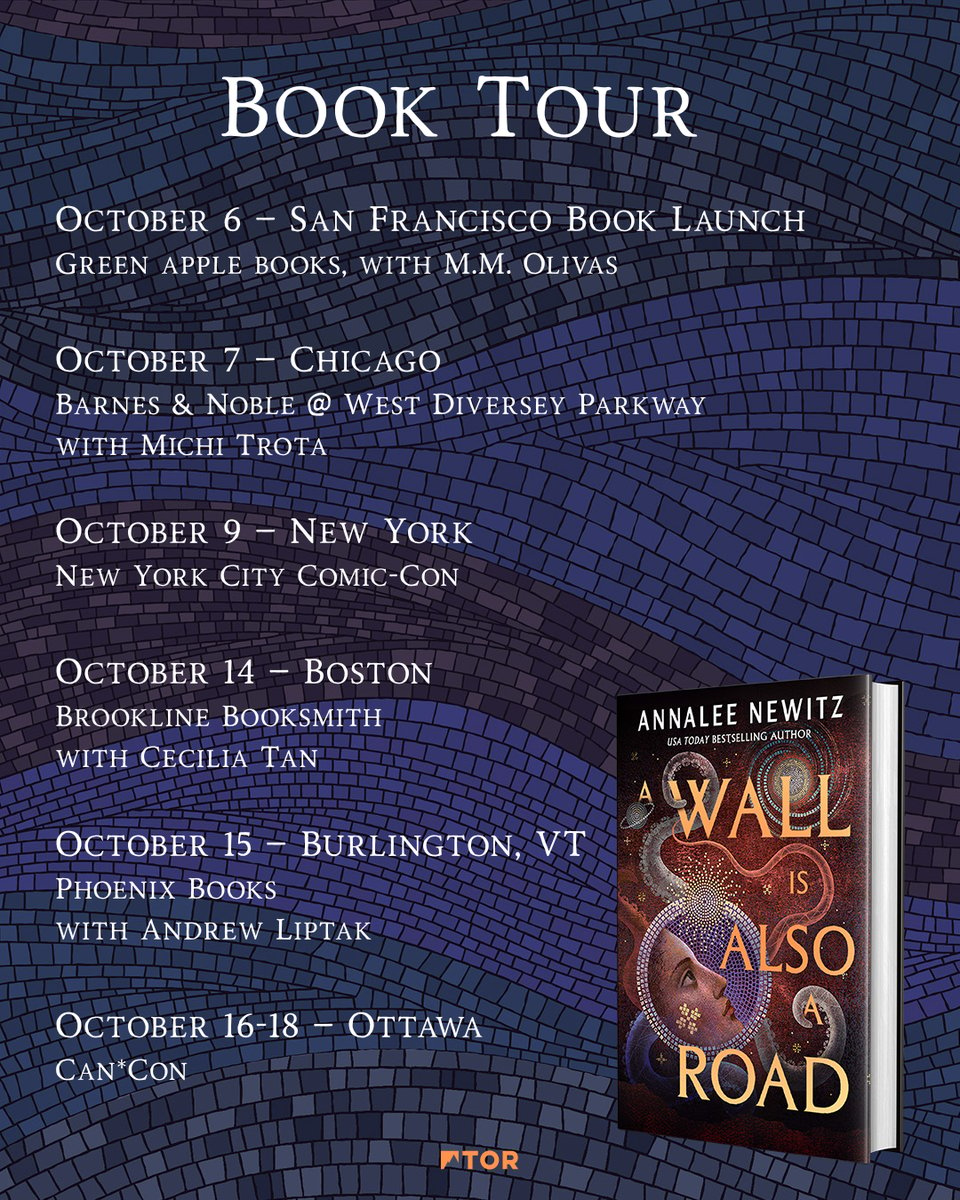
I’m going on book tour!! Come see me in Salt Lake City (this Friday!), San Francisco, Chicago, New York, Boston, Burlington VT, and Ottawa!
And finally … do you want a free book?
Because the United States still has cheap media mail, I can send you a book for like $4. That means it’s time to do a book giveaway! I’ve got 10 copies of the new AUTOMATIC NOODLE paperback, and if you want one, just reply to this email with the subject line “give me noodles.” I’ll send a copy to the first 10 people with U.S. addresses who reply! And yes I will sign it and personalize it however you want! I’m truly sorry that I can’t afford to pay to mail outside the U.S., but it’s like $25 to send a book internationally! If you do want a signed book and you’re outside the U.S., you can order one from Noe Valley Books.
You just read issue #43 of The Hypothesis. You can also browse the full archives of this newsletter.

