Taste Isn't a Personality Trait
What Miss Manners, the Boston Tea Party, and a wine fair can teach us about taste
This past Sunday, my husband and I debuted our teeny wine company, Anyway, at the inaugural Atlantis Wine Fair in the Hudson Valley, alongside 30+ New York wine, mead, and cider producers challenging norms in the beverage industry. The fair (and our brand) arrives at a time of nearly unprecedented instability in the US wine industry, rivaled only by the 1920s Prohibition.
The reason for instability? The same renewed buzzword plaguing design hiring at the moment: "taste."

To be clear: I mean taste beyond the literal sense. Both the design and wine industries are grappling with what it means to have taste — a talent for knowing what's good.
This article covers:
Why current definitions of taste can fall a bit short
How taste and etiquette are driven by cultural norms
Why taste is learnable to an extent
How you can use your own brain and awareness of global and economic context to anticipate what’s coming next.
Defining taste is tough
In UX and design, "taste" is ambiguous: desired by every hiring manager, defined by none of them. Even thoughtful designers and art directors fall short trying to pin down what "good taste" means. Elizabeth Goodspeed comes closest, in a definition my colleagues Sarah & Kate quoted in their NN/g article on taste:
“Taste is what enables designers to navigate the vast sea of possibilities that technology and global connectivity afford, and to then select and combine these elements in ways that, ideally, result in interesting, unique work.”
- Elizabeth Goodspeed
Still, I'm not sure what to do with this definition. It tells us what taste affords and enables, not what taste is, where it comes from, or whether it can be refined. Even Goodspeed seems unsure: "In my quest to share my taste [via curation platforms like are.na], I fear I may be losing track of it."
Part of the answer might lie in a conversation I had with my grandmother in her kitchen when I was an angsty preteen.
Elbows off the table
The first time I encountered the term "taste” outside the context of eating, I was in my grandmother’s kitchen on a temperate summer morning in upstate New York.
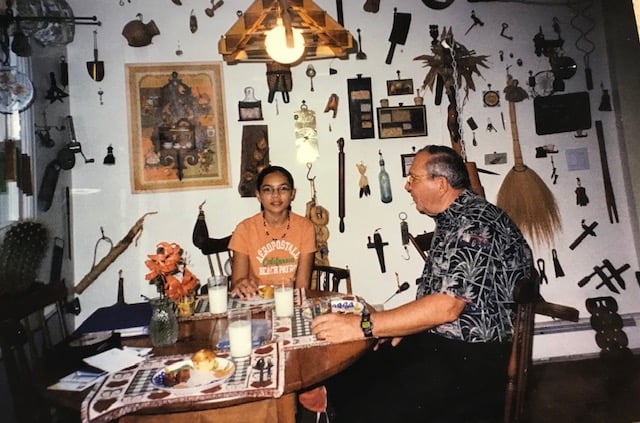
I caught a glance of a Miss Manners column she'd been reading on the kitchen table. The specifics are lost to time, but I vaguely remember a question from a reader about whether a particular wedding gift idea was in "poor taste." I asked my grandmother what "taste" meant in this scenario.
(Grandma, I know you read this, so I hope you’ll forgive me for paraphrasing.)
She said, "If something happens in poor taste, it's breaking the rules of etiquette." Confused, I replied, "Like how to sit at the dinner table?" (I was a repeat offender in that category). She replied, "Yes, but etiquette goes beyond the dinner table. It's a set of rules people follow to figure out the proper thing to do in different situations. When people don't follow those rules, it can give the impression that they are ignorant of the rules, and don't belong in certain places… which usually means that they're uneducated or poor."
Unsatisfied, I probed, "What rules? Is there a book for them? How do you know what the rules are so you don't break them?" She humored me by sharing how she had to learn about them (etiquette classes at school in the 1940s), but I quickly surmised: if there was an easy place to find these rules, people wouldn't be writing to a column every day to ask about them.
TBH, growing up, I never loved the Miss Manners columns — not because her advice was bad (it was usually insightful and considerate) or because she was unkind (she delivered hard judgment gently). In fact, the drama people wrote in with was unparalleled ("My cousin is engaged to my ex-husband. How do I tell them I don't want to be at the wedding?"), and the wordplay hooks? *chef’s kiss*
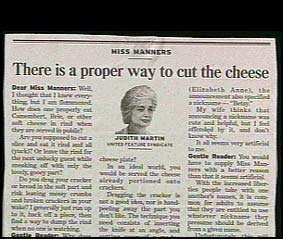
Mostly, I was mad at the idea that somewhere, invisible string-pullers were the "taste keepers" and I got the feeling I wasn't one of them. Miss Manners (and her contemporary Dear Abby) was just the messenger.
But my grandmother was onto something: taste runs on an unwritten set of rules that reflect cultural values.
What creatives say about having taste
In my own quest to understand taste, I've spoken with dozens of creatives. Some describe it as intuition — the "I know it when I see it" line, coined in a 1964 obscenity case and borrowed ever since by curators for something they recognize but can't explain. But the same people who talk about knowing the rules also praise "being weird," leaning into the unexpected. Taste, then, isn't just instinctively knowing the rules, but also knowing when to break them.
Others say their taste matured over years, suggesting taste is not a feeling, but accumulated knowledge: art history, training, exposure to new media and contexts widening the well they draw from.
Context sits at the heart of it. Design's whole job is understanding and leveraging context — what's useful, here, now, for this audience. Art does the same thing on an emotionally resonant level. Taste applies contextual knowledge to separate the exceptional from the mundane.
Anyone can be creative — I say this in every workshop I teach — because creation is generative. But curation is subtractive, sifting through the noise of infinite possibility to find signals worth pursuing. Some people (in particular, neurodivergent folks) are particularly adept at this task, and don't need much training to do it well.

Still, I don't think taste is entirely innate. The clearest account I've found of why "taste" is such a fraught idea is Erika Flowers's "Taste is Not a Moat.” It's worth reading in full, but here's the core thesis: taste is a set of rules, often written by whoever already holds cultural power. And rules can be taught.
If we take all of these features and distill them, we get a definition that helps me sleep better at night:
Taste is a set of learned rules worn smooth by exposure and experience into intuition; an internalized model of a field that enables the beholder to judge, select, and combine from an overwhelming range of options, and, at best, recombine them in ways no one else has previously imagined.
Understanding taste this way also helps us understand less visual forms of it: why caviar might actively disgust people, but is considered “tasteful,” and why certain behavior, like marrying your cousin’s ex, is probably weird.
Everyone’s confused because the way we talk about taste is all wrong. People don’t have taste; they use it.
“All models are wrong. Some are useful.”
In 1976, statisticians George Box and Norman Draper wrote a nerdy paper on model-building and approximating reality with mathematical functions, penning the quote above. As one SAS blog puts it:
“Box wanted to emphasize the notion that a model of reality is different from reality. If a straight line or a quadratic response is a good fit to data, that doesn't imply that the underlying data generating mechanism is equally simple, but it does imply that we can use the simple model to help us model, interpret, predict, and optimize our real-life processes.”
The point isn't to disparage models, but to acknowledge that every model simplifies reality, which is messier, uglier, and harder to work with than any model admits.
If taste is simply an internalized model of a field, that means three things:
Taste is dependent on the data points that feed it (the good examples it builds from)
Some taste models are better than others (some people have better approximations of reality)
As reality changes, the model must too (taste has to respond to new contexts: time, place, meaning)
This is why someone can have impeccable taste in the '80s and suddenly seem cringe by the '90s. You can still love '80s tropes while acknowledging they had their moment (and maybe they will again, in the right context in the future).
But also, maybe some kinds of "taste" are just wrong for the audience you have in mind.
Taste is cultural and contextual
Popular car colors in the US are trending toward grayscale, and one theory blames cultural imperialism for skewing mainstream products toward American color "palates." We've seen the same pattern in "millennial greige," in the dilution of spices in cultural cuisines, and in the the standardization of wine flavor profiles courtesy of Gallo and Constellation Brands.
So according to that model, one might say, “the ruling, privileged class defines what's tasteful, because their tastes become aspirational for everyone below them." We've seen this with jewelry, designer brands, even college education. Western etiquette itself is a relic of maintaining the appearance of propriety and proximity to wealth, and wine has had its own heyday as a status symbol.
But that's a gross oversimplification from a narrow snapshot in time. The ruling class doing something doesn't guarantee it gets celebrated. Context matters.
Take your tea and shove it
Taste was a focal point during the American Revolution as well. In the mid-1700s, tea was the most popular beverage in the British colonies. To fund its wars abroad, the Crown passed the 1765 Stamp Act, taxing the American colonies directly and requiring a physical stamp on all printed paper — legal documents, newspapers, everything. It was the first British tax to spark colonial outrage, planting the idea that the Crown was exploitative, and buying stamped goods was an endorsement of that exploitation. Tax officials soon found their effigies strung up in town squares.
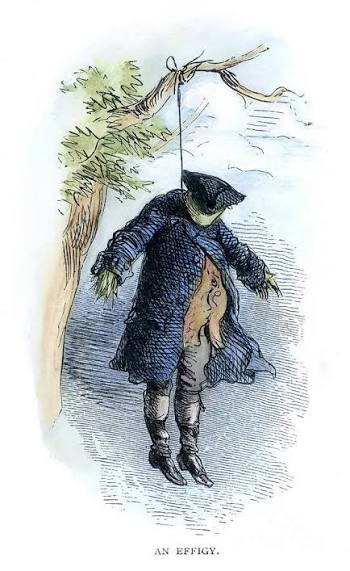
The Crown got the memo and rolled back most of the Stamp Act, but left the tax on tea, which attached to it far greater social risk than almost anything else colonists consumed. A tax dispute quickly became a matter of taste, directly tied to your politics. Loyalists would continue consuming tea, patriots switched to coffee. Tea drinkers were eventually ostracized, even chased out of their homes for stocking British tea in their pantries. By the time the Tea Act triggered the Boston Tea Party in 1773, your beverage of choice became a declaration of political allegiance.
With taste, context always matters.
When my grandmother took etiquette classes in the 1940s, they were required school learning, setting the precedent for what "having manners" meant. Miss it, and people assumed you'd grown up in a barn without ever seeing the inside of a classroom.
But, again, that's an oversimplification: manners have always depended on a combination of family upbringing, cultural values, and cultural immersion. For instance: etiquette in Japan is very different from etiquette in the US; slurping your soup is a compliment there, but rude and unsophisticated in the US.
Etiquette isn't fixed, and the most worldly people I know have a knack of being cultural chameleons.
The new taste keepers
As the class divide and K-shaped economy widen, something interesting is happening: what was once "tasteful," by upper-class standards, is now… well, boring and elitist. Luxury brands once known for polish are leaning into grunge, mess, and brutalism, grasping for relevance with an increasingly disillusioned youth.
The tide is changing, and new taste keepers are coming.
The same resentment I once felt toward taste keepers and arbiters of "good" underscores what's happening in wine right now. Snobbery and gatekeeping are so entwined with the industry that younger consumers are growing openly miffed at being locked out of unwritten rules and predetermined "civilized" ways to enjoy it.

How bad has this snobbery been? Poor Merlot has taken over twenty years to recover from the Sideways effect, dinged as less prestigious. Hybrid wines — crosses of European Vitis vinifera with native US species like Vitis labrusca or Vitis riparia — have spent a decade "up and coming" without ever making much of a dent in vinifera's market share.
That's changing fast. New drinkers are rejecting snobbery and championing new definitions of quality (see: the “natty” wine movement). Hybrid wines are now celebrated for their sustainability, and experienced winemakers are elevating their status further. That shift poses a problem for brands built on scale and standardization: the efficiencies that made them dominant don't bend easily toward the experimental, handcrafted production that sustainability-minded wine drinkers actually want.
The ivory tower is crumbling as newcomers — some laughed out of tasting rooms outright — build an economy of their own.
And while AI gets celebrated for boosting productivity, any hint of it in product marketing — wine or design — risks companies finding their own effigies hung in the digital town square. True curators don't just regurgitate trends; any AI tool can do that. They tailor the trend to the brand, the product, and the cultural moment.
Hiring managers might call that “taste,” but perhaps it’s just… sound judgment and situational awareness? You don’t need to be an artist or savant to sense the cultural tide shifting or to see the value in understanding counterculture.
Taste is a skill of pattern-recognition
At the end of the day, this seemingly impossible idea isn't that hard to define: you need to be good at spotting patterns as they happen, and at using big-picture trends to anticipate what's next. That means documenting commonalities (moodboards help) and maintaining broad contextual awareness — knowing history, reading the news, learning economics, tracking politics, knowing culture.
Some platforms help with this: Pinterest was the O.G., though AI slop is making it harder to curate there lately. Others, like are.na, are redefining what it means to spot and curate patterns. (I'm a fan of the "no big lights" channel.) Maybe the essential skill isn't visual at all — it's abstraction (zooming out) and extraction (zooming in), applied across every sense.
And! You might have great taste in one area and be totally lost in another, because you're training different senses on different media than someone else might. There's no such thing as one all-encompassing "taste." It's contextual: subcultures have their own, personas have their own, you have your own. Knowing which one to cater to is the actual skill.
Maybe instead of saying "AI will steal our jobs," we should stop cheapening our own labor and name the skill it actually requires: judgment, discernment, research, and knowledge that only comes from experience.
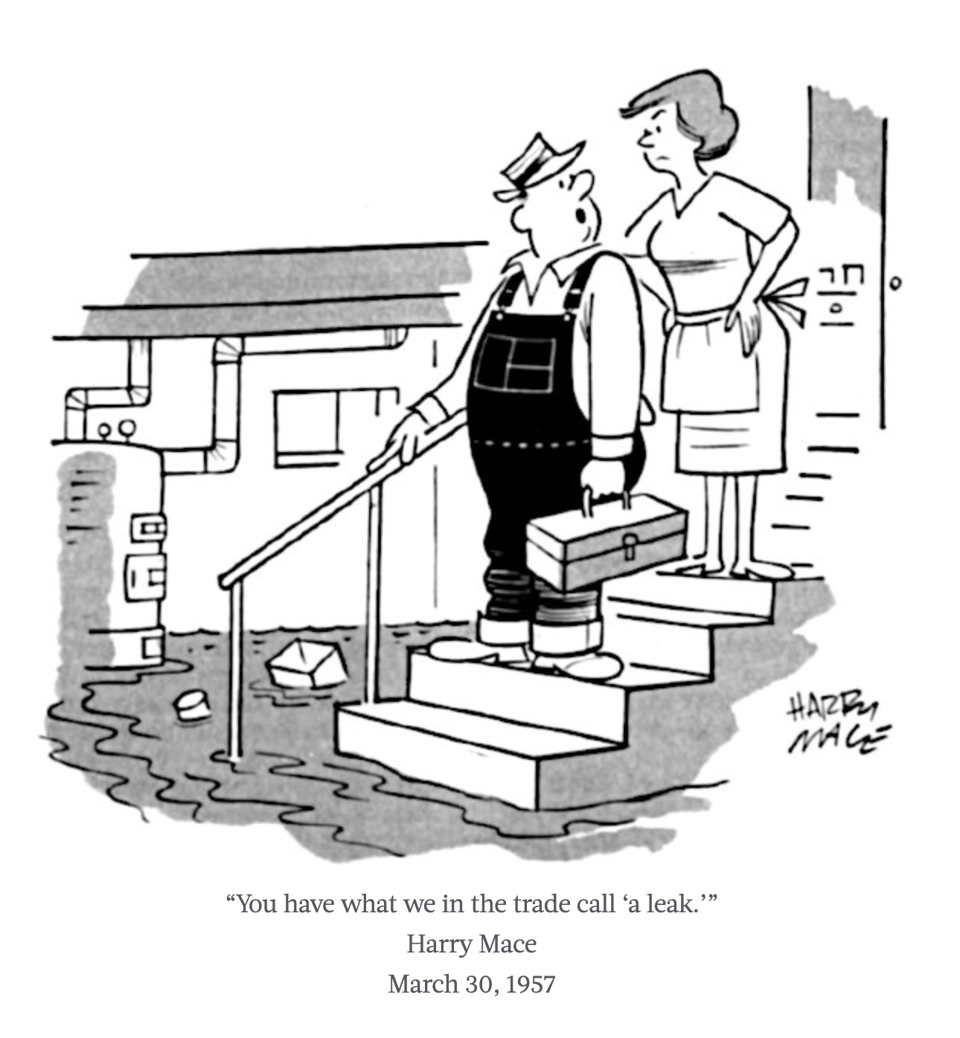
People don't suspect plumbers will be out of a job soon, but guess what skills they use to fix a pipe leak?
So yeah, taste is real; real enough that people hire for it, gatekeep it, and lose sleep over whether they have it. What's bullshit is the idea that some people just "have" it, fully formed, while others don't. No one has taste. People use it. With enough practice, you get good at knowing it when you see it, and at using that to curate something that lands. You don't need formal education — you just need to give a shit and ask questions about things other people consider trivial.
And when you've done it enough times, it'll be instinctual, and your grandmother, finally, won't have to nag you to keep your elbows off the table.
Thanks for reading!
Just a housekeeping note: I’ll be reducing the frequency of this publication to once a month for a while to maintain the quality of writeups, but if you like what you’re reading, feel free to share this with someone who could benefit from it.

Add a comment: