GoGo, Blightmud, the Zanclean Flood, and the Game of Life
GoGo in the terminal, Blightmud for MUDs, the Zanclean Flood and the deepest hole in history, and the emergent complexity of the Game of Life.
What's up! This week, we have a "Go in Go" project I'm working on, a strange terminal-based game platform, a fact about a place it was once possible to stand in dry air four kilometers below sea level, and a discussion about Conway's Game of Life and emergent systems.
Working on: This week, I built out a small client for playing online Go via OGS. In Go, naturally.
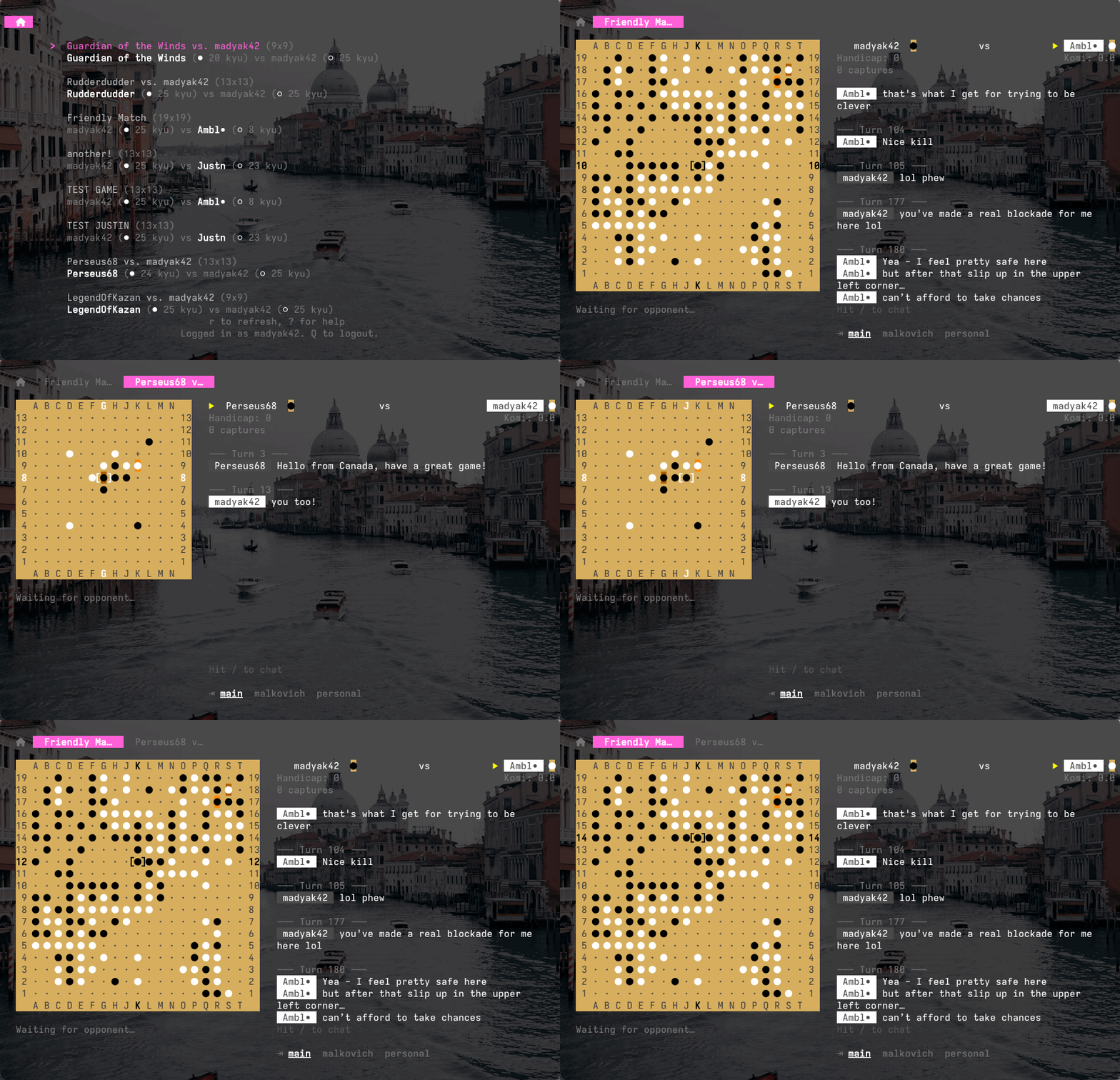
It's called GoGo, and you can find it on Github. If you're on Mac, you can also easily try it out via Homebrew:
brew install tsraveling/tap/gogo
TUI of the Week: blightmud.
As a fairly isolated teenager in rural Montana, I had a fascination with MUDs (multi-user dungeons), multiplayer shared-world text adventures run on servers that predated modern MMOs. I didn't have the internet to actually play any of them, but I loved reading about them.
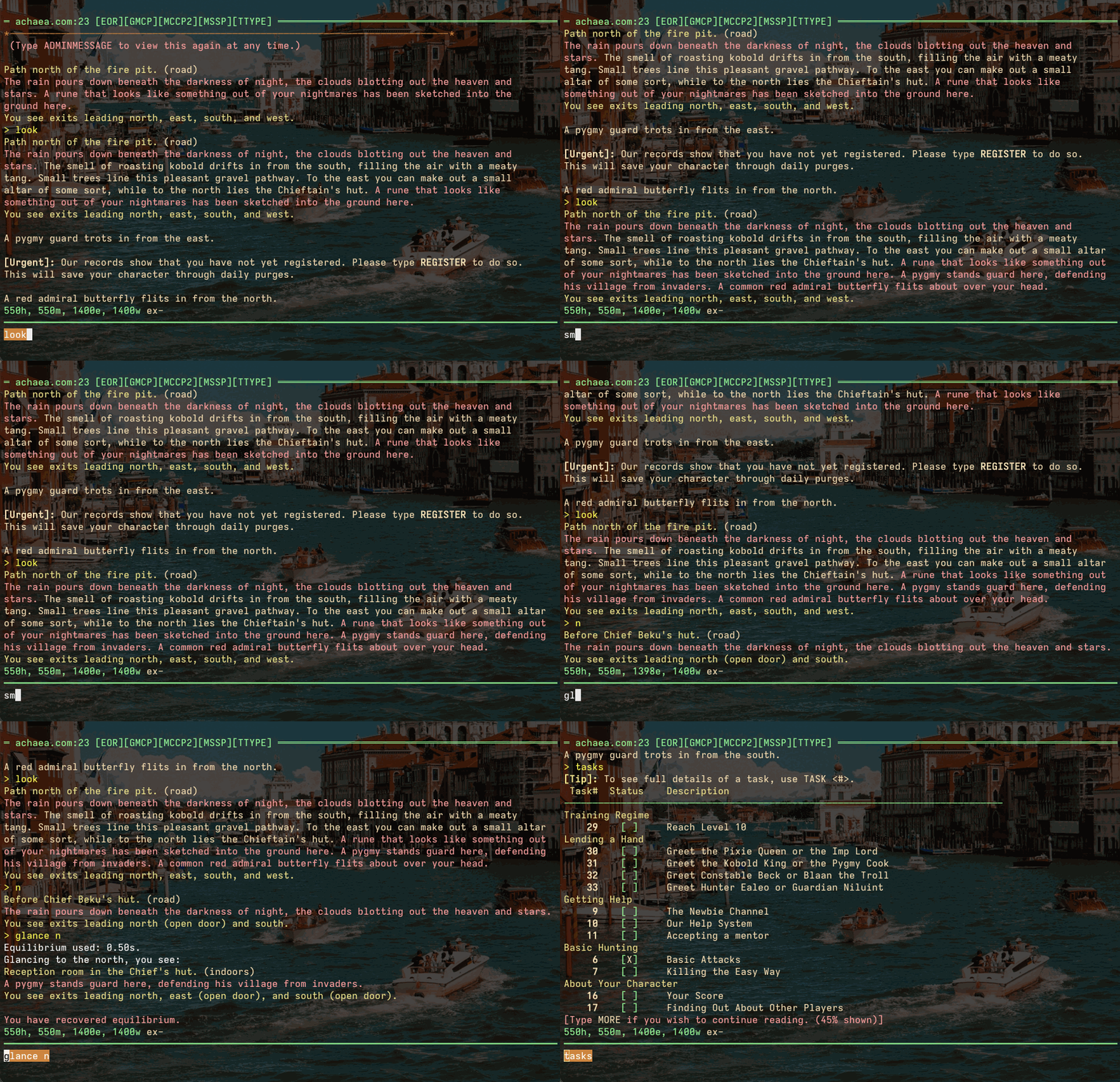
This week I've been getting into Achaea, a massive text-based MUD that's been running since 1997. It has dynamic politics, human-run cities, a full and vibrant free market, ship-based trading and piracy, and trade guilds. Basically it's EVE online for sword-and-sorcery terminal nerds.
Blightmud is an interface that lets you connect to these ancient systems in the way they were originally designed: through a text terminal.
Something Interesting: 5.33 million years ago, the Mediterranean was an empty rift in the Earth, with dense salt lakes resting at a surface over 4 km (13,000 feet) below sea level.
This one comes from the wonderful book Otherlands, by Thomas Halliday. In this hellish hole in the ground, temperatures could reach 80°C (176°F), and the sheer pressure of the air would have felt like you were swimming in the few minutes you would have had before you passed out from heatstroke.
The tension is finally broken near the end of the Miocene, when tectonic activity opens up a channel from the Atlantic at the Strait of Gibraltar. When this happens, the ocean pours in an unimaginable cascade into the great chasm, in a series of enormous waterfalls. The tallest, in the great dry plain that is now the seafloor between Sicily and Malta, falls nearly a vertical mile into the eastern Mediterranean basin. It takes more than a year for the Mediterranean to fill: a cataclysmic event called the Zanclean Flood, the likes of which have never been seen since.
Systems Thinking: The Game of Life and Emergent Complexity
For the last several months, I've been thinking a lot about Conway's Game of Life. A version of this will eventually live on systemist.net, so consider this a preview. And if you like, play along as you read.
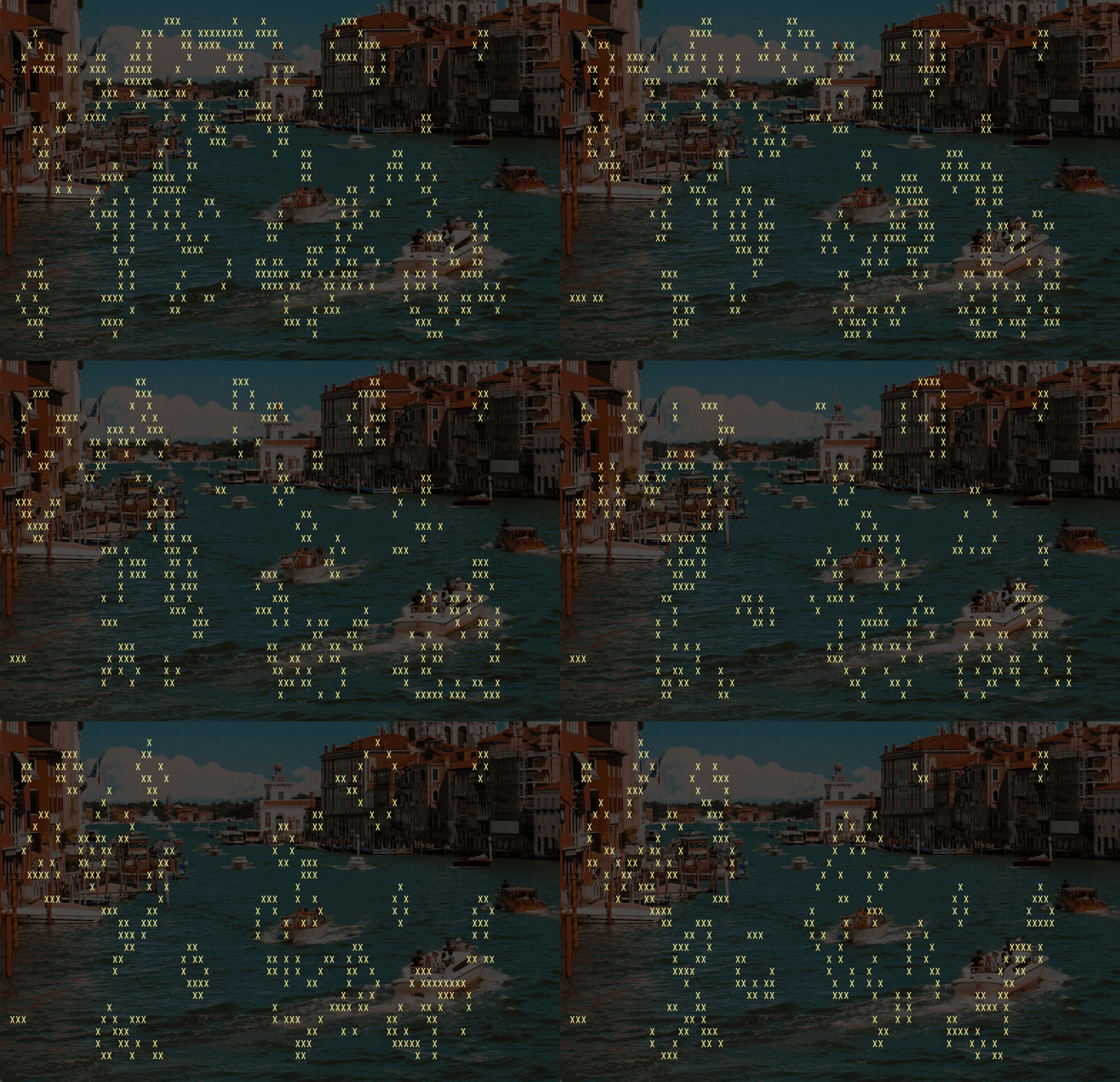
The Game of Life takes place on a simple grid where each cell can either be on or off. Then you calculate the next "generation" of the board by checking each cell of the current generation against four simple rules:
- Any live cell with one or fewer live neighbors will be dead (underpopulation).
- Any live cell with two or three neighbors will be alive (sustainability).
- Any dead cell with exactly three neighbors will become alive (reproduction).
- Any cell with more than three neighbors will be dead (overpopulation).
This is a wonderfully simple system. You can play it yourself on a Go or checkers board, if you want to. There is no uncertainty or mystery in the actions of any individual. And yet, as a system, the Game of Life is capable of enormous complexity.
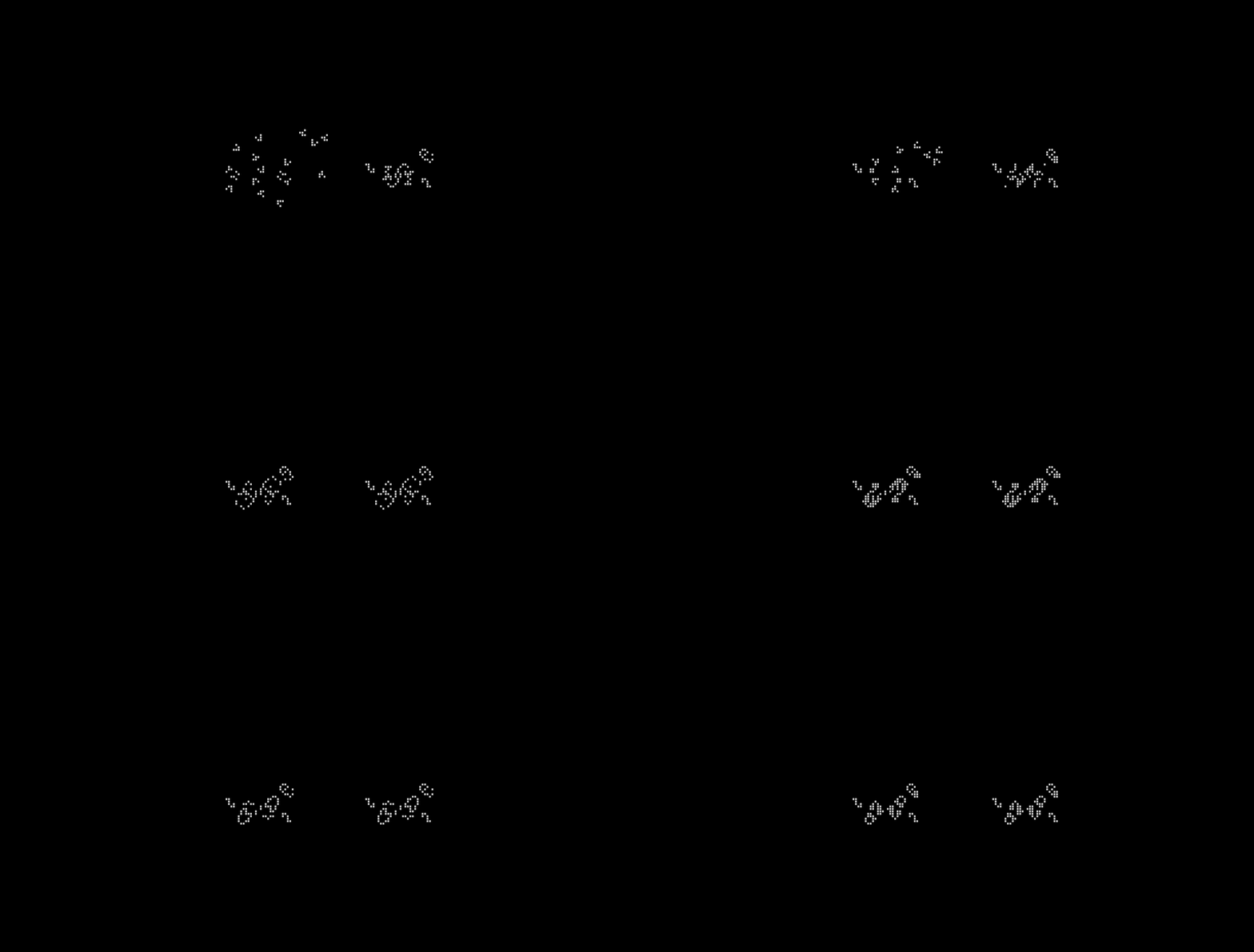
It is possible to make odd little organisms.
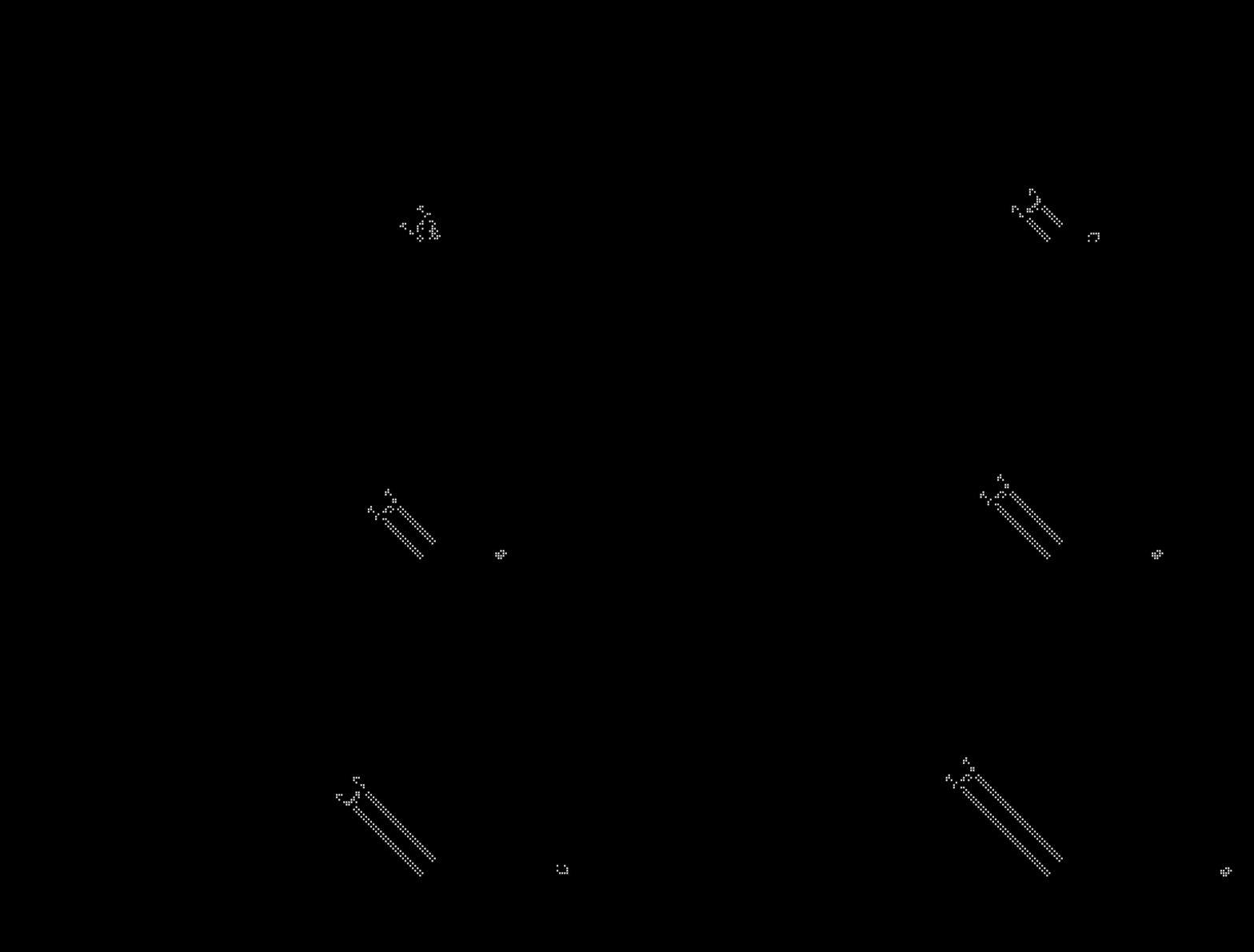
It is possible to make pseudo-biological constructors that produce a kind of phenotype.
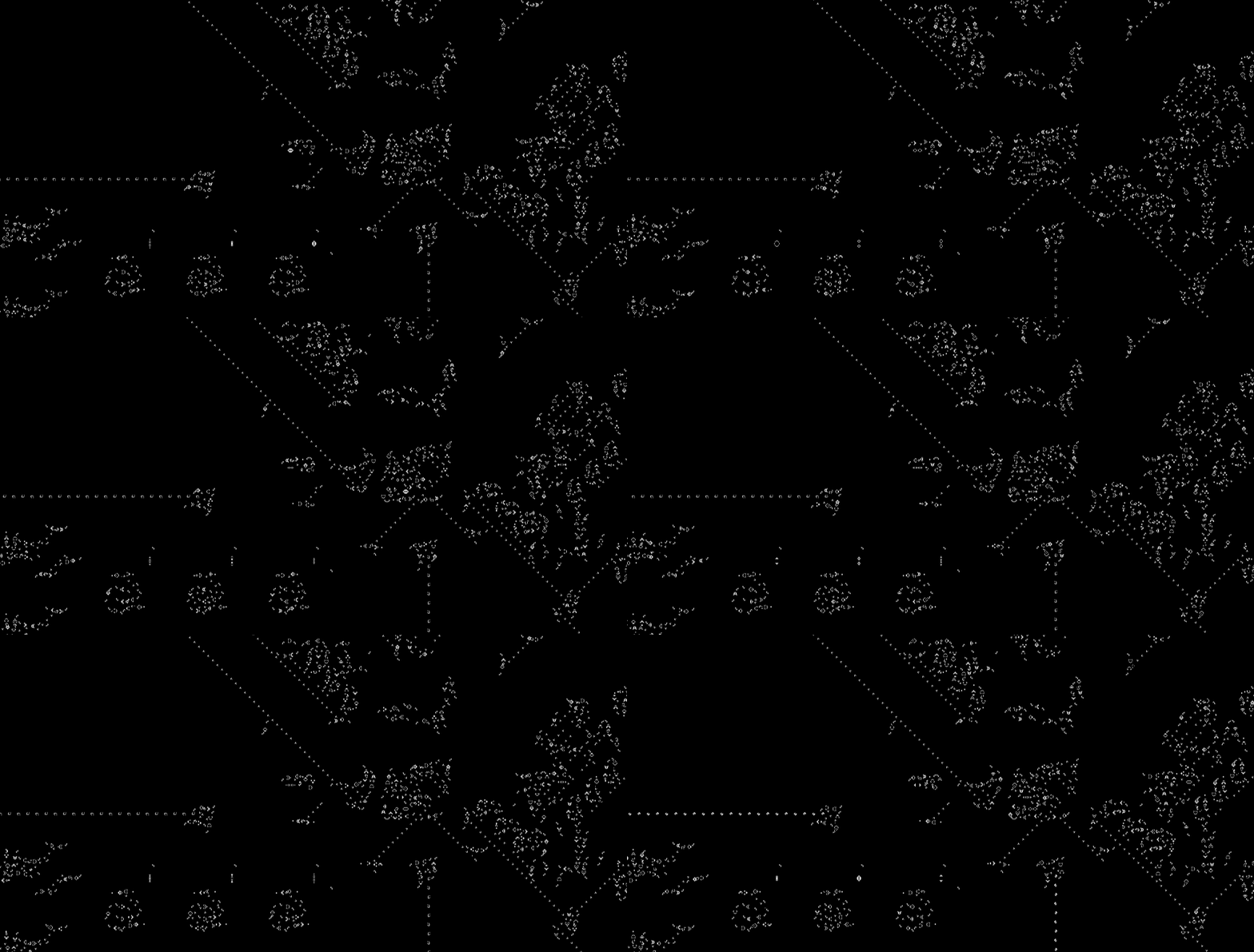
It is even possible to make a full-on Turing machine.
The Game of Life is important because it illustrates something we humans find quite difficult to understand intuitively: emergent effect. We've evolved to think in terms of direct, complex, sapient agency:
- I hunt the deer.
- The lion hunts me.
- The forest gives me the gifts I need to live and be happy.
But in a world that is increasingly governed by systems, emergent effect becomes the most important factor impacting our lives. As in GoL a single cell doesn't "know" it is part of a self-replicating structure, neither does a cancerous cell "know" it is part of a tumor, and neither does a C-suite exec at a major tech company "know" he is part of the terminal metastasization of capitalism we are all suffering under today.
This of course does not excuse individual human shittiness. But it does recognize what Hannah Arendt told us in 1963: evil is banal. Which is to say, evil is the selfish actions of shallow, petty people interacting and propagating through complex systems.
The implication that follows from that is that, like the evil itself, solutions to this problem will not be agentic -- there will never be a strongman or hero that will save us, or a villain we can kill to end our suffering. The only real way out of our plight, the only way to break the wheel of suffering, is to introduce systemic change.
You just read issue #3 of The Changelog. You can also browse the full archives of this newsletter.
