arttime, Whale Sharks, and The Artistic Medium of Logical Systems
arttime, Whale Sharks, and the Artistic Medium of Logical Systems
Hi there! This week, we have a tool (for you terminal users), a fact about whale sharks, and a discussion about logical systems as the artistic core of the games medium. Hope you enjoy!
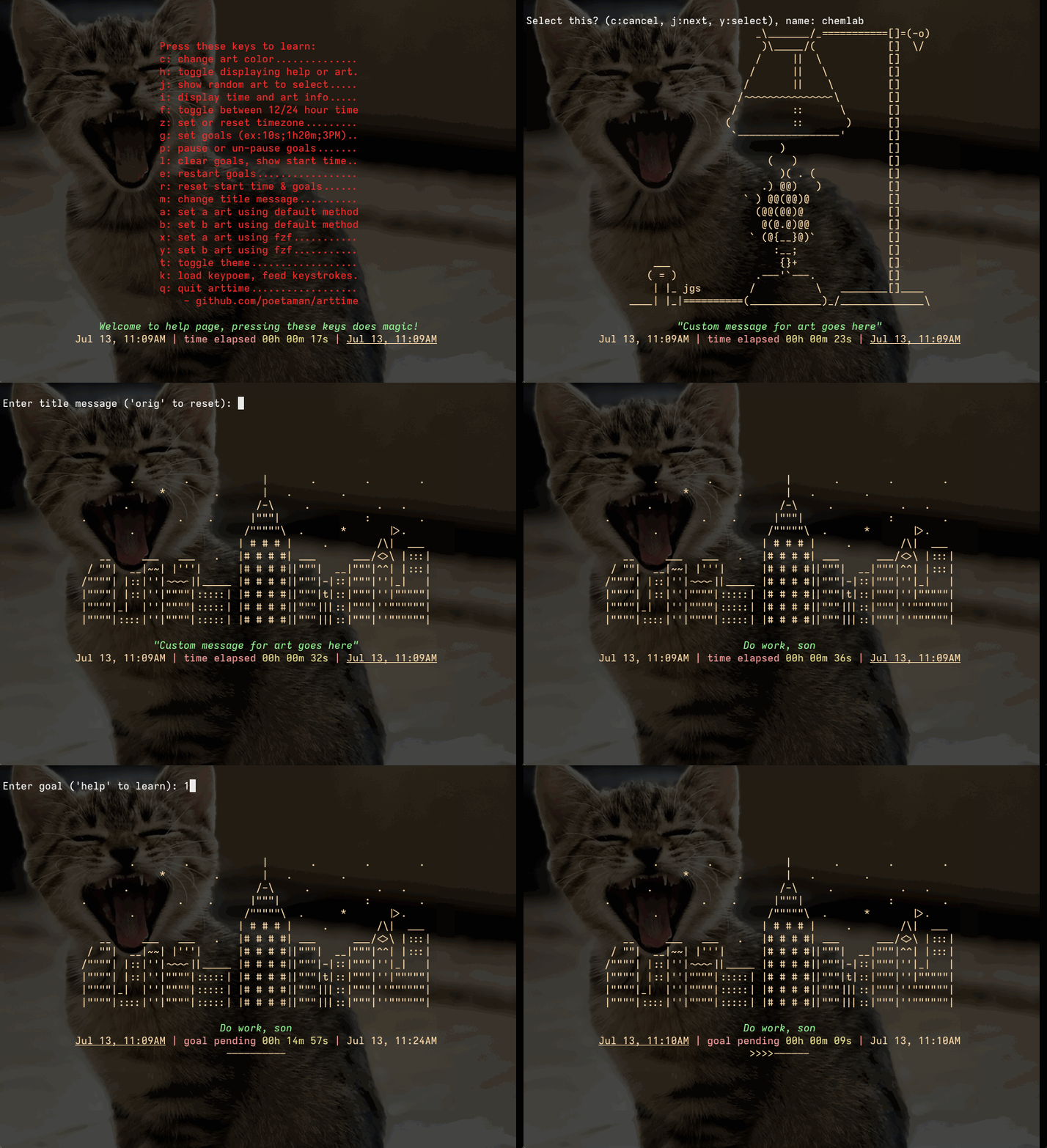
Tool of the Week: arttime.
95% of my professional life is spent in the terminal -- I'm writing this post in Neovim as we speak, in fact. I always keep a Mac desktop space dedicated to a full screen terminal with different panels going (music, an active game of go, etc). One of these is always arttime. I use it to run pomodoros or even just timebox a goal when I'm juggling too many projects (which is always). The start of my work day involves cycling through its rich library of ASCII art until I find something fun, typing my first task (with m), then hitting g to set a time limit. An OS alert pops when it goes off. Even when I'm not using the timer, seeing the art in my otherwise work-centric terminal panels gives me a little bump of happiness.
This Week I Learned: about Whale Sharks.
The whale shark is the second largest fish of all time, has mutant-strength thick skin (even for a shark), and can retract its eyeballs to protect it from parasites. I had the true fortune to briefly swim with one last year in Mexico, and it was the closest thing I've had to a spiritual experience in a decade.
Systems Thinking: Systems in Games are Art
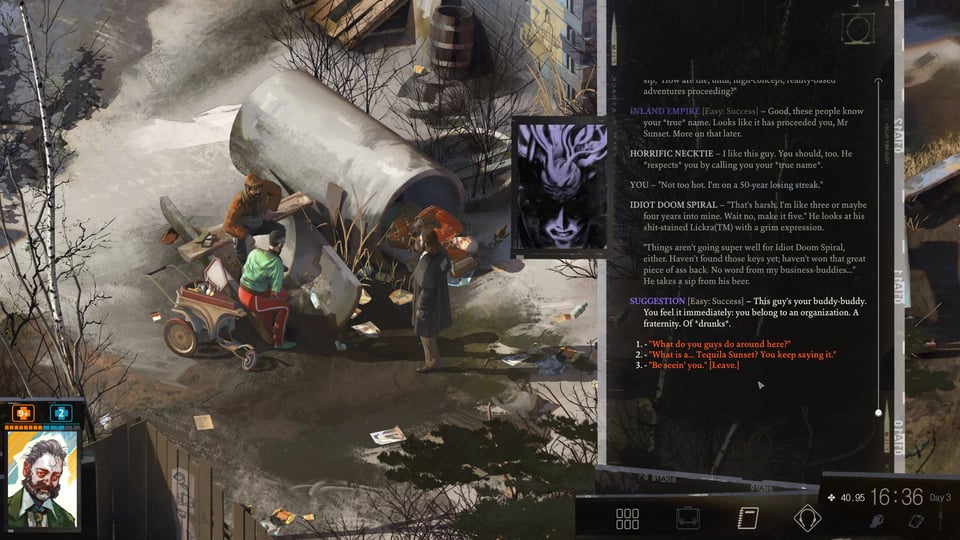
For at least the last twenty years, the "are video games art" question has been kicked around by a lot of people. In my experience that most often takes the form of looking at the actual art or text that make up the narrative or setting of a game, and in that there's no argument: games like Disco Elysium, Pentiment, and NORCO are visually and narratively beautiful things.
What doesn't get tracked as often is the fact that games (both computerized and physical) contain a medium that is unique to them: the artistic medium of logical systems.
Jason Grinblat, one of the two mad geniuses behind strange masterpiece Caves of Qud, recently wrote the simulationist's manifesto, which is worth a read. What resonated with my own thinking is this: a logical system that simulates anything, whether it's something abstract like Go, or something deeply detailed and simulational, like Paradox's Crusader Kings 3, encodes within its logic and emergent behavior a belief about how the world works.
Art is the thing humans make in order to give each other the experience of art. We write literature to gift empathy, poetry to gift language. We paint paintings to gift the experience of seeing a thing in the world that previously was only visible in our own inner eye, we sing songs and play instruments to share with other people the music inside of us. All art is the gift of something inside the artist written somehow onto an external medium so that others can share it, too.
A game, whether conscious or not, shares that private, intimate understanding of the functioning of the world with the outside. Go is a game that is about life, and also about war. The world it encompasses is one of threats, of force projection, of territory, of safety, of supply, of food, of breathing. This is not apparent when you look at a go board; it emerges within the game and within one's experience of the game over hundreds of hours as you slowly learn how to play it.
Often we think of the systems of a game as the "fun" part, the part that keeps people engaged long enough to consume the "art", which is the text of the story, the soundtrack, the art. But I'm going to posit something we'll return to over and over here: the unique territory of games as art is the systems they encode, and the experience of the world that slowly learning those systems creates in the player.
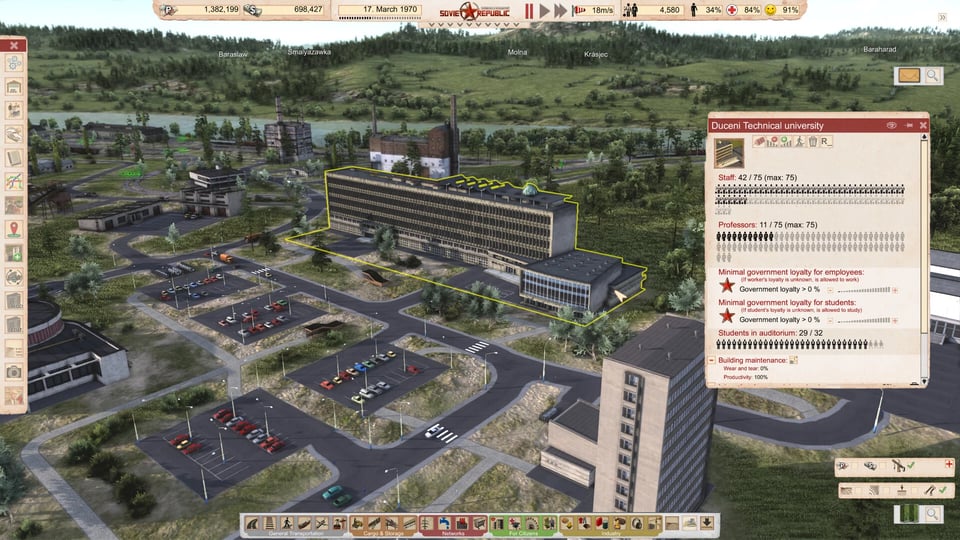
This is why playing Cities Skylines, with its commercial myth of easy free eternal growth on an empty blank-slate world, so completely encompasses the neoliberal way of seeing (and intentionally not seeing) the world, while Workers and Resources: Soviet Republic plays in a fundamentally different way, focused as it is on labor, on currency as a tool of the state, and on materials and human beings as interchangeable resources to be organized by that centralized state.
In my experience, these kinds of representative systems in games so far are mostly unconscious; rather than holding intentional theses about the world we live in, they usually tend to encode assumptions. Almost every game in the "medieval city building" genre fully assumes the aristocratic myth that peasants are vulnerable little idiots without agency, who only survive if they are controlled by a smart and caring lord who tells them what to do.
The reality, of course, is that "peasants" were just people who were already fully self-sufficient, and "lords" were violent parasites who extorted food, wealth, and ever more labor from them under exactly the same kind of protection racket and exploitation structures used by modern day organized crime groups like the mafia.
Many games will always be simply fun to play, and as in film or literature, there's nothing wrong with that. But there is an immense amount of fertile soil out there in this medium for people who care deeply about how the world we live in actually works, and how it might be made to work in the future, to express those beliefs, those dreams, those hopes, through the medium of logical systems in games.
You just read issue #2 of The Changelog. You can also browse the full archives of this newsletter.
