
In 1985 Maxell built a bunch of life-size robots for its bad floppy ad
A rough start to what would later become one of my favorite tech ads from the 80s.
This newsletter does not contain ads, sponsored posts, or affiliate links. Open and click tracking are disabled. And there is no paid upgrade or AI generated content. Enjoy!
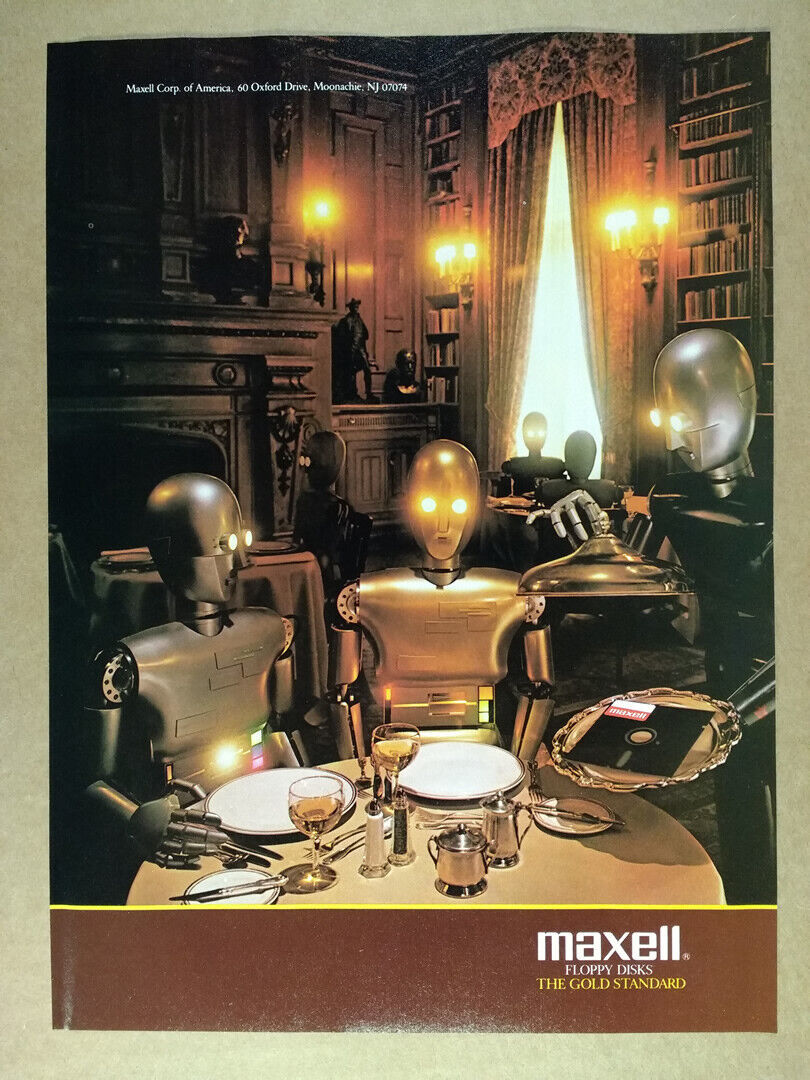
The idea of robots literally eating your precious and portable files must have been far more terrifying than it was exciting that Maxell’s 5.25” disks were on some Michelin-rated menu of computer hardware.
That could be oil in their glasses but it sure looks like white wine. And what, they’re going to season their floppy appetizer with table salt? Pick a lane, Maxell!
The ad above was a massive departure from Maxell’s previous “Gold Standard” campaigns, those with their rainbow prisms and racecar disks. The restaurant ad seems like it had a lot more money behind it too, showing up in several issues of PC Mag, Personal Computer, and Byte throughout 1985 and 1986. It is not hard to find online or in print, whether on eBay, WorthPoint, or in a frame at a Value Village in Ottawa.
Despite its enduring popularity, this was actually the worst showing of what would go on to be a campaign so good that it wound up in a museum. Because, yes, Maxell’s dollar-store C-3PO was, in fact, a life-size prop. And far from lonely.
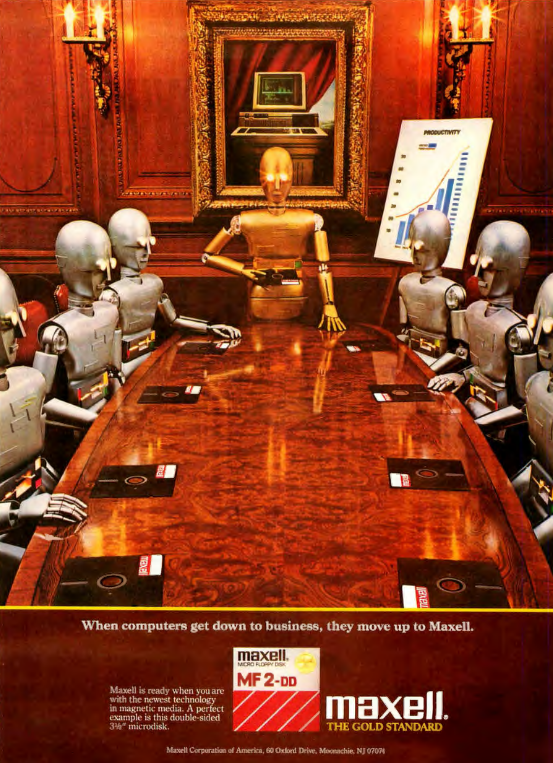
This concept makes so much more sense than robot date night! And the gilded portrait of their desk-bound predecessor on a pedestal? The BS corporate graph? I wouldn’t change a thing. Except the glaring mistake of putting “3½” microdisk” in the copy when there are 5¼” floppies on the table. I never stopped to consider what scale these sets were, though, until I found a thread on r/vintagecomputing about the spread.
“I don’t think this is a mass-produced toy…Having multiple life-sized copies is even less likely,” u/mindbleach commented. “I expect this is a photo manipulation.” Even if, as suggested, there was only one of the silver robots, snapped in six photos layered over each other, two full-sized robots (with articulating fingers!) are extremely cool. Just look at what the size allowed them to do with lighting and detail in ad number three:
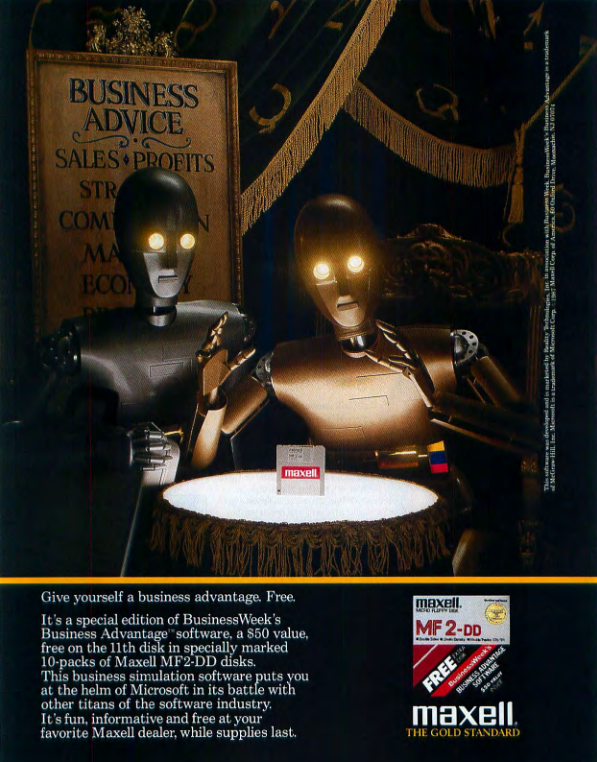
I don’t even care that a robot reading your fortune from a floppy that you’re then supposed to buy makes zero sense. That underglow is beautiful. (And you can take “Sales/Profits” as Business Advice to the bank).
Maxell’s naming system remained fairly standard throughout the 80s, with a 1983 lineup including one of the first references to “DD” disks as “Double sided / Double density / Double track” (three Ds by my count, but what do I know). And a New York Times holiday gift guide from the same month as the fortune teller ad claimed “a box of 10 premium 3.5-inch diskettes costs $20 to $25 at most stores; the high-density versions cost $55 to $60.”
If you were quick, you could pick up a box that included an 11th disk for BusinessWeek’s Business Advantage: Can Microsoft maintain dominance (which lives on as a downloadable copy at Archive.org).
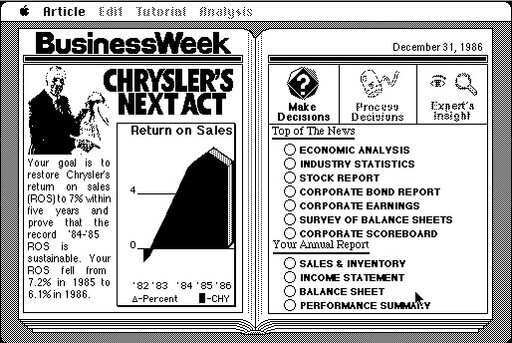
Two years later, Maxell would do it again, that time bundling Electronic Arts’ 688 Attack Sub (playable in your browser) in 10-disk packs. Before that, however, Maxell’s robots landed in a museum.
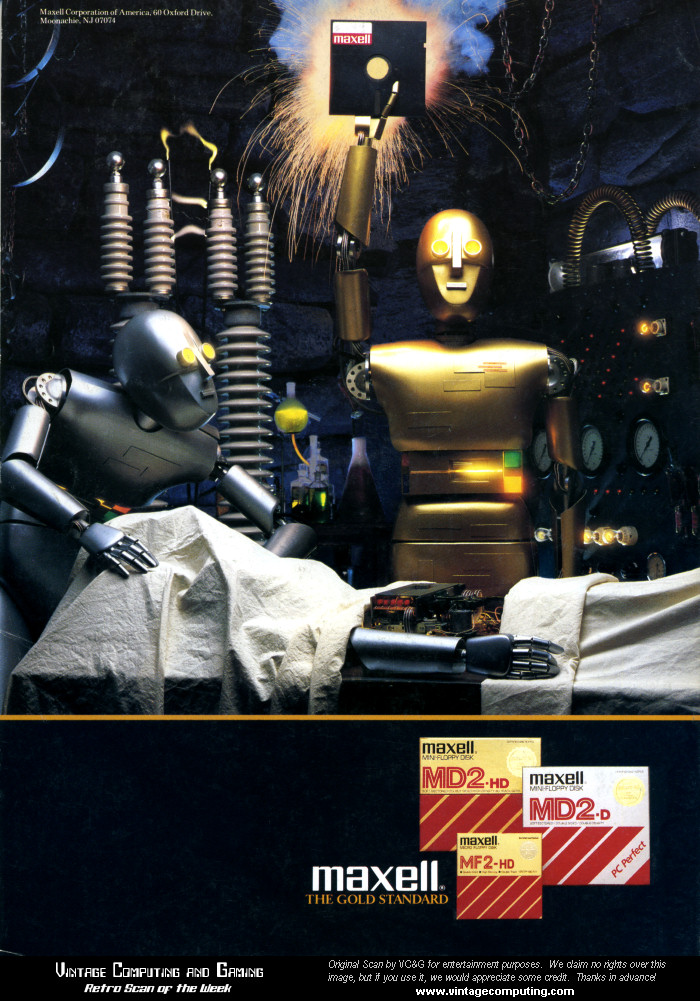
I guess the floppy is supposed to be the thing that brings robot Frankenstein’s robot creation to life? Creator and creation are essentially indistinguishable in this metaphor, which kind of runs contrary to the entire Frankenstein story, no? Whatever, the best scan I could find of this ad, the one above, was on Benj Edwards’s Vintage Computing, which had this comment below the post:
“I went to The Computer Museum in Boston in 1991, I think it was, and they had the life size models of these robots.” Jackpot! From there it was a piece of cake to track down definitive proof that these were life-size props:
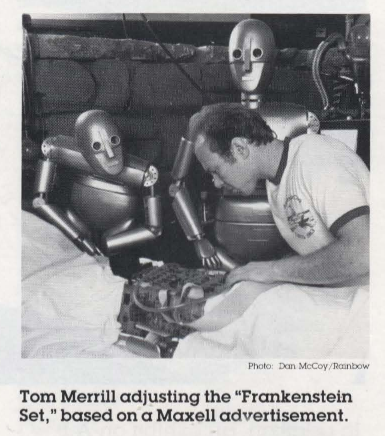
Based on all of the evidence I found, it looks like Maxell’s robots were added to an exhibit at The Computer Museum and photographed “on location” for the ad, which ran in Byte’s Extra All-IBM Edition in December 1987.
The Computer Museum’s Smart Machines exhibit, where robots lived, opened on June 18, 1987, as “A permanent gallery devoted to the history and technology of artificial intelligence and robotics,” according to researcher emeritus Gordon Bell’s website.
Maxell’s props were in “A collection of robots were arrayed inside a theater, each of which, when highlighted in the theater's video program, lit up and, in several cases, performed movements.” The Computer History Museum (which assimilated the Computer Museum in 2000) has a couple of slide transparencies of the finished exhibit in its archive portfolio:
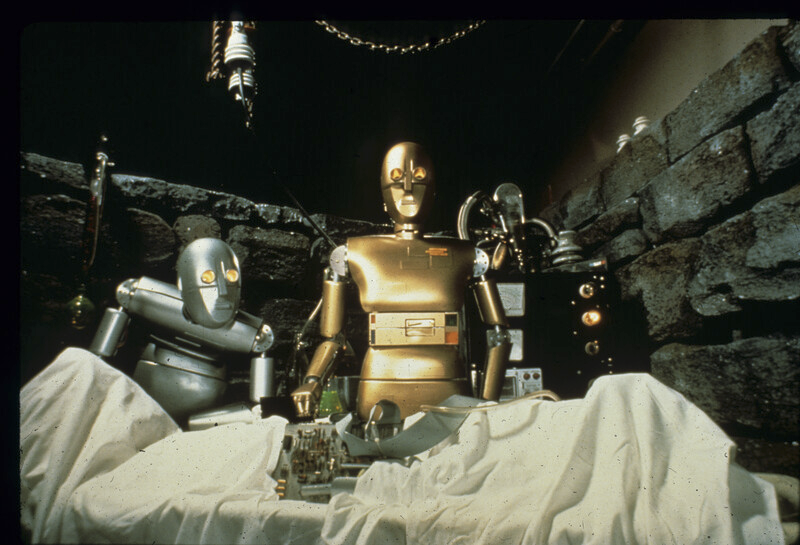
If anyone has a video of the Maxell robot performance, please share it! I couldn’t find any but did learn in the course of my search that legendary exhibit and experiential design expert Michael Sand was in charge of the 4,000 square-foot Smart Machines experience.
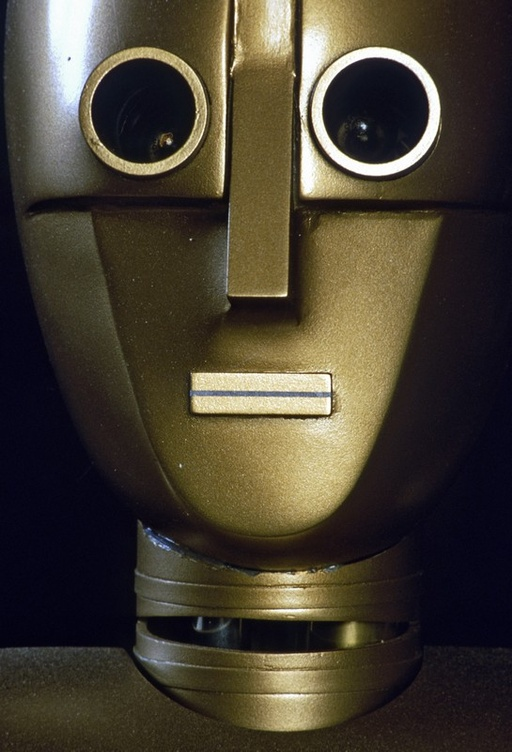
And his website has a whole gallery devoted to the project, including several high-definition photos of Maxell’s robots:
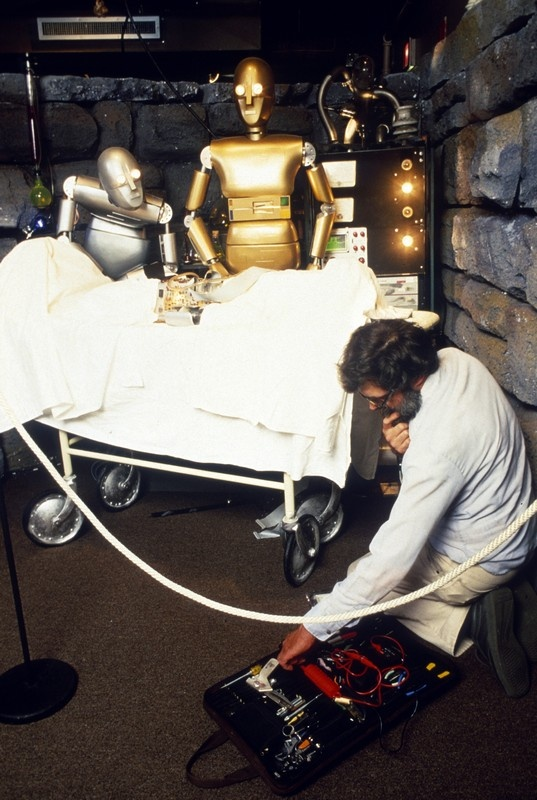
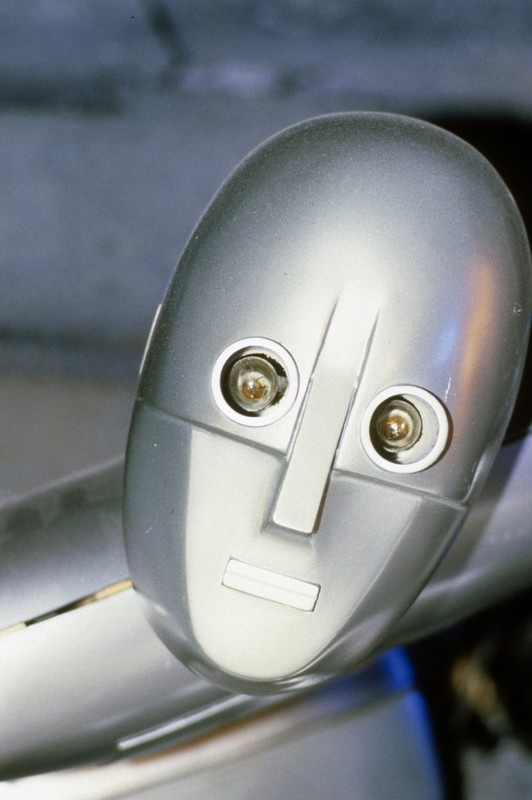
Despite shutting down in 2000, The Computer Museum’s website is still live and chock full of internal documents. For example, there’s a 53-page letter from Ripman Lighting Consultants about a bunch of issues with the Smart Machines exhibit, including some clues about what the Maxell robots were doing.
“Several observers have suggested that the Maxell tape is too long. People watching the display for a short time are not aware that anything is happening, and a four-minute cycle means they pass away from the viewing area before an event.”
And, suggesting that the performance emulated the surgery motif from the original ad, “the heartbeat level is not consistent throughout the cycle, so the display appears static.”
In fact, the Maxell robots seemed to be a pretty big problem, with one technician claiming they alone ate up a quarter of his time on the project. “The Maxell exhibit was much more involved than I had expected. When I wrote the original proposal, I had no idea that the exhibit would be animated.”
There were at least two ads after the props were placed in the Smart Machines exhibit. The first one was posed in a way that it too could have been photographed without too much repositioning:
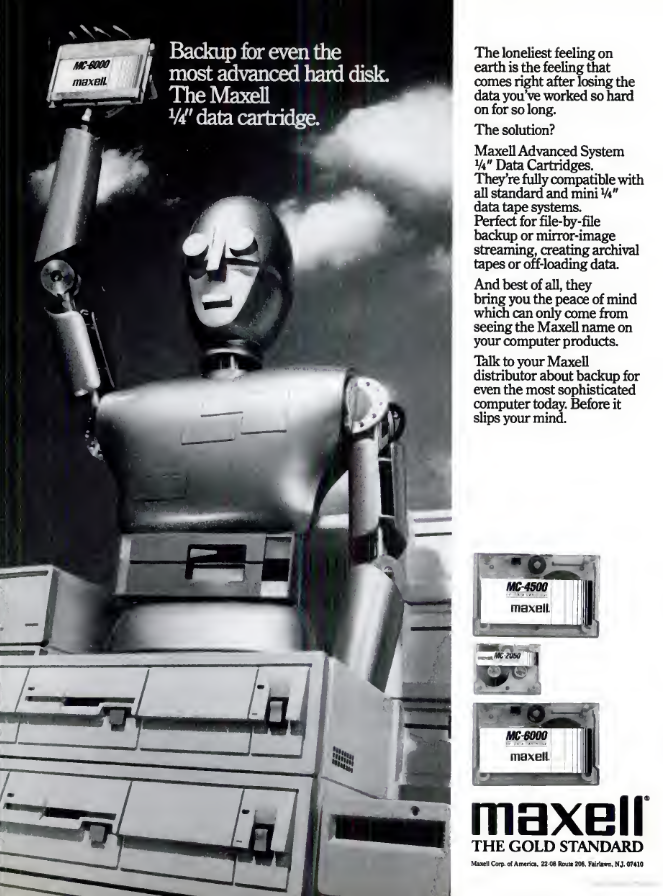
Or maybe they just had even more robots in the wings? Regardless, it’s fun to see them getting work outside of the floppy disk game.
This ad came out the same year that the New York Times published Difficulties in Choosing Diskettes, which pointed out that “A low-quality or defective diskette can be replaced easily, but the data lost with it can be irreplaceable. (That's why the ‘'lifetime guarantees’' offered on some diskettes are such cold comfort; you may lose weeks' worth of diligently compiled data and get back a $1 blank diskette.”
Soon after this one, however, there was the last Gold Robot ad from Maxell that I could find. And it seems very unlikely to have been shot inside the Smart Machines exhibit:
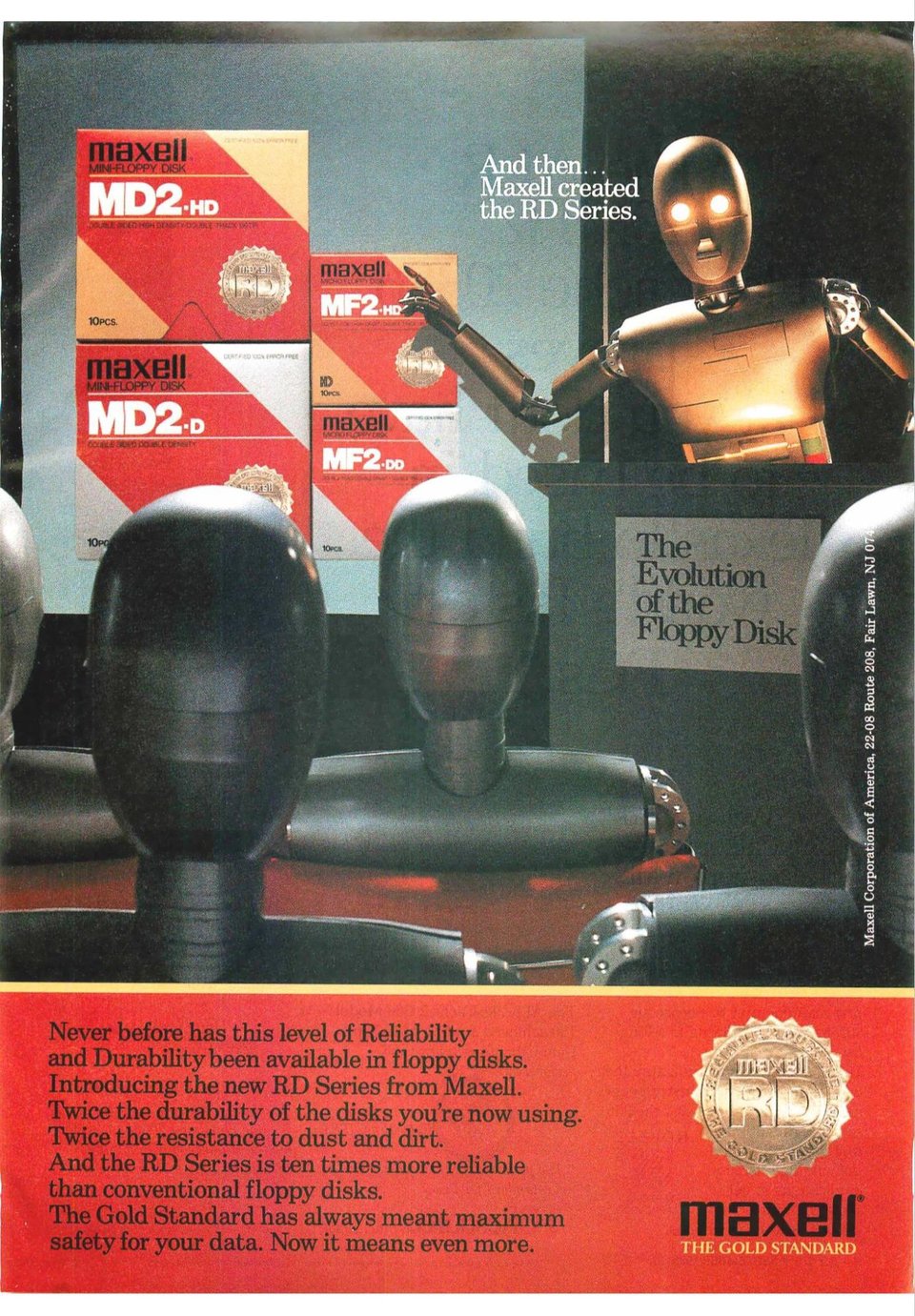
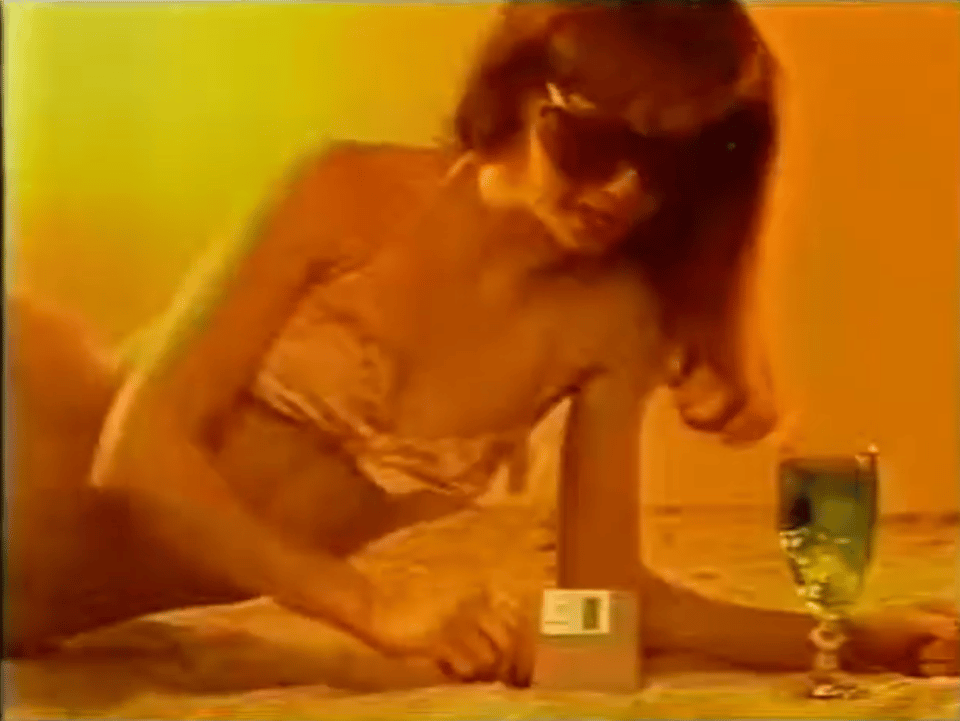
In just three years, we went from robots eating Maxell’s products during a bizarrely baroque blind date to those same robots giving lectures on The Evolution of the Floppy Disk. This was their final form. For crying out loud, this ad is better than the corresponding TV spot that aired the same year! That had a woman in a bikini shoving her floppy in the sand to voiceover that the RD “gives total performance in every environment: cold, heat, and grime.”
And, while it’s not an ad, or a robot exhibit, I have to wrap things up with another collaboration between Maxell and The Computer Museum. Opened in 1990, The Walk-Through Computer was a “giant $1.2 million exhibit--the only one of its kind in the world–features an authentic, two-story working model of a desktop computer enlarged to 50 times its normal size. People can walk through it and see how a computer actually works.” At its entrance was a six-foot-tall floppy disk:
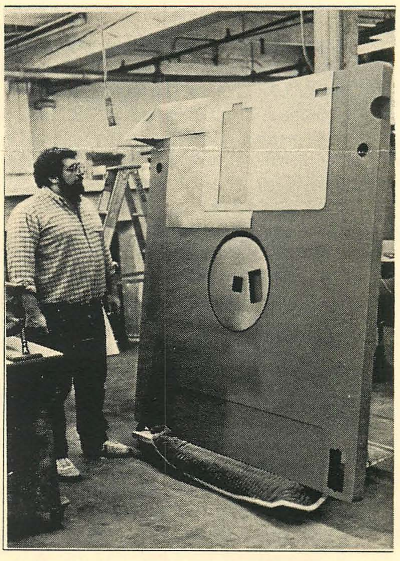
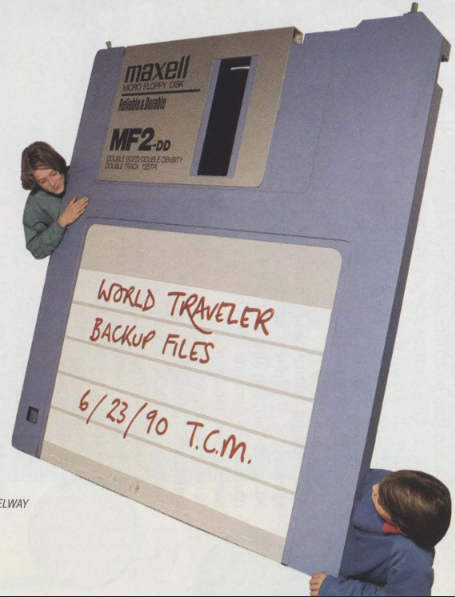
Resting against the 55-foot by 26-foot computer chassis, the disk’s access window was actually slidable and the write-protect tab movable. And, of course, in big bold letters, the name of the company that donated over $37,500 to The Walk-Through Computer:
Maxell’s robots were dwarfed by the cultural impact of the company’s 1980 “Blown Away Guy” in Rolling Stone magazine. But they, being tangible physical props, characters that held board meetings, read fortunes, performed surgery, and gave lectures, physical objects that are possibly sitting in a dusty basement below the Computer History Museum (now located in Silicon Valley), they are far more interesting to me than the couch that Blown Away Guy clung to. And they’re way cooler than the human-controlled robots fumbling drinks at big-tech parties today.
Cited References:
1987 Maxell Floppy Disks robot waiter diners photo vintage print Ad (Worthpoint)
Maxell Original 1980s Print Ad Gold Standard Floppy Disks Vintage (eBay)
Maxell 1984 Vintage Print Ad MD2-D Floppy Disk Computing Gold Standard (eBay)
Framed Maxwell Floppy Disk Promotional Poster (Wayback Machine)
Byte Nov 1986 - PDF page 13 (Vintage Apple)
I Just Love The Art of This Maxell 5.25” Floppy Disk Advert Circa 1983 (reddit)
MacWorld Dec 1987 - PDF page 36 (Vintage Apple)
1983 Maxell Catalog (Archive.org)
PERSONAL COMPUTERS; Holiday Hardware (NYT archives)
BusinessWeek's Business Advantage: Can Microsoft maintain dominance (Archive.org)
BusinessWeek's Business Advantage - Screenshots (The Mac Attic)
688 Attack Sub - DOS 1989 (My Abandonware)
[ Retro Scan of the Week ] It’s Alive! — Floppy Disk Robots (Vintage Computing)
The Computer Museum Report Summer/Fall 1987 Report (Computerhistory.org)
Byte’s Extra All-IBM Edition - PDF Page 292 (Vintage Apple)
Smart Machines (Gordon Bell)
Robots at Smart Machines - Slide transparency (Computer History Museum)
Golden Robot in Smart Machines exhibit at TCM Boston (Computer History Museum)
Smart Machines (Michaelsand.com)
Smart Machines - Gallery Lighting Strategies (Computerhistory.org)
PC Mag April 1988 - PDF page 79 (Archive.org)
THE EXECUTIVE COMPUTER; Difficulties in Choosing Diskettes (NYT archives)
Byte Sept 1988 - PDF page 11 (Archive.org)
TVC Maxell Floppy Disk Commercial (YouTube)
The Walk-Through Computer Press Kit (Computerhistory.org)
The Walk-Through Computer - A Landmark Exhibit (Computerhistory.org)
Maxel - Blown Away (Wikipedia)
Elon Musk’s Beer-Pouring Optimus Robots Are Not Autonomous (Gizmodo)
Unused References:
Another slide transparency of the gold robot (The Computer History Museum)
Advertising; Maxell: A Times Sq. Addition (NYT Archives)
Three-inch floppy disk product announced (Wayback Machine)
Maxell Robots 1985 Commercial (YouTube)
MEMO: The Computer Museum Exhibits Committee (Computerhistory.org)
Proudly part of Kagi's Small Web initiative.

