StoryGodmother Newsletter #40 - A Hard-to-Finish Story
Hello!
Well, somehow we’re at the end of May! It’s been a little while since the last newsletter. Apologies for the lack of contact – I have been hugely busy with events, deadlines and the launch of my latest middle-grade novel, The Unchosen One!
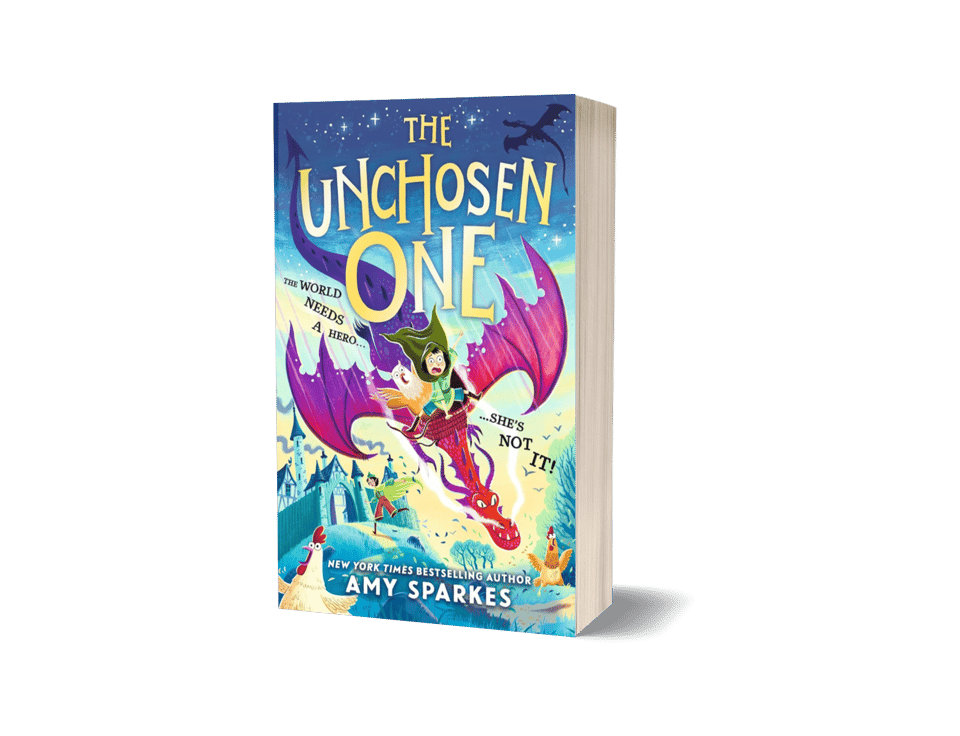
It’s very exciting to have it out in the world. If you’d like to find out more about my books (many exciting things on the way!), then please do sign up to my newsletter for readers.
RESOURCES
A Hard-to-Finish Story
Why is writing so hard to finish? Sometimes (particularly with shorter texts), it can be easy to get a story written from beginning to end. But sometimes, it can be the hardest thing in the world.
Why?! Why does this happen to us?! There are lots of reasons why this might be the case, and they can vary from project to project and writer to writer, but let’s look at some of the common ones.
Perhaps the idea isn't as sparkly as you first thought it was (a common problem) and you’re bored. Or perhaps it's a story you feel you HAVE to write, rather than one you NEED to.
Perhaps the story is harder to write than you anticipated - and this can be whether it's plotted or pantsed. If you ‘pants’ your way through, you can find yourself stuck, unsure where to go next. If you plot, you may have relied on the plot but if you find it unsatisfactory or 'wrong' as you write, you can grind to a halt.
Perhaps you love the story but time pressures have meant you couldn't invest and now you have lost momentum are struggling to 'get back into it'.
Perhaps there’s a crisis of confidence: who are you to write this book? You can't do it. Paralysis sets in.
Or perhaps it feels pointless. 'Probably nothing will happen with it anyway, right, so what's the point?' It fades away...
So, looking at those five reasons, here are some suggested coping strategies to enable you to finish your texts.
1. Bored.
To be clear, there is no hidden writing law saying you must absolutely finish everything you start. Although no writing time is ever wasted, some can be a better use of your time than others. Do you really want to finish this story? Or does this story serve more as a creative writing experiment and elongated practical exercise that you can learn from?
One tip here is to find out what you DO love about the story - what originally drew you to this idea? Find it, extract it, and try developing the idea in a different direction, perhaps tracking back to where you were still excited and see where exactly you started losing interest. Sometimes 'finishing a story' means a very different draft 2, even if draft 1 was never finished. I've done this before - and that's how we ended up with The House At The Edge of Magic.
2. Hard to Write
Backtracking is a powerful tool in the writer's toolkit. As with above, where you can use backtracking to find out where you lost interest, you can also use it to find out where you got stuck.
Whether plotting or pantsing, you can often get stuck when a story becomes Author-Led rather than Character-Led. The author decides a certain plot point happens next and the character says, 'no, I don't wanna'. Often, your character gets written into a corner and becomes stuck because it isn't a situation your character would truthfully choose. If you ever find your character saying to another character, 'Well, NOW what do we do?’
PAY ATTENTION!
They are often talking to YOU as the author rather than another character!
Some choice along the way might not have clicked with the heart of the story or the character motivation. Or perhaps there haven’t been clear decisions your character can take to lead to clear actions. Or sometimes, perhaps your imagination can't quite keep up with the pace the story is unfolding and you need to stop, look, and listen a bit before moving on. All this is absolutely fine. And normal.
Another thing you can try is swapping techniques. Pantsing your way through the story? Stop and plot the next few moves. Plotted it all meticulously but something just isn't writing? Try writing spontaneously and see what comes out. Sometimes just doing this for a short while can help the unsticking process, and then you can get back to writing how you prefer for this particular book.
3. Lost Momentum
This happens to us all as life is busy and throws curveballs from time to time. Personally, what I find helpful here, is to reconnect with the heart of the story. Instead of just trying to force myself onwards (like eating something when you're really not hungry), I try to entice myself onwards (building the appetite). Reconnect with why you love it. Fire up the enthusiasm for it and you'll want to get back into it.
Usually, this is nothing to do with plot (although there may be exceptions). More commonly, it will be character, theme, emotion or perhaps the strength of a good idea that got you excited. Spend time not writing but connecting. Talk to your character, ponder on the theme and why it's important, think about potential emotional scenes between characters. Write down why this is important to you and why you want to spend your time and energy on this.
4. Confidence
If you begin to think that you can’t write this book, it can indeed become difficult to write the book, and so the self-fulfilled prophecy circles around. What can help here is pausing and equipping yourself with whatever you feel you need to finish.
Perhaps you feel you need to learn more before you can move on with confidence. Whether you do or not can be difficult to call. But it doesn’t matter: if you feel unconfident about something, then do something about it. Say you don’t feel you’re doing a good job with character creation – stop at do some ‘writing craft research’ on characters, whether that’s reading a book about creating characters or searching the internet for tips. If nothing else, it might fire you up and get you excited again, but it will also allow you the chance to study a little more, and that should boost your confidence – you do know what you’re doing.
Or if you are having doubts about whether you can even write this story, consider getting some feedback to help gain some objective thoughts. It is so difficult to remain distanced from your own writing, especially if you’ve been working on it for a while. You can pay for feedback from a professional in the industry, but it’s also extremely valuable to gain peer feedback from writing buddies or critique partners who are on a similar journey to you.
5. What’s The Point?
It can be frustrating and upsetting to feel that finishing a story or book is pointless, however it is really important to remember that no writing is ever truly wasted. Finishing a book is a fantastic achievement and many people who start might not get that far. Here is a whole list of why finishing a book is worthwhile in itself:
Crucially, it helps you develop the skills of perseverance and resilience – skills undoubtedly needed if you want to keep writing! Find ways to get yourself through a manuscript – using rewards, trying different techniques, so that when it really matters and you have an important deadline, you know how to manage it.
You have a finished draft to do something with. Even if you only use it for editing practice, it will be helpful. If you’re utterly convinced that you won’t ever do anything with this story, then use the finished manuscript as a dummy run. Sharpen your skills on this manuscript, so you’ll be stronger with the next.
If you don’t think the story itself is likely to be published, perhaps you can still use it to enter some competitions? Or serve as a sample of your voice?
You prove something to yourself: you can indeed finish a book. This is something amazing. And if you can do this, what else could you do?
CHARACTER CORNER
I love writing about character relationships; it’s one of my favourite aspects of writing. Whether it’s friendships, siblings, mentor-mentee or antagonist-protagonist relationships, there is always something fun, intriguing or emotional to explore. In the same way that characters often change throughout a story, their relationship with other characters can often (though not always) change: there is a relationship arc.
Think about the key relationships your protagonist and other main characters have. What is the state of these relationships at the beginning of the story? Think about how your protagonist changes over the course of the story, in particularly with regards to their internal conflict – how do these changes affect their key relationships? Do the relationships become stronger? Do they become more distant? Do the power dynamics change between them? And how are those key relationships at the end of the story? Have they experienced healing? Have they experienced new understanding, whether for good or bad? Or have they stayed the same? If they have remained static, is there a clear reason for this?
Exploring how key relationships change throughout the story can add a level of authenticity. It reflects reality: relationships don’t often stay exactly the same, especially during times of great personal upheaval. Considering the relationship also provides the opportunity to really delve into characterisation, and allow readers to compare a ‘before’ and ‘after’ of key characters. Have a look at books you have read before and enjoyed: make a note of the key relationships your protagonist has with others, and study how they change during the course of the book. What key scenes, incidents or phrases highlight these changes?
WRITING COURSES & EVENTS
Free Session
As and when I can, I like to offer a FREE session as a thank you to all my Story Godmother newsletter subscribers. I’ve been asked if I can run one on diary formats, so that’s up next on:
Tuesday 9th June, 7pm GMT
Come along and learn loads about how to write a book using the ‘diary’ technique, including pros and cons, genres well-suited to this format, tips and tricks, and more. The session will be recorded and available for a limited time if you’re unable to attend live.
Book your free place here:
Exclusive Story Godmother subscribers event: Writing Diary Books Tickets, Tuesday, June 9 • 6 PM - 7 PM UTC | Eventbrite
Free event for Story Godmother newsletter subscribers. Come and learn more about writing books for all ages using the diary format.
And if you know anyone who would be interested in receiving these newsletters and accessing free events, please do direct them to my newsletter link here: www.buttondown.com/StoryGodmother (If they would like to attend the event, they’ll need to subscribe before the 9th June!)
Summer Programme
I’m excited to say that I’m creating a summer programme of budget-friendly sessions, looking at different areas of writing craft and writing life to help keep your creativity ticking over until September.
You can also follow me on Eventbrite to be notified automatically as soon as a new course is listed.
COMPETITIONS
WRITING MAGAZINE CHILDREN'S BOOK PRIZE
A reminder that the Writing Magazine Children’s Book Prize is up and running again this year, with the submission window open from 1st September - 31st October. For more information, see Writers Online - Helping you become a better writer. There are categories for picture books and chapter books.
COACHING COMPETITION
Another FREE 30-minute coaching competition is available this month as a thank you for subscribing to the newsletter and to help coaching become accessible to all regardless of means. The session worth £30 (absolutely no strings attached) is distributed via a lucky draw every newsletter, for anyone who would like to enter.
If you would like to enter, please email [email protected] with COACHING 31.5.26 in the title and you will be entered into the draw. All entries must be received by Wednesday 3rd June 23:59BST. I will contact the lucky winner directly, so if you haven’t heard anything, please assume you’ve not won on this occasion, but please do try again next time!
The session is guided by you, and we can talk about anything that you feel will help you move forward in your writing. It’s free and friendly, so give it a go!
STORY GODMOTHER WRITING COMMUNITY
Do you use Facebook? Great – join the Story Godmother Writing Community on Facebook. It’s a free, private and friendly group, where writers can share encouragement, thoughts or interesting finds. I also share weekly writing tips, and I’m there to answer any questions you have. Come and join us! Story Godmother Writing Community
It’s a private group and a friendly bunch – a safe space for you to grow as a writer. And it’s absolutely free.
If you request to join, please do make sure you answer the membership questions and agree to the group rules otherwise you cannot be admitted.
END NOTES
Thanks for reading! If you have suggestions of anything you’d like to see featured here in the Character Corner, Resources, or courses you’d enjoy, please do drop me a line at [email protected]
With writerly love,
Story Godmother
x


