
Update on the Challenge to Michigan’s Fusion Ban
Notes on law, governance, and other matters from Samuel Bagenstos.
For the past few months, I’ve been representing a coalition of political parties and individuals in a case called Michigan Common Sense Party v. Benson. In this case, we contend that Michigan’s ban on fusion voting violates the state Constitution. (If you want to learn more about the case, watch or listen to me discussing it on Micah Sifry’s podcast.) Yesterday, we filed our brief in the Michigan Court of Claims.
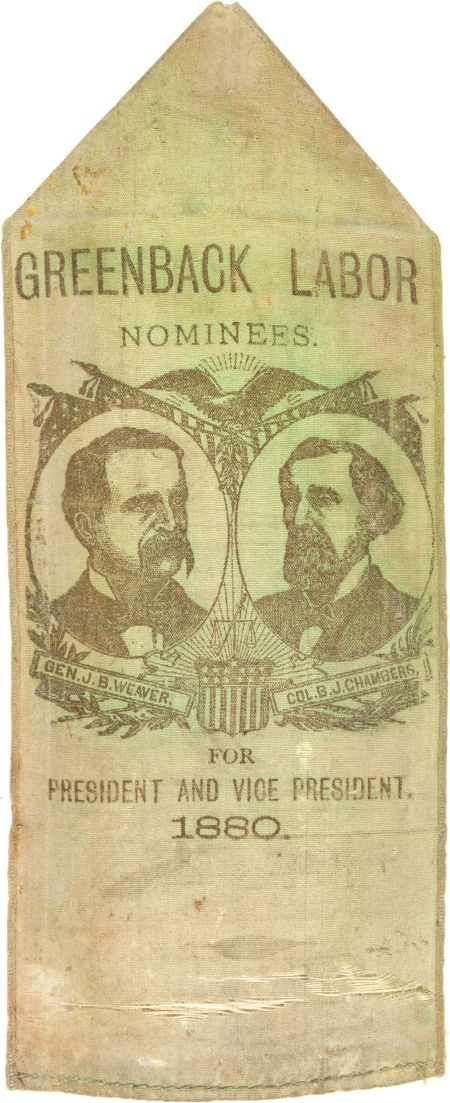
Fusion, or cross-nomination, lets more than one party nominate the same candidate, so that candidate appears on the ballot on more than one party line. It was an ordinary feature of Michigan elections through the last three decades of the Nineteenth Century. Josiah Begole won the governorship in 1882 on a Democratic–Greenback Labor ticket, interrupting an unbroken run of Republican control that begun in 1854. Two years later, fusion candidates took seven of Michigan's eleven congressional seats. Minor parties held the balance of power, and they were able to obtain important reforms: the creation of a state Bureau of Labor Statistics, movement on women’s suffrage, lower railroad and interest rates, and the secret ballot.
After Republicans re-took overwhelming control of the Michigan Legislature, they banned fusion in 1895. They did not hide their motivation. One Republican legislator said plainly that his party did not intend to let the Democrats form alliances with the Populists and Prohibitionists and run combination tickets against them. Contemporary newspapers described the new law as a measure that would leave the state with two parties and squelch the rise of new and minor parties. That is exactly what has happened ever since.
Our brief makes three arguments.
The Fundamental Right to Vote Amendment. In 2022, Michigan voters added an express fundamental right to vote to the state Constitution, along with a prohibition on any law or practice having the intent or effect of denying, abridging, interfering with, or unreasonably burdening that right. The fusion ban violates that amendment. The original goal of the ban was to stop voters outside the dominant party from combining effectively. And the ban continues to have that effect today. A voter who finds no home in either major party has three options: vote for a party that does not represent her, cast a vote that is wasted or acts as a spoiler, or stay home. That is a denial, abridgement, interference with, or unreasonable burden on the voter’s fundamental right.
The State argues, rather shockingly, that the People of Michigan meant to do very little when they added the fundamental right to vote to the Michigan Constitution. Aside from some rather technical changes, the State says, the People meant to keep existing voting practices in place. As we show, that is an entirely implausible and unduly grudging interpretation of a watershed change the People added to our state Constitution.
The Purity of Elections Clause. In Socialist Workers Party v. Secretary of State (1982), the Michigan Supreme Court adopted its modern test for determining whether a voting rule violates the Michigan Constitution’s Purity of Elections Clause. Under that test, we ask whether an election procedure affords an unfair advantage to one party or its candidates over a rival. The fusion ban does precisely that. The State relies on the case upholding the original fusion ban way back in 1895, Todd v. Board of Election Commissioners. But that case long predated the Michigan Supreme Court’s current jurisprudence on the Purity of Elections Clause and did not focus on the burden the fusion ban places on new and minor parties.
Freedom of expression and association. The State argues that the fusion ban complies with the freedom of expression and association as protected by the Michigan Constitution. But the State’s defense relies entirely on the U.S. Supreme Court’s 1997 Timmons decision, which held that Minnesota’s fusion ban didn’t violate the federal First Amendment. And the Michigan Supreme Court has made clear—most notably in a case decided just last month—that the Michigan Constitution does not simply follow parallel provisions of the federal Constitution. As a matter of both text and history, the relevant provisions of the Michigan Constitution are not carbon copies of the First Amendment. Under a proper reading of those provisions, we argue, the fusion ban is unconstitutional.
The State’s reply brief is due just after Labor Day. We expect a decision from the Court of Claims in the coming months, with appeals likely however it comes out.

