they will send you right to the sky
Thatha: “Why do you have such a long beard and wear your hair like that?"
Rishi: “Because I like it”
Thatha: “Well, I don’t like it.”
pauses
“Don’t mistake me. I’m your grandfather. Who else am I to say all this to?”
My thatha is 95 years old, though he has a habit of telling people he’s 97 or 98.
When I first arrive in Chennai, everything irks me, especially him. He insists I sleep in a different room than usual, tells me I can’t go to the movies (or anywhere) after 9pm, and insists I wear long pants and tie up my hair when I leave the house.
I am prepared for this cultural encounter: the generational clash, oldest son on each side, each armed with opinions and judgements towards the other. The 60-years-apart dance. The grief counsellor who visits our home weekly remarks that he finds our dynamic playful, fun to watch.
It takes me some time to see the love in it, though.
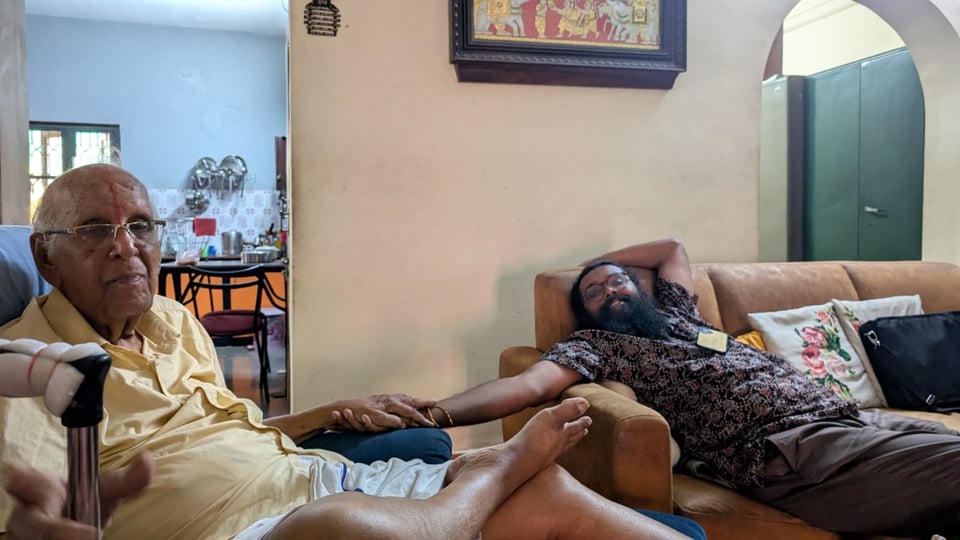
I have made personal commitments to myself to be open to thatha’s expressions of grief, and to share mine. After all, we have taken some serious losses in the last few months: his son (my mama) and my dad (the man he chose to marry his daughter) both passed away the same weekend, and a month earlier his younger brother (and final remaining sibling / member of his generational cohort), too.
You know me, so you know I’m hungry to name things plainly, to get it out in the open. I feel relief in it. But I know that that’s not his way, and sit with my own stagnation.
After a few days, I realize that I’ve been overheated and easily inflamed. We are nearing the hottest time of year in Chennai, and I am striving to maintain my current rhythm of distance runs and multi-day water fasts. How am I meant to be emotionally graceful while adjusting to a new time zone and climate?
I get twisted around, bewildered by a hailstorm of logistical tasks, public displays, and complex emotions about my place in this country. Coming from pretty much anywhere else, an Indian city is an assault on all five senses - not to mention the emotional and energetic planes. It takes time to adjust.
I stumble into funeral processions, flowers and fireworks thrown around, a rally for actor Vijay who’s running for Chief Minister. In each encounter, I feel out of place. My Tamil is rusty, awkward in this mouth that has recently only spoken the dialect of my family. I re-encounter that trait of India’s: everyone is constantly assessing where you’re from and who you belong to. Everyone seems to know my story better than me.
With time, though, I settle in. It's during a 5-mile run in the heat that my grief about my dad springs back to the surface and I release more than just sweat. I see some friends, get through some logistics, and find my meditation practice routine. My body loosens, my tongue loosens, my spirit loosens. I start to feel grateful for the extended quality time with thatha; it feels obvious to greet his idiosyncrasies with tremendous affection.
Together we visit the temple, the beach, and the home he grew up in, where his brother’s family lives. I get to enjoy a moment with my young second cousins, who I’ve been seeing since they were born. The younger one, at seven, invites me to do handstands with her and asks me questions about my name’s spelling, my favorite subject in school (music, of course), and my dad, who she has not met.
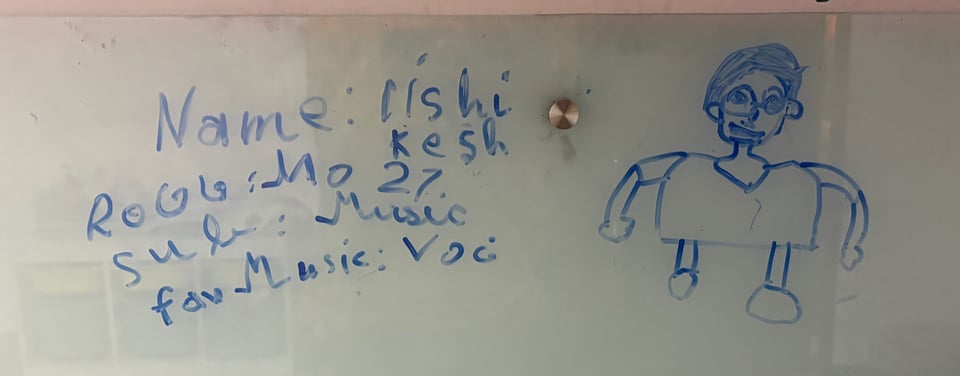
I tell her my dad passed away, at the same time as my uncle, who is also her uncle. She asks “did you cry?” and is surprised when I say yes. Next question: “were they happy tears?” This is the same precocious child who, at the age of 4, referred to passed away family members with the epithet “they became stars.”
She tells me that my thatha cried a lot when he last visited, his first time returning to their childhood home after his brother passed. He’s become a different kind of orphan.
I worry less about communicating with words after this, and claim every opportunity I can to touch him physically instead. I grab his elbow from the backseat of the car on the way home. I lay my legs over his when we lounge together on the couches. I get used to a different language with him, holding hands, sitting quietly together. In those moments, the grief I’m longing to collectively feel seeps in like ground water and something in me unclenches.
Thatha insists on accompanying me on a variety of tasks and errands, one time spending two hours outside of the house (which he’d never do otherwise). When I express concern for his well-being, he replies “I will go anywhere, because I love you very much.” I think I will cherish the sound of those words coming through his voice for a long, long time.
Occasionally, I walk into the living room and he is fast asleep on the couch, five minutes into an instagram reel scroll. I don’t have words for the level of fondness I feel. He is my oldest living ancestor, and for a time in my youth, as I lived here, he played the part of my dad. I wrote about him in college essays, admiring his relentless hard-work ethic. Later I experienced tremendous anger and frustration towards him and his patterns, and the way they impacted my mom and through her, me.
But the word that comes closest when I think about him and his way is noble. He tells me stories about the time he spent 20 nights in the hospital with someone who worked for him because no one else would accompany a dalit laborer. He lists the names of the kids whose education he has covered over the years. He speaks highly of and honors each of his siblings and laments their passing with a dignity that inspires me to love more deeply.
I am most heartbroken when he tells me of his dream of joining the air force at 16. His mother staunchly refused to entertain it because neither of his parents could work and needed him to provide. He has provided for others his whole life, and the humility with which he carries that brings me strength.
There’s far more to thatha than being my grandfather, of course. He had an illustrious photography career - he photographed Elizabeth and Charles! And many South Indian actors and artists. There’s much more to say about how caste showed up in his life. But that’s not what this is about. This is about me coming into acceptance of the deeper ways that love flows between us.
I am glad to see him living, now, a life of choice, of course within the confines of his age and of his grief. I feel grateful to have a chance to enter into his world, not quite the petulant, irritated youngster I’ve been in the past but more of a companion, doing my own thing and getting to see him clearly.
One of my favorite things about thatha recently is that he’s been taking the time to meditate every day, from a series of guided recordings my mom has found on YouTube. Afterwards he remarks, cheerfully, joyfully: “they will send you right to the sky.”
I imagine him soaring, looking down on everyday life from a birds-eye view. Sooner than later he will be journeying further than I can see, where my Patti, my Appa, my Mama have gone, where most of his friends and family and connections have gone.
As I depart from Chennai, on my own onward journey, I will cherish every moment of presence I have gotten to have with him.
-
Beautiful post, Rishi, honoring the complexity of grief and the simplicity of love. Thank you for this. <3
-
gorgeous. Thank you for bringing us with you into your heart and life.
-
I really appreciated this post, Rishi, and felt moved reading about your relationship with your thatha. Thank you for sharing
-
-
I wish you find sufficient rest in the turbulences of grief! <3
-
I wish you find much needed rest, safety and peace between the turbulences of grief! <3
Add a comment: