RGC #36: Holding Pattern
The Retroid Pocket Nova is still dominating my personal play time, so let's talk about it.
I was hoping to have a Retroid Pocket Duo Lite impressions video ready this weekend, but alas, DHL is still stubbornly holding onto my review unit. But I’m pretty sure that will be my next video, so be on the lookout for it on Tuesday.
Thankfully, even while I was stuck twirling my thumbs and waiting for the delivery person to let me down, I was able to make a few other videos too.
🎥 Now Playing
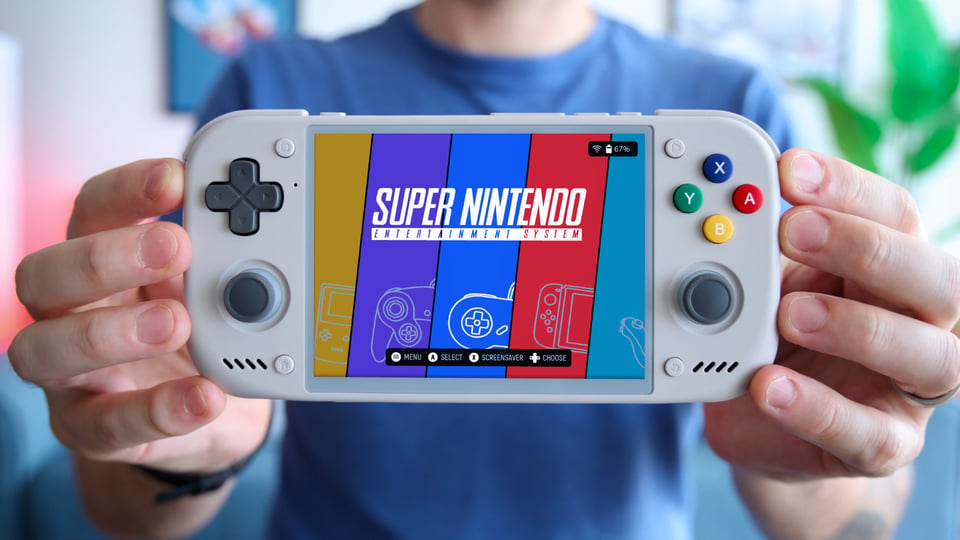
Retroid Pocket Nova - One Month Later
I've had the Retroid Pocket Nova for about a month, so let's talk about my updated experience with this 4:3 champ. Also included: new fan noise revision tests, the pain of modding this thing, and a new screen calibration app.
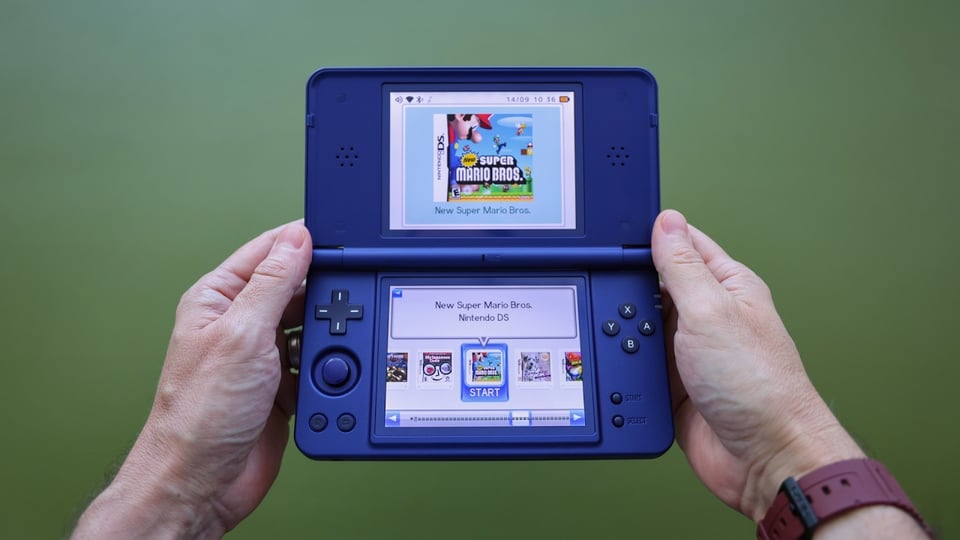
Anbernic RG DS Plus In-Depth Review
The Anbernic RG DS Plus is a nice improvement over the original RG DS, with better screens, controls, and audio - all coming in under $100. Among the dual-screen emulation handhelds available, this one feels the closest to an original DS (but falls short in a couple ways, too).
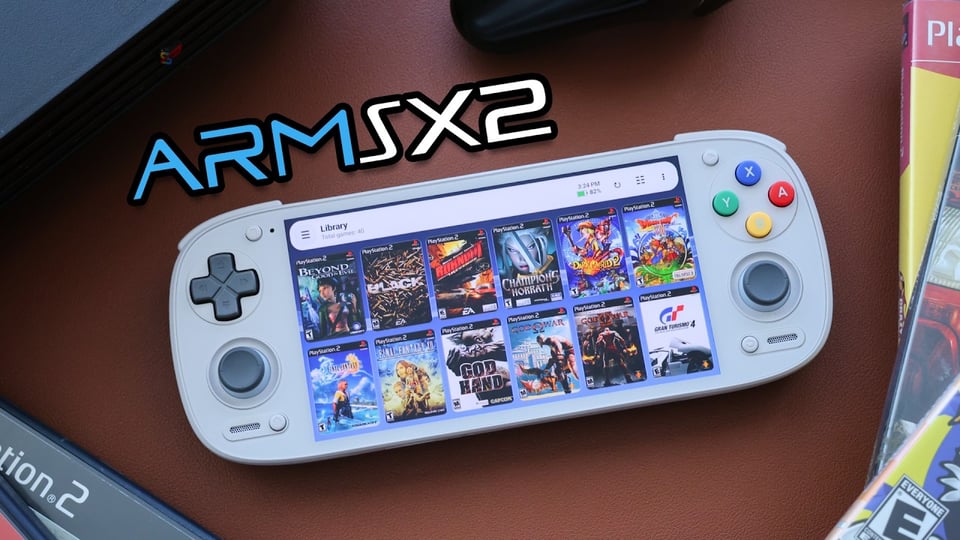
PS2 Emulation on Android Has LEVELED UP
ARMSX2 is a new PS2 emulator on Android that is derived from PCSX2, and it has a bright future ahead of it. It's become my preferred emulator app over the old standbys like AetherSX2 and NetherSX2 - and here is my guide on how to get it up and running, with some play testing too.
Other Russ Sightings:
Expedition: Handheld - In Entry #30, Adam and I cover what we expect from the Retroid Pocket Duo, how it is to use the RG DS Plus on the bus, and how Control Resonant runs on handhelds.
Save State Podcast - I was a guest on the Save State podcast where we ranked the Thor movies, broke down the exploding dual-screen handheld market, looked at new hardware contenders, and tackled the biggest gaming news of the week. I also answered some hard-hitting food questions, too.
📰 Power-Up(dates)
Retroid just can’t let us take a breather. In addition to the RP Duo Lites starting to ship this week, they announced ANOTHER dual handheld SKU. The Retroid Pocket Duo Lite Plus (say that five times fast) is essentially the RP Duo Lite (same screens/shell) but with the RP Duo’s more performant Qualcomm Dragonwing Q-7790 processor. This will make the Lite Plus a good choice for those who want a more slim-fitting option compared to the RP Duo’s stacked shoulders and triggers, and are willing to lose the Duo’s OLED goodness as a sacrifice. The good news is that it’s also $50 cheaper than the Duo, but this additional SKU also makes the dual screen handheld landscape even more convoluted. It comes with 8GB of RAM and 128GB of storage, and is $50 more than the high-spec Duo Lite (which has 6GB of RAM). Retail price is $219 + shipping, but you can use code “LITEPLUS” through 31OCT for $20 off. Shipping starts after the Duo, in mid-November. Affiliate / Non-affiliate
Yoniq, a relative newcomer to the current market, has listed two new handhelds on their website. The Duo dual-screen device is set at $160 early-bird, $200 retail, while the Portal, a PS2-themed handheld, carries a $200 price tag. Yoniq has deep manufacturing roots with 50+ years of supply-chain and production experience, but this is their first direct-to-consumer push. The company's website is rough around the edges, with placeholder copy and AI-generated assets, but their products might be real: prototypes were on display at Gamescom. Pre-orders are expected before year-end.
In a Twitter video that has been making the rounds, developer Hugo Duprez (SpriteFusion) shipped NanoDAW, a full-featured sequencer for the GBA featuring six tracks, 16-step patterns, adjustable BPM, and a polished MIDI-style interface. Duprez used AI assistance via Astra to execute architectural decisions and optimizations but hand-reviewed and refactored every line of code, and completed the whole project in a weekend. The result is a legitimately functional DAW that anyone familiar with modern sequencers can pick up immediately. Download it free from SpriteFusion's site and start tracking.
As reported by Retro Handhelds, ARC, an Indian gaming company in partnership with Qualcomm, released full specifications for the X1 handheld ahead of its October 2nd launch. The device packs a Snapdragon G2 Gen 2 processor, 8GB LPDDR5X RAM, 128GB UFS 3.1 storage with a microSD slot, and a 7-inch 1080p 120Hz LTPS display. Battery capacity is a generous 9,300mAh with 27-watt charging. Early-bird pricing is set at 29,500 Indian rupees (~$300 USD), with retail at 33,500 rupees (~$350 USD). The handheld targets the Indian market, though international availability remains TBD.
FunnyPlaying's FPGB MINI FPGA handheld launched at $69 (a short-lived early bird discount from its full retail price of $89) and sold out almost immediately. The catch: only 20 units were available for pre-order. The company's store now displays "Wait for 20 days" on the GB grey option, with no indication of how many units will arrive in the next batch. Early testing by Game Boy modder Makho revealed a significant limitation: popular flash carts like the Everdrive and Nintendo Power Flash Cart are incompatible with the MINI, a feature available on competing options like the Analogue Pocket. FunnyPlaying may address this with a firmware update, but for now, buyers (all 20 of them) should know they're limited to official cartridges only.
Just one week after launch, the Anbernic RG DS Plus’s firmware pipeline is looking extremely promising.
ROCKNIX, the always-dependable Linux-based distribution, is available for the DS Plus via their GitHub nightly releases. You’ll need to grab the “rk3566-Specific.img” and edit a config file for the device to boot (demonstrated in my RG DS Linux video from earlier this year), but once you’re in you have a fully-featured distribution; most DS games are running at a 2x resolution in DraStic with nice shader options and excellent input latency. The upcoming DSperate emulator was also recently added to the nightly releases, but it is still missing some expected features like upscaling and (hopefully!) RetroAchievements.
SimpleOS takes the opposite approach of ROCKNIX, replacing the multi-system frontend with a dedicated DS-only shell featuring a DSi-like home menu, fast boot times, and an in-game pause interface optimized for NDS libraries. You can follow development on the project GitHub, and it’s available for the OG RG DS right now.
GammaOS Nano v1.4.1 offers an extremely pared-down Android 14 tailored for dual-screen gaming, featuring a bespoke DS-style launcher, pre-configured emulators with optimized settings, performance modes, one-button save states, and quick-access settings tiles for fan control and stick sensitivity. This one isn’t publicly available yet, but be on the lookout over at Gamma’s GitHub and Patreon for updates.
❤️ Currently Grinding
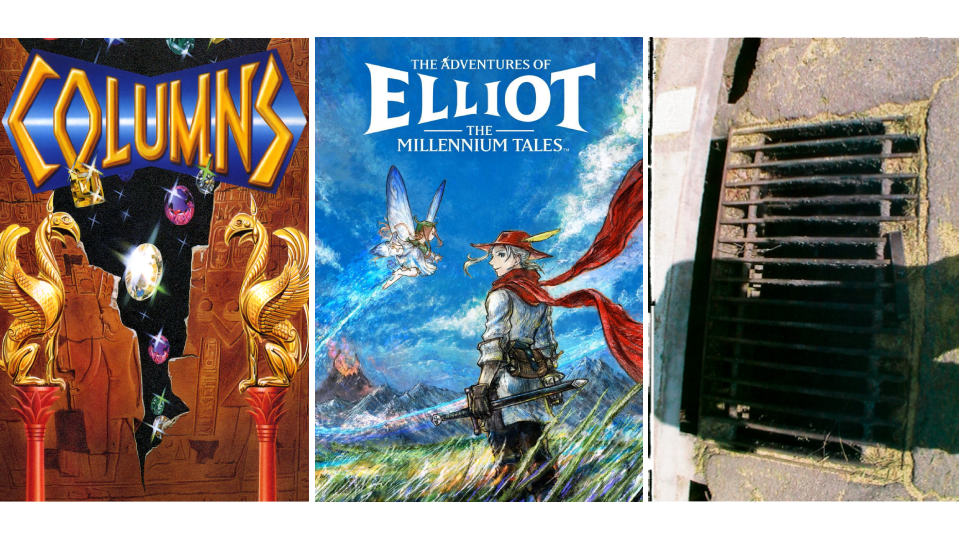
Retro Game: Columns (Genesis)
When everyone was going nuts for Tetris and Dr. Mario, the Genesis quietly competed with Columns. This game was originally developed in 1989 for an old HP workstation, but was later ported to Mac and MS-DOS, and eventually released by SEGA on both arcade and home consoles. It felt like a mix between Tetris and standard match-three games, with the addition of a gravity mechanic that would let you stack up big cascading moments. Its split-screen versus mode ruined many family relationships, and I’m pretty sure I received at least one black eye from a heated match in my youth.
I always preferred the Genesis version thanks to its excellent soundtrack, but because it was a Game Gear pack-in, lots of folks have special nostalgia for that version. The game spawned an Japanese arcade-only sequel, then Columns III arrived in 1993, but I never liked that version: it had forced multiplayer even in single-player mode, pitting you against an AI opponent. One of my favorite aspects of the first game was the simple single-player campaign, where you are only battling your own abilities - that’s the version I still enjoy today.
Modern Game: The Adventures of Elliot: The Millenium Tales (Steam)
Made by the same dev team behind the Octopath Traveler games, The Adventures of Elliot differs in some key ways: it has the same HD-2D aesthetics, but plays more like a 16-bit action RPG like Legend of Zelda: A Link to the Past. I have tried several times to make progress in the first Octopath Traveler games, but I’m always overwhelmed by the sheer amount of character choices and its somewhat plodding turn-based combat. Elliot is a much easier pill to swallow: the character roster is thankfully lean, and battles are simple hack-and-slash encounters that are satisfying, albeit much less frenetic than something like Mina the Hollower.
I only played it for about an hour on my Odin 3, but what I played I really enjoyed. It runs great on GameNative at 1080p low settings when you lock it to 30fps, and even better via Armada at about 40fps with the same settings.
Album: Summer in Abbadon by Pinback
We had another memorial for my friend Chris this week, and rather than work a half-day before going to that event, I decided to stay home and work on my long-abandoned novel (I wrote about half of it in the early days of this channel, but haven’t had the space to work on it more as RGC grew). I like to listen to music while writing, but I don’t like hearing anything that will grab my attention too much: it usually ends up being instrumental music like Mogwai or Explosions in the Sky, or something that is generally light on the ears.
Pinback is a good example of that second sentiment, and I listened to this San Diego-based band while writing this week. They make guitar-driven indie rock that also skirts alongside genres like indie pop, math rock, and prog rock all in one go. I always think of their sound as swirly; a pleasant sound that tickles my ears just a little bit but doesn’t demand a full attentive listen. Summer in Abbadon is their third album, released in 2004, and it’s my favorite (and the one I recommend starting with). Their previous work is a bit rougher around the edges and less consistent, and their later work was too polished for my liking - Summer in Abbadon is just right. Once you’re done (pleasantly) chewing through that album, I would recommend their two big EPs: Some Voices (2000) and Offcell (2003), which were conveniently compiled together into Some Offcell Voices in 2017.
💰 Bargain Bin
Amazon deals are pretty anemic this week, but there is one notable discount on SANDISK’s 512GB microSD Express Card for the Nintendo Switch 2, down to $160 from the normal $200 price tag. Have I told you lately that I hate 2026 pricing? Affiliate / Non-affiliate
I bought a bunch of mesh stylus tips on Amazon and tested them out on the Anbernic RG DS Plus built-in stylus, and I found that 5mm tips work the best. They are a little wider than the stylus itself, so you have to tuck the extra material in as you screw the tip into place, but after that it is nicely snug.
Here is the Amazon US link ($8 for 24 pcs, 12 of them being 5mm): Affiliate / Non-affiliate (similar models are on AliExpress but I can’t vouch for them without testing first.)
To install, just unscrew the rubber tip, and then pull the rubber tip off its housing and replace it with the mesh tip. You can then screw it back into place. It's a non-destructive process so you can always go back to the rubber tip if you'd like. I find it to glide a LOT better and still have the same level of responsiveness. Perfect for games like Phantom Hourglass or Trauma Center.
If you are concerned about the mesh tip damaging the screen during an intense Rhythm Heaven session, I'd recommend using the screen protector that comes with the RG DS Plus. I put one on my bottom screen today and the touch responsiveness still feels good.
Best Buy is having a massive sale on Switch and Switch 2 games to coincide with Nintendo’s controversial “Customer Appreciation Sale”. I’ve listed some of the best deals below, check it out here: Affiliate / Non-affiliate
Animal Crossing: New Horizons - $42 (down from $60)
Donkey Kong Country Returns HD - $42 (down from $60)
Kirby Air Riders - $59 (down from $80)
Kirby and the Forgotten Land - $42 (down from $60)
Kirby's Return to Dream Land Deluxe - $45 (down from $60)
The Legend of Zelda: Echoes of Wisdom - $49 (down from $60)
The Legend of Zelda: Tears of the Kingdom - $42 (down from $60)
Luigi's Mansion 3 - $42 (down from $60)
Mario Kart 8 Deluxe - $42 (down from $60)
Mario Party Superstars - $42 (down from $60)
Metroid Prime 4: Beyond - $59 (down from $80)
Pikmin 2 Deluxe - $51 (down from $60)
Pokémon Legends Z-A - $63 (down from $73)
Pokémon Scarlet - $54 (down from $80)
Super Mario 3D World + Bowser's Fury - $42 (down from $60)
Super Mario Bros. U Deluxe - $42 (down from $60)
Super Smash Bros. Ultimate - $42 (down from $60)
To mark IGN's 30th anniversary milestone, Humble Bundle put together a seven-game collection anchored by some of the most acclaimed indie and multi-platform titles of recent years. The bundle features Sonic Adventure 2, BlazBlue Entropy Effect, Subnautica, Ravenswatch, Elder Scrolls Online, and REMNANT 2, with a pay-what-you-want tier structure starting at $5 for a core selection and scaling up to $15 for the complete lineup. For anyone looking to round out their backlog with some critically acclaimed fare, this is a straightforward recommendation. Affiliate / Non-affiliate
Speaking of backlog, over at Fanatical, Capcom is running a build-your-own bundle and the savings are SERIOUS. Capcom's customizable bundle lets you assemble your own collection from a curated roster of 30+ titles spanning Resident Evil, Monster Hunter, Devil May Cry, Mega Man, Street Fighter, and more. The per-game pricing drops as you add titles: $6.50 each for 2 games, down to $6.20 each for 8 or more, making it a flexible way to grab franchise deep cuts and recent remakes at steep discounts. The lineup spans everything from survival horror to action classics to tactical RPGs. The deal ends in 10 days, and the flexibility means you can cherry-pick your favorite franchises without overpaying for titles you'd skip. Check it out at the deal’s landing page (non-affiliate).
Finally, while not a specific bundle, Green Man Gaming has nearly every Final Fantasy game and spinoff available on Steam discounted, in some cases quite heavily. Affiliate / Non-affiliate
Final Fantasy I & II & III - $25 (down from $41)
Final Fantasy IV - $11 (down from $18)
Final Fantasy VIII - $9 (down from $23)
Final Fantasy IX - $9 (down from $30)
Final Fantasy X/X-2 HD Remaster - $10 (down from $25)
Final Fantasy XIII - $8 (down from $20)
Final Fantasy XIII-2 - $8 (down from $20)
Final Fantasy VII - $9 (down from $23)
Final Fantasy VII Rebirth - $15 (down from $50)
Final Fantasy VII Remake Intergrade - $10 (down from $40)
Final Fantasy XIV - $11 (down from $35)
Final Fantasy XVI Digital Deluxe Edition - $20 (down from $67)
⏪ Previously on Retro Game Corps
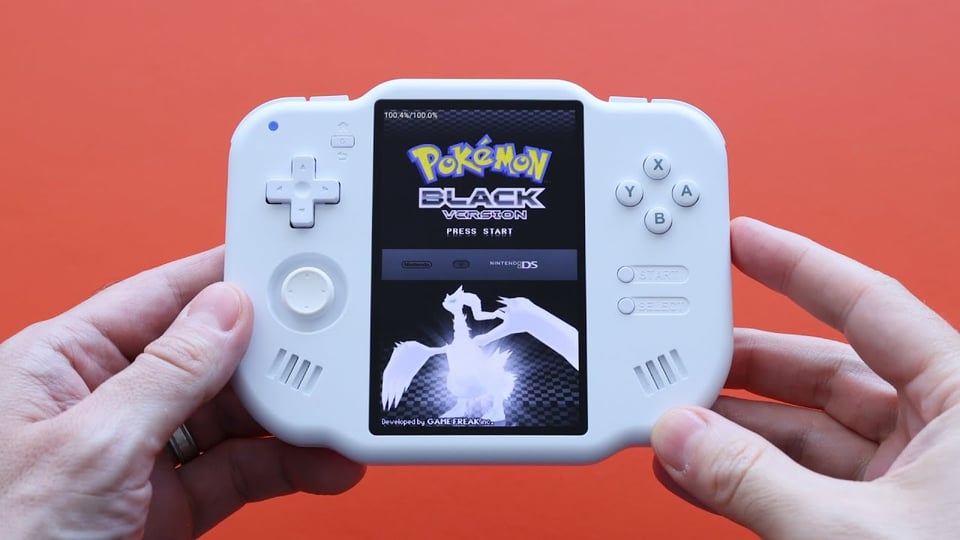
The World’s First DS Handheld
We find ourselves suddenly spoiled for options when it comes to DS emulation, but for a time, there weren’t really any options that suited the DS’s layout. Then a relative newcomer to the scene, MagicX, dropped their Zero 40 handheld, and just like that, DS emulation arrived. It was a strange and novel approach, using a single vertical screen to display both panels. It was also great for vertical shooters!
This week, let’s revisit this now-quaint offering to see how it stacks up against today’s offerings.
🎬 Behind The Scenes
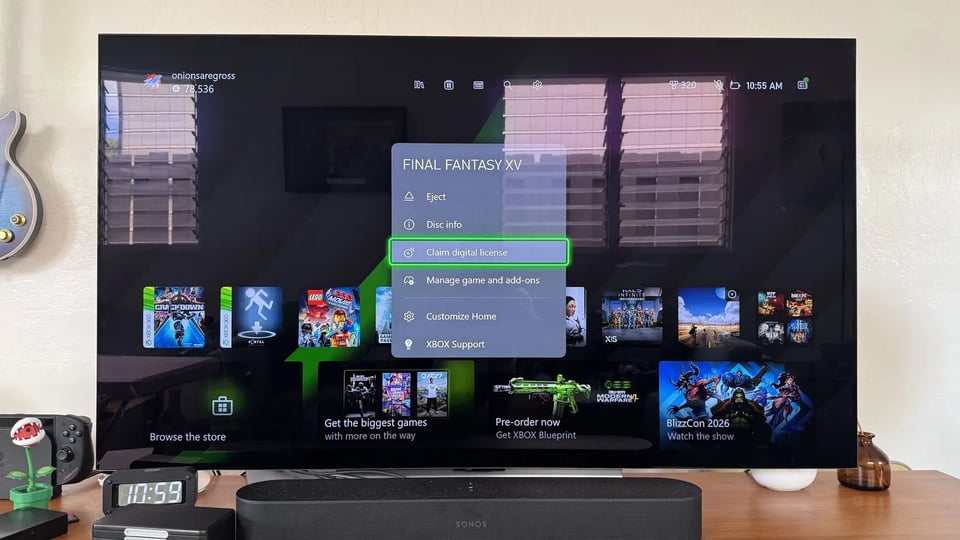
I finally leveled up my Xbox Insider status, and now have the ability to claim digital licenses for my physical Xbox discs. This feature should be coming to all Xbox owners soon, but I wanted to try it with my library ASAP. The process is straightforward: you pop the disc into your Xbox, hover over the game icon that appears, and press START and select Claim Digital License. Not all games are supported due to licensing agreements, but I found that of the 50 games I tried, at least 40 of them worked without a hiccup. The studios that I remember giving me problems were SEGA and Square/Eidos, and you can also reference this community-created list (check the “D2D” column).
I like this concept because it means that I can add my disc games to my digital library, and not have to insert the disc every time I want to play a game. At the same time, I have the game preserved on disc if ever the Xbox digital marketplace goes away. Ideally, the next Xbox generation console will carry forward their backwards compatibility, with a disc drive (or at least a USB disc drive accessory) and the ability to play titles spanning their historical catalog.
See you later,
Russ
-
Thanks again for all the recent videos and the newsletter!
With the Pocket Duo coming I’m really wondering about how you’re thinking about covering it. We’re really at a stage where devices seem to be less about being an everything console and instead being more specific to a console or family of consoles. With the Pocket Duo being a DS and 3DS form factor will you be looking at how a more focused frontend build could look for the device?
-
Thanks for all the coverage! I also hope future Xbox generations or Windows computers have an optional disc drive support, but I'm not holding my hopes high. I think this is just a one-way solution so they can claim backwards compatibility at the same time as they ditch physical media.
-
I was watching your RP Nova update and right after that checked my e-mail. As always, thank you for the newsletter. I like it a lot. Also I really appreciate how you go about the giveaways you do (like in the recent RP Nova video). Others might want to use those to gain subscribers or followers or whatnot. I think you do it the cool way. Again, thank you and have a nice day.
-
Not really related to your post, but I've been playing infidelity_nes NES to SNES ports on my nova. His Metroid, Zelda, and Mega Man ports are my favorites. I'd recommend giving them a try if you haven't. With Metroid for example it looks exactly like Metroid on NES, but now it has a built in map with missiles mapped to R since you technically are playing it like a SNES where you have more buttons accessible and with the increased power there is no more slowdown.
-
Hey Russ, hope you're doing well. Wish that in the future you could talk about the repairability of retro emulation handhelds. Many people get dead or swollen batteries within a few years from buying their handhelds, and without official support from companies like Retroid, AYN, and Anbernic, people can’t get replacement batteries, and therefore their handhelds become useless. I believe this is a very important subject and would love to hear your take on it. Wish you all the best!
Reply: