Friday Fragments #15
Turns out a proposed turtle ancestor isn't, but that makes the origins of our shelly friends clearer.
How in the world did we get turtles?
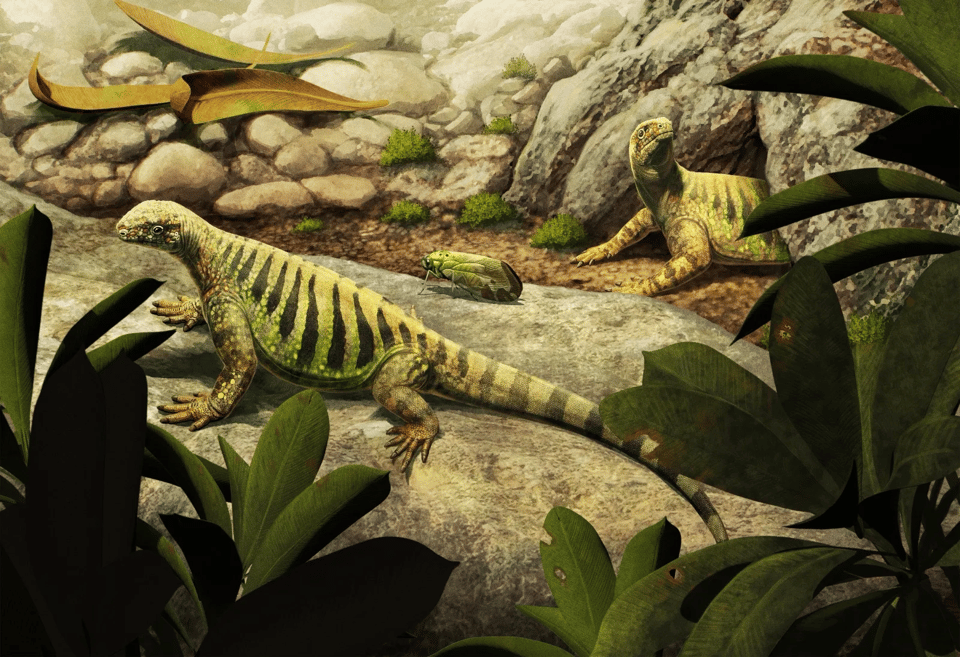
Paleontologists have been wrestling with this question for decades. I heard the refrain “Turtles are from space” more than once, the unique modifications of turtles’ shell-encased skeletons seemingly without precedent or stepwise explanation in the fossil record. Then, about a decade ago, paleontologists cheered. It seemed that experts had uncovered prototurtles after all, drawing all the way back to a chubby Permian reptile called Eunotosaurus. The squat burrowers seemed just right for turtle ancestors, linking early shelled turtles like Odontochelys with their unprotected ancestors.
But it turns out that Eunotosaurus doesn’t work as a stand-in for the ancestral turtle. In a new analysis by paleontologists Xavier Jenkins, Brandon Peecook, and colleagues, Eunotosaurus is recontextualized as a member of an ancient reptilian group that disappeared by the end of the Triassic period.
Despite what might seem like the loss of an important transitional form, the shift makes turtle origins a little clearer.
Eunotosaurus does seem to share some skeletal features in common with early turtles, like broad ribs along its sides and the structure of the reptile’s limbs. The reason for the resemblance, however, is because Eunotosaurus was likely a burrowing reptile just like the earliest turtles are thought to have been. It’s a case of convergent evolution, much the same way that both crocodiles and dinosaurs were playing around with bipedalism in the Triassic.
With Eunotosaurus now further removed from turtles, the oldest members of the shelly group are Pappochelys from the Late Triassic and Kayentachelys from the Early Jurassic. Pappochelys, in particular, is such more lizard-like than its later relatives and has the familiar, rounded shape of Eunotosaurus but much closer in time to when experts see shelly turtles showing up in the Mesozoic. What’s more, the two early turtles share specific traits in common with the broader group that contains crocodiles, dinosaurs, pterosaurs, and their relatives - the archosauromorphs - aligning with genetic hypothesis that turtles and archosaurs are closer to each other than other reptiles.
Turtles did not begin to appear in the Permian. Turtles are Triassic reptiles, one of many groups that budded off from lizard-like ancestors and rapidly changed into something unique. The Triassic, more than any following part of the Mesozoic, truly was an Age of Reptiles - scaly survivors of the terrible mass extinction 251 million years ago not only filling the Triassic world but rebuilding ecological interactions that had been destroyed with the downfall of the protomammals. When I saw a small raft of terrapins sunning in a lily pad last weekend, I was seeing an echo of the Triassic.

Scribblings
It’s coming up on a year since The Shortest History of the Dinosaurs came out! If you need a dinosaur crash course, check it out. I did my best to bring something new to the table, particularly regarding dinosaur ecology and taphonomy.
Be careful when you’re lazing at the surface. Last week’s original article, about a big fish bite, is up on my blog.
I wrapped up the Walking With Dinosaurs run of I Want My DinoTV with the series’ one Jurassic episode. I have my quibbles with the program, but it’s still been refreshing to see a prestige dinosaur show bring in experts and fieldwork in a way that most competitors leave behind the scenes.
Eunotosaurus isn’t the only ‘ancestor’ to be demoted recently. What was previously regarded as the oldest fossil octopus has turned out to be the rotten body of a different invertebrate - and that’s pretty cool. My latest for premium subscribers. Consider upgrading to help me bring more stories like this right to you.
Stomping to a City Near You
SoCal friends, I’ll be speaking at the San Bernardino County Museum on June 11th! I’ll be talking about my book When the Earth Was Green, taking the audience on a journey back to the forests that made us. Details at the museum website.
On July 28th I’ll be joining the Snug Books nonfiction club to talk about When the Earth Was Green. You can grab tickets for the event here.
Ear Perks
Never trust a corporation. Just in time for Pride, outdoor company Patagonia is suing queer performer Pattie Gonia over the claim that the activist is hurting their brand… by doing education and outreach about climate change through drag.
Are you ready for hot shrimp summer? Go check out the rad Shrimp City t-shirt that friend and ace science communicator Sarah McAnulty has up for sale and help her do more rad work.
I Saw the TV Glow broke me. I expect Teenage Sex and Death at Camp Miasma will do the same.
