Daniel Dockery's favorite cartoons
And it's not just Batman.
by Daniel Dockery, guest contributor
When I wrote my most recent book, I AM THE NIGHT: THE ULTIMATE UNAUTHORIZED HISTORY OF BATMAN: THE ANIMATED SERIES, what started as a deep-dive exploration of the greatest adventure cartoon of all time quickly transformed into an ode to animation as a medium. Since Batman: The Animated Series and those iconic titles cards ("You mean people MAKE this stuff?") I've been enamored with it in its many forms. I also figured that, in a time that sees the animation industry in America in total turmoil, maybe it could be of use to some folks. Hopefully, I AM THE NIGHT reminds you of the efficacy of animation as a storytelling advice, whether you're adapting Batman comic books or otherwise.
That said, it is not my only great love. I hold dear plenty of other movies and series from around the world, pieces of art that informed my decision to write a book about animation (available wherever books are sold) just as much as BTAS did. So here are my seven favorites:
My Neighbor Totoro
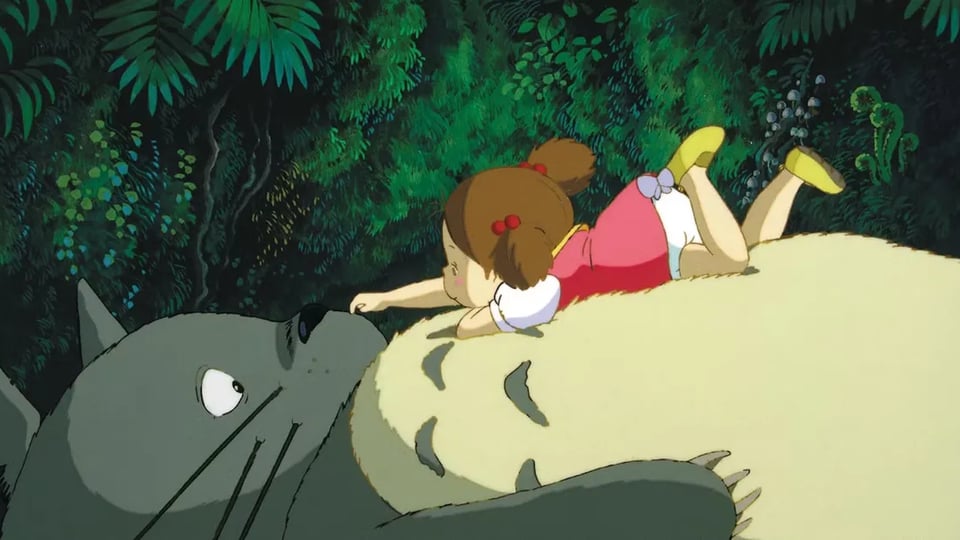
Though I'm far from a Studio Ghibli scholar, I must admit that all of the people who praise it and its famed co-founder Hayao Miyazaki do have a point. And while my taste in its output varies (Princess Mononoke and Spirited Away? Nearly perfect! Howl's Moving Castle and Ponyo? Pretty good!), my favorite since I first watched it in middle school has been My Neighbor Totoro. I think I saw it at the perfect time — when you're that age, you start to feel the naive joys and freedoms of childhood slipping away. And no amount of bold "I'm too grown-up for that!" declarations can get rid of its bittersweet poignancy.
My Neighbor Totoro captures the vivid fantasies of youth in an incomparable fashion. There's a reason why we often describe children talking and playing as "being in their own world" — it's true! Their dreams aren't dictated by the guidelines we find intrinsic to everyday adulthood. Their logic is not ours, and My Neighbor Totoro harnesses that particular magic. Eventually it goes away to some degree, and you're left with a sort of snow globe portrait of how it used to be in your memories. But My Neighbor Totoro makes it feel all too real again.
Scavengers Reign
Sometimes an original production emerges so confidently that it feels like it MUST be based on a previous work. I got the same sensation when I rewatched Disney's Gargoyles for I AM THE NIGHT. I understand why fans have continued to embrace its worldbuilding even 30-plus years after it debuted. Scavengers Reign seems like it would be adapted from some sci-fi novel, considering how gut-punch heavy some of its emotional arcs are and how well-formed some of the little cycles of extraterrestrial life feel. Aside from the original short that inspired it, there was no prior roadmap.
Instead, the creators of Scavengers Reign gave us a series where mankind's desperate attempt to survive is just as fascinating as those aforementioned patterns of micro and macro biology. I was stunned by the creativity on display at least once an episode as I watched some new examples of how these organisms lived and ate and hunted and reproduced and died. That it never got a second season is television malfeasance. This show is truly something special.
The Hand
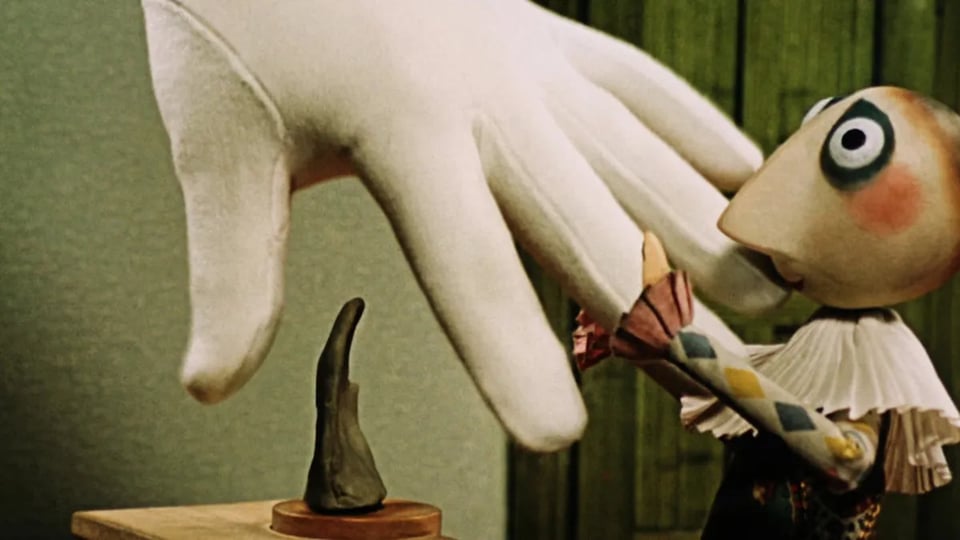
Art that has been created to reflect the horrors of an authoritarian state remains indefinitely timely, and I'd argue that The Hand is the pinnacle of this theme. Created by Czech stop-motion genius Jiri Trnka, it details the life of a sculptor who has been ordered to create something to reflect the glory of The Hand, the ruling order of his world. The whole short deals with these kinds of accessible symbols - hand, cages, flowers, etc. — but Trnka deftly weaves dark comedy and claustrophobic menace in a way that imbues The Hand with humane anger.
Stop-motion is tricky and time-consuming. Those that are good at it tend to have studied it for a long time, and sometimes spend years developing a single piece of work. Jiri Trnka would pass away just four years after The Hand was released, and it serves as his last released film. But if any film shakes its fist at those in power, daring them to remove art from the soul like so many wannabe despots have attempted, it's The Hand. There are no happy endings to be found in the short itself, but the fact that it exists at all is a cause for celebration.
Fantasia
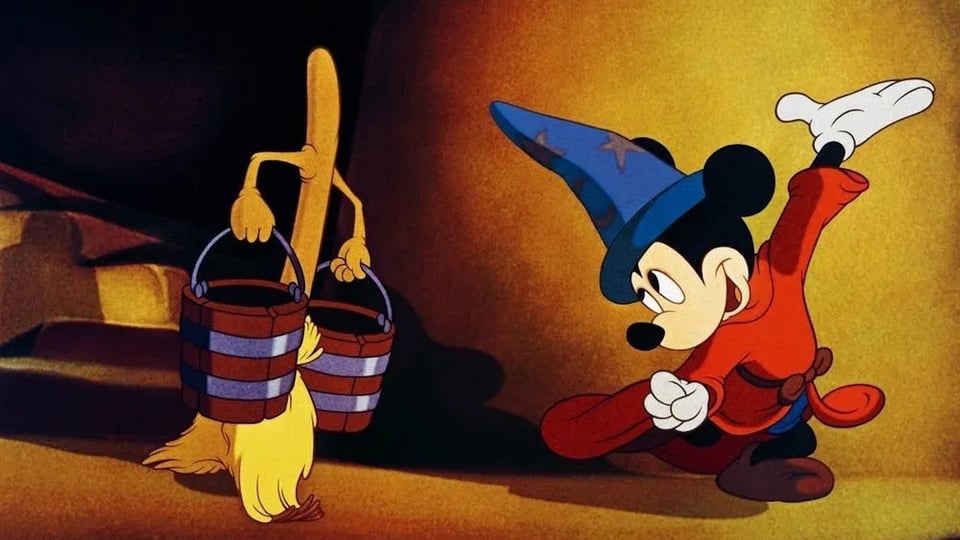
What would Disney have looked like had Fantasia been a success? Would they have taken more risks with characters that weren't either adapted from storybooks or cute talking animals? It's hard to figure out. Despite what its own revisionist history as pop culture's eternal onscreen wishing well says, Disney's rises and falls over the years lead to a million Choose Your Own Adventure-style paths. Heck, there was a better-than-zero chance of the whole thing getting bought out and stripped for parts in the '70s and you'd be getting tetanus at a decrepit Disneyland site right now rather than hugging Mickey and Minnie in some of the most expensive theme parks on earth.
It's why, to this day, Fantasia serves as both a film and a grand experiment in light and sound, the Disney equivalent of 2001: A Space Odyssey. Each segment offers something unique, from the iconic Sorcerer's Apprentice (which I was first introduced to, not in the film, but as part of the old Disney home video opening) to the bewitching Nutcracker Suite to the awe-inspiring Night on Bald Mountain. The idea that animation/cartoons is a medium for children is a fairly new concept (which took hold thanks to the unstoppable advent of television, which saw sugar cereal-eating, toy-playing kids a prime demographic to be marketed to.) Fantasia, laden with intricate design and orchestra, is a refutation of this rule. Intriguing, confusing, overwhelming beauty for the whole family!
Prehistoric Beast
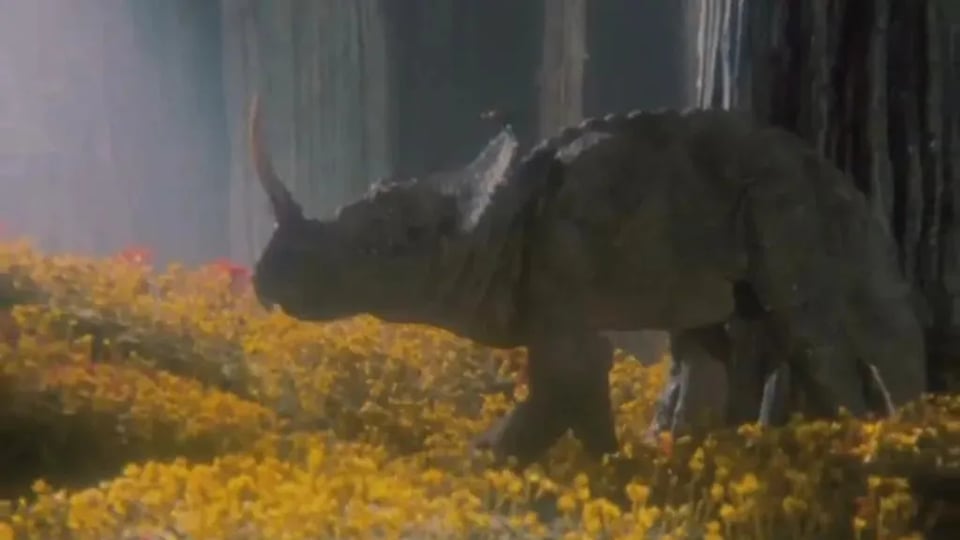
When Jurassic Park was released in 1993, many saw it as THE statement of the new "dinosaur renaissance" era of paleontology. Certainly, there were some creative liberties taken, but with their tails off the ground, their pace quickened, and their intelligence increased, the dinosaurs on screen reflected scientific progress. And when audiences got to the credits, they saw, in the role of "dinosaur supervisor," Phil Tippett. But this was not Tippett's first encounter with prehistory. And what he worked on prior might even be better.
"Prehistoric Beast," the go-motion short that was eventually attached to the Emmy-winning Dinosaur! documentary, is slight in story. A herbivorous "Monoclonius," separated from its herd, is slowly stalked and eventually eaten by a Tyrannosaurus Rex. Smash cut to the "PREHISTORIC BEAST" title card and there ya go. But before Jurassic Park brought its ancient denizens to life, "Prehistoric Beast" was already trying to concoct something that felt true to the paleontological updates at the time. Combine that with an atmosphere thick with wonder (and then terror) and you have a proper Jurassic Park prequel. It's an adventure, 65 million years….ago.
Batman: The Animated Series
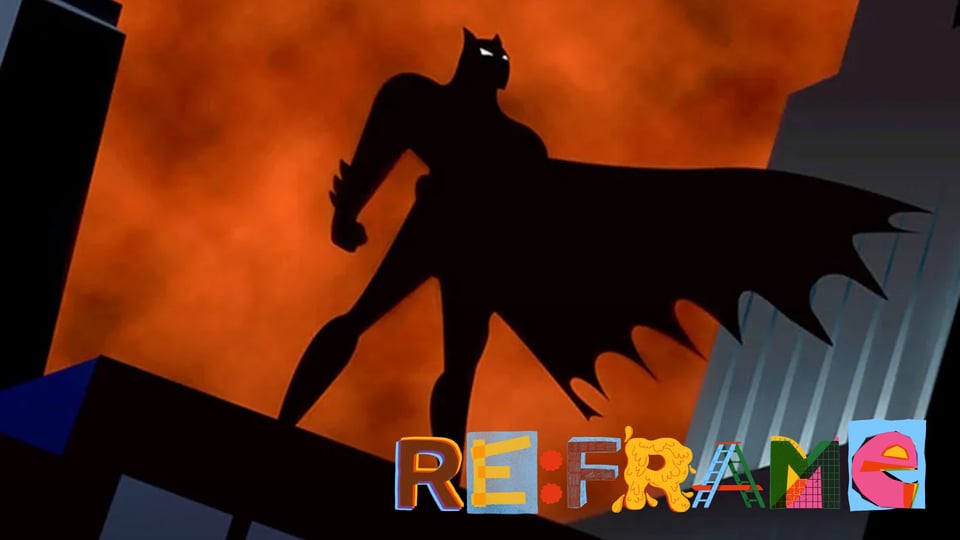
Adaptations are often a hollow, whittling effort, especially in the case of superheroes. You try to figure out what a mass, movie-going audience will "accept" and you slowly shave down the color and the mythology until you have a palatable goop to shovel into your wider franchising train. But what if an adaptation enriched the source material, taking characters that had either been bogged down by their histories or misused and distilling them into purity or sparking them with reinvention? That's the power of Batman: The Animated Series. Is it better than the comics? Eh, you can judge that. Does it stand alongside them as a three-dimensional version of the lead character and his world? Undoubtedly.
Over the course of 85 episodes (and two spinoff movies) BTAS would go on to become a generation's gateway to Batman. It emerged in the beginning of a whole wave of superhero adventure cartoons, many of which (like X-Men) reshaped what these characters meant in the public consciousness. That BTAS was able to thread the line between empathy and nightmare when dealing with the many rogues of Gotham City makes it all the more impactful. We'll be using BTAS as a template for good Batman storytelling for years to come.
Paranoia Agent
We lost the oft-imitated Satoshi Kon far too soon. Most of his directorial work, from Perfect Blue to Paprika, isn't just good but revelatory within its wider genre. And his TV series Paranoia Agent might be the ultimate statement on the recurring themes of his filmography, from how anxieties manifest themselves personally and communally, to how society is built and broken down, to the way technology accelerates and escalates situations into a fever pitch. The Lil' Slugger phenomenon of Paranoia Agent does not exist in a vacuum: it warps the way we perform our daily lives.
Though Kon said that Paranoia Agent stemmed from a "mountain of unused ideas," the 13 episodes and the many characters we meet are surprisingly cohesive in their wavelength, no matter how hallucinatory or stark Kon decided to render things. If you're looking for a clean definition to apply to it, it might be "social horror," and, like The Hand, it remains applicable to our current state, as vulnerable as we are now to misinformation and nervous horrors. There's no better anime watch for the Halloween season.
I AM THE NIGHT: THE ULTIMATE UNAUTHORIZED HISTORY OF BATMAN: THE ANIMATED SERIES is available wherever books are sold. Daniel Dockery's next book, LIFE FINDS A WAY, about the creation of Jurassic Park, is set to debut in the summer of 2028.