
81st Issue: Salma, Ni'ihau, and Li Shiu Tong
This issue of the newsletter covers two people and one place. They are not related in any way, I just thought they were all interesting.
The first is an activist now known just as Salma. She was born in 1968 in Tamil Nadu. She loved to read but wasn’t allowed out of the house. When she was fifteen, she snuck out with a cousin and a friend to watch a movie in the theater, but her parents got so upset they took her out of school and made her stay home. Her friend and cousin began to sneak books to her from the library, and with nothing else to do, Salma became an avid reader. She really loved Russian literature in particular. When she was thirteen, Salma was betrothed to her cousin Malik, but she kept postponing it until she was nineteen and her mom pretended to have a heart attack from stress. After marriage, Salma’s name became Rokkiah Begum. She had two children, but she kept reading. Her family thought her obsession with books was weird and crazy.
When she was 22, Salma wrote her first poem. She wrote on pieces of paper ripped from calendars and notebooks, while sitting on the toilet. If her husband found her work, he’d destroy it. Finally her mother decided to help her by smuggling the poems out to a weekly newspaper, where they were published. Salma became well known within Tamil literary circles. She was invited to literary conventions, but she took her mother with her since she couldn’t travel alone as a woman in her society, and she told her husband they were medical appointments.
Salma’s poems covered social issues and dealt with women’s sexuality, which is why she took on a pen name, Salma. She published a book of poetry in 2000 under that name, and went to the World Tamil Conference in Chennai, but wouldn’t go on stage. She was afraid her picture would be taken and then her village and her family would find out. She wrote a novel as well the next year, but wasn’t sure about publishing it.
In 2001, Salma ran for her local elections in Ponnampatti, and she won. Her family was okay with that because they thought they’d control her, but she was able to become independent, leveraging her position to educate women in her community. She went to an international women’s rights conference in Sri Lanka in 2002, and published more books of poetry and her novel in 2003 and 2007. She began rising up through the political ranks, but unfortunately lost one of her elections by only 1200 votes because her opponent circulated some sexual material from her writing.

Salma instead became the chair of the State Social Welfare Trust, and worked on transgender rights, domestic violence prevention, gender equality, and more. Salma continued writing alongside her advocacy work, one of her anthologies of short stories published in 2009 even getting translated into English as The Curse: Stories. In 2016 she published her second novel, which was also translated, this time as Women, Dreaming. Salma is still working today, for the LGBT movement, women’s rights, and she continues to write, seeing it as a feminist act of empowerment as well.
There is a documentary about Salma, called Salma, which was made in 2013 and won several awards. I can’t find it, but I’m on the hunt for it. She is a fascinating person.
Next up, there is an island in Hawaii – well Hawaii is all islands, but one of them is called Ni’ihau and it’s different than the others. Elizabeth Sinclair, a Scottish woman whose sea captain husband had passed away and left her a lot of money, bought the island of Ni’ihau from the Kingdom of Hawaii for $10,000. She and thirteen of her family members sailed there in 1864, bringing with them sheep, cows, chickens, and whatever else they thought they would need. Elizabeth declared that she would now preserve the native Hawaiian culture on this island of hers.
If you want to visit Ni’ihau today, you can’t, unless you get special permission from her descendants, Keith and Bruce Robinson, who own and control the island. Ni’ihau has no paved roads, running water, indoor plumbing, shops, medical care, or law enforcement. They do have some electricity now, and all of the islanders live in one village together called Pu’uwai.
Ni’ihau has reek sharks, monk seals, sea turtles, boars, feral sheep, and more. There were 1000 native Hawaiians living on the island when Elizabeth and her family bought it, but then two thirds of the population moved away within a few years. Now there are only 50-150 of them left on the island, and they have to abide by the rules of the Sinclair (now Robinson) family.
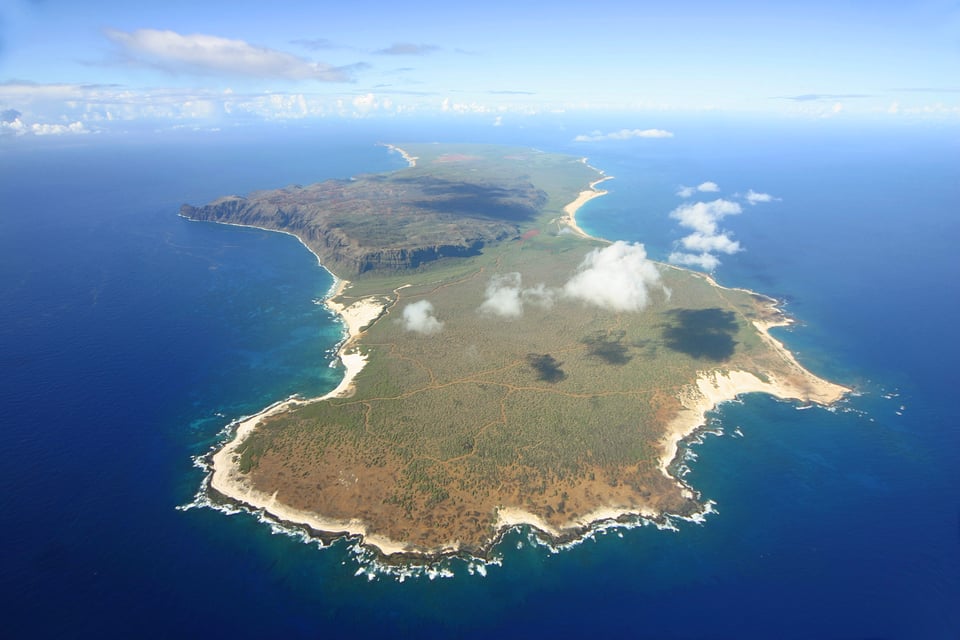
Alcohol and cigarettes are banned on the island, and so are beards, long hair on men, and speaking to the media or leaving the island for a long period of time. Everyone on Ni’ihau speaks a dialect of Hawaiian that is older than the kind of language spoken on the other Hawaiian islands. The Robinson family does have an agreement with the US Navy, who use the islands for missile testing, and tracking foreign missiles with the radar installations. The money from this is what provides millions of dollars for the local economy. The Robinsons do not plan to ever sell the island, so it’s still the way it was over a hundred years ago.
There is one random incident that happened on Ni’ihau that got made into a movie called Enemy Within. A Japanese pilot who was part of the attack on Pearl Harbor during World War II landed on the island by accident, and since the residents of Ni’ihau were cut off from the outside world, they didn’t know about the war. They gave him food and shelter, but then when they learned about Pearl Harbor they detained him. The pilot escaped and shot one of the residents of the island three times before he was killed.
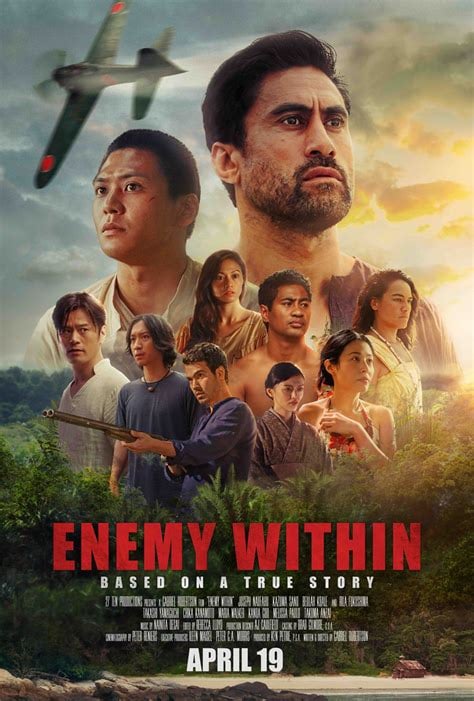
To learn more about this island, there’s an article here about it, and there’s also the Wikipedia page, but there isn’t too much out there that I could find.
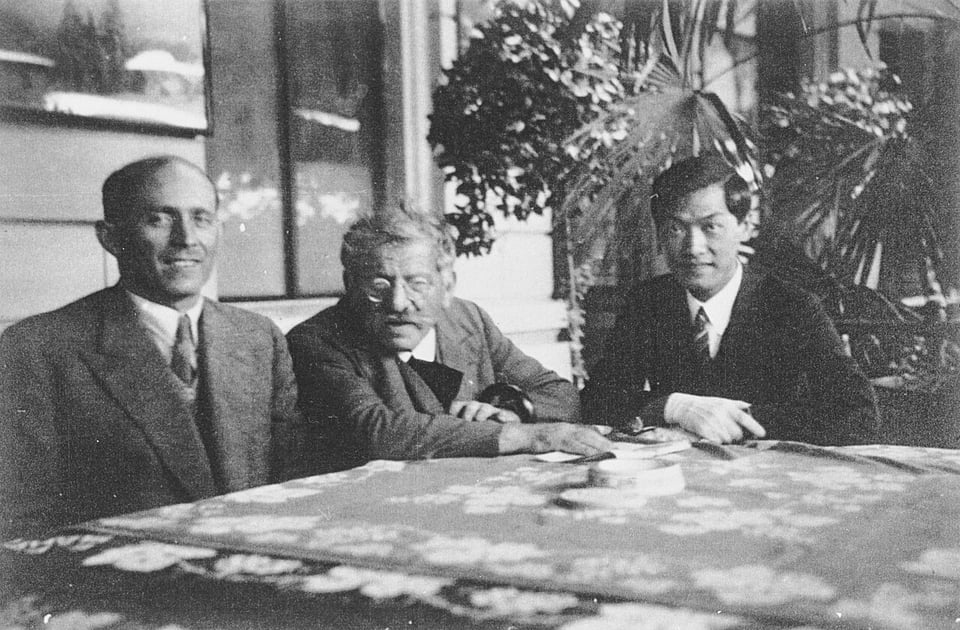
Finally, here’s some info on Li Shiu Tong, an early LGBTQ activist. He was born in British Hong Kong in 1907 to a wealthy family, and dropped out of college in Shanghai to go study sexology with Magnus Hirschfeld, who was his mentor and boyfriend. Magnus was a major researcher and advocate for sexual and gender minorities in the 20th century, himself also being both gay and Jewish. Li met Magnus at a lecture in 1931, and then offered to help him out as a translator and guide while Magnus was in China. Magnus nicknamed him “Tao Li” which means peaches and plums and also upstanding pupil. Peaches were also a symbol of homosexuality in Chinese culture.
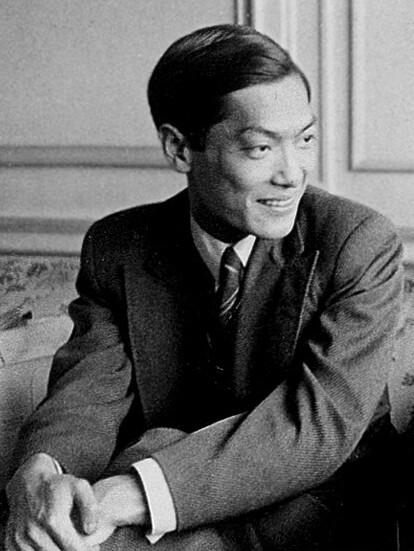
He traveled with Magnus to Beijing and Nanjing, and spoke with the Minister of Health. When Magnus left, Li went with him, hoping to study at a university in Europe. Li faced racism on his way back to Europe, but they got there in 1932, to Athens. They wanted to go to Berlin, so that Li could study and then work at the Institute for Sexual Science there – the first institution studying such things in the world at the time. Unfortunately, the Nazis were beginning to take over, so that plan was nixed.
Li hoped to stay safe in Switzerland, and spent many years with Magnus in exile from Germany. Li and Magnus published a paper on intersex people and also the idea that homosexuality is not a disease but a natural human variation to the Congress of the World League for Sexual Reform. In 1933, Magnus and Li moved from Switzerland to France, given the dangers of the Nazis destroying the institute in Berlin. They lived in Paris and Nice, though in the winter of 1933/34 Li did go back to Hong Kong to attend his father and brother’s funeral. Li started going back to his study of medicine at the University of Zurich, and then Magnus passed away in 1935 in Nice.
Li and Magnus’s other long term partner Giese were named as his primary heirs. With financial freedom, Li wasn’t sure what he wanted to do. He ended up going to the United States in 1941 and studied at Harvard until 1944, when he moved to Washington DC and worked at the Chinese embassy. Finally after World War II was over, Li moved back to Zurich, continuing his medical degree there, and then moved to Hong Kong in 1960.
In 1970 he moved to Vancouver, Canada, where most of his family members ended up joining him. He started writing a book based on the work he did with Magnus and their flight from the Nazis during World War II, but when he passed away in 1993, his youngest brother ended up throwing away a lot of his manuscripts and other historical items. One of his neighbors salvaged some photographs and papers from there, which is how we know more about Li’s life than we might otherwise.
Reading about Li Shiu Tong, I was led to this book, which I got from the library. I’ll let you guys know next time if it’s good. Or just find me on goodreads or storygraph, that works too.