
80th Issue: Rashbehari Bose and Julia Mollock
The main thing that the two people I’m writing about today have in common is interracial marriages. That wasn’t on purpose, I just went through my list of topics to write about and that was the category that made sense! Next issue is going to be about animals, not people, so they have just as tenuous of a connection in their category.
I’m going to start with Rashbehari Bose. His Wikipedia page is one of those that isn’t very long, but you can end up clicking on links and learning a lot more about all kinds of things he was involved in more broadly. I’m going to keep it short here, but include some of those links if you want to learn more.
Rashbehari Bose was born in West Bengal in 1886, where he grew up seeing firsthand the pandemics and famines that affected his people under the rule of the British Raj. He and his sister lived with their father and other relatives, where he went to a local school. He studied at Dupleix College and Morton School in what was then Calcutta.
As an adult, he worked as a clerk at the Forest Research Institute while he secretly became involved with other Bengali revolutionaries, connecting with some in Uttar Pradesh and Punjab as well. In 1912, he and several others made their own bomb and threw it at Lord Hardinge, who was Viceroy. He wasn’t killed, but was severely injured. Bose had to go into hiding, but then went right back to work and pretended nothing had happened.
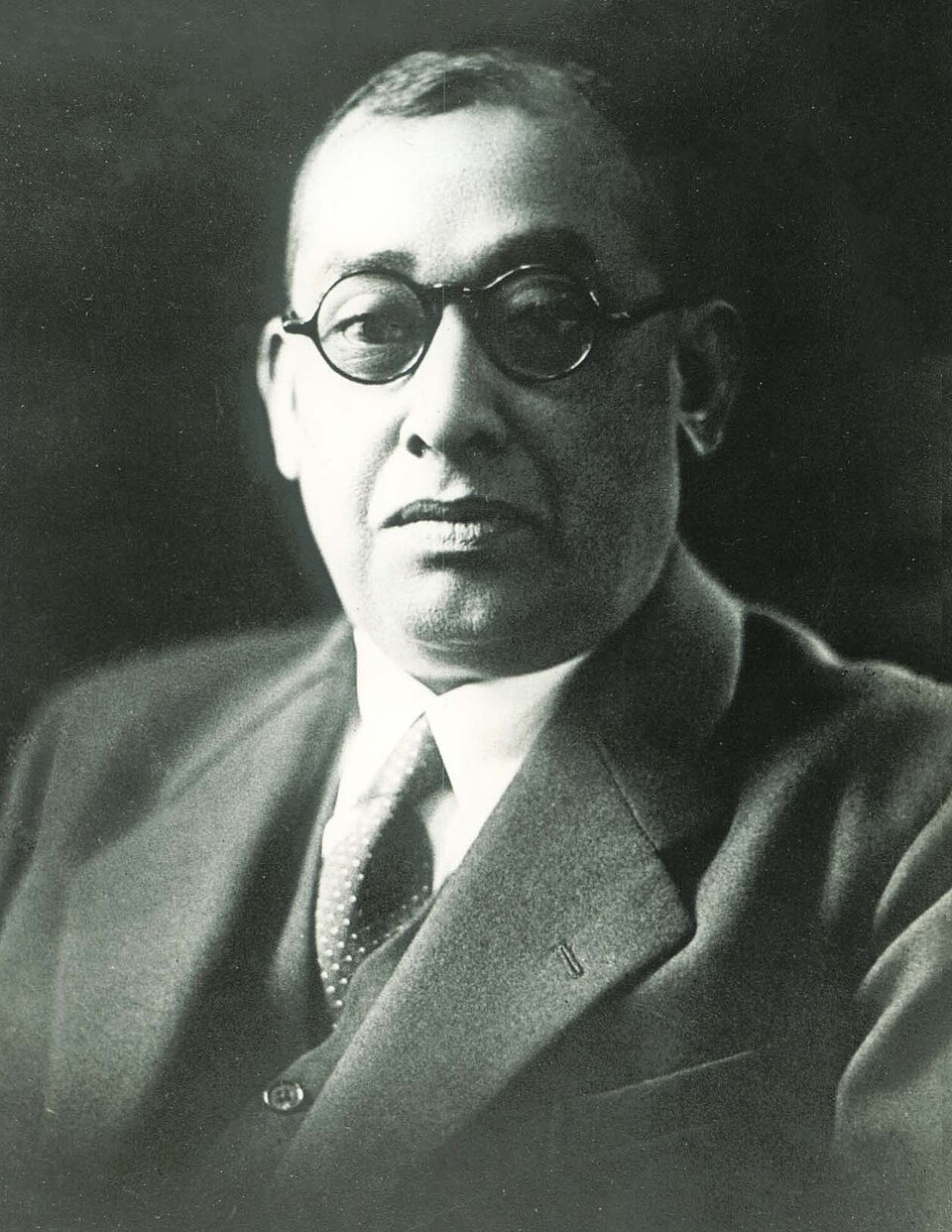
During World War I, Bose became a leading figure in an attempt to trigger a mutiny in India against the British. He and others infiltrated into the army, hoping that with most soldiers busy fighting in Europe, they could take over India. It didn’t work, and most of them were arrested, but Bose fled to Japan in 1915.
In Japan, Bose took shelter with other Pan-Asian groups. He kept switching identities and residences as the British kept trying to get the Japanese government to extradite him. He married the daughter of the owners of Nakamuraya bakery in Tokyo in 1918, and became a Japanese citizen in 1923, working as a journalist and writer. Fun fact, to this day the Nakamuraya bakery sells a Bengali/Indian style curry in Japan. Bose and his wife Toshiko lived happily together for eight years. Bose taught his wife his language and culture, and she taught him hers. She passed away in 1924 and he never remarried. They had two children together, Masahide and Tesuko – Masahide unfortunately died in World War II.
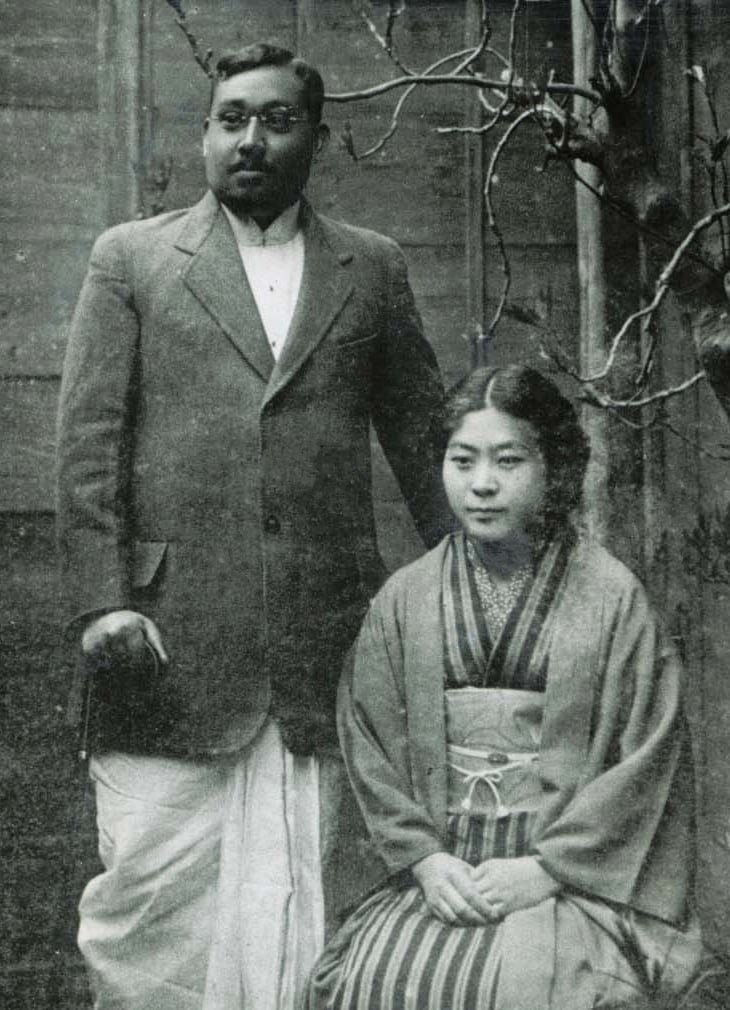
Japan was eventually persuaded by Bose and others to support the Indian revolutionaries, and during World War II, Indian prisoners of war captured by the Japanese were encouraged to join the Indian Independence League, headed by Bose, and become soldiers of the Indian National Army. In 1943, Japan honored Bose with the Order of the Rising Sun, 2nd class, and in 1967 Bose was honored with a special postage stamp in India.
Next up is Julia Mollock. I don’t have as many links for her because a lot of the news or information about her is in Korean, which I cannot read, but I got some cool photos from them. Julia Mullock was born in Philadelphia in the early 20th century to Ukrainian immigrant parents. She was the youngest child in the family, and unfortunately her father died during his work in coal mines when she was twelve years old. Her mother remarried and moved to Brooklyn. Julia served in the Navy during World War II, and then studied art, architecture, and interior design. She got a job in 1955 at the firm of the architect IM Pei. Prince Gu, of Korea, also joined this firm when he graduated from MIT with an architecture degree. They became friendly.
Julia got bored of her work and wanted to go to Spain and study art, so she taped an advertisement for her apartment in New York City on her office’s notice board. Prince Gu saw it and visited her apartment, but instead of buying it he persuaded Julia to stay where she was. He tried to speak some phrases in Ukrainian to impress her, and said that they would be getting married. Julia found she was okay with that proposal.
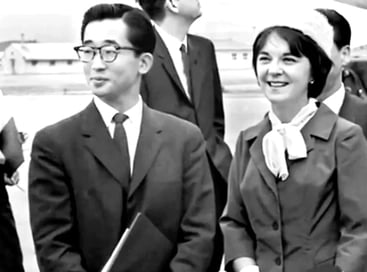
In 1957, Prince Gu’s parents, Crown Prince Yi Eun and Princess Yi Bangja were visiting the United States, so Prince Gu brought Julia to meet them. It went well, and in 1958 they became engaged and then married at the Ukrainian Catholic St. George’s Church. Most people did not know that Prince Gu was part of the Korean Imperial Household, and he lived a normal life with Julia in Brooklyn.
A little later, they moved to Hawaii, and then in 1963 they moved to Korea, where Julia’s Korean name was Yi Ju-ah and she gained Korean citizenship. She also gained the title of Grand Heir Consort Hoieun. She helped her mother in law with welfare and charitable work, and opened a clothing store to finance these charitable activities. Julia said the was the “happiest time of [her] life”. She continued her charitable work for many years, even after the turmoil in her marriage.
Julia wasn’t able to have children with Prince Gu, so in 1969 they adopted a daughter, Yi Eun-suk, also known as Eugenia, a ten year old Korean girl. She was never formally recognized as a member of the Korean Imperial Household. In 1979, her business in Korea failed, so Julia moved to Japan. Her husband’s family was upset with her that she had not produced any heir, and apparently Eugenia didn’t count.
Due to this conflict, Prince Gu divorced Julia in 1982. Unfortunately during the divorce they excluded her from the register of the Yi Family Council, so her status in the Korean Imperial Household also became disputed like her daughter’s. Julia stayed in Korea, running her shop at The Plaza Hotel and continuing to work on her charitable works until 1995, when she moved back to Hawaii. She came back to Korea in 2005 to make a movie based on her life, and learned that Prince Gu had passed away of a heart attack. She watched his funeral proceedings from afar in her wheelchair on the streets, and attended religious ceremonies at the Royal Ancestors’ Shrine with members of the family.
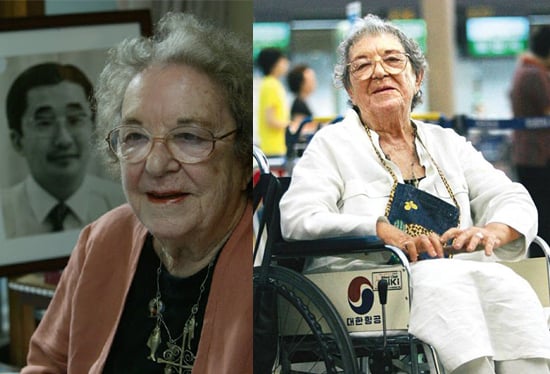
Julia died in 2017 in Hawaii, where she lived. Her daughter,Eugenia Eun-suk, conducted the funeral, spread her mother’s ashes in the Pacific Ocean, and still lives in Hawaii.
That’s all for now. This isn’t related, but if you’re interested in history, I’ve been listening to two podcasts I really recommend. The first is One Year, which was recommended by a friend, and the second is Our Ancestors Were Messy - this one the two part Langston Hughes/Zora Neale Hurston episode is fantastic! I’m really picky with podcasts but I’ve been listening to a lot lately in the car because I’m tired of the radio, so if you have any other recommendations let me know!