quantum of sollazzo

quantum of sollazzo

Archives
Sponsor
Subscribe
November 21, 2026

preview 684: quantum of sollazzo

Quantum of Sollazzo

Forwarded this email? Subscribe here  ·  View it online

No. 684  · 

Quantum of Sollazzo
 

Things that caught my attention

Last week, the UK Information Commissioner's Office (ICO) published guidance on AI-drafted subject access requests. Subject Access Requests, or SARs, are a legal right under UK GDPR that let an individual ask an organisation for a copy of the personal data they hold about them.

The ICO guidance is pretty good, and it recognises both that there is an increase in the use of AI in filing requests, and that this sometimes makes them harder to respond to as they've become longer, repetitive, broader or unclear in scope; but it is also very clear that the use of AI does not make a SAR invalid. "AI is another form of assistance", says the guidance, and I agree.

There's a lot of attention to this topic, which is somewhat linked to the "arms race" problem I pointed to in Quantum #672 – agentic flooding: there's a general impression that there's so much AI-generated filing of applications, complaints, requests, that organisations may be overwhelmed and unable to address those requests properly. It is a topic that matters to me, in my current job: as in any organisation that drives engagement from webchats and phone lines, increased AI access to these facilities must be closely looked at so that there are no issues in terms of so much overload that we can't answer contact requests from human users, and also regarding data protection, accuracy of advice, etc.

Is agentic flooding a real problem, and how much of an impact is it having? Academia is looking at it, mostly in terms of risk management and how to limit exposure. In August, Tom Loosemore of Public Digital published a briefing note suggesting that pressure is real but still early, so organisations have time to prepare.

Obviously it's for us to monitor and adapt. One important aspect is to think about whether we could use APIs to better serve agentic requests. As Orsola De Marco argues here, this means improving the reliability and discoverability of public (open) data. "The reader is changing", she writes. "Much of the open data ecosystem still treats AI readiness as a future-state question. It isn’t. Every dataset published today needs to be designed for agent-era reading." I totally agree with this. The other way of adapting, though, is to use all this as a strong hint as to what processes cause citizens to come for advice, to file complaints, or to provide documents, and fix them before they need to ask for support. This is what reimagining service thanks to AI means.

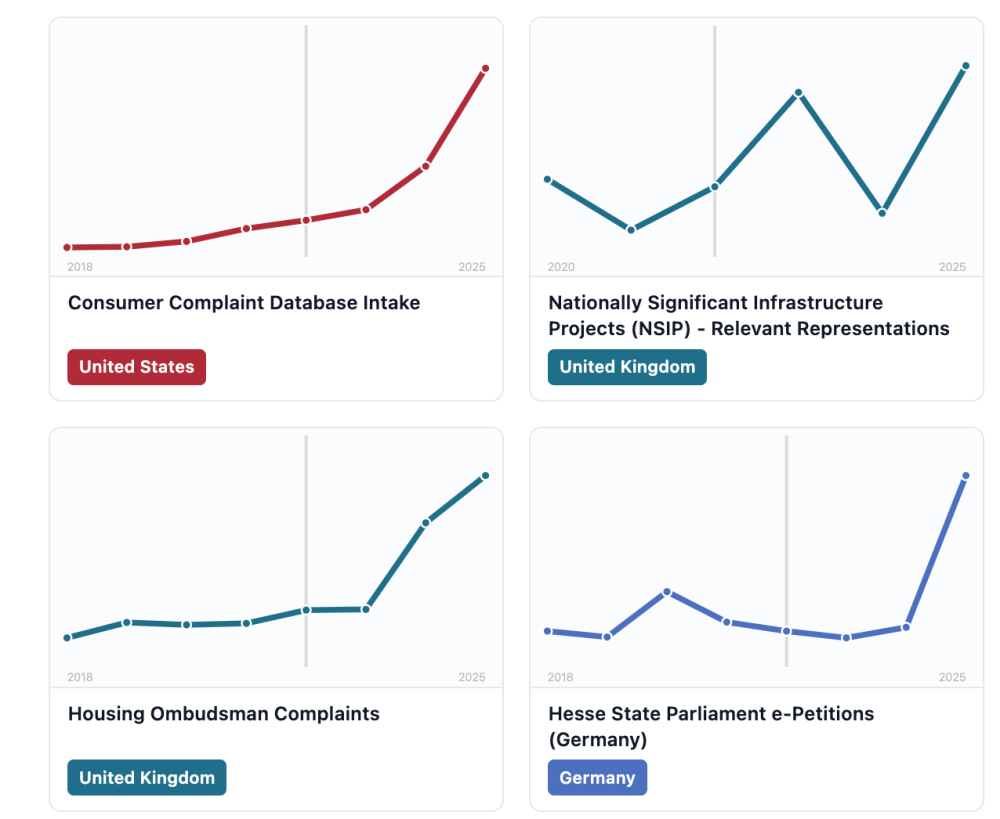
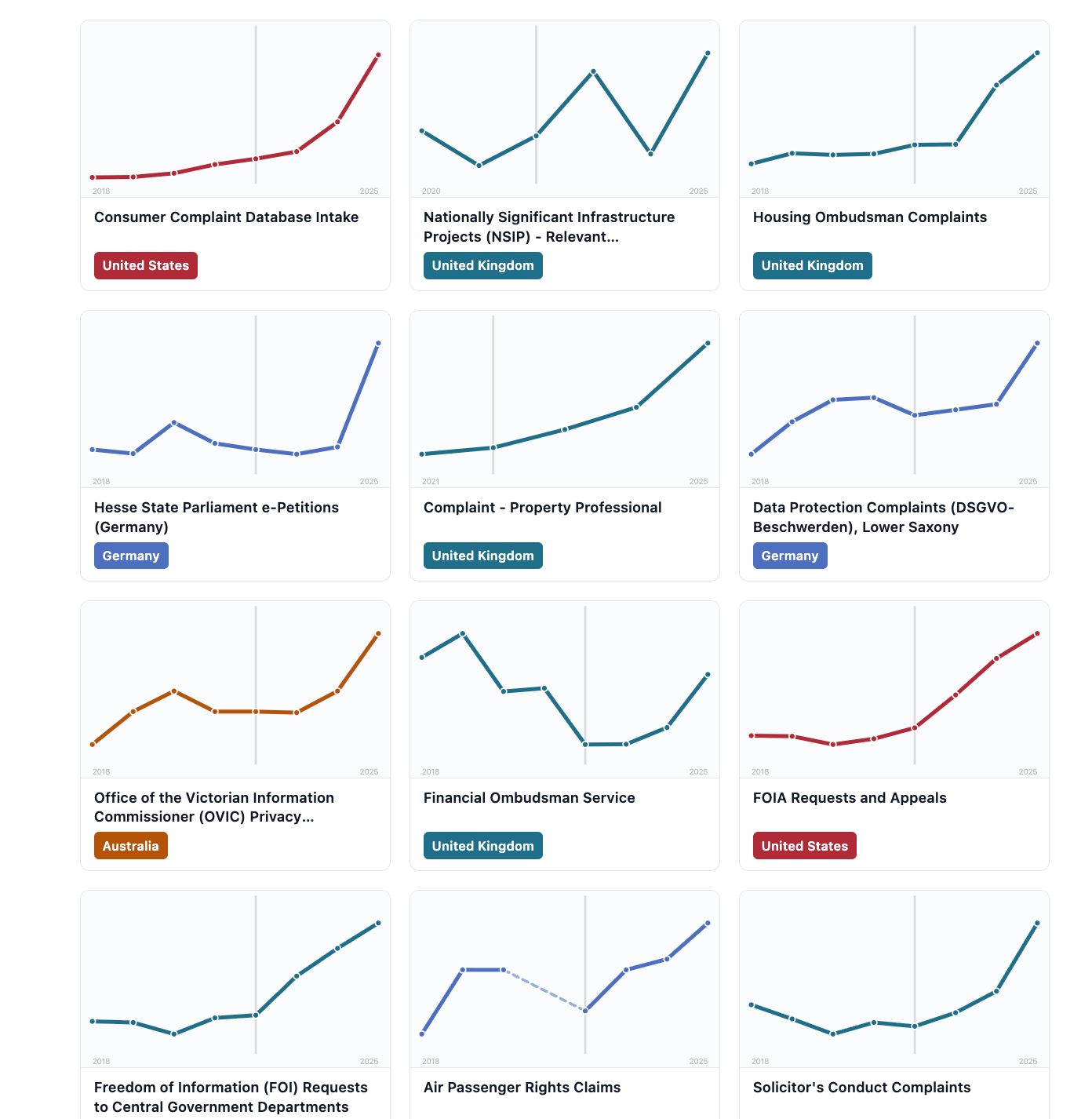
For a good look at agentic flooding stats, look at this interactive website linked to the paper above by Chris Schmitz et al., from which the illustration below is taken.
AI flooding

'till next week,
Giuseppe @puntofisso.bsky.social

Sponsored by Jane Street

Jane Street depends on all sorts of messy, real-world data to understand financial markets and the global economy: think world news, decades of weather patterns, deidentified credit card spending, or packet captures of stock exchange market data feeds.

We're hiring Data Engineers to turn datasets like these into reliable inputs for trading. Working closely with our researchers, you'll evaluate unfamiliar datasets, build robust ELT pipelines, develop deep domain expertise, and decide what's worth exploring next. 

The job requires a mix of engineering, data analysis, and product sense. If you love the detective work of investigating a weird dataset and figuring out what it actually means, we want to hear from you. No financial background is necessary.

Want to hear what the job is really like? Eric Mannes, who leads our alternative data team, talked with Ron Minsky about it on Signals & Threads.

We have openings in New York, London, and Hong Kong.

Jane Street

Topical

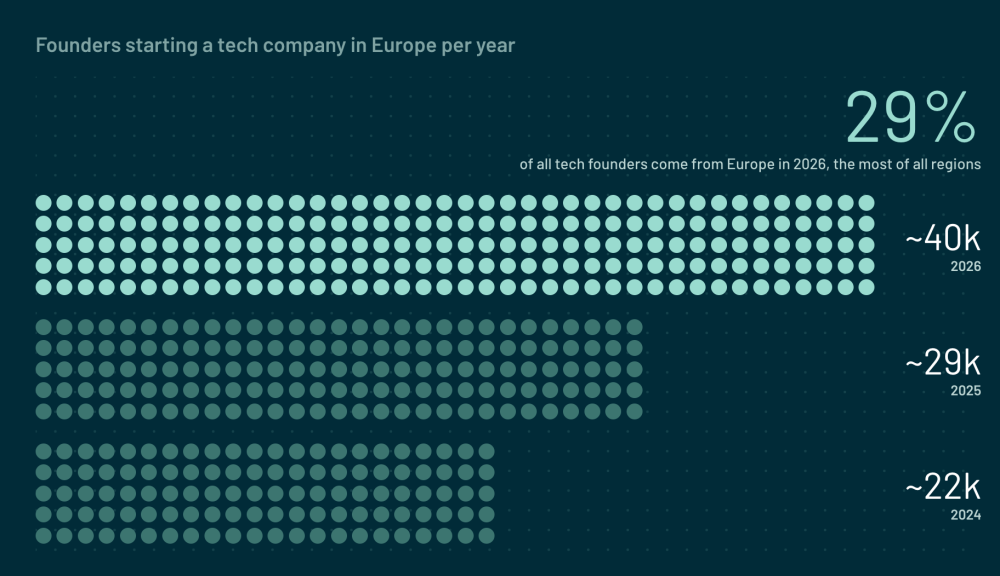
State of European Tech 2026

Europe now produces 29% of global tech founders in 2026, with investment growing pretty fast. You'll also get a good set of dataviz in this report by Atomico.

State of European Tech 2026

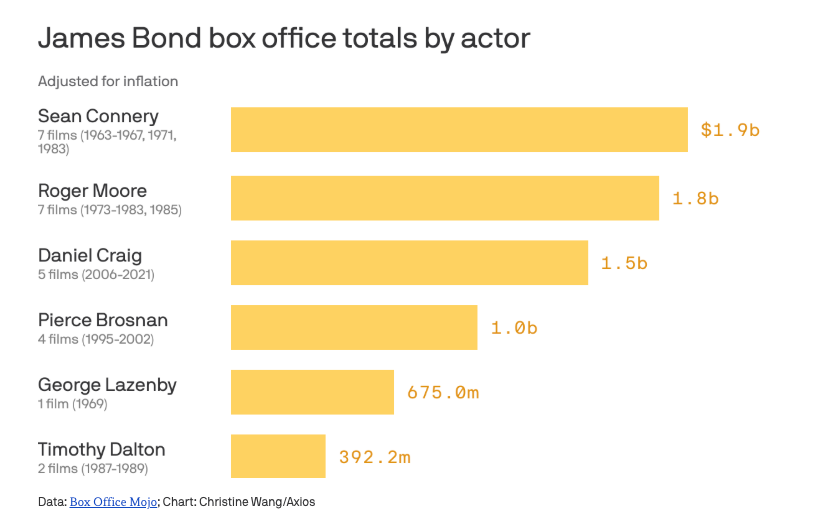
5. 🍸 Bond's billion-dollar benchmark

Scroll down to 5. Lazenby's average per film is remarkable.

5. 🍸 Bond's billion-dollar benchmark

Tools & Tutorials

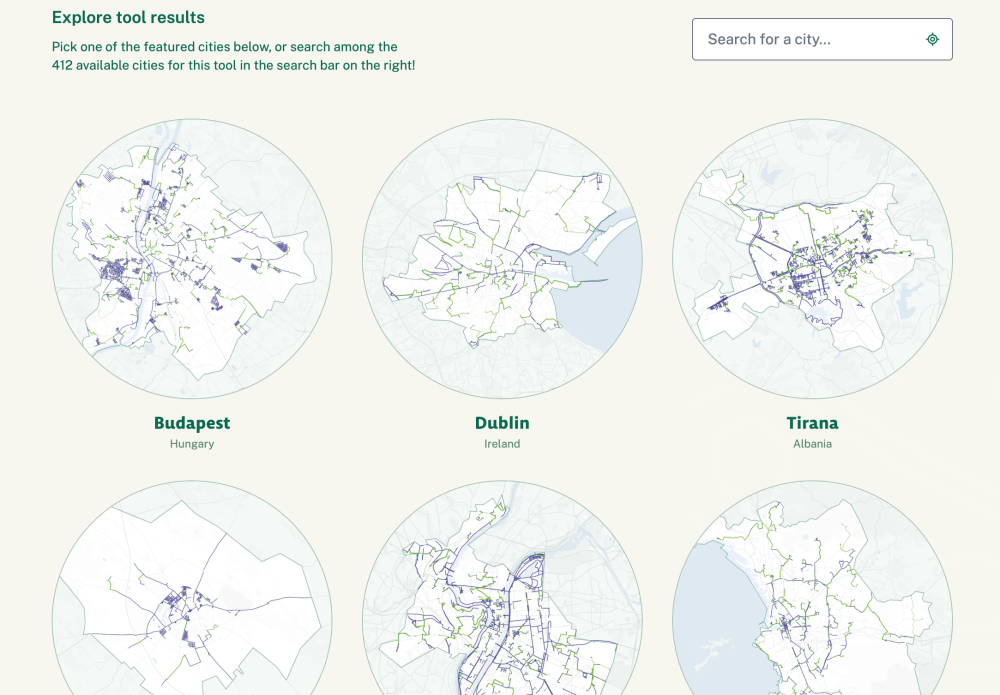
BikeNetKitThe digital toolkit for bicycle networks

"Most cities don't provide enough space to bike safely, despite the massive demand for cycling and benefits for climate, public health, and city life.
Since 2019, we have been researching new computational methods for growing and fixing bicycle networks. But these were prototypes, too rough for practical use.
BikeNetKit turns them into polished, free & open-source software tools. Urban planners and citizens can run them on their own city with their own data, exploring many scenarios to make safe cycling happen.
"

BikeNetKitThe digital toolkit for bicycle networks

Word Tree

"A word tree shows every phrase that follows a word in a text, branching wherever the phrases differ."

(via FlowingData)

Word Tree

GitHub - getredportfolio/london-transport-data-platform

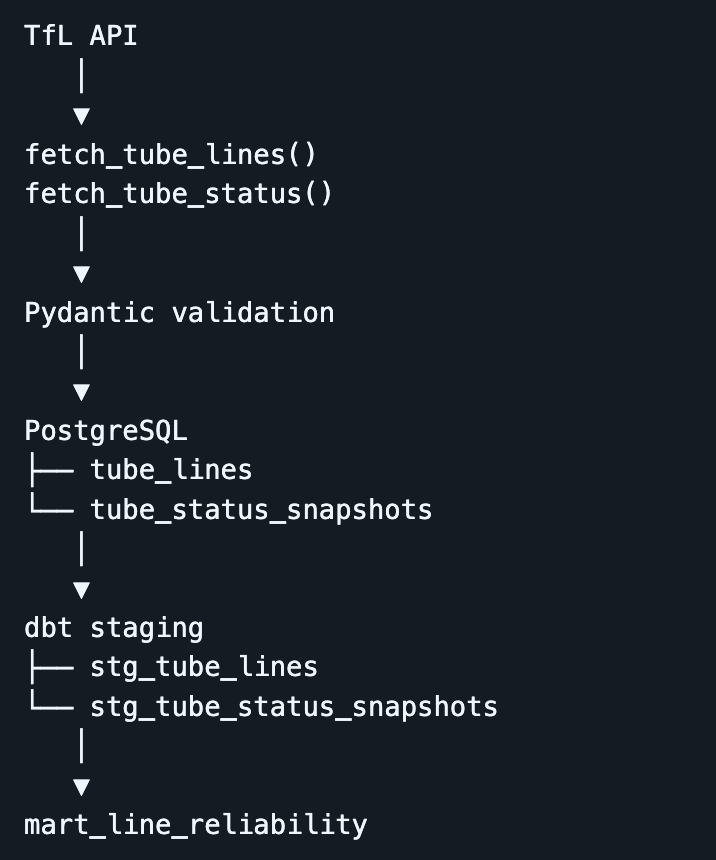
This is a repo with a data engineering pipeline ingesting live TfL Underground data, validating it with Pydantic before persisting it in PostgreSQL (tube lines are upserted while status observations are appended, building an accumulating historical dataset for reliability analysis). Apache Airflow + dbt + GitHub Actions running linting and pytest CI.

GitHub - getredportfolio/london-transport-data-platform

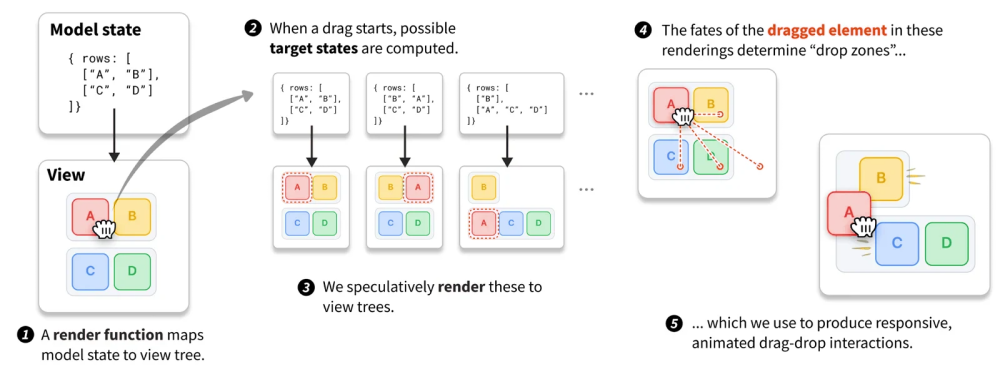
Declarative Dragging

"What if making a diagram draggable was as simple as specifying what it can become?"

Declarative Dragging

Introducing spatial CSS: A developer preview | WebKit

"Safari on visionOS 27.3 comes with an important update: a limited feature preview of the proposed spatial CSS API, with an initial focus on working with 3D objects through theelement. While it’s a big conceptual jump, spatial CSS itself is made of a lot of small tweaks to existing syntax."

Same Person, Five Records

"A companion to my OneSix post on identity resolution: the statistics behind it, how to evaluate it, and tools to do it yourself."

Same Person, Five Records

When Equal Survival Proves Nothing – Statistical Thinking

"When some patients die before a response variable can be measured, comparing treatment groups on that response among survivors can be badly misleading even in a randomized trial. A popular repair assumes that treatment changes no patient’s survival, and offers equal survival in the two treatment groups as a falsification test of that assumption. Using a simulated trial in which the truth is known exactly, this article shows that the check can pass perfectly while the survivor comparison reports a convincing treatment effect that does not exist; that no assumption about the unobservable can rescue the approach; and that what the comparison actually requires is a different and more checkable condition. A longitudinal ordinal analysis that keeps every patient asks a clinically meaningful question the data can answer and, by modeling transitions to death separately from changes in weight, recovers the true effects and shows how the assumption should have been checked. Such an analysis of everyone randomized is still causal by design. The broader lesson is that formal machinery gives false comfort when it rests on assumptions that cannot be verified, or when it quietly changes the question being asked."

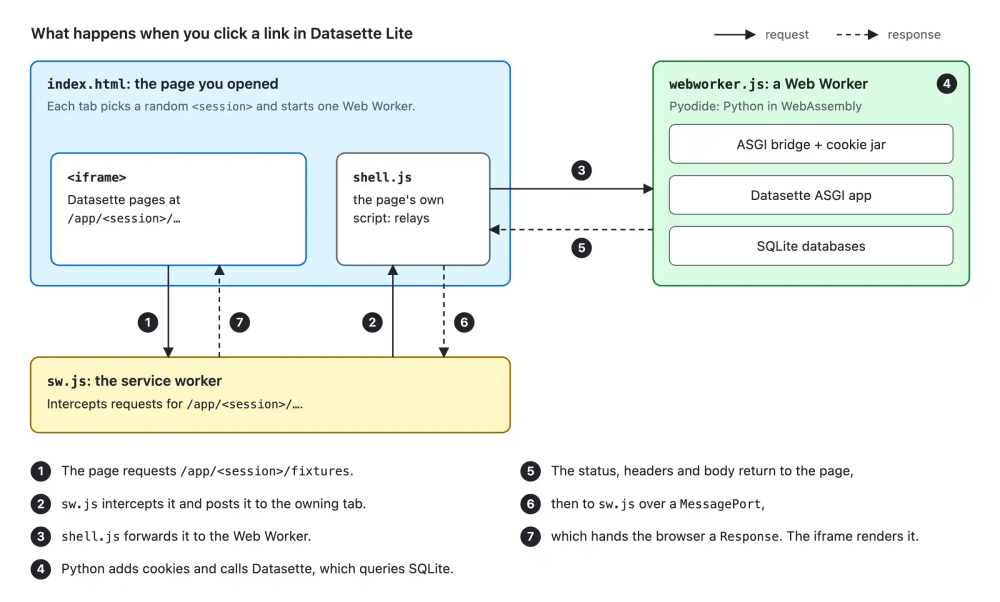
Running the full server-side Datasette Python app in the browser with service workers and Pyodide

Simon Willison: "Datasette Lite is my port of the Datasette Python application to run directly in the browser using WebAssembly and Pyodide. I’ve released a complete rewrite of Datasette Lite using service workers, and it’s now almost indistinguishable from the real server-side application."

Running the full server-side Datasette Python app in the browser with service workers and Pyodide

Trendline

Tom Calver has launched a new data newsletter for The Times. Keep an eye on it!

Data Thinking

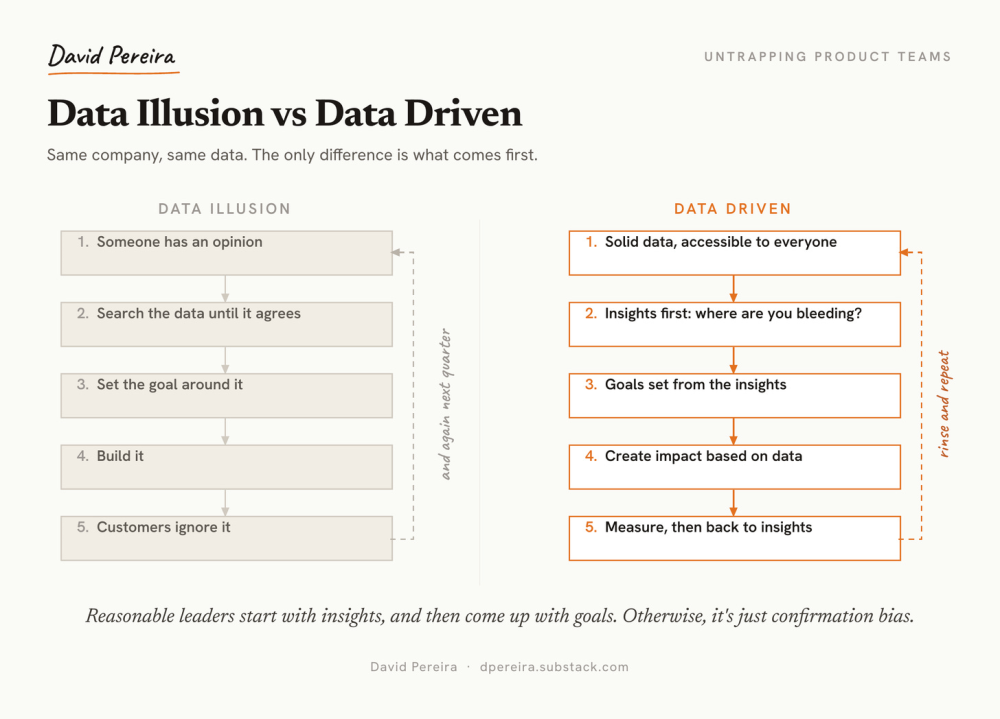
The Data Driven Illusion - by David Pereira

"Let me ask you two questions.
Do people use data to start a conversation or to confirm their ideas?
How willing are people to pivot once they find a better path supported by data?
"

The Data Driven Illusion  - by David Pereira

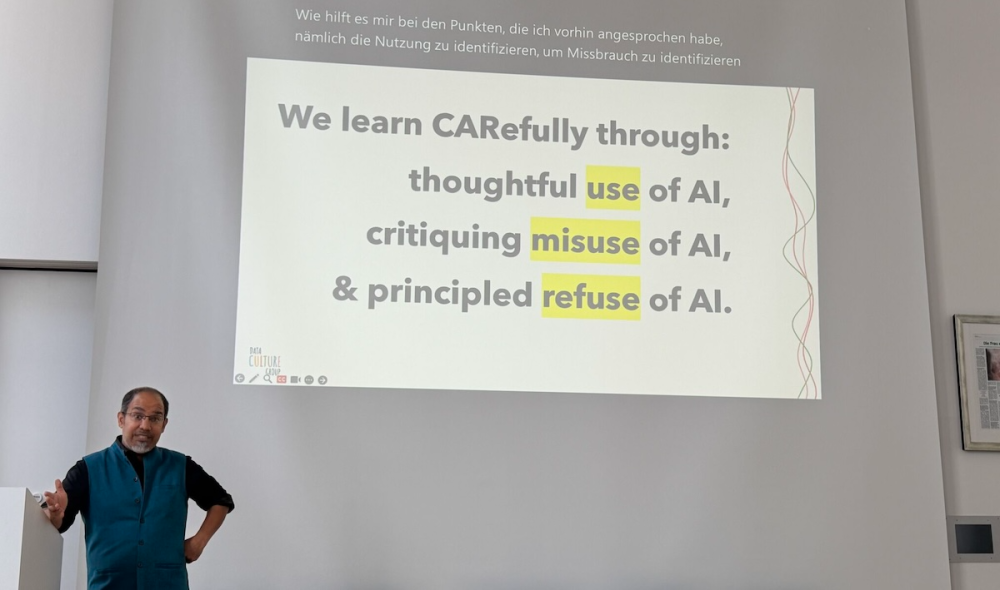
Learn CARefully (keynote on teaching AI for data journalism at SciCAR) - Data Culture Group @ Northeastern University

Rahul Bhargava's keynote at SciCAR: "Everyday we see a new gaffe, book, lawsuit, or report about AI and journalism. In the practice of data journalism, like many others, this new technology is already influencing how we approach learning in newsrooms and classroom. I want to pause to reflect my own approaches and catalog some inspirational examples here to tease out how we can ensure any engagement with AI in data journalism work is in line with the fundamental principles that underlie the practice of being a journalist."

Learn CARefully (keynote on teaching AI for data journalism at SciCAR) - Data Culture Group @ Northeastern University

Dataviz, Data Analysis, & Interactive

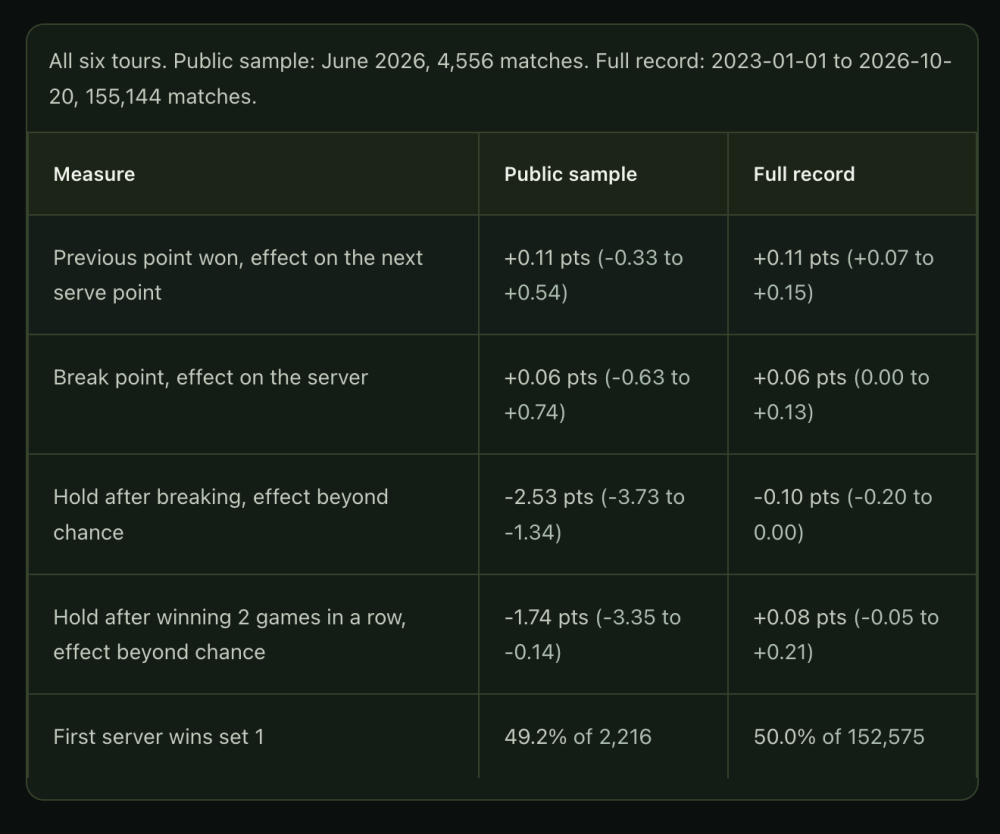
Tennis Findings Re-tested on Point Data

"Four results from tennis research, re-run on 155,144 professional matches from 2023 to 2026, with the code and the numbers free to reuse. The original studies drew mostly on Wimbledon. This record covers the ATP, WTA, Challenger and ITF tours, men and women, on every surface."
Four claims the article checks:

  • Are points independent and identically distributed?
  • Is there an advantage in serving first in a set?
  • After breaking serve, are you more likely to be broken back?
  • Do streaks predict the next point or game?
Tennis Findings Re-tested on Point Data

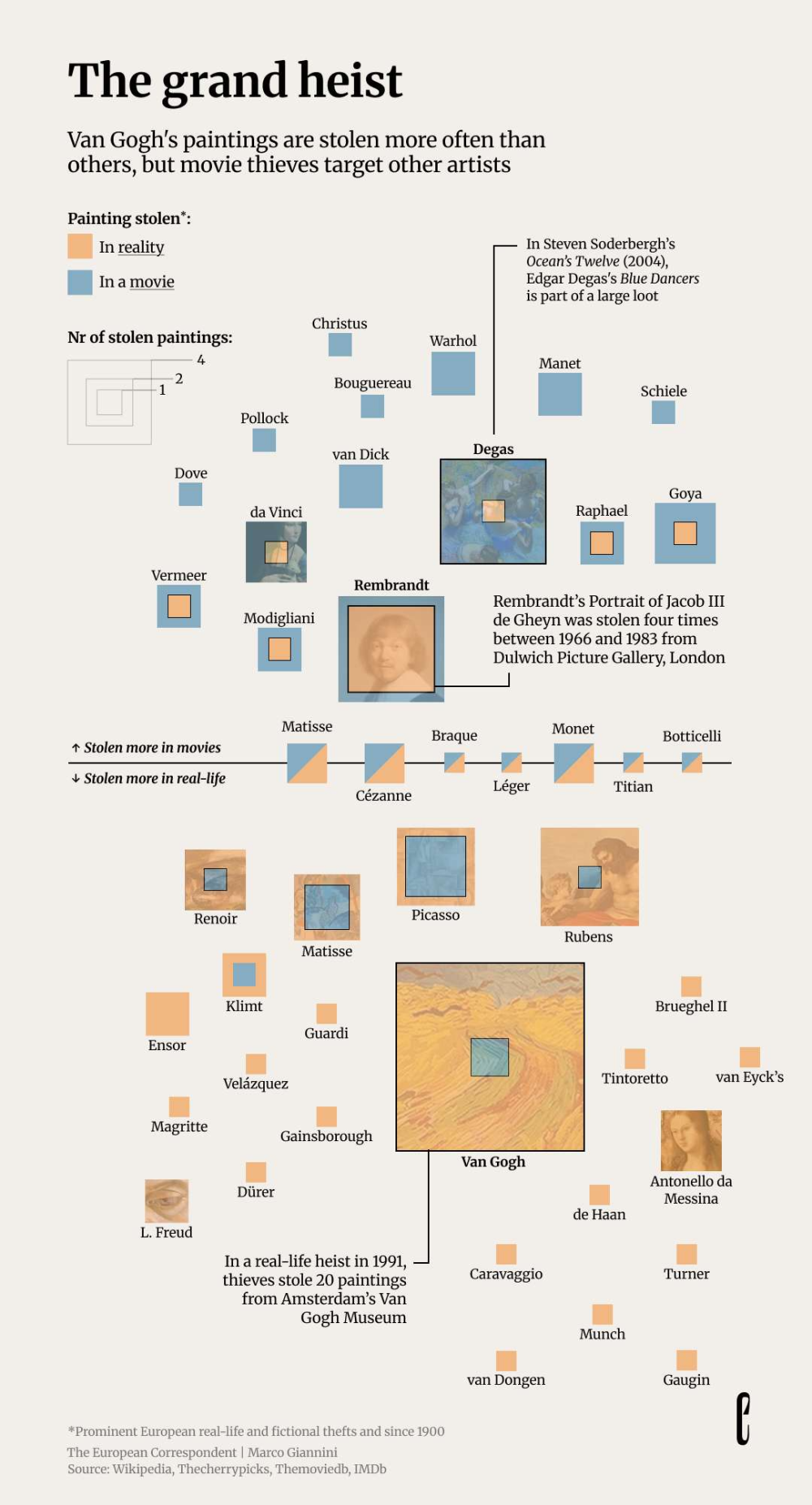
Art thefts on and off screen

"Over the past century, art thieves have stolen 27 Van Gogh masterpieces across Europe, more than any other famous artist by a healthy margin. But if you add up mainstream cinema hits, TV series, and even docu-dramas, the favourite victim is Rembrandt, followed by Degas and Rubens."

Art thefts on and off screen

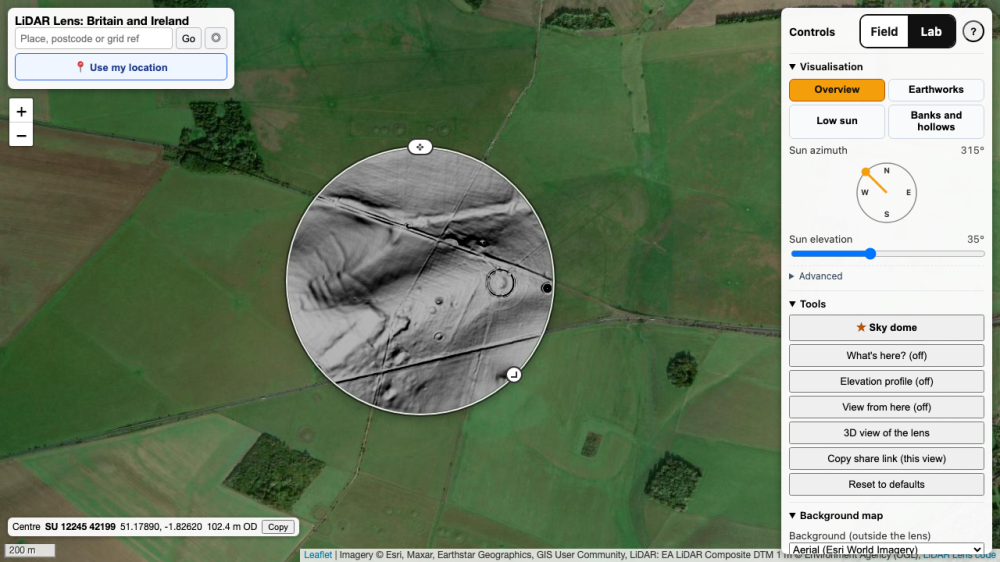
LiDAR Lens: Britain and Ireland

An interactive tool overlays 1m LiDAR ground models onto aerial photos via a draggable, resizable "lens" for Britain and Ireland.

(via Web Curios)

LiDAR Lens: Britain and Ireland

Watched · Something watched you this week

"Enter any place on Earth. See every satellite that passed over it in the last 7 days, and the actual pictures they took."

Watched · Something watched you this week

Tiny Valencia

"An isometric pixel-art map of València, in the spirit of SimCity and Isometric NYC".

Tiny Valencia

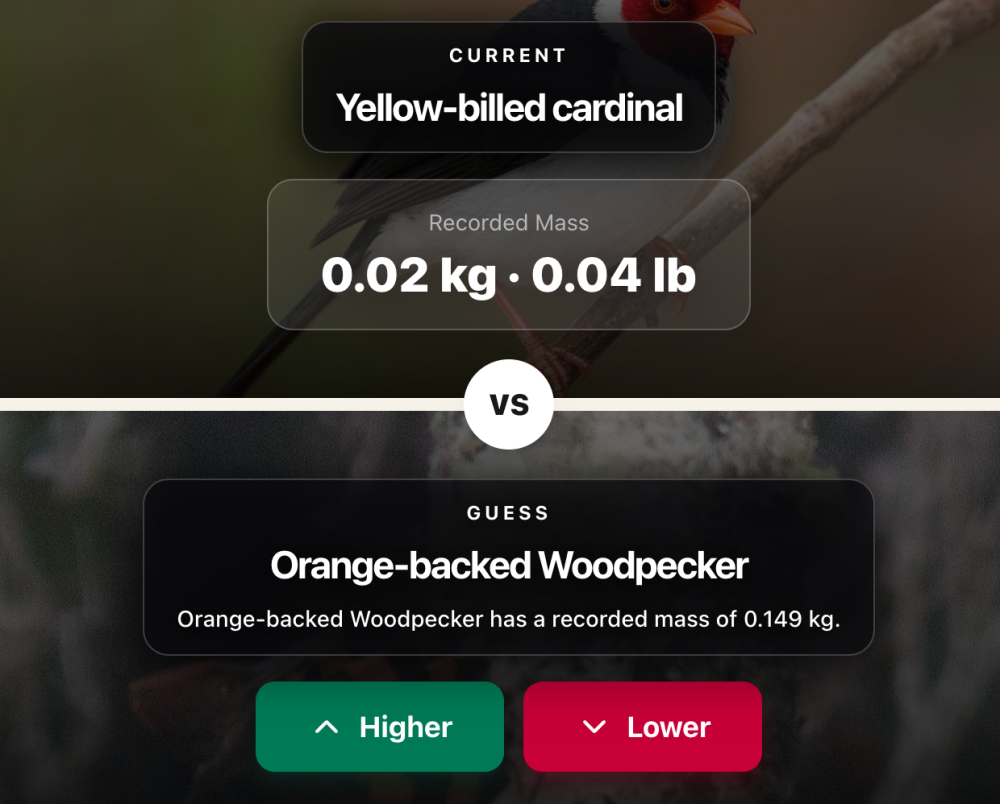
Higher or Lower Daily Challenge - November 19, 2026 | HigherLower

A daily guessing game. Pretty good fun, and numbers oriented.

Higher or Lower Daily Challenge - November 19, 2026 | HigherLower

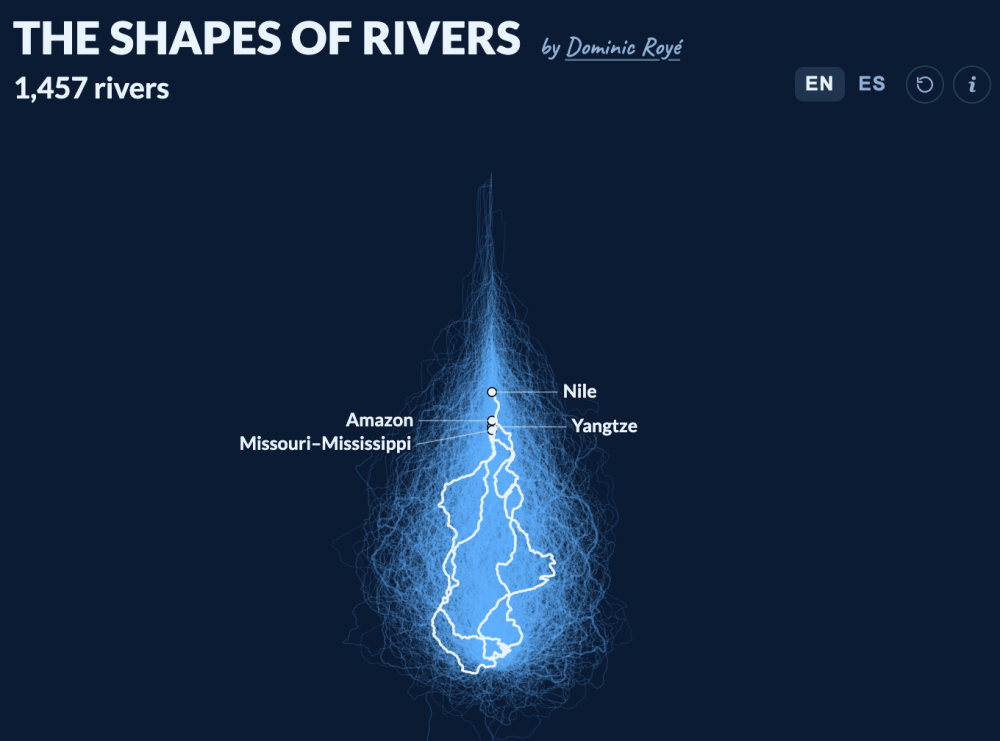
Shapes of Rivers

Beautiful location based viz by Dominic Royé.

Shapes of Rivers

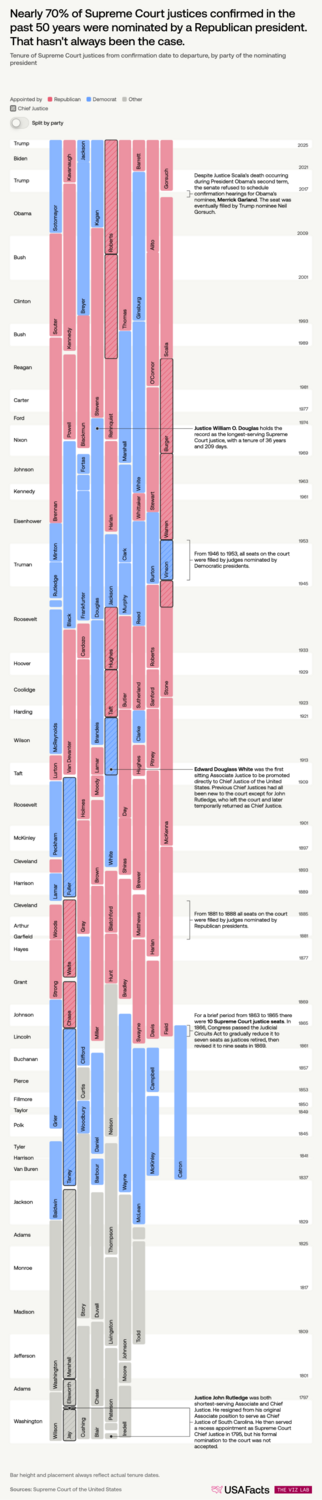
The Supreme Court has had 116 justices. Here's who put them there. | USAFacts

USAFacts: "An analysis of Supreme Court confirmations across US history shows how the power to shape the court has been distributed among presidents."

The Supreme Court has had 116 justices. Here's who put them there. | USAFacts

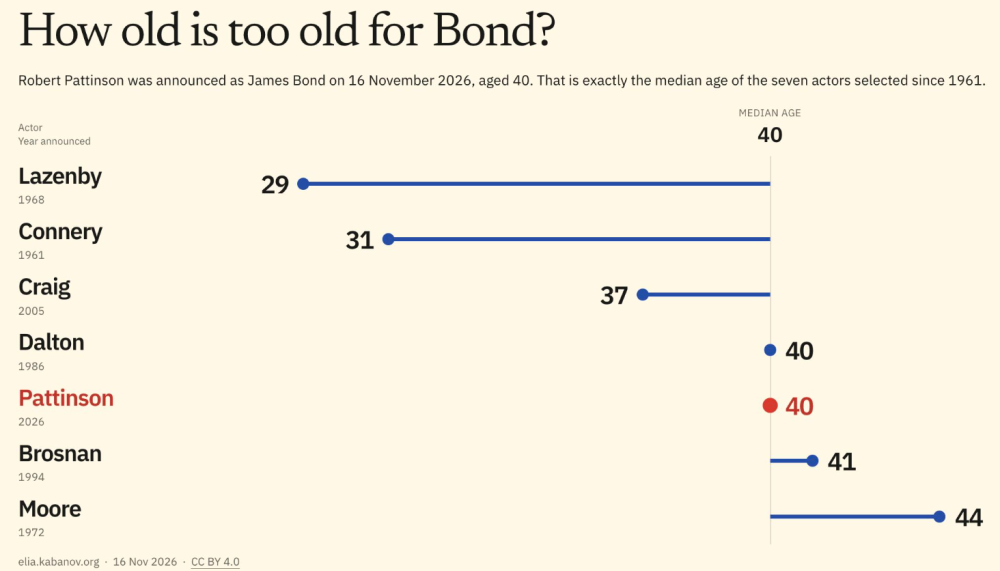
Elia Kabanov’s Post

Elia Kabanov thought Robert Pattinson, 40, was too young to play James Bond compared to past actors, and then he found he was wrong.

Elia Kabanov’s Post

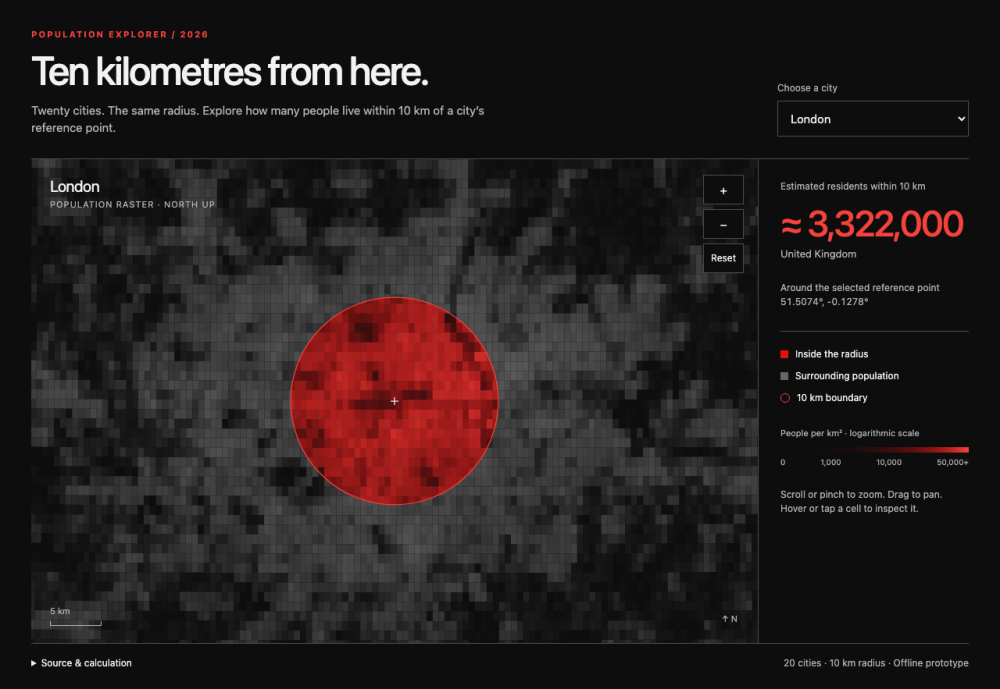
Ten kilometres · Population explorer

"Twenty cities. The same radius. Explore how many people live within 10 km of a city’s reference point."

(via Off the Charts)

Ten kilometres · Population explorer

Video Games: the new ‘local’ for a generation of disillusioned young men

"We’ve asked a young man playing an online video game what his friends do for work. His response is indicative of how his generation views life in Britain. Up against spiralling costs, lacking employment opportunities, and depressed about the decline of their local areas, many are deeply disillusioned with their lives and their future prospects. Plenty are out of work or education altogether, but even when they are working, a large number no longer congregate in the same spaces their parents used to: the pub, the club, the high street."

(via Chris Weston)

Video Games: the new ‘local’ for a generation of disillusioned young men

AI

Government services are getting overwhelmed by AI-generated requests

Good paper with some interactive visualizations.
But this is a topic I'm researching personally, and I must say that the evidence is conflicting: surely more accesses, but overwhelm is not (yet) happening.

Government services are getting overwhelmed by AI-generated requests

Did you like this issue?

Buy Me A Coffee


You're receiving this because you subscribed to Quantum of Sollazzo, a weekly newsletter covering all things data, written by Giuseppe Sollazzo (@puntofisso). Have a product or service data people should know about? Sponsor an issue.

The Quantum of Sollazzo grove now has 50 trees at Trees for Life, helping offset this newsletter's carbon footprint.

Proofread by Andy Redwood at Proof Red, who also makes motion graphics about climate change.

ProofRed Logo

© 2012–2026 Giuseppe Sollazzo · London · UK  ·  Unsubscribe

Don't miss what's next. Subscribe to quantum of sollazzo:
Older → 683: quantum of sollazzo
Powered by Buttondown, the easiest way to start and grow your newsletter.