
652: quantum of sollazzo
Hello, reader!
Quantum #651 had an open rate of 48% and a click rate of 15%. The most clicked link was this comprehensive Claude Code Cheat Sheet.
NEW WRITING – I've started a 4-part blog series about AI Adoption. It's not quite a technical blog, but rather a summary of the lessons I've learnt since taking that first AI job in the NHS in 2020, when I helped set up and run what was, at the time, the first ever public sector AI incubator in the UK (and probably the world – yes, forgive me for boasting a little about it*). The blog posts focus on the experience of using AI tools and models in real-life settings, and addresses questions of friction, literacy, and value.
You can find the first two articles here.
Do reach out if you have suggestions, comments, feedback, or points you'd like to see me explore.
(*) on the other hand, joining a public healthcare organisation in 2020 turned out to be a rather debatable life choice...
I'm writing this newsletter as I connect flights through Milan Linate airport, on the way to visit family. I had a frustrating yet entertaining experience this morning when trying to get to London City Airport. I would normally go on autopilot for most of my journeys to airport in London, leaving plenty of time to get there but knowing which route is the best. This morning was different: I had to catch an early flight and didn't want to wake up earlier than 6, so I decided to walk to my station then ask Google Maps. This is what its journey planner suggested:

I sensed something was off, but I didn't think much of it and decided to trust the system. Maybe I should have drunk more coffee. Getting off here only makes sense if you are heading to the private jet terminal. And, I'm sorry to break this to you but... I'm not that wealthy :D What's odd in this is that there were other people on the bus, all heading into City Airport, and all got off at the same stop. The actual closest stop was operational, leaving me with a question: what went wrong in Google's algorithms and how to get it fixed?
Luckily with no heavy bags the short walk was a good way to wake up ahead of the flight! This also reminds me of a few years ago, when Google decided that South Kensington station was, in fact, called "Carluccio's".
'till next week,
Giuseppe
Topical
Entire Claude Code CLI source code leaks thanks to exposed map file
This is just one of many articles reporting on the recent Anthropic leak and its consequences. To note, it was not the model itself that was leaked, but the scaffolding around it. But this, in tools like Claude Code, is clearly rather important because where competitors and open source models are worse is in the interaction with the model rather than in model performances. Also read this more technical explainer, and this good article on the same topic.
Jane Street depends on all sorts of messy, real-world data to understand financial markets and the global economy: think world news, decades of weather patterns, deidentified credit card spending, or packet captures of stock exchange market data feeds.
We're hiring Data Engineers to turn datasets like these into reliable inputs for trading. Working closely with our researchers, you'll evaluate unfamiliar datasets, build robust ELT pipelines, develop deep domain expertise, and decide what's worth exploring next.
The job requires a mix of engineering, data analysis, and product sense. If you love the detective work of investigating a weird dataset and figuring out what it actually means, we want to hear from you. No financial background is necessary.
We have openings in New York, London, and Hong Kong.

Tools & Tutorials
Atmospheric Simulation in R
Tyler Morgan-Wall explores how to achieve realistic lighting in 3D data visualizations through atmospheric simulation in R. Of interest especially for the geospatial data renderings.

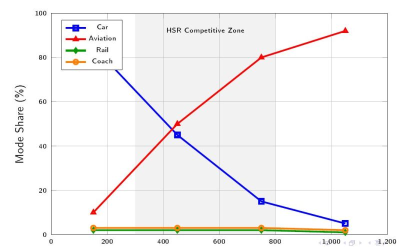
What is the best approach to model the impact of High-Speed Rail on Australian cities?
Use LLMs, argues transport planner Saeid Adli.
National Symbols – from zero to hero in an hour
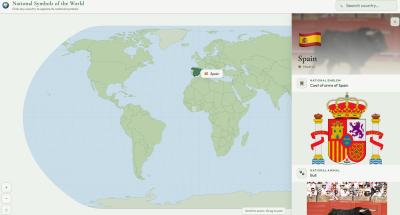
Steven Feldman is on an LLM-powered map-making streak. This time he documents creating an interactive map of national symbols using Claude. His starting prompt: "I want to make an interactive map of national symbols: Flags, Trees, Flowers, Animal, Symbols,Anything else you can suggest?". The resulting map is here.
claude-howto
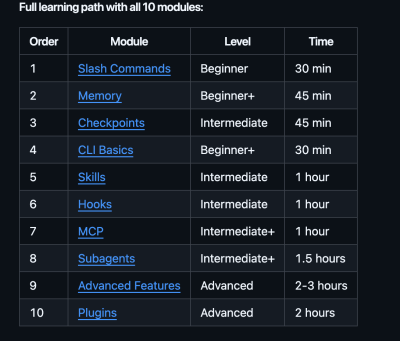
"A visual, example-driven guide to Claude Code". This non-official guide provides a "structured, visual, example-driven" learning path with copy-paste templates for immediate implementation. Its 10 modules include slash commands, memory systems, skills, subagents, MCP protocol, hooks, plugins, checkpoints, and advanced features.
transformers.js
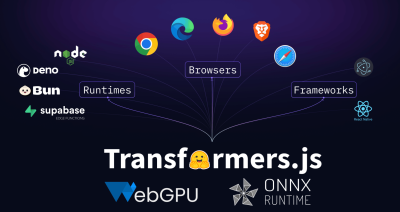
Transformers.js is HuggingFace's AI-in-the-browser library. Version 4.0.0 marks a major milestone with a rewritten WebGPU backend in C++ that enables hardware-accelerated AI models across browsers. The new architecture supports over 200 model types and adds popular models like GPT-OSS, DeepSeek-v3, and Qwen.
XML Comparator
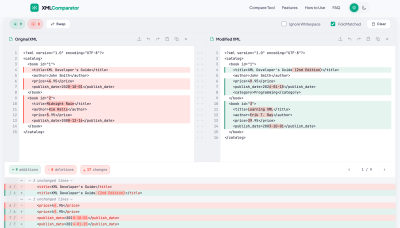
XML Comparator is a free, browser-based tool designed to compare two XML files or snippets in real-time and highlight differences.
LLMs for building tracing
"Stop tracing building footprints manually" and use LLMs, argues this post by the Sustainable Design Network. The prompt (for NanoBanana and similar): "Extract exact building footprints from the satellite image using pixel-accurate tracing. No interpretation, no simplification. Include only visible roofs. Output solid black shapes on transparent background, perfectly aligned for overlay.".

lat.md
lat.md is a tool that creates a knowledge graph for codebases using interconnected markdown files. The problem it aims to address: "AGENTS.md doesn't scale. A single flat file can describe a small project, but as a codebase grows, maintaining one monolithic document becomes impractical. Key design decisions get buried, business logic goes undocumented, and agents hallucinate context they should be able to look up."
datahike
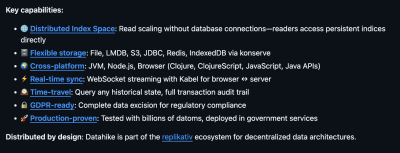
Datahike is a durable Datalog database with Datomic-compatible APIs and git-like semantics. "Built on persistent data structures and structural sharing, database snapshots are immutable values that can be held, shared, and queried anywhere—without locks or copying."
The Power of Data Sketches: A Comprehensive Guide
This is a tutorial for data sketches.
"Let's say you're running a successful internet company selling mobile apps and music. Your internal reporting system collects log data from two main sources: web servers (tracking page views, time spent, items browsed, etc) and a financial transaction system (recording purchases, processing credit cards, and handling authentication).
Two simple data sources. Billions of events per day because, hey, you're successful!
Then analytics comes knocking with questions that sound trivial, questions like:
How many unique users viewed the Apps site over the last week?
How many users visited both Apps AND Music?
How many users visited Apps but NOT Music?
What's the median and 95th percentile time spent on site?
Can we get a frequency histogram of time spent values?
What are the most popular items purchased?
Which user ids generate the most revenue?
Sounds routine, right? Sure, but not at scale."
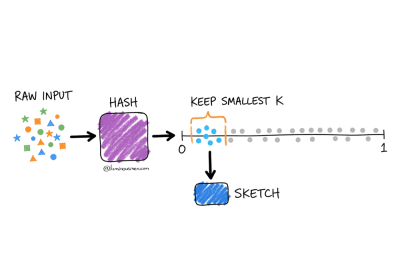
Data sketches are probabilistic data structures that address these queries by trading exactness for speed when processing massive datasets.
Change Data Capture: Stop Copying 50M Rows to Move 5K Changes
Some traditional ETL processes copy entire database tables when only a small fraction has changed. The author explains Change Data Capture (CDC) as a solution that tracks only modified data
What is inference engineering? Deepdive
"Many engineers use inference daily, but inference engineering is a bit obscure – and an area rich with interesting challenges. Philip Kiely, author of the new book, “Inference Engineering,” explains."
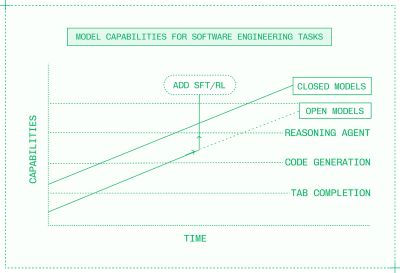
TL;DR: Inference engineering is emerging as a critical discipline in the current LLM-driven world, as open AI models become more capable and widespread and this requires engineers to fine-tune their performance, through techniques like batching, caching, and quantisation.
Mr. Chatterbox, or, The Modern Prometheus
This article chronicles the creation of Mr. Chatterbox, a chatbot trained from scratch on Victorian-era literature. It used Claude Code, trained it on 28,035 books from the British Library, it cost less than $500, and produced a 340-million parameter model.
Data Thinking
The First Step in Equitable Predictions
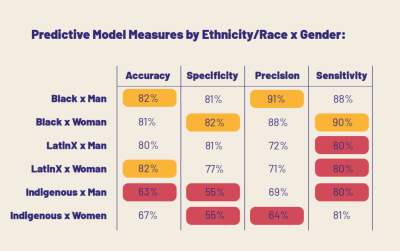
We All Count discusses how to improve equity in predictive models by examining performance gaps across different demographic groups. "What amount of difference between the groups can we tolerate before we feel that our model prioritizes one too heavily?" is the critical equity decision. While universal benchmarks don't exist, examining how predictions work for each group is essential. This is particularly important because predictive models don't reveal their mechanisms, yet organizations increasingly use them to shape decisions affecting diverse stakeholders.
Young men, bad data and moral panic
YouGov had to retract a poll about church attendance after discovering fake accounts being created to accumulate survey incentives. Chris Curtis reports on the issue and how this is distorting polling data about young men.
Dashboard rot as org attention grave markers
"Dashboard rot" is the discovery that many dashboards in large organisations are broken or unused. Nobody notices. This feels familiar, sadly.
Dataviz, Data Analysis, & Interactive
Heat-resilient city design with street-level imagery
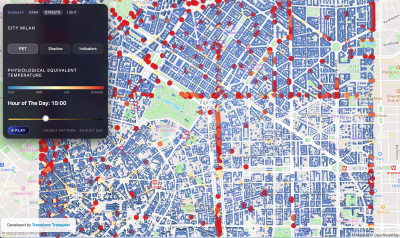
Vasileios Milias: "*How can street-level imagery support the design of heat-resilient cities?". Interesting article and interactive tool linked in this status update.
Is Hip-Hop in Decline? A Statistical Analysis
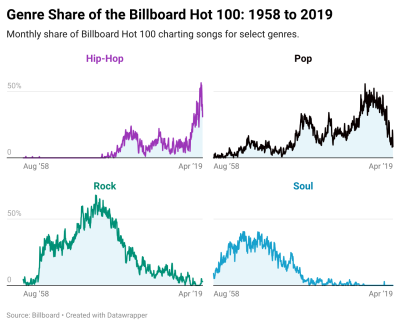
Daniel Parris (StatSignificant) looks at hip-hop popularity.
Ascending into the Realm of Japanese Charts
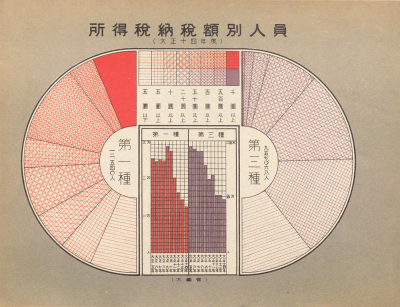
RJ Andrews describes his collection of Japanese chart books, using AI to translate them.
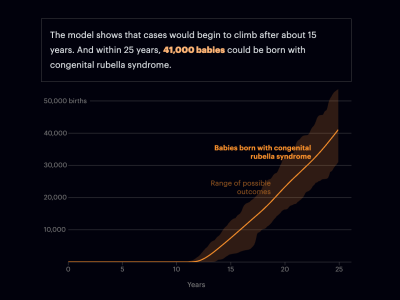
The Horrors That Could Lie Ahead if Vaccines Vanish
ProPublica examines modeling by Stanford researchers Mathew Kiang and Nathan Lo that analyses the potential consequences of reduced availability of childhood vaccines.
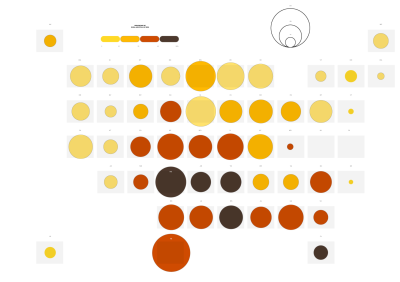
Why rural hospitals close
This article by Reuters Graphics analysis the increasing hospital closures in rural USA.
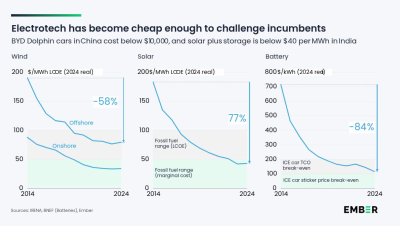
The Electrotech Revolution
Annual report from Ember's Futures team. "The analysis looks at the energy system from a variety of different angles. It divides the energy system into two main parts – electricity generation and energy use. The world is split into four key groups – mature economies, China, emerging markets and petroregions. The analysis considers marginal change as well as system size, considering three key drivers of change – supply from renewables, demand from electrification and new technologies to connect the two."
AI
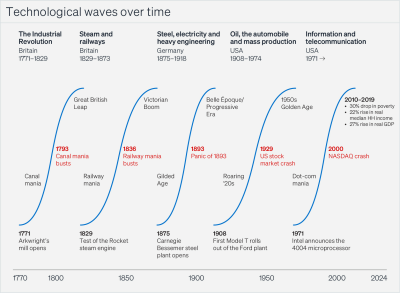
AI Will Not Make You Rich
A positive spin on AI: Jerry Neumann argues that AI is likely to enrich consumers rather than investors and entrepreneurs, using parallels from other tech-driven boom cycles in history. What can I say... let's see? :)
Can LLMs Be Computers?
Can Large Language Models (LLMs) function as computers? This piece investigates.
So where are all the AI apps?
"Fans of vibecoding and agentic tools say they are 2x as productive, 10x as productive – maybe 100x as productive! Someone built an entire web browser from scratch. Amazing! So, skeptics reasonably ask, where are all the apps?"
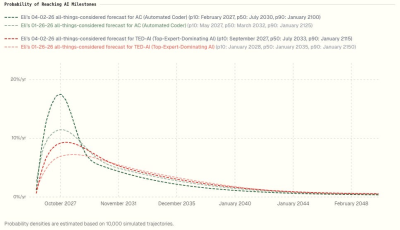
Q1 2026 Timelines Update
Ah, the good old AI 2027. They're now releasing quarterly updates...
"Daniel’s Automated Coder (AC) median has moved from late 2029 to mid 2028, and Eli’s forecast has moved a similar amount. The AC milestone is the point at which an AGI company would rather lay off all of their human software engineers than stop using AIs for software engineering."
AMA – Ask Me Anything! Submit a question via this anonymous Google form. I'll select a few every 4-5 weeks and answer them on here :-) Don't be shy!


The Quantum of Sollazzo grove now has 40 trees. It helps managing this newsletter's carbon footprint. Check it out at Trees for Life.
'till next week,
Giuseppe @puntofisso.bsky.social