
653: quantum of sollazzo
Hello, reader!
Quantum #652 had an open rate of 49% and a click rate of 14%. The most clicked link was this useful XML files comparator.
CCIR 653 is the official name of the standard powering Teletext.
You will notice a little change of formatting from this issue: every article's main link is now in the title, while secondary links remain in the body of the link write-up. This is in response to some good feedback I've received recently, and part of a set of changes I'll do over the following few weeks, in preparation (probably a few months down the line) of reaching the big 5 (5,000 subscribers are now within reach).
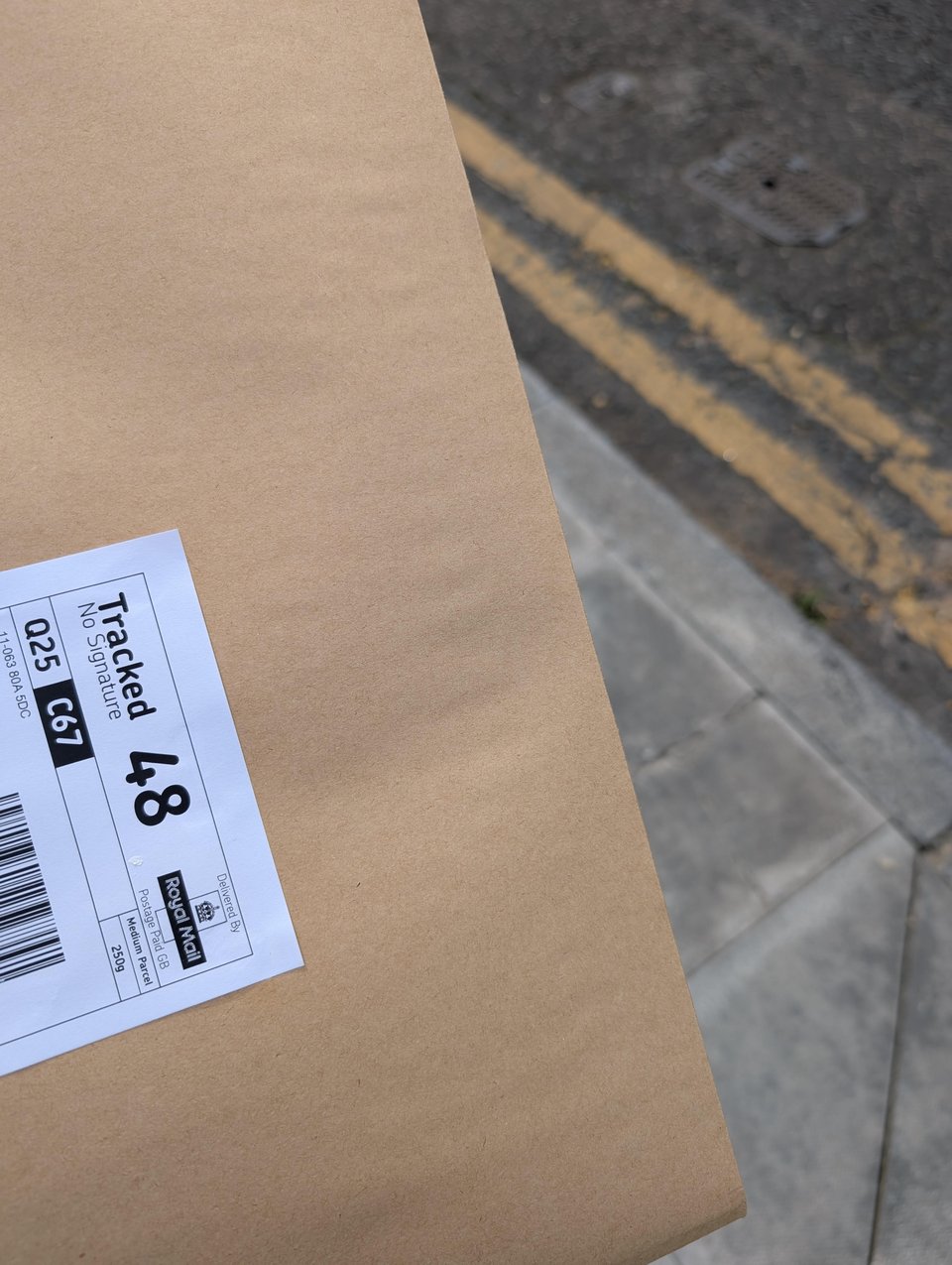
A photo of me shipping another hand-made map print :) My (mostly map-based) prints are on sale at shop.puntofisso.net. Please take a look and share among your map-loving friends. Most of the maps on sale are screen prints and cyanotypes, with more coming.
'till next week,
Giuseppe
Topical
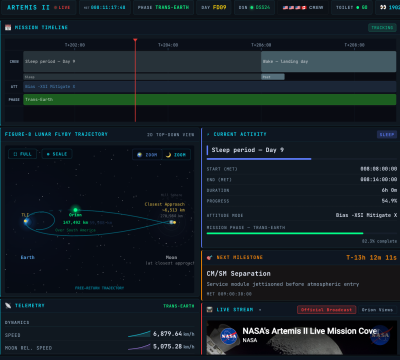
Artemis II Tracker — Live Mission Control
Beautiful dataviz: a live mission control tracking page for NASA's Artemis II mission, featuring real-time data displaying various mission telemetry series.
(via Donata Columbro)
Jane Street depends on all sorts of messy, real-world data to understand financial markets and the global economy: think world news, decades of weather patterns, deidentified credit card spending, or packet captures of stock exchange market data feeds.
We're hiring Data Engineers to turn datasets like these into reliable inputs for trading. Working closely with our researchers, you'll evaluate unfamiliar datasets, build robust ELT pipelines, develop deep domain expertise, and decide what's worth exploring next.
The job requires a mix of engineering, data analysis, and product sense. If you love the detective work of investigating a weird dataset and figuring out what it actually means, we want to hear from you. No financial background is necessary.
We have openings in New York, London, and Hong Kong.

Tools & Tutorials
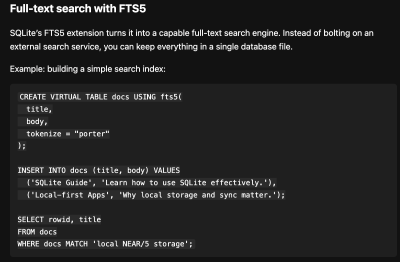
SQLite Features You Didn't Know It Had: JSON, text search, CTE, STRICT, generated columns, WAL
SQLite never ceases to surprise me. This article showcases some of its most advanced capabilities, including native JSON support, full-text search with ranking, and analytical features.
Find Cheap Fuel Near Me – APIs and cron jobs
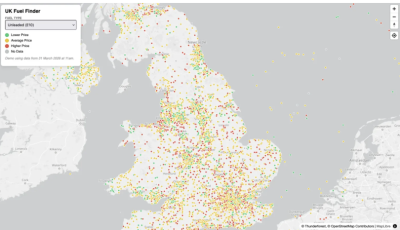
Yet another Steven Feldman LLM-powered map-making adventure. This article describes developing a fuel price search application that connects to a UK government fuel finder API. The resulting map is here.
Despite Claude's assistance, Steven describes the process as "pretty damn hard".
SQL, Silence, and the Shape of Thought
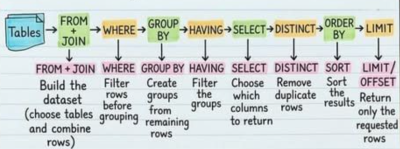
A reflective piece on SQL execution order as a metaphor for structured thinking and decision-making: "The quiet lesson of SQL is that clarity comes from disciplined sequence. We cannot select wisdom until we first build and refine our inputs. We cannot sort priorities until we have reduced noise. The same is true for teams, products, and decisions."
LLM Wiki
Karpathy strikes again with this ready-to-use pattern for building personal knowledge wikis using LLMs. The key idea: "Instead of just retrieving from raw documents at query time, the LLM incrementally builds and maintains a persistent wiki". It's ready to drop into your favourite LLM.
National Soil Data and USRNs Analysis
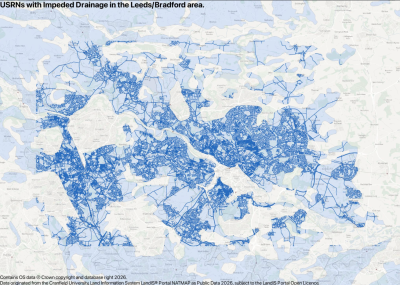
Christopher Carlon discusses his exploration of recently released open national soil data, recently released for England and Wales. Source code available here. Here he matches the data to Unique Street Reference Numbers (USRNs). The map below shows USRNs with impeded drainage in the Leeds/Bradford area.
How to Become a Data AND AI Engineer
A conversation with Alejandro Aboy, a Senior Data and AI Engineer, exploring how data engineering and AI engineering are merging. "You cannot really do good AI engineering without the data engineering part".
crashcat
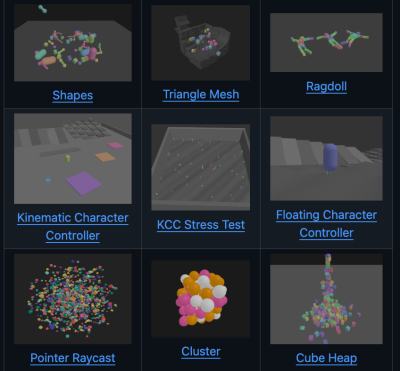
crashcat is a JavaScript physics engine "built for games, simulations, and creative websites".
svg-inject
SVGInject is a lightweight JavaScript library (~3.5 KB gzipped). It replaces "\<img> elements with inline \<svg> so you can target every path, circle, and group with CSS - colors, animations, hover effects, dark mode, all of it. One line of code, works everywhere.*"

Visualization with R's ggplot2 Package and AI Tools
An online course part of Alberto Cairo's Open Visualization Academy.
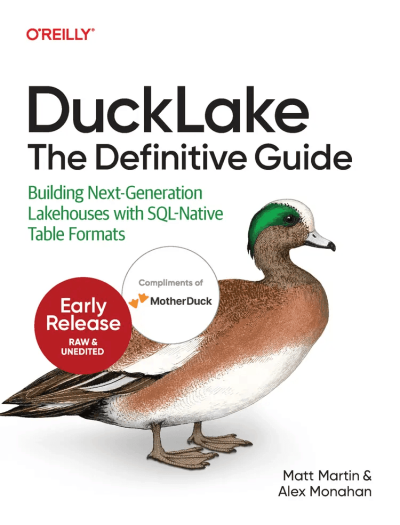
DuckLake The Definitive Guide
A free O'Reilly guide. It introduces DuckLake, an open table format that revolutionizes lakehouse architecture by replacing traditional file-based metadata with SQL databases (Postgres, SQLite, or DuckDB).
Chess in Pure SQL
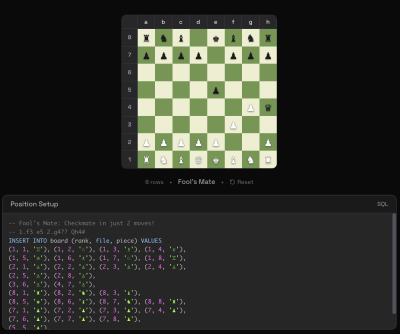
How to build a fully functional chess board using only SQL. I mean, why not?
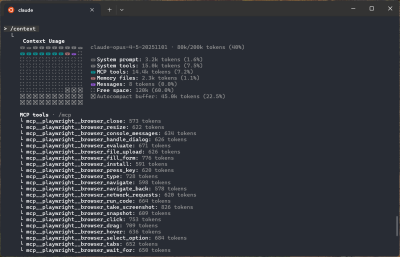
Why I'm building my own CLIs for agents
Martin Alderson explains why he's moved away from MCP (Model Context Protocol) toward building custom command-line interfaces for AI agents. This is about token usage and composability, two dimensions under which CLIs perform much better than MCP.
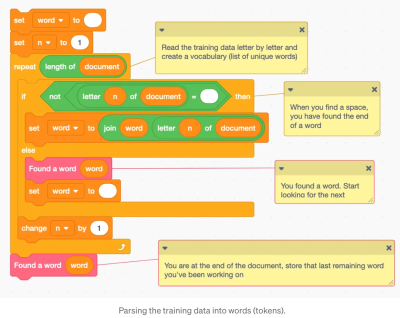
Clawed: A Language Model Written in Scratch
Exactly what it says on the tin! "I will show how a unigram language model and bigram language model works in Scratch."
Dataviz, Data Analysis, & Interactive
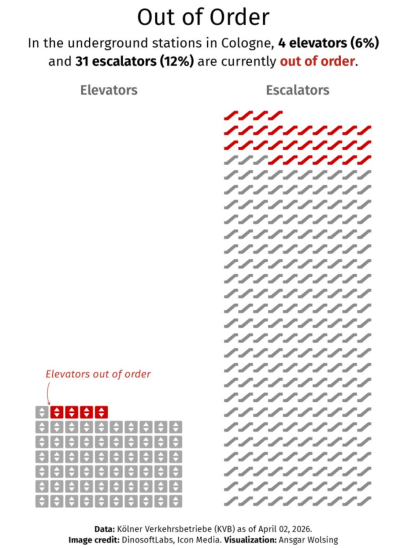
Mapping Out-of-Service Elevators and Escalators in Cologne's Public Transport
Ansgar Wolsing realised that "Cologne's public transport services (KVB) offer an open-data API that returns a CSV or JSON file listing the lifts and escalators in underground stations currently out of service" and he set out to map them as part of the #30DayChartChallenge (Day 2 - Pictogram).
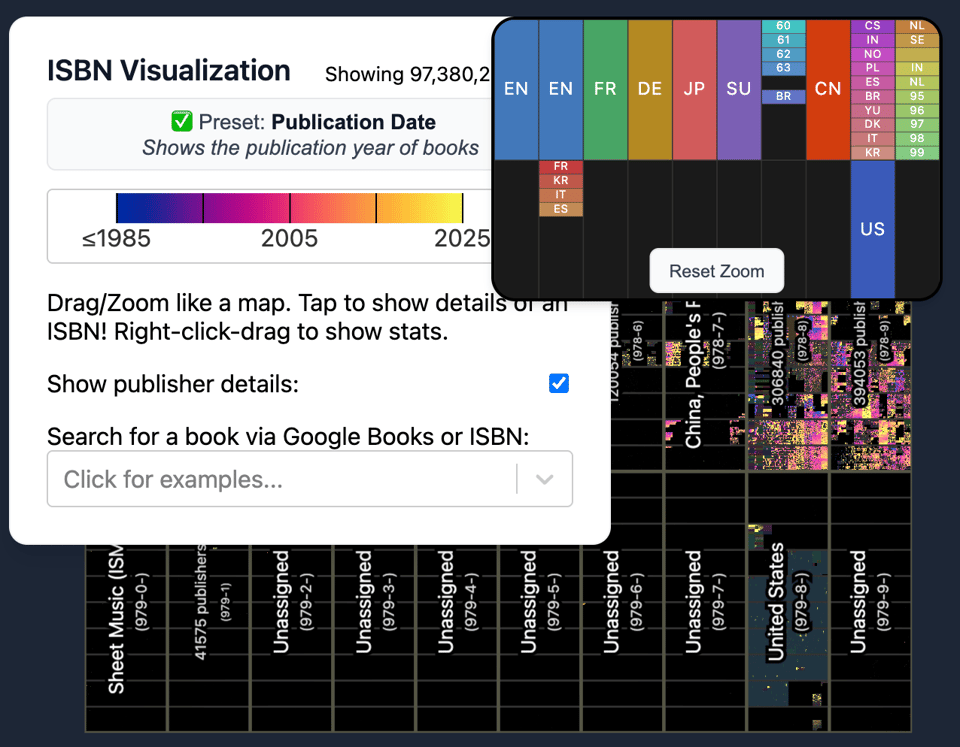
Visualizing all books of the world in ISBN-Space
This article describes an interactive visualization of the entire ISBN book space using Anna's Archive (which can't be linked).
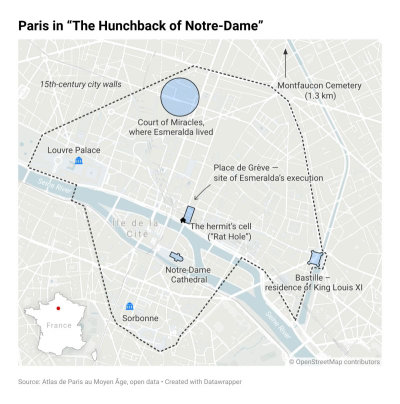
A coworker asked me to create some infographics for her article about the history and reconstruction of Notre-Dame Cathedral
"A coworker asked me to create some infographics for her article about the history and reconstruction of Notre-Dame Cathedral. I think no one did more to popularize the cathedral than Victor Hugo."
This also inspired me to create (work in progress!) this Opera Locations dataset and dataviz. I'll link in Quantum when it's ready – I'm using Claude Code not just for the app but to build the dataset from scratch.
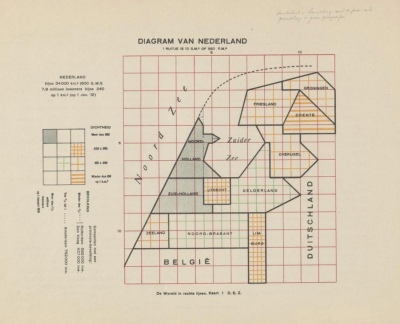
Dutch cartocubism
Attila Batorfy discusses a forgotten 1931 Dutch atlas titled De wereld in rechte lijnen (The World in Straight Lines) by D.E. Zuidhof, published in Haarlem (Netherlands). This was rather radical for the time, simplifying all geographical features.
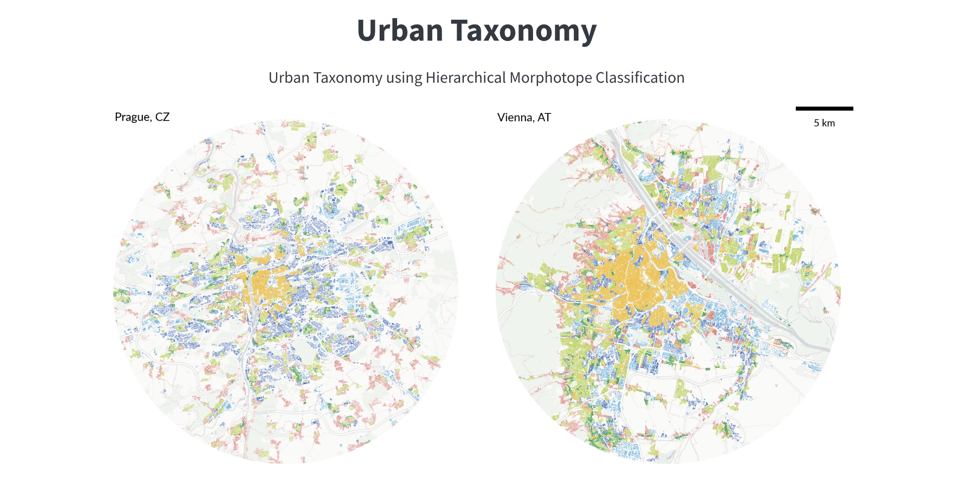
The hierarchical morphotope classification: A theory-driven framework for large-scale analysis of built form
Martin Fleischmann presents his new paper with a novel method for analyzing urban form at scale. There's also an interactive map.
AI
DailyArxiv - Automated AI Research Podcast
Colin Davis launched DailyArxiv, an automated podcast that covers current AI research publications, pulling arXiv's daily feed and summarising it in a daily 15-minute episode.
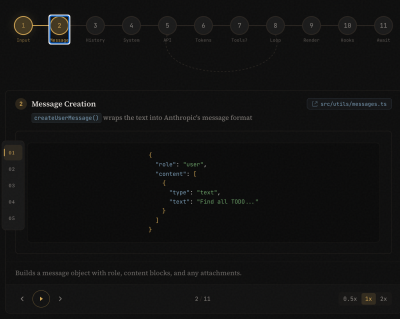
Claude Code Unpacked
An interactive technical breakdown of Claude Code's internal architecture, created by mapping its source code structure. "What actually happens when you type a message into Claude Code? The agent loop, 50+ tools, multi-agent orchestration, and unreleased features, mapped straight from the source."
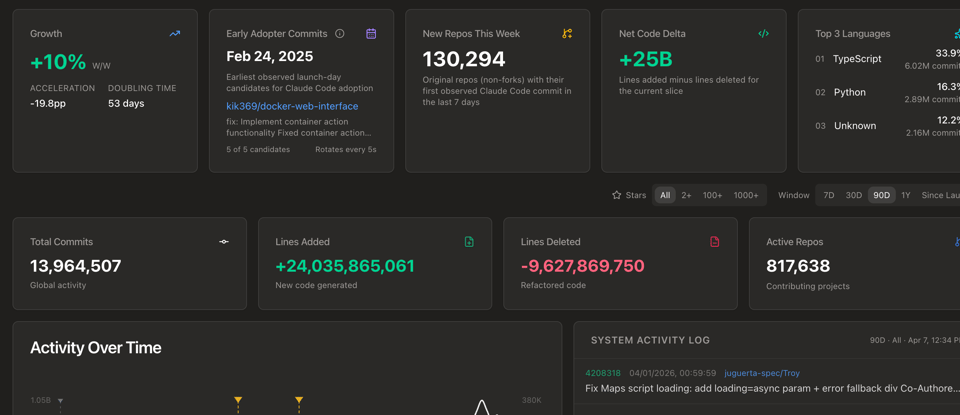
Claude's Code
A real-time analytics dashboard tracking the adoption and usage of Claude Code, showing for example recent GitHub commits co-authored by various Claude models.
(via Nicola Ferri)
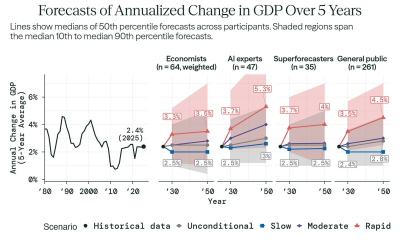
Forecasting the Economic Effects of AI
A comprehensive study of expert views on AI's economic impacts (and when I say comprehensive: it surveyed 69 leading economists, 52 AI experts, 38 superforecasters, and 401 members of the general public), by researchers from the Forecasting Research Institute.
The study reveals a puzzling disconnect: economists assign 61% probability to moderate or rapid AI progress by 2030, but they also predict key economic indicators to remain close to historical trends.
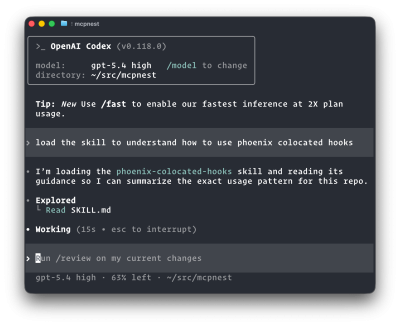
I Still Prefer MCP Over Skills
Somewhat opposed to Martin Alderson's position above, David Mohl argues against the emerging consensus that "Skills" should replace the Model Context Protocol (MCP) for connecting LLMs to services.
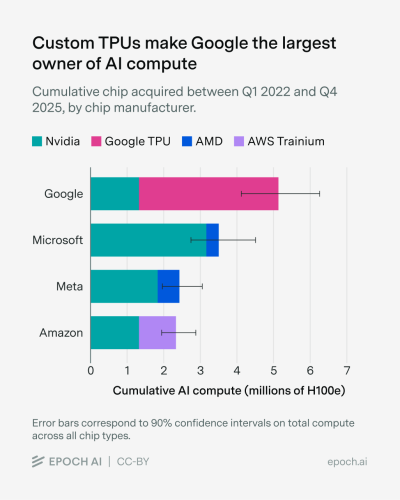
Google controls the most AI computing power, driven by its custom TPUs
According to Epoch AI Google leads in AI computing power, controlling approximately 25% of all compute sold since 2022. Around three-quarters of its compute capacity comes from its proprietary TPU (Tensor Processing Unit) chips, designed in-house.
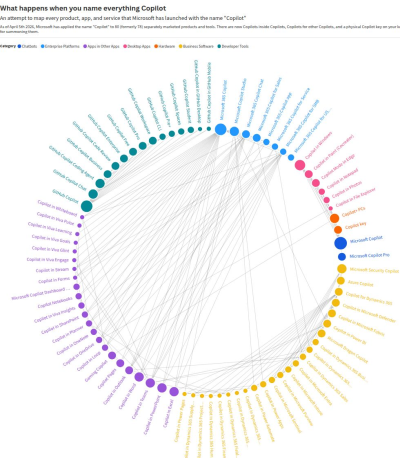
How many products does Microsoft have named 'Copilot'? I mapped every one
|Tey Bannerman attempts to explain what Microsoft Copilot is but he finds 70+ different products. "Try to find a pattern. I couldn't."
Critique of AGI Claims for Current AI Systems
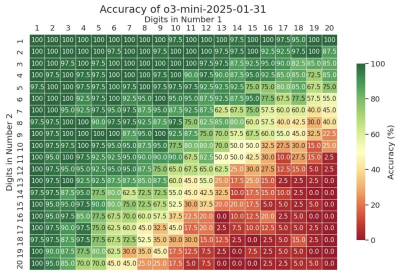
Nikolas Markou: "Sequoia declared 'This is AGI.' Jensen Huang agreed. Then someone asked these systems to multiply two six-digit numbers and they could not do it."
"Correct answers, broken reasoning. That is not intelligence. That is memorization wearing the mask of logic."
He acknowledges LLMs' value for code generation and pattern recognition, but he rightly argues that their usefulness depends on proper engineering, human oversight, and guardrails.
LLMs are not conscious
I loved this take by Jon Ayre: "If you don't prompt an LLM it sits utterly dormant. Not a single artificial neurons fires. Not a single signal happens. Everything is just zeros. When you do prompt an LLM the input ripples straight through from inputs to outputs then everything is dormant again. Each neuron fires once and that's it." This makes them different from biological neurons.
AMA – Ask Me Anything! Submit a question via this anonymous Google form. I'll select a few every 4-5 weeks and answer them on here :-) Don't be shy!

The Quantum of Sollazzo grove now has 40 trees. It helps managing this newsletter's carbon footprint. Check it out at Trees for Life.
'till next week,
Giuseppe @puntofisso.bsky.social