
Pointless Internet Debates
Reflecting on the “Rules As Intended” vs “Rules as Written" argument, talking Forbidden Solitaire, and the latest news of stuff I've worked on!
Recently on Bluesky, someone made a comment about “discourse wars” and I flippantly posted that I’m the veteran of a thousand discourse wars, because I am not above making a Blue Oyster Cult reference. (Spoiler: I’ll make another one in Lair of the Rat Kings.)
However, it got me thinking about how some discussions in the RPG design space not only get repeated every few years as new designers enter the space, but also how a few of those discussions are so entrenched it’s hard to dislodge it. And one that I continually run into is often codified as “RAI vs RAW.”
For those of you not in the know and/or who use your time more wisely, these two acronyms stand for “Rules As Intended” and “Rules as Written.” The argument is that every TTRPG rule has two versions: the rule that the designer intended to create, and the one that’s on the page. In an ideal work, these are identical, but for a variety of reasons these sometimes (and, in arguably inferior works, often) don’t match up.
From a certain perspective, there’s validity here. Aside from some of the most intricate board games, tabletop RPGs almost invariably require interpretation at the table. There’s no computer processing the rules, nor are the rules so clear-cut that there’s no ambiguity (for example, something like “roll a die and move that many squares”).
The problem is, the argument as framed is utter nonsense, and I’m baffled as to why so many people act like it isn’t. So I figured it’s time to break down why I find the concept so frustrating.
Let’s go back to the terms themselves. They’re so prevalent amongst gamers that users frequently just reference the acronyms with no context, and assume (correctly) most of the people in their community will understand them. So I’m not picking on an obscure or oblique viewpoint here. Both of the terms in the argument specifically centre on the designer: the rules the designer intended vs the rules the designer wrote.
In games where rules aren’t interpreted, a conflict between those two goals matters. To go back to “roll a die and move that many squares,” there’s a problem if there are dice with different sides. The conflict is clear: since the written rule is unclear, which die did the designer intend?
You can see how this looks like it should apply to TTRPGs, but the issue is that it really only works for similarly explicit rules that aren’t designed to be interpreted. But a TTRPG often has many rules that (intentionally or otherwise) require interpretation at the table. For the purposes of this discussion, let’s call conflicts within explicit rules something else, like “errors.”
The issue I have is in the extrapolation of errors to other parts of the text. Because we’re still working from the concept that the designer has introduced errors into the game, any other place where the rules don’t seem to work are assumed to also be errors. But TTRPGs are, as I mentioned earlier, designed to be interpreted by a human who isn’t the designer.
Why does this distinction matter? Because not only can designers make mistakes, but so can players. (Side note: I’m including the GM as a player for this discussion. I feel they really are a player, but that’s a future newsletter, maybe.)
Unless you are the designer of the game or the designer is on hand to ask, you don’t know what the “rules as intended” truly are. You’re assuming the intent, and you know what they say about assumptions. Even if you go purely with “rules as written,” in order for the game to work, the players need to interpret them, because rules don’t play themselves.
To step back for a moment, humans read the same things differently. If you write something, anyone reading it will have slightly (or even moderately) different interpretations of it based on their background, knowledge of the subject matter, neurodiversity, what colour the text is on the page, and a wide variety of other factors. So any “rule as written” must therefore be read differently by different people.
Which mean, to be blunt, the designer’s intent doesn’t matter. The player’s understanding does. And players will occasionally get things wrong.
Is that the designer’s responsibility? Partially, because the goal of writing the rules down is to communicate them well. Most of the time the rules should be clear, but over the years there’s been an increasing argument for “interesting” as a metric of communication (which can sometimes conflict with clarity). In the end, though, a designer makes a set of decisions on how to get across the design of the game. In larger productions, what the designer writes might also be modified by several people in the creation process, such as developers, editors, and layout artists, each potentially adjusting the intent of the written rules.
I feel that, when someone spouts out RAI vs RAW, they’re actually noticing a different disconnect. The intent of what rule the designer wrote doesn’t matter at all, but what the designer implies should be happening can be at odds with what the players understand should be happening.
This is a much more useful discussion, because while it doesn’t let the designer completely off the hook, it does open up more options for consideration. Did the players misunderstand a related rule? Is there a bit of the text missing? Does a word or phrase mean something different to this specific reader?
Even then, however, I feel the utility of such discussion is limited. If we continue to accept that every rule is interpreted by a human, and each human interprets them slightly differently, we can naturally conclude that every game is run differently. The only question that matters in the long run is “does this rule work for us?”
No one can answer but you, but it can make for interesting discussion on a forum, instead of implying the designer is some kind of idiot.
News
First off, somehow my character in the Call of Cthulhu campaign Masks of Nyarlethotep has survived sixty episodes! Here are the latest ones:
Two more YouTube links. One is another video for Extra Credits (a short about board game piracy), and the other is another reading from Watson is Not an Idiot.
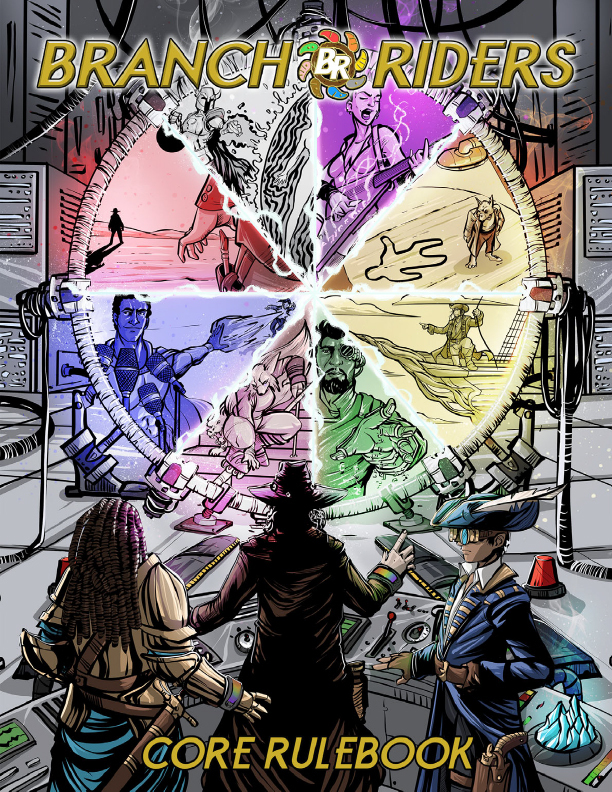
Finally, Branch Riders is out! This is a new tabletop game created by a group of therapists to help facilitate roleplay therapy, but the game is also just great to run if you enjoy light-hearted, rules-light multiverse games. I helped out as a designer, and I had a blast working on it.
My Media
I took a four-day vacation to clear my head a bit, which meant a lot of bookstores and playing games on my Steam Deck, which means I genuinely have far too many things I want to talk about. I’ll put the rest on backburner and maybe get around to them, but today let’s talk about Forbidden Solitaire.
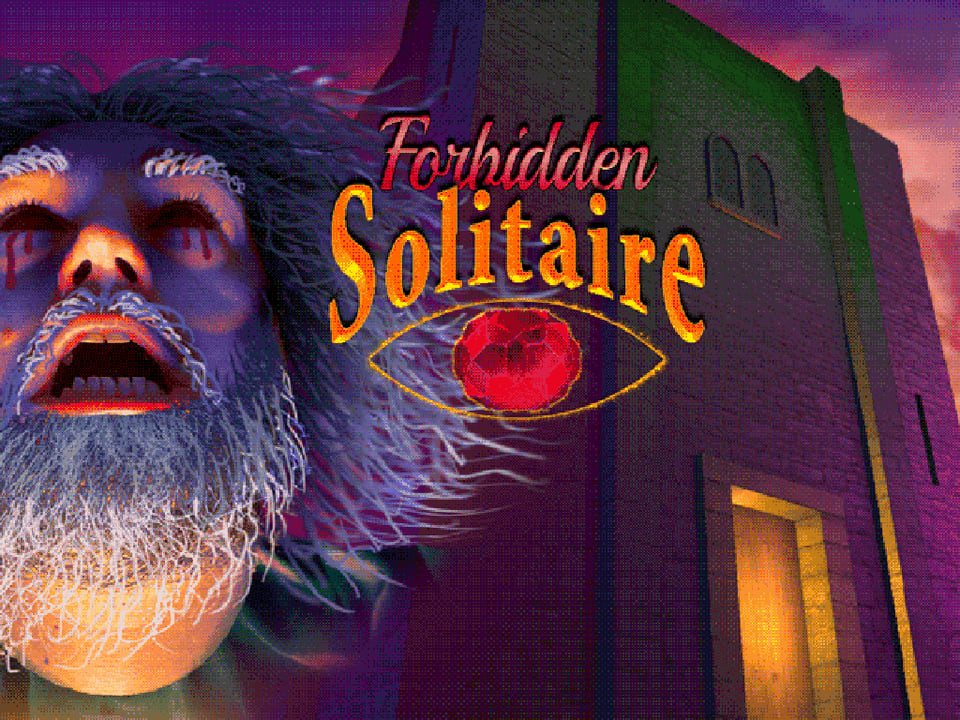
The concept is bonkers, so I’ll just reprint it from the website:
It’s 2019. You brought home a strange yet familiar 1995 CD-ROM game from the thrift store. You vaguely remember seeing ads for this game, and some kind of controversy, but you never got the chance to play it. Until now.
The game is by Grey Alien Games, and if you’ve played a Grey Alien solitaire game, a lot will be familiar. You pick a card that’s one higher or one lower than the foundation card until the tableau is empty. Over time you get various powerups that manipulate the cards in different ways, while the cards also get increasing varieties of modifiers to make it harder to remove cards. Occasionally you have battles, which are just different solitaire setups with more time pressure. I’ve played a few of these games, and they’re generally great for relaxed second-screen activities when I want to unwind.
What makes Forbidden Solitaire fascinating is that it’s a solitaire game presented within the frame of a 1995 CD-ROM aesthetic, which is itself presented within a computing experience that’s seven years old now. You’re not just playing a nostalgic game that didn’t exist; you’re also going through the deep dive that sometimes comes with such an experience.
Minor spoilers (which are implied in the sales text, so I don’t feel too bad about it), but once in a while you’re interrupted by IMs from your (fictional) sister, who has fallen into a research deep dive around the game. So as you play, you occasionally get links to old ads, interviews with the (fictional) developers, and screenshots from (fictional) game magazines and police reports.
Aside from that, the commitment to the 1995 aesthetic is intense. When you start the game, it shows you a desktop that’s a legally-distinct Windows 7. Once you click the Forbidden Solitaire icon, the game boots in a (fictional) DOS window, complete with (fictional) CD-ROM clunking and grinding noises. When you’re done playing the game, the quit button is “Exit to DOS.” The art style looks straight out of Planescape Torment. It is a ludicrous amount of detail to lavish onto a solitaire game.
And the horror bits of the game evokes a very specific era of 90s edgelord. You get upgrades by buying them from an eyeball trapped in a wall, and each upgrade is a gem that’s bloodily jammed into your hand. Death scenes when you fail involve your wizard character’s eyes being ripped out of his head. But it’s all done with that low-fi 90s CGI that makes it more like a Hammer horror film than, say, Saw. It’s definitely not for kids or for chilling out in front of the TV, but it’s also a blend of gory and quaint.
The game is easy to finish in a long afternoon, although I enjoyed it sitting at my desktop just as it got dark, really channelling that 2019 era of rediscovering CD-ROMs. It reminded me when I found a 90s Sherlock Holmes CD-ROM in 2020 and ended up playing it on Twitch. It’s such an extremely specific experience to emulate, and yet it does so perfectly. I cannot recommend it enough.
As much as I’ve enjoyed revisiting 2019 and 1995, it’s time to get back to work in 2026. See you next month!