
Carceral abolition is all about safety, thriving, freedom and liberation without policing, prisons, surveillance, banishment, punishment, or violence, even in response to violence. But to get to that ‘without’ we need to build something better. So this month let's talk about the generative side of abolition.
This is part of a series of updates sharing the understandings that inform Planning for Abolition's work, with the caveat that abolition isn't one thing. There are multiple overlapping, and sometimes diverging, ways we will get there.
+++
Last month's update went back to the abolition of chattel slavery, and the reminder that abolition started with the rebellions of people who were enslaved, and the new worlds those rebellions built.
But Angela Davis points out that in spite of the work of enslaved people, abolition became an incomplete project because the root causes of slavery in violence and imperialism 1 weren’t addressed. So we find ourselves back in the position where so much of life is devalued while policing, imprisonment and violence flourish.
One obvious example is the silence of state leaders while thousands are killed through acts of war that clearly violate international law. As another example we see moves away from care and community and towards forced medical procedures for people who use drugs across Canada.
Angela Davis describes what is needed to complete the project as abolition democracy, building up a constellation of resources and ways of making decisions that prioritize safety, thriving, freedom and liberation for all. This isn't a request to participate in existing systems that lead to a few having more than they know what to do with while the rest of us struggle, but a demand to go to the root of what causes this imbalance to build something better!
At its best, urban and regional planning, can play a part in building abolition democracies. As Nisha Botchwey describes, planning is "process of collective decision making" about how resources include housing and infrastructure alongside information and economic opportunities will be prioritized, distributed and accessed. But as she also points out, who has been included in that collective shifts and changes depending on when and where you are.
So next time more thinking about the generative side of abolition, how and what planners would need to learn to be a part of building that abolition democracy.
+++
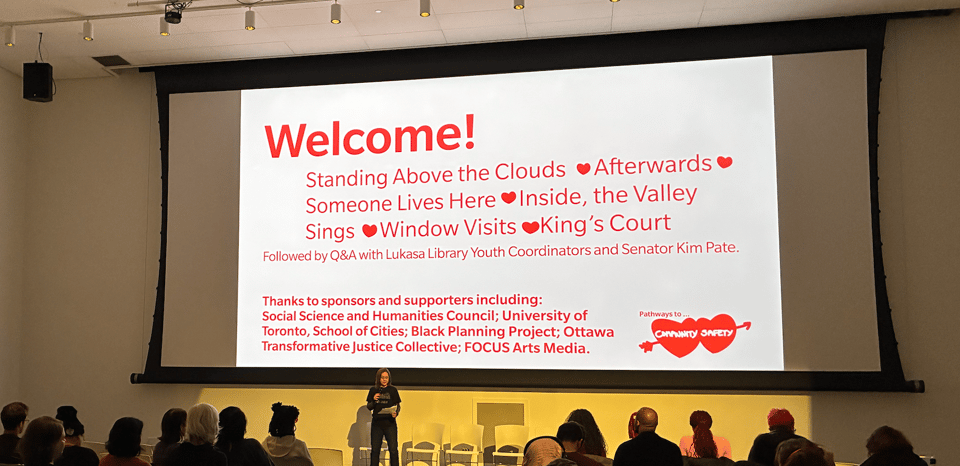
Trying to image abolition democracy all at once can feel overwhelming, so as part of our Pathways to Community Safety Workshop and Community Exchange we started with a film night to spark our abolition imaginations with stories about making freedom through land defence movements to imagining maintaining relationships in solitary confinement, talking through what it means to be a good man on the basketball court to talking through healing from domestic violence around a kitchen table. Take a look: https://tinyurl.com/febfilms.
à bientôt
[email protected]
Learning + Action
Some other examples of folks building those better worlds:
Regina program helps young men build new lives outside the justice system [CBC]
Launching four new community resources! [CUP]
End corruption and fund the city [Another Toronto is Possible]
Feminists reclaim the city! The Encuentro Nacional de Mujeres in Argentina [Funambulist]
Culturally tailored care for South Asian people who use substances [BC Centre on Substance Use]
Thursday, April 23 - Environmental Justice & Detention Abolition [Detention Watch Network/Instagram]
May 8-10 - Planners Network Conference - Planning in the Face of Fascism [PN]
meaning the spread of power through force and a desire for constant growth and resource hoarding for a few on the backs of others. ↩
You just read issue #10 of Planning for Abolition. You can also browse the full archives of this newsletter.