
Monthly Musical Miscellany – September/October

Dear all,
Better late than never! What was meant to be September's miscellany has, through no fault but my own, drifted into October. We'll call it fashionably late and say no more about it.
Here is this/last month’s monthly miscellany…
‘Punching the Clown’ by Lambchop
Kurt Wagner and company's first record since 2022, built around "lined-out singing" — an old gospel call-and-response form with roots somewhere between Scotland and Appalachia — with Justin Vernon on banjo and a six-part choir folded into the mix. The first track is a lovely thing indeed. All laid-back, beer-on-the-porch, leaves-flying-past autumn vibes, and I'm very much here for it.
Julian Bailey’s introduction to jazz theory
I have a small but devoted cohort of students I jokingly call the "chord boys" — those of you drawn to the thicker, more expansive harmony you find in jazz and soul (you know who you are).
If you're new to theory, this will feel like being thrown in the deep end without a flotation device. But if you're chord-curious, Bailey's video is a solid — if dense — distillation of the harmonic foundations sitting under most jazz piano. Watch it twice.
Top Secret Drum Corps
Mesmerising and gloriously silly in the best possible way. The Top Secret Drum Corps are a Swiss outfit from Basel, founded in 1991 out of the city's centuries-old carnival drumming tradition — though where the old Basel style is sombre and martial, Top Secret is fast, loud and shamelessly show-off. Their 2003 debut at the Edinburgh Military Tattoo made their name; they've since been invited back more often than any other civilian group, and went on to found the Basel Tattoo, now second in scale only to Edinburgh itself.
What reads as spectacle is, underneath, formidable craft. Precision drumming at this level is memory and millimetres: two dozen or so players locked to a single internal clock, sticks flipping and crossing in choreographed unison, the whole corps behaving as one instrument with no conductor to lean on.
(A bit of trivia for the electronic-music brigade: Liam Howlett of the Prodigy is a fan, and had them record for a record.)
What are we teaching music for?
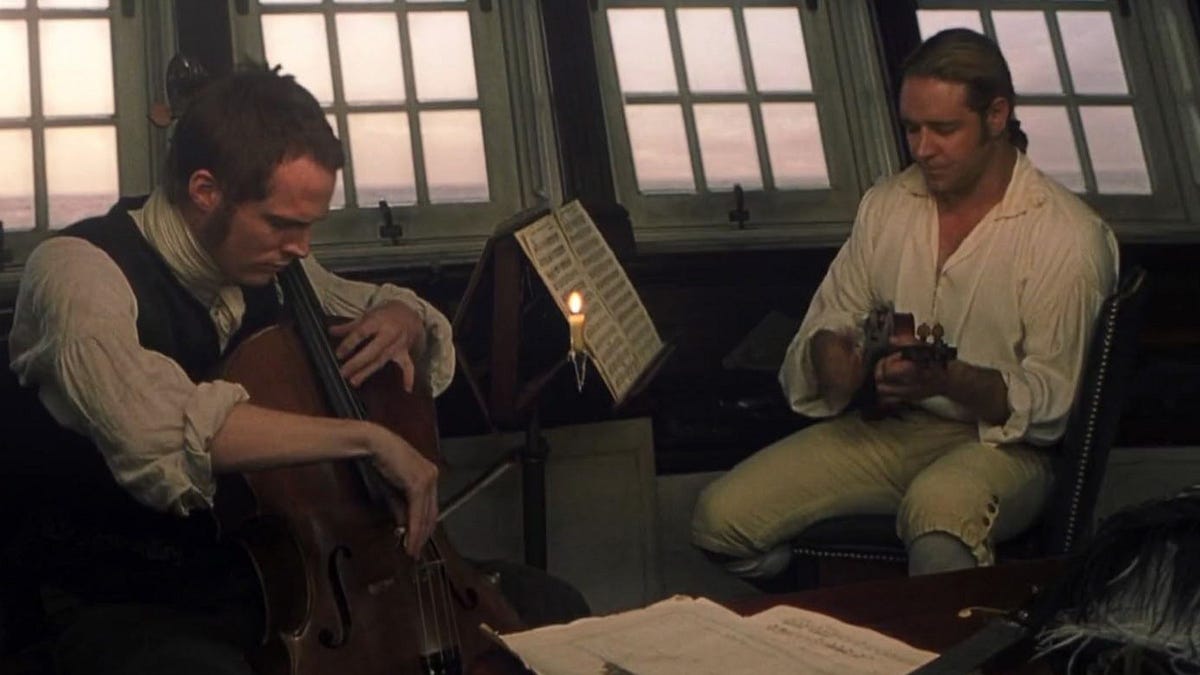
What are we teaching music for? - by Peter - Ecumene · 天下
Millions of parents put their children in piano or violin lessons for perfectly sound reasons.
A sharp little essay that's been rattling around my skull since I read it.
The argument: most music education is quietly engineered to produce one thing, the solo virtuoso, even though virtually no parent signing their child up actually wants that.
We march students up a ladder of ever-harder repertoire, through grades and recitals, and then at eighteen they step off the ladder and never play again. Ten years of lessons, and you can still trot out a couple of showpieces, but can you sight-read something unfamiliar, pick out a tune by ear, accompany a friend, sit in with other people and simply join in?
Let us aim instead at the old ideal of the capable amateur: the person for whom music is just something they do, sociably, for life. Think of it this way: we don't teach children to read in order to mint novelists; we teach it so that words become part of a life.
None of this means binning scales or technique; the early graft looks much the same. It's a shift of emphasis. Play with others sooner, rather than waiting to be "good enough". Sight-read often. Keep a big pile of easy pieces on the go instead of endlessly buffing the same three hard ones. Treat fluency, not flawlessness, as the target.
The importance of play
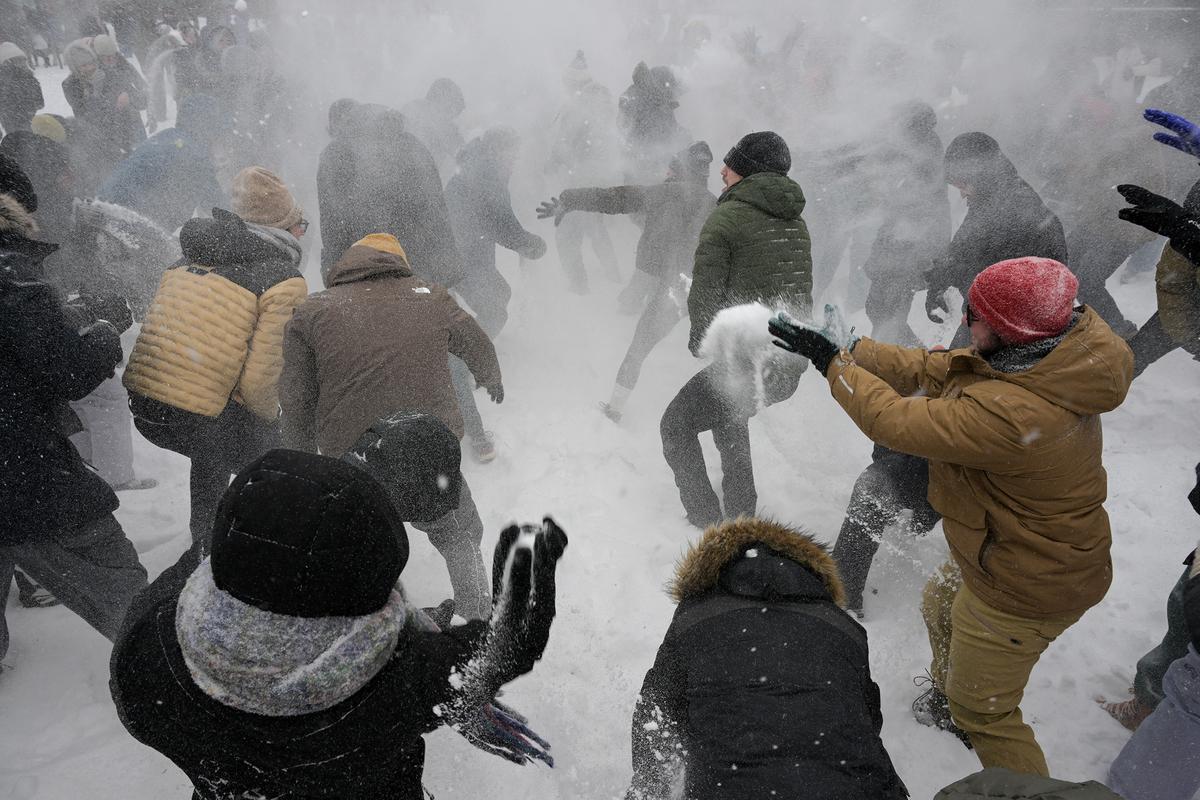
Play is doing its work even if we’re not keeping score | Aeon Essays
We are most human when we play freely, imaginatively, pointlessly. Gamification risks atrophying that most precious capacity
Another topic very close to my heart, and — I'd argue — a non-negotiable ingredient of any music practice meant to last.
This essay draws a line between two sorts of play: the competitive kind, with rules and scores and winners, and the older, stranger, pointless kind, messing about with no aim and nobody keeping track. Modern life has quietly throttled the second option. Everything now arrives with a streak, a leaderboard, a progress bar where “the metric eats the meaning”.
It's unstructured play, not box-ticking, that makes us feel genuinely present and alive, rather than merely compliant. Why this matters at the piano is simple enough. A practice diet of nothing but grades, targets and perfect repetitions is precisely the sort of thing that eats the music. The bit where you sit down with no plan and just noodle — chase a chord because it sounds nice, play a tune badly for the hell of it, improvise something that goes absolutely nowhere — isn't time off from practice. It's the part that keeps you coming back for the next twenty years.
Playmusictheory.net
I've been having oh-so-much fun with this lately. It's billed, accurately, as "a visual instrument" — a browser toy (there's an app too) by Tala Rae Schlossberg that lets you fiddle with the relationship between sound, shape and time. No notation, no grades, no right answer: you draw something, press play, and then ‘hear’ your drawing come to life. Tonnes of fun.
Gene Shinozaki
To finish — a reminder of how much sound one person and a microphone can make. Gene Shinozaki is a Berklee drummer turned beatboxer, and a world champion of the form, who assembles entire tracks — bassline, drums, the lot — out of nothing but his mouth (and the drummer's ear underneath it is doing an enormous amount of work too).
I’ve been doing a little research into beatboxing and mouth percussion recently, as part of my diploma, and stuff like this quite honestly completely blows my mind. Some of it (like creating two different tones at once) is beyond my comprehension).
I’ll stick to the piano for now…
See you all in the Studio soon!
Will