
Turn key negotiator
Envisioning a probable future where dominant freight will move through spot
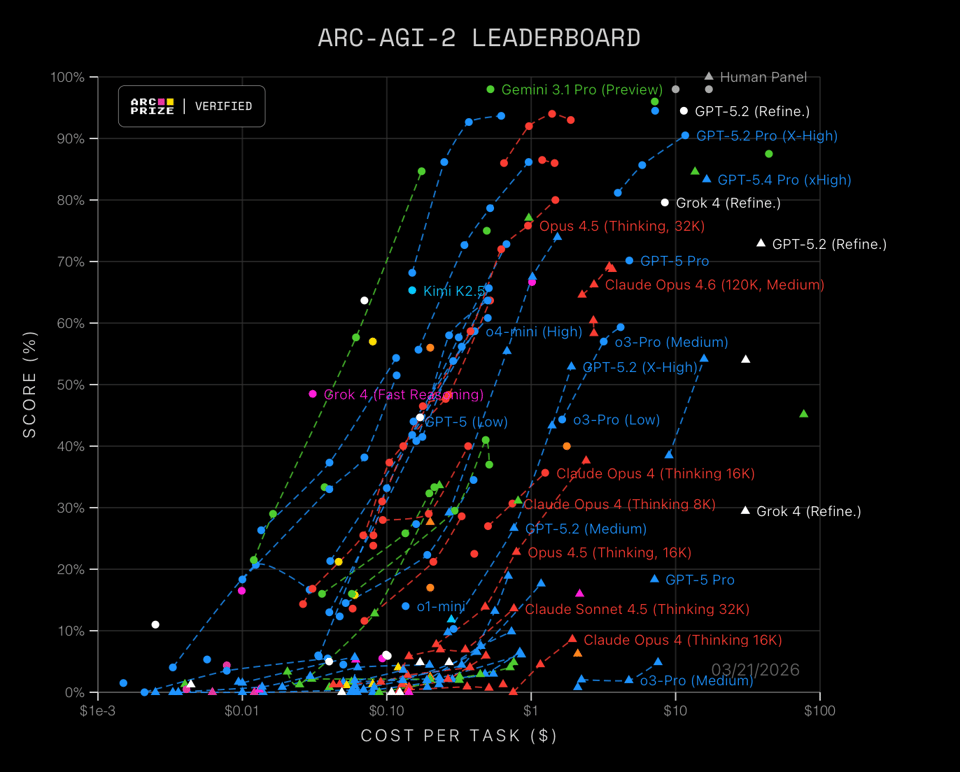
Agents can run longer and cheaper to complete tasks
Few weeks back, I was on a call where future of freight in North America was being reported by gathering expert opinions from operators.
Post that call, I have been thinking about a hypothetical which is probable with the advent of AI agents and their current capabilities.
Quick recap , from a previous post on deploying agents in legacy domains;
AI agents are a sequence of steps executing in loops towards a specific goal.
Prior to moving to US , I worked in trucking in India where greater than 80% of it was spot. In addition we operated in movement of commodities and produce which was further spot dominated. It was informal, dynamic and had significant volumes. There was a constant negotiation going on to map the next load with a truck at the right price. The search cost involved blasting phones to the network and figuring out each part of the transaction. We survived 3 years in that space booking freight with brokers and owner operators.
Now that I inhabit the North America region, the market is stark opposite. Only 20% of freight is moved outside contract. 80% of it moves through incomplete contract where price is determined but not volume.
The impact of long term relationship in trucking in comparison to spot was studied in this interesting paper by Adam Harris and Thi Mai Anh Nguyen for US truckload market
They had 3 major observations, emphasis mine;
Frst, one-third of the time, shippers do not select the carrier with the lowest contract rate as their “primary carrier”. This suggests the importance of non-price factors in long-term relationships. Second, while carriers are more likely to turn down relationship transactions when spot rates are favorable to them, shippers are not. This suggests that the spot market crowds out relationships by creating a moral hazard problem only for carriers. We show in our companion paper Harris and Nguyen (2024) that shippers mitigate this moral hazard problem by conditioning relationship continuation on carrier acceptance. Third, consistent with Hubbard (2001), we find that spot arrangements take a larger share of total market volume on lanes with higher total demand. Scale efficiencies in the spot market offer one potential explanation for this pattern.
The different surpluses incurred per each type of transaction
….a relationship transaction realizes match-specific gains while a spot transaction incurs a search cost; the latter might scale (inversely) with spot market volume. At the market level, the spot market absorbs both direct spot demand and unfulfilled relationship demand, pinning down equilibrium spot rates and search costs.
My main takeaway from the paper validates what we saw in India as well, when the price point of the lane increases due to lack of capacity or excessive demand , many trucks will try to find freight in the lane. The authors of the paper also postulate that when search cost is low for a given lane, carriers would switch to spot transaction.
What happens when the cost of search is subverted by cost of doing a task by AI ? And the cost of doing a task is getting cheaper and cheaper with every successive model.
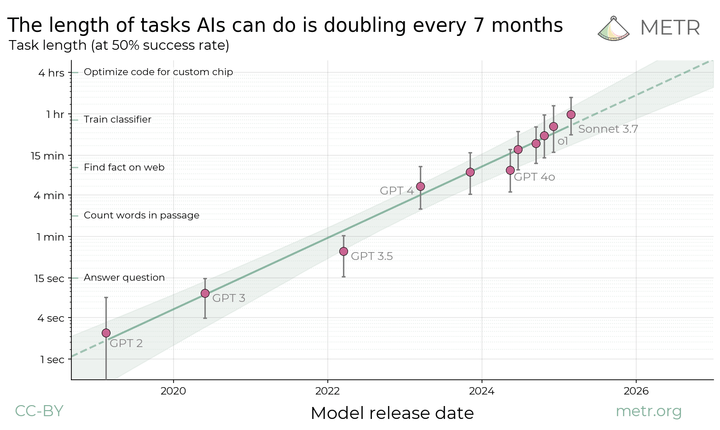
Combine this with how long a task could run by the agent ? The task length doubles every 7 months.
Theoretically, we could delegate an agent to negotiate with counter parts across all loadboards or emails to find a load for a lane. The agent should have a goal of maximising yield of trip or reducing dwell time of the trip or optimise route of the trip.
It can run in the background till it achieves the goal.
The entire dynamic of lanes that are considered hot and the ones that are termed difficult effectively cease as the agents brute force their way to finding the optimal load basing on their goal. Instead of a single player optimising their operations , the optimisation comes in the form of overall execution with mutual benefit to everyone involved.
In such a scenario, the likelihood of even North America shifting to a dominant spot market doesn’t seem improbable.
The channels stems in the finding the right platform where agents of each of the stakeholder interacts or standards defines the protocol of interaction between agents.
Round up
I have been part of the sales process for a bit now. Pitching to customers involves following the framework proposed by April Dunfor
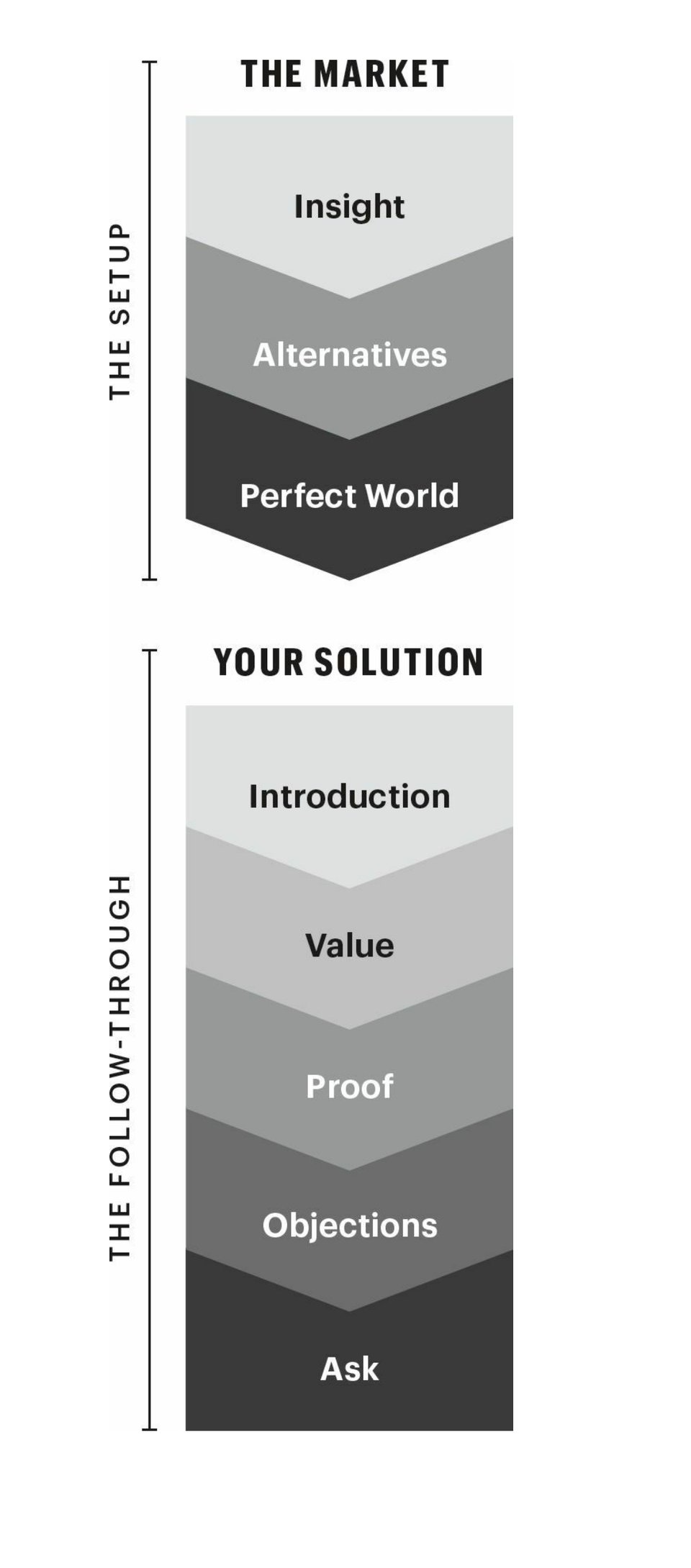
The creative juices keep flowing when you can have a proper set up. The missing part of this framework is discovery questions. Asking the right set of them unpacks the insight to be relayed to the customer.
An example of this is frame spot can be opportunistic. The ask is equally important because it takes us to the next step.
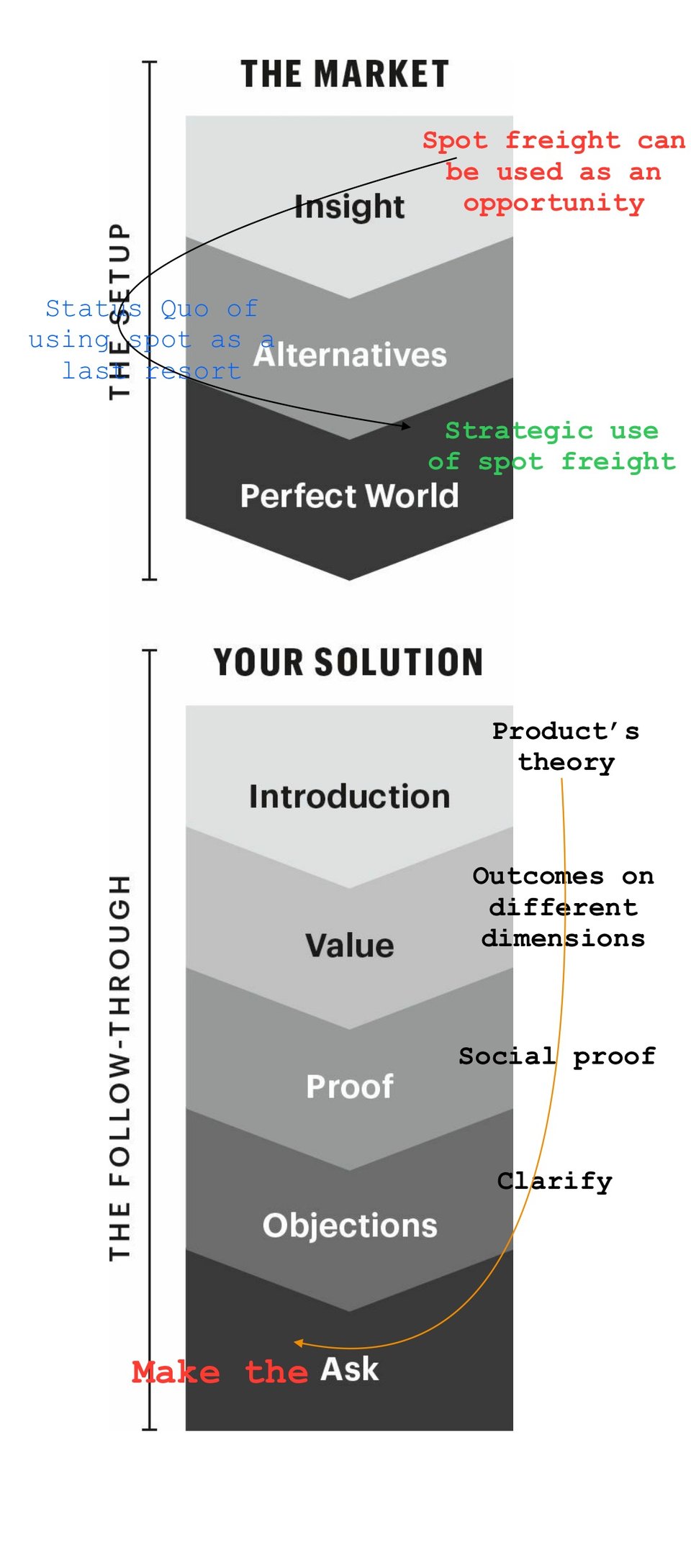
I have been on a few calls lately where we are getting the framework on point.
Links that resonated
Gamblers Trying to win a bet on polymarket
I am intellectually interested in the idea of prediction markets but this report shows the unintended consequences where prediction markets are being run on war scenarios.
Om writing about the phenomena of ClawCon being hosted across the world.
Sign off
I missed last week because I couldn’t find the time to sit and finish the main idea of this issue.
I interviewed my mentor on all things AI. We recorded it on video. It wasn’t without bumps. The first section of the interview didn’t record and we had to start all over again. I was stupid to not see that the camera wasn’t recording.
This week I was travelling again to meet prospects and had tremendous fun figuring out ways to pitch our products.
While the adrenaline is definitely high when you pitch to a prospect and see their reactions, the toll of travel with intense work days and unrelenting personal life has taken a toll on my body.
Its time to apply brakes and close some loops before I completely burnout as I am running on fumes.
Signing off till next time,
Vivek , finding the right rhythm

