
The Great Unbundling
AI is eating the world and I try to make sense it using bundling and unbundling frameworm
We unbundle to bundle
Information, TV shows or books we read during our formative years shape our worldview significantly.
Stratechery’s posts on strategy and aggregation theory were pivotal in my own understanding of knowledge economy and how businesses structure their strategy.
Great Unbundling was one such post which explained the core concept of making money with internet aggregator businesses. Either you bundle or unbundle your offerings across the value chain to make it valuable to customers.
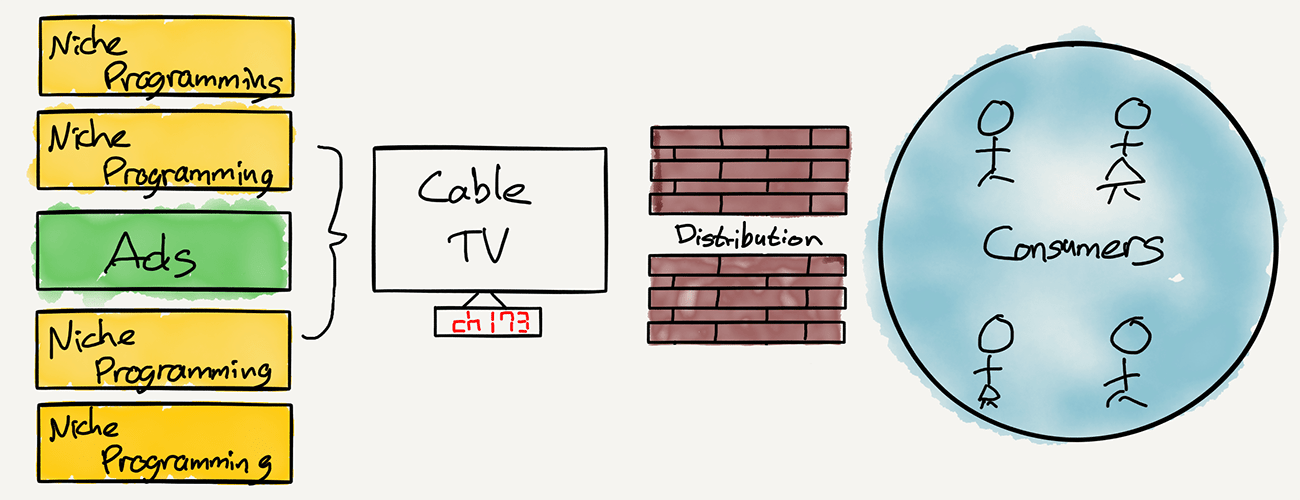
Ben provides the example of old media and the digital aggregators. When the cost of distribution fell to zero. The digital aggregators like Facebook aggregated users and advertisement and commodified the publications.

He also cites Chris Dixon’s post on Economics of bundling which highlights how it is net benefit for consumers when things get bundled.
The green boxes represent revenue for the seller. The deadweight loss areas to the right of the green boxes are transactions that would have benefited buyers and sellers but are not occurring because the revenue-maximizing prices are set too high.
With bundling the demand curve becomes fatter or flatter ( to be more accurate).
Using the above simplified model, the two demand curves that go from $10 to $3 become one curve that stays flat at $13. In general, adding the individual demand curves creates a flatter demand curve:
A flatter demand curve lets sellers charge prices that capture larger areas under the curve and pass more surplus back to consumers. The only loser is the deadweight loss area

I had to set this up to talk about the current phase of great unbundling taking place. People are experimenting with agents and figuring out tool building that is bespoke to their needs and opinions. The entire SaaS market is facing the brunt of narrative violation that they no longer are high margin businesses.
As Agentic AI eats software which until recently was busy eating the world. Things are very volatile at the moment and not knowing can be quite taxing.
We are uncertain about how this will unfold but I have some sense in which direction it will move.
I wrote in deploying agents in legacy domains how agents are targeted towards a goal.
AI agents are a sequence of steps executing in loops towards a specific goal. I would like to focus on the goal and why it becomes the gateway to deploying AI agents.
So we are going to deploy 100s of agents to automate workflows across the stack. This will lead to SaaS companies defending their margins as they get unbundled by different agents that enterprises deploy.
This unbundling ensure that aggregation is happening at a different place in the value chain.
The platform to deploy these 100 agents is where we will start seeing bundling again. The economics of agentic platforms with foundation models will look a lot like reseller programs of SaaS vendors.
Like Jim Barksdale of Netscape fame said that there are only two ways of making money, bundle or unbundle.
The frontier framework that Open AI published projects the future bundling area and where the unbundling reverses and we bundle again.
The superpower of this approach is that AI coworkers are accessible and useful through any interface, not trapped behind a single UI or application. They can partner with people wherever work happens, whether that is interacting with ChatGPT, through workflows with Atlas, or inside existing business applications. This is true whether agents are developed in-house, acquired from OpenAI, or are integrated from other vendors you already use.
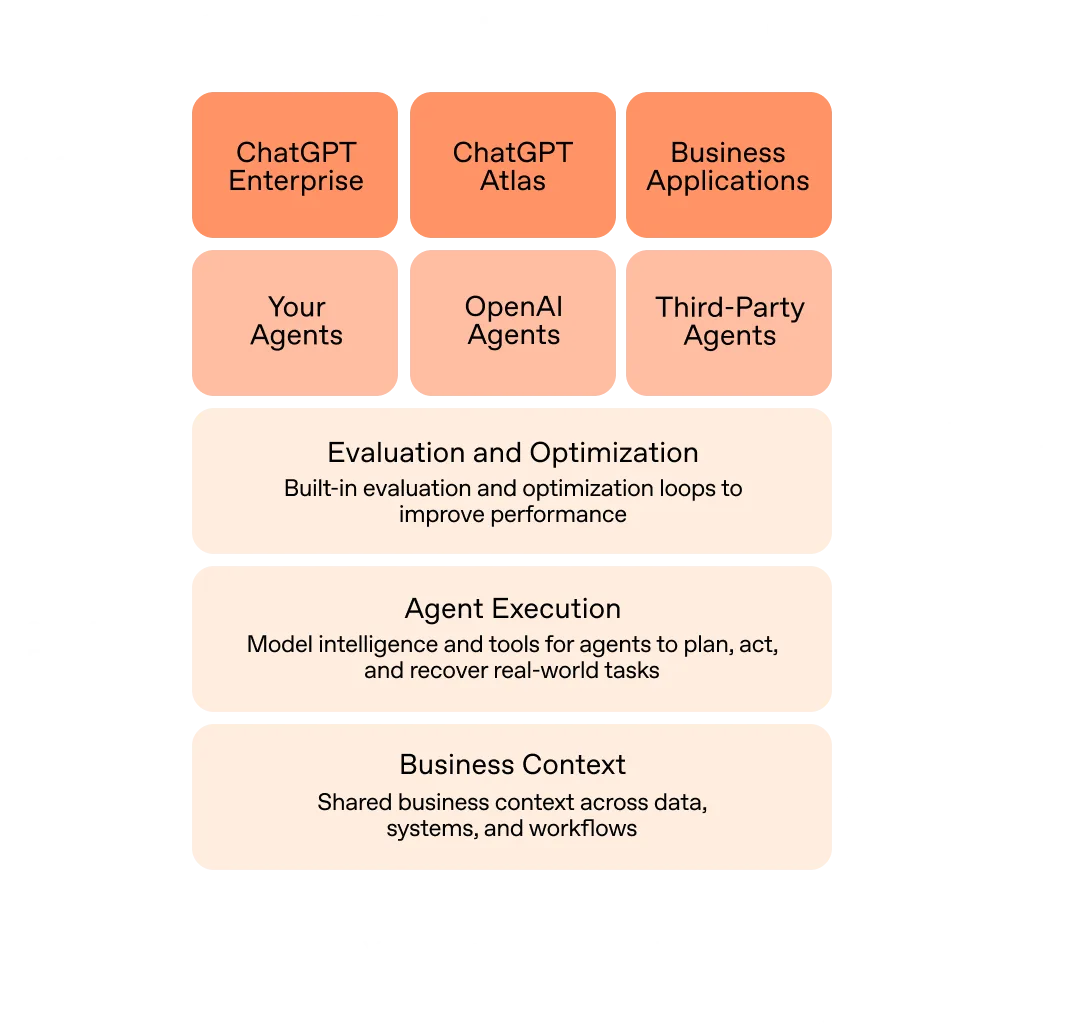
We had systems of record come with everything on top of it. A GUI to interact with the data and tools to observe the performance of the product.

What Open AI proposes is to modularise the entire platform into components that are interoperable. And they become the platform integrating at the interface level where user aggregation is through their chat windows.
With every platform shift, the story rhymes and you use the framework that is easy to understand to make sense of the shift.
In the journey of unbundling and bundling lies the opportunity to build value again for existing SaaS companies and agent platform companies specialised in a specific system of record.
Round up
This week was all about hunkering down and selling to prospects, team members and own self.
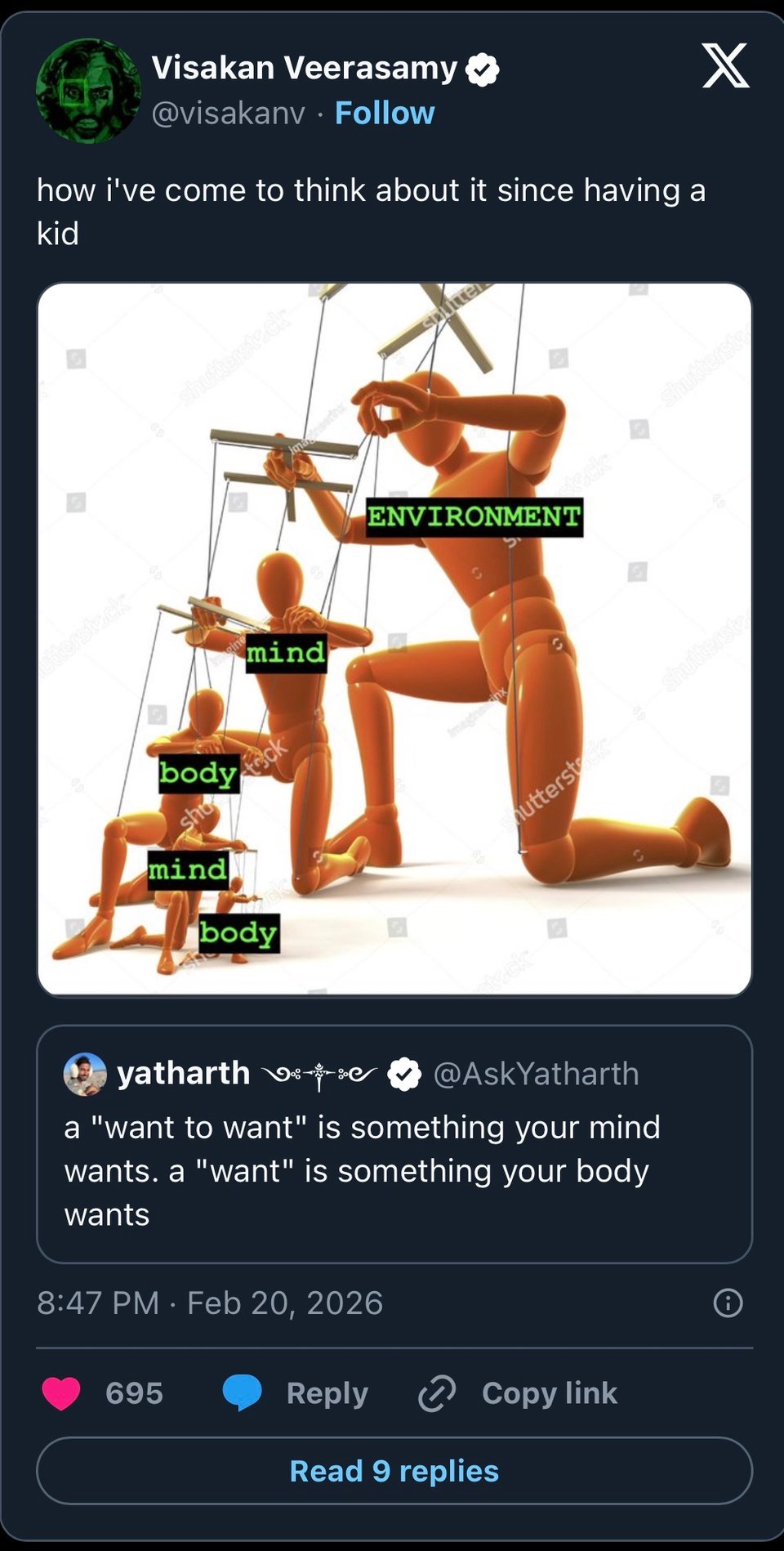
This tweet from Visakanv clarified the challenge I see while selling a new idea or concept. Environment shapes body which shapes mind. Grasping the environment is real skill and I am yet to get good at it.
Links that resonated
No links this time. The original post has enough links to enter rabbit holes.
Sign off
I have received a reply from a subscriber outside the few friends who are forced to read this newsletter.
Close to 4 years of writing and it happened for the first time. It was one of the highlights of the week.
This newsletter gets written in bursts of late night typing on the mobile. It happens any day between Friday night to Sunday night. The realisation that I haven’t written a draft strikes me on Friday morning and I write every chance when I get a breather .
Signing off till next time
Vivek, bundling food and body to get fatter like the demand curve

