
Open ended roles and goals in AI driven SDC
2026-04-19
Adopt Uncertainty mindset in teams
Uncertainty mindset by Vaughn Tan is a book on designing teams for innovation. He wrote the principles for an innovation team by observing R&D teams in high end cuisine.
I want to unpack it with respect to shift in SDC — software development cycle taking place inside every organisation with the rollout of AI.
The change comprises of shift towards generalists teams as Jonah McIntire has written ( also happens to be my super boss).
There are two hypotheses he is proposing:
- Team’s are shifting towards generalist rather than a collection of specialists
- The ideal team size is falling, probably to a trio (3 people)
The rest of the post substantiate his point of view with different frames of reasoning.
While reading through it, I was constantly thinking how would working in such teams would feel.
Vaughn Tan’s work would help shine some light on how the work will happen with the right framework.
So, lets start with understanding why generalists approach is better suited with AI.
To kick things off , AI enables development of novel products that still feel familiar.
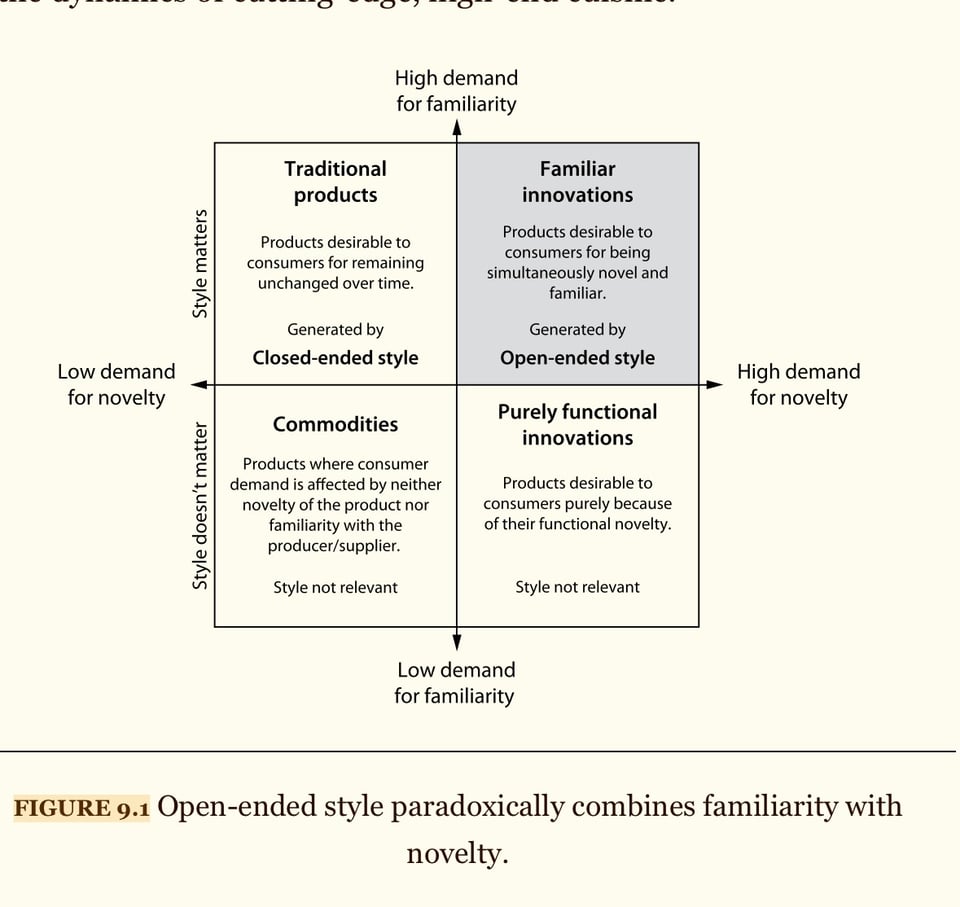
A concrete example of this is launching a conversational interface to a popular product, Notion comes to my mind. It makes customers experience the familiar is a novel way.
For novelty, teams have to deal with true uncertainty. Risk quantifies uncertainty since all possible outcomes are known. True uncertainty cannot be quantified because outcomes are unknown.
From the above example, you as the team responsible for the product will still be uncertain what conversations will the customer have once they adopt the new interface.
Developing familiar but innovative products is the future of Software in the AI age.
A teams role is to do the routine work efficiently but if the team is tasked with innovation , they should adapt the uncertainty mindset.
The R&D teams I spent time with therefore had the uncertainty mindset: the belief that what happens in cutting-edge cuisine’s future is uncertain, not risky. Perceiving the world as uncertain motivated these teams to explore and seek new information in an attempt to change the world and guide how it would change.
Working with AI and in smaller teams would look a lot like R&D teams of cutting edge cuisine.
One of the core concepts is that there is no clear job description of roles on the team. They are negotiated basing on the work at hand. You are hired for your skillsets but your work in the team is predicated on what others are doing and the end objective of the task at hand.
As Engineers, Product Managers and Designers form a team, what they work on depends on others on the team and task at hand. This negotiated role and scope of work is truly chaotic for the outsider but allows team members to achieve things no one individual could do on their own.
The next thing that these R&D teams do is share feedback openly irrespective of rank. The feedback is not on the process but only on the outcome. Since each member with the help of AI can push code, you focus on the end output of the code rather than the structure of the code.
In the pursuit of novel, there are many routine tasks that chefs on the R&D team have to do. They turned these tasks into micro tests for team members. This would allow the chefs who are not familiar with the skill get specific feedback on a regular basis by the group.
I may be over indexing on a personal anecdote over here but one of our engineers asked me to commit code to production. The change was minuscule but we have been working back and forth for a week on the larger bet and he suggested I make this one particular change. So with the help of AI , I did. He reviewed the PR on the outcome and gave me feedback.
Up until now, the code I committed to production invoked changing copy of a site wrapped in HTML.
Lastly, teams should work on consequential stuff. The R&D teams would take up real work with real consequnces and design desperation projects to motivate the team.
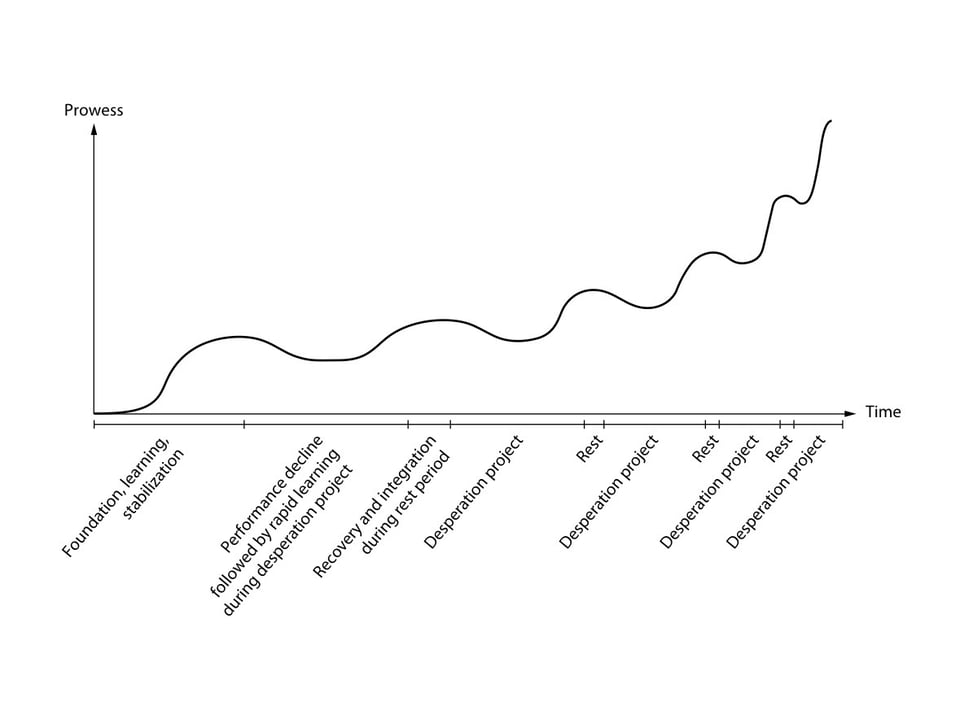
The work from the team shows gaps of rest before they put themselves through an another desperation project.
Working with AI in smaller teams will look a lot like working on a desperation project. The leaders and managers should device breaks for teams to rest and recoup. Planning bets and allocating priority becomes the bottleneck for running successful teams.
All these facets allow teams to be nimble and nifty which in return allows the organisation to adapt and innovate.
Yes, the Software Development cycle will change significantly but we got the means to adapt and innovate. Just follow what cutting edge cuisine R&D teams do to innovate on food.
I just scratched the surface, there is more in the book. I highly recommend you read it to be better prepared in what unfolds next with AI.
Round up
I have Obsidian Vault with a Command Line Interface tool to organise my work at the day job.
Making Claude Code My Chief of Stuff
Crystal Widjaja writes how she has claude code working as a chief of stuff. She mixes the PARA methodology of organising notes and connects to other services using MCPs.
I am going to use some of the tips and approaches mentioned here but the takeaway is that you could really customise what AI does for you by following a similar approach.
Links that resonated
Henrik Karlsson writes a terrific piece on hacker mindset citing film maker Robert Rodriguez.
One Developer, Two Dozen Agents, Zero Alignment
Maggie Appleton writes down her talk on opportunity cost becoming the true bottleneck with agentic development.
Sign off
Restaurants and food businesses have some great lessons for Software Development world. Cutting edge cuisine is one of the many types of food business similar to how software products can be about any domain.
Legacy domains definitely benefit from using AI to develop software because the cost of production has reduced and operators could encode their knowledge and scale their impact by building products.
I find this opportunity far more lucrative then building customer facing AI solutions in the domain. The adoption curve of AI facing products will be much flatter in these domains due to nature of business and people involved in it.
Signing off till next time,
Vivek, learning git on the side
Don't miss what's next. Subscribe to On the side:

