
Market Based Logistics and its future
Deriving market based logistics and how it will evolve in the world of AI agents.
We need to choose between service or product
I was in a hotel right next to this facility of DOLE. For those who don’t know DOLE, it is a Fresh fruits and vegetable company that also manages its own supply chain. It also has vessels and as per this article trying to go green. It takes supply chain seriously.
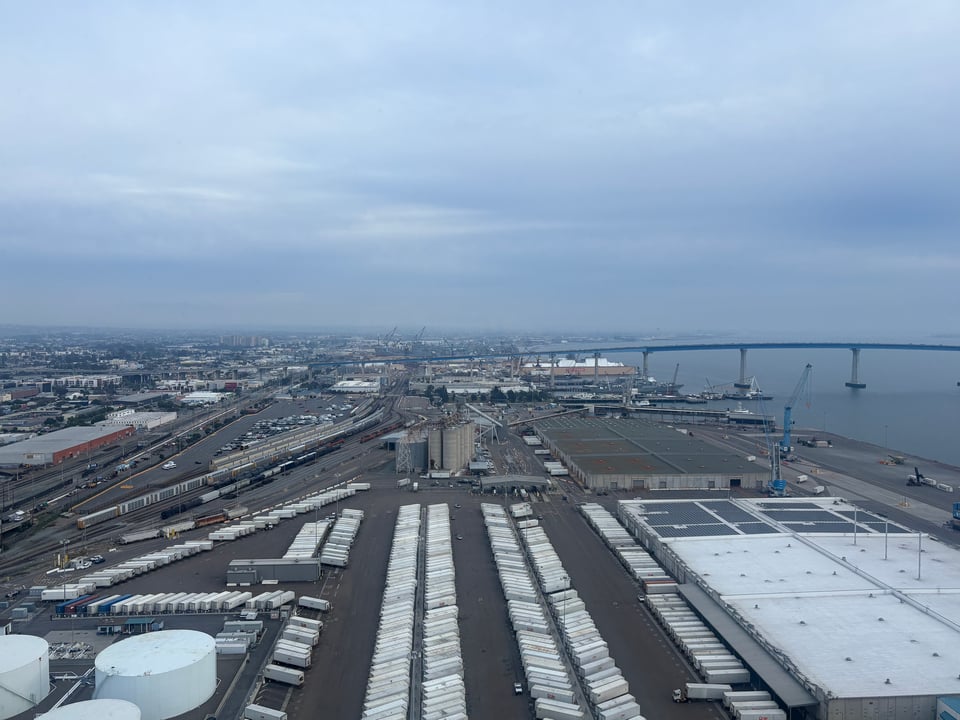
Now, I have eaten a fair share of DOLE banana’s ever since I moved to states and the reason being that they are available at every grocer’s shelf. They have scaled their operations to make it accessible to consumer no matter where they shop. They are what we call a vertically integrated fresh food producer.
My favourite illustration to explain this vertical integration of supply chain is the smile curve. This post by Chaitravi first captured the concept by Stan Shih of Acer.
‘Smiling Curve’ is an illustration of value-adding potentials of different components of the value chain in an IT-related manufacturing industry (Source – Wikipedia).
…..
….
What the Smiling curve essentially shows is the success of a product is dependent on the concept, research, branding, marketing, and distribution. These areas thus require specialized and highly skilled personnel.

Are DOLE’s banana’s best in the world? To some they maybe but DOLE is a successful producer because it invests in all functions of the smile curve that make the difference.
I have no prior knowledge or insider information but I can with high probability can claim that the TMS(transport management system) DOLE uses required some customisation from the software service provider. This would be because, DOLE would be running a complicated workflows in a complex supply chain.
In complicated workflows, people are involved. The relational rules between people which factors the org chart, people’s irrationality and traditional practices.
They are an amalgamation of simple components and people diktats that are hard to divide into simpler components.
Most products that are changing complicated workflows find it hard to succeed.
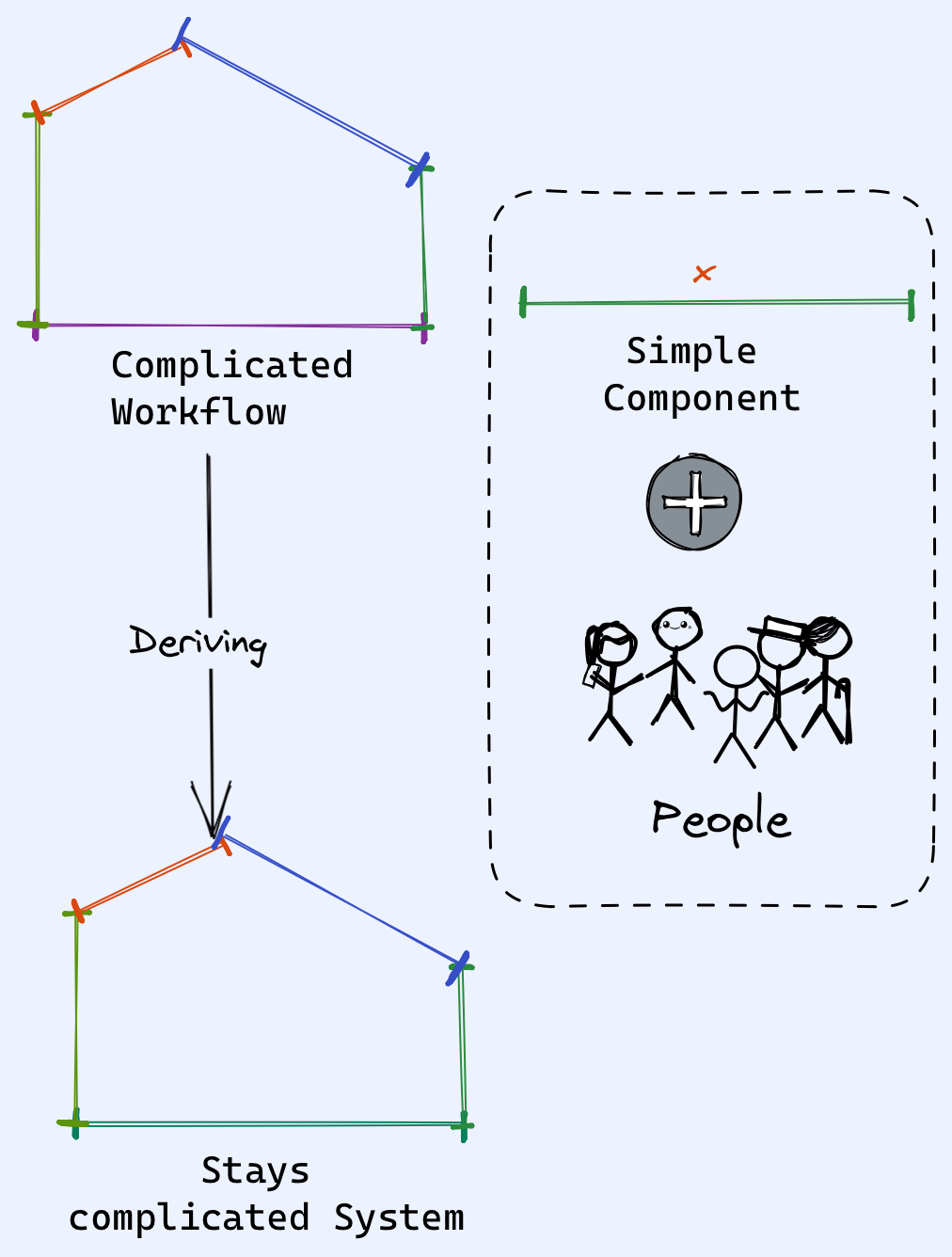
For example, as I wrote previously about how TMS products are fundamentally about enabling the customer to do the same set of activities in transportation with a specialised software and the promise of making it seamless. So, in order to capture the full set of workflows at DOLE, the software provider would have customised their TMS offering to adapt to DOLE’s complicated workflows.
The reasons software development packaged in form of product is high margin because once a digital product is developed, it can be distributed to all future customers at zero marginal cost. In contrast a service involves costs, the consultation and customisation required for making it valuable to the customer incurs costs much greater than zero.
Lets take it from the top. Logistics is a legacy domain, i.e , front line workforce has no incentive to adopt change. Logistics is complex since it is dependent on multiple stakeholders to enable the movement of commodity from one region to other. Stakeholders in logistics have complicated workflows as they try to navigate this complex supply chains with process and sometimes product.
Supply chain of a company comprises of multi-step sequential execution done by different stakeholders. Each of these stakeholders are specialised in one form of service. For example, the company providing long distance freight and last mile distribution service will most probably be different. They are offering their respective services because they have specialised in them and do it for a set of customers.
Pipehaul, the commodity logistics startup we founded was developed on similar lines. There were more than 1 company looking to move their commodity from one place to another and we believed we could provide that service in a manner that no one else did.
By breaking them down into fundamental components we are able to combine them in a manner which fits the needs of multiple companies moving same commodities across regions.
This process allows us to take the concept of software development or design systems of using fundamental components to make new components.
By viewing your services as a combination of these fundamental components. We will be able to create a market where multiple companies can use the services via a marketplace.

I was talking about making a service accessible to wider set of companies by standardising it or making it configurable.
If we go back to the example of DOLE and banana supply chain, if we were to build a TMS for all the small Banana distributors that are helping Costa Rican banana farmers to make their produce available in US. This product would be far more scalable in terms of customers that could use it without significant modifications.
Over the last 3 years, this has been my learning. If you are building a product that either requires consultation or is easy to adapt by a company for a specific job, its high margin. If you are somewhere in the middle, it ends up being low margin business.
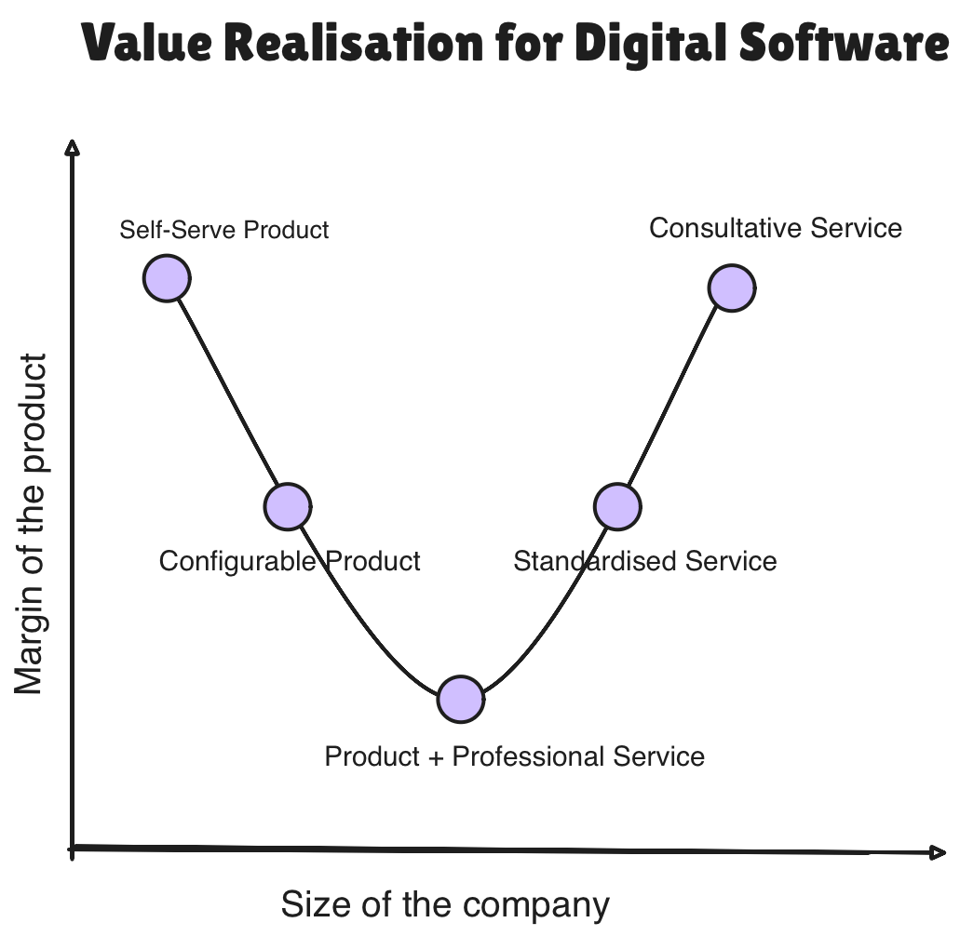
Going back to DOLE, they may have customised their TMS but there would be other products in their supply chain stack that they bought off the shelf and use it.
The concept of market based logistics stems from using jobs to be done to define the simple task that can be accomplished using the product by most companies. The product comes with an opinion communicating why the design of the product enables a customer to perform the job in a better way. So, every company who has to do the job can now opt to use the product and do it in a better way.
This process allows us to take the concept of software development or design systems of using fundamental components to make new components.
By viewing your services as a combination of these fundamental components. We will be able to create a market where multiple companies can use the services via a marketplace.
There are two futures that may take shape with the advent of agentic AI :
- First, a product bundles consulting by leveraging agents and expand to enterprise. The challenge is not just about feasibility but also acceptance from customers.
- Second, agents instead of humans start using products. This involves building AI competencies within the customer’s organisation and products making their jobs to be done easily understood by an agent.
Which of the two will prevails remains to be seen as the agentic AI discourse is deafening at the moment. When the tide recedes , we will have an answer to this and if you are a software provider in this space, tread thoughtfully since both approaches can lead to increase in margins. Executing on either comes with its own set of trade-offs. If you hedge by doing both, you will be stuck in low margin business.
Round up
Over the last couple of weeks, I was frantically preparing for the talk I had to give to our go-to-market teams. I was re-editing the slides till the last day but each time I was doing it, I was looking at message that I was delivering and checking if it fits to what I want to communicate.
Prepare a presentation
This post by Joe Pairman was helpful in preparing me for the talk. Except doing the practicing bit I tried to follow the advice in the post. I can now vouch for its believability.
The version of talk in my head was far more complete than the talk I delivered. So, next time I am going to be looking at myself in the mirror till I practice all the jokes that I would like to say in the talk to the audience.
Links that resonated
The Tragedy of Agentic Commons
A post by Rohit Krishnan and Alex Imas talking about the necessity of price in a high dimensional matching market with AI agents. The post has many other papers linked to it which I am currently checking out but I highly recommend taking some time and going through the series first.
Sign off
I planned to stay an extra day and take a breather but the weather had different plans. We are going to wintess a Winter Storm, my first. So, changed my flight and got back as soon as possible.
Spending time with colleagues who I see on screen all day is really energising. Last year my contributions came as surprise to the organisation but this year they expect me to deliver results. So, it becomes my main job not something I did on the side.
And, I am starting to feel the pressure. I have been thinking of ways to improve our execution and increase our performance levels ever since I got back.
Signing off till next time,
Vivek, staying warm indoors.

