
Categorised as TMS
Revisiting the concept of Transport Management Systems (TMS) and the power of software "concepts" in the logistics industry.
You get a TMS , you get a TMS
Lately I am revisiting the topic of Transport Management System or its ubiquitous short form TMS.
The uncanny feeling of coming back to this category of software in logistics after starting something along these lines in my first job and building a no-code version of it within a startup is reflected in this famous Oprah meme were she hands a car to everyone in the audience.

The first version of TMS is usually an excel sheet. You don’t need to buy a TMS software to be using a TMS. Very similar to living outside the cities in America, you end up using a car whether you own one or not.
Every company requesting logistics and transportation services will at some point invest in getting a TMS for formalising the practice of managing their transportation.
A special mention that all of this are my own thoughts and not that of my previous and present employer.
Few months back thanks to fediverse I stumbled onto this in paper by Daniel Jackson where he and his co-authors broadly outline the use of concepts in software at Palantir.
So, what is “concept=software” mean.
Any software app, service or system can be viewed as a collection of interacting concepts
And quoting from the abstract of the paper, Palantir uses these concepts as a repository to build apps.
With a centralized repository of concepts, Palantir engineers are able to align products more closely based on shared concepts, evolve concepts in response to user needs, and communicate more effectively with non-engineering groups within the company.
It is also important that we differentiate this from features which are more broader representation than a defined concept.
The fundamental difference is that concepts, unlike features, can be defined independently. A concept is free standing, and can be reused between one app and another. That’s what makes concepts understandable: when you learning how to use HackerNews and you discover that is has an Upvote concept, you know what it’s for and how to use it, because you’ve seen the same concept in other apps (for upvoting comments in your newspaper, for example).
A concept of procurement of services from logistics service providers and we can represent it using a state diagram.
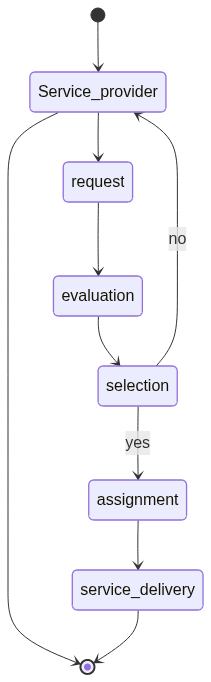
So interaction with any logistics service provider will replicate the same concept. If there is a software providing this feature to its users, it will also imbibe the concept.
The “concept” framing brings an independent component that can be used to provide a granular abstraction of the physical activity. For example, our concept of procurement could be used for Logistics service providers as well as vendors or suppliers.
The irony in all of this is that typically form over function gets associated with TMS. It can only be a TMS when sold by certain vendors or it would take multiple years to build a homegrown one. Both are in some form expensive endeavours.
So, when we built a TMS using an airtable account in a startup as a logistics division. The product team played down the TMS tag and spent 8 more months building their own version. By the time I left, it was still struggling to get adopted by teams inside the company.
In the meantime, our entire division ran with the airtable TMS and the tool evolved organically with the functions of the team. The main drawback for any no-code solution is that it is pinned to the one who hacked it together. Once that person leaves, the product stagnates and becomes reductant as it fails to satisfy all the jobs of the users.
“Concepts” as a framework helps to address this drawback. By defining and building independent components, AI could be used to build a TMS that fits the function of the team. Thus, no longer limited by any one contributor.
Going back to the paper where the concept of list was extracted and connected to other concepts it was being used with inside Palantir products.
For example, we reified the concept of a List, a “user-curated grouping of information intended to support decentralised knowledge management”.
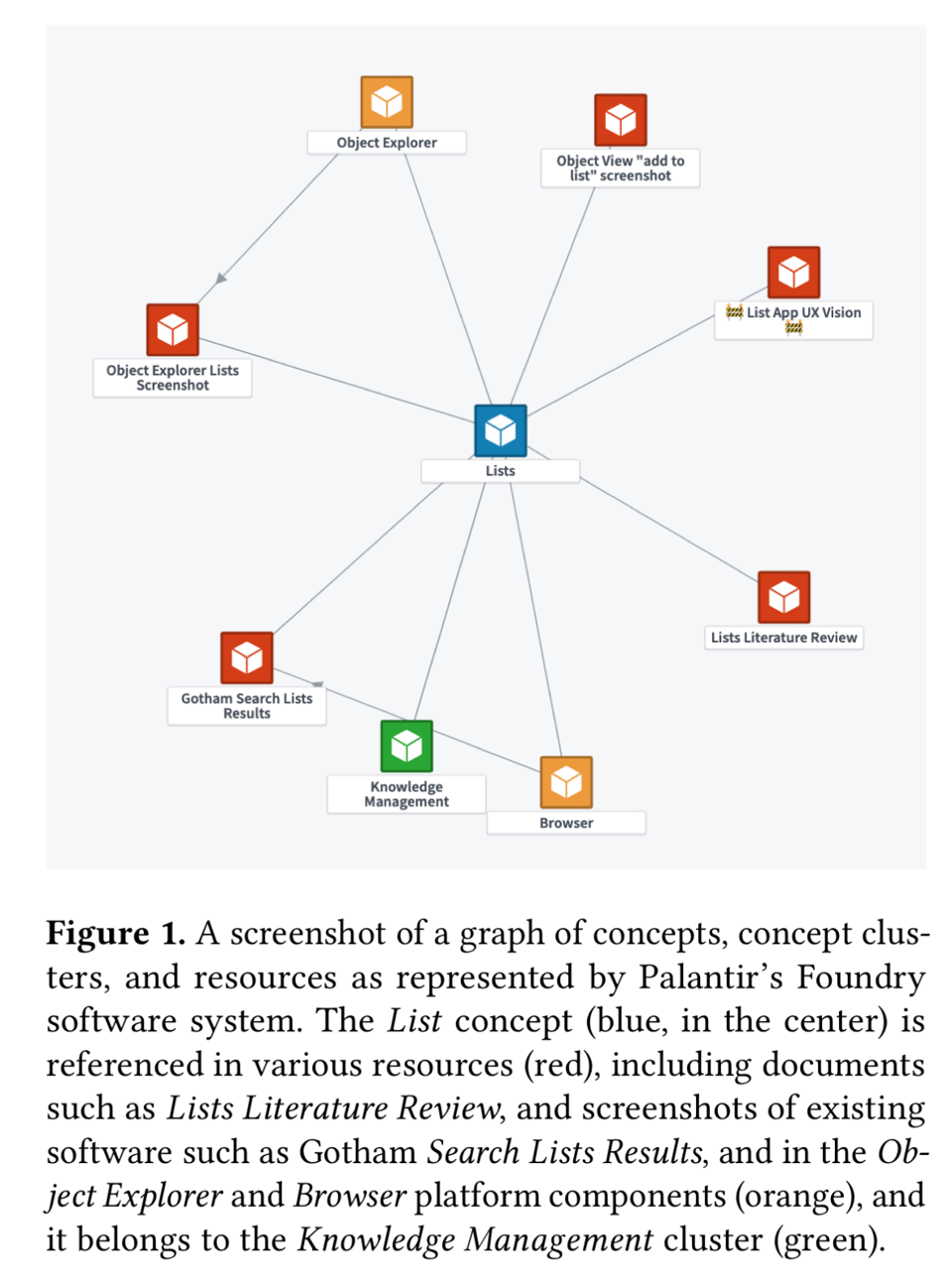
Which when extended to the category of TMS and I still get a sense that underlying sentiment of what gets called a TMS hasn’t changed. I like to express my emotion using the famous dialogue of Logan Roy in succession, “You’re not serious people”

I want to close out by mentioning what building software actually entails.
Computational thinking means more than being able to program a computer. It requires thinking at multiple levels of abstraction." - Jeannette M. Wing
Building accurate abstractions whether it is with AI , no-code or excel in logistics is what products should demonstrate to its users.
I will write more on this but for now the takeaway is that next time you see someone claiming to be a TMS, just ask their thinking and how they abstract the processes into their product instead of judging the stack on which it is built.
Round up
I have completely dropped the ball on updating my LinkedIn or twitter with any form of writing to share as a roundup.
In other news, I moved roles inside the same org and now operate more in a product growth role. Trying to put some of the thinking behind this post into action.
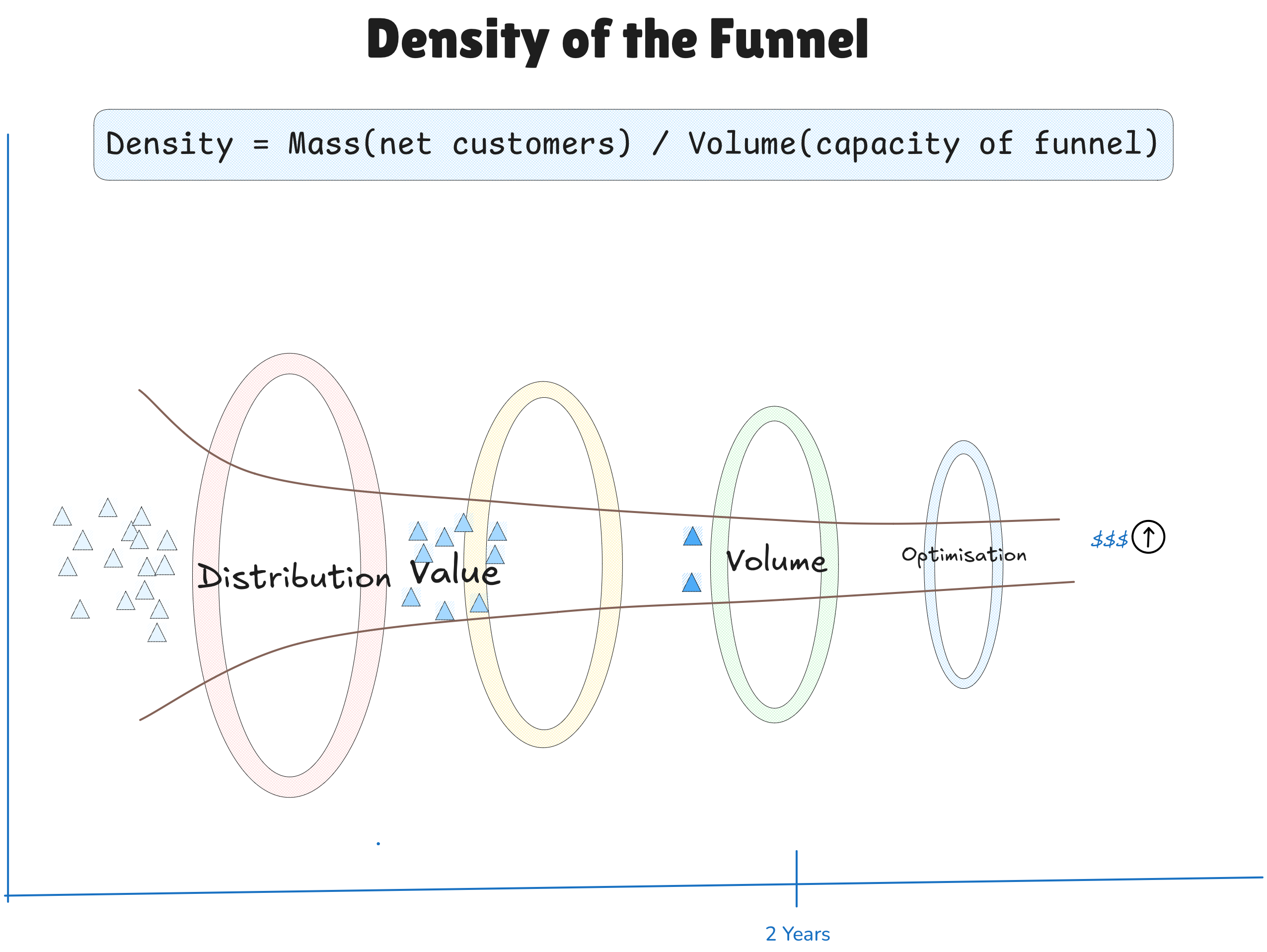
We can increase the density of the funnel by either increasing conversion rate or increasing the volume of the funnel.
Links that resonated
Karthik who was running Babbage insights wrote a set of poignant posts around his startups closing down.
I happened to read his writing for a while now and was rooting for him to succeed because I believed the problem they are solving is on point.
My learnings from Babbage Insights
If you read both the posts together , you get a sense of what toll it takes when things don’t go well. Most often in startups things don’t go well but it also provides you learnings that will catapult you back into the groove. Wishing Karthik all the best as he looks to recoup and restart.
Sign off
My apologies for being late. I have been writing this issue in bursts instead of a single stretch. The role change and then upcoming travel took most of my weeks to find some time to write.
As I finish this on my long commute to the airport to travel to west coast and spend time with our go to market teams, I will be unpacking some of lessons learnt last year. I spent most of the time on the front lines pitching to customers. And this year the objective is to scale the effort by building narrative loops that enable the teams to execute further without me in the loop.
Signing off till next,
Vivek, visiting west coast of United States for the first time.

