Expecting the Unexpected: The Comprehensive Guide

This week, we’ll investigate how there is no such comprehensive guide, but that does not mean you shouldn’t try to assemble a sort of readiness kit despite that. There is “possible” housed within the (seeming) impossible. Promise.
It’s been a complicated week, hence why I’m sending this in the waning minutes of Sunday as it becomes Monday, rather than in the early morning hours as planned.
Further on will be pretty much a copy/paste of the “syllabus” that was designed to be the welcome email you receive for subscribing. Some of you got it, others didn’t, but now it will live right toward the beginning of the archives for everyone’s convenient reference.
The Steep Hill to Climb
We are still a long ways from both the short term (mom’s May rent) and the long term (ongoing monthly rent) goals we need to hit to keep Rita where she is. The important thing is that we’ve made progress. The biggest thing you can do to help is to keep sharing this post wherever you can.
The outpouring of messages has been heartening. Every donation toward her care, including those who have contributed via monthly subscriptions to this newsletter, has been more meaningful than I can express in words.
I was terrified that starting this newsletter, making that post, and sharing what’s been going on could lead to any number of doomsday scenarios.
I have gotten a grand total of two Very Unhelpful Messages of “Advice” that are the polar opposite of the dozens of messages the rest of you have sent. One of them directly told me that I should “face reality” and sign my mom up for Medicaid and “let the state handle it.”
Boy, did I delete that message from a person who does not know me or her faster than lightning.
I’ve done extensive research into all of the possible options along the way. The current state of Texas Medicaid is such that it’s neither a “solution” nor a process I would wish on myself, my mom, or perfect strangers.
This well-sourced article is from 2024, and things have not gotten better since. Medicaid is a Federal program, but it’s administered by states. In the name of rooting out fraud, the people in charge in Texas and the federal government have made a concerted push to refuse benefits to people…out of an abundance of alleged caution. The reality of living on Medicaid in a managed care facility is neither secure nor safe. The majority of facilities, like Medicaid itself, put an enormous amount of effort into saying there’s “no room.” Unlike emergency rooms, there’s no mandate that a facility that can accept Medicaid patients actually will.
I don’t care what it takes. We spent over a year keeping her alive, and she deserves a better quality of life than that.
The whole country does.
As optimistic as I would like to be, I have to be realistic, too. This week will be very make-or-break on a variety of fronts, in some ways that I’ve shared about and others I’m not ready to just yet.
I’m eating my daily meals and hydrating, getting full nights of sleep, and making sure that I don’t disappear into the dread of worst case scenarios. Feel free to worry about me, but don’t worry about me, if that makes sense.
Please keep circulating the link where you can. One person with means could make a huge difference all by themself, but so can a lot of one persons in aggregate.

The Improvisational Frameworks of Preventing Imminent Apocalypse
I got home this evening and felt like something seemed off.
At various points over the last year, that feeling would have me hop in the car and drive across town at 3am to check on her. Every once in a while, something would be going not-well in the middle of the night, especially toward the beginning of the journey.
Don’t worry, by the way. There’s no big bummer story coming.
Today’s is a story about how everything isn’t just a series of nonstop catastrophes, and how to lessen the impact when a Bad Thing does eventually happen or start to happen.
The best way to encapsulate the feeling above is “here comes the asteroid.”
It’s one of the most-recurring feelings I’ve had since mom had her fall last year, by a long shot. It’s a multi-daily reflex at this point, no different in many ways to “did I leave the stove on,” but it’s radically more capable of cratering one’s ability to think about anything else.
Tonight? I think it was just indigestion.
That, and sliding into thinking about the ongoing list of stuff I have to keep getting done, as tough to face as it may all be.
Managing mom’s relatively minimal “estate” has been a challenging, interconnected series of never-ending quests and side-quests.
There are a bunch of things that I learned early in this whole un-fun anti-adventure that I wish I’d known in advance. The simplest is that there are three things that would have saved me a lot of trouble if I’d had them sooner.
I promise that you or someone you know may need these things now, soon, or…for absolutely certain…some unexpected time in the future.
Having them does not make The Bad Thing happen. Think of them as magic keys you will need to open doors that you will need to go in and out of multiple times, no matter what form The Bad Thing takes. It’s better to have the keys you need than to try to summon a locksmith out of thin air.
For anyone with elder parents, the three key things you need to have, ideally before something happens like my mom’s fall, are:
Medical Power of Attorney
Durable/Financial Power of Attorney
A current Will and/or Advanced Directive regarding life-saving care
It might seem like you only need the first one for many/most situations. It is much easier to get them all at once, both in terms of the notarization needed and the emotional labor of facing tough things to come down the road.
You will absolutely avoid or want to avoid having the conversations needed to make them happen or make the time to do them.
Putting them off will make hard times harder.
The “MPOA” is the most essential, especially if your parent or loved one is incapacitated in any way, no doubt. That’s the most crucial. You need that for whatever shape the “triage” stage takes. Have the original where you can find it along with multiple pre-made copies.
The “financial” POA allows you to transfer necessary accounts into a trust, but more importantly, allows you to just plain access those accounts in the first place. Think bank, mortgage, insurance, and everything else you may need to manage. Start setting things to autopay. Figuring out what to change, dial back, stop paying? Can’t do any of that with access.
The Will or Advanced Directive is the thing you are going to want to put off more than anything.
The same big conversations around final wishes, quality of life, and so on that are hard to start will be much harder to have when you’re both in panic or crisis mode.
Everything you’ll have to deal with when a Bad Thing happens cannot be perfectly anticipated, no matter what.
Having these three key things at hand will result in care staff stopping to tell you “oh you already have that? That’s great. You’re really well-prepared.” The verbal gold stars will help make you feel more capable and in control than you feel or are.
Here’s the big secret of the Three Keys I was saving: you should give some thought to who needs them for you, too. Get those done. Change or update them over time as necessary.
If you have trouble getting your Significant Other onboard to get them done for each other…well.
Consider changing or updating that, too.
The Fourth and Fifth Keys of Power
This may be the thing you resist the most, but if you trust me this far, go with me on this.
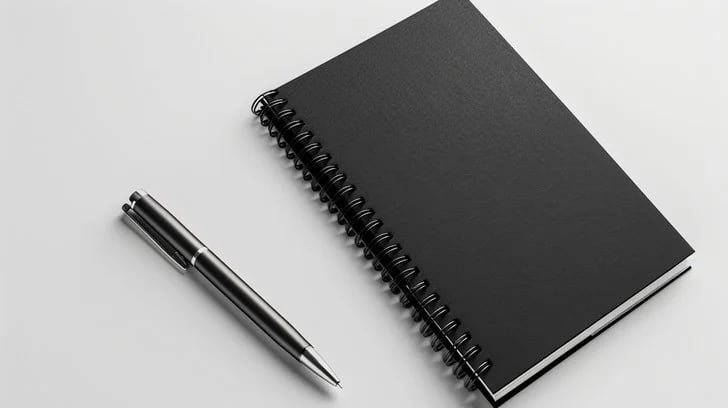
You need a notebook and a pen.
Set them aside in advance with the Three Keys, or get one at any convenience or grocery store on the way to the hospital when The Bad Thing happens.
They don’t need to be fancy in either case, but you’ll want a bunch of pages. Completely optional but very useful is some sort of document folder, the kind that folds up like a sheet of paper accordion-ed into thirds. Storing the Three Keys in something like this? Rarely will stationery make you feel so powerful.
It doesn’t matter if you hate your handwriting or do not like taking paper notes. You are going to need to assemble reference info you need as it comes, changes, and gets handed to you in a rush.
Sure, you can take notes on your phone. We all tell ourselves we will and that we can keep great track of things that way. You’ll tell yourself that you will take photos of all the paperwork you’re handed. You know you’ll always have your phone across many sleepless nights, and it’ll just be better to have it all in your phone.
You might try to make all that work, but then finding the one thing you need again is a dive into a labyrinth with no end.
Especially when it comes to medications and doses and polysyllabic procedure names and doctor names and phone numbers…all hospital records are digital on their end. Getting a hospital to provide digital access to all that info you need just won’t happen.
The notebook and pen are your capture devices, a “home” for all sorts of useful and necessary information. When you or your loved one transfer to another place, there will always be a delay in records transferring, even within the same hospital system. Even then, those records are geared toward the care team, not you or your loved one.
You need to have access to your own “knowledge base” that works in a way that works for you. Among other things, you will need to keep track of:
room and floor numbers, direct number to the room
medication, dosage, changes in dosage, when changes happened, and side effects to watch for
doctor names and contact info
procedures that are planned, when they will happen, how long they should take, and where you can wait
cafeteria and nearby food options: hours, menus, and locations
visiting hours and how to get in after hours
“next steps,” including types and options of specialty facility you may go to next
contemporaneous notes in the event you detect possible/obvious neglect, experience poor treatment, or witness outright abuse
other things I couldn’t predict or remember if I tried, honestly
The most important thing I didn’t realize about these tactile things at first is that they give you something to hold onto. When you feel your grip is as loose as it has ever been, it helps more than you might think.
As necessary, throw them really hard into the seat of the most uncomfortable recliner in the universe.

The Idiot Box
Rita’s fine, in good health, and safe. She’s making better wheelchair transfers and getting stronger.
She’s happily rewatching the full 17 seasons of Heartland that are available on Peacock. It’s a “ranch people” soap set and shot in Alberta, Canada.
She found it amusing that Chris Potter, who plays the family patriarch, was the original cartoon voice of Gambit in X-Men: The Animated Series, a show that my brother Eddie and I both loved. Eddie in particular was obsessed with it, and loved Gambit almost as much as Wolverine.
She’s enjoying “noticing things [she] missed the first time around.”
For someone who has hated watching episodic TV for as long as I can remember, Heartland has somehow broken through for her. She would dismiss filmed entertainment as “boob tube” this and “idiot box” that and “well, at least Star Trek is reasonably well written, but…did you already finish your homework” when I was a kid. Now, she is downright eager to escape into novelistic television in the evenings as the assisted living quiets down for the night.
For just as long as she previously hated TV, I’ve known my mom to be a voracious reader.
Her dementia had progressed enough after she fell that she couldn’t hang onto the narrative of books anymore. We went through a few rounds of her acting like she was reading books I’d get for her, but she still craved that narrative engagement. The loss of “books” was tough for her to cope with until just a few months ago, when she finally tried out binge-watching massive swaths of TV.
She watched the entirety of Yellowstone and enjoyed it well enough, but it was “too gross” and “far too violent.” I don’t know if I’ll bother taking her through the prequel and upcoming sequel series.
Help me out: what “novelistic” TV series do you think she might like, with a preference for longer-running series?
The Syllabus aka What to Expect
Every Sunday morning (Central Texas Time), you’ll get an email like this one.
Like an Honors Seminar, the course this newsletter takes can (and should) be influenced by your input.
The full archives will always be available to you as a subscriber, whether you have been with us from the start or joined later in our open-ended term. Office Hours will stay “pay what you can” in perpetuity.
Please make sure to catch up in sequence, as various planned topics will definitely involve a serialized cadence.
You’ll receive updates about (and in some cases from) Rita, in addition to the aforementioned already-planned topics.
Rita will take her metaphorical “Red Pen” to each issue prior to publication. Her notes will be provided in-line as quotes or, at the end of each installment prior to sign off, as needed.
Email us any time, and the Professor and I will reply as soon as we can and do our best to help: [email protected]
“What Rita Taught Me”
One topic in particular is specifically in need of your input.
If you were a student or colleague of Rita’s and have a story (or stories) you want to share, whether long or short, we want to include them. Did taking one of Rita’s courses or knowing her have an impact on your life?
If there are photos you have to share, please find and send those too!
I’ve heard stories over the years about how my mom was the reason people met and married their spouses, changed the course of their professional lives, and more.
It’s fine if it takes some time to collect your thoughts and/or photos if you have them.
Send us an email ([email protected]) and I can help get things started.
Course Requirements
There is no “homework” unless you need there to be, don’t worry. This is not even “Pass/Fail.” You Pass by virtue of being here.
The only rule in place for this course is that my mom and I kindly request that you respect our boundaries of privacy and safety.
Regardless of how much we choose to share in these emails or otherwise, or how close you have personally been to her previously, please do not attempt to locate or visit Rita for any reason.
Her memory is already such that even slight disruptions to routines radically affect her stress and general health.
Dementia is a countdown clock.
You can feel it ticking down, but you never have concrete numbers to tell you just how much time is left until you have already arrived at one of those big drop-offs.
I started Office Hours with my mom’s permission to make the best use of however much time that ends up being. This allows me to safely share as much of her life and journey as possible while also not missing people who want things communicated to her.
The good thing going at the moment is that she is clear-minded enough to focus on this in a way that can help prevent that clock from ticking away any faster than it has to.
For my part, I hope that sharing some of my experiences as a caregiver will also helpful to you or someone you care about.
About the Author/Editor/Teaching Assistant
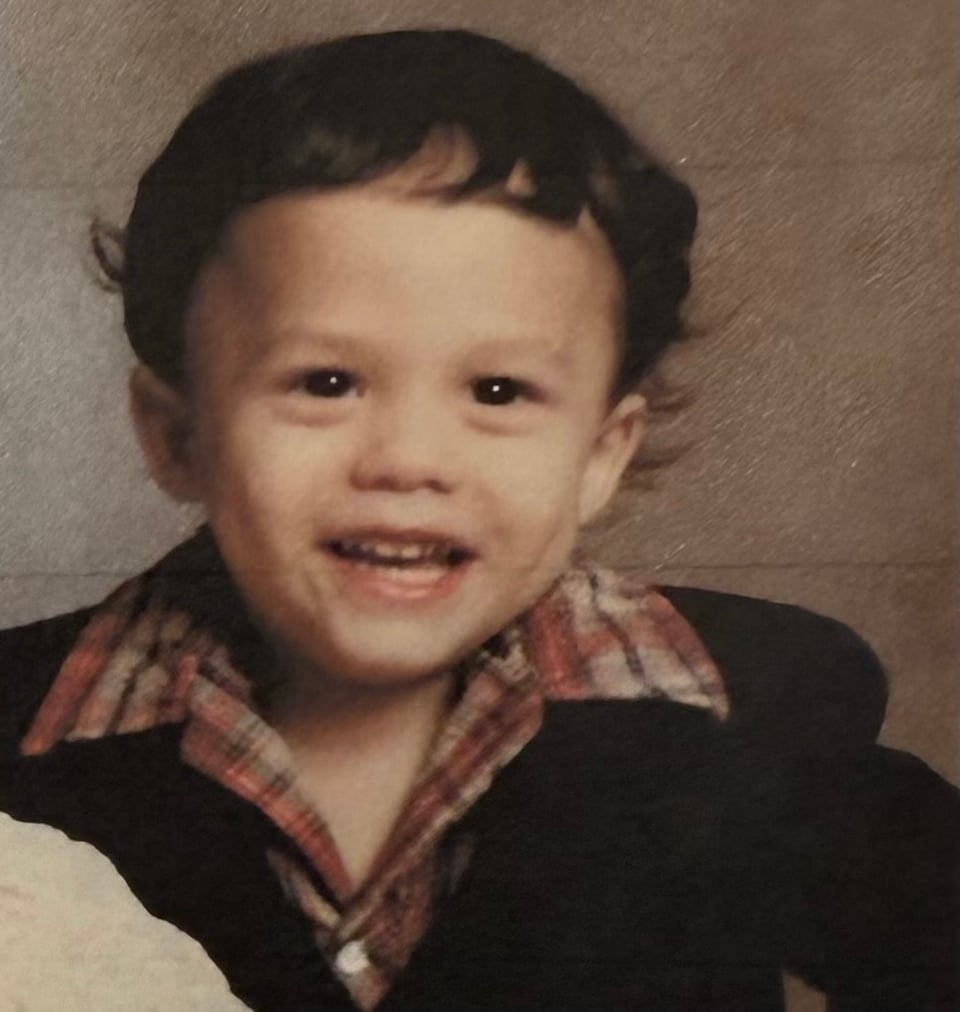
My mom has been fond of reminding me of late that I am her longest-term “creative or instructional design project.”
I’ve had an extremely varied career, including time in marketing and business consulting, acting & directing, and, for a while, I was a sort of talk show host on weekends at pop culture conventions across North America. LeVar Burton, my lifelong idol as a children’s entertainer, gave me the best compliment anyone has ever given me at what turned out to be the last one of those I’d ever do.
I only started doing those because of my mom and the “bucket list” trips she took my little brother on before he died. We’ll get into those sometime this summer. I have a lot of photos to dig up before we do.
I’ve been actively podcasting as a host, co-host, and panelist on various shows going back to around 2010. My fiction and poetry have been published in literary magazines that no longer exist, so I really should get around to finding the clippings I may or may not have saved.
There’s a lot of good to go with the tough times, promise.
That cold 42nd birthday night in mid-February and the months since have given me a sense of clarity I’ve never had before. It brought into sharp focus my need to be far more intentional about how I choose to spend however much time I have left.
I’m really glad to know that some of it is with you, whoever you are.
However dark and difficult the world may feel in a given moment, I promise that someone out there cares about you and what you’re going through. Somebody is rooting for you and believes in you.
It’s me. I am that someone.
I am rooting for you, and I believe in you.
I’ve spent 14 months and counting as of this writing telling my mom that in different ways at different points.
She believes me, most of the time.
She ought to.
I learned it from you, mom.
See you next Sunday, brighter and earlier than this week, I hope.
Bear with me though, I have a tough (but not insurmountable) week to come.
Regardless of how today went, here’s to a better tomorrow.
-Moisés
Thank you for subscribing to this weekly update from Dr. Rita Deyoe-Chiullán, written and edited by her son and Teaching Assistant, Moisés Chiullán.
The best ways to contribute to Rita’s ongoing care are detailed in this post.
Whether you were already one of her nearly six decades of students or not, you are now! Office Hours will remain “pay what you can” on an ongoing basis. Please just keep showing up for class.
If you have a story about “What Rita Taught Me,” please send us an email ([email protected]), whether you learned something from her in a classroom (in-person or online), or even just from reading Office Hours.