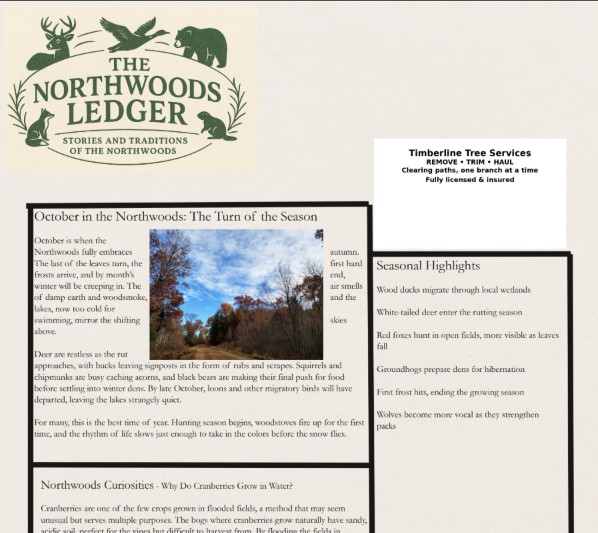
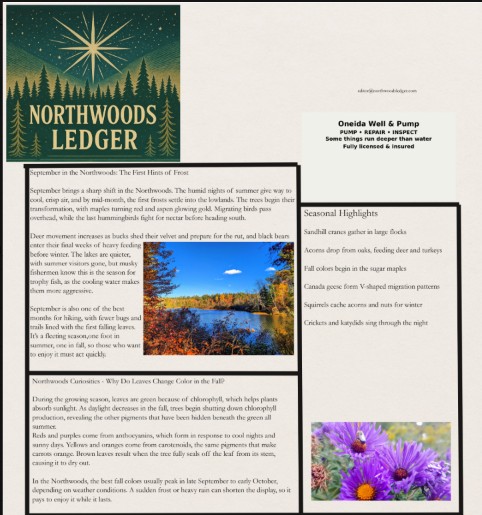
The October issue of The Northwoods Ledger is now live!
Click the image to see this month’s Ledger!
This month, we cover local town board decisions across Vilas County, how cranberry bogs are harvested, and the hard routes traveled by early mail carriers on snowshoes.
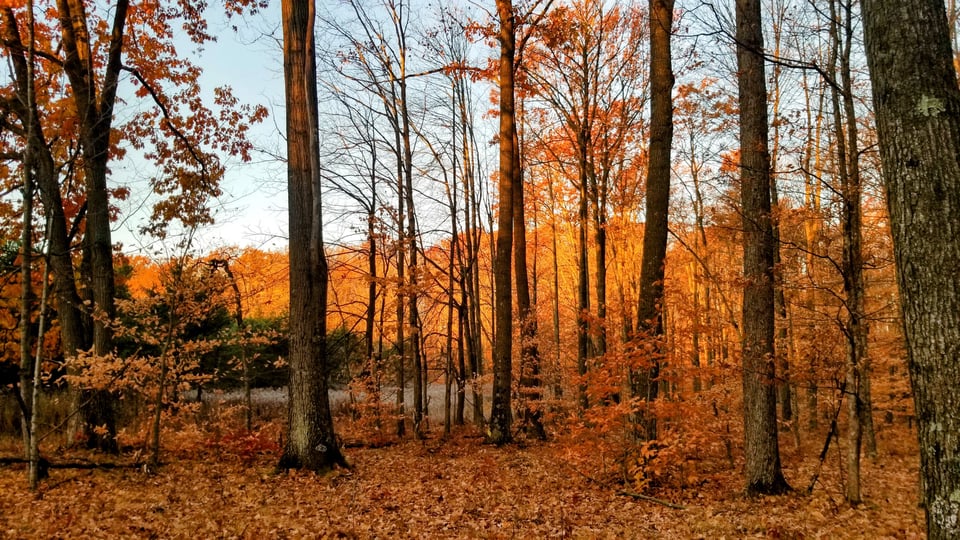
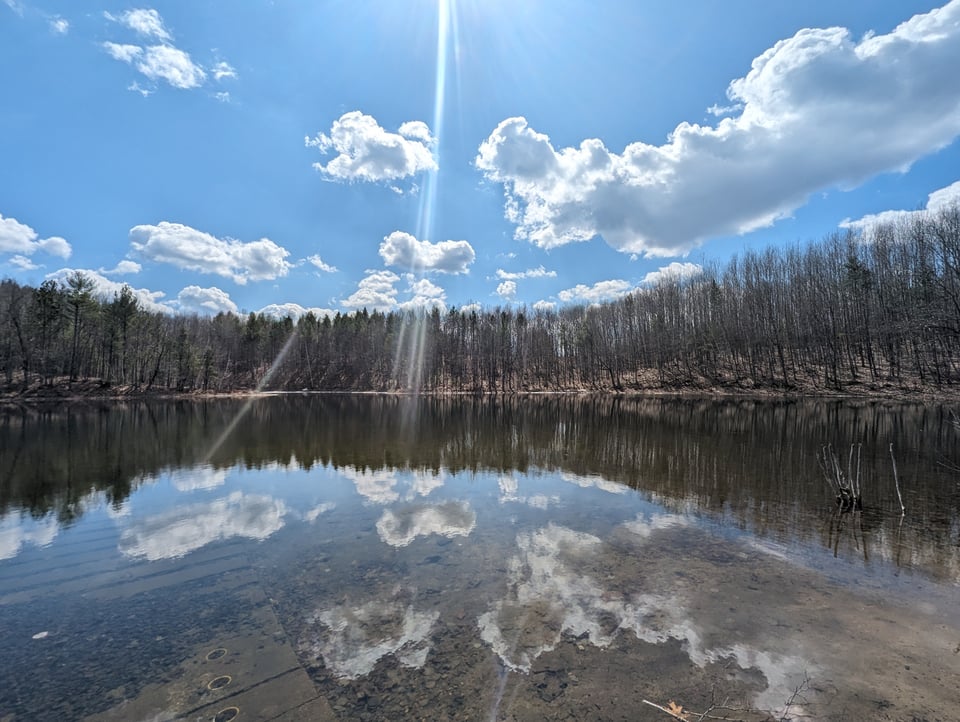
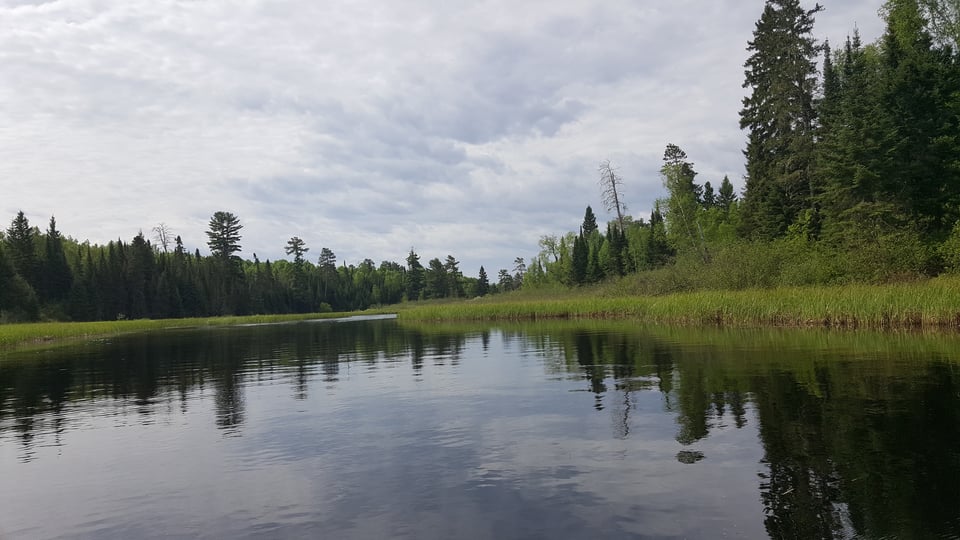
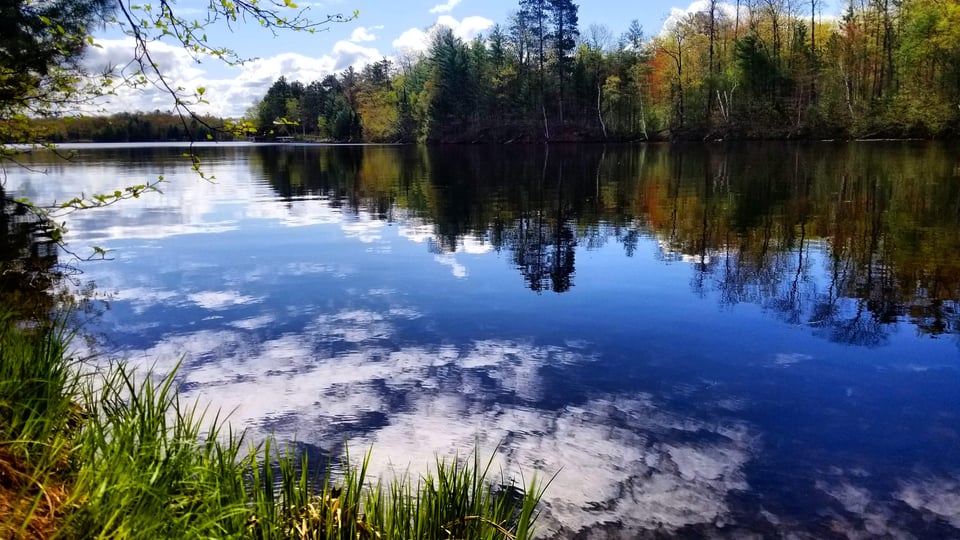
October is when the Northwoods fully embraces autumn. The last of the leaves turn, the first hard frosts arrive, and by month's end, winter will be creeping in. The air smells of damp earth and woodsmoke, and the lakes, now too cold for swimming, mirror the shifting skies above.
Deer are restless as the rut approaches, with bucks leaving signposts in the form of rubs and scrapes. Squirrels and chipmunks are busy caching acorns, and black bears are making their final push for food before settling into winter dens. By late October, loons and other migratory birds will have departed, leaving the lakes strangely quiet.
For many, this is the best time of year. Hunting season begins, woodstoves fire up for the first time, and the rhythm of life slows just enough to take in the colors before the snow flies.
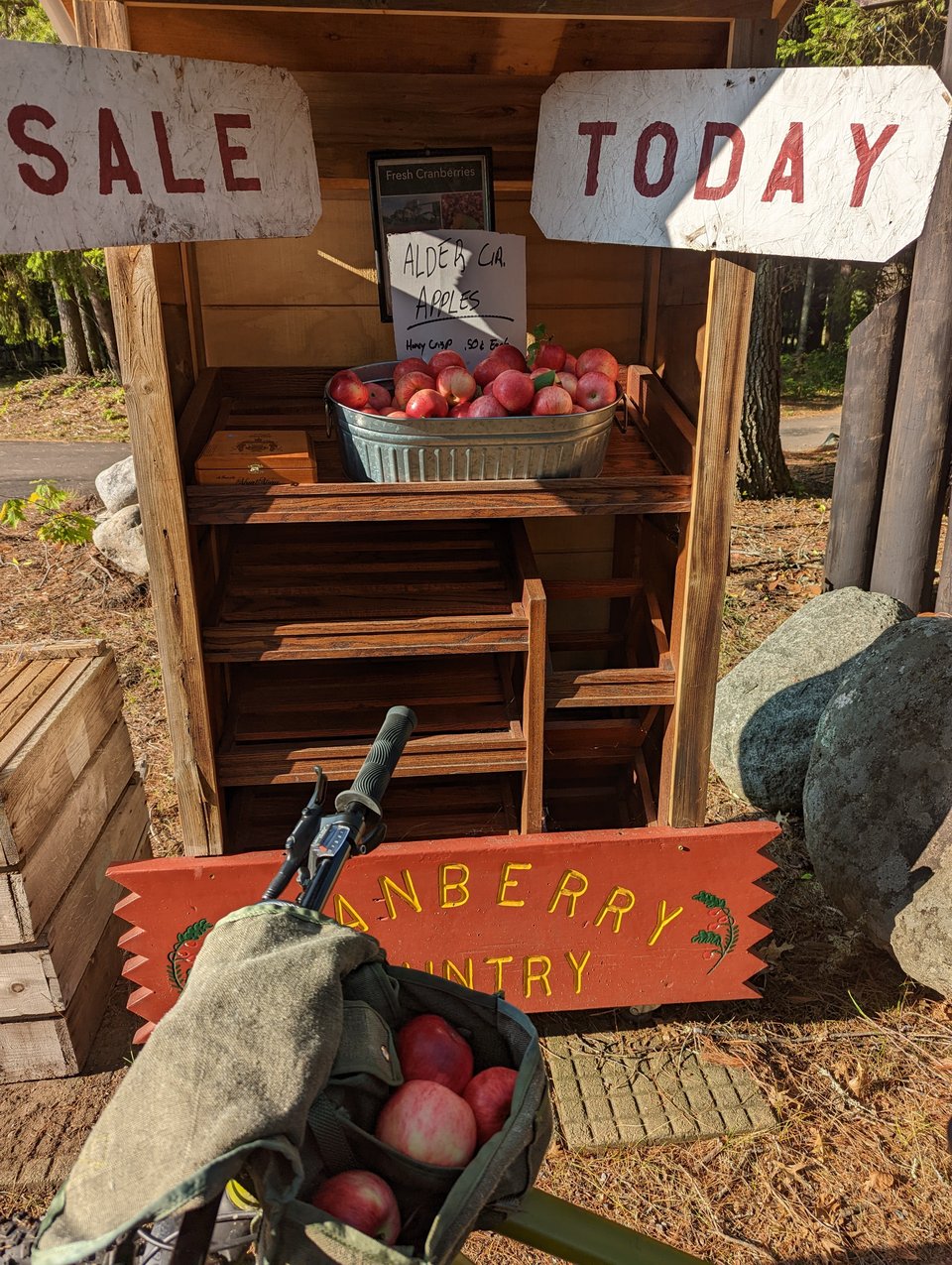
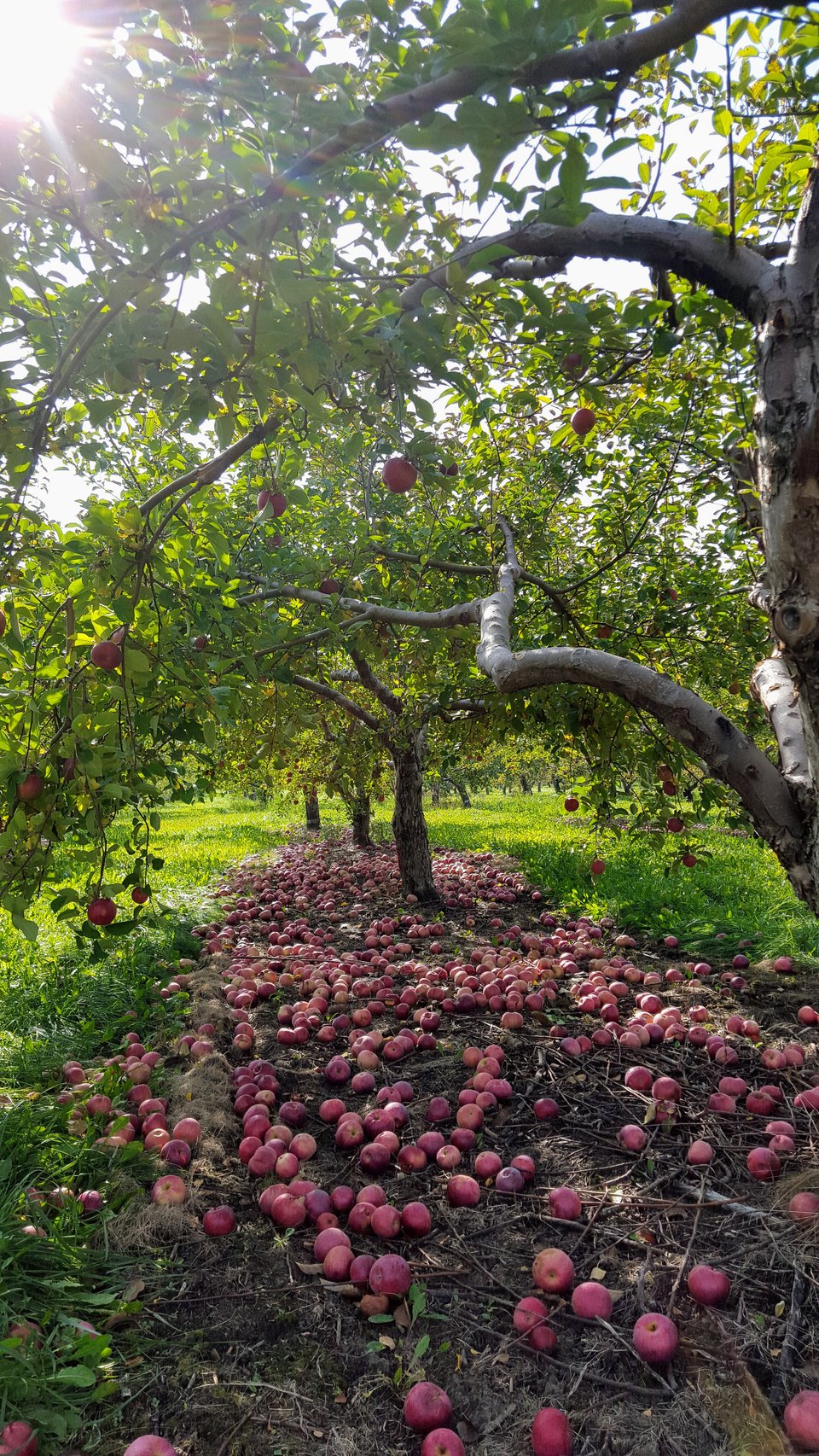
Before grocery stores stocked shelves with jugs of cider, making apple cider in the Northwoods was a community effort.
Families would haul bushels of apples to a shared press, often set up in barns or near farmhouses. The process was simple. Apples were crushed into a pulp, then squeezed to release their juice.
As temperatures drop, meals get heavier. A good stew is a staple of Northwoods cooking, simple, filling, and perfect for a cold October evening. Here is a classic venison stew recipe that has been a favorite for generations.
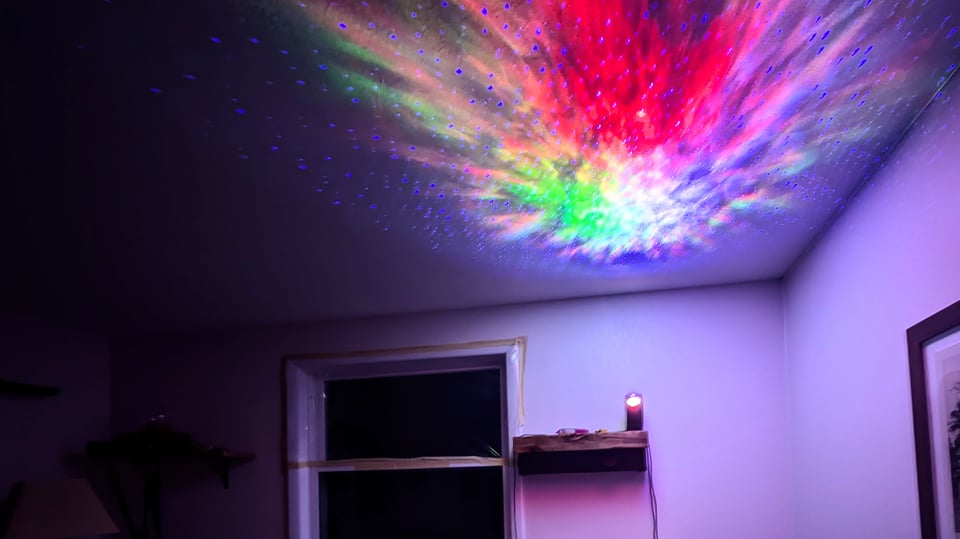
As the nights grow longer and colder, the chances of seeing the aurora borealis improve. Solar activity, clear skies, and minimal light pollution create perfect conditions for catching the dancing green and purple lights. Best viewing happens on crisp, cold nights when the sky is clear and free of moisture. The best locations are away from town lights.
Open fields, frozen lakes, and high ridges offer the best chances. Watch the northern horizon, and be patient. The aurora doesn’t work on a schedule. Peak season for northern lights runs from fall through early spring, making October the start of a long, dark stretch when the sky itself puts on a show.
On August 18, 2026, the Eagle River Common Council voted on a citizen petition proposing new term limits for local politicians. The local organizers gathered signatures from at least 15 percent of voters. Because of this, the city was legally forced to act. The council had 30 days to either pass the proposed law exactly as written or send it to the voters.
The council voted unanimously to deny the proposed law. This step sent the measure directly to the November 3 general election ballot. Alderperson Dan Dumas made a brief statement. He noted that the petition organizers did a lot of work and stated that the voters should decide the issue.
The petition on the November 3rd contains four specific rules for the Mayor and Alderpersons.
First, it sets an eight-year cap. This limits officials to four two-year terms in a row.
(We believe that informed voters are the only defense against fiscal mismanagement and the erosion of local resources. If you are a paid subscriber, thank you for making this work possible.)
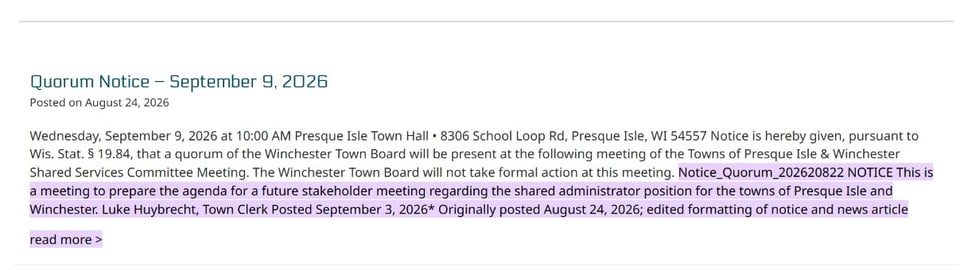
September 9, at 10:00 a.m., the town boards of Winchester and Presque Isle will meet at the Presque Isle Town Hall. Winchester Town Chairman Nicholas Newton and Presque Isle Chairman Al Eschenbauch will lead a discussion on sharing a single municipal administrator. Both towns lack the manpower needed to operate alone. They are looking for a way to manage state rules without raising taxes.
The Northwoods Ledger exists to track the history, environment, and government of Oneida, Vilas, and Lincoln counties. We document Northwoods history, write about the ecology of our woods and waters, and translate dense municipal budgets into plain, verifiable facts.
Real investigative reporting begins with Wisconsin Open Records requests filed under Chapter 19 of the state statutes. It means waiting out statutory delays, pushing back against improper redactions, and paying reproduction fees out of pocket.
Then comes the unglamorous labor. Combing through hundreds of pages of raw check registers, internal staff emails, and zoning maps line by line late into the night.
Our September edition is now live, along with the complete archive of our August investigative audits and field reporting.
Here is what is inside the new issue and a summary of our stories from the past month.
Inside the September Edition
September in the Northwoods: A seasonal look at cooling waters, active deer movement, aggressive late-season muskies, and black bears feeding before winter.
Northwoods Wilds (Peak Mushroom Season): Where and how to locate prime edible fall fungi, including Hen of the Woods, Honey Mushrooms, Lion's Mane, and King Boletes.
Root Cellars (Storing Food the Old Way): Low-tech food preservation techniques to keep potatoes, sand-packed carrots, cabbage, and onions fresh without power.
Northwoods Curiosities (Why Leaves Turn): The science of the autumn canopy, showing how declining daylight exposes bright yellow pigments and cold nights create deep reds and purples.
Northwoods Traditions (The First Frost): Practical steps to harvest remaining crops, cover sensitive plants, inspect chimneys, and stage woodpiles before the ground freezes.
Looking Back (The 1895 Timber Boom): The history of the logging surge, river drivers, and round-the-clock sawmills that built the city of Rhinelander.
When a developer divides land into home lots, the biggest expense is usually not buying the land. It is building the road.
Clearing trees, digging drainage ditches, and paving a standard public road costs between $150,000 and $300,000 per section. Under Wisconsin law, that bill is supposed to be paid by the private developer who profits from the project.
In Oneida County, however, developers have found a way around these rules. By utilizing a local waiver clause (Section 15.31(2) of the county subdivision code), developers are bypassing state mandated infrastructure costs and deferring them to the taxpayer.
When Oneida County approves a waiver, it allows a dense residential development to be treated on paper as a minor split, instead of a full subdivision. That wipes out the requirement for paved public roads and financial guarantees entirely.
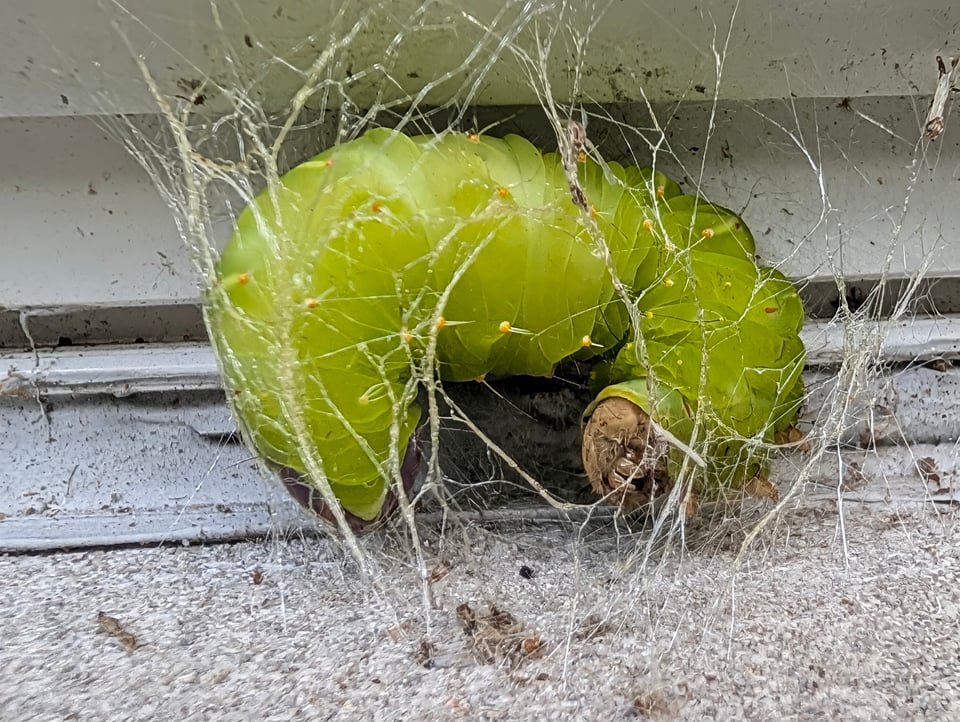
Late in the summer, homeowners in Oneida, Vilas, and Lincoln counties often see a strange, neon-green bug spinning a tough web against their houses. It has an accordion-like body with shiny orange bumps. This is the final caterpillar stage of the Polyphemus moth, a giant silk moth native to our northern Wisconsin woods.
The life of a silk moth is all about extremes. Over about 50 days, this caterpillar eats up to 86,000 times its starting weight in leaves from local oak, birch, and maple trees. It has to eat this much to build up the fat it needs to survive. Once it becomes an adult moth, its mouth does not work, so it can never eat again.
After it finishes feeding, the caterpillar empties its stomach and spins a tough, weatherproof cocoon. It uses liquid silk made of strong proteins held together by a natural glue. Inside this shell, the insect stops growing and makes its own natural antifreeze, called glycerol. This stops ice crystals from destroying its cells, letting it survive Northwoods winters that drop well below negative 20 degrees Celsius.
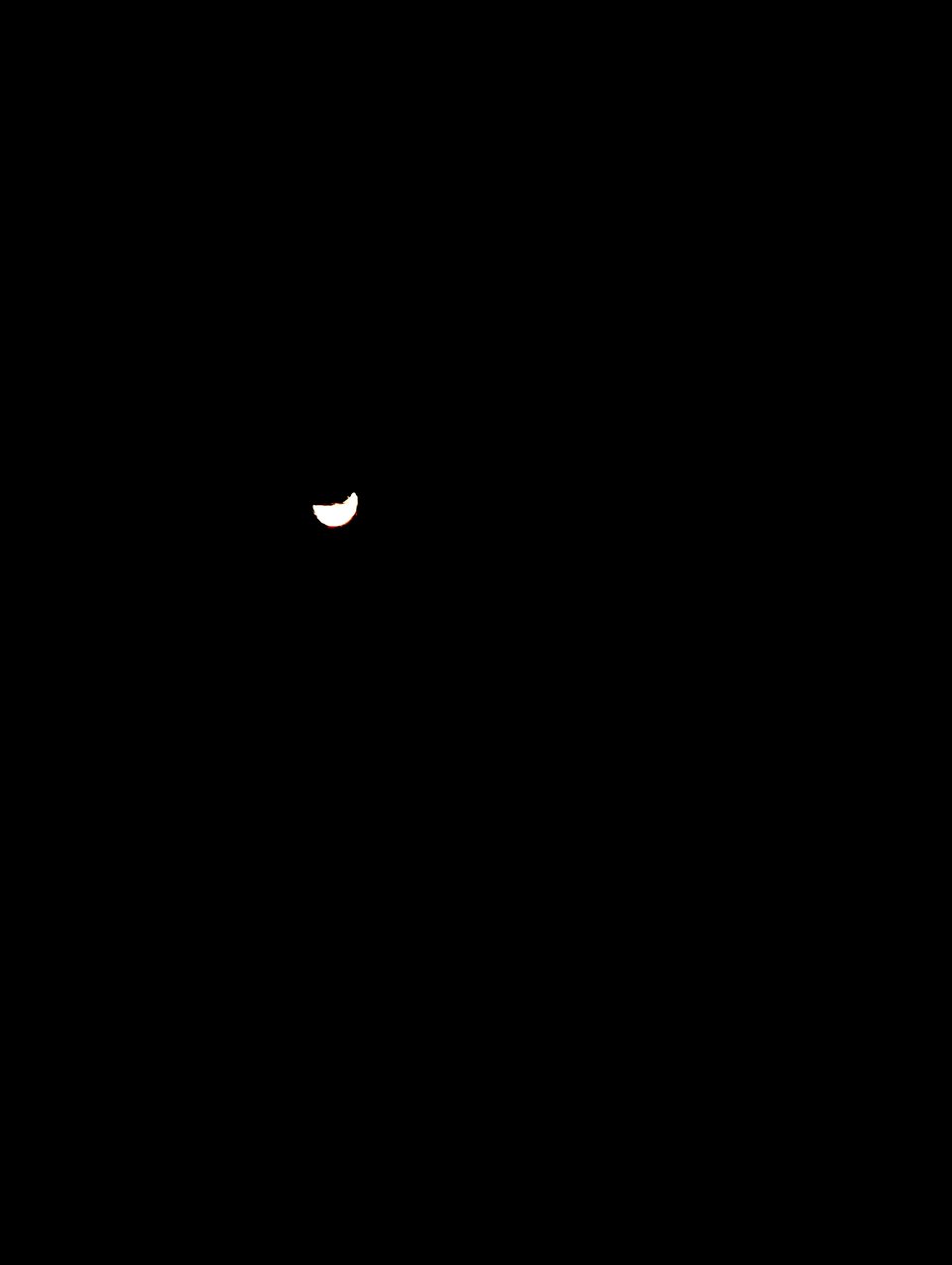
Thursday night at 11:12 PM, Earth's shadow will swallow 96.2 percent of the full moon. That is as close to a total blackout as you can get, leaving only a hairline sliver of bright white light on the top edge while the rest of the moon turns a dark copper red. You do not need an observatory, a telescope, or special eye protection. You just need a south-facing view over open water, a heavy jacket against the midnight damp, and the patience to stay up late.
The Field Timeline (Central Daylight Time)
9:33 PM: The First Bite. Earth's dark inner shadow touches the lower edge of the moon. To the naked eye, it looks like a clean, curved notch carved out of the bottom rim.
11:12 PM: Peak Eclipse. Earth's shadow covers almost the entire disc. That tiny sliver of direct sunlight remains on top, while the rest glows a bruised, dusky orange.
12:51 AM (Friday): The Shadow Clears. The hard shadow exits completely, returning the moon to its usual blinding white light.
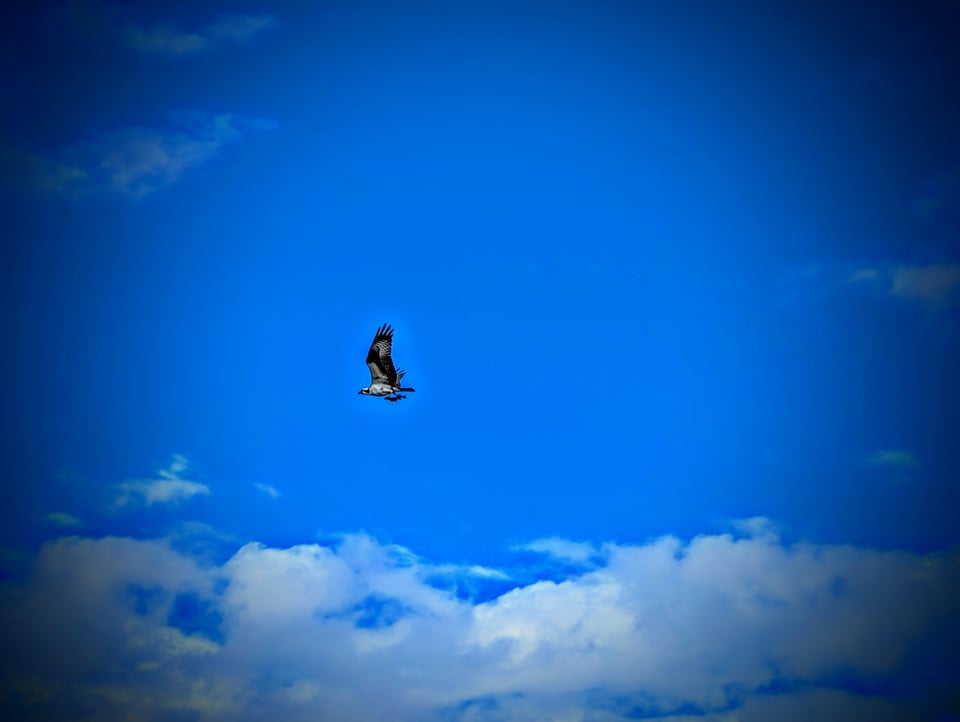
Most birds of prey eat whatever they can find, but the osprey is a rare exception. It is nature's ultimate fishing machine, built for a single task: hunting live fish underwater.
Hovering fifty to eighty feet above the surface, it locks onto a moving target, compensates for light bending through the water, and folds its wings into a sharp "M." It punches feet-first through the surface at over forty miles per hour, often plunging up to three feet deep to strike.
This is Part 2 of our watchdog series on Oneida County shoreline zoning. Catch up on Part 1- which details the initial 2023 courthouse showdown and early DNR warnings—[read Part 1 here].
The Origin: Public Pushback on Two Sisters Lake
In 2020, an aggressive clear-cutting project on Two Sisters Lake sparked public calls for tighter rules.
Oneida County officials spent nearly four years reviewing a proposed shoreline zoning amendment that would have altered how building footprints are calculated near lakes and streams.
The Core Debate: Redefining "Building Footprint"
Under state rules, structures built close to the water before modern zoning laws are called legal nonconforming structures. Current laws limit expanding these buildings within the 75-foot shoreline setback zone to protect nearby lakes and rivers.
The proposal created a new legal definition for "building footprint." It counted open outdoor structures, such as wooden decks, covered porches, eaves, and roof overhangs, as part of the main building footprint. Under this rule, a property owner could enclose an open deck or porch into indoor living space without technically increasing the structure's legal footprint.
(We believe that informed voters are the only defense against fiscal mismanagement and the erosion of local resources. If you are a paid subscriber, thank you for making this work possible.)