
The Ballad of Binge-Purge
2025-12-05
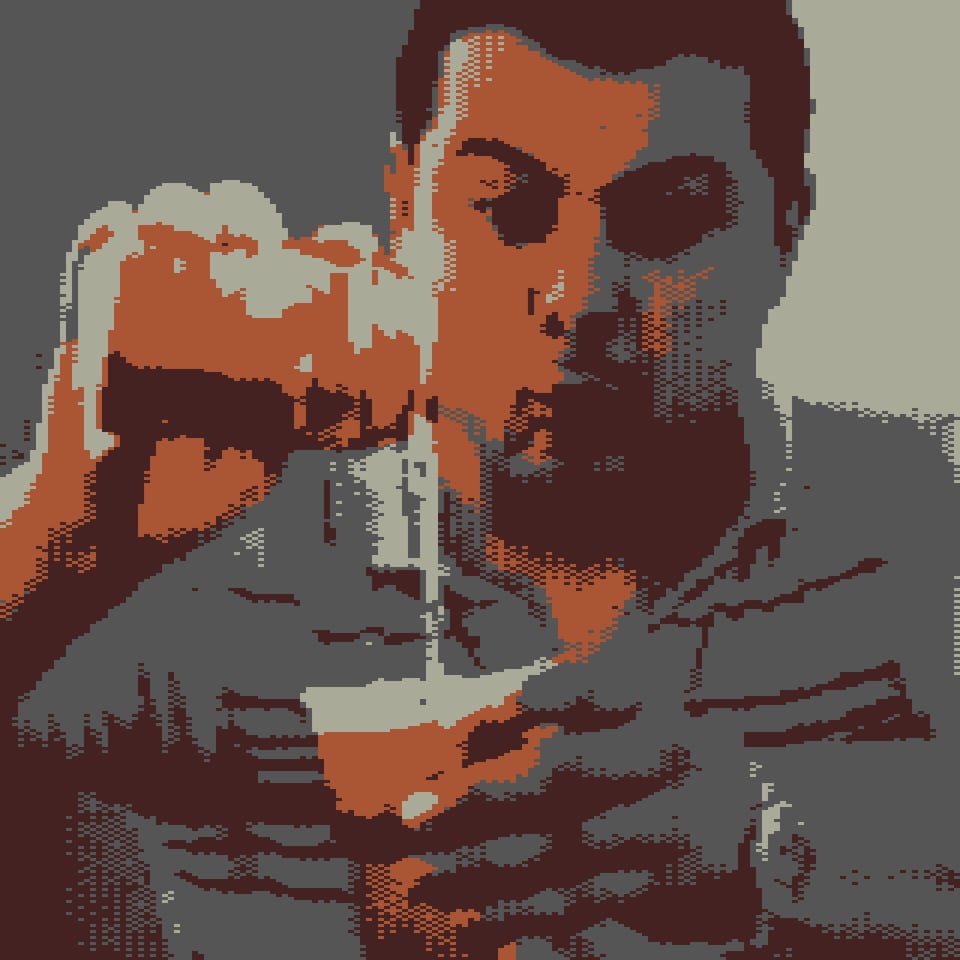
Back in the early 00s, my friends coined a nickname for me: Binge-Purge.
This was because of my habit of periodically switching between two poles of excess and asceticism. I'm not sure which was the most insufferable – the boisterous, mouthy drunk or the holier-than-thou teetotaller.
I'm off the sauce right now, have been for over a year, and it feels great. I've always enjoyed sobriety. Whenever I switched to my purge phase, I’d often find myself at the same shebeens and drinking dens that once proliferated in basements and upper rooms of Soho before the licensing laws were loosened. As the inevitable political debates erupted from my cadre of inebriated open mic poets, I'd find myself playing David Dimbleby, pausing one line for a moment while signalling the next speaker’s turn. As I bounced off to catch my night bus an hour or so later, sobriety would feel like a performance enhancing drug, which was partially down to the micro-doses of caffeine that I'd imbibed all evening.
In my current sobriety, I don't really head out on the town that much. I miss the old social circles that went with the necking of jars, but I don't miss the booze at all.
A few years back, a spokesman from Stella Artois appeared on the morning news to give his take on the concept of the "Stella Defence" – where people who ended up in court for drunken misbehaviour evoked the specific qualities of Stella in provoking their excesses. The spokesman said that there was indeed an ingredient within Stella that made people act like maniacs and that ingredient was called alcohol.
It wasn't that I hated beer, it was that one particular ingredient that I came to dislike. This missive is not sponsored by Guinness 0.0% but I find it to be indistinguishable enough from the real thing and with some of the other alcohol free brands it just took me a few drafts before the palate adjusted. It's all a balancing act where the fineries of taste trade off against the promise of no more hangovers or sudden lucid memories of being a brightly burning bore.
The same could be said for meat, or specifically the flesh of mammals and birds, which I stopped eating around 2019. None of the meat alternatives tasted like real meat when I first ate them but then I slowly forgot what meat was meant to taste like. Nowadays I'm more partial to pure veg or fish and no longer hanker for the stringy textures or the real thing.
With all that being said, there was one challenge that old Binge Purge took on that didn't offer the same rewards, despite all the rewards that have been loudly touted for it. That would be the strange interlude of my adult life where I went without coffee for six months.
Six. Months.
It must have been more than five years ago, as I would never have tried that kind of madness during the pandemic, and I can't remember what it was that motivated me to jack it in. Maybe I was trying to save money, or was becoming prone to the caffeinated jitters? I vaguely recall hearing some arguments on a science podcast that, once a person was weaned off coffee, the brain would rediscover it's own innate alternative to that early morning caffeinated surge.
I waited six long, miserable months for that natural surge to materialise. Instead, waking up was more akin to a slowly turned dimmer switch, as gradual as the break of day itself. There was, in all honestly, something quite lovely about this – to stir from the oblivion of sleep and gradually come into being. It could have become my thing.
So, why did I relapse? I missed that surge, especially with regard to writing. I loved how the mind would start racing and ideas wold erupt before I started hammering away at my keyboard as more ideas got pulled from the unconscious into the fray.
Then there was the fact that no brand of decaff could pull off the literal black magic that Guinness were able to pull off. In the years before the six-month experiment, I was scurrying off to Covent Garden or Borough Market once a week to score some medium roast Guatamalan beans. Then, at 6am every morning, in the neurotic throes of midlife crisis, I'd smother my grinder with a towel so the loud burrs didn't wake my family in the next room. I'd then spend the next ten minutes swirling hot water onto the grounds in a circular motion from my goose-necked stovetop kettle. I was still insufferable, but in a quiet, unintrusive yet self-satisfied way.
Coffee wasn't just caffeine, it was a ritual, a sun salutation, or, as Tomas Tranströmer put it in his masterful poem, Espresso, "a salutory push, Go!/Inspiration to open your eyes."
There was one upside to the six month hiatus. It reset my connoisseur palate. This meant that, when I finally gave into temptation and said yes to a pour from a filter jug, I was perfectly fine with the bland, bitter flavour of the over-roasted grounds it had seeped through. I was able to make do and settle for the supermarket fare – the posher brands, but not Borough Market posh. And yes, I still use the fancy goose-neck kettle. Just in case you needed to know, its brand name is “Normcore”.
As with alcohol, our livers get worse at processing caffeine as we age. It might just be the case that I will once again have to make do with the slow dawning of consciousness on dark December mornings. But by then I'll no doubt be a dab hand at saying my goodbyes to things I once took for everyday experiences. If middle age is anything to go by, the days might whizz by even faster than they already have and I might just be grateful for the ability to slow things down. Either that, or I might start drinking tea.
A cutting from the garden
Wigs
I keep thinking of that time when one of the workers at the local shop started wearing a wig. I'd never dwelled on his baldness before and always recognised him more from his style of moustache . Then one morning I had to give a little double take before I realised it was the same man with a full head of jet black hair in the slightly mulleted style of an 80s Bollywood star. He cottoned on to my cottoning on and looked slightly abashed. He kept wearing it for a few days and I grew used to it. I hoped he'd fixed it on firmly to avoid any mishaps whenever he crouched down to rearrange the lower shelves that the toddlers kept stealing from. But all that came to nought because one morning he was back to being his old bald self. I wondered about what prompted the reversion. Whether it was the cumulative pressure of all those quizzical double-takes or something more sudden, more wilfully cruel? There was a woman at the big supermarket with a similar issue, a few scant strands of hair billowing from her almost bare scalp. She seemed so much more unhappy, her gaze often fixed to the floor. Then one morning, she also had a full head of hair, stylishly coiffed. Now she held her head up and smiled and we all smiled back. I wondered which sense of shame was more prominent – the shame of a man wearing a wig or the shame of a woman going without one? Whether we were smiling at her new, stylish confidence or her hidden baldness? How, beyond the orthodoxies of gender, it all seemed to be about how each one of us hides our own private shame from the public that gifted it to us.
(6/8/25)
Don't miss what's next. Subscribe to Rusty Niall:
-
I found this read (during an afternoon lullette) as refreshing as a morning cuppa. Thanks!
-
↳ In reply to Frankie
Thanks Frankie! I try to time them so that they arrive at a time when an unstressful email is most appreciated.


Add a comment: