The American War on Iran
Living through the fallout from the US war on Iran and its larger regional impacts
Good morning, I hope you and yours are well. Hope and I are safe here in Abu Dhabi, despite the collective actions of the US and Iranian governments.
We are currently teaching remotely. Conveniently, our normal spring break is scheduled to begin this coming Friday and some airlines in the region have begun offering limited outbound flights. If our scheduled flight is available, we will leave the country headed for Thailand. If it is not, we feel safe hunkering down in Abu Dhabi, assuming the situation doesn't degrade.
That said, the lawless manner in which the US is carrying out the war endangers people across the region. The illegal targeting of desalination plants, unarmed vessels, and the school I mentioned last week, where at least 148 people were killed, are escalatory and create a precedent for Iran to do similar or worse.
This war is making the world less safe and has already claimed too many lives.
Subscribe nowIn the newsletter this week, I want to briefly recap what my Lebanese colleague jokingly called our five star warzone experience. We have power, electricity, and high-speed internet. There are no shortages. We went to the pub yesterday with friends and the local liquor store is offering two hour delivery. We have extra water in our apartment and our go bags are packed but they’re mostly a precaution.
We are safe.
However, my heart goes out to my friends and co-workers from Lebanon. They face a two front war: The threat here of incoming strikes, meanwhile their home country is under attack from the IDF. But they don’t have the benefit of state-of-the-art air defense. The IDF has seized Lebanese territory and shelled sites in southern Lebanon and Beirut since the war started, in violation of the previous ceasefire.
Yesterday, at least forty one people were killed in the Lebanese town of Nabi Chit (see video below).
My colleagues are worried about their families and worried about themselves. Because their passports are not especially strong, they don't have the options that we have.
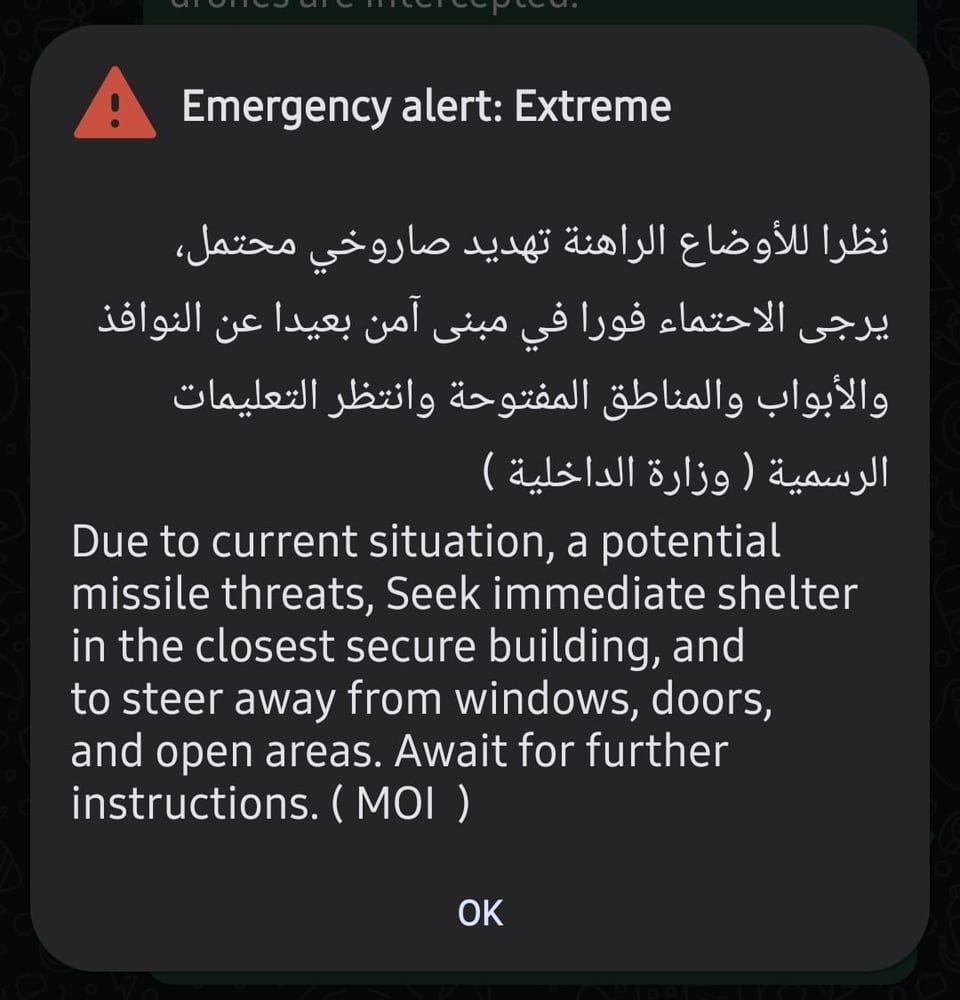
Next, I want to praise the local authorities here in the UAE. The Ministry of Information delivers clear and timely communication about incoming attacks and when to take shelter (see below from Thursday night).
The air defense forces have been kept busy. According to data released Thursday, they have a 96% knockdown rate of incoming drones and missiles into the country.
For context, here is the Ministry of Defense report published yesterday afternoon.
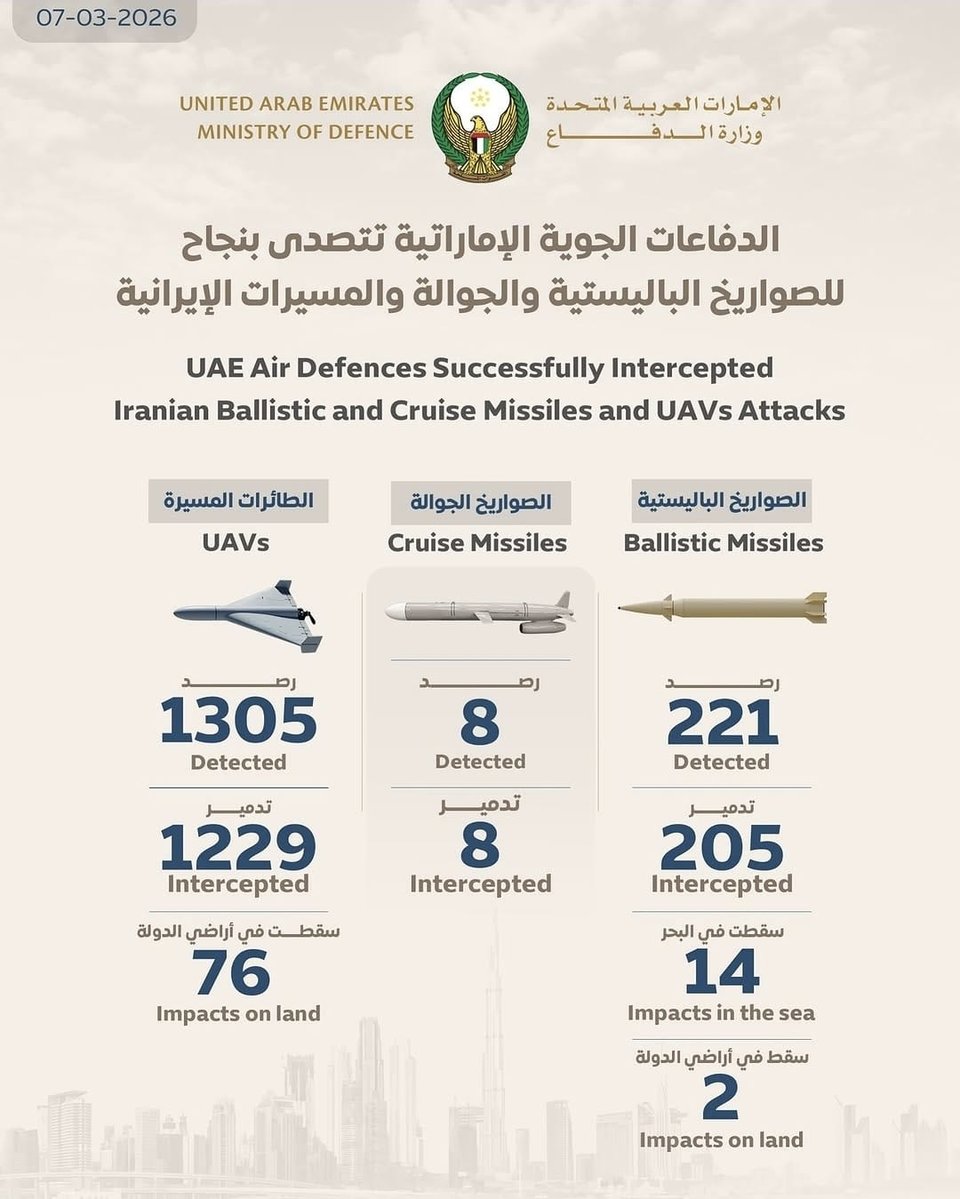
Most if not all damage and injuries are from falling debris from interceptions, including a Pakistani national who was killed in Dubai yesterday. I don’t mean to discount his death nor the others that have passed away, but I feel safe despite the situation and simply put the Emirati emergency management has been amazing.
I wish I could say the same about my own country.
I released an episode of the podcast this morning that is a conversation between Hope and me about the situation, so I’m going to encourage you to give that a listen and spare you the full blow-by-blow here.
But what I will say is that the US State Department has absolutely failed citizens living in the region.
I want to remind you that after the President ousted his National Security Advisor in May, Secretary of State Marco Rubio also assumed the role of National Security Advisor. This means the State Department could not have been blindsided by this conflict because the Secretary of State is the President's NSA.
Nevertheless, the war commenced with zero plan for the more than one million US citizens who reside in the Middle East, and in particular the roughly 250,000 who live and work in the Gulf states. The response has been shambolic in every possible way. Career bureaucrats at the embassy are embarrassed. Officials from other embassies are openly mocking the US.
I did an interview with CBS News midweek in which I cited the lack of congressional authorization for this conflict and the fact that this is an unnecessary war of choice that runs contrary to the national security of the United States. Various factions within the US, and abroad, have spent the past twenty-five years urging Washington to attack Iran. Yet every previous President, including this one during his first term, ultimately concluded that doing so would be folly.
I also explained to the reporter that the war was initiated with no plan for safeguarding US citizens in the region, and that the State Department was telling people they needed to immediately evacuate via commercial airlines even though no flights were departing. That ended up being the focus of the interview.
Again, I’m going to refer you to the podcast for the details. But we are now eight days into the conflict and the State Department is just now rolling out plans to help people leave.
I’ll close today where I began.
Hope and I are safe and well. Pray for the civilians around the region who do not have the protections and privileges that we do.
We gon’ be alight.