
RIP Book World, "Lost Lambs," & Byline Catch-Up
In which I mourn Book World, consider the grim state of book reviewing, and appreciate "Lost Lambs" as a rare breakout hit. Plus, older bylines.
This newsletter is free to the public, and appears infrequently due to my chronic illnesses. If you would like to support me, you can subscribe to my podcast's Patreon here. Although I'm on leave, this still helps. Otherwise, feel free to send me a couple bucks through Ko-fi.
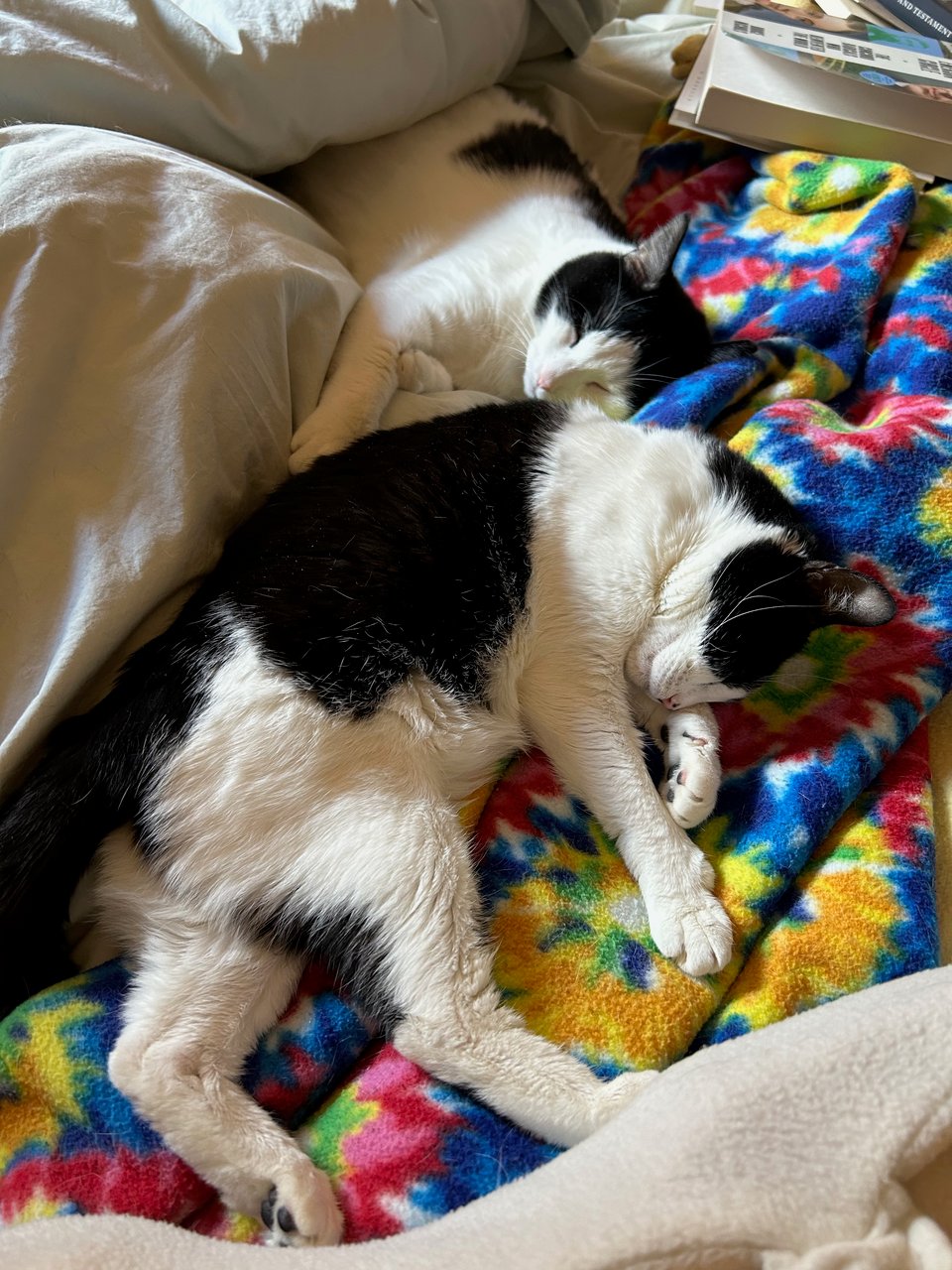
Greetings from snowy Brooklyn, where the city’s been shut down for the second time inside a month. I’ve put a photo of the cats snuggling at the top of this email as soothing blizzard counter-programming, but Laurie is in fact climbing all over the desk and laptop, and my stomach, as I type, trying to turn my attention away from this evil machine and onto him.
I’ve sent out a couple updates since last summer, but I haven’t included recent bylines in them, so here’s a quick roundup for anyone who doesn’t follow me on social media. I reviewed Mona Awad’s riotous follow-up to Bunny, We Love You, Bunny; reviewed Patricia Lockwood’s novel Will There Ever Be Another You and considered the wider state of Long COVID lit (such as it is); wrote about Sarah Weinman’s excellent book Without Consent and the history of criminalizing spousal rape; and, finally, got to write an essay on Jane Austen for her 250th birthday in December.
I have a few interviews and a few essays in the works, which will be coming in the next couple of months. In the meantime, Gav and I recorded a bonus episode of Overinvested on Pluribus, which podcast Patreon subscribers can listen to here; we’ll have episodes on The Fifth Season and the Oscars coming soon. And as I’ve been catching up with last year’s important films I’ve been enjoying writing reviews on my Letterboxd, if you’re interested.
Finally, I never finished writing up my best nonfiction books of 2025, which I’m going to try to do next month just so that it’s on here as a resource, even though obviously the conversation has totally moved on. Most of the books on my list didn’t get a ton of attention and I want to highlight them… especially since books are getting so much less media attention in general these days.
To wit…
There’s not much more I can say about the demise of The Washington Post’s Book World1 that hasn’t already been said by others, most notably Becca Rothfeld, formerly the nonfiction critic at the Post and now a new hire at The New Yorker. I think Rothfeld is the best critic currently working in America, partly because she is simply brilliant (I highly recommend her essay collection All Things Are Too Small) but also because she has been afforded the space to write regularly. This gives a writer stability and allows readers greater access to their writing. Her former colleague Ron Charles, who wrote about fiction, was just about as good and a true joy to read. I believe there are now five book critics employed full-time in America (if we continue to count Rothfeld).
The main responses to the Post’s shuttering of Book World (and its firing of nearly everyone else at the paper who covered culture) has been a) broad despair and rage, b) “I hope this person gets employed somewhere else soon,” and c) people starting newsletters, and/or also complaining about the proliferation of newsletters in general. I think we all feel A. The problem with B is that there are barely any books sections left to employ critics, as demonstrated by the numbers cited above. (Is the NYTBR now technically the only full books supplement in the country in a newspaper? The LA Times and some other papers, like the WSJ, do have books coverage, but not as robustly as the Times, or the Post until this decision.) It makes sense that Rothfeld would go to The New Yorker, since she’s the kind of writer they like, both academic and accessible, but they can’t hire everyone and we will get to read far less of her writing at The New Yorker than we did at Book World.
I am most demoralized by C, even as I sit here writing in this newsletter. I don’t want to be writing a newsletter and I don’t want to read other people’s newsletters. It’s not financially sustainable to expect people to pay the money they might spend on a subscription to an entire publication to one individual’s newsletter. That isn’t the fault of the individual journalist or critic, of course; everyone is just trying to survive. But the atomization of journalism in this way is bad for everyone financially, and bad for getting people to read your work.
How is a lay person supposed to be able to discriminate between these zillions of newsletters? Publications, whether they’re established newspapers or upstart websites, serve as gatekeepers and curators for the reading public. Anyone can write whatever the hell they want on a newsletter, and they’re almost never edited.2,3 I can also personally say that while I subscribe to a lot of newsletters with the earnest intention of reading them, most of them languish in my inbox unopened. It just isn’t a good way of communicating with people.
It’s incredibly hard to successfully pitch book reviews, thinkpieces, or author profiles as a freelancer, and it’s only going to get harder now that there are fewer outlets and more people pitching those same outlets. Many outlets pay almost nothing for writing about books, or do in fact pay nothing. None of this is sustainable. I don’t have solutions but I hope there are people out there putting their heads together to figure some out.
If you’re enjoying this newsletter, consider subscribing below.
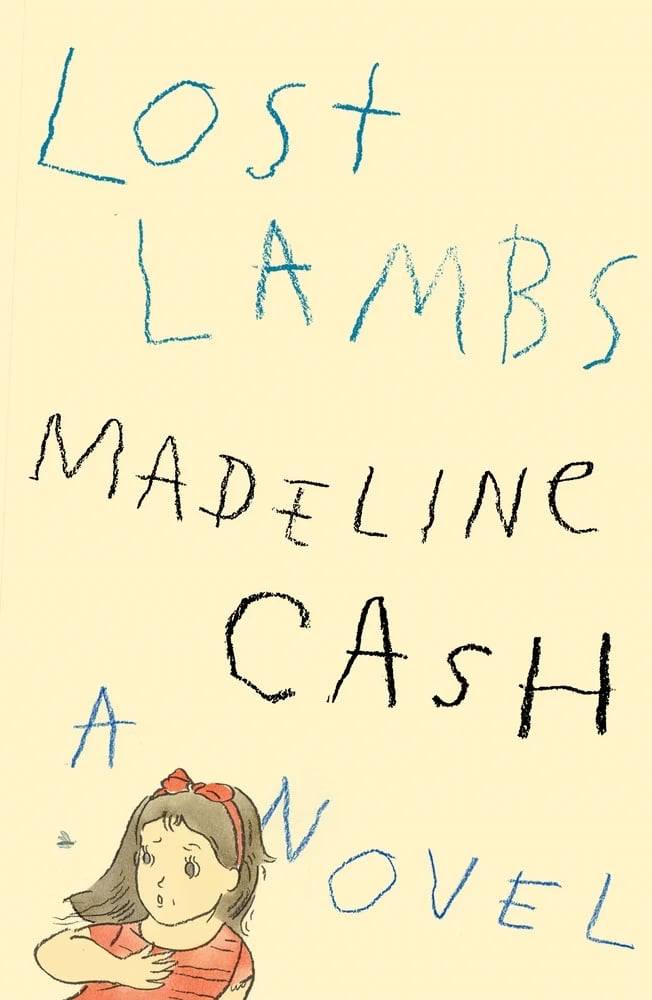
This has all been on my mind as I read and thought about Madeline Cash’s debut novel Lost Lambs. For those of you blissfully unaware of the infighting on the literary internet, certain people, most (if not all?) of them men, have been very annoyed that Lost Lambs has gotten such a robust reception. This book has 17 reviews on Bookmarks, one of them from the deceased Book World and another from the soon-to-be-deceased Pittsburgh Post-Gazette. (RIP.)4 Cash has also been interviewed in many publications. For a debut novelist, this is more than a dream. According to the men in question, whom I will not deign to name or quote, this is evidence of a conspiracy carried out by… I’m not entirely sure. Cash’s publisher, Farrar Straus Giroux? Book critics?
How the promotion of this book differs from the promotion of any book, carried out by a publishing company or sometimes independent publicists hired by the author, has not exactly been made clear by these online geniuses. Publishers choose to promote certain books more intensely than others, because they think they have a better chance of succeeding, and usually because they have paid higher advances for them. But ultimately publicists cannot control whether publications choose to cover a book; if they did, we would probably not be seeing the rapid demise of book reviews across journalism. Mostly, I get emails from publicists asking if I would like to read a book. Then, they send me eight hundred follow-up emails asking the same question, if I haven’t responded, or asking if I have plans to cover it, if I have. The cycle continues.
It seems obvious to me that this half-baked conspiracy theory is the direct result of both misogyny and desperation about the dire state of media. Most people’s books come out to no reviews whatsoever, except trade reviews (from Kirkus, e.g., which regular people don’t read). Most authors don’t get interviews. Their books fall like trees in the forest with no one to see them, and then they aren’t read.5 Some books do, of course, gain wide followings without reviews: genre fiction in particular has never been widely reviewed in mainstream outlets, and these days publicists and marketers are smart about finding audiences through social media. (It goes without saying that the romantasy boom did not kick off with glowing reviews in the NYTBR.) But literary fiction needs reviewers to help it gain traction.6
It’s not fair that Cash has gotten 17 reviews when many authors only get two, but that’s hardly her fault, and in this case, it’s clear that the book has succeeded not because it is about a timely subject that journalists could showcase in profiles (or whatever), but because it’s actually good. (Ironically, it is also highly interested in conspiracy theories.) Unlike many highly acclaimed literary novels of recent times, it is unapologetically funny, and it focuses on literature’s most relatable subject: a dysfunctional family.
If you haven’t read any of the reviews of Lost Lambs, here’s a brief summary of its premise: Bud and Catherine’s marriage is on the rocks when she starts to get involved with their neighbor and suggests “opening up” the relationship. Bud is horrified and doesn’t agree, but Catherine doesn’t care. Their marital strife results in them totally neglecting their three daughters, Abigail, Louise, and Harper. Abigail is beautiful and rebellious, dating a man called “War Crimes Wes” who works private security for a local billionaire; Louise desperately wants attention from someone, and finds it in an online boyfriend who happens to be an Islamic fundamentalist; Harper is a prodigy who starts investigating shady dealings by the local billionaire (for whose company her father works). Disaster ensues in various forms. Cash, who like several other members of the Dimes Square downtown literary scene is a convert to Catholicism, features the family’s local church as a social hub, which gives the book an unusual character for hip young literary fiction while never being moralizing.
The novel is supremely readable, full of both situational humor and line-level wit. For example:
All complex female characters needed conflict and adversity, thought Harper. She was a troublemaker with no origin myth. No trauma pointed to her ennui, her restlessness. … One theory: Harper was too clever for her own good.
[…] Harper was eventually expelled [from activities] for the nuanced and imaginative ways she disturbed the other children and administration alike.
“Why, Harper?” her mother had pleaded. “Why would you bite the Carlyle girl?”
“Because,” said Harper, “she said ‘bite me.’”
Or later, when Catherine discovers that her potential paramour has a basement full of poorly made ceramic vaginas:
Jim Doherty laughed, moving the sculpture side to side like it was talking, a contorted mouth. They all seemed to be talking, actually. All of the vaginas were telling Catherine to run, run while she could, get out of this house and never return.
“So these are all the women you’ve…”
“They are less depictions of something than depictions about something. You know what I mean? These pussies are moments in time.”
It’s not really a spoiler to say that this liaison doesn’t work out.
I hugely value and respect humor in fiction and it’s clear that Cash does too, and has worked to make her novel entertaining, though the book doesn’t feel labored over. There is something funny on basically every page. “War Crimes Wes,” to give another example, has not committed war crimes, but instead suffers from terrible IBS, and as a result barely talks and wears a severe expression of suffering. Others, especially his girlfriend Abigail, project pathos onto this silence that does not exist in reality.
As Harper’s musings suggest, Lost Lambs is a book highly aware of its own book-ness, its own status as a narrative. In real life, if a twelve-year-old girl announced she had unearthed a vast conspiracy in her hometown, she’d rightly be sent to a psychologist to figure out what was wrong; in Lost Lambs, Harper’s suspicions turn out to be correct. The novel singles out these sisters, and thereby makes them exceptional, and thereby makes them heroines. Because this logic holds throughout the novel, they never feel in real peril. Though Cash touches on serious topics, her prose and her elaborate narrative structure are both so winking that they prevent her from exploring her characters’ inner lives with real depth.
But given the horrors of the world right now, I was more than happy to read an exquisitely written and uproariously funny book that skipped along the surface of its characters’ inner lives. I’m not sure how long the novel will stay with me, but that’s okay: for the time that I was reading it, it gave me enormous pleasure, which is more than I can say for most books or films I read or watch. And I don’t expect debut novelists to write a perfect book on their first attempt. Debut writers should have the space to write something interesting but flawed, and then improve on subsequent efforts. Given the success of Lost Lambs, Cash will no doubt be afforded that opportunity. But fewer and fewer writers are so lucky. More often these days, a debut novel fizzles out, unnoticed, and then that writer doesn’t get a second book deal. If we want interesting writers to grow, we need to keep working to figure out how to get coverage for their books so they have a fighting chance of success.
But that’s not going to stop me from writing an entire newsletter about it! ↩
There are exceptions to this rule, of course: newsletters that actually function as publications, with editors and a wide range of writers. Book Post is one good example; I just paid for a subscription. My friend Elizabeth Minkel is starting a newsletter publication, Fansplaining, which will launch in the spring, and to which I’ll be contributing periodically. This kind of newsletter is not what I’m complaining about. ↩
This one is obviously not edited; I don’t charge for it, either. Given how infrequently I update it, that would be pretty absurd. ↩
The fact that two of the 17 reviews for this book that came out a month ago are from publications that will either cease to exist totally or cease to cover books… sheds light on the current crisis of journalism in this country. ↩
This whole state of affairs all incredibly demoralizing for critics, but it’s just as demoralizing for authors. I have slaved away writing novels for years, and in order to do this you have to maintain a level of conscious delusion about your prospects: probably this book won’t get published, because it’s so hard to get an agent and then a book deal, but you have to believe anyway. Now, you also have to keep in mind that your book probably won’t get reviewed, either, and maybe not read by almost anyone. This is not an environment that encourages creativity, and I’m not even talking about finances. ↩
As Dan Sinykin pointed out on Bluesky, the NYTBR has in fact increased its coverage of genre fiction under Gilbert Cruz, the current EIC. I was pretty incensed in December by the number of genre titles on their Notable (i.e., Best) of the Year list, obviously a result of this. My problem isn’t that genre books don’t deserve to be considered seriously—in theory, I think this could be a great thing. I read mystery novels voraciously and I am just as eager to read reviews of those books as anything else. But anyone following the Review closely can see that the increase in genre coverage has directly correlated with a decline in literary fiction coverage, and fewer reviews being published in general. This is a huge problem, especially when the Review is the only real Books section left in the country.
In some ways it feels unfair to point at them and shout “The future of publishing is in your hands!” because journalists (obviously!) work independently of the industries they cover. A newspaper should not be responsible for holding up a collapsing creative industry. But the situation is so dire that I feel like they should be paying more attention to how their coverage choices affect publishing, and making smart decisions based on those outcomes. ↩
