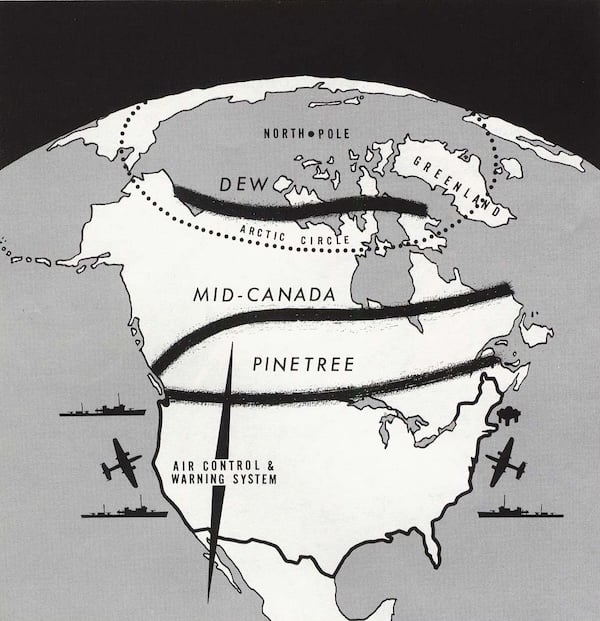
distant early warning
Hello from a few days after the autumn solstice, just north of the 49th parallel. I’m already waking up each morning in the pre-dawn darkness, but today the sky is blue and the sun is shining.
Kicking off with the big news: I’m officially writing another book, with the working title of Tactile: Matter, Technology, and the World We Make. “Officially” because it’s now under contract with Riverhead, who published How Infrastructure Works, and I’m delighted that I’ll again be working with my brilliant editor Courtney Young and the rest of the team there. (Thanks to my agent, Zoë Pagnamenta at Calligraph, for shepherding this through.) We’re aiming for publication in the fall of 2028.
I already see the new book as something of a companion to How Infrastructure Works; if that book was primarily about energy and networks, then Tactile focuses on matter and bodies:
We live in a world full of stuff, and there is a direct throughline between our bodies and how we interact with the physical world around us, with the development of materials, with the evolution of design, the increasing complexity of technologies, and the supply chains in which our lives are embedded. Our material culture – the world of things that we live in – has become inextricable from planetary material flows and mass production. We now have the technological capacity to address the issues of materials extraction and pollution, but we need to build the systems that allow us to do so. And to do that, we need to see and understand the systems we have.
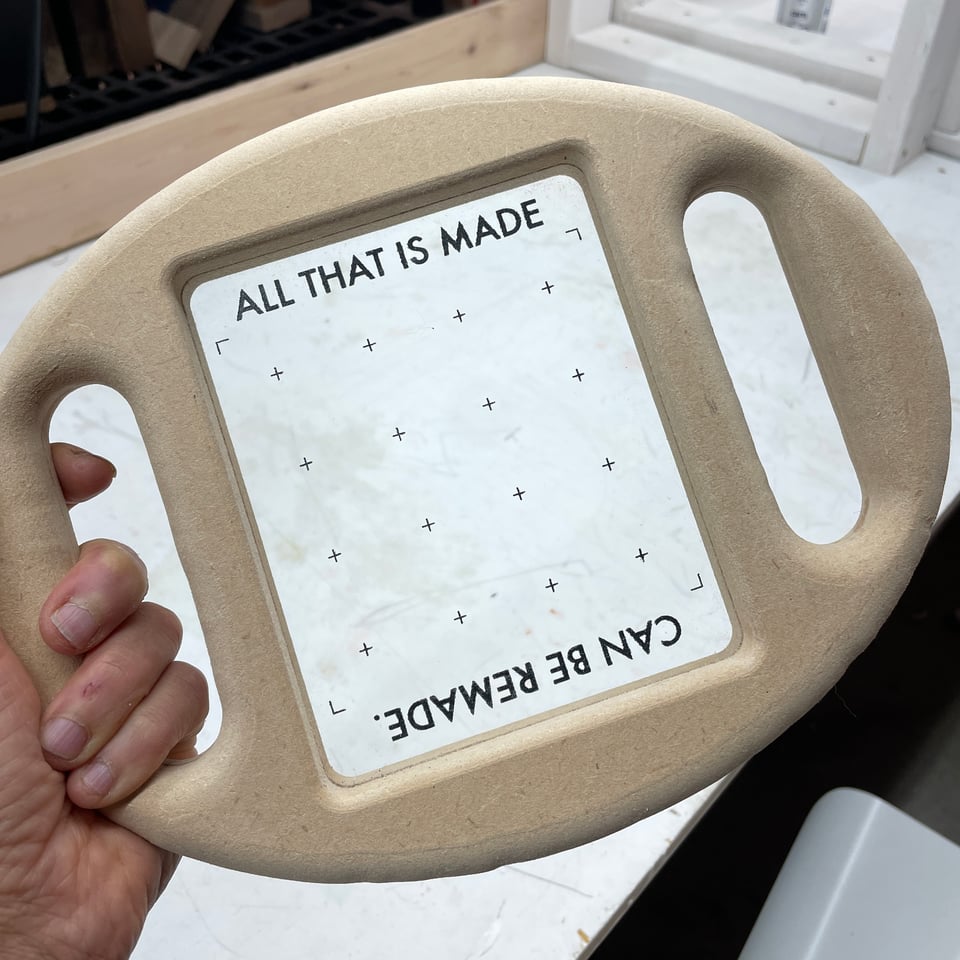
I often quote Ursula K. LeGuin’s brilliant definition: “Technology is the active human interface with the material world.” We spend virtually every moment of our lives engaged in these interactions through physical objects — for me, at this exact moment, the ‘technology’ is my computer, but it’s also my clothing, my chair, the walls and windows around me, even my contact lenses — and I’ll be digging more deeply into what this means. As with How Infrastructure Works, the roots of Tactile go deep, drawing on my training and expertise as a materials scientist, my work as an engineering educator, and a lot of thinking and writing about sociotechnical systems. But you can also expect to hear about my experiences as an inexpert watercolourist, making weird lumpy vitreous children in the glassblowing studio, wrestling with the lasercutter and the ShopBot, and more.
Coming up on the third anniversary of the publication of How Infrastructure Works reminded me that it’s been ten years since some friends and I walked the length of the LA River over the course of a long weekend. Wayne Chambliss shared his notes and remembrances: The river is everywhere.
Also from the vaults of memory: one of my favourite collaborations ever was this 2015 visual essay about whalefall. I provided the words, and it was beautifully designed and illustrated by Joe Alterio and the team at Primer Stories.
This fall, I’m hosting a weekly experimental reading/lecture series at the University of British Columbia as part of the programming for the FLEET:UBC + The Fabric of Campus Fibre Garden. Participants are invited to bring some handwork and listen to me talk textiles and technologies, on Thursdays from 12noon to 1:30pm; It’s free and open to the public, with more details at the link. Lower Mainland friends, if you’re interested but can’t make it to UBC in the middle of a weekday, check out the many other activities, including evening and weekend workshops. Non-local friends, I’m tracking the readings and will likely collate and share them in some form — stay tuned!
This past week we talked about what fibres like flax and wool actually are, which was basically my excuse to nerd out about biological materials. Plant and protein fibres are typically made from long, skinny biomolecules, like cellulose or keratin. These molecules aggregate side-by-side and end-to-end into the larger and larger structures that make up biological tissues, which include the useful-to-humans fibres that we can see and handle. (During the session, artist and professor Germaine Koh was aggregating wool fibres to make them thicker and longer — by spinning them into yarn.) Ed Yong’s upcoming book, Life Beyond Measure: Nature’s Hidden Wonders at Every Scale, gets at this deeply transscalar behaviour of living systems, not just in materials science but in all sorts of ways, and I’m so looking forward to it.
There’s nothing like announcing that I’ll be spending the next two or so years working on a book project to make me really appreciate your time and sustained attention! I’m grateful to you for sharing it with me, and feel free to reach out by replying to this email.