
Why do we argue about games? And more...
Hello readers!! Late spring has arrived. Flowers are sprouting out of asphalt. Children are frolicking outdoors. My seasonal allergies are finally fading away. It's getting much hotter. And, I'm taking some time to write a bit after a recent deadline for Danchi Days. (If you're following Angeline Era dev, we're currently in the process of console porting.)

Today is mostly miscellaneous thoughts. Feel free to peruse!
Bullshit in RPGs
Sylvie was talking about Dragon Quest 2:
it's nice to be in a community where people think dragon quest 2 is good instead of bad, but what conversations do i want to have about dragon quest 2? maybe ones that inspire creativity, whether it's new playthroughs and commentaries on dragon quest 2, or entire new rpgs that have a bs endgame....
— sylvie (@sylviefluff.bsky.social) May 15, 2026
Made me want to think about “bullshit” in RPGs. I liked a lot of DQ2's exploration but not really the battles. One might call either of these things "bullshit", or BS... First, I don't even want to use the term "BS" because I just wrote and deleted a bunch of stuff trying to define it and it's impossible and subjective. Whatever it is, it's certainly adjacent to when people complain of "difficulty" and "tedium" and "unfairness". Playing Dragon Quest 2, I quit maybe 1/2-2/3 through because I got tired of how long the loops of dying and retrying are, so I quit.
When you get down to defining BS... I think you're really just laying out your personality and preferences. Like, I think I might have put up with DQ2's dungeon bullshit more if there was something more of a funny narrative arc to it. Getting misled by a character. Or if the high randomness of the difficulty has a narrative dimension for some reason.
Tough dungeons can produce interesting gameplay textures on their own, and some people like that. But I like it when they're tied to something else. E.g. Sen's Fortress's traps (vs. a random contextless cave full of a bajillion traps). Or a boss whose attacks are tied to its visual design (vs. shooting out a bajillion bullets just because... like the joke superboss in Ys 6).
I think back to playing Romancing Saga and how I went to the bottom of hell to beat Satan or someone, which took like an hour or two. And permanently sacrificed a friend for a mediocre sword. It was tedious, repetitive, but I found it really funny and memorable. So I guess for me, I can like bullshit... but it has to feel unique enough to me or contextualized in a way I like.
The same thing might be why I prefer Souls bosses that are more in tune with their environment, rather than "GIF-able circle-arena bosses". The design of a boss like artorius zip-zapping-somersaulting a circle arena around feels more like the boss could have happened anywhere, whereas bosses like Taurus Demon or Capra Demon, while not particularly hard, feel tied to the environment in memorable ways.
I guess what I like is crystalized in some aspects of my game Angeline Era, haha. Which makes sense... Marina and I make what we like. Most of the action levels definitely can feel like bullshit on the hardest difficulties, but for me each level is like exploring a chaotic slice of the game's world, and the physicality of the combat and each unique room, visual design/setting, feels unique enough that it's enjoyable mastering the bullshit that I made myself.
Likewise the difficulty of the Angeline Era bosses feels nice to me because the texture of the fights isn't mainly memorizing timings of various attack animations. Rather, we wanted to create a unique physical texture to each fight and how the dodging/weaving/attacking works. There's the desperation of Caitlin (1:43) setting her basement on fire, throwing out piles of thorns even to her detriment. Or the way Neo-Kerygma (2:33) dominates their battlefield with messy attacks but is very weak to a borderline-janky exploit with jumping on their arm, which feels in tune with that boss being tied up and not free to move. The Sorcerer (3:11) forcing you to bend to its weird rules of territory, implying you're in starting to step into an alternate dimension. We like bosses where the boss visual design, the arena, boss moves and how you approach it... have this organic 'whole' quality to it. This did make designing good bosses tougher for AE... but I liked how they came out. (In later Souls games defense, fights like Elden Ring's Radahn and the Fire Giant, though certainly full of bullshit, were memorable because of the weird ways the moves and your horse intersect.)
What do I want out of games?
I've noticed that myself and others - critics, gamedevs, players - sometimes wonder what exactly it is we want out of games. I think for some this might drive one to madness or anger as it's easy to fall into a cynical rabbit hole where you can never find the thing it is you want.
I think there's something to the appeal of games that is hand-in-hand with the difficulty of forming stable identities nowadays due to how advanced modernization has progressed. I was talking with Fellow Danchi Days Developer sandy powder about what we think changed in Japan in the past 10 years, and the first things were all stuff that made life more 'convenient' but also served to eliminate even more tiny human-human encounters. Computerized checkouts, robot servers, shortform video usage, prevalence of AI, Uber Eats delivery. In isolation they're not much but they do add up.
When things get convenient, as they have in the past 200+ years... I think it means we don't need to rely on others as much. It's easier to get isolated, and with that, it's harder to fully feel you have particular social roles or obligations to fill. Of course, you can still find social roles through work or family or volunteering etc, but that's the thing, it's different being forced into a role vs. having to choose it.
Not that I would advocate for going backwards in time, but I guess the point I'm making is that society's focus on "self-actualization" as an ideal also creates this sense of metacognition about choosing things to do. A pressure to "find" your true self. Like if I choose to get really into Chinese cooking, it would feel good and validating but it's also a choice I had to pursue, it's not like I naturally was surrounded by it.
But as for what I want out of games? That's a tricky question. I used to think it was "to see other humans being expressive," but I don't think that's quite it... certainly it's a prerequisite for me liking a game. But deeper down, for me it's more that I have very particular design values, and I would like to feel "seen" by finding games new or old that also seem to share some of the similar design fixations I have. It's a matter of belonging. And belonging comes in many flavors across life... belonging through hobbies, friendship, particular interests, identities. And for me there's a kind of "inner designer" that wants to feel belonging, and I think that's why I'm so into digging for games.
I think problems only arise here when that search for belonging is your only search for belonging and you assume that games solely can be the wholeness of your belonging, when in fact it’s something that should be sustained across multiple aspects of life.
What's an artistic movement in games?
I think artistic movements are smaller nowadays due to how societal roles have becoming more specific, but I think art movements have always been tied to tech, from like jomon vs yayoi pottery (and it's relation to agriculture), to bitsy/twine/etc games or recent indie VN boom
— melos han-tani (@hantani.bsky.social) May 13, 2026
Boghog was writing about Artistic Movements in gamedev and various people were trying to define what that means.
Where I landed personally was gamedev movements might be historicized at different levels of granularity.
Tech context: Very broadly, where game movements are seen as specific movements enabled by tech. Smartphone portability, keyboard/mice, TV gaming. I think this kind of historicizing is correct but perhaps too broad, something that feels like simply talking about history in terms of technology and tools
Economic context: Gamedev movements enabled by money - much of the classics of the 80s-00s Japanese gamedev scene, for example, or the indie boom enabled by self-publishing on Steam
Social context: Gamedev movements as "scenes", be that geographical proximity..."Tokyo indie/doujin game devs". Or online communication platforms bringing people together:2000s Game Maker Forum devs, late 2000s/early 2010s TIGSource forum devs, Game Jams, or any of the countless siloed off Discord gamedev communities.
Desire context: Thinking about what desires particular genres/trends of games fulfill: seeing genres as particular responses to desires in populations - desire to own homes, to have stability, to have goals that can be overcome and fulfilled. Or desire of the catharsis of a particular kind of story genre. Popular genres are a kind of mirror for different societies, in this sense.
For example we might tie certain kinds of 1-2 hour games with high-youtube-reaction-potential, we might tie that to the desire of a viewer to see their favorite influencer react or spitball in some way.
It's worth noting that these contexts are all reductive. When I think about making games, I know that I'm part of an economic context, tech context, social context, and desire context, probably others too. I also know that if my work were to be solely described in terms of these contexts, it would be losing out on some of the more artistic/human qualities of my work that aren’t as easily categorizable.
Why is there game design discourse
Game designers and players like to argue a lot... sometimes I step back from this and wonder what the point exactly is. Many designers work in completely different genres from one another. So why do people constantly argue over 'should the game have a difficulty slider' when there's successful examples of games from all sides of the argument?
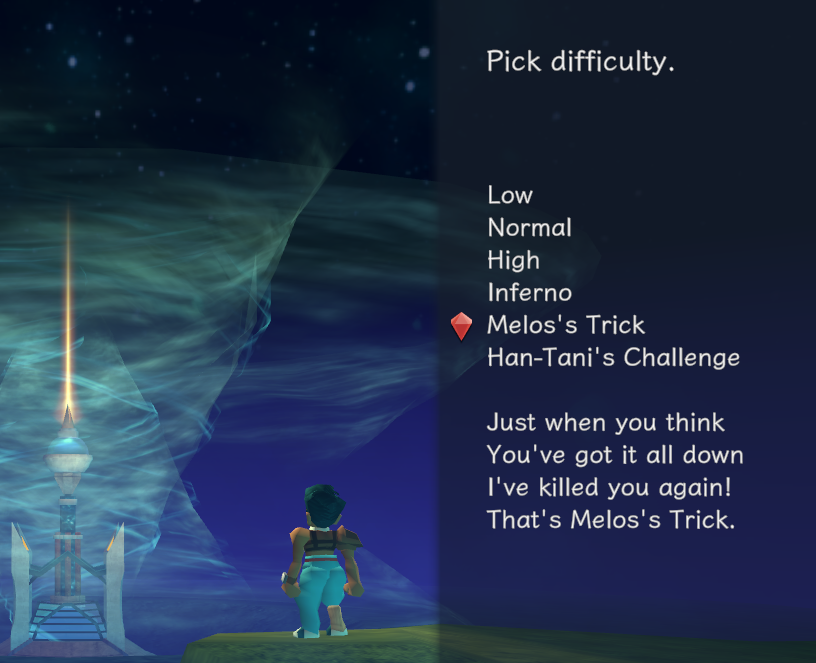
I think there is partly a ritual function to these discourses: the participants are able to strengthen their identities as gamers and people who value games. So in this sense, the point of discourse is not to reach any concrete end (and base on seeing the same discourses for decades, there seems), it's really arguing as a means towards having the identity as gamer/game designer. Which... is not really an issue unless someone goes overboard and like, drags someone into it who doesn't care. (But idk... sometimes you do really want to change the world with discourse and it's hard to do that without encroaching on other beliefs...)
There may also be a reason tied to self-justification of play habits (for players) or design choices. For example, I think there's a sect of gamers who value self-discipline and training when it comes to high difficulty games. (No this isn't just in the e.g. arcade gamer community, I think it's a personality trait that crosses all genres). So when participating in difficulty discourse, this person might be trying to 'renew their vows', so to speak, in terms of why they value difficulty and how that shapes the kind of person they are. Again, not an issue until dragging others into it or attacking people.
Perhaps the insidious version of this type of discourse is if it's a developer trying to justify why their game is filled with addictive mechanics, though. It's easy to use theory to justify just about anything, if you sound convincing enough! Try it sometime, it's kind of funny and dark. Like try to be a game designer who designs addictive games and use an argument like "The world's a tough place - I just want to help give people a little sunshine at the end of their day~ through BATTLE PASSES!!" or something...
All this makes me think back to various schools of Japanese Buddhist thought all arguing with each other over centuries. Things stagnate, then some group of people come along with a new belief that gains many adherents. Humans are always looking for belonging and mutual understanding.
So perhaps the value of discourse, is not really in that we reach any design conclusions nor do we meaningfully shape future game design. (Although that may happen alongside the discourse...) Maybe the value is more in that we (players, designers, etc) develop various schools of thought about games that people can adhere to and thus more meaningfully understand themselves. So in that sense, I think discourse is good... so long as we aren't assholes about it. But it can be hard to argue or discuss things in a way that aren't partly projecting our internal disturbances and grievances, for example, attributing moral downfall to like action games having a difficulty slider.
Or going into a negative steam reviews and blatantly projecting one's own personal issues onto the developer (please stop doing this to me, negative Steam reviewers...). Well, what can I say! You learn a lot about humanity releasing these games.
Public Eye on Reviews
But speaking of that... I was thinking about criticism and writing reviews as a game dev who has some level of following. I generally avoid writing negative reviews if it's by another indie team and is recent. But I wonder how much of that is me assuming too much of how that team would feel: instead I think I ought to act and write in a way I want reflected in the world. I think we should openly discuss each other's work, so long as it's not being done in mean or dismissive ways. But that's also a political hedge... "not being done in mean or dismissive ways". Because if I really write a negative review then I kind of disagree with something about how that work shapes player minds or encourages people to play.
One of the challenges with writing reviews as a developer is that like, you might be writing about a friend's work... in an ideal world I think people would not take it too personally, but you never know who reads these things! But I don't know. I think being able to see honesty from other developers is valuable though.
And if anything it's the fans of a game's work that are far more prone to being unreasonably upset and attacky, than the devs themselves. I had a 2 star Silksong (2 stars for me doesn't mean it's bad! It just means I was ho-hum about it) review up for a while which I deleted because some commenters were annoying. Your game literally won every accolade on earth and sold 10 billion copies!! What do you want from me!!! That's another weird kind of behavior, fans of humongously popular games who scour the game for negative reviews and then get mad. In conclusion I'm not sorry I gave Mario Galaxy a 1/5.
Award Shows
Been meaning to write about this one! So, earlier this year Angeline Era got Design and Grand Prize nominations for the Independent Games Festival! The Audio even got an honorable mention, which was nice because I've felt like my musical contributions to games have been pretty overlooked for a long time...
That being said, I've been on the judging side of the IGF before so I've wondered if we ought to be phasing out the winners of the award. Coincidentally, this year, Angeline Era ended up losing the award to Titanium Court. Also back in 2020, Anodyne 2 lost Grand Prize to Short Hike. The way voting works is ranked voting, but I believe the competition ends up being pretty close as to who actually wins.
But... only the winner gets the cash prize of $10,000! Hey… I wanted a piece of that pie!! Oh well…
I wonder why we're still picking winners instead of letting the nominees win equally. I was talking about award shows with some friends, and like, I don't know how much they really make sense for games, anyways, given how diverse games are? Grand prize noms for 2026 were Angeline Era, Baby Steps, Blippo+, Horses, Perfect Tides: Station to Station, Titanium Court. You certainly play these all on a computer, but I think the similarities stop there.
I don't necessarily think we should abolish categories, as the games nominated for each IGF category tend to be fairly diverse, a testament to the IGF's strength as an awards show. But it's not like games are like awards for e.g. best pumpkin, or fastest runner, which have clearer criteria... so to me this is also a reason why having winners (and not just a winner) could make more sense. Also maybe I just wanted to win something once lol (see next section).
Anyways, this is not to throw heat at the IGF in particular. I think IGF is one of the better award shows - it's sure better than handing out awards to the same games to pad out their accolades trailers!
Fame
Kind of related to awards. Regarding fame, it’s a tricky thing. Due to my typical suburban childhood and American nationality I have been conditioned since birth to want fame. I don’t know if this is a specifically American Honor Student thing or whatever, but there is always this annoying urge that has to be fought for desiring recognition, winning awards, having a bajillion Steam reviews. I don’t really like it… but it’s something that that has to be dealt with often. The inner darkness…!!
But I know fame is not a desirable thing to have… it comes with a lot of challenges. What I try to remind myself is I think what’s desirable is being respected, and like my oddball 6th grade gym teacher once said while teaching us somersaults, it’s important to have integrity. In that sense Marina and I are exceedingly lucky to have been able to make art for so many years while only have a small, respectful following of players. (Thank you.) Maybe this is why I write so much publicly and say strange stuff sometimes, because even though it’s still constructing an online persona with the parasocial aspects, it’s still a grounded/human-enough persona that it can’t really achieve fame, or at least I hope so.
Intergenerational religious change, internet community
Okay, for the rest of this post I'm shifting away from games.
I was thinking about how there's a pattern of Asian Americans leaving America now, the inverse of our parents/grandparents coming to America. I have wondered at times if this act is like "undoing" their work. I think viewing it that way is oversimplifying by ascribing a symmetry to the act... Though there's economic aspects to leaving, I think there's always been an intergenerational sense of not fitting in widely, and perhaps we just now have the resources to choose to live elsewhere, even though living in Asia absolutely does not solve the "not fitting in" feeling, at least not in one generation. (It's also worth noting that I think the feeling of not fitting in might be population-wide, due to just how society is organized nowadays.)
I think overintellectualizing the not fitting in... may not amount to much. Like I got at earlier in this post with the question of "why do I play games?", I kind of think that the feeling of “not fitting in” is just part of living in the 2020s from a well-off country. The way culture and life feels siloed off and less guaranteed than before, where it feels like we have to work for friendship or community… I guess it's our era's problem.
Slightly related, I don't think the act of moving to other countries severs an American from their Americanness. Even if one were to move somewhere and totally fit in, you still carry that life in America with you and its mixed sense of fitting in/not fitting in. Like I miss backyard barbeques, hot dogs, even driving around sometimes. But then at other times I don't really miss the way towns are laid out or the focus on higher education pipelines, or just how much Stuff there is everywhere.
On the other hand, at least there's the internet and you can be on that no matter where you are. The internet has been a nice balancing force to balance out all these modernity problems... it's easy perhaps for people who didn't grow up on it all the time, to be like "just use it less!" But idk, the world/reality very much is the internet, too... it's just about finding a good balance. And probably staying off those shortform video apps. And having a good word mutelist on Bluesky.
On that note, I was also thinking about how religion may have changed between generations. My grandparents were all some kind of Christian, despite the home countries predominantly being Confucian/Buddhist/Daoist (Taiwan) or Buddhist/Shinto (Japan).
I wonder a bit about their conversion stories, and to what extent American assimilation reinforced that (I think in the Taiwan case it started in Taiwan). There's a lot of writing about Taiwanese/Japanese Americans and the spread of Christianity amongst that group, following the usual patterns of it being both helpful in precarious immigrant situations, as well as very valuable for building social capital.
Maybe in bizarre way, the internet for me / mutuals has a similar draw to the presence of Christianity for these grandparents. At least for me, it just seems unimaginable to somehow be offline forever.
I've often thought there are some aspects of organized religion that are valuable: in some sense, being guilted/pressured to showing up once a week at the same place ensures you know a lot of people in your immediate vicinity. The downsides of organized religion need no explanation, but it had me thinking, what is it that forces people together nowadays? I mean, work... family blood relations... so I guess it's money, precarity. Having a relationship with someone that has high stakes related to money seems to also be the natural way of society keeping those people together. Of course, workplaces have their own problems. It's weird thinking about organized religion being replaced by corporate/working life.
So... actually, this is making the internet sound kind of good, haha. A place you can talk about niche interests, argue over them, etc. Maybe this is why people get so heated over arguments online, though. Because the internet can offer something of a spiritual value to a life where that need likely isn't being met by work, nor by organized religion. Then again, you don't need me to tell you the internet isn't rosy all the time...
But on good days, I think even Bluesky can be nice - posters continuing to spread friendly/fun discourse, or game devs releasing games... like maintaining those little shrines across Japan that people go to for good luck and spiritual fulfillment in various aspects of their life.
Fruit
On a lighter note, in my personal life I’ve been really getting into eating fruit. I want to share some of my favorite fruits from Japan today.
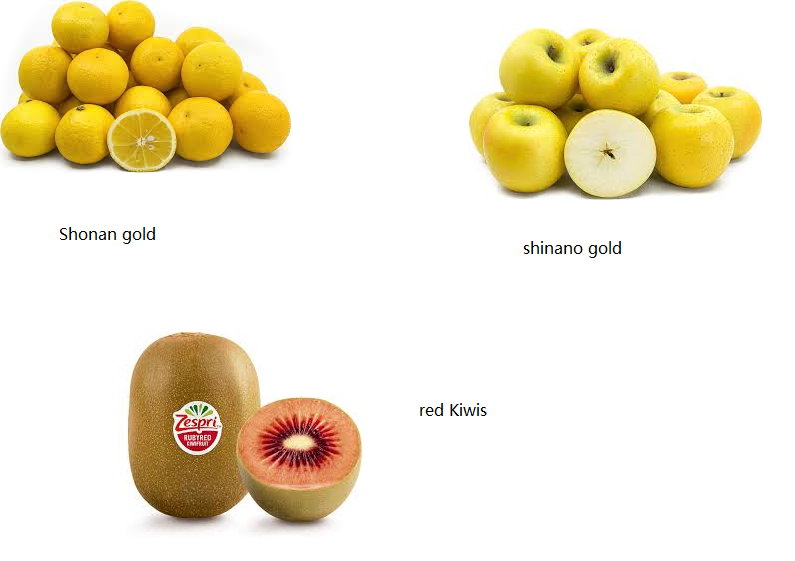
Shonan Gold Citrus: Peak season is February. These are expensive but worth it. They taste like if sweet lemon candy was a fruit. Texture are like yellow mandarin oranges. Not particularly sour, but just the right balance of fruit-sweetness and candy-sweetness. This fruit is amazing. I think it is my most favorite fruit.
Shinano Gold Apples: Peak season is December, but they’re available year round (though the likelihood of bad ones goes up as the year goes on). My ideal Shinano Gold tends to be yellower on the outside and firm. They have this great mixture of tartness and sweetness. This is my second favorite fruit ever.
Red Kiwis: I didn’t know these existed until this year. They are like the perfect mix between often-too-sour yellow kiwis and overly sugar-sweet green kiwis. I can’t remember what they taste like except they were good. I can’t find them now in the store. This brings me some small sadness. They were easier to find in late march/April.
Free Idea for fruit farmers: How about inventing blue kiwis? Think about it.
Subscribe now
Add a comment: