
Looking For Meaning In Other People's Houses
Let's talk about how important it is to share weird art with the people you love.

My brother once asked me, “Why do you only remember the bad things? It's like you never want to remember the good.”
I paused, feeling the barb of his words in a bright sting. We were talking about our parents, of course. I had made the decision -- the mistake -- to talk to an on-campus counselor at my university. It was not a decision taken lightly. My father was offended that I didn't keep my problems within the family. My brothers lashed out at me for speaking on our business to others. My mother wished that she could go to therapy. The tension in the air felt like molasses as I walked through the house, hearing whispers and murmurs of discontent about my making trouble out of nothing.
Eventually, running out of feelings to feel at that moment, I answered, “I spent so much time telling myself that things were good. Now I just can't.”
I think an important but not so often discussed aspect of the human relationship with art is how communal the experience is.
Okay, that sounds a bit dramatic. We do talk about it. We talk about theater experiences for summer blockbusters and seeing art in public at a museum or gallery. Going to a concert or attending a book club. These are ways for people to encounter and engage with art among others. The setting may not always be grand or the crowd large, but it is social. It is still external to you and made up of more than your own thoughts, feelings, and experience of the work.
But what I'm talking about is the communal experience of art on a much smaller scale. Art shared among friends or family. Art shared in the home.
The act of intentionally sharing art with people you love is vulnerable. Or maybe it isn't, depending on how you do or don't think about it. You keep a book to read to your child when they're old enough to understand it. You put on a movie or a show to watch with your partner. You pull out a cool comic book or video game to lend to your friends. It's just a thing you do socially. We all share art like we share spaces or meals.
When that art is meant to challenge, provoke, or otherwise prod at something beyond enjoyment, fond sentiment, or curiosity, I think sharing it becomes something even more vulnerable. You don't just want to have a good time. You want to open up a dialogue with this person about the art you're experiencing together. You're observing one another's experiences as they happen, often as concerned with what they think or feel as your own responses to the work.
Did I have fun watching Heated Rivalry with my wife (then girlfriend) Melissa? Yes. We had a great time, talking and laughing and discussing the impressive quality of filmmaking. Was it as fulfilling as watching Twin Peaks: The Return, and sitting together in the quiet discomfort and upset it evokes?
Well, not really.
Do I remember the many conversations we had, both while watching and after, with the same clarity as our puzzling over our feelings on Laura Palmer's final scream?
Well, also no.
This isn't a value judgment. Heated Rivalry isn't bad because it isn't Twin Peaks: The Return. It's a very good season of television. It's just…not Twin Peaks: The Return. It doesn't depart with the kind of psychic burn, leaving you feeling at once anxious, sad, and awestruck once the screen goes black.
We talk a lot about the positive communal experience of watching shows like Heated Rivalry together. But I don't often see the same kind of attention paid to things that are fraught or puzzling. And that's the kind of conversation I would like to have more of, if only in my own spaces.
Anyway, all of this started with an infomercial.
Unedited Footage of a Bear is a 2014 short film directed by Ben O'Brian and Alan Resnick and written by Resnick, Dina Kelberman, and Robby Rackleff. The film comes out of Wham City, a Baltimore-based art and performance collective active until 2022. While the collective produced a range of art and comedy events in the 2000s and 2010s, they're best known for producing absurdist comedy and surreal horror projects on Adult Swim's late night Infomercials series. This includes the uneasy parody Live Forever As You Are Now with Alan Resnick and Cry of Mann, an interactive live soap opera that allowed viewers to call in and engage with the characters.
Most relevantly to this discussion, they're also behind the sprawling multimedia project This House Has People In It. But we'll get there.
As a film, Unedited Footage of a Bear is a haunting ten minute experience. Seeing it for the first time in 2014, as a viral horror piece that spawned a spate of breathless YouTube explainer videos, it rewired my brain. It begins as the title suggests: someone's unedited footage of a bear uploaded to YouTube, with the people behind the camera murmuring about the animal as it sits and looks around rather peacefully. The footage fades to black to allow for a YouTube ad.
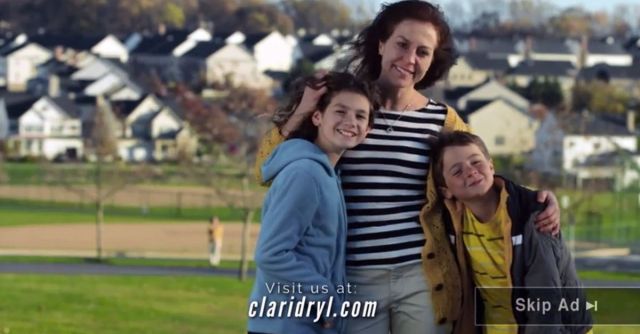
This was aired on TV. The shift to a YouTube desktop interface is jarring as the little ad countdown block appears in the lower right of the screen. An ad for prescription medication Claridryl begins to play, featuring a mom at the park with her two children. Cheery music accompanies her sales pitch, as a stressed mom who needs Claridryl to get through her hectic day. Colors change from dull to vibrant as she runs around the park with her kids, enjoying the effects of the medication.
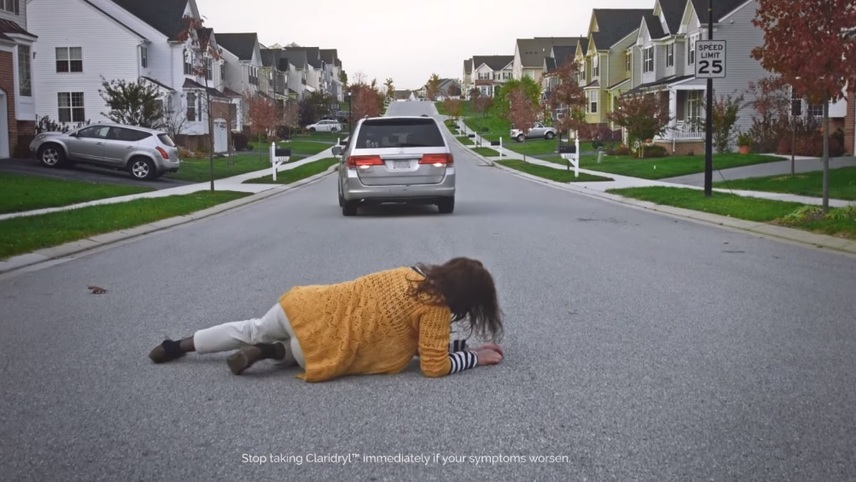
The ad plays on, long after it should have ended, as the woman gets in her mini-van and drives away. A neutral voiceover reads off the increasingly ominous side effects. Fine print and disclaimers appear across the bottom of the screen. We notice her children aren't in the van. The bright colors and cheerful mood begin to darken as the woman's expression falls. What ensues is a descent into chaos and primal terror as the medication she relies on shatters her life.
One day, I turned to my wife on the couch and said, “Hey, want to see something messed up?” We had just watched Too Many Cooks, Casper Kelly's legendary sitcom spoof for Adult Swim, which she quite enjoyed. This sort of thing was outside of her wheelhouse, but it was very much in mine. And so she said, “Sure!”
I showed Melissa Unedited Footage of a Bear. Afterwards, she looked at me and said, “So that's about the unseen horrors of chronic illness and the medication treadmill, right?” Having not seen Unedited Footage in quite a few years, the observation struck me.
You see, Melissa has multiple sclerosis, and she participates in surveys for pharmaceutical marketing. If you've ever seen an ad for multiple sclerosis medications on television in the last few years, there's a good chance she's had some strongly worded feelings about it.
This demystifies a lot of tension around pharmaceutical ads for me, having discussed these sorts of things at length with her.
The long lists of very scary, almost comically evil side effects are a legal obligation. Even if only a single person had a negative response recorded during the drug trial phase, it has to go in the disclaimer. For example, the risk of side effects for Melissa's medication includes brain infection. Exactly one woman contracted a brain infection during drug trials. Even though it couldn't be proven if she contracted the infection on her last medication or the one she was taking as part of the trial, both were obligated to list it as a possible side effect.
The woman recovered just fine, thankfully, and changed to a new medication. The communities around these trials are so small that you can find out about stuff like that pretty easily. I'm not saying that to downplay the severity of medical side effects, just that seeing how the sausage gets made changes your perspective.
Likewise, knowing that an already ill person suffered greatly while taking these medications during trials, up to and including death in some instances, such that the company has to disclose that death is a known risk, changes your perspective. The empowering music and imagery of the ad are far less absurd or funny when you stop to think about the human cost. It becomes downright harrowing.
Most of the discourse and analysis of the film I've engaged with centers on the unseen risks of medications. These discourses approach Unedited Footage of a Bear as an anti-drug public service announcement of sorts, taking the negative effects of Claridryl totally at face value. It makes you into a monster without your realizing, with its long list of scary side effects, and so you should have never taken it at all. The disclaimers were right there. You were told that this could be dangerous. Or perhaps the side effects were downplayed by some malicious doctor, too busy pushing pills to adequately warn his patients of the risk.
First seeing Unedited Footage in 2014, long before I had my own cocktail of diagnoses and prescriptions, I took many of these arguments as gospel. I grew up in a family that was generally quite suspicious of medical professionals and intervention, so I was open to this kind of reading. Watching it with my wife, the horror hit much closer to home.
The woman in the ad, who we learn is named Donna, is a single mother of two children. There's no husband in the picture, and none to be found in family photos in the home. She's trying to stand her ground, in the language of the ad, and do what she must to be there for her kids. She's also trying to date, because she's still a woman with a life and needs beyond motherhood. Claridryl, while framed in the summery marketing language of an antihistamine like Claritin, appears to be an antidepressant. Or, perhaps, an antipsychotic. The film shows her dependency on Claridryl for stability as its effects wane and Donna's world darkens, making less and less sense to her.
It seems like she very much needs, not simply wants, this medication. Without it, everything spirals out of her control.
So is this about the scary side effects of an unnecessary medication, or the slowly unfolding dread of your medication failing you? Is the film condemning Donna for her addiction to dangerous pills, or is it expressing the terror of your mind or body operating outside your control? Is this her condition exacerbated by the side effects of her medication, trapped between the suffering caused by both? Isn't this the risk we must take to seek treatment, to navigate the often annoying, sometimes outright harmful side effects of the medications we need to function -- if not survive?
I don't know if there's a conclusive way to read this film. I doubt it, given its ambiguity in presentation, following the logic of a nightmare. There was also an accompanying Claridryl website (now lost to time and link rot) that allowed you to further explore Donna's house for strange clues and surreal imagery. But I know what I think of the film for what it says and how it says it.
We see Donna's identity fracture into at least three different representations: Donna the Mom in her cardigan sweater, Donna the Doppelganger who terrorizes the children, and Donna the Husk. This third iteration is inside the kitchen during the doppelganger's invasion, wearing a blouse and slacks. The kitchen around her is a mess. She is haggard, with sallow skin and dark circles under her eyes. Her movements are lurching, robotic, as she jerks to attention at the sound of the ringing house phone.
On the other end of the line, this husk hears a primal, terrible song. She calls out her name and receives no answer. Frantic, she screams her name into the phone. Over and over, to cut through the song that's drowned out her reason. This, to me, is the real Donna, the woman inside the disease. She's in her kitchen, the most domestic space, well-dressed despite the mess and exhaustion. Suppressed by either the illness or her medication's side effects, she's trying to hold it together, for her and her children, and to regain control of herself.
She just…doesn't make it in time.
As intimately upsetting as it is now, I gained a much deeper appreciation for the film by watching it with Melissa. Just two girlies with chronic illnesses and all that. It's easy to see an ad for a medication and feel contempt if you've never been in Donna's place. Donna deserves our empathy as someone who takes necessary medication with potentially dangerous side effects. Unless you've had to weigh the risks yourself, you can't know what that list of comically evil side effects really means.
You can't know what it's like when the cure is just as bad, if not worse, than the disease.
The next time I asked Melissa if she wanted to see something weird, it was This House Has People In It. And since then, it's lodged itself so deeply into my brain, imprinted across the ridged gray matter. A much younger version of myself found it fascinating. Weird and funny, but fascinating. Watching it with my wife? I realized how horrific it actually is for the first time.
Clocking in at eleven minutes, This House Has People In It is a 2016 absurd, surreal horror film. It was directed by Resnick and written by Resnick, Kelberman, and Rackleff. Presented as found surveillance footage inside an American suburban home, the film follows a series of supernatural events that unfold during preparation for a child's birthday party.
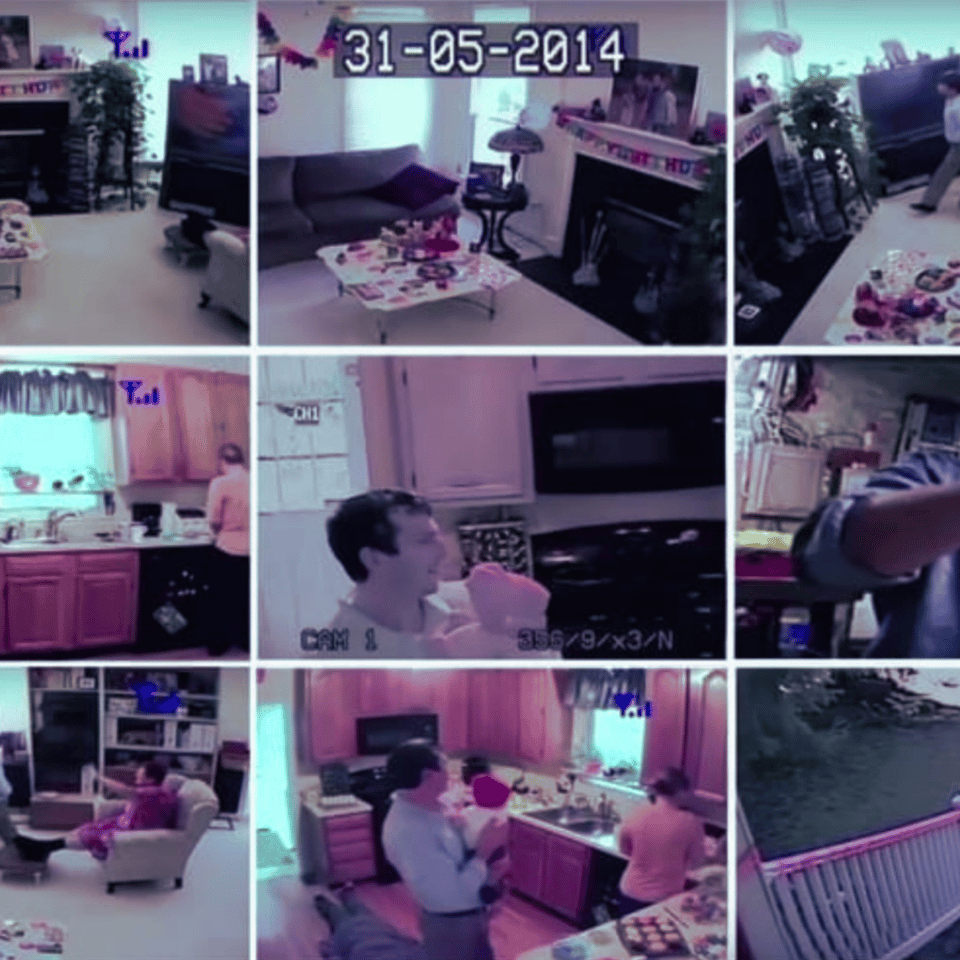
Parents Ann and Tom try to save their teenage daughter Madison as she lies prone and sinking through the kitchen floor. The young son Jackson turns away the arriving guests for his party as chaos ensues inside the home. The grandmother neglects the baby, Amber, to watch a strange Bob Ross-style TV program as the infant wanders outside. Cupcakes for the party burn in the oven and fill the house with smoke. A blue figure darts past the windows and outside on the property in a blur barely caught on camera. The parents, joined by handyman Dennis, rush around to save Madison, as she sinks into the basement. All the while, static cuts into the feed. A sickly, bald pink form emerges from the junk piled in the garage, inserting itself into the narrative through these jabs of night-vision footage.
Ann steals Jackson's mattress, his bed naked of sheets, to carry into the basement and break Madison's fall. Tom is having a breakdown in the basement, shouting about the importance and sanctity of family. Jackson is nowhere to be seen within the home. An outdoor feed shows the infant Amber crawling away from the house. Ann screams as Madison falls completely through the floor and onto the mattress. The feed cuts and the teenager is gone, the basement empty. Outside, the rejected party guests, who had been chatting and entertaining themselves in the front yard, now lie facedown on the ground. They mirror Madison's position on the kitchen floor.
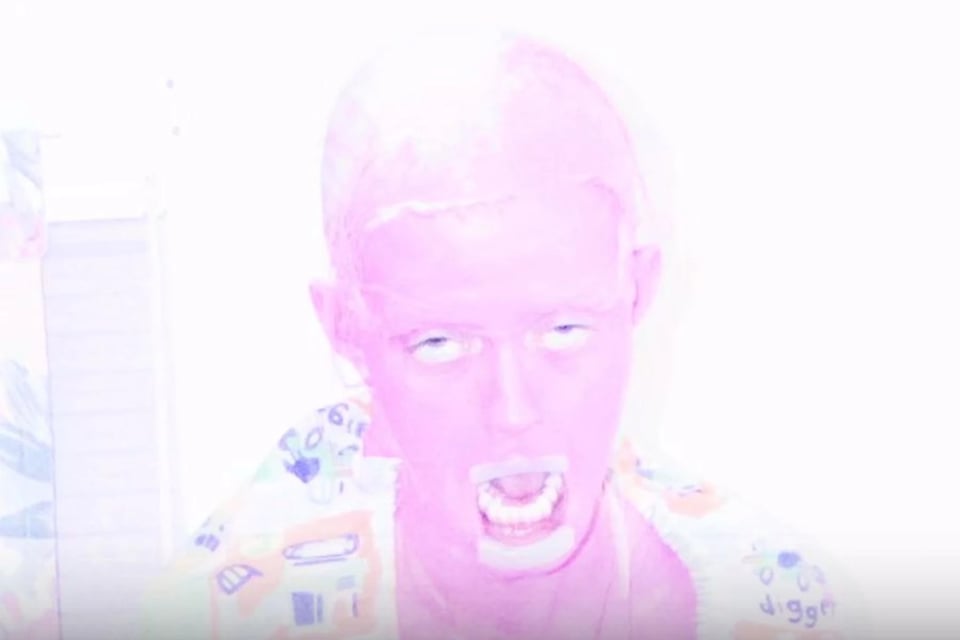
One final cut of static reveals the pink figure in a single frame. The colors are blown out. Its eyes are dead and mouth is slack, the jaw hanging open. The frail body is draped in a child's bedsheet. A link at the end of the film encourages viewers to go to the website for the company AB Surveillance Solutions.
Having not seen it in several years, I found myself sitting there in front of the black screen, feeling a bit ill. The thought of a child's bare bed gave me pause in a way that I hadn't anticipated. I asked Melissa what she thought of the film. She said, “Well, this is clearly about child abuse.”
“And,” she added, “I want to kick the parents’ asses.”
Now that I've explained what This House Has People In It is, I have to talk about my history with it. I loved this thing when it first premiered in 2016. I thought about it constantly. I devoured interviews with the cast and crew. I watched and rewatched videos analyzing both the film and the hours of supplementary material on the AB Surveillance Solutions website. And there was just so much to think about.
The site served as a portal to all the footage, phone calls, emails, and other materials documenting the events inside the house. An entire alternate reality game, designed by Kelberman, featuring the characters living their lives through a series of strange conversations and occurrences. There were codes to decipher, hidden messages to find, links to other websites and YouTube videos, and even a fake newsletter. AB Surveillance Solutions had amassed months of materials on this family, its members labeled as “subjects” within its file system, for viewers to access and review.
But the subjects of…what? A study? Are they being watched? And who is watching them?
We learn that this is a blended, rather chaotic, family. Madison and Jackson come from Ann and Tom's previous marriages. Amber is the couple's first child together. There's no mention of Madison's father, but there are glimpses of a photo near Jackson's bed of who we can assume is his mother. Tom and Ann frequently communicate via phone calls and emails, even when inside the house together. The children essentially receive missives from their parents through email instead of in-person conversations. The grandmother appears detached, sometimes cruel. The handyman Dennis is seemingly always around, at all hours of the day and night, because the house is always in a state of disrepair.
The most tantalizing throughline of the short film and the supplementary material is Lynks disease. Lynks is an illness propagandized to the family by The Sculptor, the host of the Bob Ross-style program the grandmother enjoys. It appears to operate like a combination of Lyme disease and measles. Highly contagious, it's in the air, clay, and water, and passed among romantic partners and family members.
It’s further expanded upon in The Lynks Review, a newsletter Ann subscribes to which contains information about Lynks as both illness and a lifestyle. Once caught, you can treat Lynks, yet you can never recover. If you do catch it, which you will, Lynks will give you a slew of physical symptoms. This includes blisters, rash, blackened tongue, ear infection, forgetfulness, loss of bodily control, feeling trapped under a heavy weight, and, inexplicably, a collapsing head. It will also give you perfect pitch and what is known as “special attributes,” supernatural powers that are each unique to the individual. The Lynks Review posits that its quizzes are as good as a medical diagnosis. Its articles tout the efficacy of new treatments and must-have Lynks-related fashion and accessories. It shows you how to end your family's suffering when the time comes, printed next to crossword puzzles and interviews.
You are always in the state of contracting, treating, recovering from, and avoiding Lynks simultaneously. It's inescapable and debilitating yet easy to manage through lifestyle choices. Lynks disease is the cause of all your problems and frustration in life. It's also what makes you so special. Lynks makes you unique, ushering you into a niche community of secret knowledge and endowing you with powers no one else has. The disease is as enticing as it is bedeviling.
All of this spiders out into a web of secret YouTube videos and websites, messages hidden throughout the family home and newsletter issues. We learn that the family eats clay to ingest its healing properties. They stop to stand and stare blankly, touching their faces in soothing rituals. Tom becomes convinced he's trapped under an invisible weight and randomly loses control of his body, unable to open the front door or get off the kitchen floor. He later appears to believe he has perfect pitch and randomly breaks out into patriotic songs. Ann believes she can move objects with her mind. It's easy to think of these incidents as the product of hallucination or wishful thinking, but there are records (no video, thankfully) of Jackson's head collapsing. Coupled with all the other surreal goings on at the house, one must take Lynks as seriously as any other aspect of the world.
If Lynks is real, their lives are a nightmare where your body fails you or your head collapses. If it isn't, then this poor family is deluded. They've been taken in by alternative medicine and lifestyle marketing from people who profit off the fear of the disease. It could happen to any American family, and often does. (You can probably imagine examples of conspiratorial thinking and alternative lifestyle frauds in your own life, if you're an American reading this now. I know I can.)
All of these codes and clues, all of this footage, document a family unraveling from within. They can't see what's happening to them. It's a compelling tragedy, a sad, strange little box to unpack and examine the contents of. We survey them, as they are being surveyed, to make sense of the things that they cannot.
At least, that was how I used to see things. This House Has People In It was a mystery to me, and Lynks felt like the crux of it. Putting all of the pieces together would yield some kind of conclusion. A catharsis. There is no end, however, no terminal place awaiting you. The supernatural occurrences, blink and you'll miss it messages, and secret codes all compound and recontextualize but never fully illuminate. Not in the way that I was convinced that it would, and the way the explainer videos frequently rationalized.
These instances paint the picture of familial dysfunction, but not with the broad strokes I would often see discussed back when this film was fresh in my mind. This House Has People In It feels very pointedly about the American family is a way that I find much more distressing now. Yes, I'm older and I can see more in it with the gift of perspective and experience. No, I don't think I was capable of seeing the piece in its totality.
Sometimes, it's better to keep things in their little boxes, where they're easier to pack up and put away. Now I find less use for the false comfort they offer.
When I say that watching this with my wife felt like watching my own childhood on a screen, I need you to believe me.
It starts with how the parents are framed. Tom is often presented as a lovable oaf, engaging in goofy antics and maintaining a silly tone in his documented correspondence. Ann is portrayed as level-headed but still sharp and funny. She's a bit silly in her own right and overall accommodating of Tom's nonsense, yet she does challenge him when need be. On the surface, their behavior keeps with the well-worn sitcom tropes of the harmless buffoon husband and the kind but firm wife who keeps him in line. It also helps that Naomi Kline and Robby Rackleff are pitch perfect in their roles, imbuing the characters with an earnestness that sells the viewer on the absurdity. Ann and Tom are a bit strange, yes, but they're familiar enough. Safe enough. It's in the details that this image of a comforting television family begins to degrade.
Tom has a juvenile preoccupation with politics. He expresses flatly jingoistic rhetoric and listens to war sounds in his spare time, relaxing to a score of shooting and explosions. His tendency to randomly sing nationalist anthems and burst into tears while the family joins him in a compulsive salute shoots past absurd to become quite eerie. Eerier still, Tom dresses in a Boomy the Cat costume when his wife isn't around. He can be observed in the surveillance footage running around the neighborhood in a skintight blue outfit. Boomy is Jackson's favorite cartoon character, a Sonic the Hedgehog-style blue cat who eats trash and runs fast, which Tom has become obsessed with.
The steadier and more mature Ann becomes overly emotional whenever a character dies in the book she's reading. She bursts into tears, calling Tom in the middle of the day for comfort as if a real person has died. Her belief that she's developed psychic powers is also treated as an emergency, something she calls a family meeting in the living room about while the children look on in confusion. Her feelings seemingly always take priority in the home. Tom's too, as supportive as she is of his antics, despite the strong face she puts on.
In a more abusive turn, Ann is controlling and belligerent toward her daughter Madison. Madison is a somewhat moody teen adjusting to the new family dynamics, with the home being Ann's where they lived with Ann's mother before Tom and Jackson moved in. Ann monitors the girl's time in the bathroom and complains angrily to Tom when Madison wants to go to the mall with friends. Madison also faces harsh accusations of smoking and threats of punishment when Ann finds cigarettes in the house. (Cigarettes that Tom brought in, we learn, and bribed Jackson to hide behind his bed.) The emails are the only communication we see between mother and daughter, and they are cutting and dismissive.
When we see Madison lying on the floor in the film, Ann complains that she was there for two hours. Two hours, stepping over her daughter like an object. Ann mocks and shames Madison and takes photos of her motionless body to “show to everyone” with a sneer. Everything the girl does is treated as an inconvenience to the family and her mother especially.
Tom's son Jackson is quiet, melancholy, and having trouble making friends at his new school. Like his step-sister, he has no privacy in the home, though it manifests in different ways. Jackson shares a room, in his little kid blue car bed sans sheets, with his step-grandmother. She tells him “You're dead, you're a dead body” while he lies in his bed. He can be seen hiding things in the space between the wall and the bed, like the cigarettes or the decorations from his party. The only communication he receives from Ann is a clinical email regarding the guest list for his upcoming birthday party. Tom sends his son bribes and complains about the grandmother judging him.
The boy has little for himself and retreats into the comfort of his favorite cartoon, Boomy. But even this is taken from him when we see Tom go into the room when no one's home. There Tom tries on Jackson's too small clothes and lies in his bed to take his place as the child. Tom sits at his desk and draws crude crayon pictures of Boomy, passing them off as Jackson's. As a child, Jackson's interests and meager possessions are the site of roleplay and fantasy for Tom, something to reclaim for himself. Something to take.
In those calls between Ann and Tom, Tom rambles about hiding food from the kids because he doesn't want to share with them. He rambles about not wanting to go to a certain store to pick up paper goods at Ann's request because the clerk makes him feel judged. Ann is preoccupied with the house and the yard, and sorting through Tom and Jackson's things to donate what isn't needed. The house which, as we know, is always undergoing repairs by the handyman Dennis. Footage shows the baby Amber disappear while Tom is playing with her, only to reappear in another log replaced by a baby doll. Amber functions as little more than a prop, never spoken of and rarely shown with her family, and is portrayed as such. She appears when necessary, validating Tom and Ann's relationship to others, and then disappears when the reality of raising a new baby becomes too inconvenient.
All the while, the pink figure lurks in the home. The figure is constructed from elements of each child: its skin is pink like Amber's beanie, its shoulders are draped in Jackson's missing bedsheets, and its body is that of a grown woman, which Madison is seeking freedom to become. It hides in Ann and Tom's bedroom, its eerie face caught in mirrors, its figure seen emerging from the closet. At night, it goes out to the yard to tend the lawn with a manual reel mower. By day, Tom is unable to lift the mower to use it, the object seemingly too heavy, trapped to the earth. Even this small responsibility, to tend the lawn, is too much of a burden. Someone else must take it up.
In the final footage log, the pink figure is seen confronting Ann and Tom in their room. It comes out to stand before their bed where they lie together, talking and reading. Silently it opens the drape of its sheets to expose itself to them. Ann and Tom scream, like they screamed when Madison fell through the floor and vanished. Like they screamed during random call logs, conversations cut short by a terrifying sight.
Or a terrifying reminder.
To see the pink figure, this amalgamation of their neglected children, rise from the depths of the home to stand naked before them, all they can do is scream.
Sometimes I wonder if my brother was right, that day we talked about good memories and bad. It's a scary thought to have when you already experience difficulties telling the real memories from the ones you were told about. Maybe he was right? Maybe, due to some spiteful impulse, I forgot the good things that happened in our house? Maybe I really had set out to hurt my parents by only remembering what I wanted to?
But then I remember all the years I spent telling myself that my house was good. That my family loved me. That whatever happened to me was my own fault, a fate brought on by my too-big emotions or my too-loud faults.
And I remember…
That can't be true, because of how much it hurt when I realized it wasn't.
Melissa and I talked for days after we watched the film. I brought her to my rabbit hole of theories and explainer videos and she happily jumped down. We watched more Wham City projects, too, and talked about them alongside This House and Unedited Footage. We turned all of it over in our minds, again and again. Every video log, email, and phone call which had once set me off in a different direction, racing to a different conclusion, brought us to one shared interpretation.
The house is an institution. It must constantly be surveilled and maintained or it will fall into ruin. We watch these people through their own surveillance cameras, installed in every room to protect themselves from intruders and survey one another. Their conversations and correspondence is open to our gaze the way we survey one another through technology and screens. Once inside the house, the parent is the absolute authority, on par with the state and god. Ann tells Madison she will “come down on you like a divine wind,” does she not? We already know Tom worships state power. The reality presented by the parent is the only true reality.
And what feels more quintessentially American than a house full of eyes and disease that makes you both a victim and an overman? There is always a threat to expel, but in your defeat, you are victorious. You are better.
Something happened to Madison that day in the kitchen. It was something so awful that it threatened the facade of the house and the family. Jackson had to turn the birthday guests away, closing the door to the outside world and the danger of its gaze. The danger of possibility, too, as a community of people outside the family gathered in the yard. Tom sermonizes about the importance and sanctity of family as if giving a stump speech at a rally. Dennis, the handyman who works day and night to maintain the house, is recruited to help protect it from this crisis. Amber is left unattended and wanders away. Ann takes Jackson's bare mattress, one of the few things he gets to have, sacrificing two children to aid another. It's no wonder that there appears to be a small body wrapped in a sheet inside the bed frame once the mattress is removed.
When Madison falls through the floor and vanishes, whatever transpired in the house was so devastating that knowledge of it escaped. Its effects rippled out into the world. The party goers in the yard assume the same position on the ground, because they've been touched by this knowledge. This is why the pink figure is shown rising from the clutter and mess of the garage at the same time. That which was repressed, relegated to the unseen depths of the house, is finally free.
The horrors of the home, frail and sickly and ugly to look at, have come to confront you.
At least, that's the way we came to see it. It felt…correct.
Watching the film with Melissa gave me the permission to view it with new eyes. When I first became consumed by its mysteries, I was living in a house with people in it. My family was arranged in a very similar way. My parents pursued alternative medicine as a solution to their problems, choosing it over conventional treatment unless in dire circumstances. I saw the antics of Tom and Ann as absurd, maybe a little sad, because it was safe to do so. Their shared naivety made them easy marks for frauds and scammers. It clouded their vision and muddied their judgment. They were victims, too.
This is true, and I believe it. But they were still the kind of people who neglected and ignored their children. They still strove to keep up appearances at any cost. They were still preoccupied with their own validation, their own escapism, their own fantasy, placing that above everything -- everyone -- else in the home. And what of the incident in the kitchen, and then the basement? What happened to Madison, and if it was so cataclysmic, how can the family return to normal after these events?
Well, I can say from experience that when a parent decides something is done, it's done. Maybe there's an apology, or some kind of repentant gesture, for whatever they inflicted on you. Maybe they were upset and maybe you pushed them to act poorly. You happily accept their words, because maybe this time will be different. Maybe there will be a reckoning and your parents will learn to stop treating you like this.
It's a comforting thought, anyway.
A decade, a cross-country move, a PTSD diagnosis, and an SSRI prescription have all given me the space to be finally disturbed by This House Has People In It. To be disturbed and to share that disturb, that distress, that deep sense of empathy for the children, with someone who understands it.
That, to me, is a gift.
Add a comment: