
Engaging With Art Every Day: Vol. 2
I decided to engage with a piece of art every day. Here's what came of it.

Welcome back to my current life project: engaging with at least one (1) piece of new art every single day.
When we last left off, I discussed a recent selection of illustrations, animations, and short films that had greatly impacted me. It was a slim but respectable list that pretty successfully captured my rather broad aesthetics sensibilities. At least, I felt it did. I'm happy with what I was able to put together and I'm excited to do it again.
For this volume, I gave myself more time to collect and reflect on different works to offer an even more varied range of pieces. This means I have more to talk about and share. This also means that I can demonstrate just how weird and eclectic my tastes are. I feel that this is kind of an important element of curation that our hyper-specific, algorithmically-tailored social media feeds can't fully replicate.
This isn't finding art that I'll like or that I think you want to see. I experienced all these works by actively searching for art a little every day. Some arrived in my feeds, others I had to go out of my way to find. Now I'll share them here and ask that you go in with an open mind, ready to let art happen to you.
Let's get started.
Possibly In Michigan
Directed by Cecilia Condit
Before this year, my understanding of the 1983 short film Possibly In Michigan was predominantly as a historical artifact. It was referenced in many an article and iceberg video about surreal horror art projects of the 2000s and early 2010s internet. Back then, I had only ever seen the first half of the film, as this was the broadly available version uploaded by filmmaker Cecilia Condit on her YouTube channel.
This truncated version of the film was very much what its IMDB page has to say about it:
Two women are chased through a shopping mall by a stalker named Arthur.
Sharon (played by Jill Sands) and Janice (played by Karen Skladany) are close friends who do indeed meet at a suburban shopping mall. Skladany also contributed the score and the absolute banger track, Animal Cannibal, which plays in the beginning of the film and throughout its first act. They meet to shop for perfume, one of the things they have in common. The other is their shared tendencies to attract violent men.
The women's stilted, unnatural performances and grimly comedic dialogue run in sharp contrast to Arthur, the silent stalker following them across the mall. Dressed in a tuxedo, Arthur wears a disturbing mask that hides his face. The mouth is agape as if to scream, the eyes quite dead, as he advances upon Sharon and Janice in a leisurely stroll. When Arthur makes himself known, the women flee the mall. Sharon recognizes him as someone she may have met in Michigan. Their narrow escape, set to a reprisal of Animal Cannibal and intercut with uncomfortable sequences of Janice dancing with the masked Arthur, is where I understood the film to end.
I was very surprised, and a little annoyed, to learn about the entire other half nobody ever talks about.
The first act at the mall is at once surreal, tense, and darkly funny. It's iconic to those of us whose brains were made rotten by late-night YouTube creepy video compilations in 2010. Sharon and Janice have an edge to them, a sense of volatility, as they singsong through rather distressing conversations while sampling perfumes. Arthur cuts an unsettling silhouette in his neat tux and eerie mask. He is at once scary to look at and oddly disarming in the clunky execution, strolling around the mall with this big, weird head.
But when Sharon goes home, Arthur, sans mask, all mustache and rakish charm in that very 70s/80s Burt Reynolds sort of way, has followed her there. The tone becomes much darker, the stakes raised from threat to palpable physical danger. Sharon sees Arthur ringing her doorbell and hides to call Janice for help. The ensuing sequence is remarkably tense as Arthur breaks into Sharon's bedroom. He kisses her, then repeatedly shoves her into the bed before producing a knife. The stalker speaks in a slowed, distorted voice as he explains her options:
He will either eat her immediately or slowly dismember her, then eat her, in what he describes as an act of love.
Janice rushes in to rescue Sharon and shoots Arthur dead with a pistol. Together, the women proceed to dismember, cook, and eat Arthur. They mock his masculine violence and ravenous appetite by butchering and consuming him -- rendering him to meat -- in an act of revenge. Finally, they dispose of Arthur's body and throw him in the trash, his body munched by the jaws of the passing garbage truck.
Properly revisiting the film in its full length, with the additional context of Condit's life and career as an experimental filmmaker, I was struck by how truly harrowing Possibly In Michigan is. Not all of her films are quite so distressing, but they speak to her fascination with myths, fairy tales, and dreams, and the representation of women within them. They also speak to how she contextualizes and explores themes of violence, misogyny, and sexuality.
Condit's 1981 debut film Beneath the Skin (also starring Jill Sands and the first of “Jill Sands Trilogy”) centers a woman's reflection on the experience of learning her boyfriend was hiding his ex-girlfriend's body in the closet. This event was taken from Condit's own life, having dated Ira Einhorn (known as the Unicorn Killer), who murdered ex-girlfriend Holly Maddux and hid her corpse in the home for two years. It's impossible not to see Einhorn, and the countless men just like him, in Arthur's uncanny masked face, stalking shops and streets for women -- the meat -- he feels so entitled to.
Possibly In Michigan has become one of my favorite things since I've returned to it. It's so much more than a creepy scene in a mall in 1983. Strange, funny, subversive, and downright scary in some moments, it's a wonderful, dreadful little film.
Yokai Photography
Yuji Watanabe
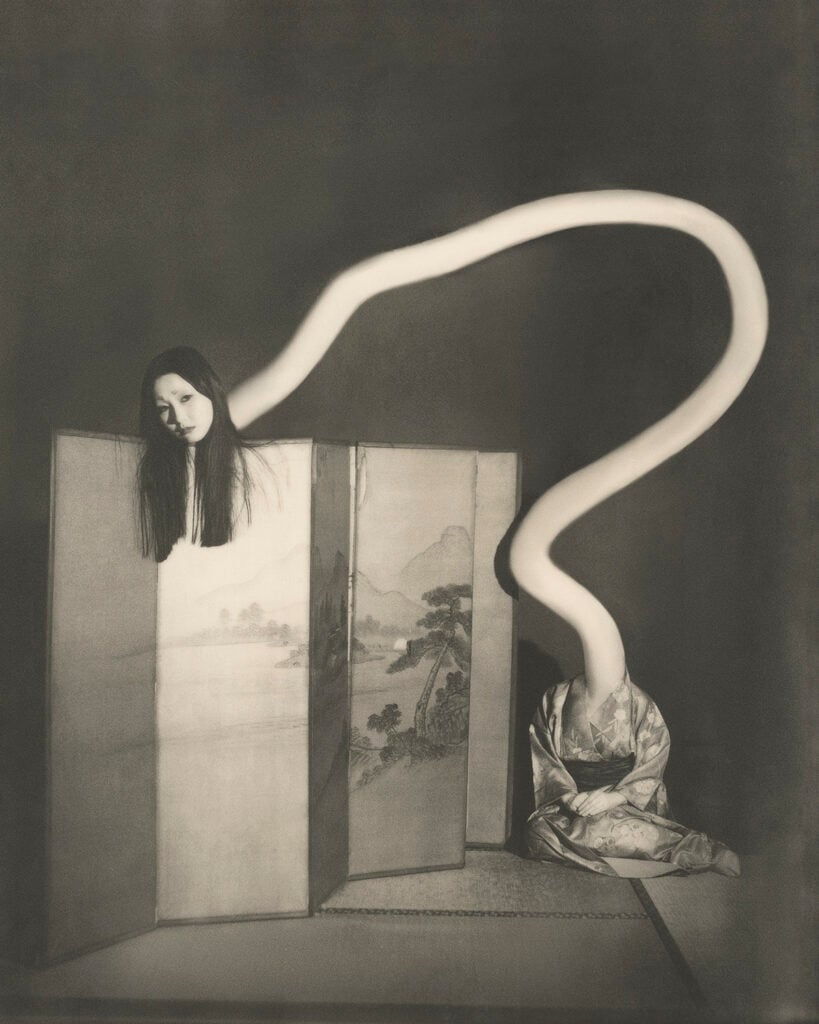
This series by photographer Yuji Watanabe has stayed with me since I first stumbled across it online. The aged photograph of a long-necked woman seated on the tatami floor, her hair falling upon the folding screen which takes most of the frame, immediately commands your attention. The background is an indistinct smear of darkness, giving her eerie white skin a preternatural glow. Her long, coiled neck is a white tube that curls like a question mark above her neatly arranged body. Framed by bluntly cut hair, the face that sits at the end of her extraordinarily long neck is serious, perhaps a bit sad.
It all works together to make you ask:
Who is she?
What is she?
Who's taking the photo?
Under what circumstances is this photo taken?
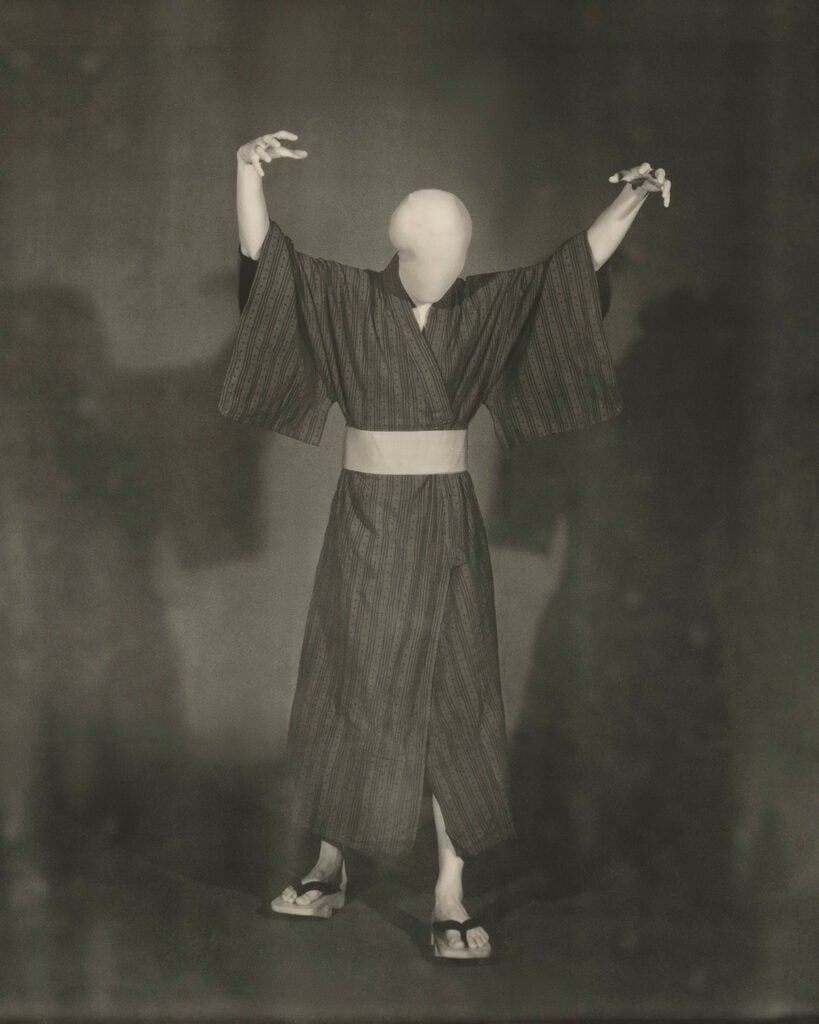
Each photograph in the series is similarly meticulous yet elusive. Beings from Japanese folktale are carved from light and shadow to create dreamlike tableaux. Their forms are sometimes familiar, sometimes indistinct against the hazy background, the images weathered and ragged with age. The expressions, too, are difficult to parse in their distance and neutrality. There's something uneasy about that blankness.
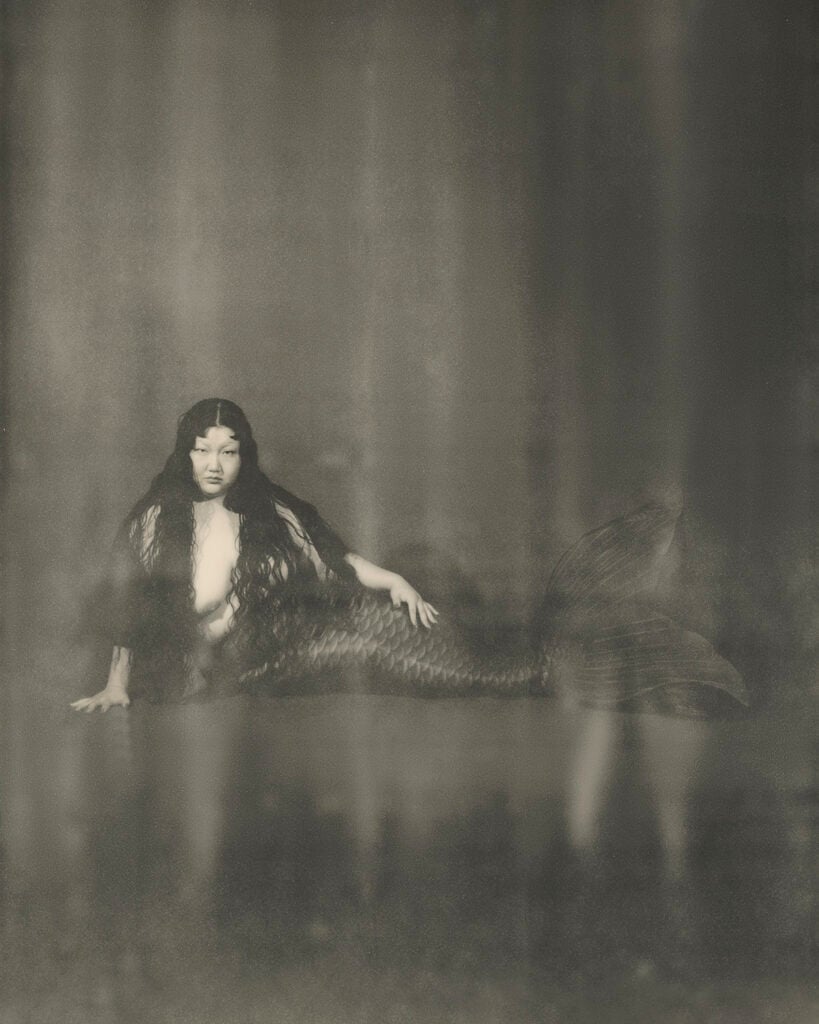
All together, the series has the feeling of 19th century portraiture. I'm sure the weathering gets that point across, but I mean moreso in the formalistic content. These creatures stand a bit randomly, a bit awkwardly, seated rather plainly. Some of their gazes meet the camera while others have no eyes with which to look. It reminds me of very, very old pictures at my great grandfather's farmhouse. There, the walls are decorated by wrinkled, stained photos, collected into decrepit wooden frames. The photos show plain, sun-weathered people who didn't quite sit in the center frame, and didn't quite know what to do with their faces. While stoically positioned, they appear very aware of the camera and its gaze. Yokai Photography gives me that feeling.
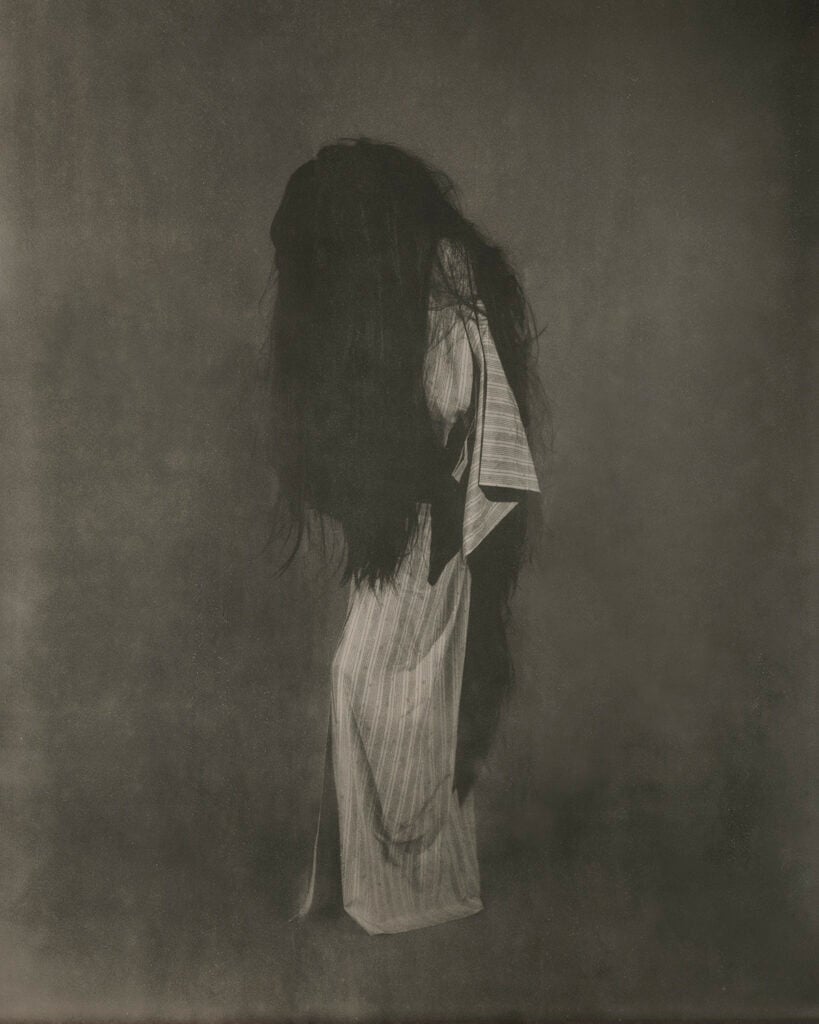
There's something…quaint about that, I suppose? Something almost sweet? The idea of these yokai -- these otherworldly, at times fearsome, creatures -- seated for portraits, as self-conscious as one of my ancestors trying to get a good photo. I don't know. I just really love these photos.
You can find more of Yuji Watanabe's photography at his website.

Femicide
Michelle Mi Che
Sometimes you just see a piece that hits you in the face like a brick. This sculptural piece from the Fracked Femme series by interdisciplinary artist Michelle Mi Che did just that. It's almost funny to observe at first glance: a fleshy, pink mass, its form not clear from a distance. Then you take a moment to study it at every angle and it feels every bit as lethal as it intends.
Femicide is a smooth, fleshy pink jug of pesticide. Old blood smears its body in hand prints and splatters while fresh gore drips down like thick, bright tears. Attached to its sludgy, overflowing mouth is a coiled hose feeding the chemical to a handgun. Long metal spikes pierce the jug from the inside with explosive force, like bullets exiting a body. On the back of the jug is the product copy:
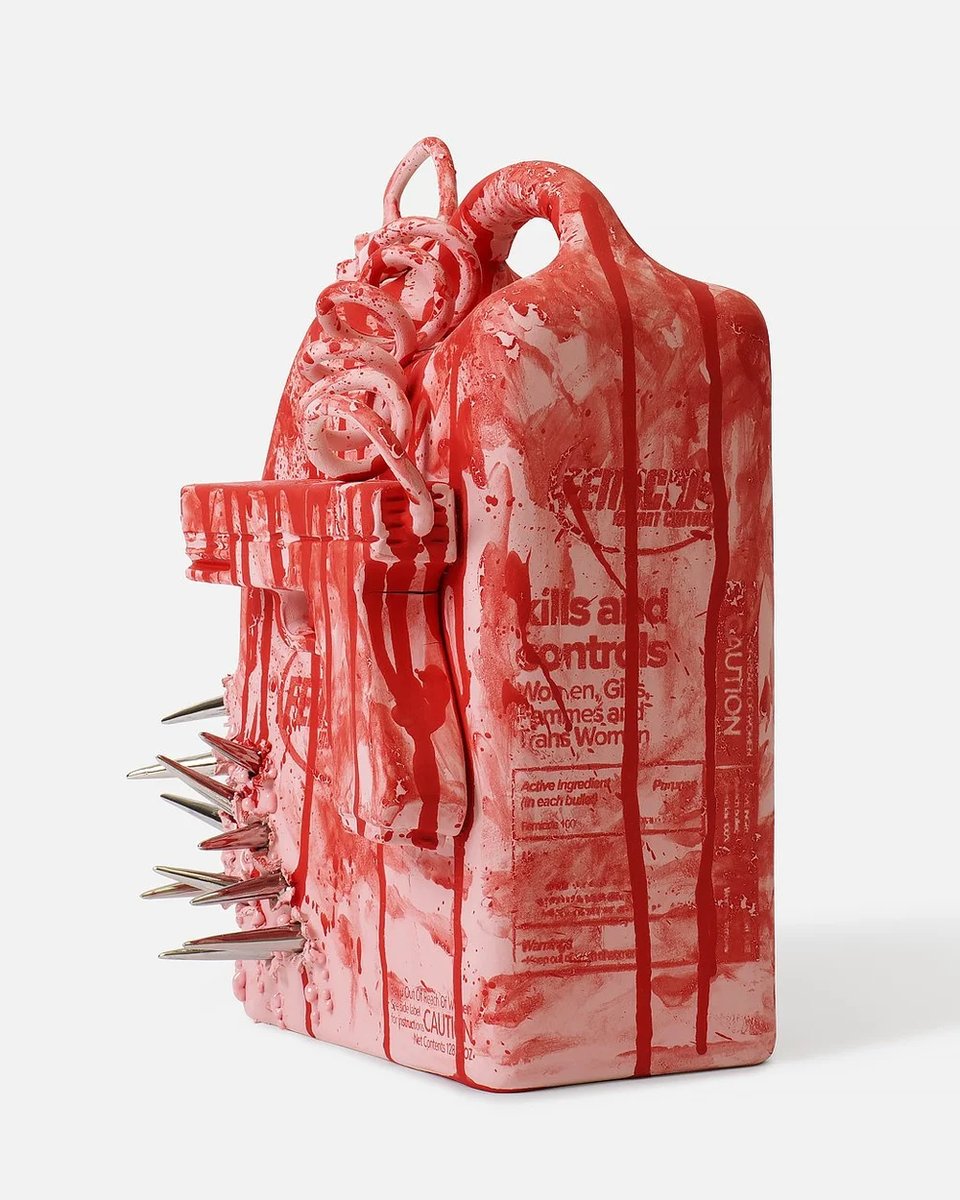
Kills and Controls Women, Girls, Femmes, and Trans Women
And yeah.
Yeah, I pick up what it's putting down, like a kick in the teeth. But it's that soft, fleshy pink punctured by steel and corroded by poison that feels so fucking true. An industrial nightmare of a weapon made of flesh and blood and coiled tubing, its contours almost heartlike in how they meet. Whether a body or an organ, this fleshy blight pumps poison into our veins like a man shooting bullets into a soft body.

I can't say that I had the same visceral reaction to the rest of Che's Fracked Femme collection, but Femicide lives rent-free in my head. You should also check out the vase collection Waifu, which reimagines 12th century Korean plum vases and interrogates how Japan sanitized and commoditized its image after World War II. The pieces are angry and mournful, and absolutely stunning in how Che approached the materials and worked them to their final forms. I really appreciate Che's sculptural work in particular, and the lens that she brings to her other projects is equally powerful.
More of Che's work can be found at her website.
The Black Tower
Directed by John Smith
Something of an accidental horror movie, John Smith's 1985-1987 avant-garde film The Black Tower is concerned with architecture. It follows a narrator first noticing a stark black structure rising above the skyline near his home as it begins to appear wherever he goes. What begins as nagging curiosity about the function of the tower soon blooms into fear at its constant presence, stalking him across the city.
Smith moves through the story using voice-over and sound design to connect otherwise disjointed or abstracted scenes and images together. Color, sound, and meticulously assembled film convey the narrator's experiences as he struggles with the impossible dread of a tower moving ever closer. While tense, the film is also quite funny, using dry wit, puns, and timely editing choices to convey a sense of humor in an otherwise melancholy world.
The story of a man driven to madness over a malevolent building, The Black Tower explores our relationship to the architecture around us and the horrors of structures that defy our understanding of the world. Whether those horrors are present in the world of the film or the product of the narrator's imagination, we must sit with their implications as we watch Smith's tightly constructed visual narrative. There are no clear or simple answers, just questions to chew on once the credits roll.
Khazna
Kiss Facility
It's probably cheating to put an entire album on this list, but I make the rules here so it stays. I've gotten pretty obsessed with Kiss Facility this year after happening upon the track Kotshena. The project is a collaboration between producer Salvador Navarette (aka Sega Bodega) and singer-songwriter Mayah Alkhateri, who went from Instagram friends to a couple before releasing an album together. That's the kind of cute backstory that hooks me right away, I have to admit, having married a friend I met on LiveJournal myself.
Kiss Facility filters the hazy drums and guitar chords of 90s shoegaze through the crisp, processed sounds of contemporary electronic dance and pop. Alkhateri's wispy soprano vocals, all sung in Arabic, build upon the distant, dreamy instrumentation like a labyrinth of sound, something you can get lost in. Tracks like Plasma and Noon lull you into a trance, while the hard drums and guitars of Kotshena and Akira Yamaoaka-ass sound of Ishara reminds you that you're still listening to a rock album.
Khazna feels like it was grown in a lab to appeal to me, specifically. It's dreamy, it's dancey, it has ethereal vocals over a lush and purposefully crafted soundscape. Every track is so tight and clean in its production, not a single note feels unaccounted for or misplaced. There are a few tracks that I don't necessarily love, or don't hit with the same force as some of the ones I've mentioned already, but on the whole, it's a really wonderful album.
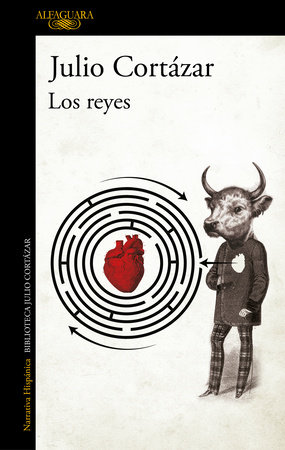
Los Reyes
Written by Julio Cortázar
So, this summer, I inexplicably became obsessed with The Minotaur. You know, as one does. I think it happened after I saw Christopher Nolan's The Odyssey with my wife and mother-in-law. I got one look at some of those monsters and started thinking about The Minotaur. Which, you know, also might have something to do with seeing Elliot Page in a Nolan movie again, given all the references to the myth in Inception. Which is probably still my favorite Nolan movie after The Prestige.
Also, I didn't really love The Odyssey, which might explain why I was thinking about other stories while watching it.
Anyway, so, The Minotaur. I tumbled down a rabbit hole of my own making over this past summer. We're talking historical writings, paintings, poetry, fiction, podcasts, literary criticism, and even an opera. I was absolutely obsessed with the idea of the labyrinth and the terrifying, tragic figure at its center. This was how I came across the writing of Julio Cortázar and his dramatic poem, Los Reyes.
Published in 1949, Los Reyes reimagines the myth of The Minotaur as a tragic romance. Cruel King Minos stews in his loathing for Pasiphae's monstrous son, who now stalks the halls of Daedalus’ labyrinth. Ariadne harbors a secret, passionate love for The Minotaur and conspires against the brash and demanding Theseus to see him freed. Despite this lovers’ scheme, The Minotaur gives his neck to Theseus’ blade, vowing to live on in the dreams of man, through art and song and dance, having no place in this waking world.
Los Reyes is a truly haunting piece of writing. It uses the conventions of the dramatic poem to tell its strange tale of three men, each a king in their own rights or minds, and the woman who binds them. The daughter, the sister-lover, and the prize to be taken. Cortázar's language is lush and dense, taking the familiar imagery of the myth and building upon it in beautiful, subversive ways. The image of The Minotaur as this potent, erotic figure, not merely a tragic or beastly one, makes him so much more rich and complex than he's often given the space to be.
I think about this poem…all the time. Entire lines of it live rent-free in my head. It's probably my favorite piece of writing about The Minotaur, rivalled only by Jorge Luis Borges’ The House of Asterion. It's just a fascinating work that I highly recommend you check out.
The original work is in Spanish, but there's an English translation by Caridad Svich available on In Translation.
The God Crippled With One Leg
Directed by Jun Kurosawa
I struggled with whether to include this piece on my list, just as I struggled with the work itself. It took three attempts to watch the eleven-minute film in its entirety. This is due to its absolutely demonic sound design, which hits all the exact tones that make me -- a person known historically for leaving the room whenever the THX logo appears on screen before a movie -- lose my entire mind. For context, I also have to watch one of my favorite films, Shinya Tsukamoto's 1989 Testuo: The Iron Man, in a state of white-knuckled, teeth-gritting discomfort. So I'm not against evil sound design; it just makes me, specifically, feel like I'm going to leap out of my skin like a cicada and run away.
But Jun Kurosawa's 1994 experimental film is a work worth sitting with. As user Terren on Letterboxed so perfectly stated:
Eleven minutes of pure maxed out auditory and visual destruction, very cool
Very cool indeed!
The God Crippled With One Leg feels, to me, like an act of violence caught on film. Or perhaps, the act of filming is the violence. The film is about a captured woman bound in an abandoned warehouse. She is tied up by strips of film as Kurosawa's kinetic camera observes her, examines her, absorbs every detail of her body, in excruciating detail. The gaze is threatening. Penetrative. Its movements evoke an attack in the way it dissects her body. Outside, an angel -- deity? spirit? -- wanders around, seemingly detached from the woman's plight.
I don't really know what this film is “about.” Its contents are so abstract, just image and sound furiously spliced together, that it demands you divine your own interpretation from its chaos. Yet that chaos is so aggressive and its sense of violence so nihilistic that I feel that the film actively resists your attempts to interrogate it. For me, the camera assumes a violating perspective, that of a malignant force rather than an individual actor. As if the act of looking in and of itself is violent, and to force you to sit with that violence while an uninterested god permits it to happen.
I don't think the camera is evil, or the film itself contains a demonic force, or some other such reddit horror story fodder. It feels much more complicated than that. I just think that the film wants you to really think about the act of looking at a woman's body in making her bondage by the gaze a literal act of violence. Especially when considering the eroticism inherent to that bondage and the deeply intimate way the camera moves over her. What is our responsibility in looking? What power are we imbuing the camera with? Can we separate the intent of our own individual gaze from the overarching authority of cultural norms and expectation?
I have no idea! I don't even know if all my obsessing over the gaze is even really getting to the point of the film, either! And I like that I don't. It's pretty neat, actually!
It took three attempts to watch this film. Each time, I was made uncomfortable by the sound design but remained absolutely enrapt with its imagery. This film makes me feel terrible, and I'm glad that I finally got through it. I find my thoughts returning to it often, thinking of the angel, the woman's suspended form, and the reams of film that bind them. It's a compelling work that's more enjoyable to think about after the fact than to experience in the moment, but one that I find worthwhile.

The Works of Poi + Keely
Keely Majewski
I'm going to be completely honest: I don't really have anything coherent or interesting to say about the work of digital artist Keely “Poi” Majewski. I just really like it and think it's cool. That's the only criteria an artist needs to meet to be included in this list, after all!

Majewski is a self-taught artist who sculpts characters in Blender before drawing over them digitally. Painting over the “surfaces” of the 3D models creates this pointedly artificial, ultra high gloss effect, stretching these plastic women's forms with extreme perspectives, poses, and aesthetics. And I love it. The rich colors, the liquid-smooth latex outfits and gleaming skin, the eroticized postures these women take. I love it all.
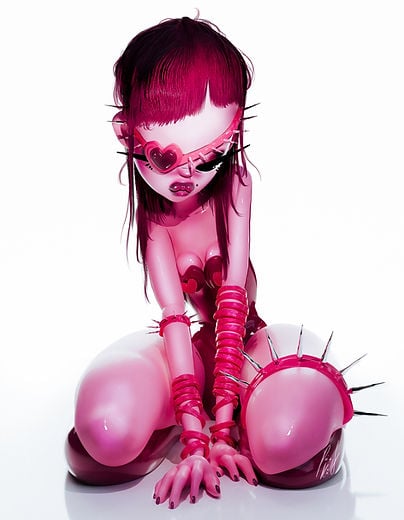
If sexy impossible women are your thing, you can find Majewski's work at her website.
Hollow Point Road
Directed by Dexterous Animation
Sometimes you see a film that haunts you. Other times, you see a film that makes the world feel smaller, darker, and infinitely more inscrutable than you already believed it was. Hollow Point Road by Dexterous Animation is that film. It wormed its way into my brain like a parasite that simply won't leave, no matter how often I knock my head around to dislodge it. It's in there for good, it seems, reshaping the soft parts into new configurations the way only good art can.
So, what is it? A crime thriller? A horror film? A nightmarish look into the world of a broken man? The answer is yes, and also no. Grimy, grungy, and told through seeming non-sequiturs, this eighteen-minute 3D animated film is a mystery that refuses to be solved. A series of grisly and unconnected crimes unfold across a decade. Victims and perpetrators end up on a collision course with one another, the totality of which you can only watch squeamishly as they meet in acts of horrific violence.
You try to put it all together. You try to understand how the characters of the story are connected, tethering them with bits of string like a detective's case board. There is always a piece of information missing. Some omitted context or undiscovered clue that remains just out of frame. With it, any sense of closure or understanding eludes you. There are only broken people here, and those that we meet are capable of truly horrifying things.
Uncompromising, brutal, and absolutely gripping, Hollow Point Road is a masterclass in horror. The impeccable direction and editing had me on the edge of my seat for the entire runtime, and the atmosphere is so heavy with dread that I was almost sick in one specific scene. This film can be hard to stomach, but if you have the mettle to do so, I highly recommend Hollow Point Road.
See you next time.
Add a comment: