
❖ i’m coming out as anti-chamfer
cars, complicit overtourism, and reality/unreality in Barcelona
if i told you i went to Barcelona to see a certain type of street configuration, would you be surprised?
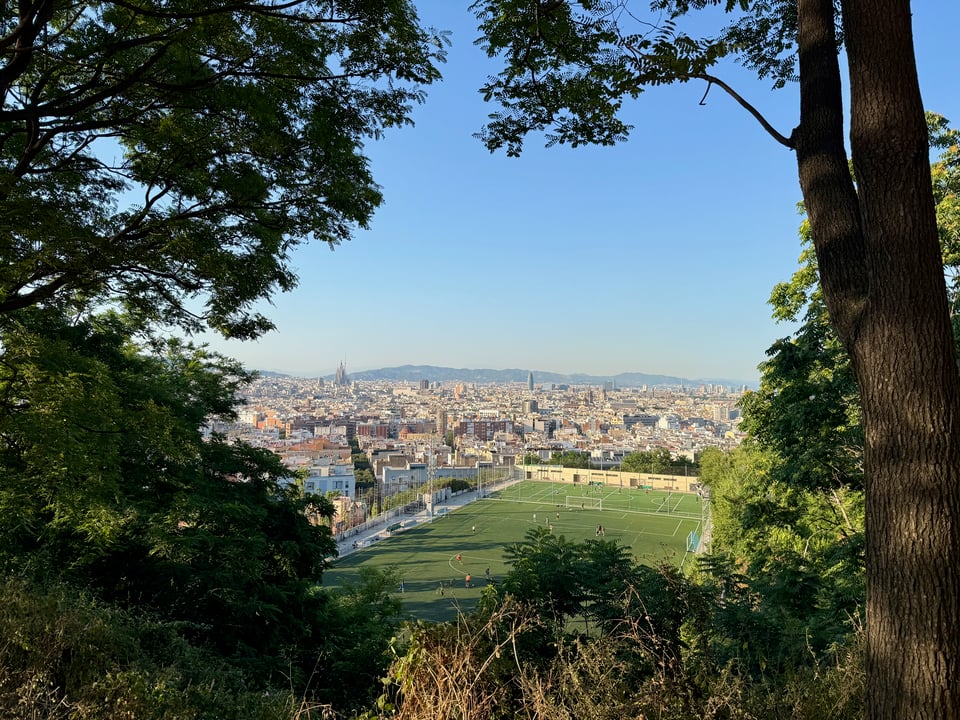
i came for the Superblocks and i stayed for an old friend, a heat wave, the Tour de France, and a dance across the line between reality and unreality. Barcelona marks the last leg of my trip through the Dolomites and Vienna.
❖ ❖ ❖ ❖ ❖
ten years out of planning school, the specifics of most cities have crumbled to dust. but in Barcelona, the chamfered corners stuck in my mind like chewing gum. last month, i planted myself right in the chamfer zone: the Eixample.
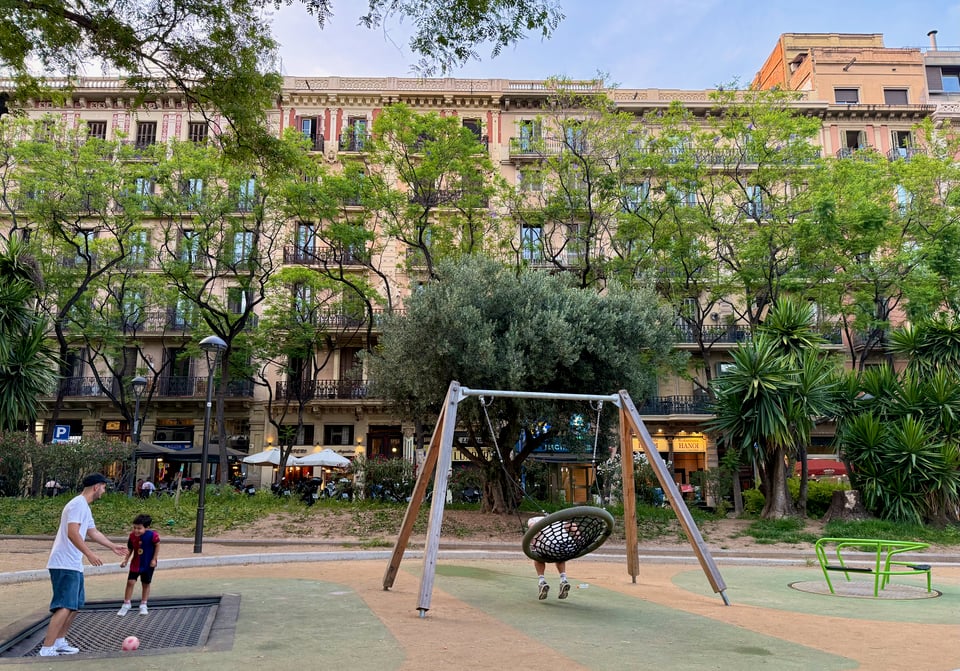
i dropped my things and stepped out of my apartment for gelato. scoops in hand, i sat on a park bench. two sets of toddlers and young DILFs bounced on an in-ground trampoline. next to them, a grown man swayed in a woven swing beside a spinning teacup ride. all these play sets, and two eight-year-old boys still chose to toss a busted bottle back and forth, leaking gray sludge onto the pavement. still, in the Eixample, they have some place to do it.
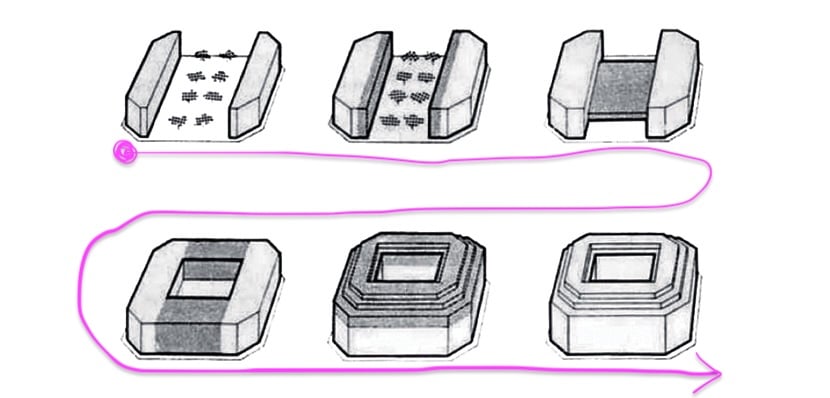
planned by the vaunted architect Ildefons Cerdà in 1855, the Eixample (”ay-shamp-la” in Catalan) spreads the center of Barcelona in uniform, square Lego blocks. Cerdà directed the builders to chop off the corners of each building to amp up airflow, visibility, and public space.
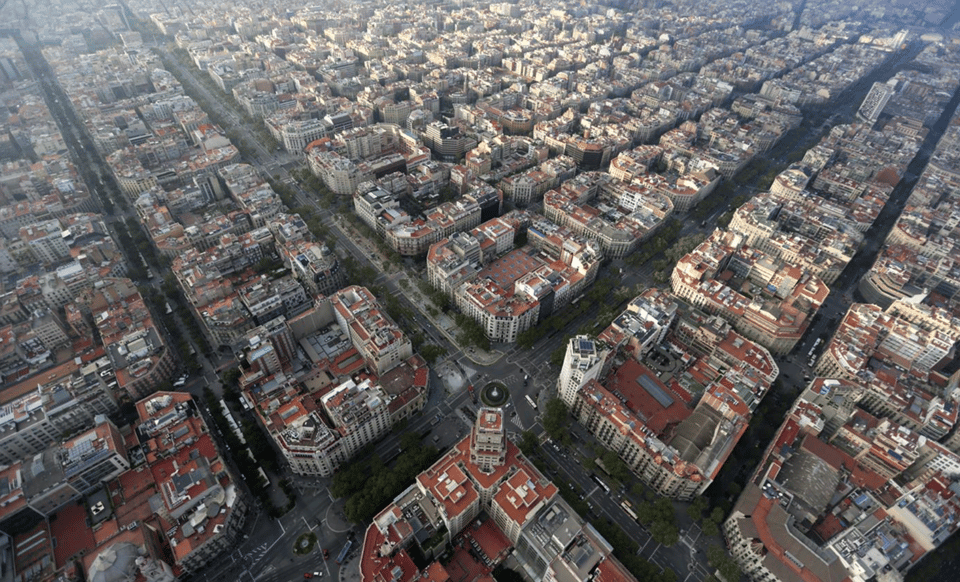
the plan started out as an idealist, pro-social vision for a neighborhood of equals: rather than scooting off to the edges of town, the wealthy were slated to live in the same buildings as the working class. blocks were to remain open on two sides so spacious green courtyards could spill out. Cerdà also knew what the Viennese know: social structures are just as important as physical ones. he designed bylaws and a set of social and economic principles to guide the mixing of people in this place.
population growth and real-estate greed got the best of Cerdà’s plan, though. the Spanish government chose not to ratify the social parts of his plans—just the architectural parts. rather than leaving the blocks open for green space, developers built up all four sides. in a few decades, the buildings took up over four times the square footage he envisioned.
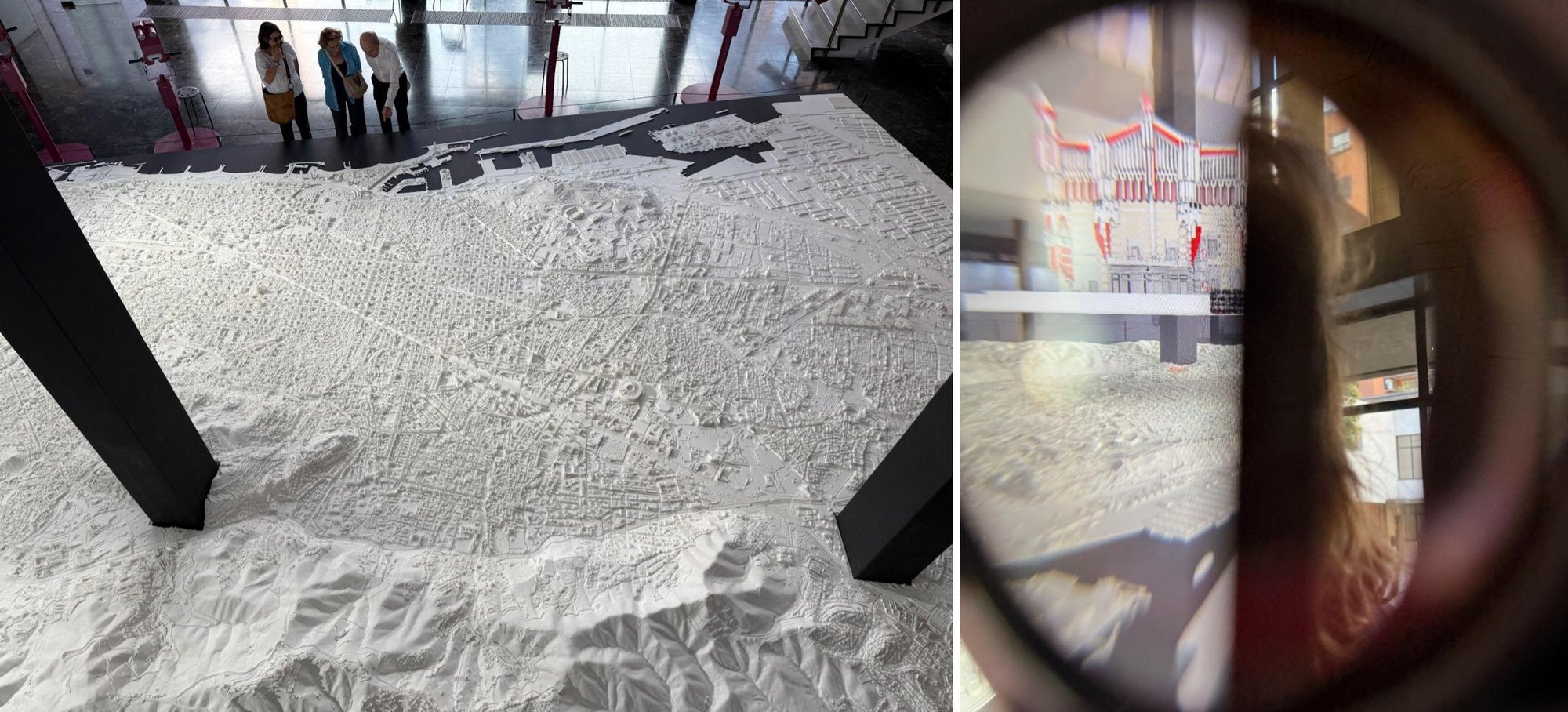
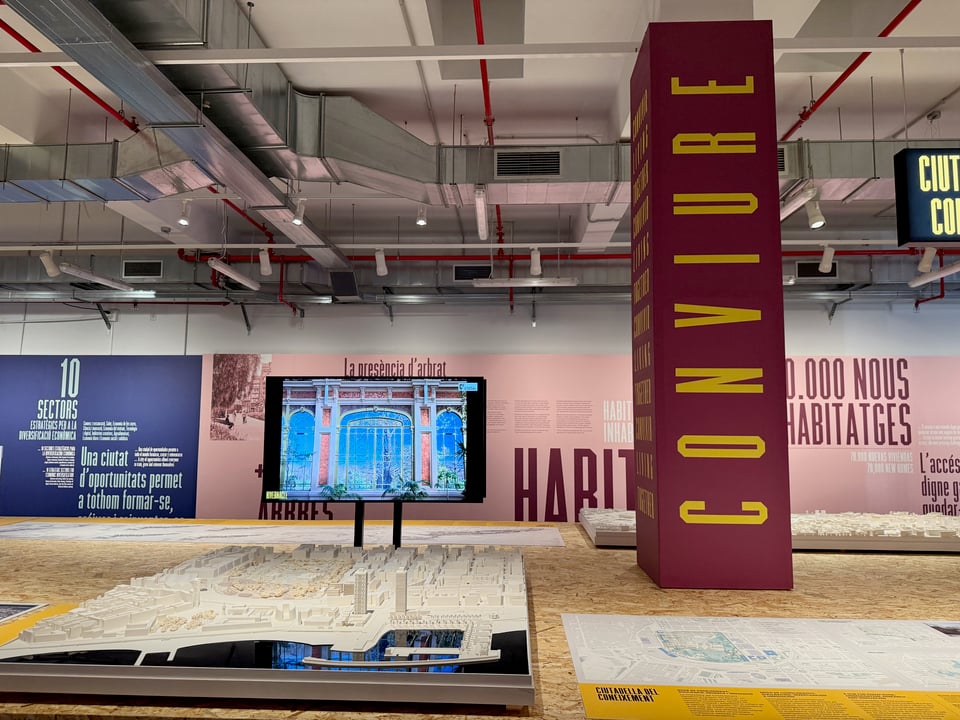
i saw the results not just in the city itself, but with a god’s eye view at the Casa de l'Arquitectura de Barcelona. exhibits celebrated Barcelona’s title as the 2026 World Capital of Architecture, including a room-sized model of the city in stunning white. over 1,200 3D-printed pieces show the “volumetric complexity” of Barcelona’s “urban fabrics.” next to the model, augmented-reality binoculars visualize an imagined future for each neighborhood, with buildings that float and rotate in space through the lens.
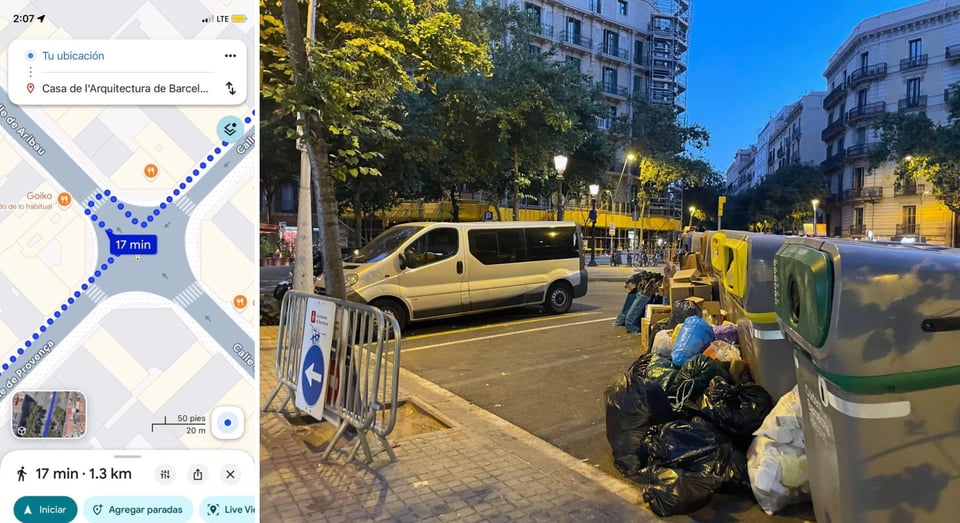
today, cars park in the Eixample’s chamfered corners, dashing Cerdà’s vision for public life. they’re a visual scar, and to get around them—to go straight through the intersection, past the cars—you must turn twice. for this reason alone, i have to come out against the chamfers.
//
cars and an impressive, if overwhelmed, waste system
so, over time, Cerdà’s idealist plan is dashed. here, though, swoop in the Superblocks.
❖ ❖ ❖ ❖ ❖
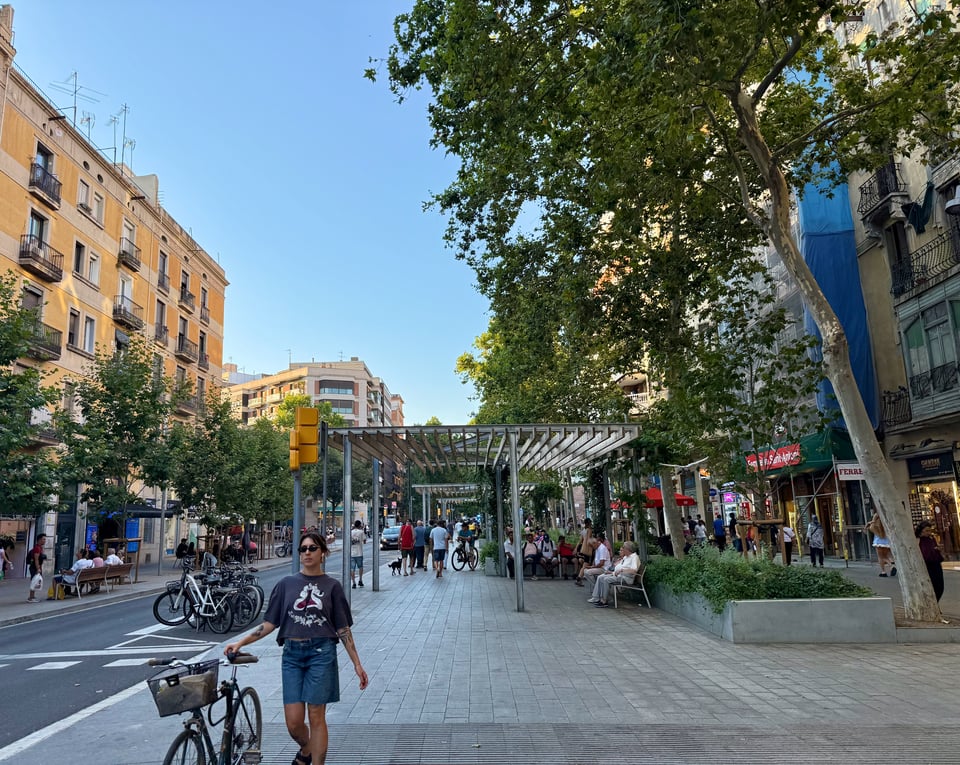
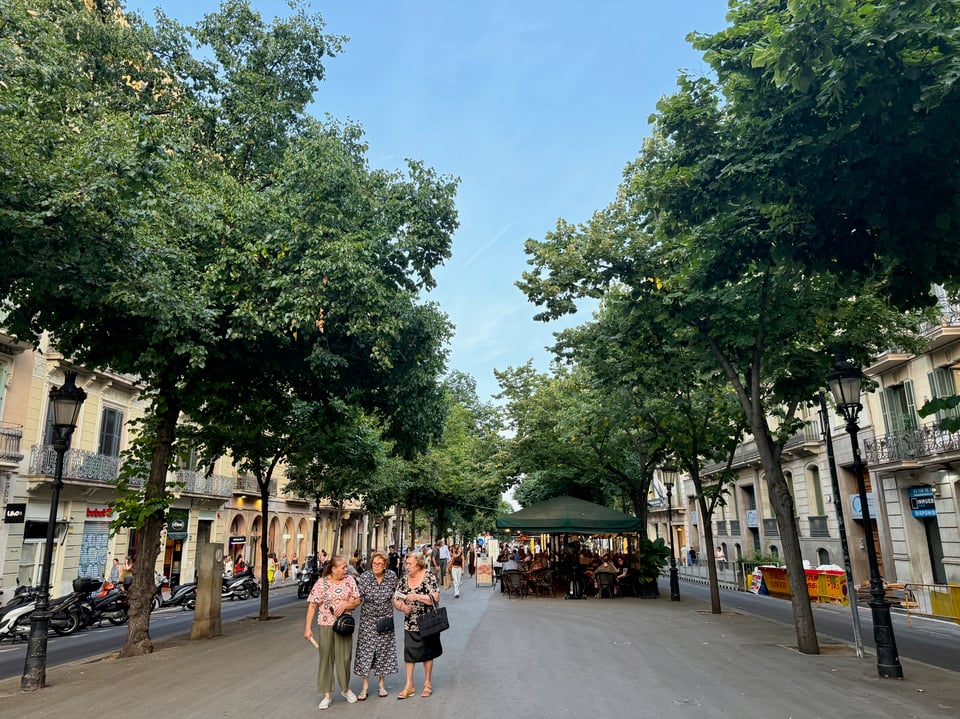
sprinkled around the city, the Superblocks, or Superilles in Catalan, open up streets and intersections to people and close them off to all but the slowest of cars. sometimes the streets are programmed with parks, sometimes cafes spill out on the sidewalk, and always you’ll find benches and shade trees. carrying forward Cerdà’s vision, the Superblocks, a brainchild of urban ecologist Salvador Rueda, seek to tame Barcelona’s infamous noise and air pollution.
at golden hour, i wandered down the hill from Montjuc, where i found a park with a view of the city, the Sagrada Familia perched above scarlet facades. i came upon the Ronda de San Antoni, a road transformed into a stretching plaza empty of cars and full of space for people: children kicking a soccer ball, benches of old men, boys pulling a plastic string and spinning each other in a delirious tug of war, women in hijab talking in circles.
Barcelona excels in kid parkitecture, with plazas for children to play on twirling slides, log forts, and merry-go-rounds. the City puts out plan after plan for Superblocks, green streets, and public spaces, institutionalizing early successes into a new approach at planning the city altogether.
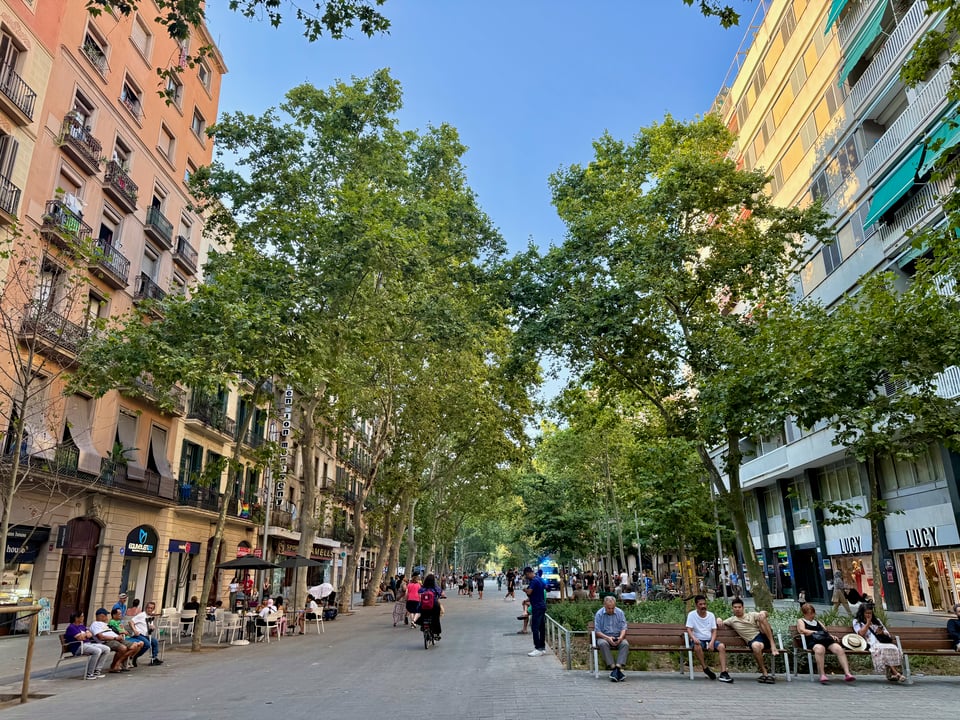
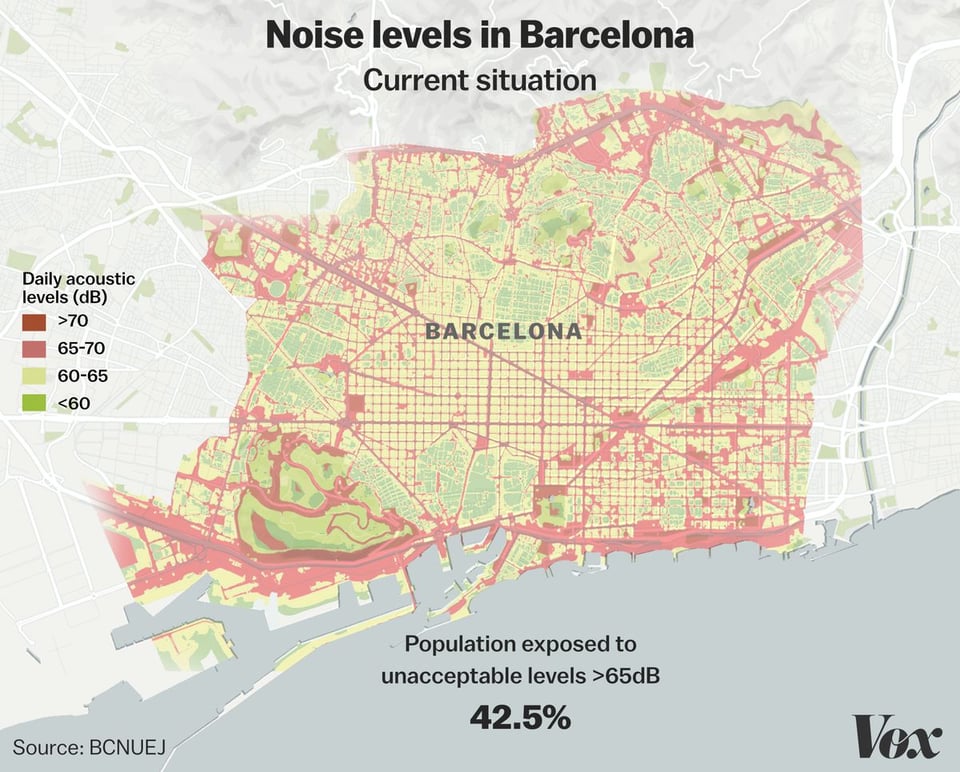
still, navigating these parks, i contended with the nuisance the Superblocks were meant to tame: cars, everywhere. despite more buses—in quantity in variety—i’ve ever seen, cars still flowed relentlessly: slow, honking, little ones; groaning rectangles; motos like an army of ants; milling black and yellow taxis.
the noise overtook any sense of calm i sought on morning runs; it flooded the people trying to chat over coffee outside of cafes. entire ramblas were devoted to scooter parking. where i saw not a single fingerprint of Amazon in Vienna, delivery vans circled here. a boxy Amazon truck blocked, squarely and in totality, the entrance to a wide pedestrian path on Passeig de Gracia.
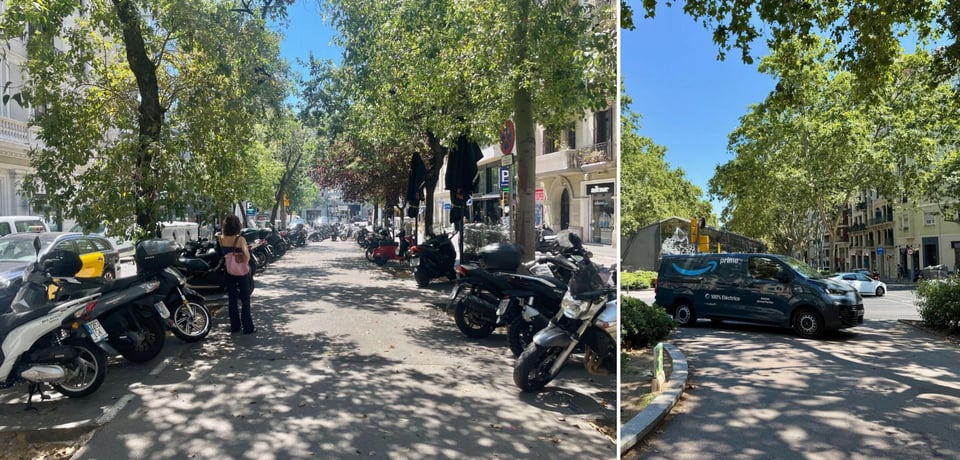
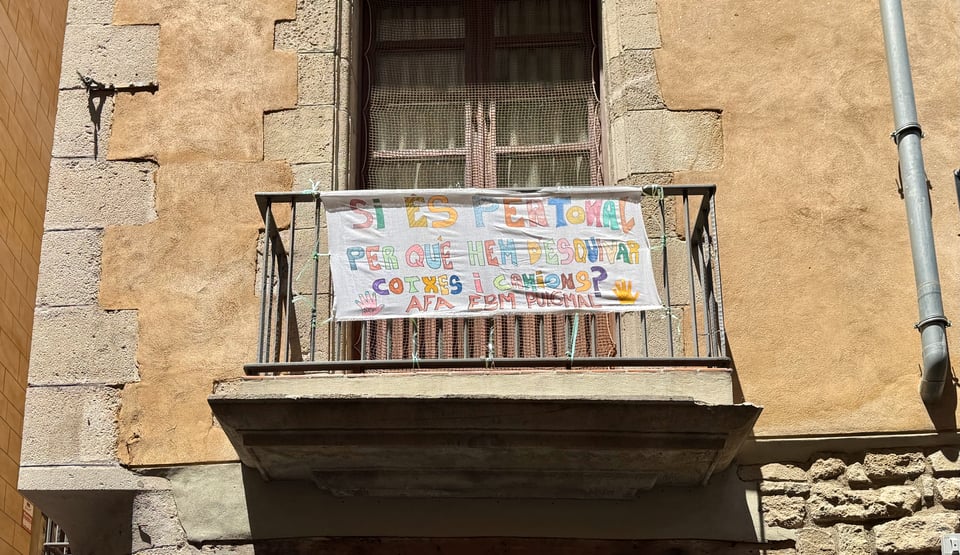
for this reason, people press the Superblocks to do more.
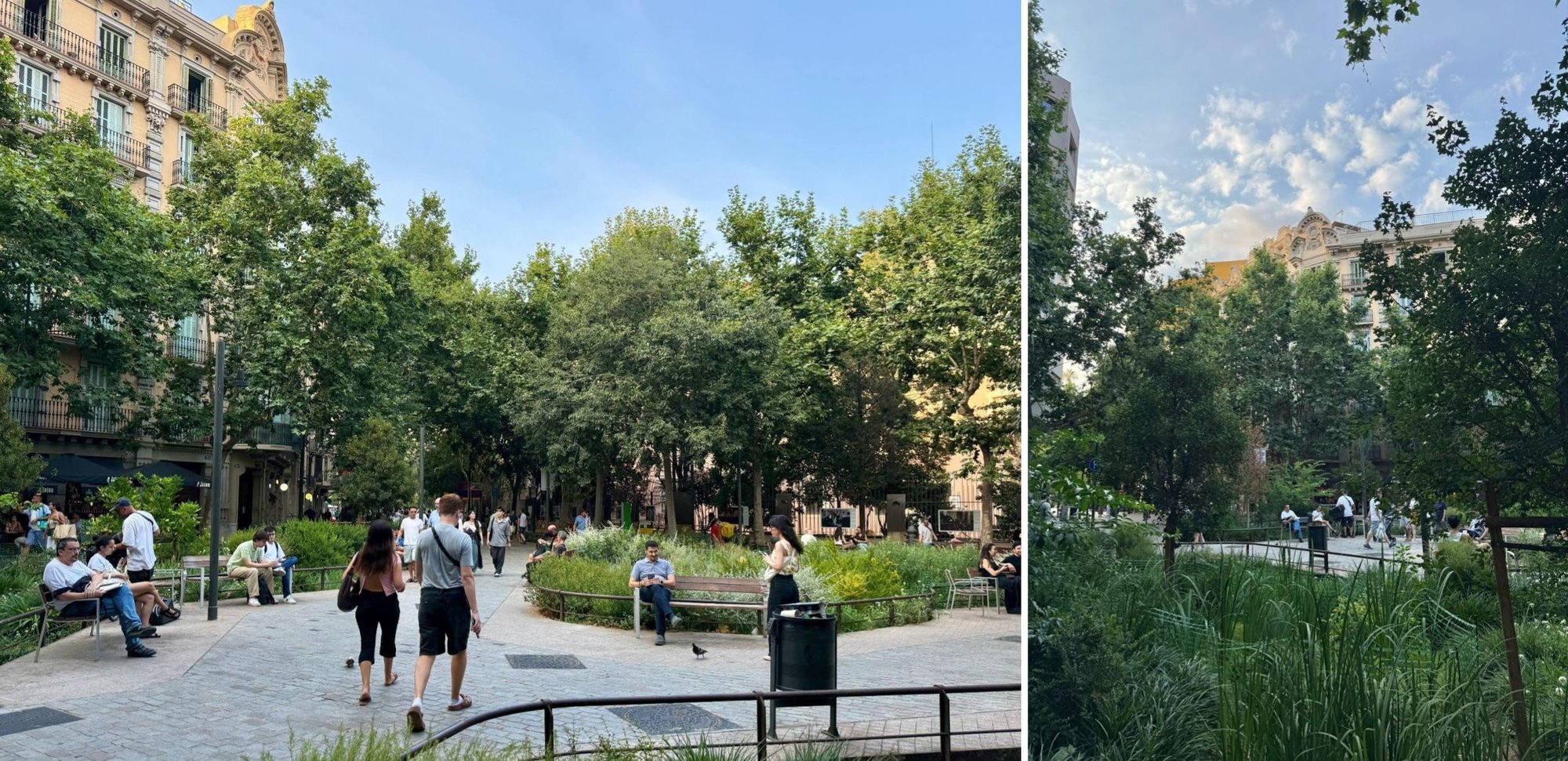
the groan of cars was not the only sensory intrusion. in Doctor Letamendi Park, i rested on a singleton’s bench beside a spindly woman nibbling celery and hummus, hoping to subliminally inspire her with my gelato. the air from the bioswales wafted up, the detritus of human and canine life mixing with the cream on my taste buds. the scent reminded me of Hassalo on 8th, a green development in Portland’s Lloyd District with a human-waste digester that makes its presence known in the summertime.
La Barceloneta, a swirl of narrow alleys and charming yellowed walls built on a ledge in the sea, smelled ammoniac, metallic, betraying that it used to be underwater. droplets fell from laundry hanging off balconies and pooled in black puddles dotted with cigarette butts.
Barcelona and Vienna are both full of life and luminary buildings. but the sensory experience of Barcelona made it it feel like a real city in the ways Vienna seemed fake: the cars, the noise, the smells. it brought me back to New York, that realest of cities, as i remember it growing up: swampy armpit in the middle of August, where you must elbow out the cars for your rightful space in the street.
much pleasure can be found in the sounds and smells of a city—the soft screech of a playground at recess, a whiff of your neighbor’s spice blend sizzling, wind carrying honeysuckle through the curtains. yet, by associating the “realness” of a city with the noise of cars and the odors of pollution, i define “the city” by its unpleasantries. but that’s not the full picture.
❖ ❖ ❖ ❖ ❖
Barcelona proved itself a real city again and again, and in not-unpleasant ways. you can get ice cream or a haircut at 1 in the morning, while in Portland, you can’t find dinner past 8:30. one day, i awoke to silver barricades lining the avenue for miles. over the afternoon, families pulled up in lawn chairs, and kids craned their necks at packs of men in alien helmets humming by on paper-thin bikes: the Tour de France started here, in Barcelona. in a big city, a real city, everything happens.
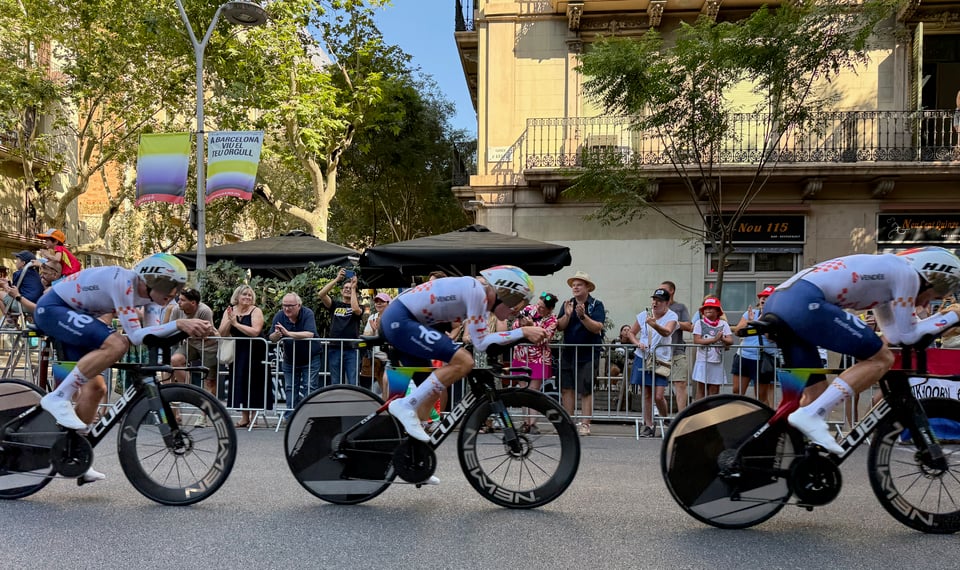
however, an undercurrent of artificiality remained—a sense that the city wasn’t for real people living there. tourism in Barcelona, and the resultant housing crisis and overstuffed sidewalks, have made headlines for years, beginning with the 1992 Olympics and supercharging in the Airbnb era.
in the neighborhood—the chamfer zone, and also the tourism zone—i found corporate pride branding splashed over full-block hotels and cutesy arrows pointing to a slew of gay-man bars. across the city at Parc Guell, people took pictures on top of ledges; staff existed entirely to tell them to get off of things.
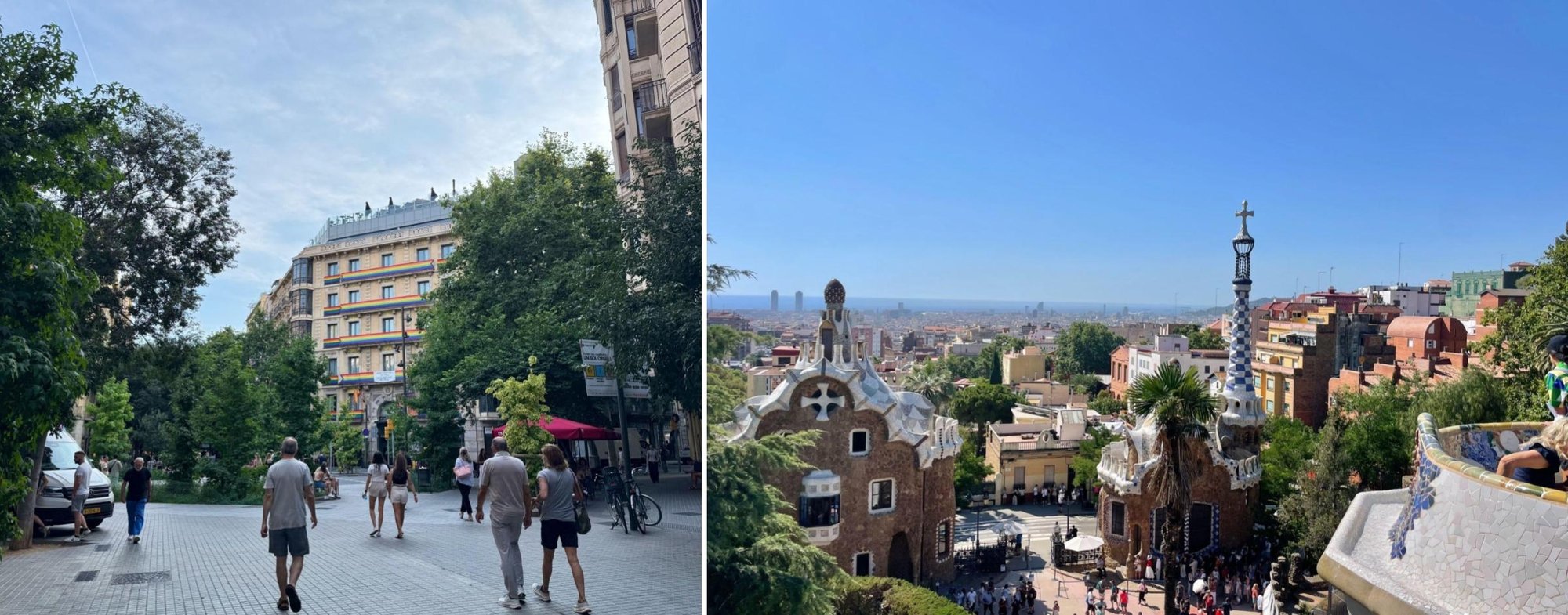
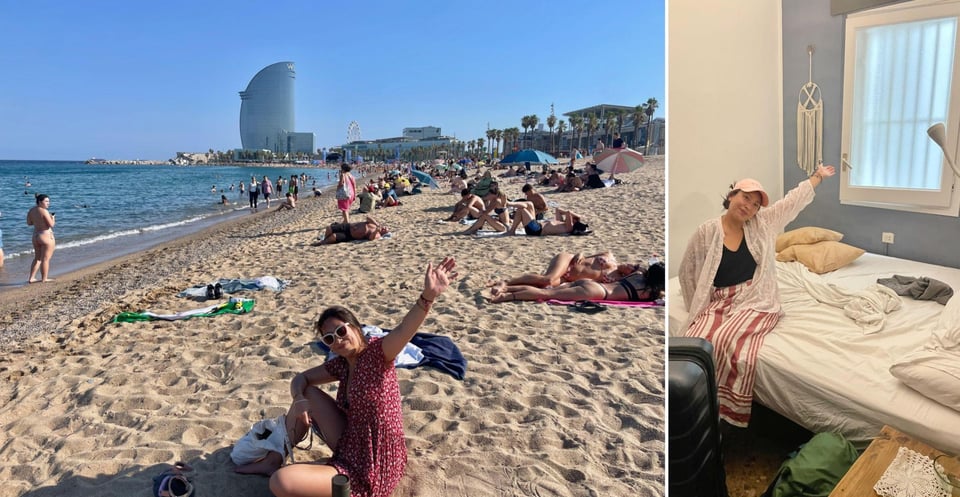
on the beach at La Barceloneta—a mall, a concert—i sidled up between towels bunched tight and swam in waters mystically blue despite their proximity to the city. a girlie tiptoed up and asked if i could watch her things while she swam. of course, i said. she told me she’s from Sri Lanka and has been studying in France; she hasn’t seen the ocean for two years; could i just take a few photos and videos of her in the water? sure, i said.
i assumed the vertical orientation for Instagram, as Kbaby’s sister always reminds me. you can take photos while the video is running, she taught me, as she dashed off into the water. she splashed, she sat; i wasn’t sure how long to film her. did she want me to film her entire bath? after 30 stretching seconds i put the phone down, hoping she’d still enjoy the water without the surveillance.
in the end, though, what are these love notes if not the reverse of “a picture is worth 1,000 words”?
❖ ❖ ❖ ❖ ❖
i emerged from the Glòries station at the tip of the Poblenou neighborhood and navigated to the string of Superblocks on my map. people lay on benches atop painted streets lined with trees. shades like windsails covered swing sets and made shapes on the pavement. the mood was pleasant, if ghostlike in the dry midday heat.
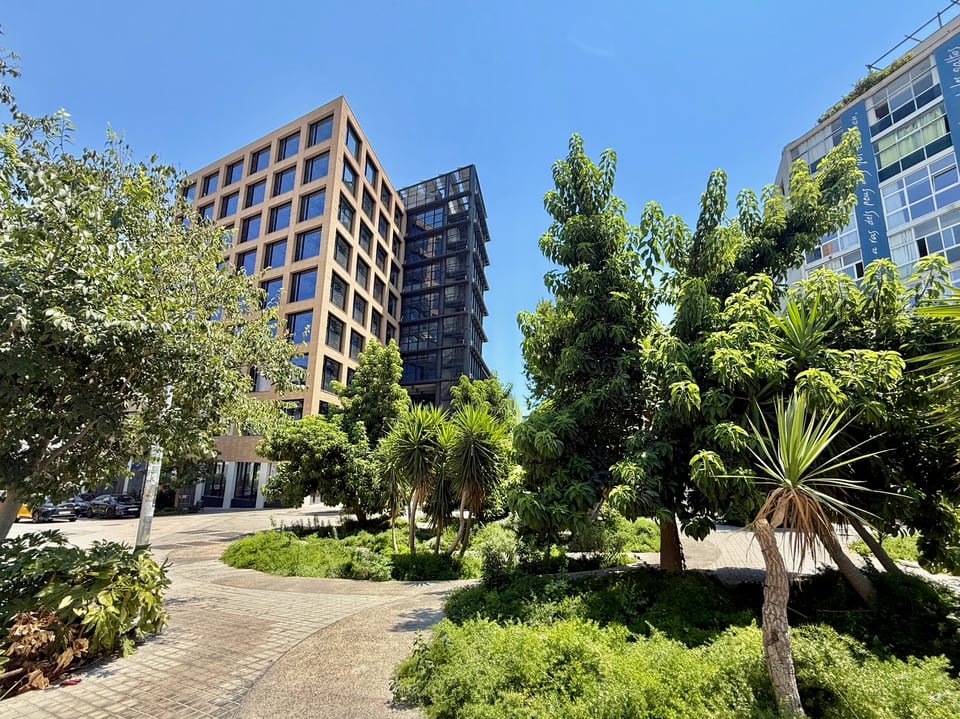
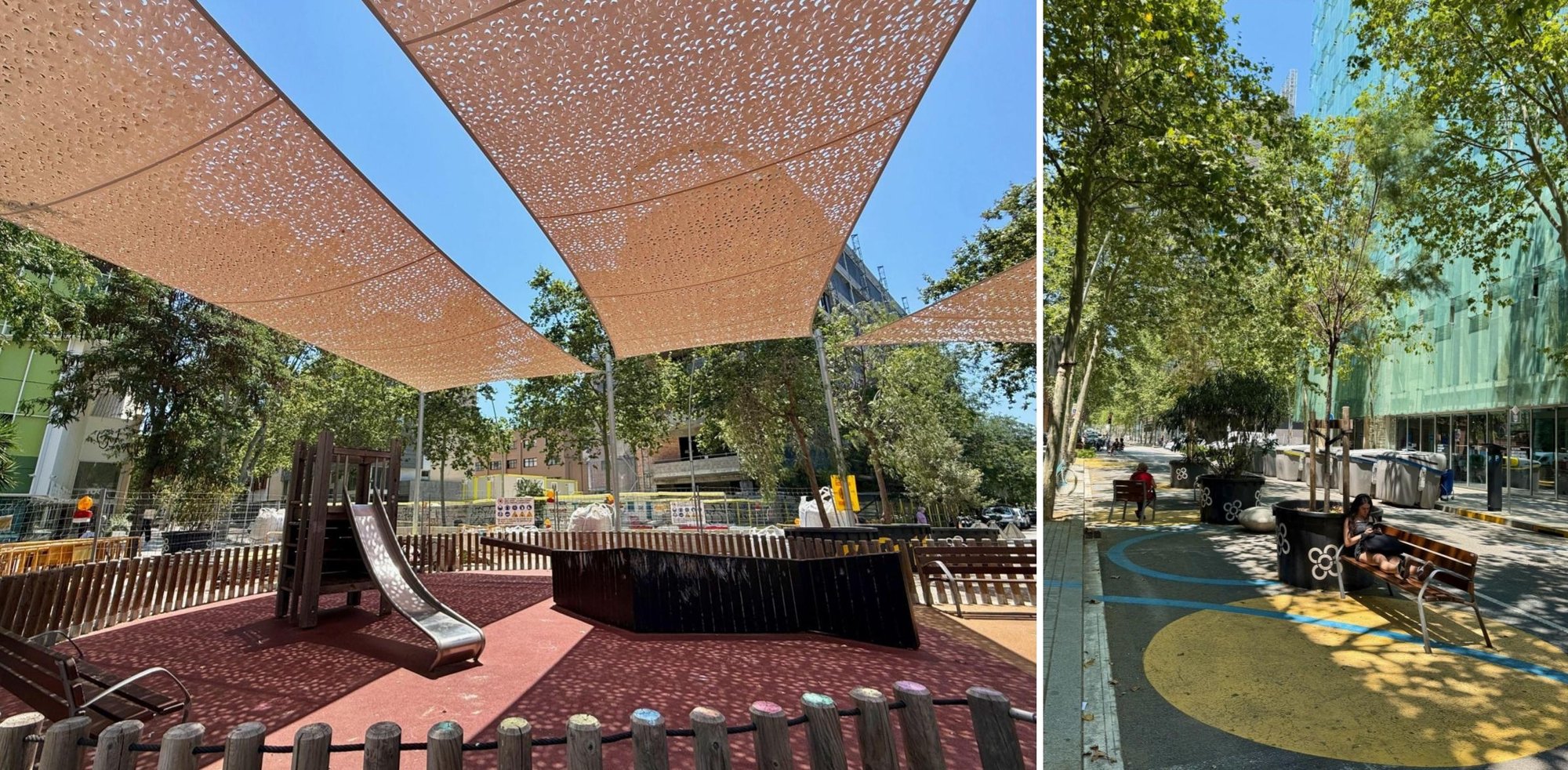
back in 2016, the City chose to place the neighborhood’s first Superblock in an intersection surrounded by social housing, creating “a safe environment that prevents gentrification.” a member of the social housing association knows what cities in the U.S. struggle to comprehend: “When you make some interventions like this one, improving the public spaces, one of the bad things…is that the prices of the housing are going higher. But in this case, because we are living in social housing, it’s not possible. So it’s very important for municipalities, when they make these interventions in the public space, to make sure that the people can continue living there.”
around the time the first Superblocks cropped up, the City rebranded a swath of Poblenou, overhauling the industrial zone and christening it the “22@ Innovation District.” it transformed warehouses into apartments and office space in energy-efficient buildings, with development bonuses for “innovation-related” jobs. out with industry; in with innovation, technology, and “creativity.”
the project “implies the last transformation” of the neighborhood’s industrial areas. in its first 11 years, 4,500 new companies moved into the district—or 1.2 per day. i saw them around me: stray millennials milled in and out of coworking spaces and the silvery offices of Perk, a $3 billion travel-tech company.
i wondered what happened to the people these offices and parks (and the new zoning underlying them) replaced. who was working those industrial jobs? where are they now, and how are they making ends meet?
a year before Poblenou’s first Superblock, the center-right administration picked up Rueda’s lefty plan to build 500 of them across the city. the Superblocks have sliced across Barcelona’s political lines, and so has “innovation” in service of “the creative economy.”
❖ ❖ ❖ ❖ ❖
taking in the Superblocks and stellar parks, i remained skeptical about who these nice things serve. i saw friends and neighbors run into each other, babies in strollers and groceries in hand. but i wonder about people who have been here a long time, since before the nice things arrived: who are they? are they able to stay?
and what of the immigrants (the ones who need a place to be, not the digital nomads choosing among interchangeable options)—since it’s so far west, are people coming from the east and the south? what are the flows between Spain and its former colonies? how do the long-timers treat the newcomers?
can the people working in all the cafes live here? the taxi drivers, the bike deliverers: where do they live? at the end of the day, the same questions return: who is the city for?
back at the Casa de l'Arquitectura de Barcelona, i found some answers in the exhibit Barcelona = (Diversity + Intensity) x Complexity.
the equation Diversity = (Origins¹⁸³) x History, where 183 is the number of nationalities held by people living in Barcelona, hinted at where people come from. over a third of the city’s 1.7 million residents were born outside of Spain, and they speak over 300 languages.
Barcelona has always has been a place of people from other places, but since 2011, more people from other countries have come to make a life here, rather than from within Spain. half of them come from Latin America.
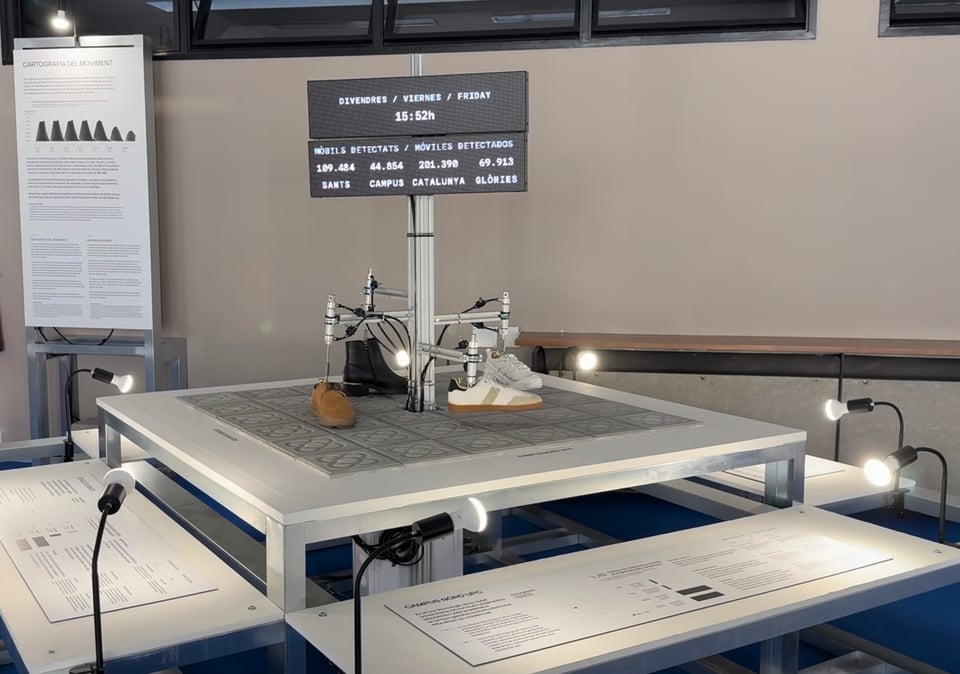
and where are people going? every day, 2.6 million people, including 200,000 international visitors, move through Barcelona. four pairs of shoes tap-tapped footsteps representing the volume of residents, commuters, Spaniards, and internationals at four locations over a week in November 2024.
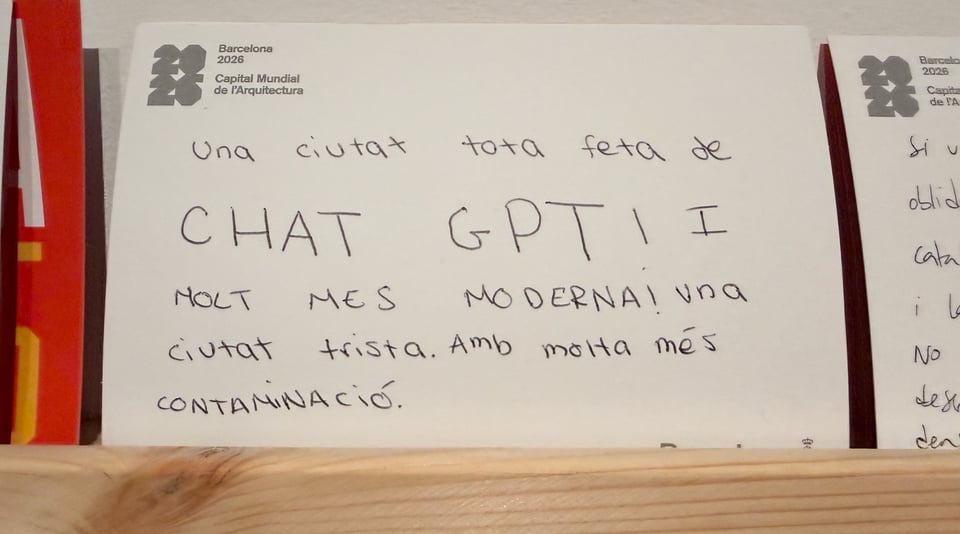
another room housed Barcelona 2035. A City for Living in. the title itself positions living in against visiting, nodding to the frustrations of overtourism. on postcards in Spanish and Catalan, people told us how they imagine the city in ten years, from the visceral, the “real”…
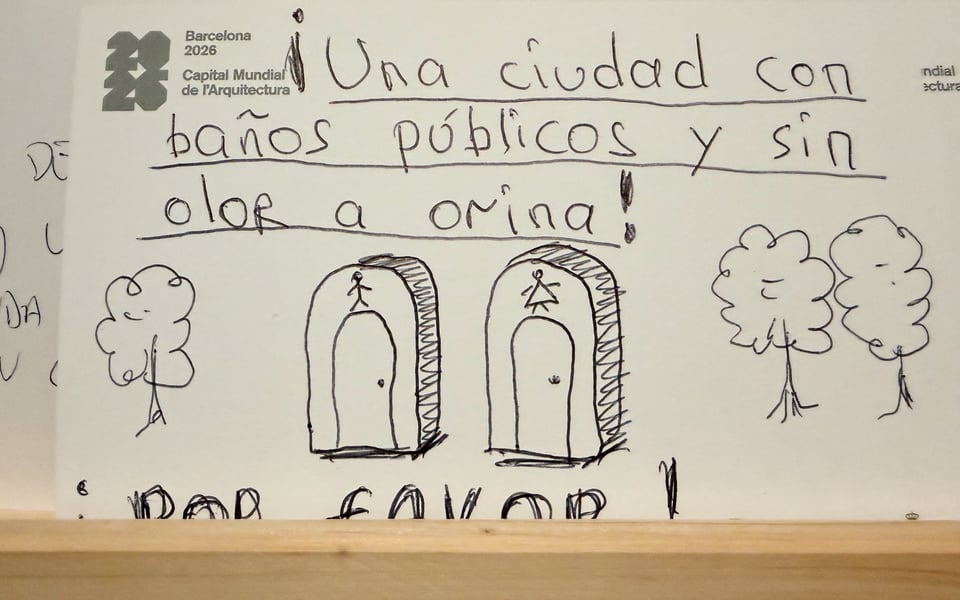
…to the pessimistic.
math helped as well:
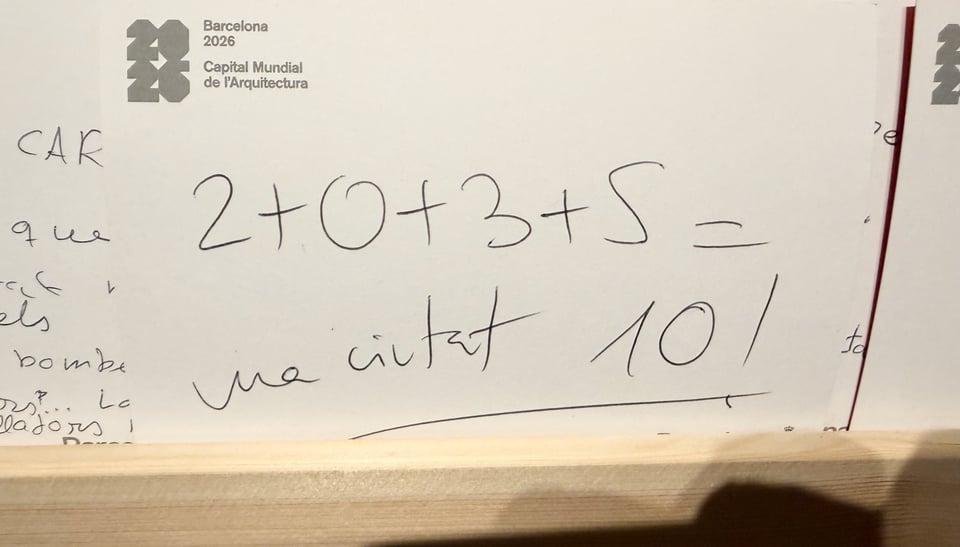
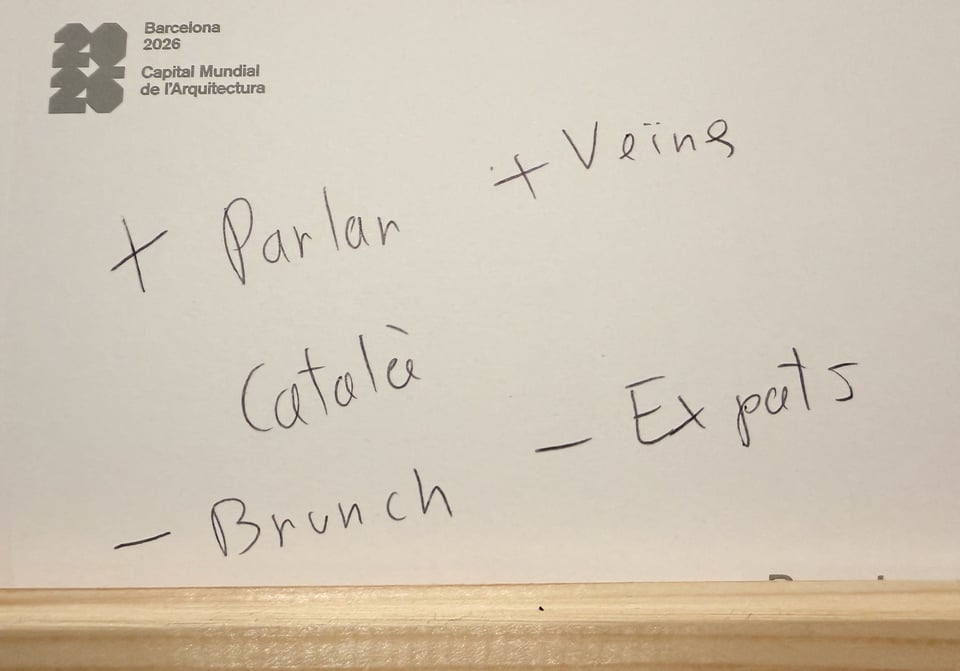
+ neighbors
- brunch
- expats
❖ ❖ ❖ ❖ ❖
i, of course, joined the swells of tourists making the city an unaffordable, un-real place for people to live.
one of my first projects as a baby planner was to figure out how many Airbnbs operated without permits in Portland. Airbnb and its ilk destroy housing landscapes, making things expensive to the point of impossible for many people. i also believe they commodify practices of exchange that once occurred through sharing—staying with family and friends, or making new ones by couch-surfing and home-swapping.
but when i searched for a hotel, they all ran $400 a night, so i clickety-clacked against my own conscience onto Airbnb.
i feel that the harm-reduction version of Airbnb is to book a place where the resident actually lives there, so you’re not taking up what could be an entire family’s home—just one room. so i booked a 10’ by 10’ square with a man in the Eixample.
the heat wave added ten degrees to Barcelona’s regular July temperatures, and my room’s “window” opened to a narrow space between buildings covered by a plastic roof. Cerdà had positioned his Eixample blocks so they’d see the most sun, but in our changed climate, apartments bake at the temperature of the human body. my room transformed into a hotbox (not the fun kind), with a fan that blew chunky dust down my throat.
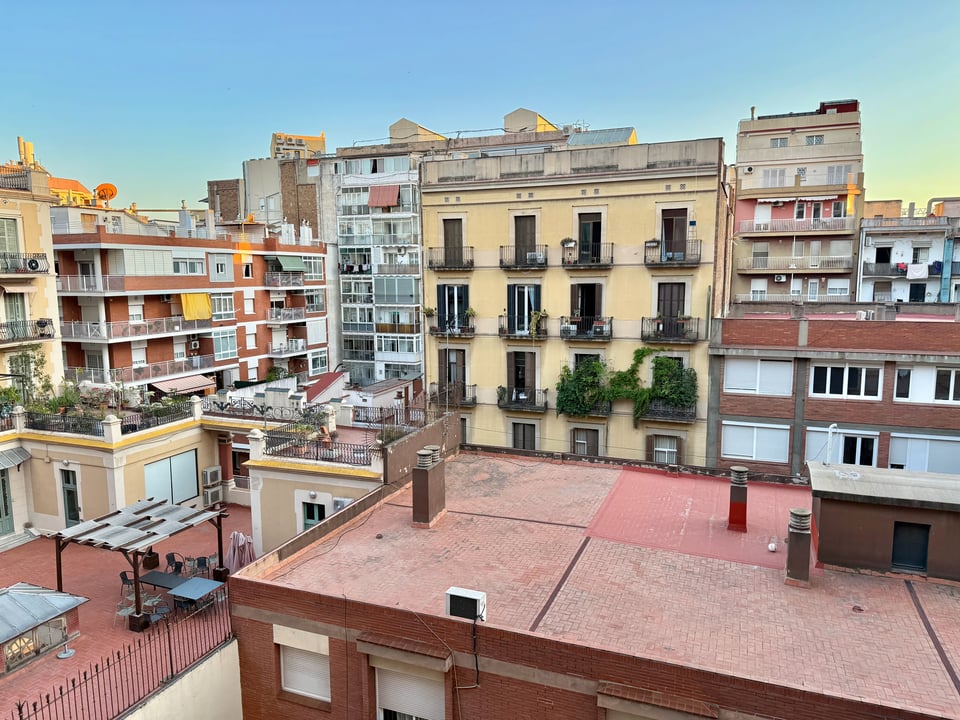
when i arrived, i found that the listing address was wrong—a full block over. a different person met me to let me in, after much confusion due to said wrong address. as ever, the room was darker than the photos. the host was kind, but his cigarette smoke wafted through the corridor into my dungeon.
before i arrived, he made me rebook because the original listing was “hacked.” when i pointed out the incorrect address, he gently gaslit me about it. when i met him, he told me that if neighbors ask, tell them i’m a friend or family of his. i wondered if he’d gotten shut down by the City, and he believed these obfuscations would cover his tracks. i tried to maintain my grace for him. does he own the place, or does he also suffer the crushing weight of the rent coming due?
i felt bad about visiting a city infamous for overtourism and bad about using Airbnb, but not bad enough to not do it—yet another hypocrisy. still, my guilt and my swampy, sketchy stay have finally led me to divorce Airbnb. next time, i’ll take a $400 hotel as a sign i simply can’t visit a place.
❖ ❖ ❖ ❖ ❖
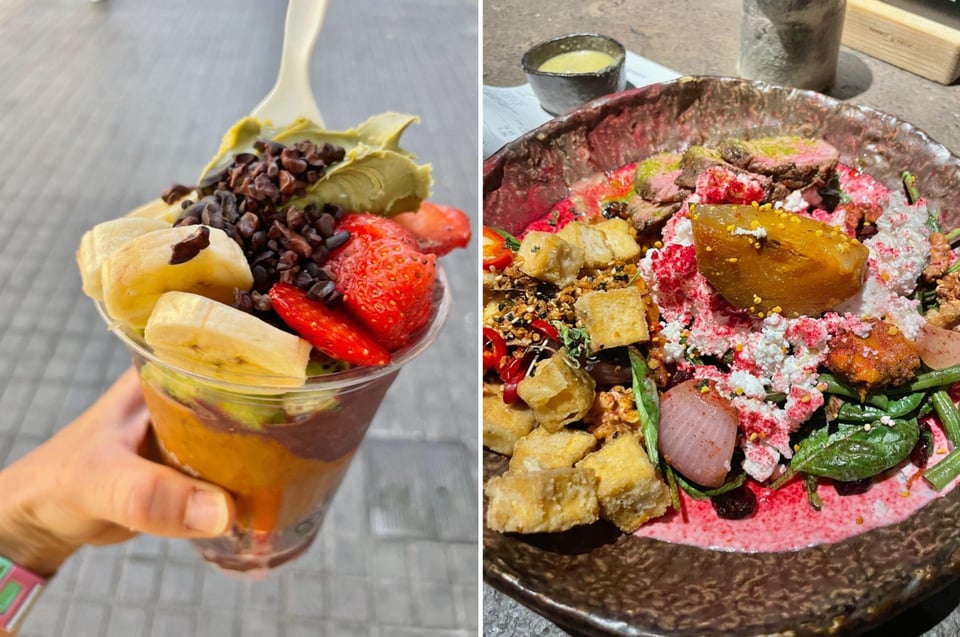
in no place is the unreality of a city made more plain than the gentrification-aesthetic restaurant, where tourists and digital nomads extract themselves from daily life and retreat into the comforts of air conditioning, free water, and globalized blandness.
sometimes, i find these places. my remaining anxieties about what to eat manifest in my search bar: smoothie, açaí bowl, vegetarian restaurant. for the latter, i visit a place called Honest Greens.
monstera plants hang from the ceiling, and a miniature dachshund walks in on a leash. an ethnically ambiguous DJ spins smoothed, nameless electronic house beats. British- and American-accented English swirls. the wall lists local ingredients between framed moss and bags of coffee, as if you are supporting the people who live here rather than extricating yourself from them. it’s in Catalan, though, so you don’t understand what they are, and neither does anybody else.
poma
allets
alfabrega
datils
tomaquiet lleig
blat de moro
nyores
remolatxa
kale. ah, yes!
accompanying the gentrification aesthetic meal: phone/portal; TikTok in a language you speak, or for me, newsletters. i read about Anne Helen Petersen going to the Mariners game, about the artist who made the Obamas’ first official portrait. i look at no one. no one looks at me.
alone is not the way to eat tapas, or anything, in Spain, or Greece, or any place with a socially and mentally healthy food culture. these are not places to travel alone. at the gentrification-aesthetic restaurant, though, you order one whole meal to yourself, often glopped into a bowl, often with ingredients you’ve pointed at through a glass wall. it’s counter service, like every restaurant in Portland, but the cashier must explain how it works to the errant locals who wander in.
the gentrification-aesthetic restaurant is the new McDonald’s, the place you stop after a long flight or a few weeks of other peoples’ food. everything is starting to feel a little loud, a little cramped. you are tired of feeling lonely so you choose to be alone.
❖ ❖ ❖ ❖ ❖
just as i began to feel like a tumbleweed flitting across desert sands, hot wind in my face as i wandered, observing people across some impassable distance, i was relieved of my solitude. my dear friend Brit came to meet me from London, where she lives—Brit, who grew up just down the way. the warm recognition of an old friend after a long time alone unfolded over tapas in a cave of a restaurant, melting gelato in front of a fan.
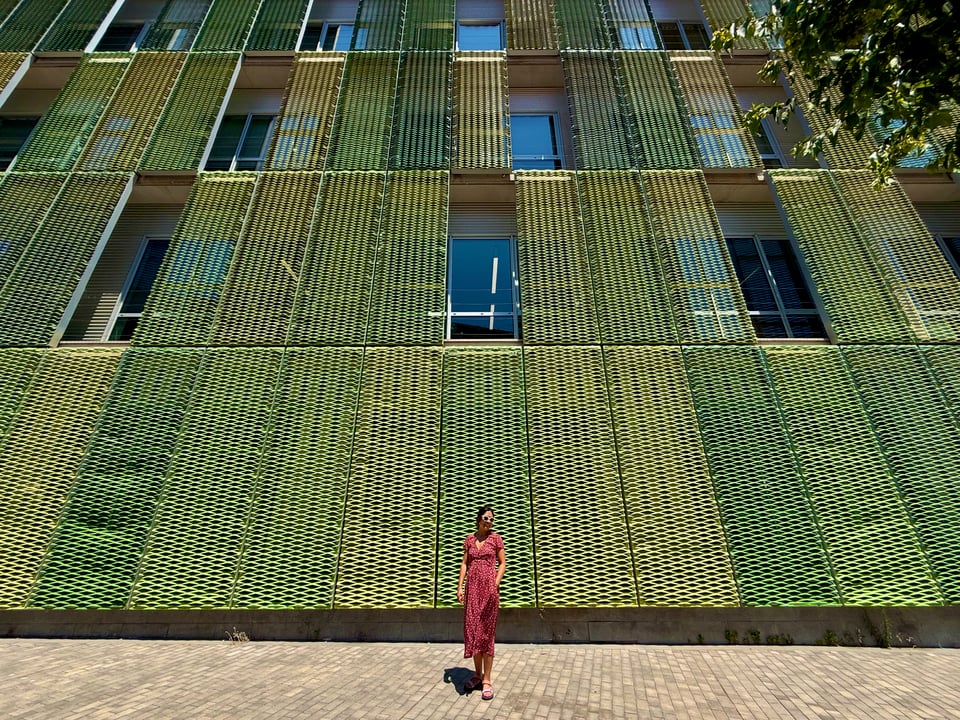
we wound through the Gothic Quarter, perused the mercat and bought some cucumbers and oranges for bathroom access, overheated, dipped in at the Playa de la Barceloneta. we shuffled into the bed in my room, nudging the floor fan inch by inch, desperately willing it to bless us both with stale air.
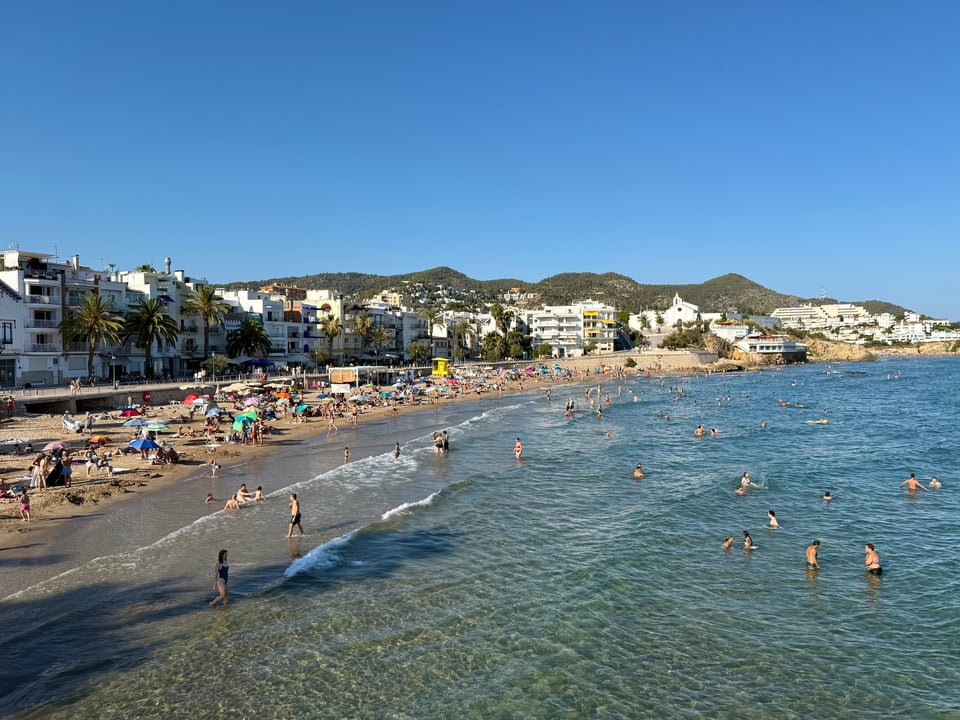
we took the train to Sitges, a beach town. we rented two chairs and an umbrella and remembered what it is to sit, recline. we napped; we read. in the train and on the sand, people packed into a tight weave, but in the Mediterranean, we became spacious.
❖ ❖ ❖ ❖ ❖
as my loneliness thawed, two words from the exhibit rumbled in my mind. on the walls, they stood as tall as a person: habitar and convivir. they’re cognates, but they sing more deeply in Spanish.
next to futuristic renderings of ten “transformation areas” studded with social housing and sweeping green spaces, the exhibit describes the word habitar as something beyond residing: making the whole city your home. it’s “feeling like the city is yours, and that it is made to look after you”—a city of care, like Vienna.
in The Death and Life of the Single-Family House, my to-be UBC advisor Nathanael Lauster illustrates how people extend their sense of home to the whole city. “A stabilized home”—be it a house, a studio, or a room—”motivates and enables outside exploration,” and “each new adventure provides the possibility of outwardly expanding one’s sense of home, wherever new interactions can become routinized and made comfortably familiar.” with time, “familiarity comes to extend our home networks in new directions.” we can feel the tie between habits and habitat as we begin to feel at home in new places, radiating further from our base.
novelty in the city—venturing from home to expand it—always involves other people. convivir means to live together. the exhibit uses convivir to describe a city that “brings us together, connects us, and makes us feel part of something bigger than ourselves.” convivir scratches the surface of belonging, and the glittering drawings inside the exhibit aim for it: “Barcelona is committed to a way of life based on closeness and connection…to shared spaces and experiences that give meaning to the city.”
adrienne maree brown, drawing on Octavia Butler, describes all community organizing as science fiction—as imagining something that doesn’t yet exist, something not yet real, and calling it into being. to me, this is what planning the city should entail, too: visioning the unreal, drawing it, and building it into reality.
at the exhibit, people imagine a new, real Barcelona through the AR goggles over the model of the city, through shiny renderings on screens, even through wishes on postcards. people stretch their minds from the present to the future, imagining both the city’s physical form and the feeling of being in it.
habitar, convivir—to inhabit, to live together, in a place you belong—remains un-real for many people. if organizing is science fiction, planning should be too. planners should help pull these verbs into reality for everyone, and the city should be where this happens. as Lauster writes, “Ultimately, it takes more than a house to make a home. For many people, it takes a city.”
❖ ❖ ❖ ❖ ❖
tell me: what cities do you belong in, and why?
keep it hot Barcelona,
<3
Add a comment: