
⚘ how to build a city of care and beauty (Vienna, for example)
expecting Warsaw, i found Heaven
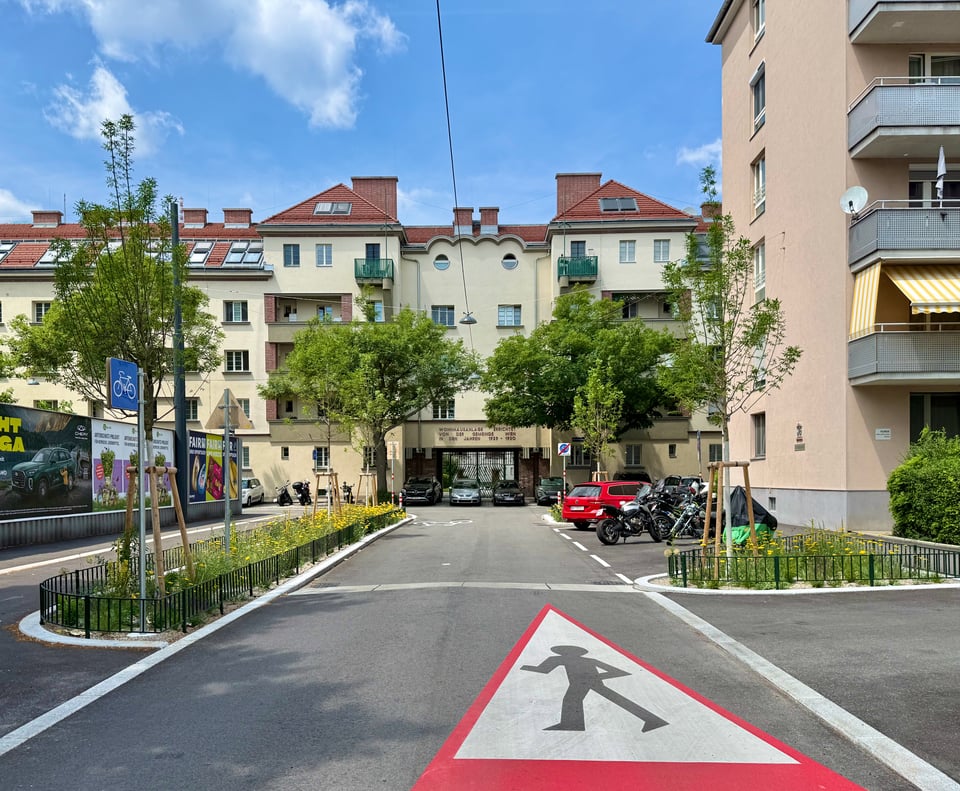
not important enough to attend the Portland delegation’s social housing tour of Vienna, and unwilling to pay the $8,000 fee, i decided to embark upon a tour of my own. before launching on my hike in the Dolomites, i landed in Vienna.
in addition to the social housing (about which we’ll keep the policy nerdery to a minimum!), read on for: the train as an act of care, a City-sponsored wine hike, trash-whimsy, some veneration, and some complication of that veneration—empire, homogeneity, and affordability for whom?
⚘ ⚘ ⚘ ⚘ ⚘
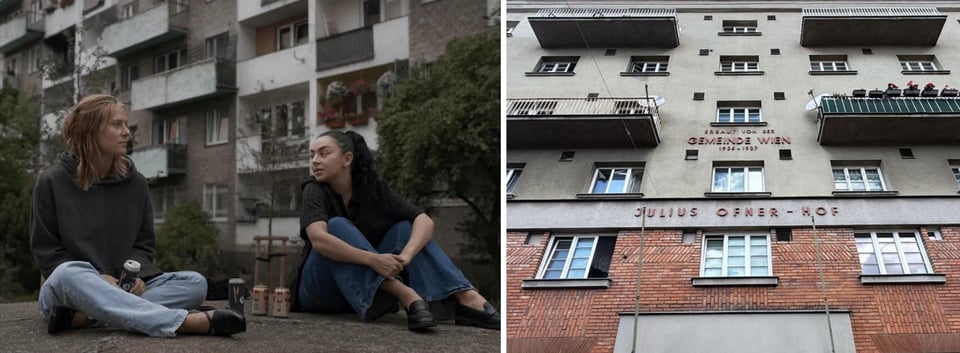
in May, my friend Renata, ever patiently indulging my Charli xcx kick, went with me to see Erupcja at Cinema 21. Charli’s character visits Warsaw, Poland with her boyfriend, who plans to propose to her. instead, she runs off with a childhood friend in a bout of intense (if non-consummated) Sapphic tension.
for the past few years, i’ve absorbed images of the spare, flat architecture of Vienna’s oldest social housing, built in the years before WWI. Brutalist-adjacent but plainer, it appeared Erupcja-like to me. extrapolating, i expected the rest of Vienna to look like Warsaw: stark facades; sticky streets; hardy, rumbling trains; iron grates on windows; the blue-gray sheen of director Pete Ohs’s filter.
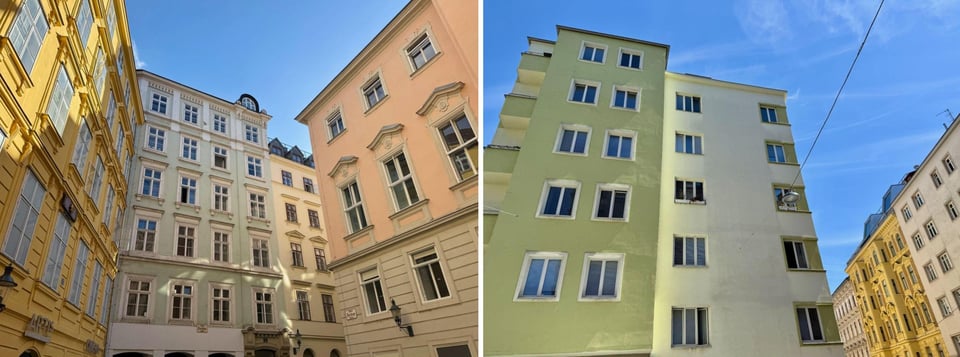
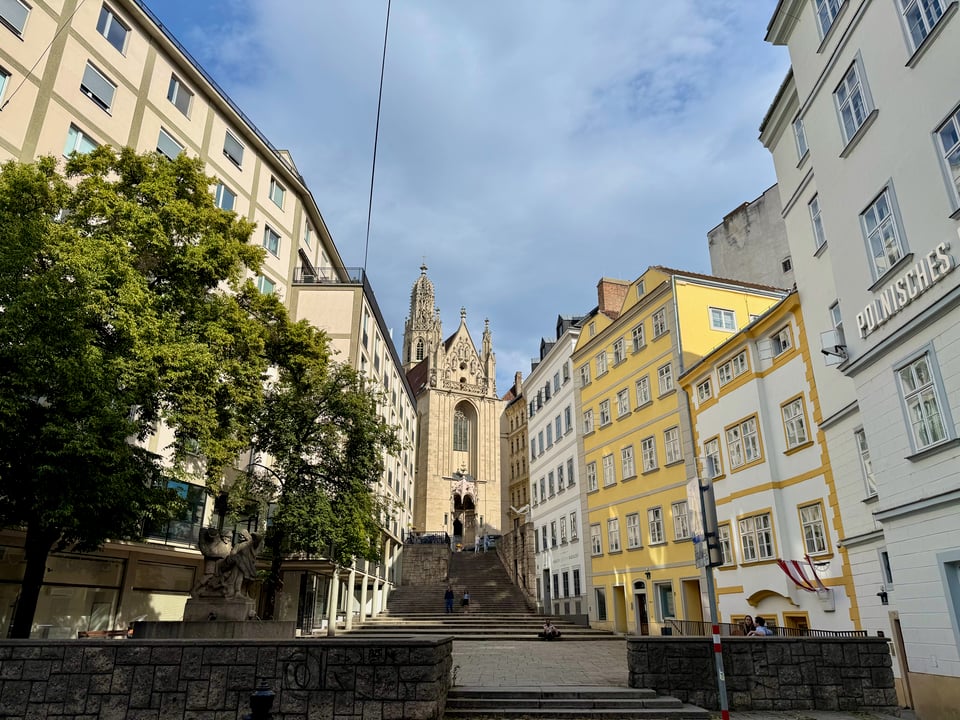
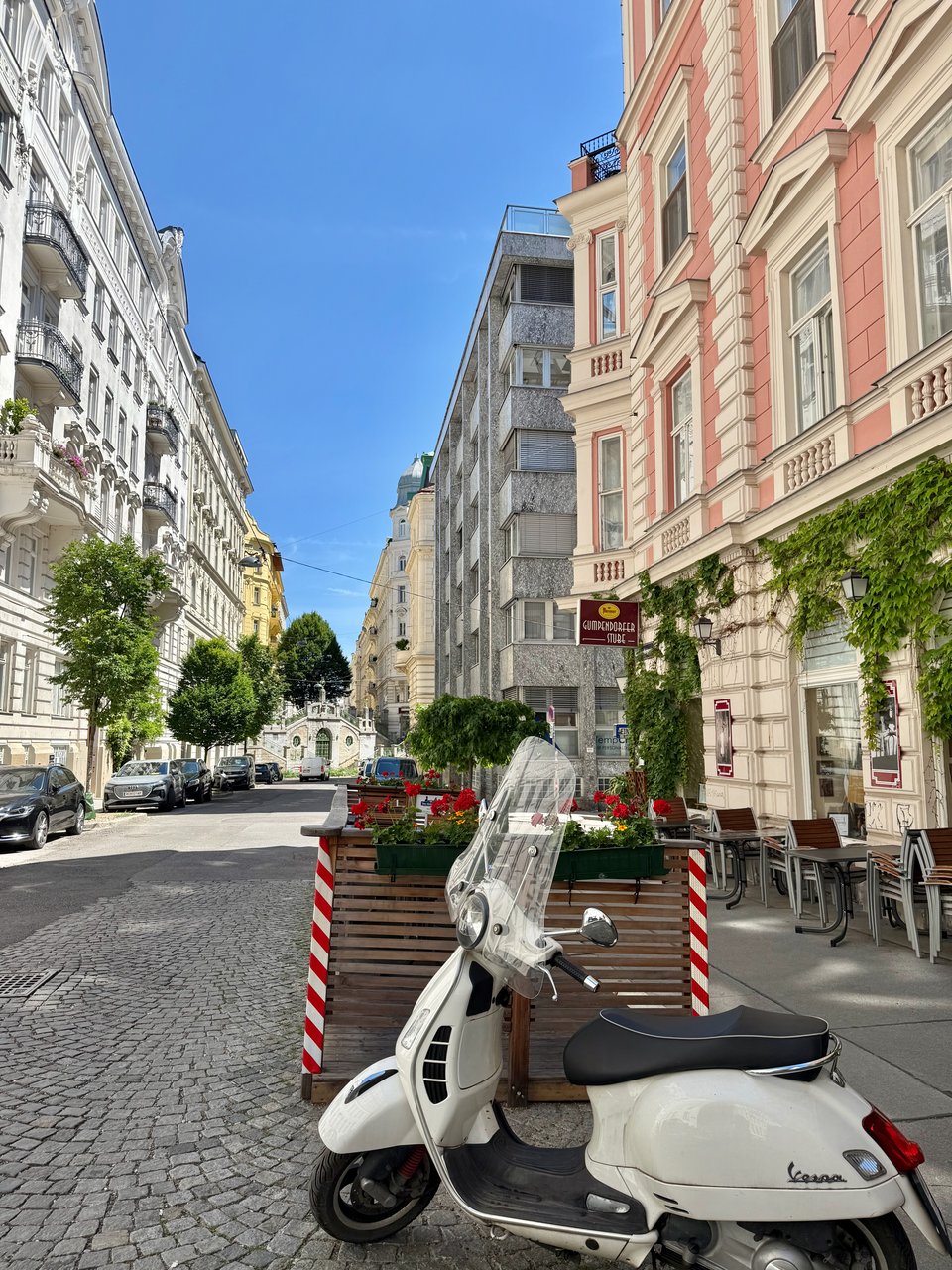
i was wrong. old and new buildings alike stunned me: pastel and majestic and ornate and modern, they lined the streets in lime green, pale lemon, and periwinkle. lavender spilled out of parks onto silver streets. in the plazas, i sat before a church in the faintest robin egg, the sun making shapes on walls, an unfolding tree. every corner was a vista.
i didn’t really believe, in my heart, that a place could provide both bread and roses, so i expected a stereotype, a cold socialist propaganda seared into my mind. but Vienna is not Warsaw; i am not Charli xcx in Erupcja.
⚘ ⚘ ⚘ ⚘ ⚘
beauty takes many forms. one is a prim row of stately castles from 400 years ago. another is a trash burner that can only be described, aesthetically, as Evil Willy Wonka Factory. the Spittelau incinerator takes in 250,000 tons of Viennese trash and converts it to electricity and heat for 60,000 people. it’s appended with a shining copper tower you can see from anywhere in the city—a beacon—but its black-magic mass must be experienced up close.
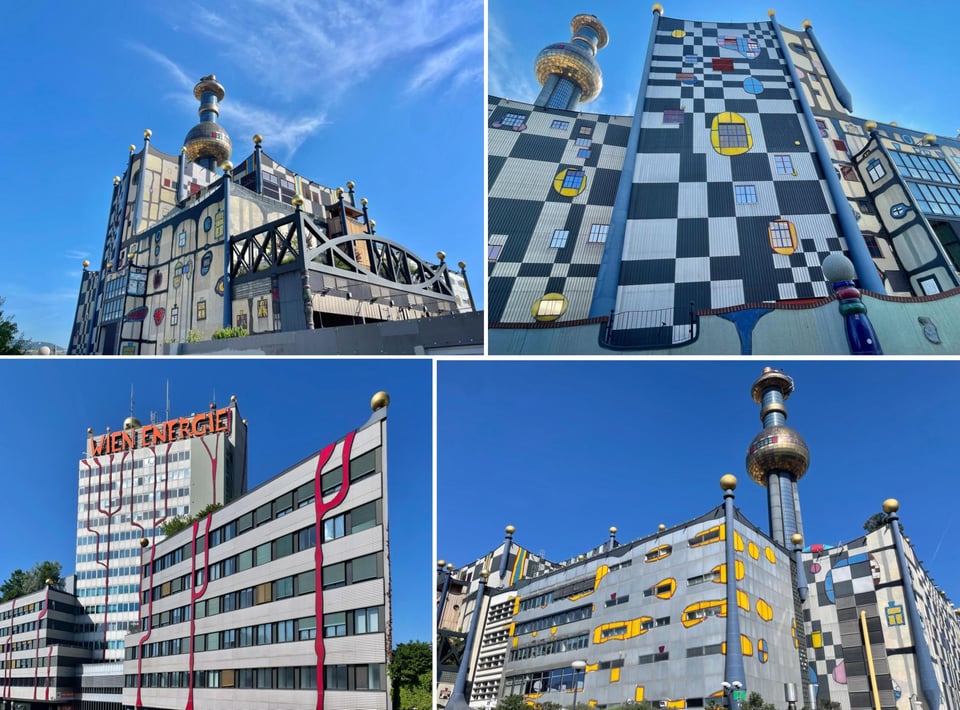
the government agencies responsible for waste, this unsexiest of utilities, didn’t have to gild the trash burner in whimsy. but they did, and now people across the city marvel at it and value its functions.
among modesty, care still exists. the underground train, U-Bahn, doesn’t have the decadence of TrenItalia or the spic-span of CalTrain, but magazines hang from hooks at seat height for a literate society.
the transit is so plentiful, the network so mycelial, that i started setting off in random directions with no attention to how to get back. i held a religious faith that i could take a train, tram, or bus and be back to my hotel in 25 minutes from anywhere. the annual pass equates to €1.25 a day, so 1.3 million passengers have them.
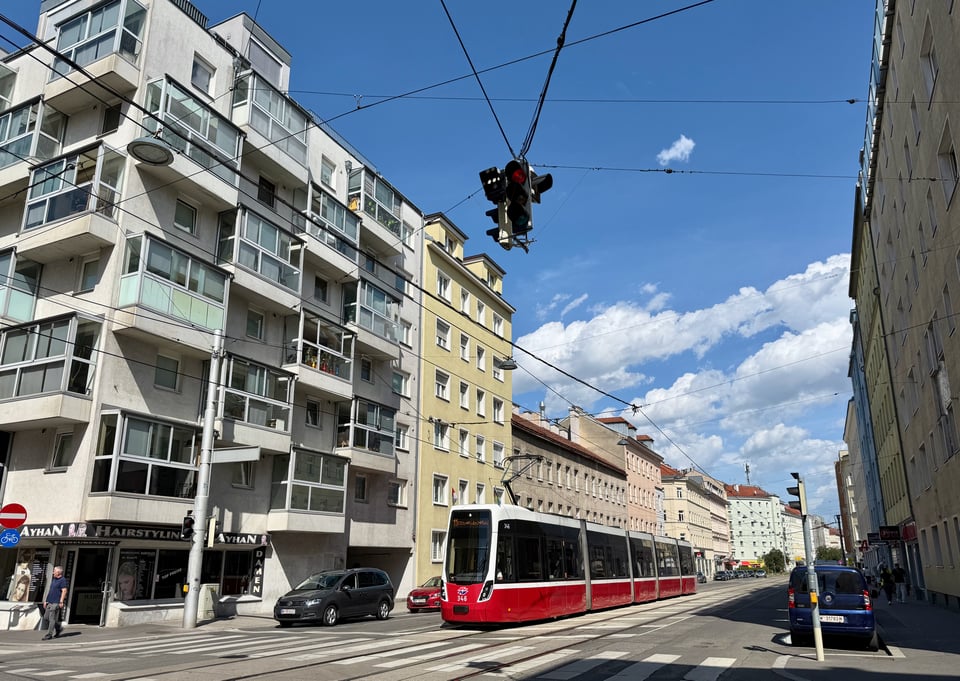
on my umpteenth descent into the U-Bahn, i started to feel that riding the train is an act of care: an act of being cared for, of the state taking care of you. the state is, as ever, comprised of and reliant upon people: the people who drive the trains, the people who built the tracks and the cars, the people who planned the routes to take people where they must go, the people who tax themselves to make it all run.
we can think this way about eating, as Thich Nhat Hanh teaches: we can hold in our minds everyone who harvested the fields, worked in the warehouses and stores, and cooked for us. we can think this way about trains and the burning of trash.
what would happen if we thought of everything this way? the reverence, the awe! the tempering of waste and greed!
⚘ ⚘ ⚘ ⚘ ⚘
on the second day, i met Luke, a LinkedIn connection incarnate. Luke got his master’s in planning from UVA when i got my bachelor’s. he got another master’s in demography at the University of Vienna, and now he’s earning his PhD at Technische Universität Wien, researching comparative land-use politics. he knows the city deeply, and we turned from strangers to friends after five hours traveling through it.
Luke kindly introduced me to his colleagues in the TU, Vienna’s second largest university, who work on things like climate adaptation and cross-border collaboration. education here costs $750 a year and anyone can do it: Austria lacks the exams, essays, and competitive admissions that gatekeep U.S. universities.
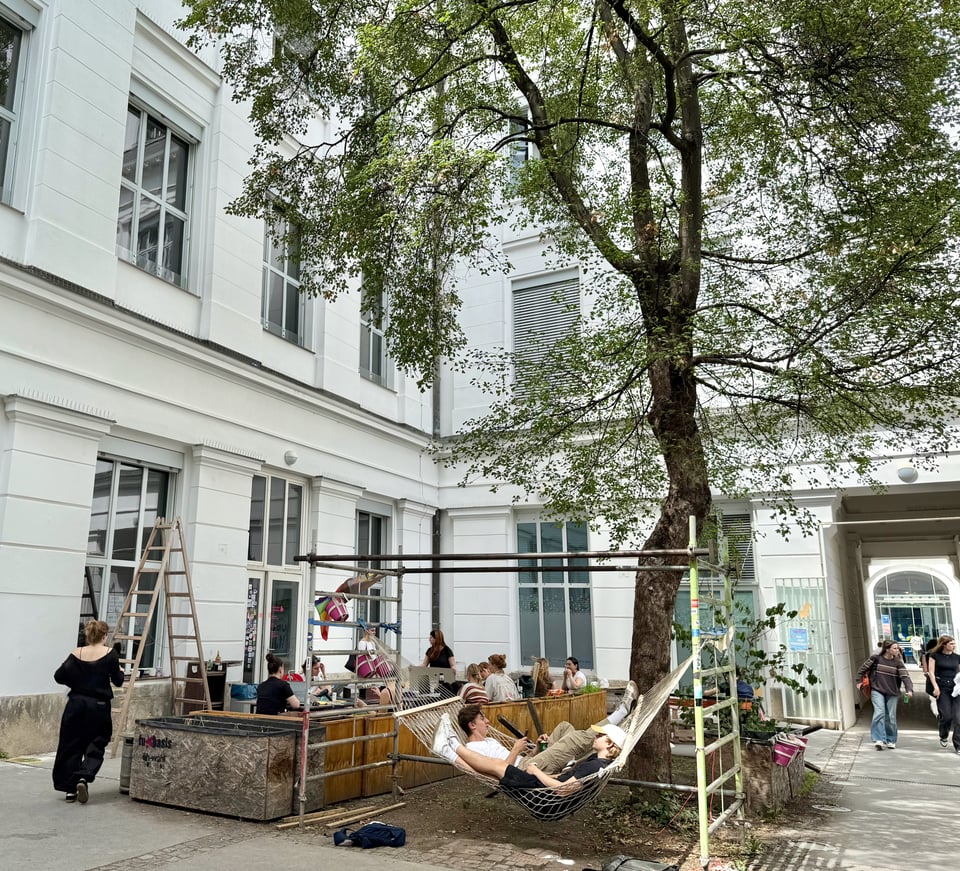
we twisted through narrow streets and took the U-Bahn to Stephansplatz, the geographical center of the city. overflowing with people, it’s one of many long-standing, multi-block pedestrianized streets. in the 1970s, the City parking lot-ed them in emulation of the U.S., but they’ve since returned them to the people.
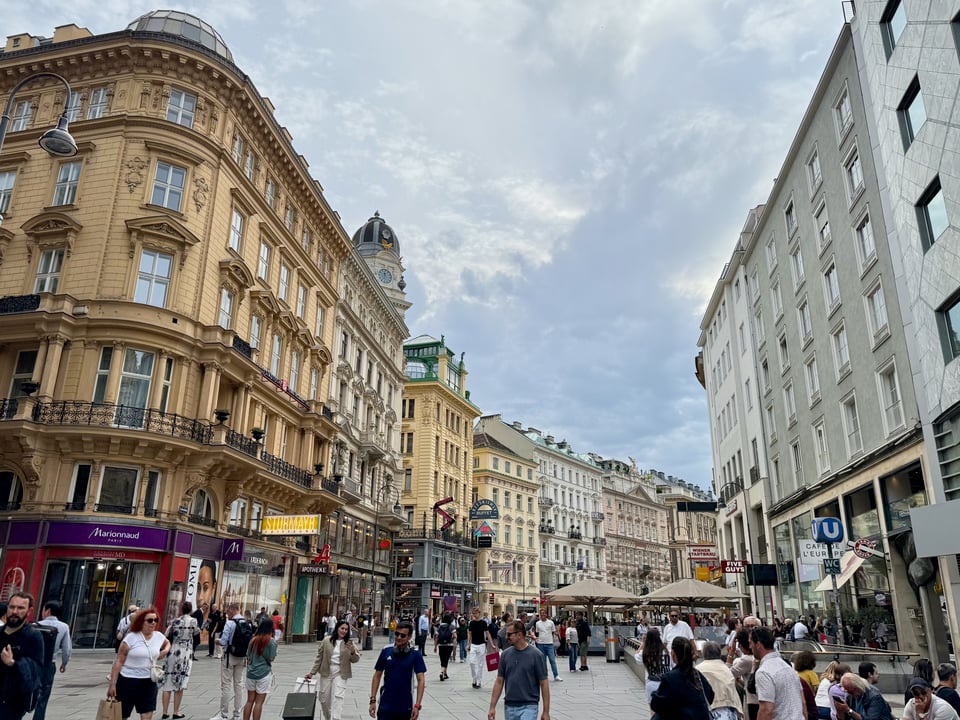
consider Stephansplatz the Times Square of Vienna, if Times Square had taste and defining qualities other than fluorescent capitalism. (per Wikipedia, the “exclusive shopping street” next to it is called Graben, “literally ‘ditch’.”)
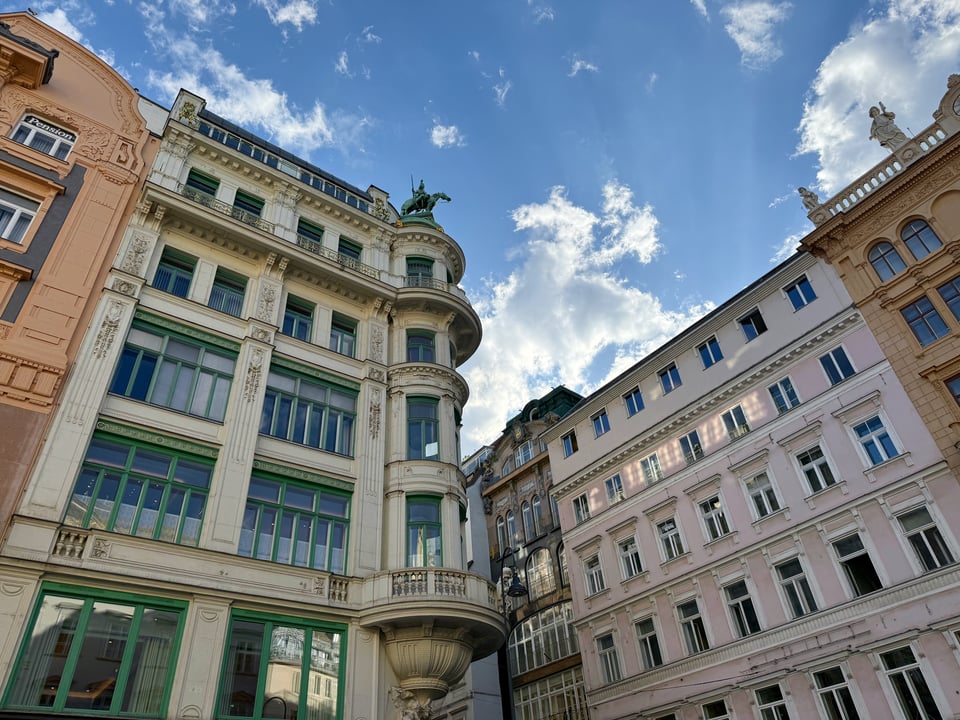
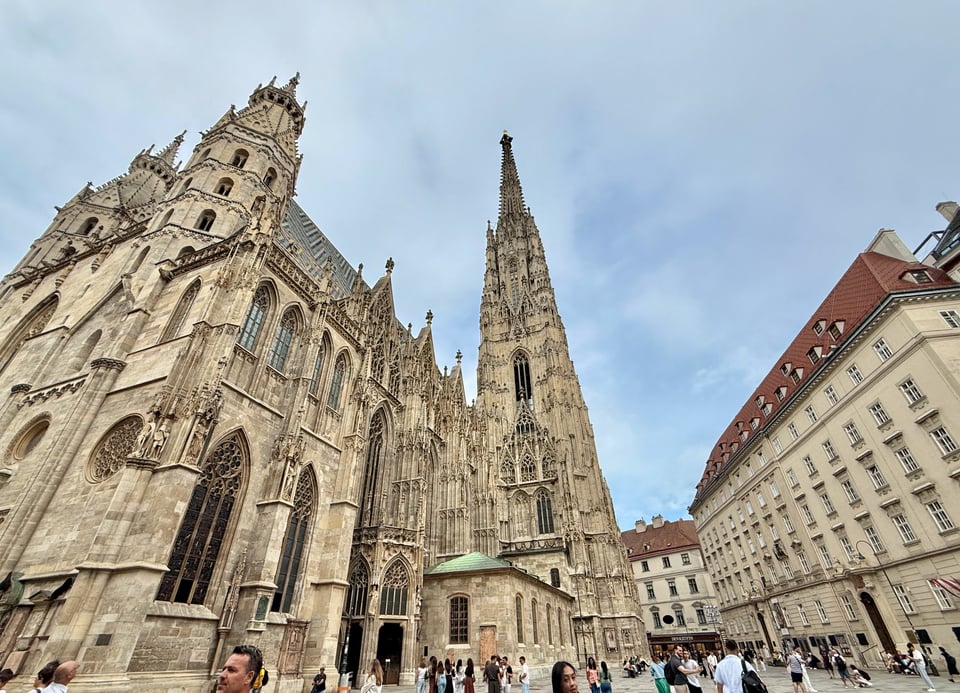
Stephansplatz is anchored by the imposing, eponymous St. Stephen’s Cathedral. flying sparks set the roof alight during WWII, so they replaced it with glazed tile in chromatic, pixelated patterns. outside the church, plazas splay out in front of elegant buildings, where cafe seats sit oriented for people watching.
nearby, we passed another church rumored to be the oldest building in Vienna, built in the 1100s with parts from the 800s. it dwarfs the timescales of U.S. history. we took a tram to Brunnenmarkt, an open-air market in the district where many people from Serbia, Syria, Turkey, and elsewhere live. each district has such a market, where people buy vegetables and meats and cheeses and sit down for a wine or coffee with their friends.
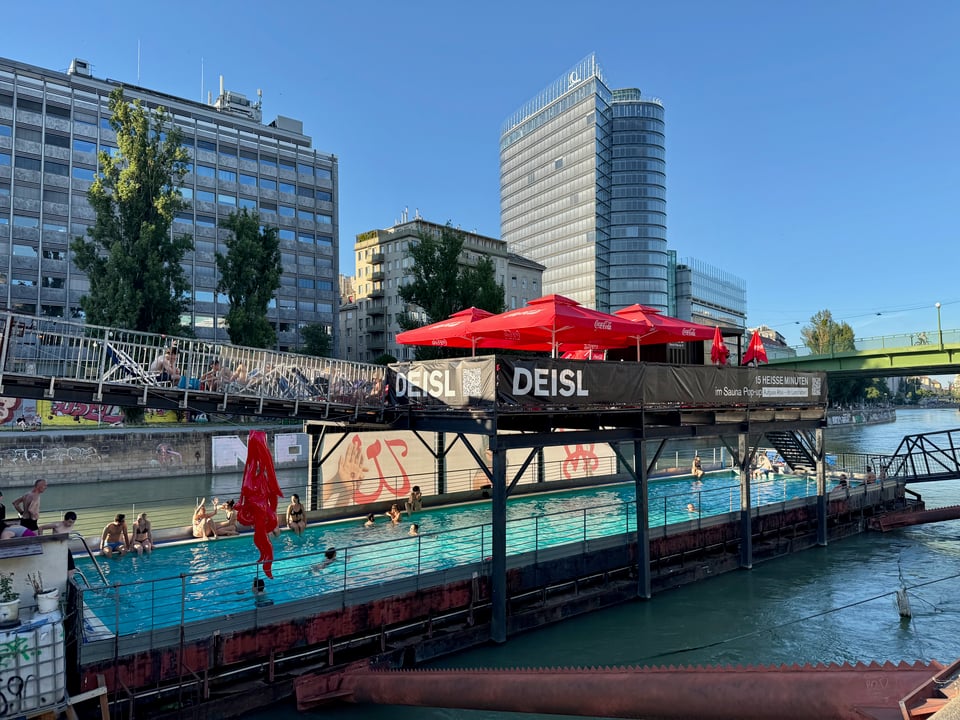
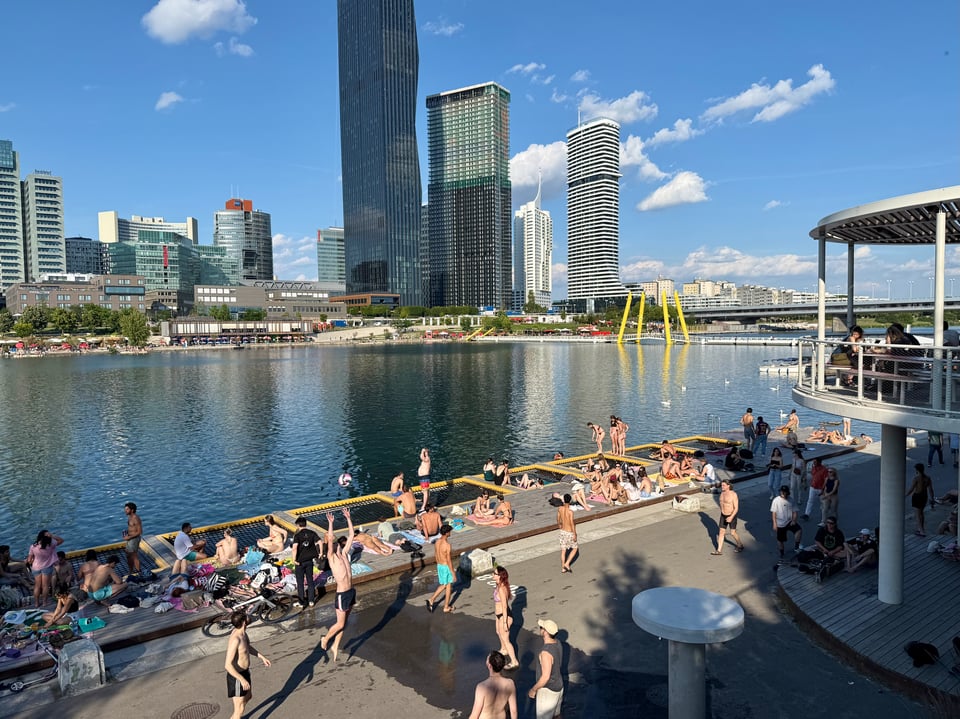
we strolled the winding Donaukanal (Danube canal), banked with tiny bars and restaurants and skirted with bright murals. the City and the political parties put on concerts here. in the evening, i swam in a boat-pool floating in the river. i watched people and bikes zip by beneath glittering buildings and fading sky.
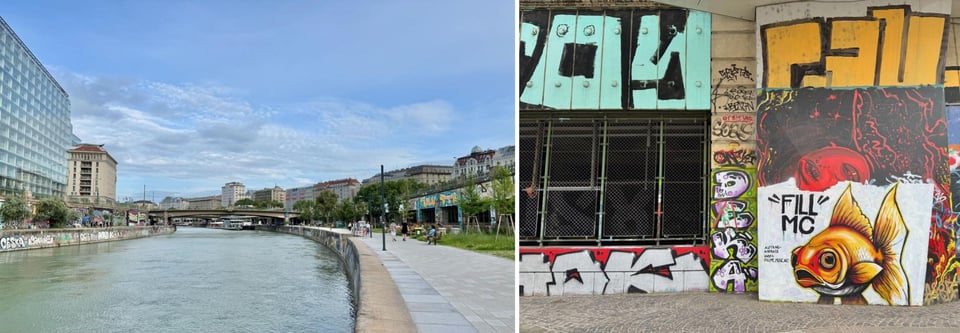
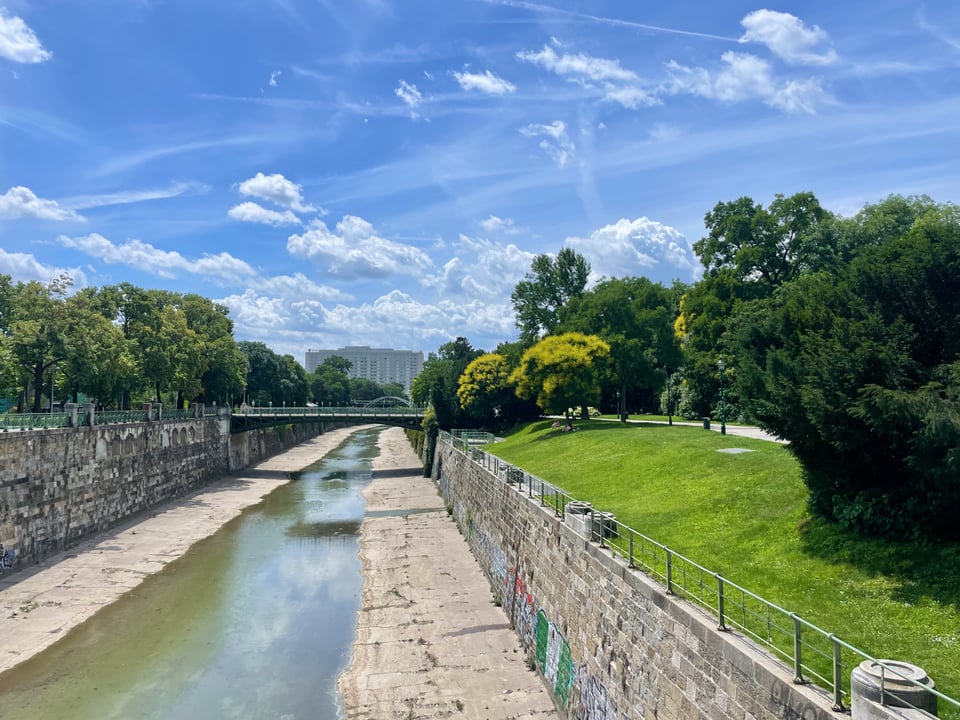
i told Luke that my primary impression so far was that Vienna didn’t seem real—something about it was off. it was just too quiet to register as a city. a Disneyish quality permeated.
it wasn’t for lack of people, like in the richest, eeriest parts of San Francisco—people sipped coffee in plazas and whizzed around on bikes. groups of teens lounged on benches; tourists milled along the canal. murmurs emanated from cafe tables and trams whirred pleasantly as they slid by.
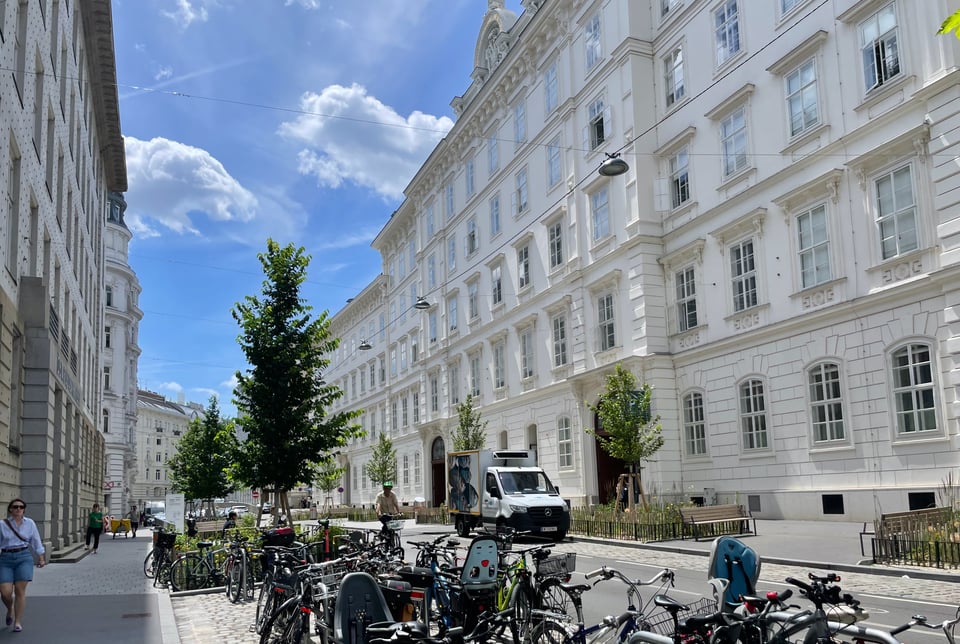
rather, i felt an absence of dull chainsaw buzz i’d come to expect: the ambient hum of cars. wide streets were empty of them, and not just a few cute summer closures—most streets, aside from a few ring roads, were calm. bike lanes and roomy tram stops covered hunks of pavement. the volume was set to low. it didn’t compute for a city of two million people.
“as i always say,” Luke told me, “cities aren’t loud, cars are.”
⚘ ⚘ ⚘ ⚘ ⚘
to plan my own social housing tour, i pored over PowerPoints i’d seen presented to Portland City Council, housing conferences, and advocacy groups over the last three years. i mapped the buildings they talked about, and i googled and googled. (social housing, as an umbrella term, means permanently affordable homes removed from the private market and owned or controlled by the people. Vienna’s model holds particular esteem.) beyond the buildings, i sought out the infrastructures—built and social—that surrounded the people living there.
first, i took the bus to the expansive green of Helmut-Zilk Park, a do-not-miss for people who like life. at the mouth of its acreage sits a school that had just let out, with children crossing a wide car-free path into creative parklets and playgrounds. they climbed on interlacing contraptions made of silver and wood and tree fibers and swung back and forth on a felled log.
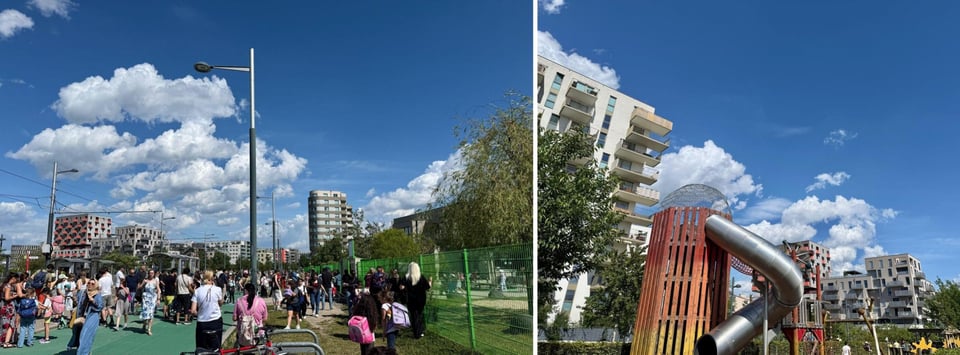
alongside the pleasant shrieking of ten-year-olds, a cotton ball sky backgrounded the park. buildings sat around it, each one worthy of analysis and admiration, popping with color and geometries of all kinds.
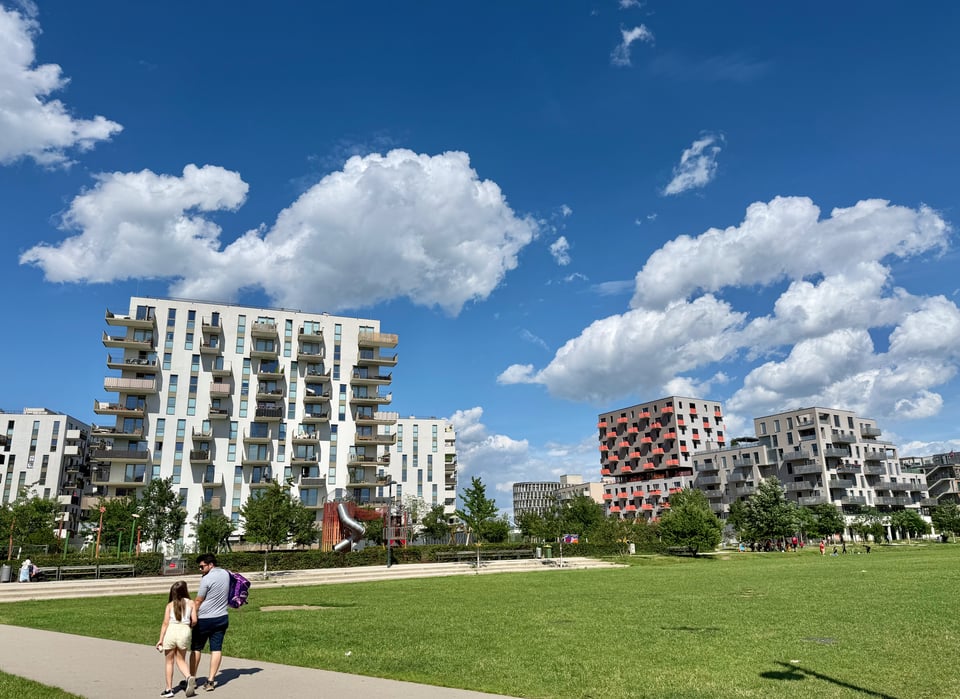
i navigated myself to specific buildings i’d found online, but every one felt as thoughtful as the next.
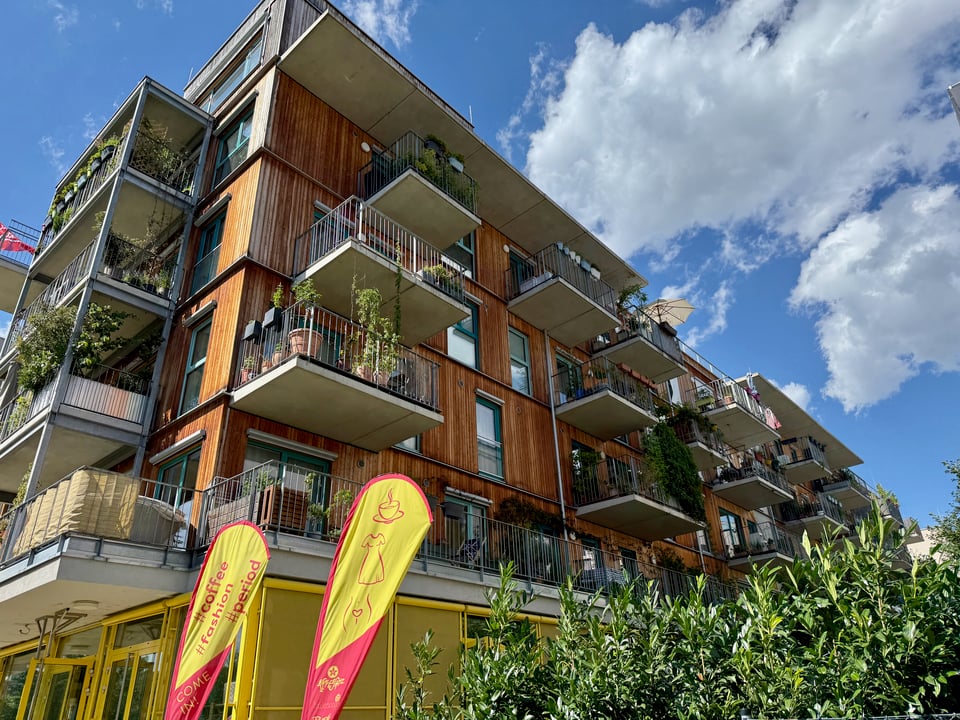
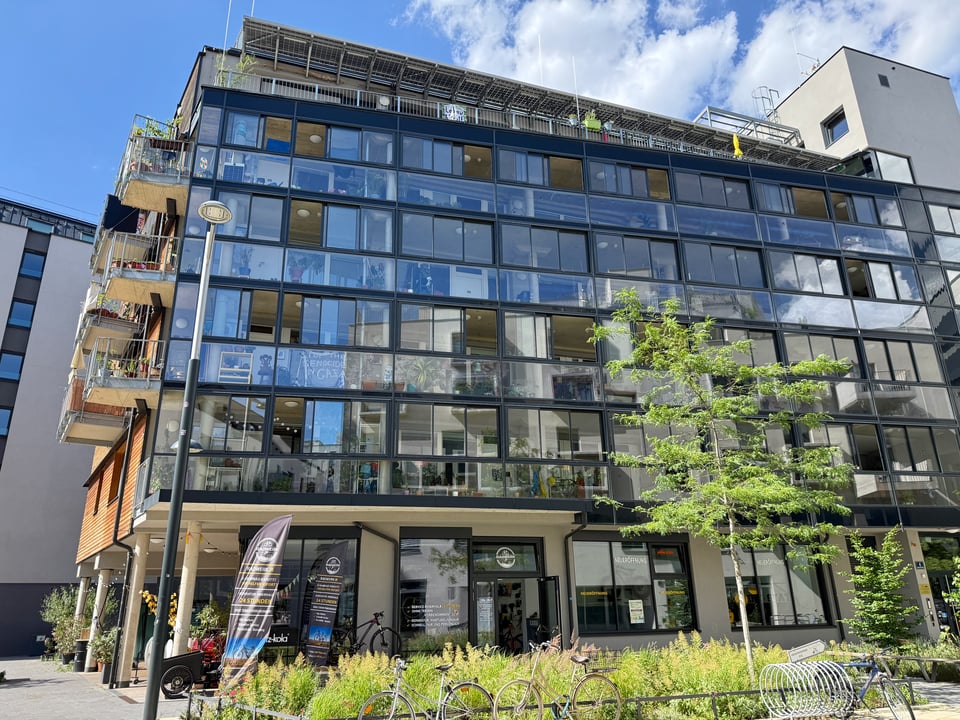
Helmut Zilk, the park’s namesake, served as mayor-slash-governor around the time i was born. he was a member of the Social Democratic Party, like all mayors since 1945. he also ratted people out to the Czech secret police for Bohemian crystal and ca$h and allegedly worked with the CIA. corruption cannot be escaped, even among a legacy of delight.
⚘ ⚘ ⚘ ⚘ ⚘
at the last stop on the purple U2 train, the City repurposed an old military airport into one of the most ambitious development projects in Europe, a neighborhood called Seestadt Aspern.
oh, how i love to see a new neighborhood planned and constructed from nothing at the end of a train line, sprouting into everything. this from-scratch, godlike urbanist creationism is inspiring to see but nearly worthless to teach in U.S. planning schools. we simply choose not to build transit and housing at the same time, to lay down train tracks instead of arterial roads.
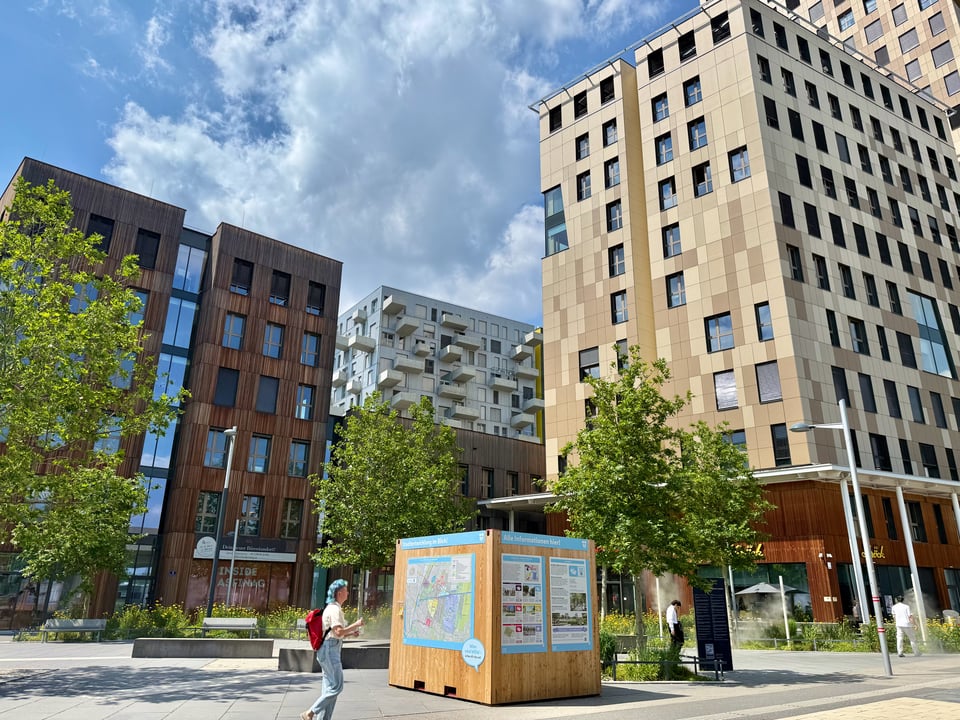
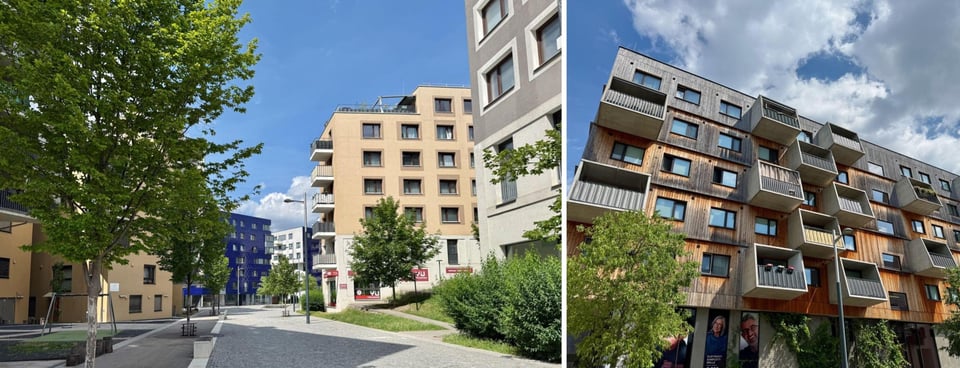
they carved out a big hole in the ground for construction material, and it’s now a pristine, greenish cyan lake like i saw at the top of the Dolomites. all ages swam in it, from toddlers in floaties to teenagers jumping off docks to the gentle bounce of gray-haired grandfathers. parks line its rim, and train tracks arc over it like a bird.
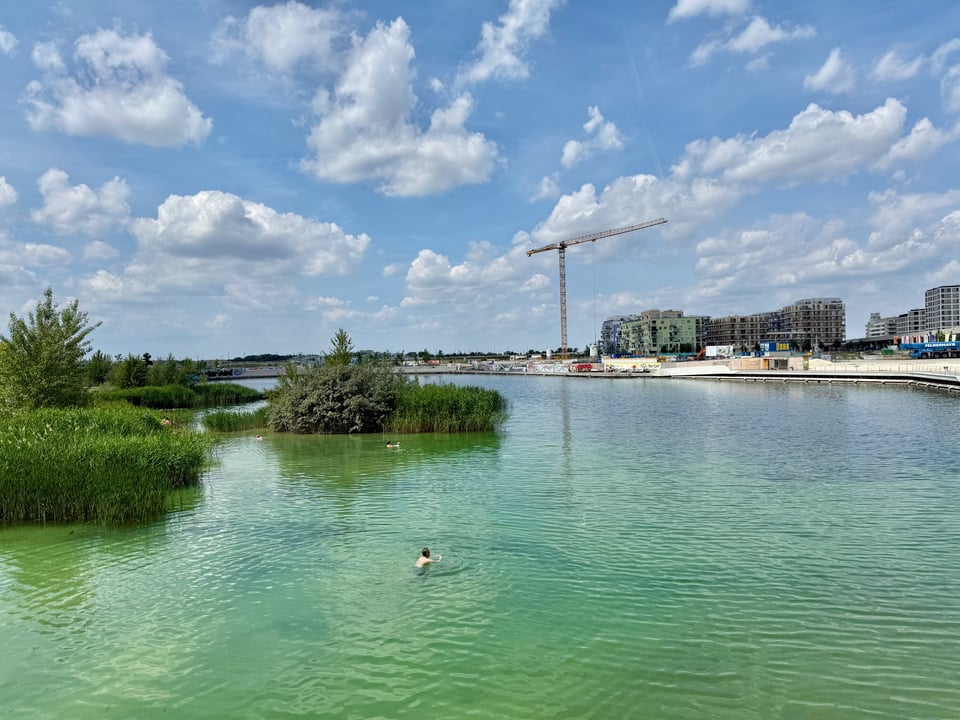
surrounding the lake, misters cool people off as they walk and bike between rich wood buildings. i rode a bike out the back of the neighborhood, past tall grasses into a gingerbread-house town surrounded by fields, a portal from future to past.
⚘ ⚘ ⚘ ⚘ ⚘
despite my passionate map-making, it turned out the City of Vienna had already done the work for me: they’ve created an official social housing hike.
Wanderegg 11—the best word for “hike” i could come up with if i tried—covers the most iconic Gemeindebauten, the older social housing the City built starting in the 1920s, when most people were living in overcrowded squalor. the Social Democratic Workers’ Party of Austria took up the mantle of governance and launched the period of Red Vienna, where they built homes, parks, schools, and health care for poor and working people.
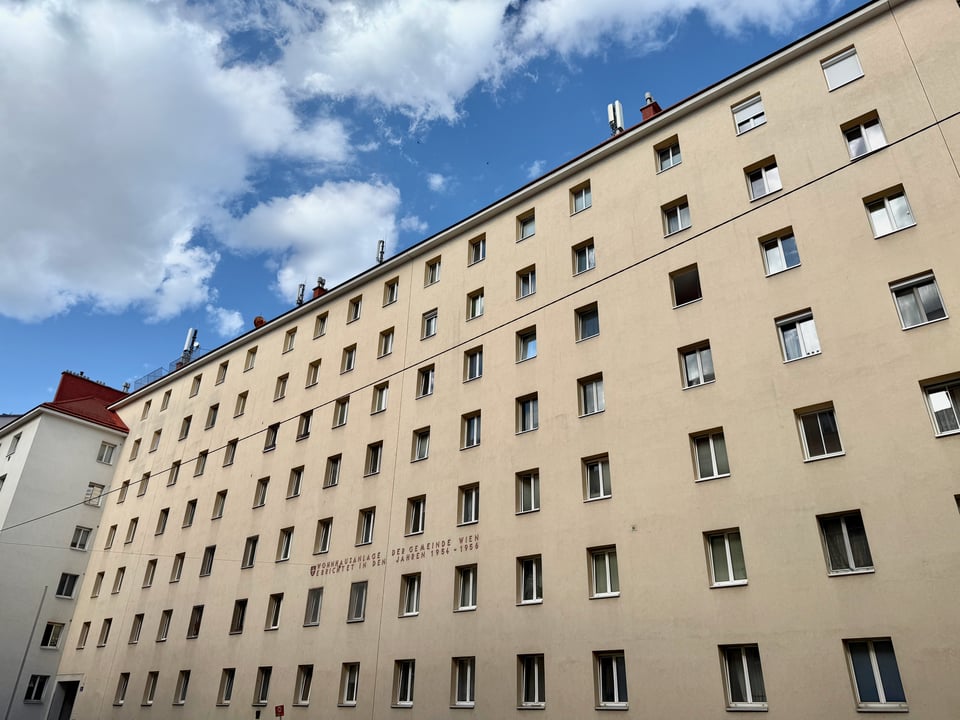
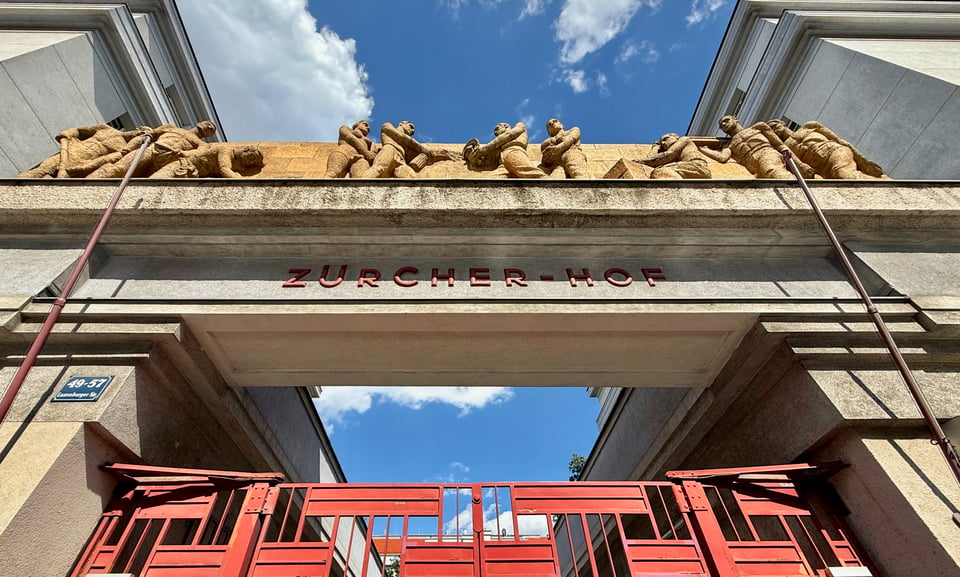
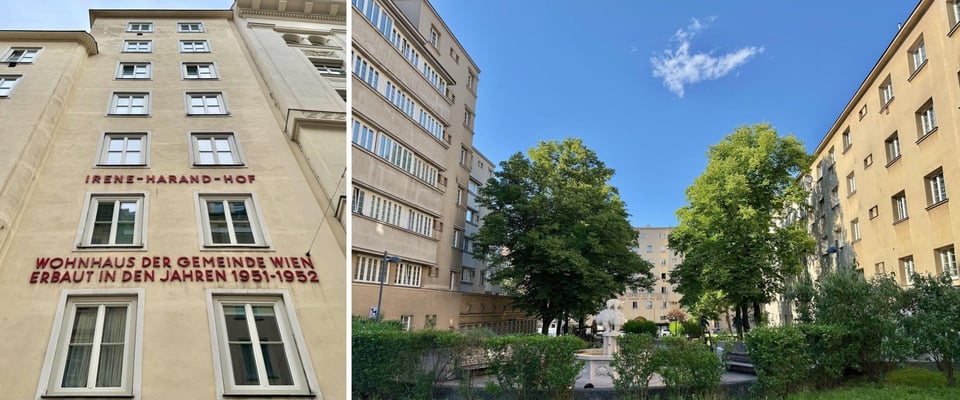
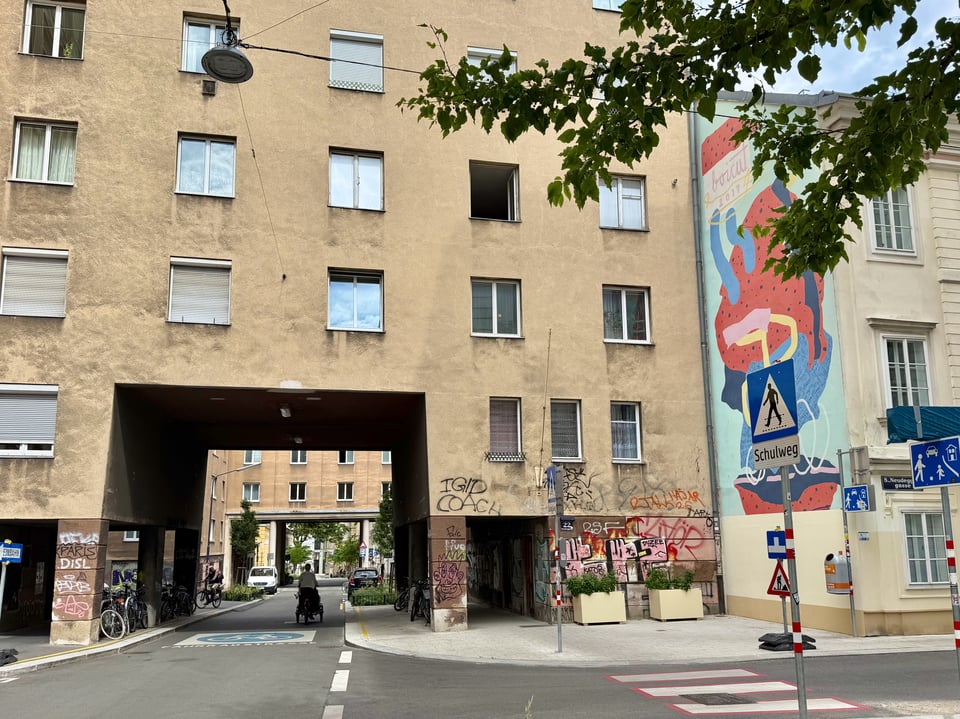
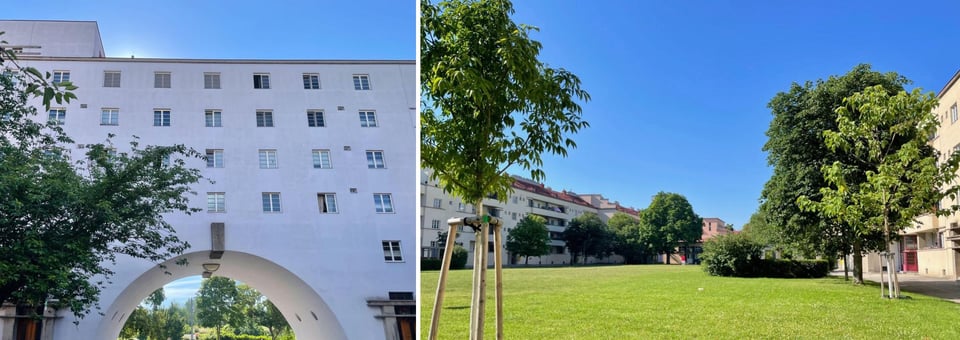
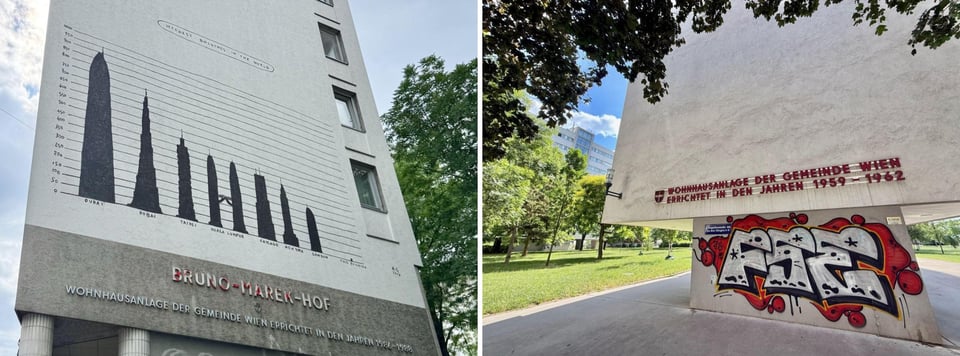
all over the city, you can spot the Gemeindebauten by their names and dates printed proud in a deep red sans serif. the buildings, hulking masses, sit on campuses with pleasant greens. sometimes they appropriate airspace over streets for homes—efficient land use, efficient air use!
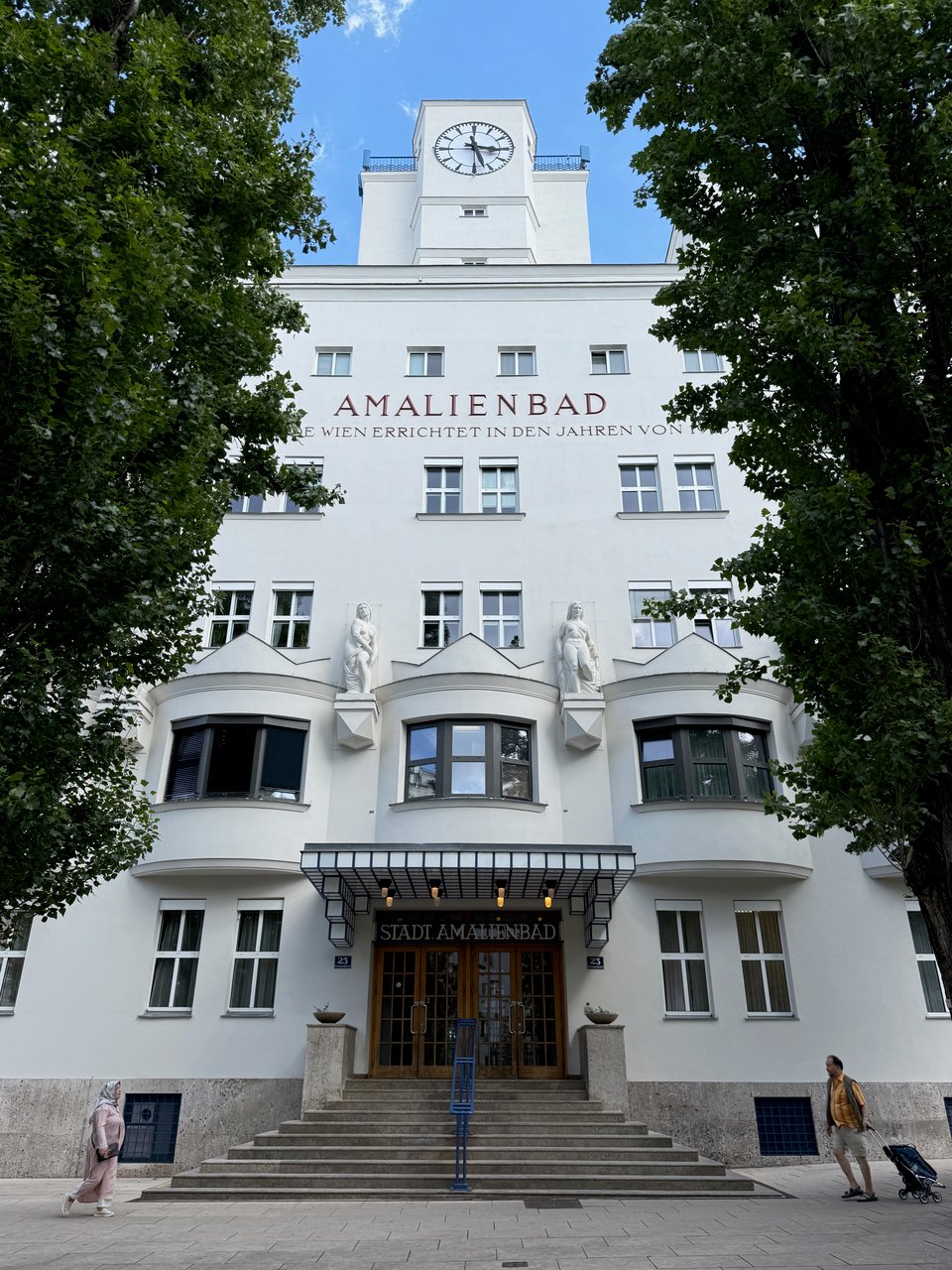
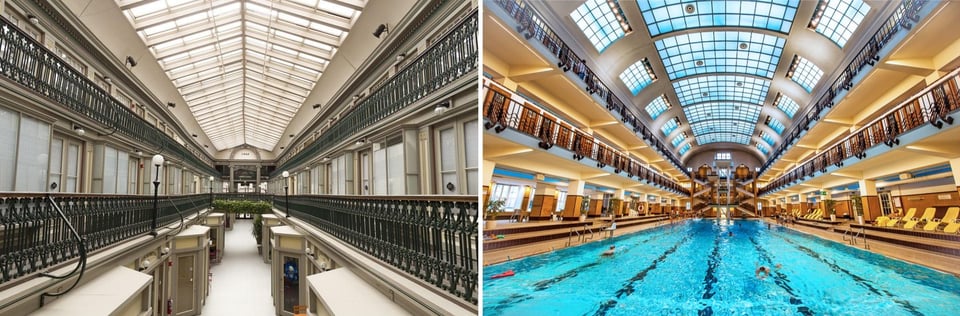
Wanderegg 11 starts at Amalienbad, a grand public pool built in 1926 for people living in apartments that often lacked bathrooms. the buildings around it were named for the Habsburg empire’s royal family, but Amalienbad’s constructors took pride in naming it “not after an archduchess, but after a worker, the social democratic Viennese municipal councillor Amalie Pölzer,” its opening announcement read. it reminded me of that charming mall-to-housing conversion in Providence, Rhode Island.
one cannot discuss social housing without discussing Karl-Marx-Hof, a heft of rectangles home to 5,000 people. it took three years to build, starting in 1927. size aside, it’s a feat in its ordinariness: a tended garden, a gray-haired woman shaking out a rug over a balcony, a mother in hijab walking her child by the hand to the on-site kindergarten.
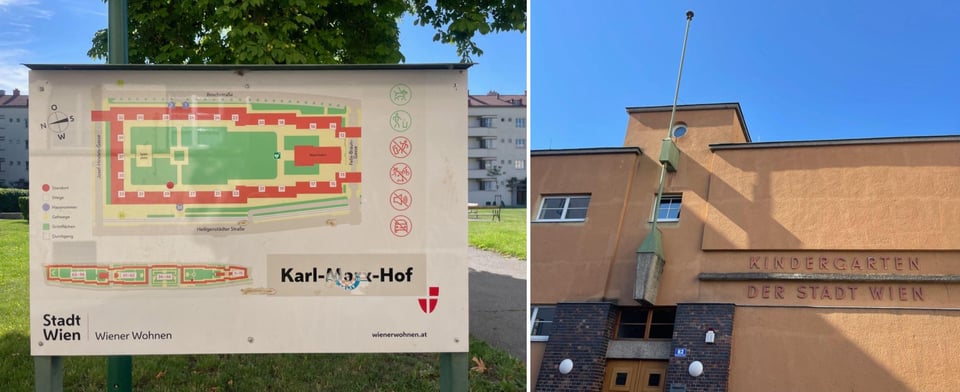
Red Vienna ended in 1934. the rich did not appreciate the redistribution of wealth that paid for the well-being of everyone else. Christian fascists opened fire at Karl-Marx-Hof, and the ensuing civil war killed 350 people. after, the Nazis came.
fascism so often arises only to quash socialist momentum. we saw it in Vienna, and we saw it when the U.S. dismantled socialist governments across Latin America. Naomi Klein teaches us to see it in the technooligarchy, and more broadly, how the right lashes out in fear when the left builds builds strength. it makes sense that the Christian fascists targeted Karl-Marx-Hof, a place of power and a synecdoche for what the left can do.
walking through its courtyards felt like paying my respects, like a pilgrimage in the religion of the city, or maybe of care.
⚘ ⚘ ⚘ ⚘ ⚘
i spent a year and a half living in an architecturally marvelous but socially disastrous cohousing community in Portland. no number of “community spaces”—commercial kitchen, lounge rooms, shared gardens, children’s swings—could rescue us from nonfunctional bylaws, toxic norms simmered for years, untreated mental health disorders, and one leaf-blower incident that cracked the whole thing apart.
U.S. experiments in collective living can suffer from a hyperfocus on space and too little attention to people’s interactions in that space. Vienna tends to both.
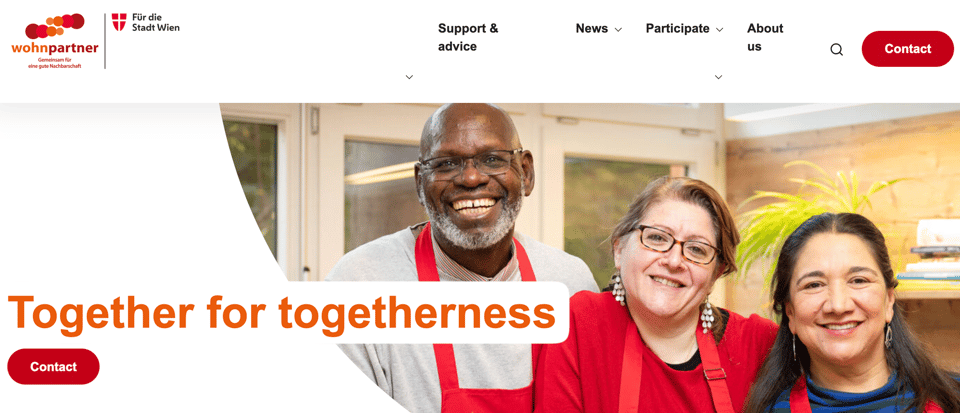
the City operates this agency, “Living Partner” in German, that works both proactively and reactively in social housing: they host choir groups and clothing exchanges and language cafes, and they offer conflict mediation when one lady operates an electric leaf blower after the other asked her not to.
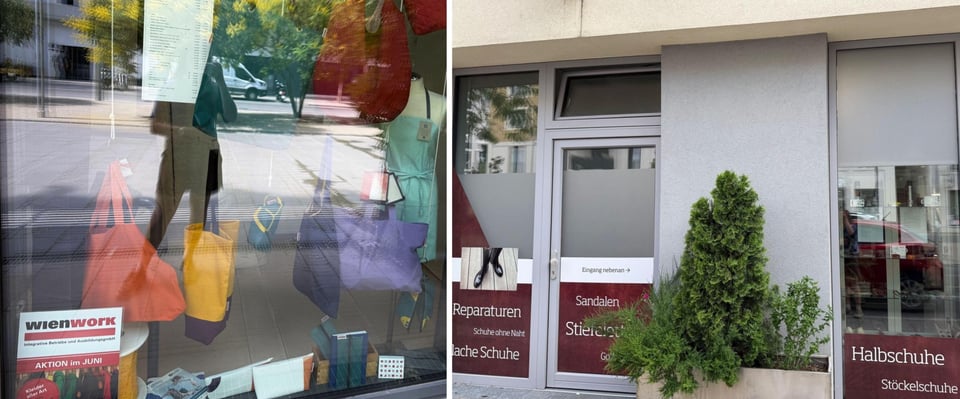
they’re paying attention to people’s livelihoods as well. in Seestadt, i passed shops for a textile maker, a woodworker, and a shoe repairer, all part of a City-funded employment program for people with disabilities.
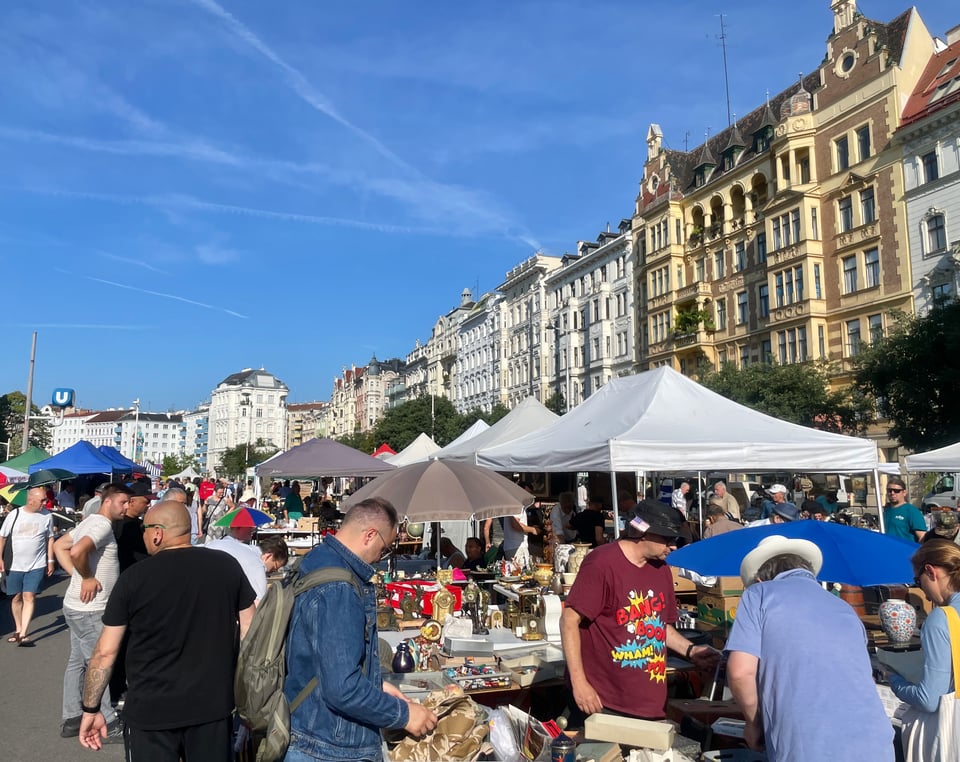
across the city, i popped out of the train to a flea market stretching for blocks, where people sold antique metal figurines, baby clothes, billowing pants, clocks, camo. you could find anything: Amazon in the flesh.
at the scale of the city, you can see these social infrastructures on a handy map. behold: twenty-six (26!!) City-run supermarkets—the dream of Mamdani is alive! advice centers, and a density of public childcare that would have the Preschool for All folks salivating. “dream wedding locations.” “dog poo bags.” lost and found boxes!
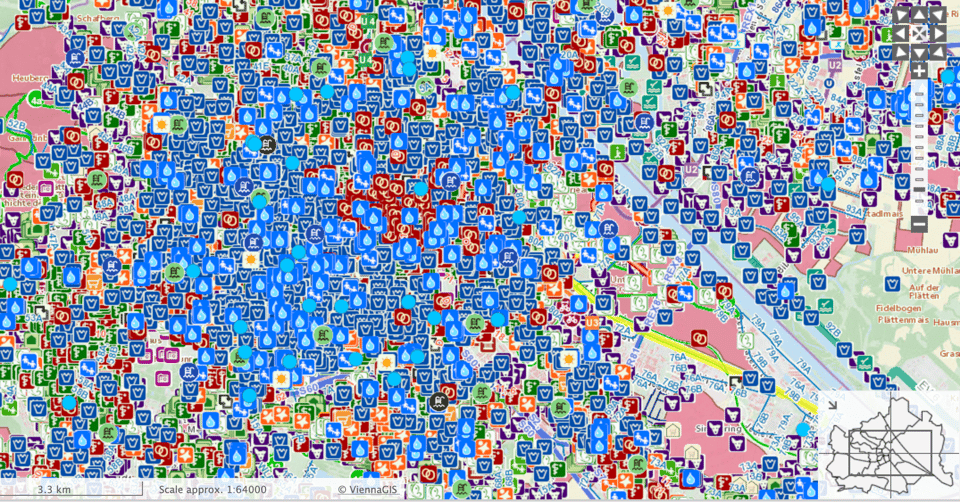
some of these seem crucial, and others simple or even superfluous, but these are all acts of care that people feel everyday. like Zohran filling the bump on the Zohramp, these daily accounts of competent government services show people that the state cares about them and can be relied upon.
⚘ ⚘ ⚘ ⚘ ⚘
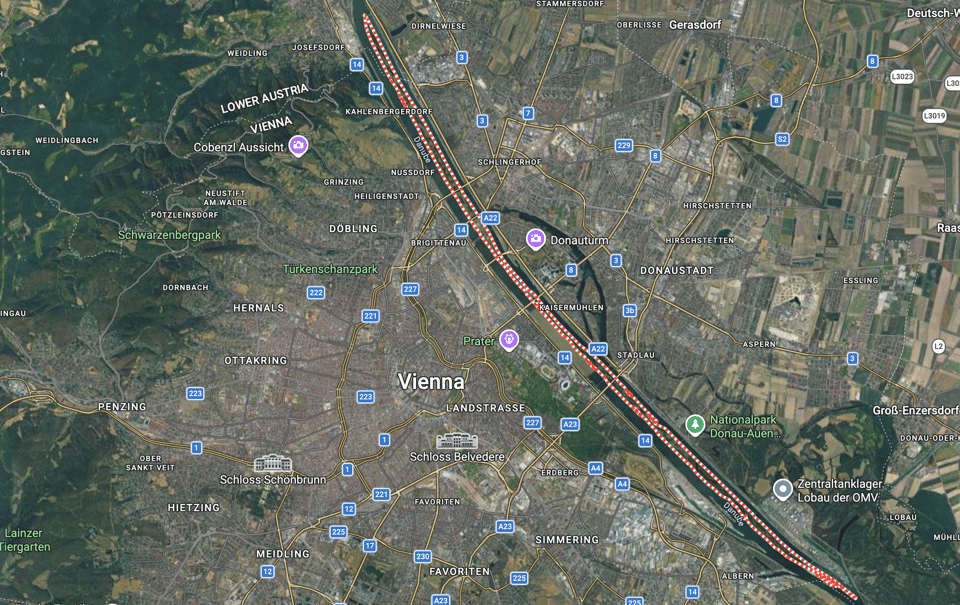
one piece of social infrastructure you won’t see anywhere else: a floating park with the severe proportions of the Donauinsel, or Danube Island.
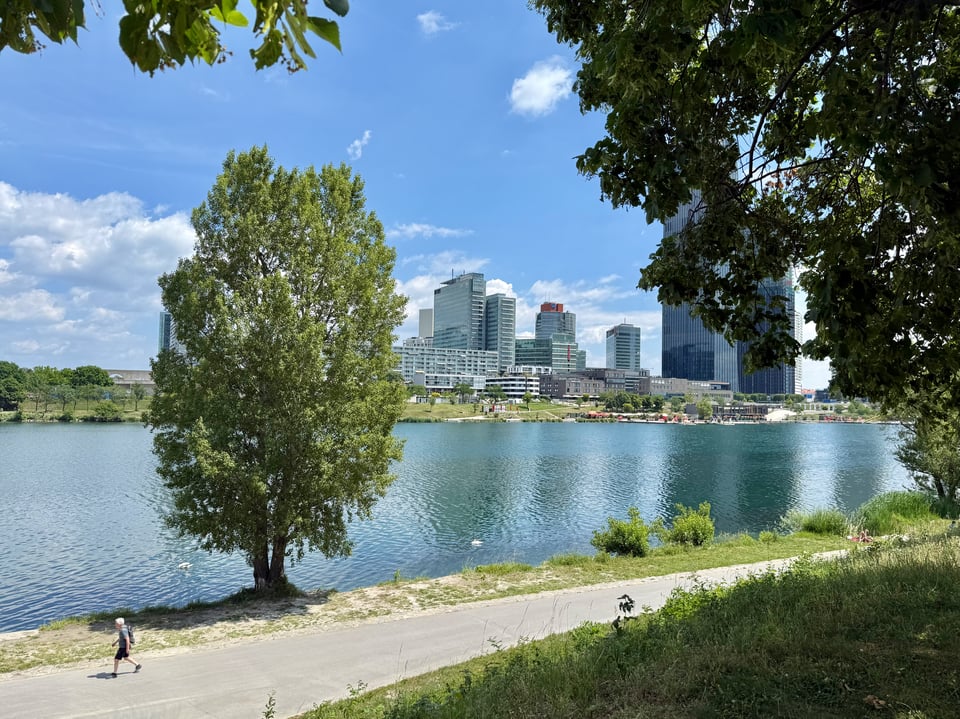
the Danube is the second-longest river in Europe, running from the Black Forest through ten countries to the Black Sea. (here there be pirates.) the island sits in the middle with stunning linearity—an ogre’s fingernail, a banana flattened by a semi-truck. it’s a half marathon long and down to 230 feet wide, a ratio of 301:1.
on the south side of the island, the Danube runs a slate-inflected teal. on the north, it’s cleaner, a deeper blue. all sides are lined with little spots to dip in and big, parkitected piers with micro-restaurants, curving benches, and geometric sandy beaches. each June, the Social Democratic Party hosts the largest music festival in the world (!) here, with 3 million attendees. Dua Lipa’s played, and the Beach Boys.
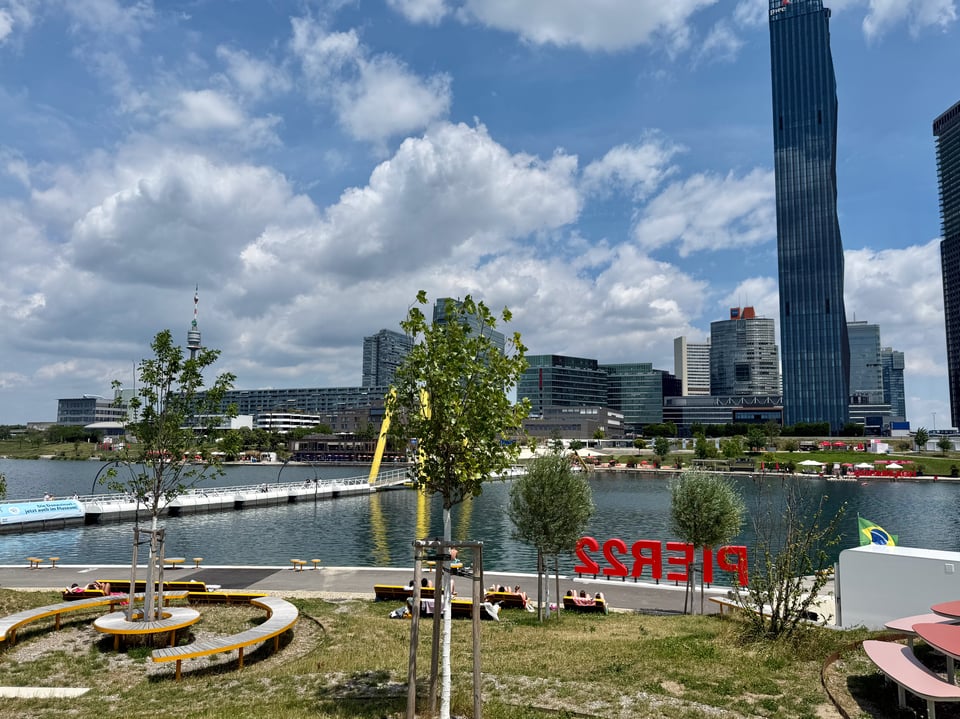
trails weave along the island, where people bike, walk, and run. on each end, beavers, otters, and grey herons make their home and bare skin shines on nude beaches. the City mows the lawn with sheep.
to get to the island, i hopped on the City’s bike-share, Wienmobil Rad. i paid three (3) euros to ride for almost 2.5 hours. in Portland, this would have cost *pencil scratching on paper* $53.50.

a German company called nextbike operates their system. Lyft operates ours. i’m sure vampire companies exist there, suckling on people’s livelihoods to make their owners richer, but i don’t think there are as many, or that they do so as greedily.
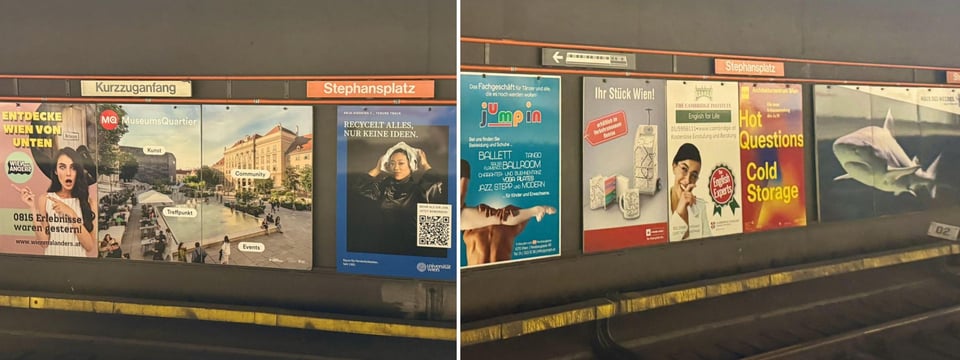
in fact, in my five days in Vienna, i didn’t see a single Amazon ad or box or truck or exploited delivery driver. i didn’t see a single AI ad, not even in German (künstliche Intelligenz). the Viennese waiting for their trains see ads for culture and social services.
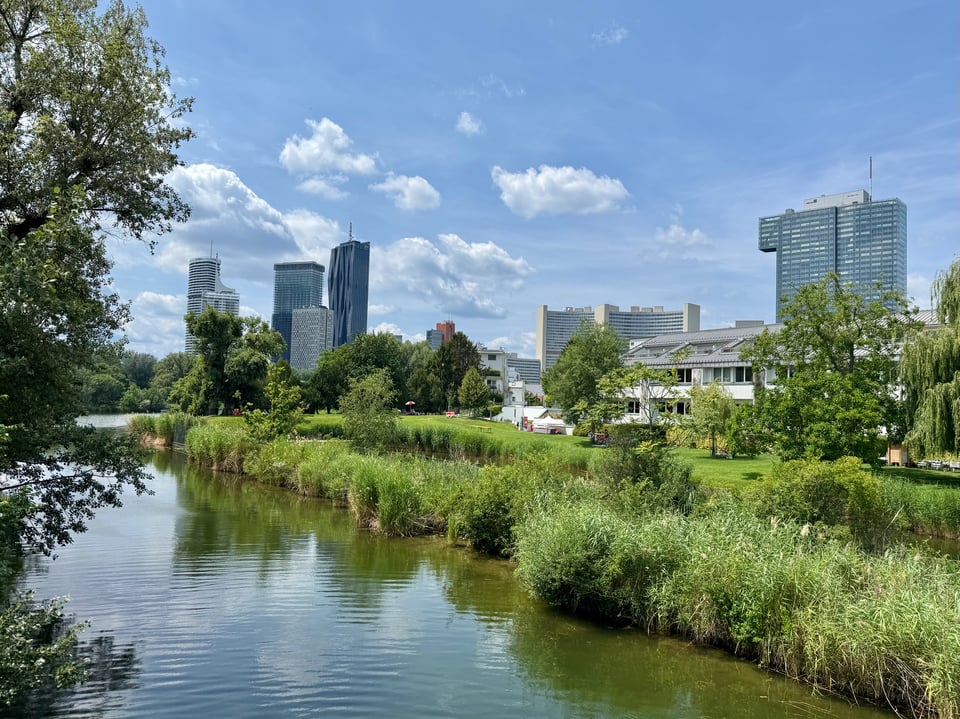
i biked the island for so long a sun rash sprouted on my forearms. i crossed the north side of the Danube to a crescent-shaped hunk of city built on a landfill, where i wove between glass towers and off-roaded through reedy inlets.
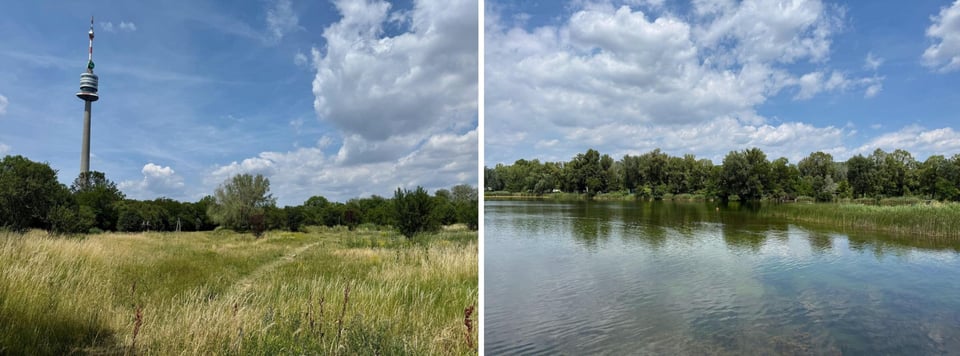
i returned to swim at a pier, setting down my backpack and salty shirt among a sea of twenty-somethings gossiping in German. a small boy cannonballed into the river, and people lounged on netted hammocks. an older couple stopped to rest on a bench among the foray. i lowered myself into the Danube, keeping half an eye on my things, but in a society where most people have what they need, most people don’t steal. threads of seaweed floated through a clear cerulean the temperature of the body.
the German felt rhythmic, non-distracting, lulling. being surrounded by a language you don’t know leaves you unable to eavesdrop, but it also makes you feel less alone. you couldn’t have been invited in on the secret anyway. among the German, a wafting string of American-accented English left me with a tingle.
i rested my head on my bag and wondered how much all these packed parks, public spaces, and social services scale down to the interpersonal. do people treat each other with care, individually? (do they help each other on the sidewalk, scrape the snow off each other’s steps?) or are they relieved of the obligation because the state has it covered? and if they are, did they offload their networks of care to the state so they wouldn’t have to do it themselves? or the other way around?
⚘ ⚘ ⚘ ⚘ ⚘
if anyone from Austria visits Washington D.C., they will see our monuments, Greek-temple cosplay and erect phallus in the sky, and think, “…um, quaint!”
Vienna is a land of castles. i entered its most mammoth, the Schönbrunn Palace, from the back, which i mistook for the front. the summer home of the Habsburg monarchs, the palace spindled outward in a buttery yellow that matched the morning sun. across 400 acres, sprawling promenades led to secondary palaces, museums, theaters, and a sculpture of 1,000 intertwined figures. tree-lined paths criss-crossed through rose gardens to a lily pad pond elevated above the city. people used it like a park: walkers, runners, and tourists with expensive cameras laced the grounds.
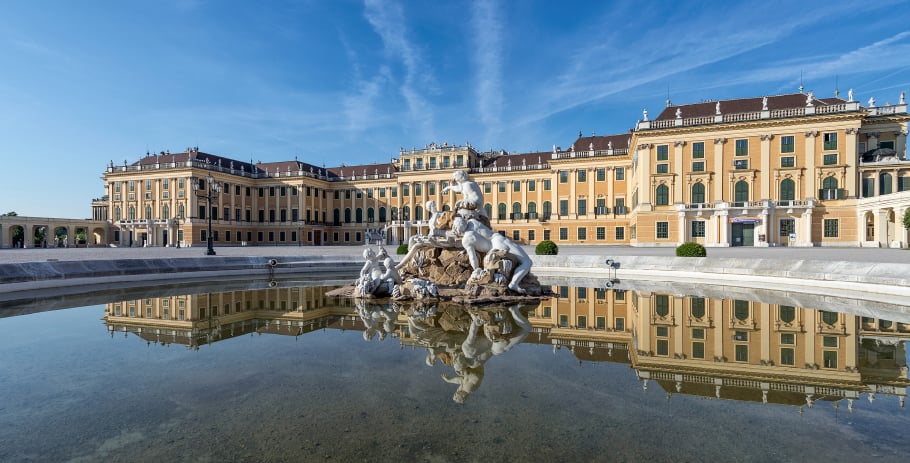
standing before that monster of a castle brought forth, once more, what i call the “Where’d-you-get-all-that-money-for-all-these-nice-things??” argument against Eurocentric urban-planning doctrine.
planners tend to venerate places with smart bike and transit infrastructure, glimmering buildings, and robust safety nets (see: the preceding 3,000 words of this love note). they (we) tend to cherry-pick wealthy cities in Europe—your Amsterdams, your Parises—even though examples exist across the continents.
the answer to the doctrinal question—where they got all that money—is colonization. the House of Habsburg ruled its lands from Vienna from 1278 to 1918, known as the House of Austria during that time. (this lifespan amounts to 2.5 times that of the U.S.—a reminder that empires fall). this sprawling dynasty involved Spain, Germany, Austria, the Holy Roman Empire, parts of Italy and Central and Eastern Europe, and all those countries’ colonies. it spread across Europe like wings and across the rest of the world like a parasite. the empire portrayed itself as benevolent, non-nationalist, and invested in maintaining a multi-ethnic pluralism, but a political theory called the Habsburg myth calls that projection what it is.
the amount of wealth inequality underlying these castles remains unfathomable to me. still, the “Where’d-you-get-all-that-money” argument is not as simple as it sounds. it’s not that, for example, Denmark stole the people and gold from the west coast of Africa, then turned around and built some kick-ass bike lanes. they did do those things, but time passed; other things happened and other influences swirled. but money flows onward.
Vienna, for its part, grew from this juxtaposition of staggering wealth and desperate poverty into socialism, then fascism, and back again. the question, now, is who the fruits of that socialist blossoming are for.
⚘ ⚘ ⚘ ⚘ ⚘
people who proclaim the U.S. can’t do what Europe does say it’s because they’re homogeneous. i think this is a cop-out: we can supersede our differences, and we choose not to. it’s also untrue, as people from everywhere live everywhere, and increasingly so. but the question remains—would places like Vienna have created these social safety nets if the nets had to carry many different types of people?
homogeneity is, in some ways, policy. Vienna has plentiful social housing in its various forms, and 75% of people make incomes that would allow them to live there. but if you’re not an Austrian citizen or haven’t lived in Vienna for two years, you’re out of luck—you can’t get in.
and the longer you’ve lived in Vienna, the higher you’re placed on the wait list. on its face, it’s a way to make sure people who’ve been waiting a long time get the care they need. but amid increasing immigration from the east, we must ask: affordability for whom?
Luke tells me that Vienna has worked long and hard to create a feminist culture of gender equality, which conflicts, at times, with the traditional worldviews of Muslim immigrants. some long-time Viennese, including and especially the “progressive” ones, see these newcomers as negatively influencing their progress.
today, the city is over half “other,” as in, of non-Austrian ethnicity. the social systems seem to be holding for now, but Luke sees the right-wing wave coming. the Nazi-descendent party is rising again, and he thinks they’ll win the government next election.
Austria does not allow dual citizenship, and non-citizens cannot work in the government. as a citizen of the country where people live under ICE and a thousand other violences, and a descendent of another country that sinks refugees in the Aegean, i have no room to speak about how Vienna treats its immigrants. but can you imagine a Portland city government without non-citizens? can you imagine that multiplied in cities across the U.S.? i can’t, or at least, i don’t want to.
⚘ ⚘ ⚘ ⚘ ⚘
back at Schönbrunn, the City hosts a free outdoor symphony for 50,000 people. the Vienna Philharmonic plays for hours, its classical performance gliding across the palace’s expansive grounds. i saw it on the TV in the hotel room. each person sat in a prim white chair. no one stood; surely no one moshed. the camera, panning close to their faces, caught no one making even a whisper, a wiggle.
this apex of culture, at least of one type—buttoned up, prescribed—must always be enforced: polizei at the entrance, even at 7 a.m.; polizei glaring at a homeless man as he fiddled with his belongings, for no apparent reason other than his dis-order.
the whole city has quiet hours everyday from 10 a.m. to 6 a.m. and all day Sunday. during Ruhezeiten, you can’t do your laundry, mow your lawn, use a hammer, or play music. Luke got yelled at for talking on the roof with friends at midnight. his neighbor shook her fist: “i’m going to call the polizei!” Austrians are a culture of calling the cops, of snitching, he said. (the internet corroborates this specific story.)
quiet brings order, and order can be beautiful. but when enforced with badges and guns, the pursuit of order shrinks people into a narrow, singular, homogenized way of being.
⚘ ⚘ ⚘ ⚘ ⚘
the City has an official social housing hike, and the City has an official wine hike—several of them, in fact. on my last day, it was time to get City-sponsored sloshed.
some of my favorite hikes are i-took-a bus-to-get-here hikes. the Wanderegg i took—that wondrous, wanderous word again—starts at a bus stop in the foothills at the edge of Vienna, a Busch Gardens town where modern urbanity has given way to turreted alpine chalets.
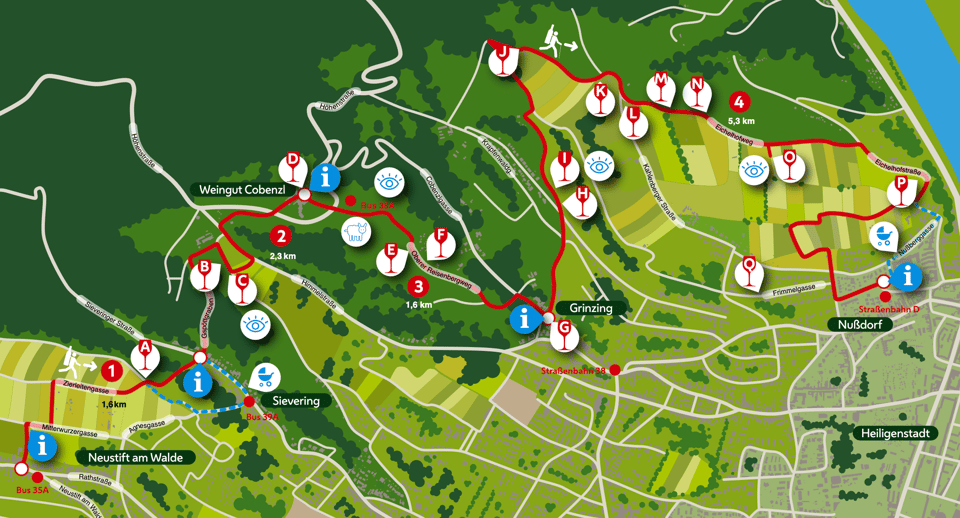
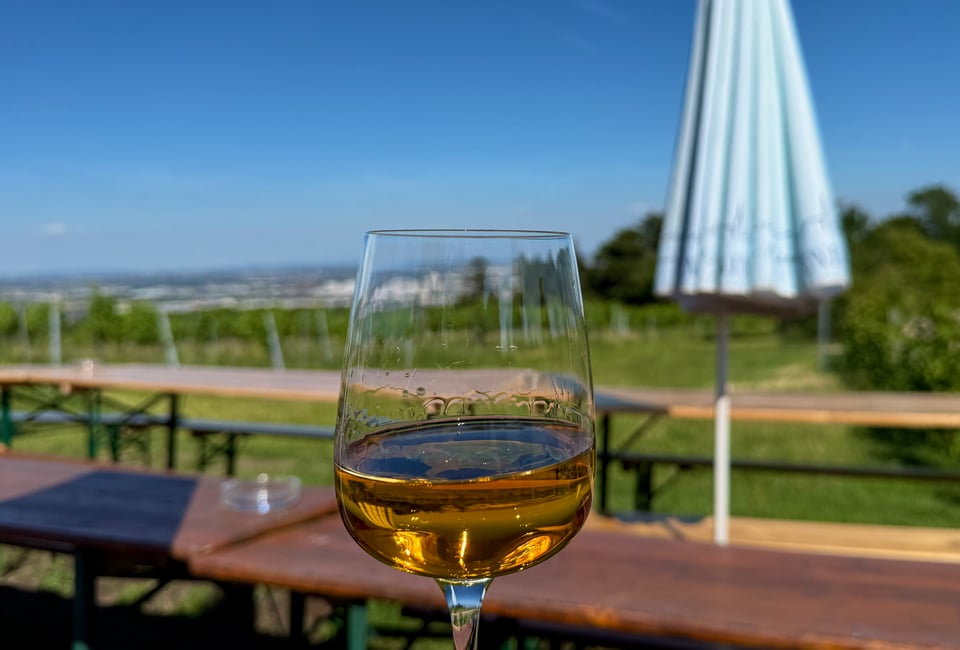
the wine hikes take you through Heurige and Buschenschänke, traditional taverns where winemakers offer their wares alongside regional cheeses, meats, and snacks. on this 90-degree day, i walked a few hours before coming upon an open Heuriger like a mirage in the desert. my backpack revealed swampy sweat lines as i ordered my first glass, a white grown only here that i sipped under umbrellas sprawled out on a hillside.
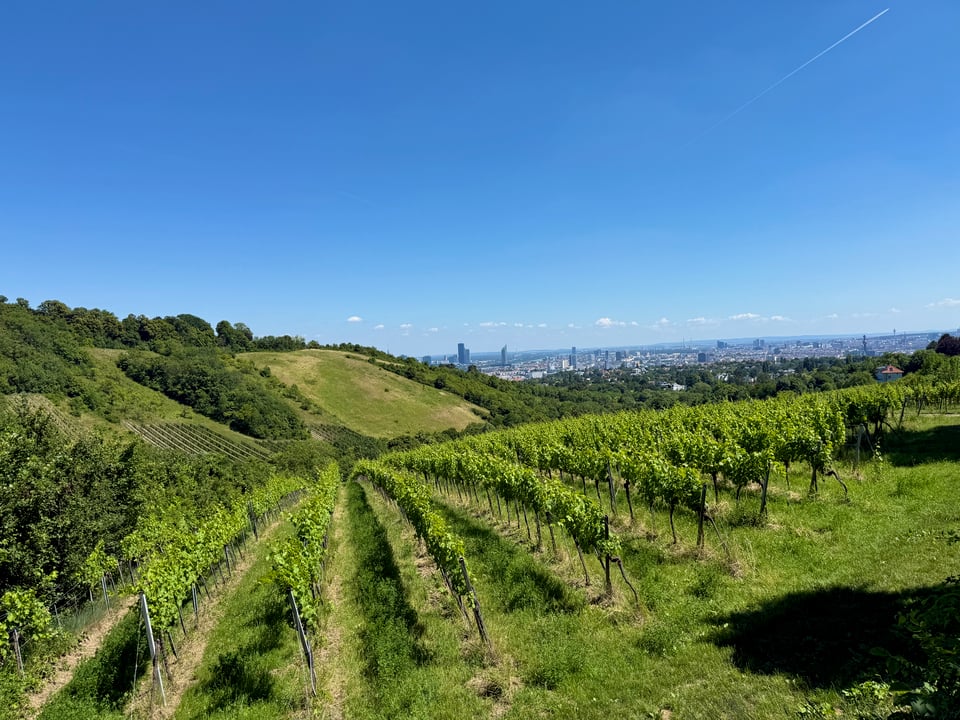
i passed the City-owned winery (!), Cobenzl. with its award-winning wines, viewpoints, weddings, and wine vending machines, it’s a place of pride for the Viennese: government excellence in all corners.
next, a stop for an Austrian grape called Muskateller from 2021, the golden orange of balsamroot at sunset with a mushroomy, metallic funk. in the distance, neat lines of windmills in the flatlands gave way to gentle hills and the blue outlines of mountains.
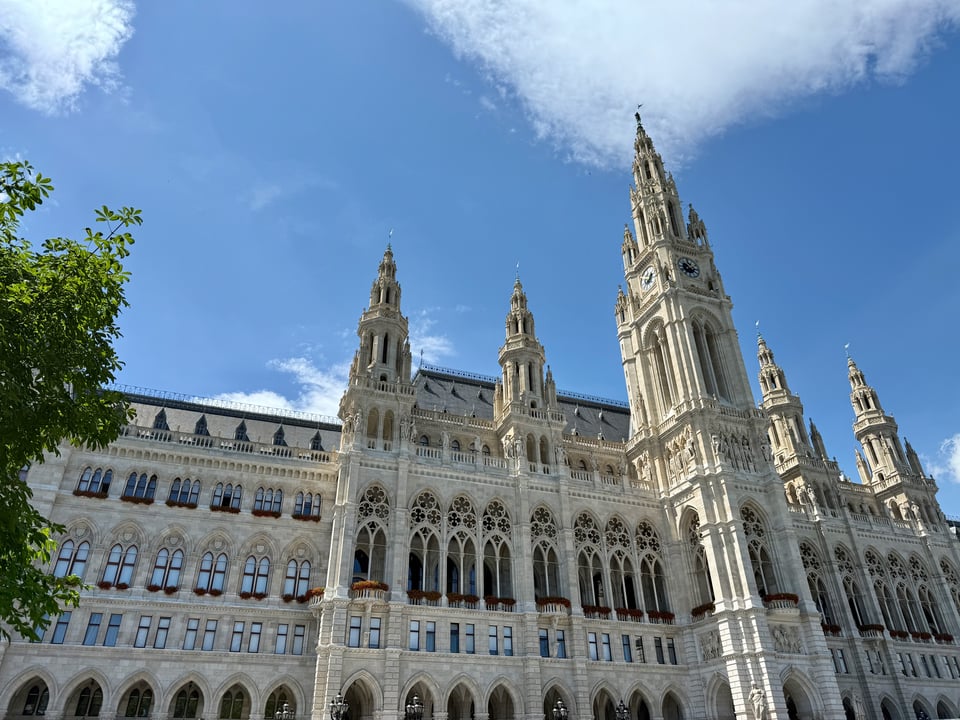
as i hiked through the vineyards overlooking the city, i thought about the castle i passed in the city center that morning. i’d assumed it to be another artifact of wealth and empire, but when i googled its name—Rathaus—i learned it was the Vienna City Hall. floored, i tried to conjure the feelings of respect and duty that municipal employees must feel working in this building. (i sense it doesn’t have the fallen ceilings, punched-in tables, and windowless desk-closets of the Portland State Office Building. the only part of Rathaus we have is the rats, amirite!)
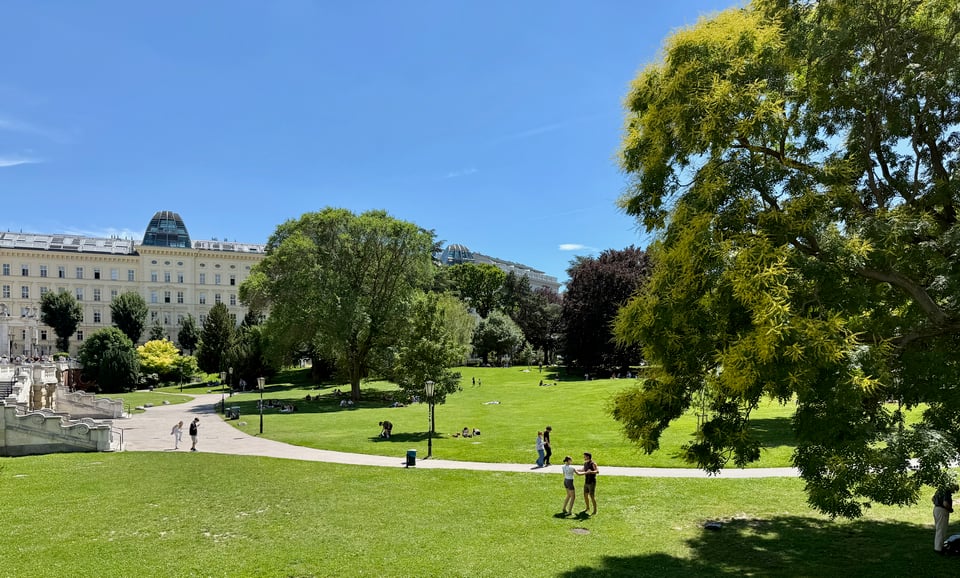
i pondered all the things Vienna’s government does that we can’t imagine in the U.S., and how it does them with care and beauty: the social housing, yes, and the City-owned winery, cheap bike-share, and plentiful, delightful transit. the details, though, are what got me: the walk signals with two women holding hands in red, the way lovers rest and dance on the remains of old castles, the free water stations hydrating people in a heat wave.
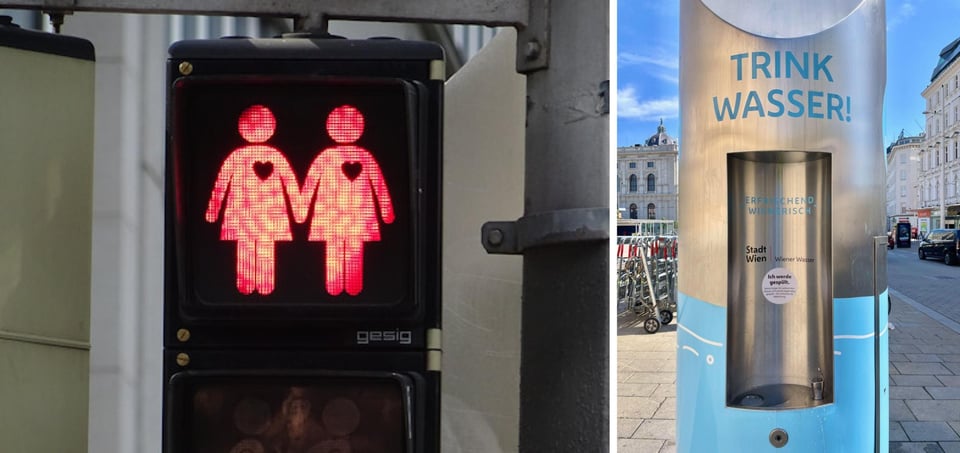
i’m not sure how to reconcile these pleasantries, these moves past surviving to thriving, with the dark histories that led here or the present-day conflicts lingering out of my sight. still, with a patchwork of motivations, Vienna seems to have traversed the path from imperialist wealth-hoarding to socialist democracy in a way that’s fairly broadly enjoyed. other places are leading on other fronts—care and beauty in other forms. as ever, we can, i hope!, take the lessons from each place we go and weave them together to build places of our own.
prost to that dream and to inching ever closer,
tell me a place of care or beauty you’ve been lately,
<3
Add a comment: