
⎆ decennial injection of New York into my veins
the opposite of “interpersonal austerity”
i’ve been repeating the word “decade” a lot, feeling dramatic: i’ve been in Portland for a decade, been an adult for a decade, been a city planner for a decade, about to become something else (something additional).
i haven’t been to New York in a decade. last time, i interviewed to become the Compost Queen for the New York City Botanical Gardens in Flushing Meadows Corona Park. i didn’t take it.
a decade later, i went back to see what that alternate life could be like.
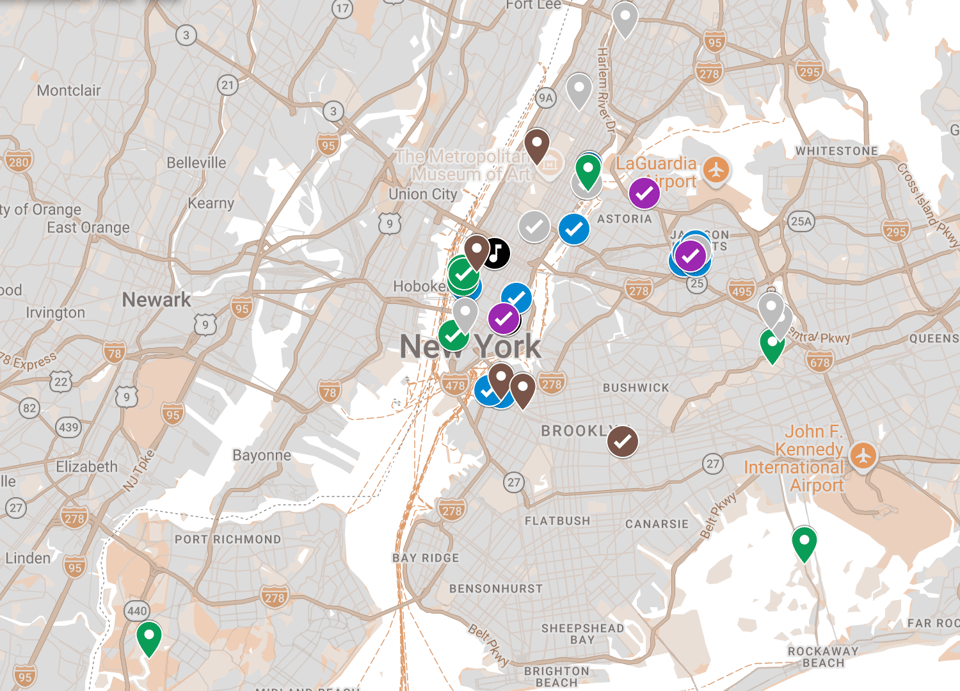
of all the places on my list, the first i wanted to visit was Jackson Heights. some time back, Kbaby and i realized Jackson Heights and Astoria almost graze each other on the map, the New York homes of our two cultures almost uniting. as in life, a small but bridgeable distance (called Woodside) separates them.
at Ben’s suggestion i read The Intimate City: Walking New York, which contained an interview with Suketu Mehta, who grew up in the neighborhood. (Mehta authored Maximum City: Bombay Lost and Found, which i drew upon extensively to understand Mumbai and its surrounds.)
beyond India and Greece, i wanted to see the cultures represented by the 167 languages spoken in the neighborhood (and AOC).
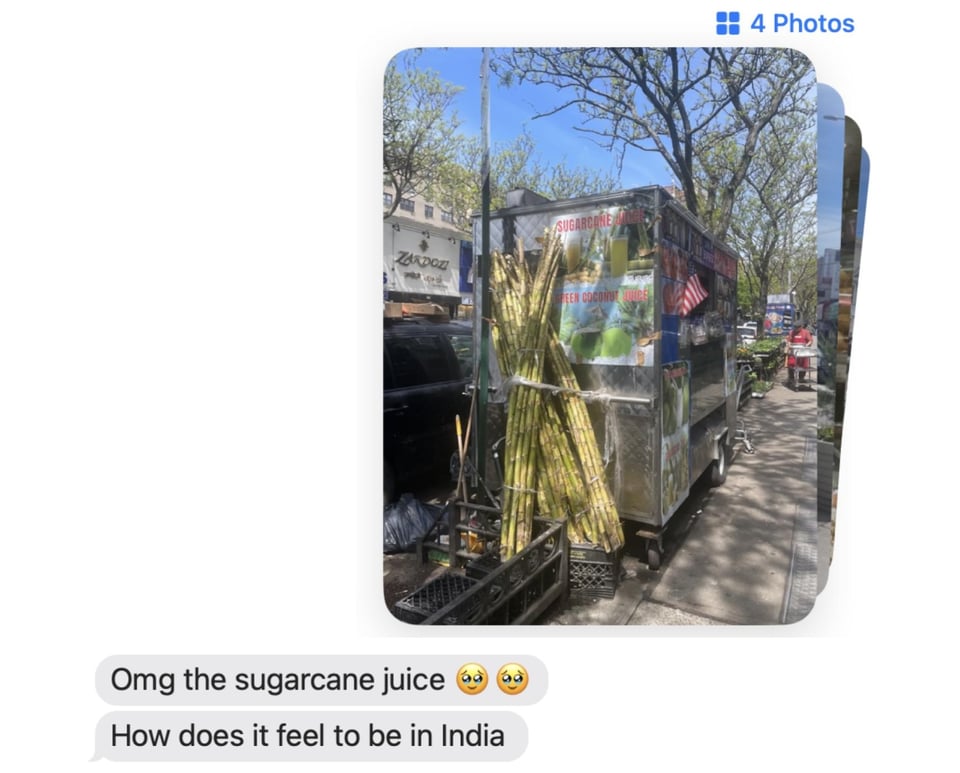
just as Mehta described, 37th Ave and Roosevelt Ave brought forth rows upon rows of restaurants, markets, clothing stores, hardwares, and essentials from many places across South Asia and Latin America, woven together. we passed dripping jalebis in the window lining Diversity Plaza and a cart pressing Kbaby’s favorite sugarcane juice from 8-foot stalks. we thumbed the pages of the Librería Barco De Papel Comunitaria and ate arepas de queso with maduros.
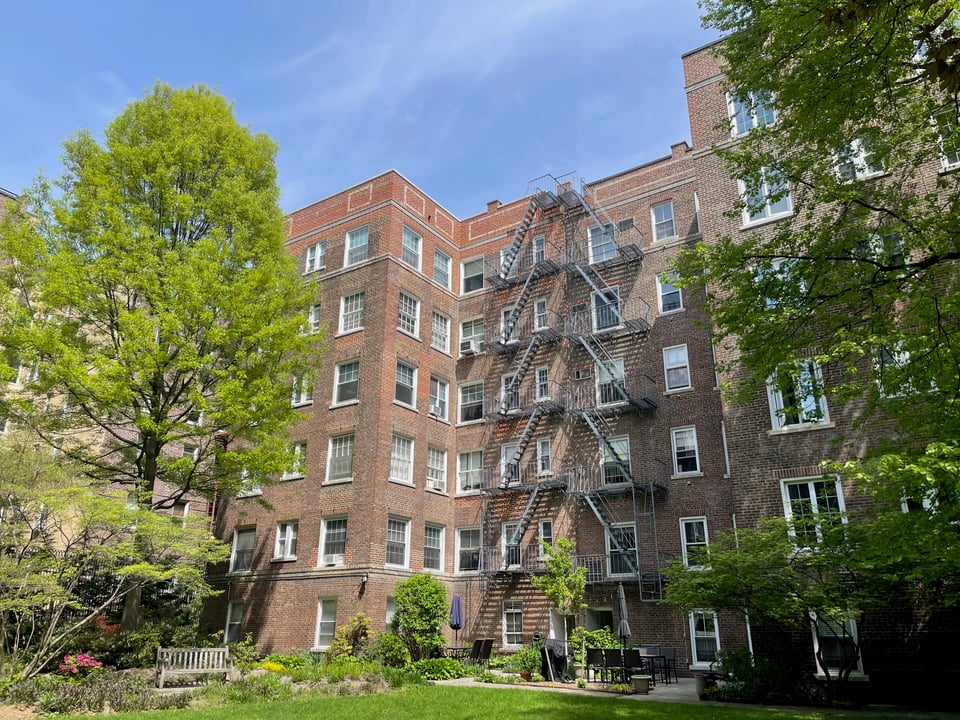
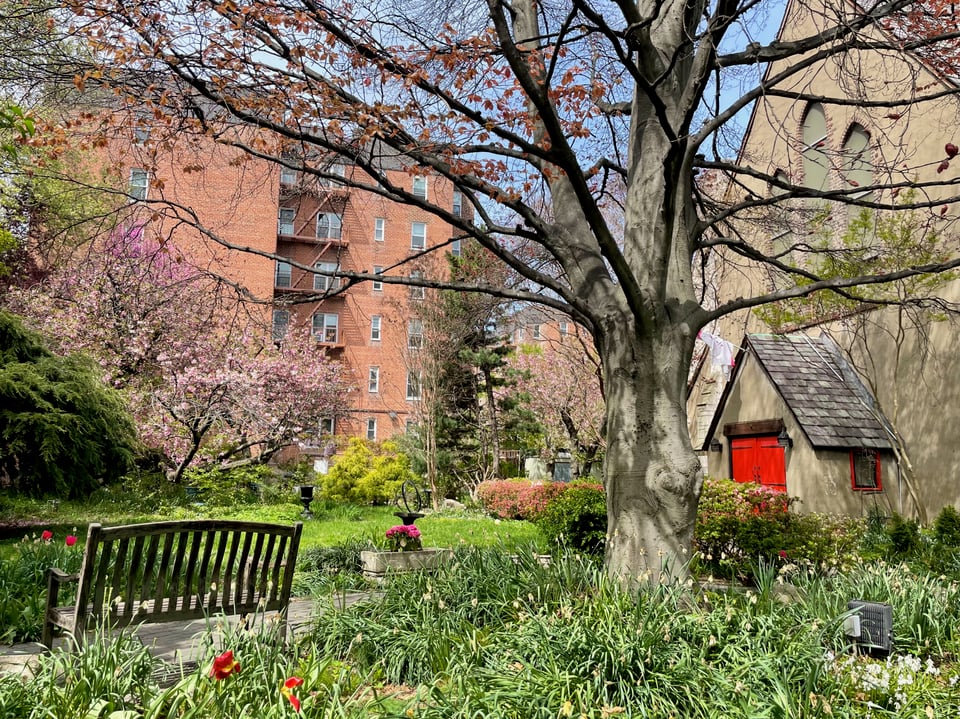
behind the main street lay the most elegant brick buildings with castle-like turrets and interior courtyards made of green and lilac and papery snowdrops, with benches and picnic tables to breathe it all in.
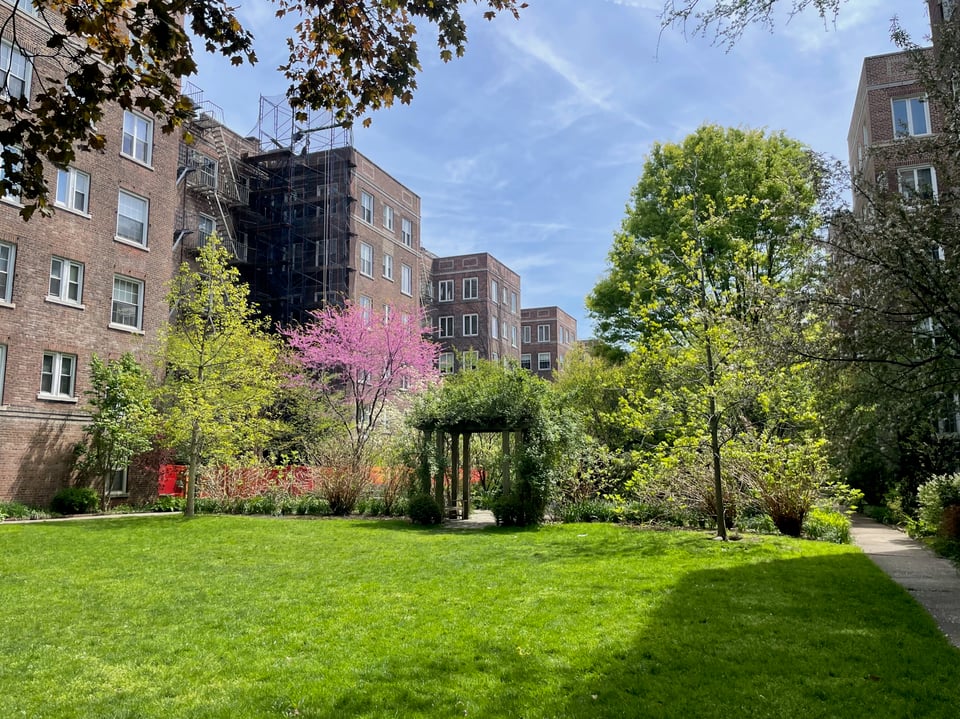
unlike other such stately places, in these buildings all can live. as Mehta tells it, “When I lived there—and the situation is no different now—the owner was Turkish. The super was Greek, the tenants were Indians and Pakistanis, Dominicans and Puerto Ricans, Muslims, Uzbeks, and former Soviet Jews.” still, now they are pushed downward, crowded into basement apartments as “young bakers and tech workers who like having the ability to choose between pupusas and parathas for dinner” move into the neighborhood, per Michael Kimmerman.
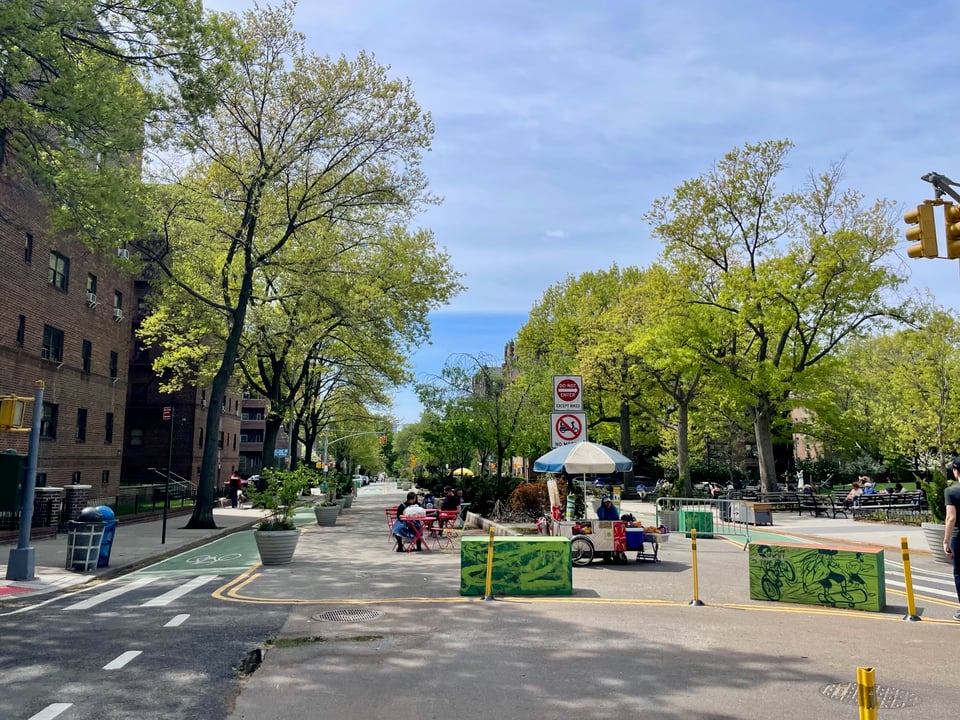
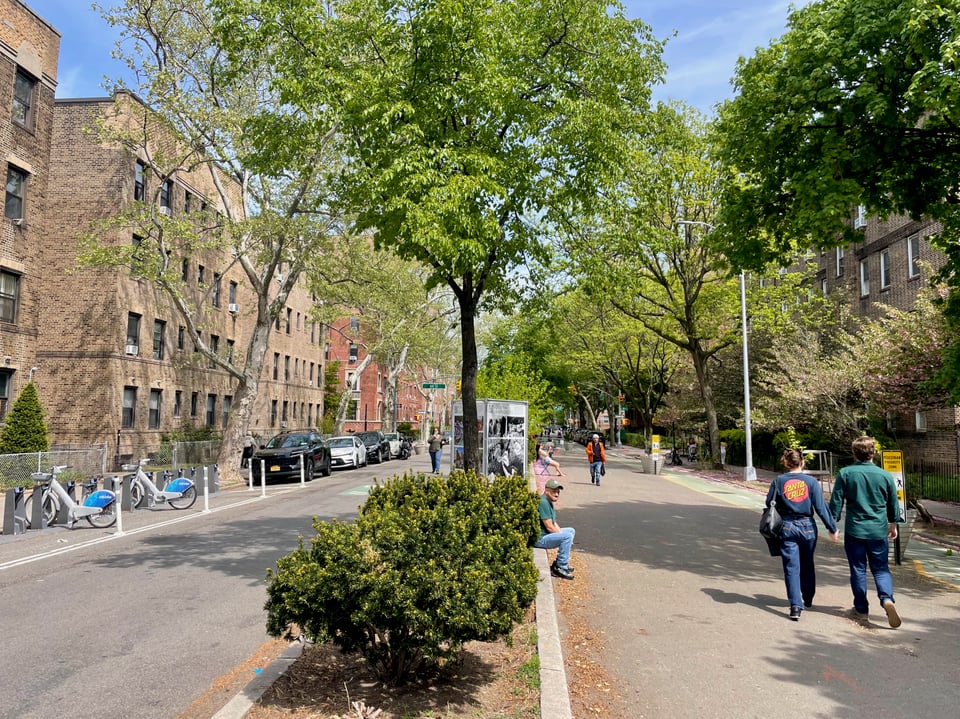
to the north, a 26-block stretch of street was closed to cars to create Paseo Park, where all types people slung their children’s backpacks over their shoulders for the walk home from school, buzzed by on bikes bumping multilingual music, sat for a rest to gossip on the phone, and sold icees under rainbow umbrellas.
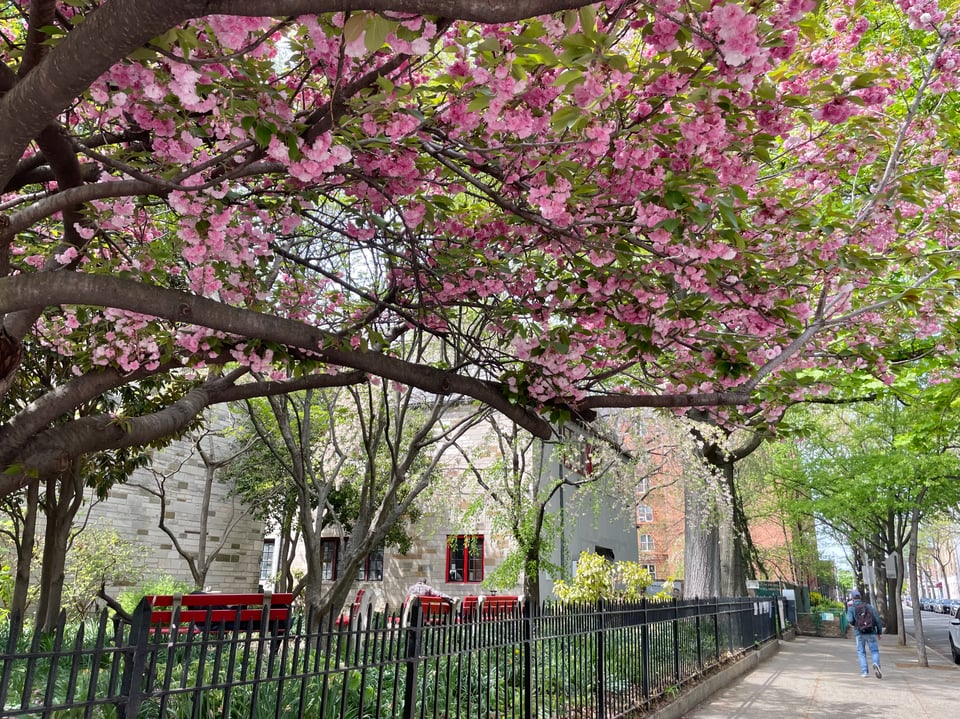
outside a church, the full branches of a blooming cherry blossom sunk overhead. we sniffed. a lady no taller than my shoulders approached, politely and rapidly demanding that Ben, a useful 6’ 3/4”, pick off some flowers for her. her name is Kiran Kataria from Dubai, she told us. she is a food blogger. she takes pictures of what she cooks everyday, and she needed to know what these cherry blossom flowers taste like in tea. she created over 100 recipes to make in a sandwich press. then another 100 for a waffle iron. she was featured in the news, she said.
Kiran Kataria, look me up. Google Kiran Kataria from Dubai. right now! i will, i told her. i pulled out my phone as we waited for Ben to procure her goods. she took the phone from my hands. the letters are too small, she said. press the voice. i tapped the microphone icon and she spoke her name into the bottom of my phone. we found her story in Gulf News, where she shares recipes for waffle-iron poha, Sindhi koki, puran poli. she thanked us and called out to a lady poking through the Little Free Library, her next new friend.
watching Kiran Kataria boss Ben around for her cherry blossoms was a highlight of my trip.
on the plane ride, i’d scribbled in the margins of a paper i’d printed about immigrants to Norway who couldn’t make friends. the authors created the term “interpersonal austerity” to describe people who treat social energy as a scarce resource.
this concept deserves more breathing room, part of my continued obsession with warm and cool cultures, but this is what we have in Portland. people prefer their own company and that of their existing three friends. new connections happen all the time but don’t stick.
i haven’t tried in earnest to make friends in New York, but this dynamic scales down to the daily interactions we have with neighbors and strangers. in Norway-slash-Portland, when a person sees a stranger or even an acquaintance, they assume they’d rather not be bothered than have their humanity acknowledged with a “hello.” cultural values of peace, autonomy, and conflict avoidance undergird this practice.
in New York, i felt the opposite. it is, of course, impossible to smile and nod at every person on the sidewalk. but one lady called to another lady holding a small cactus, brisk tracks halted midstep, “i just bought that same plant!” a small gay man pulled a 6’ 9” (heterosexual) beefcake aside to marvel in joy at his stature and ask about his life up high.
i held open the door for a guy managing an unwieldy delivery of ingredients. he locked eyes and thanked me: “appreciate you, miss. appreciate you.” the next day, an older man wheeled a RoundUp tub into a shoebox of a smoothie shop to spray rat poison along its interior (!). i Tetris-ed myself out of his way. he chummed with the workers and as he headed out the door, he asked me, “did you just go for a run?” “yes, sir!” “great! have a good day. God bless!”
some people in Portland, this notoriously areligious town, may be affronted by a “God bless.” others may find “miss” antiquated and diminutizing. same for the men helping me hulk my suitcase over the subway turnstile. these are the little risks and vulnerabilities we open ourselves up to in order to connect.
i am curious how place—the homes and parks and streets and buses that shape our lives—influences and is influenced by these cultural dynamics, and the politics that follow. the planning pedagogy would draw an obvious line: the more spaces to share, the more we welcome each other. i have a sense that, like other tenets of “good” city planning, additional forces lurk under the surface, working at crosscurrents.
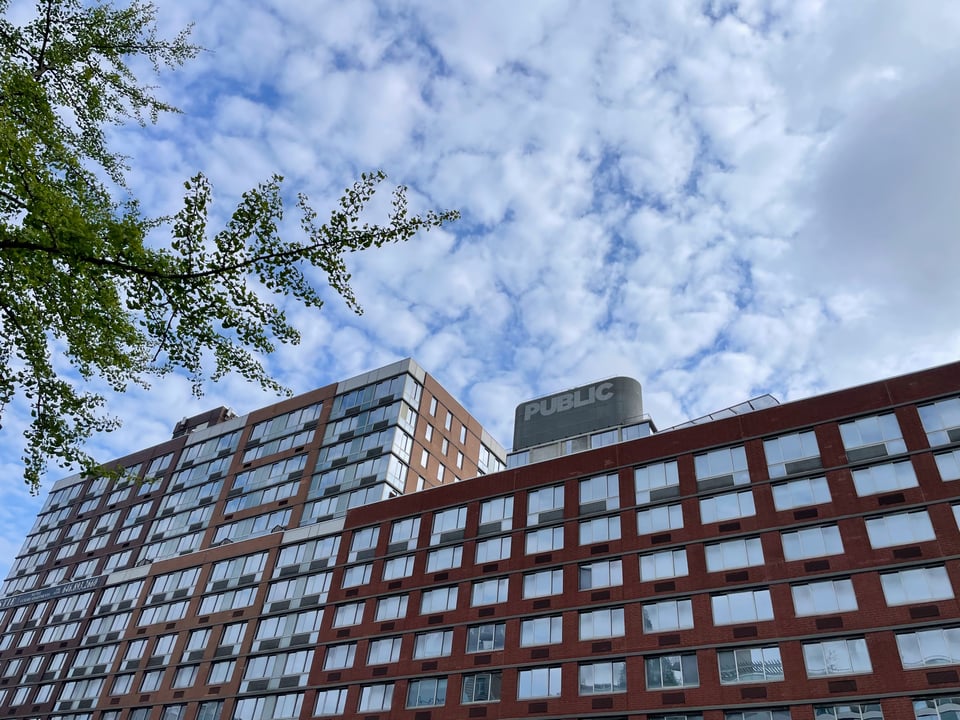
for now, though, in New York, i inhabited some stellar public spaces.
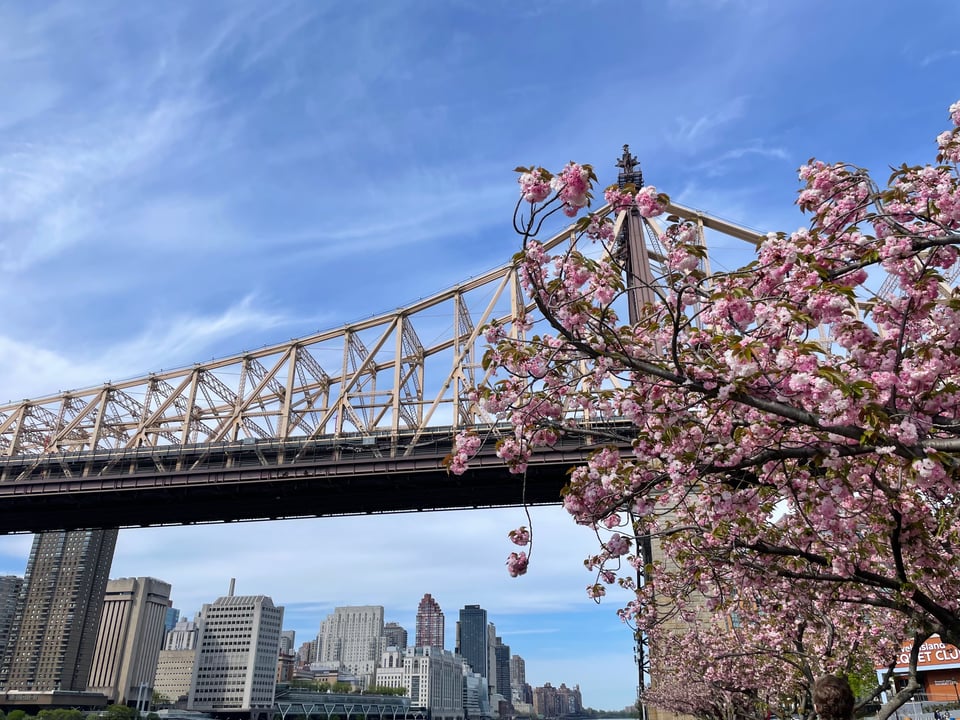
in the type of weather that entrances you, makes you want to give up your whole life and start fresh like the baby-pink blossoms lining the streets, we traversed shining parks at the edges of Manhattan. they overlooked a shimmering river and offered benches for resting under sun rays streaming through bridge cables.
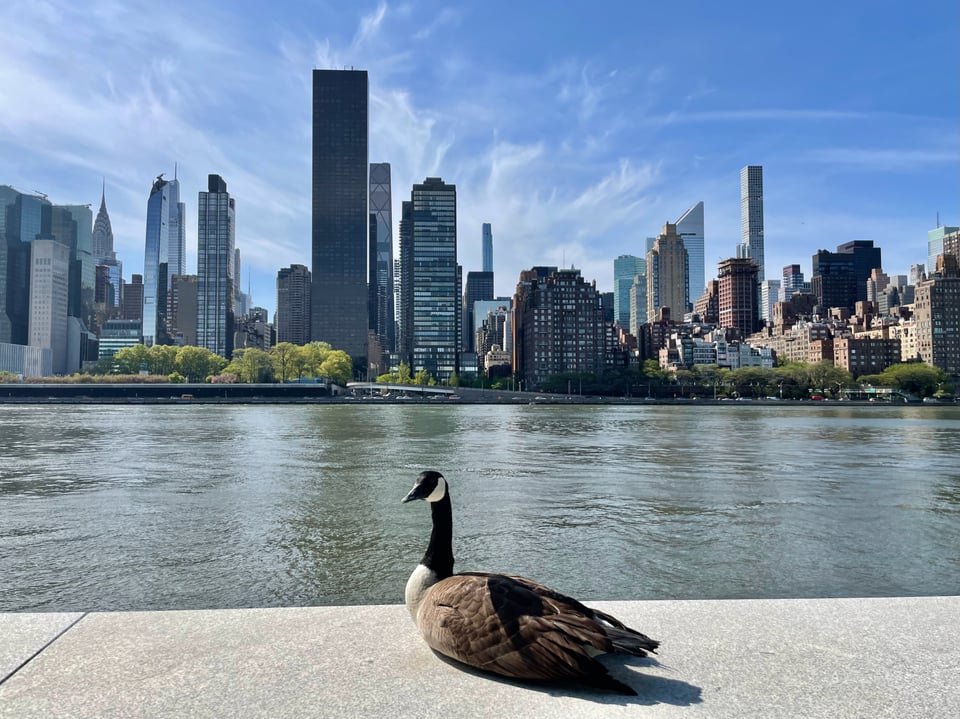
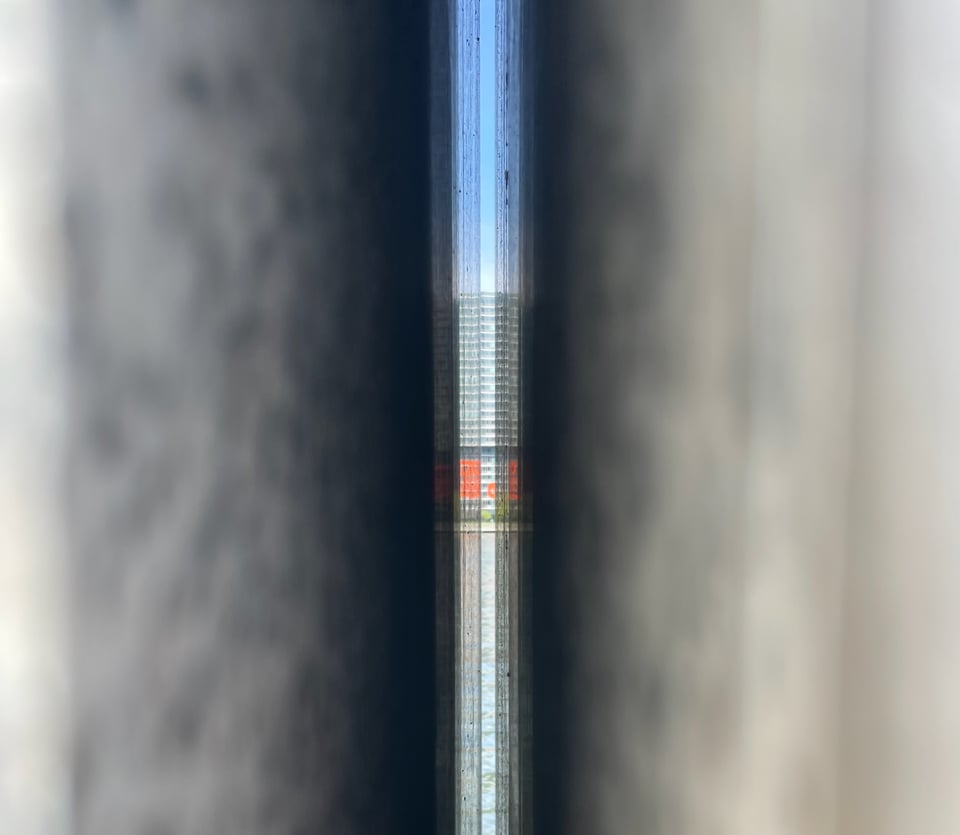
on Roosevelt Island, that oblong mass between worlds, a cat sanctuary and giant slabs with tiny gaps, portals to the east for half your eye.
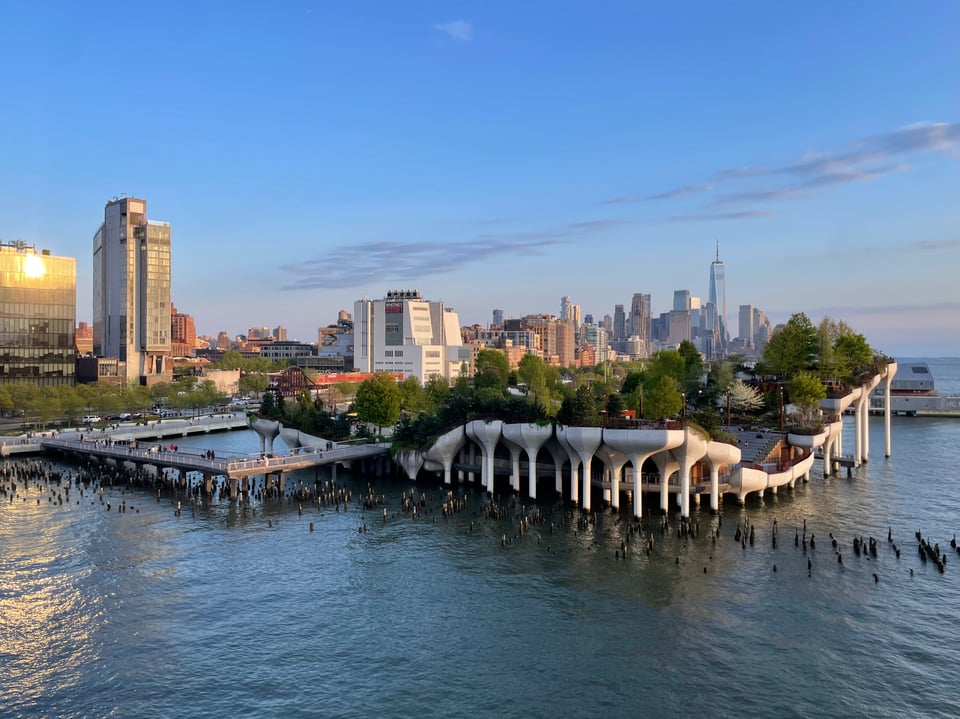
next, a billionaire’s island: Barry Diller, buddy of Rupert Murdoch and husband of Diane von Fürstenberg, spent $260 million building a square plot of “land” out out of concrete tulips, miniature Supertrees, in the Hudson. it’s called Little Island, and it has amphitheaters and optical illusions and a set of tiles that make music when you dance on them.
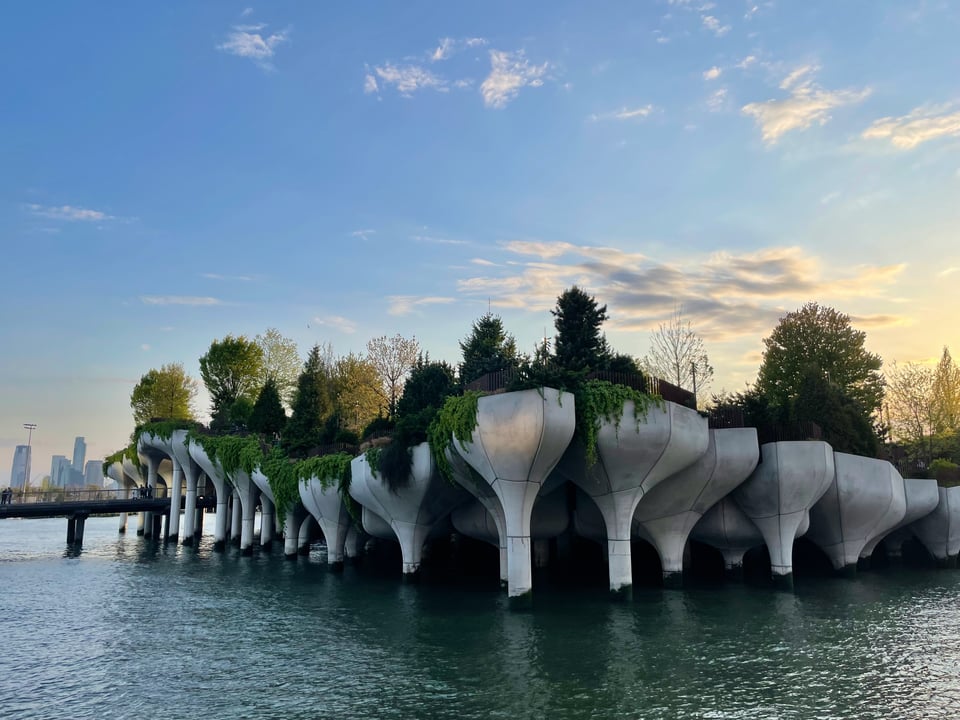
from the top we looked back to the city and Ben, encyclopedic, told me the architect, program, current tenants, and construction maladies of each building i pointed to. if billionaires are going to exist, this is not the worst (if not the best) pet project they could come up with.
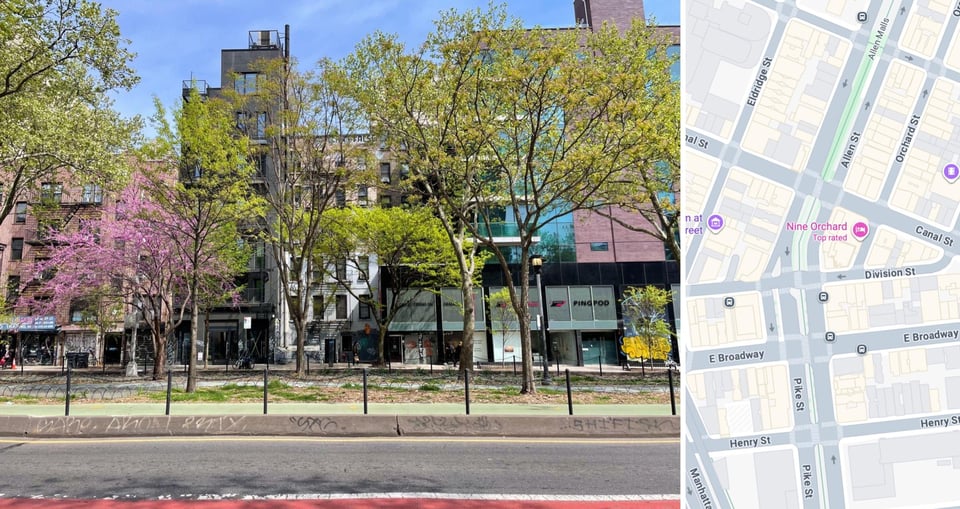
tulips explode from the sidewalk strips in canary yellow, scarlet, and eggplant. in thoughtful places, you can run up the median between honking streets, a linear solace with tables and chairs and piles of crumbled pastries for the pigeons.
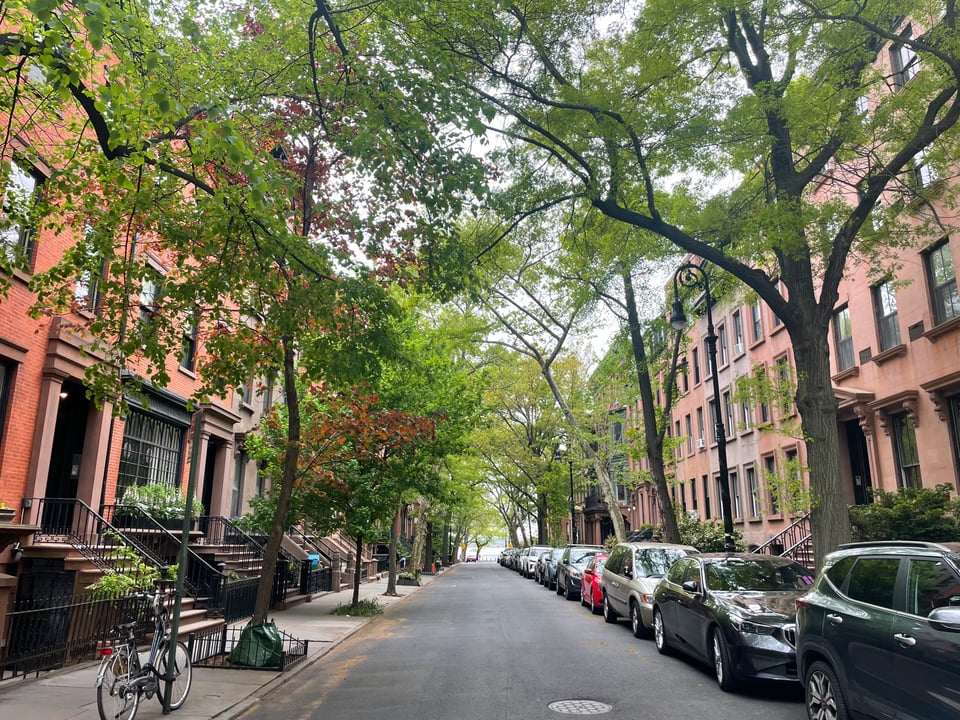
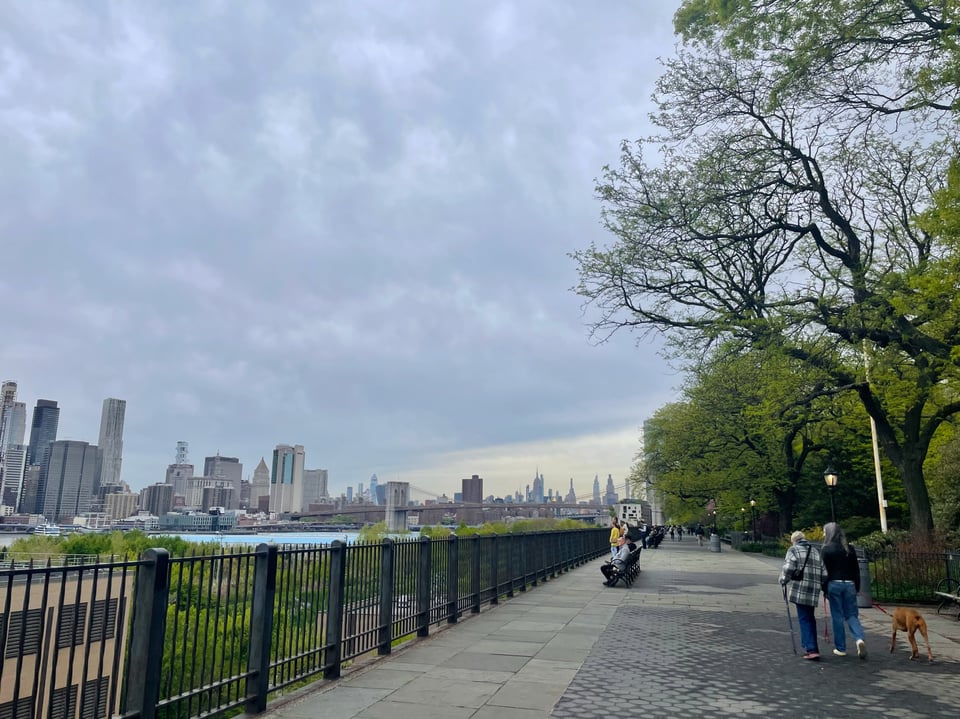
in Brooklyn Heights, rows of perfect brownstones on streets named Orange and Pineapple and Cranberry terminate at a perfect promenade cantilevered over the Brooklyn-Queens Expressway in a way that tames it.
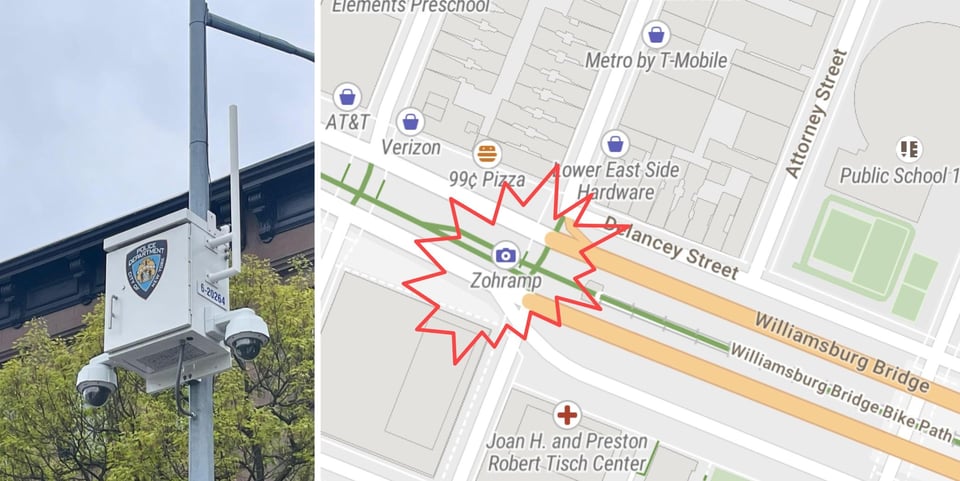
the surveillance state watches over this ritziest of neighborhoods, looming as it does on the subway—vested NYPD officers and sometimes the literal army prowl the stations, quote-unquote “for your safety” per the automated voiceover. what are they doing but sucking red lollipops and tapping at their phones like the rest of us? the difference is that they have a gun at their belt and we don’t. i am not sure Zohran’s stance here. make the buses fast and free, but keep the cops to enforce the non-fares? fix the Zohramp, but keep the cops to ticket the bikers? i assume his attention is elsewhere, or he is making his deals. i maintain that he and his people are our best hope, and, but.
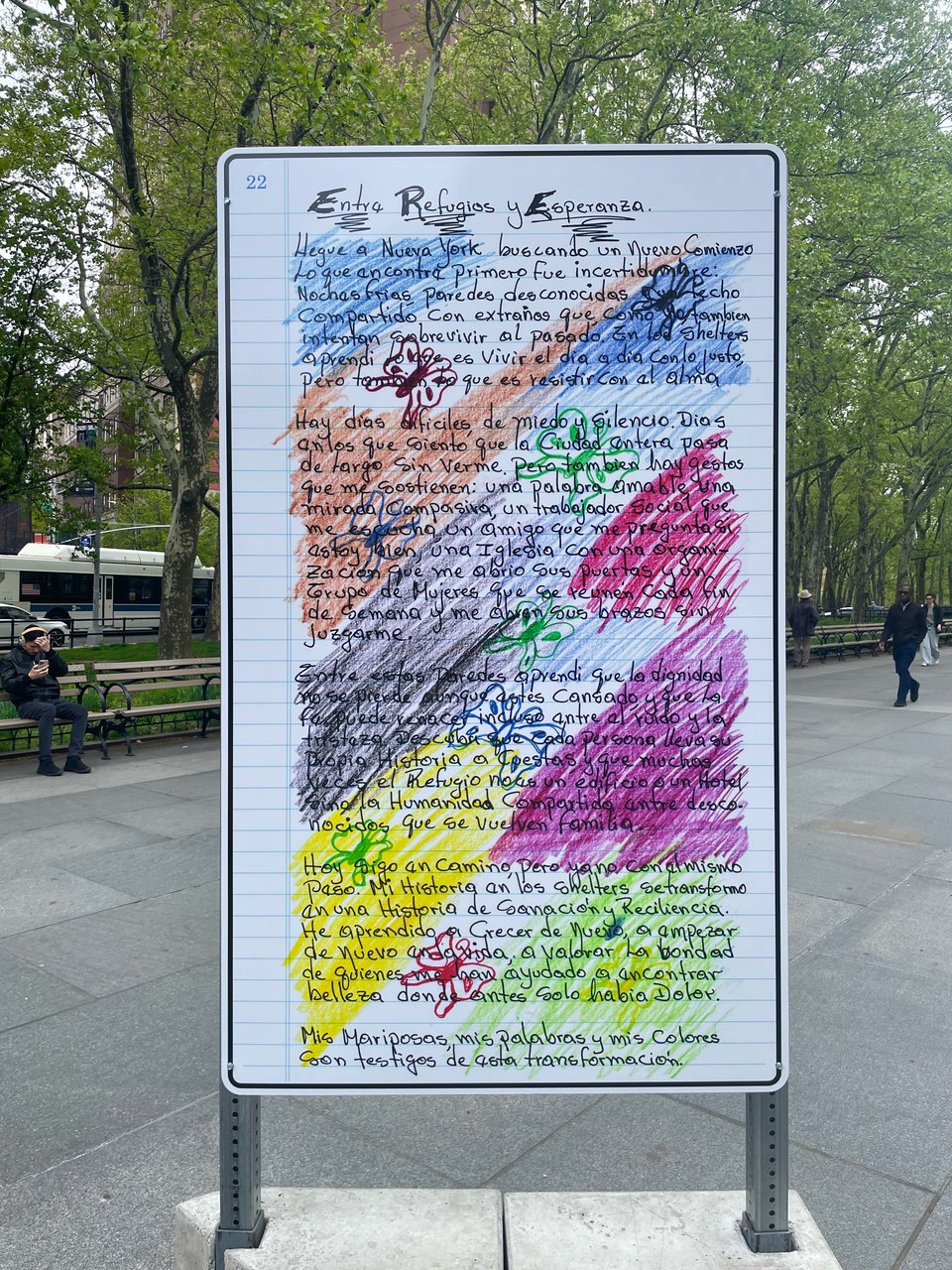
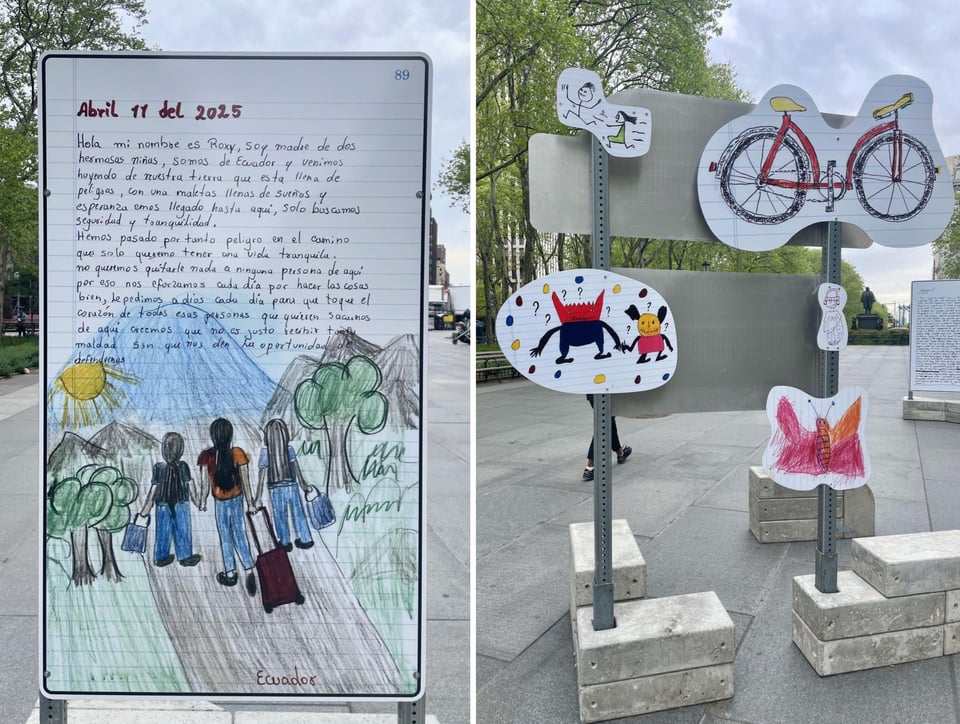
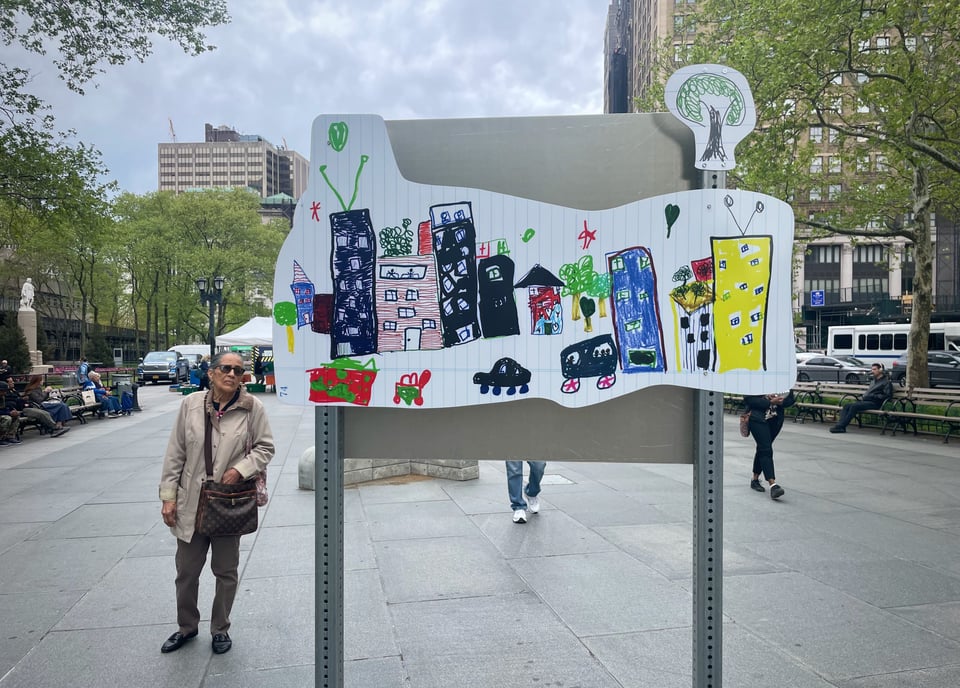
further south, Public Address in Columbus Park. the Artist in Residence for the Department of Human Services interviewed people living in city shelters and blew up their stories on street signs, elevating their art and their lives into public consciousness.
between the parks, food. all types: 24-hour Ukrainian food, Pakistani chopped cheese, Georgian fusion, Punjabi on every corner, midnight gnocchi in a box, arni me avgolemono (only on weekends!), pani puri, Polish, and an establishment simply called “Gooey In The Middle.”
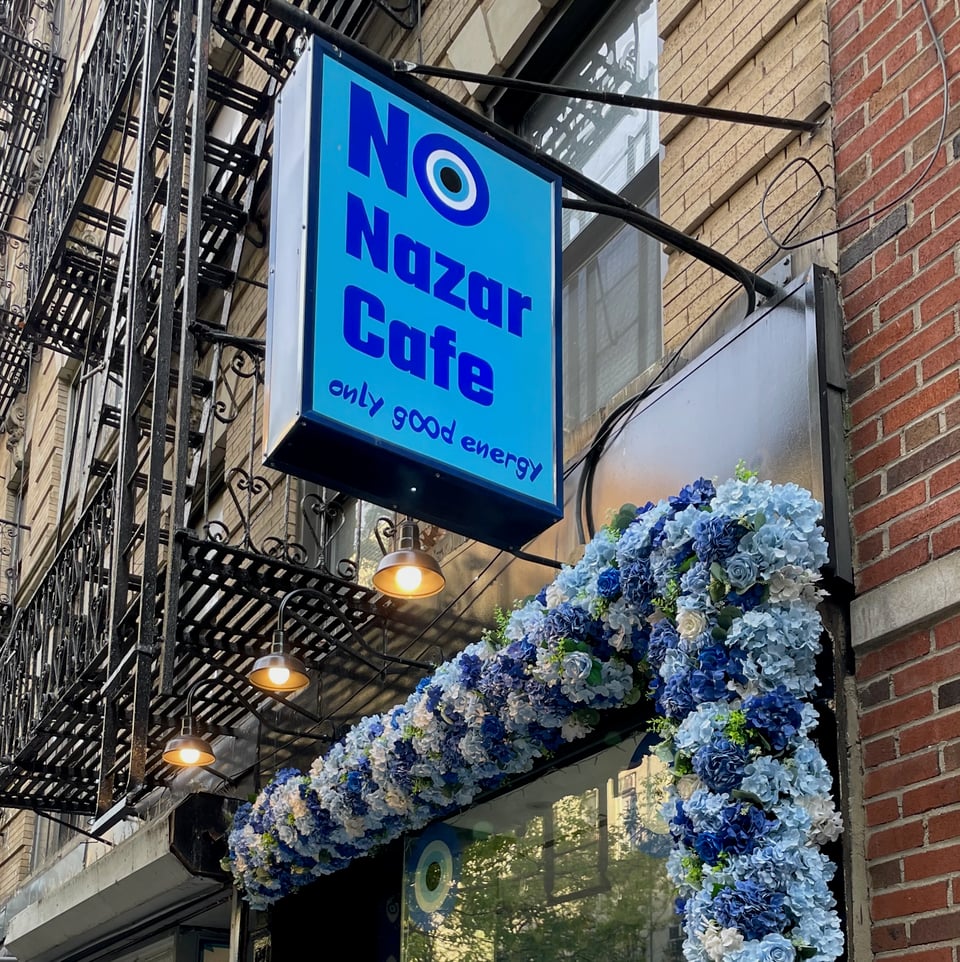
midmorning, five exemplary girlies perch outside on the Bowery, sipping peanut butter Kagoshima matcha lattes and almond butter bulletproof coffees. one of them exclaims, “wait. i just got an email saying i won the Gender and Sexuality Studies Department Achievement Award!“ they cheer. i want to know what these girliest of girls are studying about gender. i want to read all their theses.
i’ve never felt so ugly-duckling as in New York, nor as dirty. not because New York has dirtified me, but because of the Clean Girls, because of the Pilates Girls—the Venn diagram between whom is virtually a circle. the Clean-Girls-Pilates-Girls wear $400 legging sets in beige or mauve. their glossy skin shines with a seven-step care routine and plain-old youth.
the gender-studies girlies wear hats with flowers on them that look like a kindergartner drew it. it cost $48. in Portland, this twee cap is the only one you can find. but here, you can still buy $5 NEW YORK hats on the street. you can buy $1 magnets, $5 tote bags, $10 sweatshirts. behold: MAFIA license plates and cherry-red MAGA hats on the wooden decking of the Brooklyn Bridge, vended by brown and Black people from all over the world.
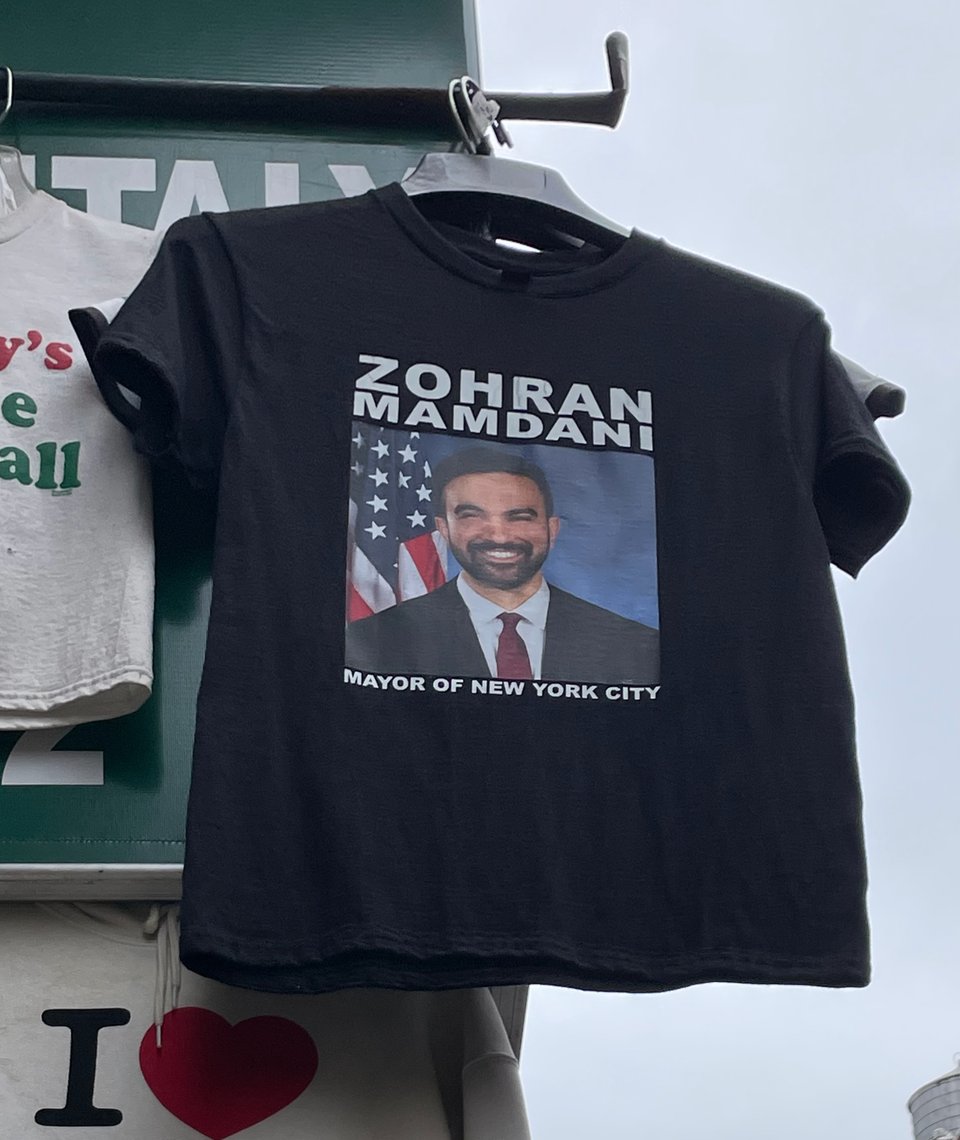
on Mulberry, Zohran Mamdani t-shirts swing in the breeze next to shirts with triumphal drawings of Trump clutching his right ear (“you missed, fuckers!”). all these wares are sold by people wrapped in scarves and masks, people speaking with any number of accents, doing what they must to make a buck from the tourists who would vote against their lives the first chance they get.
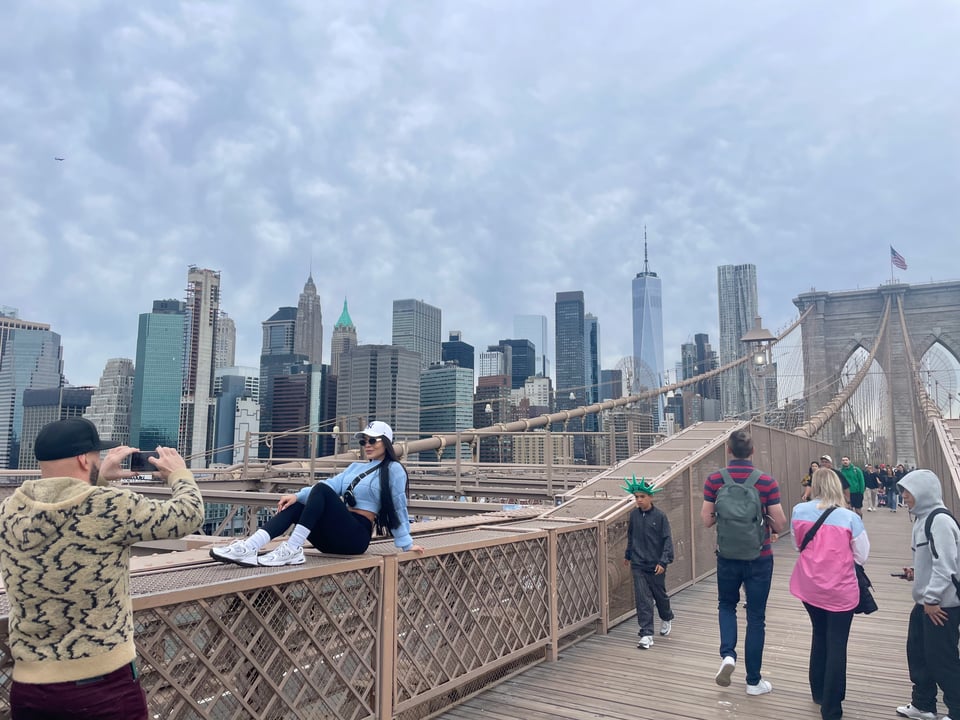
i am interested in pictures of people taking pictures of people. walking over the Brooklyn Bridge, i find them. if i were a photographer, this is the coffee table book i would make.
i would describe the part of Brooklyn you can walk to from Manhattan as sanitized, fabricated, produced in a flash that both ripples time and collapses it—buildings razed and risen all at once, stellar architectures filled with gentrification-slop. the Domino sugar factory, a marvel of reborn brick and glass, and once home to Kara Walker’s reverent “A Subtlety, or the Marvelous Sugar Baby,” houses an Equinox on the first floor.
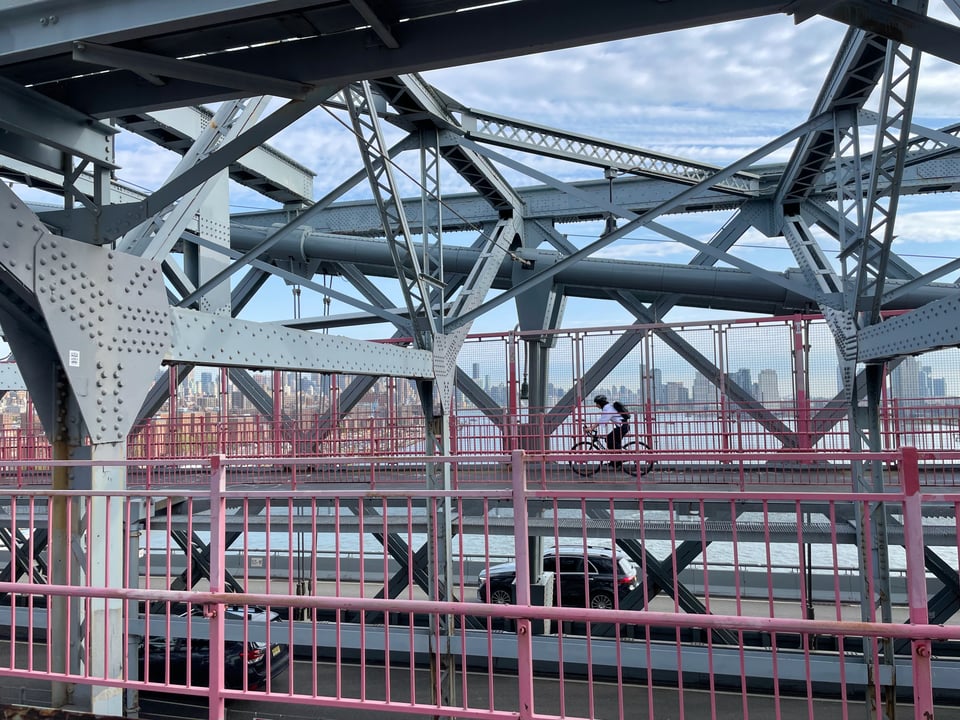
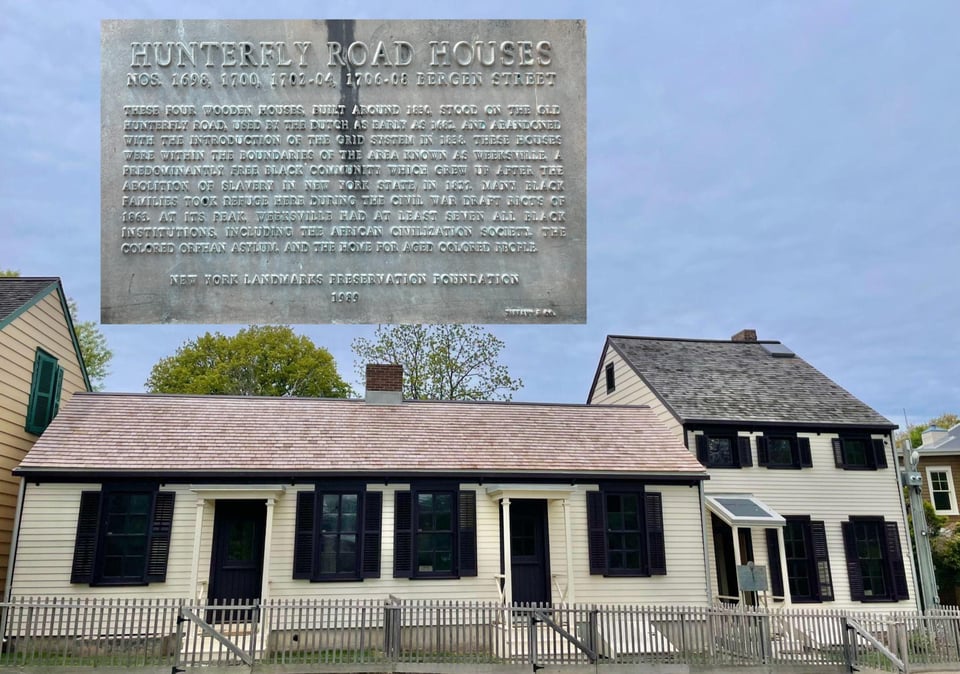
further east, we visited Weeksville Heritage Center, commemorating one of the oldest, largest free Black settlements pre-Civil War, founded in 1838. four houses where families made livings and sought refuge are preserved and surrounded by a meadow and a beautifully architected exhibit center.
in New York, slavery was abolished in 1827, but Black men had to prove they owned $250 of property in order to vote. of the 12,499 Black people in the state, only 16 could vote. Weeksville was an intentional community made to change this reality for more people, a radical and material creation of space.
three weeks out of my last job, i try to exit myself from the field of affordable housing, but i keep getting pulled (or pulling myself) back in.
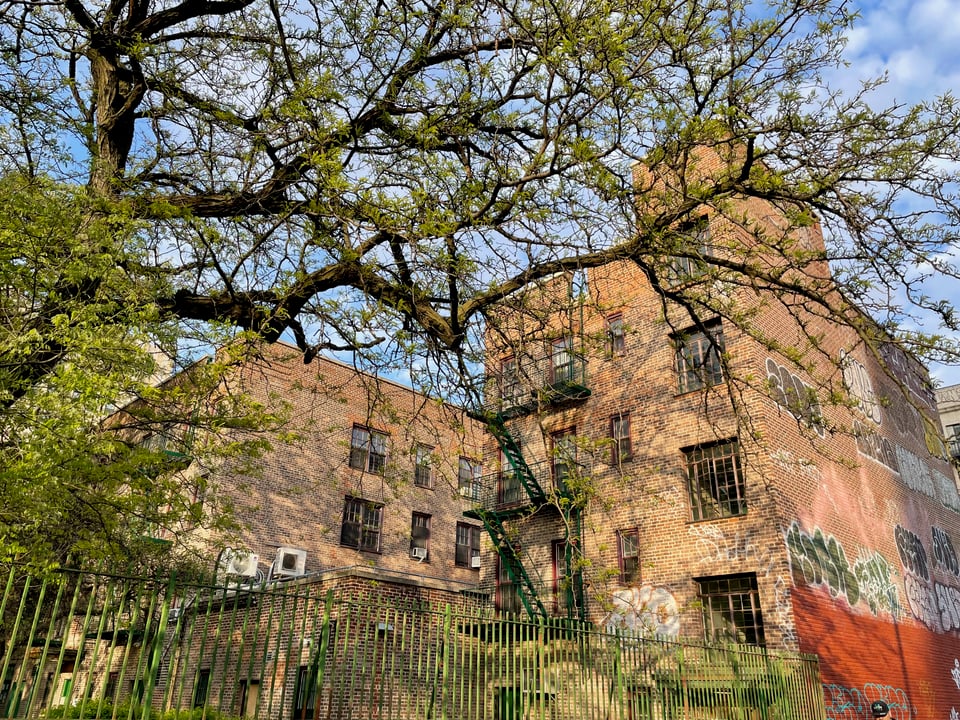
Ben’s apartment in the Lower East Side sits across from the first-ever NYCHA building, beautifully scaled, from before they started building the tower-in-the-sky stuff that didn’t go so well.
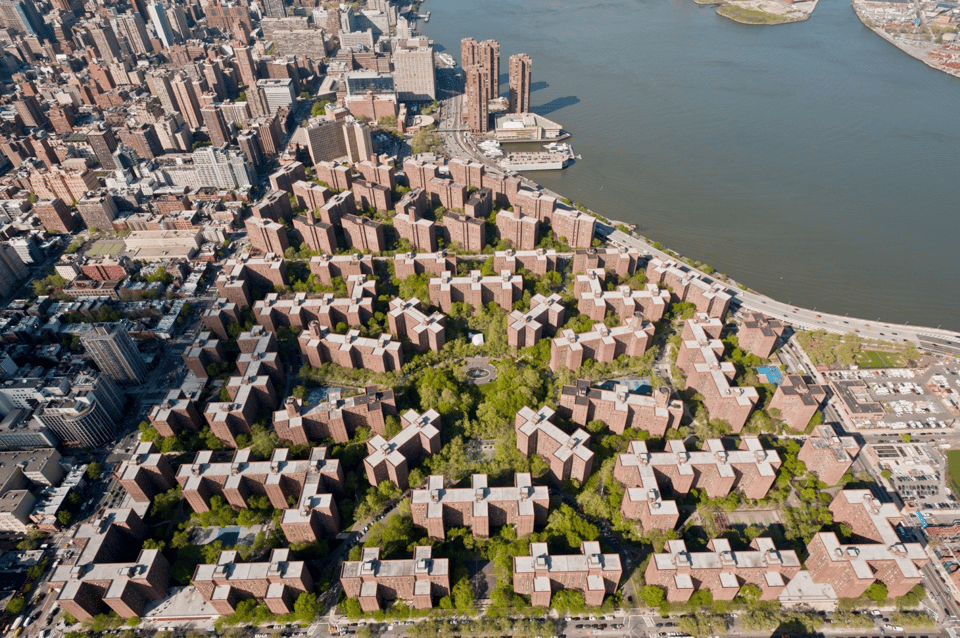
nearby, StuyTown—urbane! a pleasant oval lined with childcare, study spaces, and tree canopy. its 80 acres were built as veterans’ housing after WWII. rent-stabilized, they now creep towards market rate as units turn over.
its marketing (“the comfort and joys of suburbia while living in the big city”) betrays its history as a Moses project: “slum clearance” and eminent domain for private companies strike again!
Moses and his ilk opted not to ban discrimination in lease up, so Black people were not allowed in. see also: the rest of the GI Bill, which shut out Black veterans from the trajectories of wealth and stability that uplifted white veterans for generations.
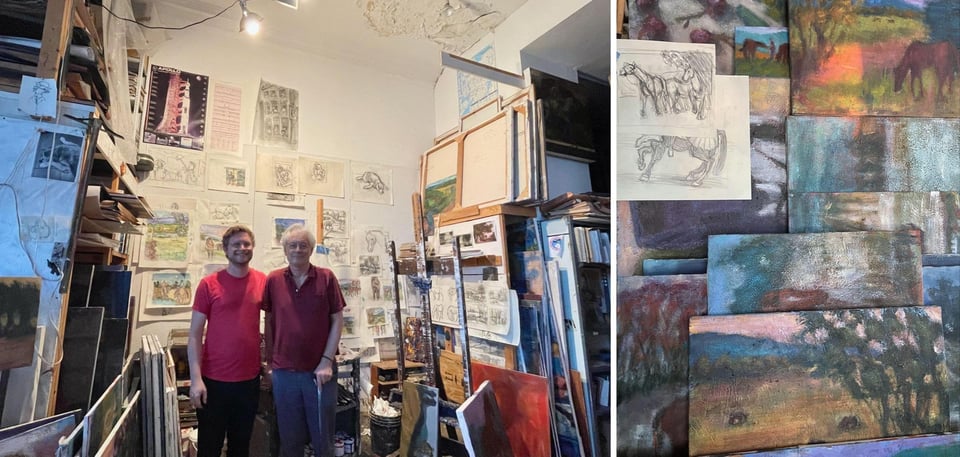
west, another form of affordable housing: Westbeth Artists Community, a coop with its own Wikipedia page where Ben grew up. his mom, a textile conservator for the Met, made us spinach pesto bowtie pasta and i got to see his dad’s studio, full of life-sized paintings of the subway, of horses upstate. i also got to see my friend in his parents, and vice versa.
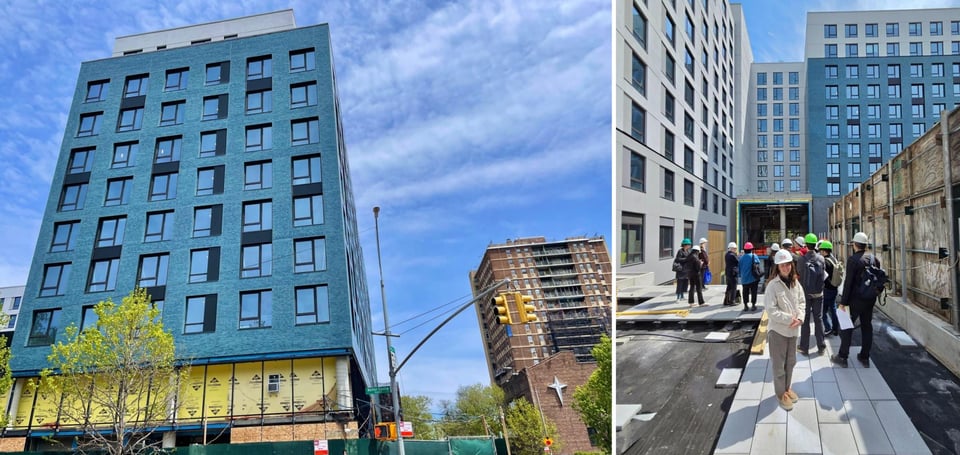
across the East River again, Ben took me to a tour of two affordable housing buildings in in Brownsville and East New York.
in neighborhoods like these, which are three-quarters Black and one percent white, i become self-conscious as this gaggle of hard-hatted architects clogs the sidewalk to umarell at towers growing into the sky.
below the apartments, the storefronts will include some community services—youth employment training, a radio station—but also a a spa and an “Asian fusion” restaurant. says the architect, “how do i say this nicely? there’s nowhere to eat in this neighborhood.”
35,000 applications flooded in for the 233 homes in these glazed blue brick walls. many people need to live here. with these numbers, who in this neighborhood can afford a such a restaurant, described as expansive and upscale, or a day at the spa? these are nice, but they are for other people.
indeed, the locals know this. a man pauses on his bike and asks, “what are you guys gentrifying now?” “it’s affordable housing,” an architect reassures him. “i’ll believe it when i see it.”
one can understand why many weary people believe that new housing, even “affordable” housing, can gentrify a neighborhood (by which i mean attract investment and residents from outside that displace those living there now).
my non-architect’s architectural solution: first, fill commercial spaces with businesses that actually (and only) serve the people living in the neighborhood. second, flip the materials inside out. put the glitzy blue brick from Spain on the interior facades of the building, where residents can see it from their windows and enjoy it when their children play in the private courtyard. move the less fancy facades (in this case, something approximating gray Hardi) to the outside of the building. make the building more humble, more normal; make it stick out less from those that provide home to the rest of the neighborhood’s residents.
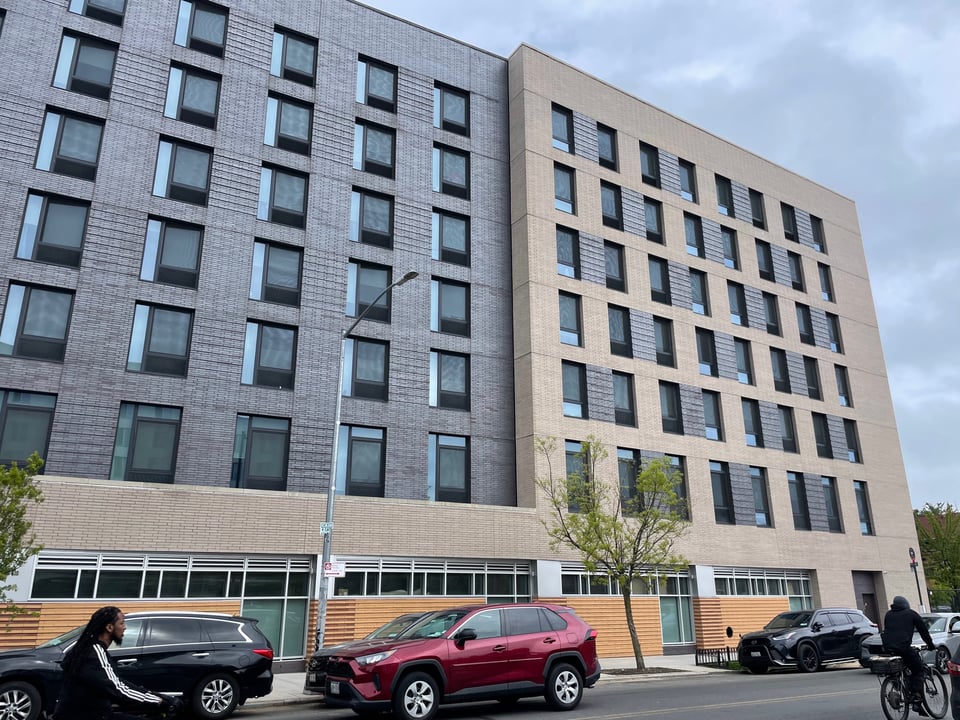
in the next building, the architects built homes over light industrial space in recognition that housing is not New York’s only social problem; rather, people in this neighborhood listed unemployment as #1.
pairing these two uses is a decidedly extreme move, hardly replicable: it required a change to the zoning text for this specific site only. they had to call in vapor specialists, vibration specialists, acousticians. they had to set little fires below the exhaust pipes to make sure they were doing their jobs, not leaking out smoke particles into people’s bedrooms.
i like this building better. the materials are more humble, as in, they don’t try to show off to the other buildings in the neighborhood, don’t make them feel less than. these subsidized manufacturing spaces, where people now build cabinets and other wooden things, got snatched up the day they opened.
i took one thousand pictures of things that simply shocked or delighted me, which we can’t fit here. i also made it upstate to some dearest friends and got food poisoning, neither of which we will get into at this time.
if you have made it all the way here, this is the coolest thing on the internet i’ve found regarding New York City.
New Yorkers: what do you feel and think about your home??? where am i naive, wrong, right, bananas?
bless!
<3
Add a comment: