
lots to say: Don't Give Them Our Word
Language changes, but some words are worth preserving.
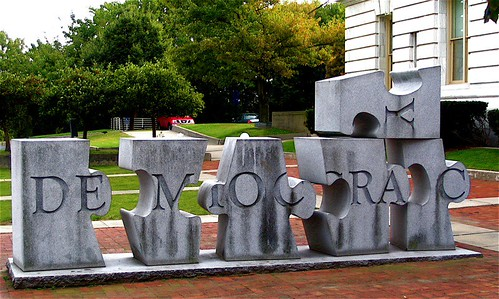
You gotta love the evolution of language. I won’t flaunt my slang appreciation by sneaking in claims that democracy means letting the basics cook, or that rule by aura is sus. I’m Gen X and would fool no one. But it’s genuinely fun to watch words change.
So it’s not from indiscriminate fuddy duddery that I resist some linguistic change. Take the use of “literally” to mean, in effect, “totally.” If a friend tells me their team literally wiped the floor with their opponent, I might enjoy the image of athletes used as mops, but I’ll also wince a bit, knowing my friend probably just meant the game was a rout.
What’s the offense? Not that they’ve strayed from the great and mighty dictionary – no book can freeze English. My complaint is that this use of “literally” takes more from our language than it offers. We’re taking a highly useful, specific word and using it instead to say something we could say with any of a dozen others: really, completely, utterly, thoroughly, truly, etc. When literally no longer literally means literally, and we have no comparable word to use in its stead, we’ve ended up with less capacity to express ourselves clearly. It's a bum deal.
For related reasons, I think we should fight for democracy. Not just the concept but also the word. When the Ancient Greeks coined the term demokratie, it meant something. The word more or less held that meaning for millennia before being co-opted to mean something completely different. We’ve been left poorer.
Democracy used to mean authentic rule by the people. The people chose the rules. Now it means the people, or a slice of them, choose the people who choose the rules. We have a surplus of words to describe contemporary electoral systems: constitutional republics, popular sovereigns, commonwealths, etc. We could easily create more honest ones: competitive oligarchy, electoral aristocracy, pick-an-elite... But having lost democracy in the haze, we’re left without a term reserved for actual governance by the people. It's a bum deal.
We all still get to choose together how we use language, though. I say we bring democracy back, starting with the word itself.
The Ancient Athenians did not create the concept of self rule; that idea extends far into human prehistory. But they architected a rich, scalable system of deliberative assemblies around the concept, undergirding a metropolis that thrived for centuries. And they named it well.
Democracy was a deep design commitment, not a sales pitch. If you asked an Athenian to introduce you to a member of the ruling class, I imagine he’d look at you funny. By definition, the ruling class was the people. Americans today would suffer no such confusion; we know who is in power; it is not the everyday citizen.
The Greeks did not, as many misunderstand, involve everyone in every political decision. They did not, by and large, rely on “direct democracy.” That narrative is likely based on the Ekklesia, a mass assembly where as much of the demos as possible crammed together for debate in a big bowl-shaped hill. So yes, an all-in-one-room forum played a role.
But nearly every other assembly in Athens, including the Council of 500 that approved or rejected the decisions of the Ekklesia, used sortition. Sortition, or democratic lotteries, assigned citizens to various roles. The people – the demos – ruled and were ruled in turn. No perfect exemplar, the demos excluded women, slaves, and anyone lacking two Athenian parents. But within the demos, power (kratos) was extremely well distributed, mostly at random. Lawmakers, jurors, and even magistrates were selected by lot. Positions rotated rapidly; nobody held any given power for long, and everybody got an opportunity to serve.
That is the essence of democracy: the people rule. Not everyone in all decisions, but everyone in turn.
Whenever a small group of people amasses durable power, democracy has given way to oligarchy. So it’s ultimately pretty simple to tell if a system is a democracy. Just ask who is really calling the shots. Is it the people? If so, that’s a democracy. If not, you’re dealing with something else; find another word.
Aristotle surveyed nearly 60 Greek polities, seeking to understand their governance. He noted that sortition was broadly considered democratic and elections were oligarchic. Democratic systems empowered the people. Electoral systems empowered an aristocratic elite.
In other words, when the Ancient Greeks, who gave us the word democracy, looked at systems that worked very much like ours does today, they saw the term did not apply.
Skip ahead two and a quarter millennia to the American Revolution. At the time the word democracy still retained much of its old Athenian meaning. And, as such, it was roundly rejected by the bigwhigs. “Mob rule” decried the convening aristocrats, who instead favored elections, which favored the aristocrats right back.
In fairness, eighteenth century thinkers knew less about the role of lotteries in Athens than they knew about the raucous mass assembly. This skew fed the misconception, still persistent today despite our transportation and communication technology, that true democracy is only viable at a very small scale.
It’s true that a regular mass assembly for the thirteen colonies wouldn’t have made a lick of sense. Ancient Athens was a single city with a population of around three hundred thousand, including sixty thousand or so in the demos. America in the Revolutionary War era had a population about ten times larger and spread across a territory equivalent to three modern Greeces. Notwithstanding highly exclusionary voting rights, colonial America simply couldn’t fit in a bowl.
But sortition, the superior engine of democracy, could have had a role. Yes, lotteries would have proven tricky to implement in large American colonies and certainly in the union as a whole. Only the wealthy could afford to travel long distances to convene. But I certainly suspect the likes of Rhode Island could have pulled it off if they’d tried.
Alas, sortition was never seriously considered as a major tool of American government. The scholarship wasn’t really there to suggest it. The Greeks’ use of democratic lotteries was not well understood until a papyrus with Aristotle’s description of the constitution of Athens was discovered in Egypt in the late 1800s. The founders found far more merit in the Roman Republic than in Athenian democracy. And their vocabulary showed it. They didn’t call the states or the unions democracies; they called them republics.
The word republic may connote elections, but ultimately it denotes the origin story, not the mechanism, of power. The central republican story is that power originates with the people, rather than from, say, a king or a god. But it may or may not end with them. In this sense, democracies are almost always republics, but most republics aren’t democracies. In democracies the power originates with the people and stays there. In other republics the people’s power flows to someone else, for example by electing them. So it was in the young republic of America and in every American state.
At least it wasn’t labeled democracy.
But the term stuck around. Followers of Thomas Jefferson began using “democratic” to describe their populism, even if Jefferson himself avoided the word. (The Jeffersonian party that we now call the Democratic-Republicans was so dubbed by historians who thought that nomenclature would clarify things somehow. They didn’t use the name at the time.)
While contemporary writers increasingly described broad voting rights and populist policies as “democratic,” no founding-father president ever described America as a democracy. John Quincy Adams became the first president to do so in 1825, calling the US a “confederated representative democracy” in his inaugural address. But his successor, Andrew Jackson, really accelerated the word’s bastardization. “Jacksonian Democracy” and its celebration of the “common man” kicked off in earnest the long American tradition of elites offering themselves as vessels of the people.
In Democracy In America, a book first printed in Jackson’s second term, Alexis de Tocqueville further blinged the word, celebrating American town halls with their genuine echoes of the Ekklesia. He also spoke glowingly of citizens democratically solving problems for themselves through voluntary associations. As much as anyone, he helped embed the term in America’s self-image. We ate it up.
America gradually achieved democracy less by evolving their government to meet the ideal and more by devolving the word to describe the government they already had.
By 1861 Lincoln was describing America to Congress as “a constitutional republic, or democracy—a government of the people by the same people.” The redefinition was complete. He cleaned up the phrasing at Gettysburg to suggest America resolve that “government of the people, by the people, for the people, shall not perish from the earth.”
That Gettsyburg line has become one of the best known definitions of democracy, even if Lincoln didn’t mention democracy by name in his address. It’s a beautiful phrase, but the words have never accurately described American governance. We have never had a government by the people.
It would be one thing if we’d warped “democracy” to mean “popular election” and left it at that. But what’s worse is that we pretend the word still retains its original meaning. Even while describing a system of elected rulers, we still assert democracy means rule by the people.
Aren’t elected people part of “the people?” Try this trick with the IRS. Create a charity with a bucket of your own money and say it’s completely “publicly funded” because you’re a member of the public. They won’t buy it.
They won’t buy it, because, in any given context, once someone assumes enough power, they become something other than the public, other than the people. They become the elite, the elect, the select, the few. Elected oligarchs are, of course, people. Some of them are fine ones, no doubt. But they aren’t the people.
But don’t elections mean the people still have the power? The people do have some power. And, to be sure, our system could be much worse. Elections sure beat hereditary monarchy; at a minimum we have a peaceful mechanism to replace unpopular leaders. And most elected leaders, at least the dwindling numbers with competitive seats, at least monitor public opinion.
But choosing doctors doesn’t make you a doctor. Choosing architects doesn’t make you an architect. And choosing rulers doesn’t make you a ruler.
America has a ruling class. We can’t say exactly where the cutoff line is, but state and national elected executives and legislators are in the ruling class, and you and I are not. If the people, by and large, are not in the ruling class, then the people don’t rule.
So no democracy.
To be clear, democratic doesn’t necessarily mean good. The Ekklesia were democratic – and chaotic and vulnerable to demagoguery. And presumably smelly. Referendums are democratic, or at least can be. But they have the same vulnerability to demagogues and no deliberation. I dislike both systems but recognize that they are democratic. For that matter, you can prefer electoral systems and recognize that they are not.
I, however, believe healthy democracy centered around deliberative assemblies selected by sortition, has enormous potential to transform our world for the better. And today there is hope. Civic assemblies are popping up all over the globe, deliberative tech is exploring new ways to facilitate generative discourse, and thinkers like Terry Bouricius, whose new book Democracy Without Politicians can be downloaded for free, are pushing us to explore the possibility of a new flourishing of democracy built from systems of assemblies selected by lot.
It’s easy to get discouraged when you hear how people are losing faith in democracy. I’ve lost faith in it, too, but only in the corrupted version of the word. Elections are vulnerable to partisan warfare and dodgy politicians and ultimately authoritarianism. This is not news. Aristotle knew it. Madison knew it. This is not democratic backsliding; it’s routine electoral pathology.
The answer is to bring real democracy back. Both the system and the word.
We need not be shrill. We will lose our voices if we bark at everyone who describes electoral systems as democratic. But we can start inching toward richer and more honest vocabulary. We can insert “real” (or “genuine” or “authentic”) before “democracy” when referring to sortition systems. We can judiciously insert “so-called” (or “alleged” or “putative”) before “democracy” when referring to elections. We can invite – not shame – others to join us in this linguistic, conceptual, and political correction. It's not about snobbery, it's about remembering what we're capable of. Focus on possibility, not pedantry.
Over time, we can make democracy mean democracy again. We can squash the double speak that describes government by the elect as “government by the people.” And perhaps someday we can really, truly, completely, utterly, thoroughly toss the corruption of the term democracy to the curb.
But not literally. I’m not delulu.
Add a comment: