
I overthought "Wuthering Heights" to deal with my grandmother dying
“Wuthering Heights” (2026) will forever be linked to waiting for my grandmother’s death. With only notifications about her moving from one hospital service to another and her health updates lighting up my phone, I found sitting in a dark room with a single source of stimulation comforting. I knew with absolute certainty that Cathy Earnshaw was going to get off the Lintons’ fancy carriage, the servants were going to be amazed by her red-and-white embroidered dress, and she would look to the decrepit roof where Heathcliff was a second before.
All this to say, I saw this movie five times in 10 days (I have an unlimited cinema pass) and then handwrote 24 pages of notes. I read many takes that made me feel stupid, because one particularity of the “WH” discourse is that it isn’t just about liking or disliking the movie – it’s about anyone enjoying it being illiterate and too dumb to appreciate complexity. People have dedicated thousands of words and podcast minutes to explain all the ways this movie asks us not to think. I have been chronically online for 20 years, so I should know better than to take the tone personally, and yet this one sent me into a tailspin and made me wonder what I was missing. It is far from the best movie ever made, but it is also not the worst. It definitely made me think a lot.
The translations
I first read the novel in its 1925 Frédéric Delebecque translation, in my early teens, right after I read Jane Eyre. I remember the weather, the ghost and the grave scene, but mostly I remember the smell of the paperback which had spent too long stored in the cellar. I picked it up again this Christmas, and the smell is still there. The movie doesn’t have the same smell, although it’s a movie that smells.
Now let’s loop back on Delebecque because it turns out the man was a piece of work. He co-founded a pro-monarchy, far-right magazine and was a known antisemite. His translation of WH was first published by a far-right publisher. So exactly the right person to translate the themes in Brontë’s novel.
His is one of 15+ French translations dating back to 1892, the most recent published in 2024. Most of them were done by men. There is a 1937 translation by an aristocratic couple, republished in 2015 with an introduction by Patti Smith (only the husband has a Wikipedia page).
Every French translator does their spin on the title, with levels of luck – their own version of Emerald Fennell’s quotation marks. Patrick Reumaux (2024) translated it as “Les Hauts de Hurlebise”, a play on the word “bise”, which can be both a biting cold wind and a small kiss. The 1892 translation was titled “Un Amant”, “A Lover”, because the is-it-a-love-story debate has been going on forever. However, Warner Bros. didn’t own up to it, cowards, and released it as “Hurlevent” in France, which means “Howling Wind” and was part of Delebecque’s title. Shudder.
Nelly as the villain
Nelly is the villain of this movie. There is a 1958 article, “The Villain in Wuthering Heights” by James Hafley, which argues the same point and which Fennell references in a scene analysis for Vanity Fair.
Fennell’s Nelly doesn’t just stop Cathy and Heathcliff from being together; she actively causes Cathy’s death by doubting her miscarriage. Nelly isn’t the unreliable narrator in this version; instead, we are all the unreliable viewers because there are so many weird elements in the movie, from the huge strawberry to the emptiness of the moor skies, that we never know how real any of it is. Plus, Nelly tells the whole first part of the novel to a feverish Lockwood, so for all we know, he is making this up anyway.
Movie!Nelly is the illegitimate daughter of a Lord. She lives in the Earnshaw household as Cathy’s companion. She is Cathy’s only friend and vice versa until Heathcliff arrives and disrupts that dynamic. She likes to read and by the time she is grown up, oversees the household. She knows what it means to be unwanted, as her father hid her, and Heathcliff’s presence means Cathy spends less time with her.
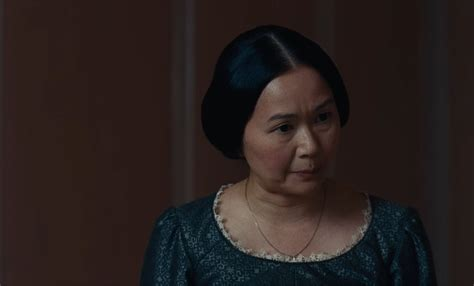
Although Fennell cast Hong Chau, an Asian-American woman, in her fantasy world, none of that rejection comes down to race. When Earnshaw tells Nelly that they ignored the fact she wasn’t top drawer, I think he refers to her birth rather than her race. The problem is that the sentence is about the two people of colour cast (Linton being the other one, more on that shortly), which introduces an ambiguity that probably falls in one of Fennell’s blind spots.
I don’t think there is anything sapphic between Nelly and Cathy, although some reviewers have read it as the only woman of colour and queer character being the villain. I read Cathy’s jab at Nelly after Edgar Linton’s proposal that no one has ever loved her as a reference to her family and proof of Cathy’s cruelty more than anything else.
Nelly wants Cathy to marry Linton because he is, objectively, the best outcome. Linton has the funds to take care of the Earnshaw household, both Cathy and her companion. As Nelly says, once settled at Thrushcross Grange, what is there to complain about? For likely the first time in her life, she is warm and comfortable and can dedicate herself to reading. The next logical step is that once the Lintons have children, she becomes their governess (there is something very Franco Zeffirelli Jane Eyre about Nelly at the Grange). So, when this safety is threatened, it is only logical that she wants to protect it at all costs. Of course, this backfires spectacularly.
One of the best lines of dialogue in the whole film takes place when Cathy fires Nelly because she learnt that Nelly knew Heathcliff was listening in on their conversation about her marriage to Linton. “You like to see me cry”, “Not as much as you like crying”, Nelly replies. Cathy as Fennell wrote her is absolutely that woman, except there is nothing in the rest of the movie that backs it up. Adult Cathy cries once, when she accepts Edgar’s proposal and realises she needs to let go of Heathcliff. She is angry and jealous and often stares into the emptiness of her life, but she rarely cries. Of course, because of the actors’ race, there is a whole subtext of white women's tears, but I don’t think Fennell demonstrates any evidence of being aware of it.
The character of Linton
Fennell chose to ignore the novel's race theme in her adaptation. Not only is her Heathcliff white, but he is not white in a way that was racialised and would have othered him at the time (some scholars argue that Heathcliff might be Irish). She pretends to do race-blind casting, and aside from Chau, cast Shazad Latif, a British-Pakistani man, to play Linton. A bit like Bridgerton, Fennell decided not to question what these casting choices mean in terms of colonialism, slavery or racism in the world she built.
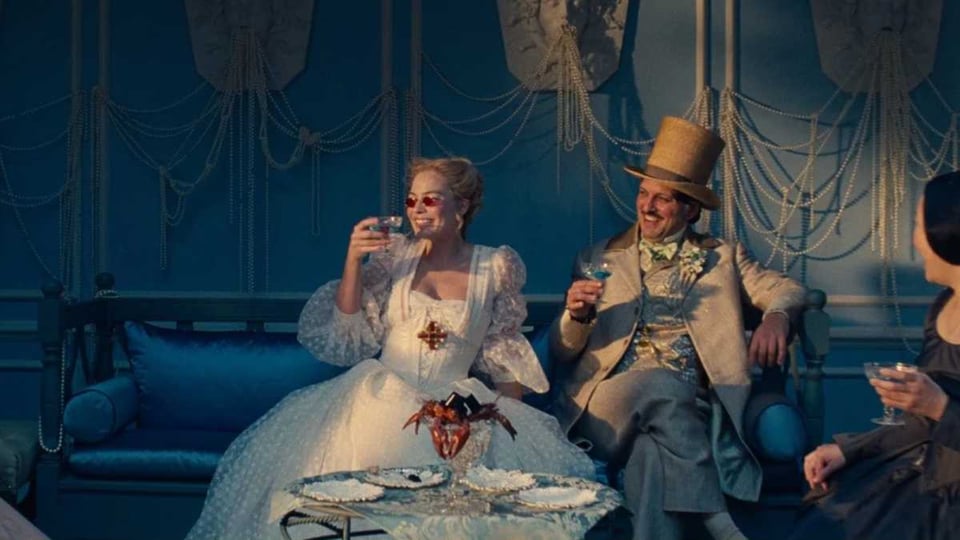
I personally thought that the Lintons, Edgar and his ward (not sister) Isabella, were the most decent people in a cast of terrible characters and two of the people I ended up empathising with the most – which fits with Fennell’s general take on class and wealth, the people you are asked to empathises with in Saltburn are the titled Cattons who have middle class people coming for them. Some people are criticising Edgar’s characterisation as an idiot cuckolded by his wife and a poor sexual partner.
Cathy does cheat on him, but that is a reflection on her, not him. He is clearly besotted with his wife and determined to give her all she wants. He probably sees her as a better person than she is (whereas Heathcliff sees her for exactly who she is, and that is part of the appeal). I do think that Cathy is at a minimum fond of him – “one could not help but love Edgar”, she tells Nelly after his proposal, and this clearly refers to his wealth, but it feels like she gets to rely on him emotionally in at least some ways.
Edgar doesn’t know Cathy is having an affair until Nelly tells him, but I don’t think the affair lasts that long; I think we see on-screen every time they have sex (so seven-ish times). My best guess is that between Heathcliff’s return and Cathy’s death, six weeks to two months go by, and their actual affair lasts two weeks in the middle. Cathy’s body doesn’t change enough for Heathcliff to realise she is pregnant.
When Edgar learns of the affair, he is angry but also gives his wife a great deal of grace and understanding. He waits until the next morning to confront her, which seems very mature, and he makes her understand he knows without humiliating her. Later, when they are reading in the parlour, and Heathcliff breaks a window with a stone to warn Cathy he’s there, Edgar knows his wife is not going to rescue a sparrow, and yet he lets her go out – there is also a lot in that moment that passes between them as husband and wife. When he sees Heathcliff right after Cathy’s death, he still tries to protect him. “You didn’t want to see”, he murmurs to Heathcliff’s back. A lot more could have been done to build him up, but then a lot more could have been done to build up all of them.
A lot of the movie doesn’t back itself up
The opening credits are a wonderful stop-motion animation of Margot Robbie and Jacob Elordi’s hair growing towards each other. The hair in the movie tells the evolution of the characters – Cathy has her hair down when she is at the Heights, a variety of complex hair-dos at the Grange, and then as she is dying her hair is down again; Heathcliff starts with a bushy beard and long hair and comes back clean shaven and with short hair (hair & make up called the two styles “Jesus Elordi” and “Darcy Elordi”). There is an unsettling scene where Isabella presents Cathy with a doll made with her real hair, which she stabs later, because the imagery of death follows Cathy around. But most likely, the opening credits reference the hair locket Book!Cathy wears, which first contains Linton’s hair, then Heathcliff’s, and then a braid of the two. Here, it’s just a nice animation, one of the many winks Fennell gives to the novel without much follow-through.
Another one is Isabella first spotting Cathy spying over the wall and thinking it’s a ghost. No Cathy ghost ever materialises; although alive, Cathy increasingly takes on the appearance of a ghost. There are a few instances where her makeup looks super white, such as in the blue parlour when Heathcliff visits, and when her health takes a turn for the worse, she starts looking otherworldly.
And then there is Heathcliff, who never backs up his awfulness in the movie. “I am rough and cruel and cold and unfeeling”, he warns Isabella by way of a marriage proposal, but like – is he? Not that Fennell’s Heathcliff is the best man alive, but he is also not the vengeful and violent person he is in the book. He breaks a chair and a window. He says he would kill Linton, but I never felt it was a real threat. It feels like Fennell is too attached to her fantasy of the character to make him who he needs to be. His main personality trait seems to be “in love with Cathy” although it’s never fully clear why, aside from the fact she is the girl he grew up with. She is never that nice to him. He is rough in that he is uneducated, but he is also the only person who gets to leave the moors during the film. He is cruel because marrying a naïve young woman to spite your lover is cruel, but Fennell wraps this in so much consent that it doesn’t feel that cruel. As for cold and unfeeling – again, his only motivation throughout the movie seems to be his love for Cathy.
The hell/paradise motive and fairytales
When Cathy, sitting on the floor, tells Nelly that their wealthy neighbour Edgar Linton proposed, she says she would be extremely miserable even in heaven because she would be homesick. Nelly replies that she isn’t worthy of paradise anyway. Apparently, Brontë took inspiration from Milton’s Paradise Lost, which I haven’t read. I can still see the paradise/hell motive Fennell is playing with. For Cathy, the Heights, her drunk, gambling and abusive father and their descent into poverty are hell. “We are all ill because of you”, she shouts as he stumbles through the dark courtyard – one you enter via a tiled doorway, a motive Fennell loves. She uses doorways to frame key shots and moments in the characters’ lives: a Gothic arch for child and adult Heathcliff and Cathy, another arch when Cathy cries on the staircase over Heathcliff marrying Isabella, and another door to frame Cathy’s death. It gives the whole thing a stage-like feel and contributes to the movie never feeling quite real.
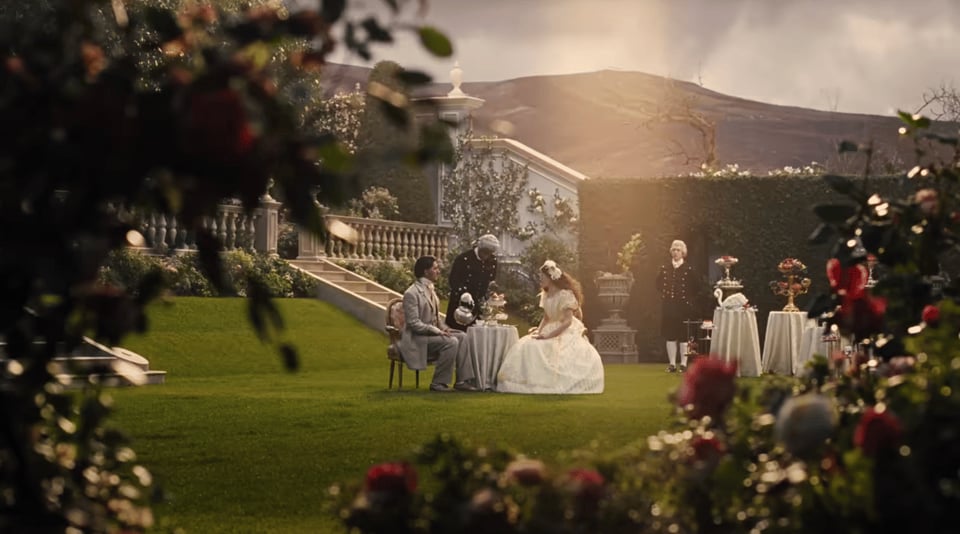
If Wuthering Heights is hell, Thrushcross Grange is Paradise, one Cathy can marry into to access two things society is applauding: marriage and wealth. The first time we see the Grange through Cathy’s eyes, it is lit by the sun, as if it has its own micro-climate. The flora there is lush and, in contrast with the harsh red, black and white of the Heights, the colours are pastels. The weather is present, but until Heathcliff’s return in the third act, there is no howling wind. The snow looks like it came from a chocolate box painting. There is even a true blinding sun; people have to wear straw hats, and Cathy puts on rose-tinted glasses. The rain only falls when the inhabitants of the Heights come down to the valley, whether it is Joseph announcing Earnshaw’s death or Heathcliff upsetting the peace.
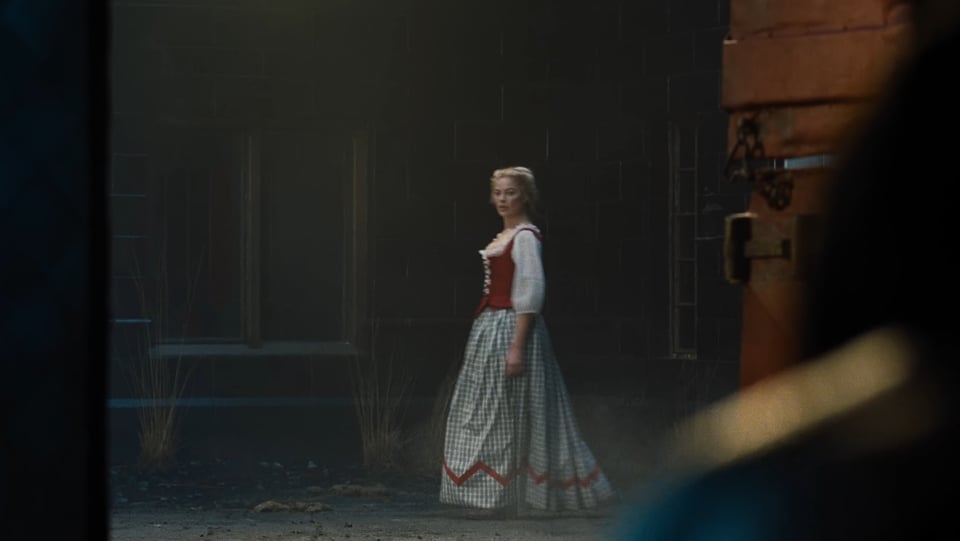
When Cathy walks to the Grange for the first time, she is dressed in a gingham blue dress with a red corset – Costume Designer Jacqueline Durran said in a talk at the V&A that this was the hardest dress to create. It evokes milkmaids and Alice going to Wonderland, especially when combined with Robbie’s blondness. Cathy walks through brambles to get to the Grange’s walled garden, which also echoes The Secret Garden. There is a swing in the garden, modelled on Fragonard’s painting.
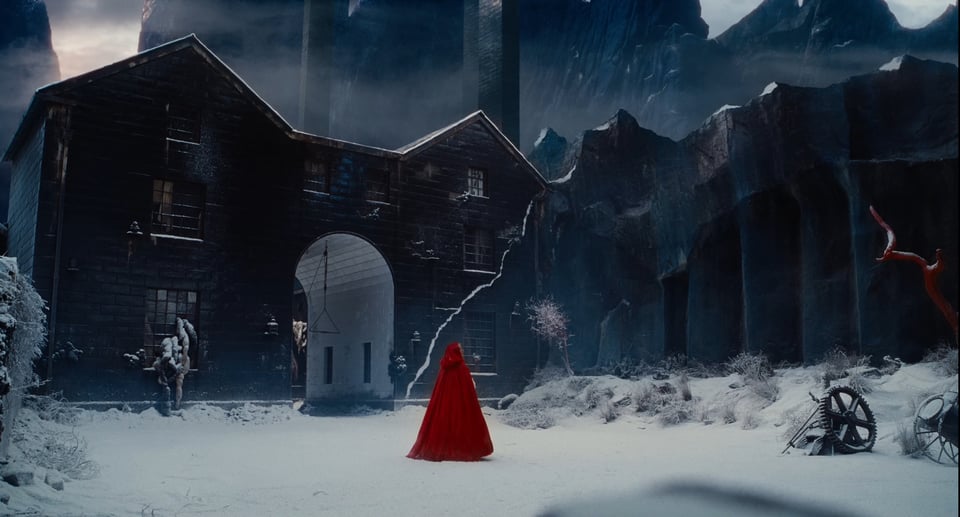
Later, when a married Cathy goes back to the Heights, officially to wish her father a merry Christmas but really because she misses Heathcliff, she looks like Little Red Riding Hood in a stunning red cape. Her father is the big bad wolf—the shots emphasise his teeth.
When Cathy confronts Nelly about her treachery, she does so wearing a dress that looks like all the evil Queens in fairytales, all black lace and red ribbon and the whole library is lit in hellish red. Cathy embraced the two things she was told would make her happy, but neither did and she is back in hell.
Nature encroaching
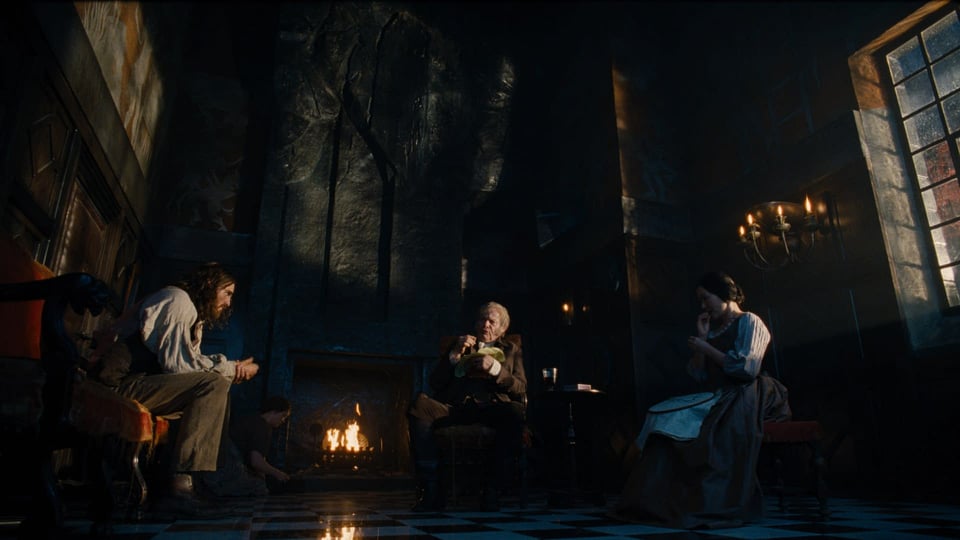
It goes with the Gothic and the title, and so in “Wuthering Heights”, the wind howls, the rain pours down, and the mist rises. Nature is elemental, unhospitable and violent. There are black rock formations on the moor in the opening credits that look like they belong in a high-fantasy movie. There are black rocks breaking into every room of the Earnshaw household, taking the space of furniture sold as the father gambled the fortune away. There is a great shot in the Earnshaw parlour where Cathy’s father relays his first trip to the Grange to see his convalescing daughter and wonders at the Lintons’ parlour made of crystals. We see that blue room later, and it’s one of the ways nature is caged and domesticated at the Grange compared with the Heights.
That nature breaking in, blowing skirts, and soaking coats is the only nature that is free. The animals of “Wuthering Heights” are either killed for human consumption or caged. Wuthering Heights is a decrepit house with not a rodent or spider in sight (compared, for instance, with the rats in Victor’s lab in Guillermo Del Toro’s Frankenstein, or all the nature shots in Andrea Arnold’s WH). We know there are rats because children Cathy and Heathcliff bludgeon some to death in a barrel, but we don’t actually see them. There is a running practical joke with eggs, but we don’t see or hear chickens. We hear a pig die and see its blood and carcass, but we don’t see pigs alive. In his first adult appearance, Heathcliff complains that the horse kept him up all night, and we see him working in the stables, but they are empty. When Fennell films horses, it’s as a means of transportation. I am pretty sure there isn’t a single bird visible throughout the movie, not even when Heathcliff and Cathy wait for each other on the moor. There are no rabbits or bees or anything else in the wilderness, which is unsettling. There are lots of carcasses at the Heights, and roasted animal or a fish in an aspic on the table at the Grange – these animals are dead, and close to decay. The Grange features dead lobsters fighting on the table when Heathcliff returns, and one with a top hat on Cathy’s skirts in the early-marriage montage, which I took as a nod to Schiaparelli’s lobster dress, where the crustacean is a phallic symbol. The animals that aren’t dead are caged – Isabella’s “too small” dog is mostly in her arms, the goldfish in its bowl by the end becomes leeches.
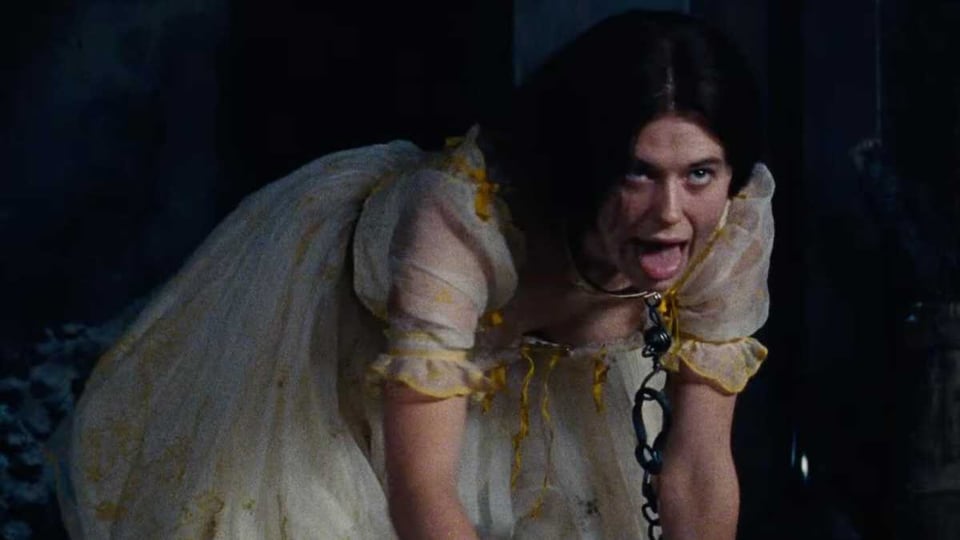
There are a lot of references to dogs in the dialogue which are progressively less positive: Heathcliff promises-slash-threatens to follow Cathy to the end of the world “like a dog”; Isabella calls Cathy “a dog in the manger” and Heathcliff agrees; Cathy threatens to send the dogs on him if he comes back to the Grange and Heathcliff says every bite would be a pleasure if it came from her, and in the next scene he calls her a bitch. I can’t quite figure out whether this is all leading to the now-infamous scene with Isabella in a dog collar, which, depending on who you read, is either a great feminist retelling of her character or a huge betrayal.
Red and other colours
If there is a colour that ties the movie together, it’s red, which isn’t exactly an original choice for symbolism. Agnes in Chloe Zhao’s Hamnet is in red for most of the movie, aside from when she is grieving, which sets her apart from the rest of the cast and the landscape. Del Torro in Frankenstein uses the colour in a disciplined way to mark Victor’s mother for death and to create the link with his family.
By contrast, Fennell’s use of red is so expansive that it is at times difficult to figure out if it has a specific meaning or if she just liked the colour. In one of my five viewings, I focused on the red. In an interview with AP, Fennell said that she chose red because it was fatal and arterial – sure, but I wish she had given more. The opening credits take place over a river of blood running through the moors, which echoes at the end the river of blood coming from her vagina when she miscarries and dies.
Nothing shouts “she’s the heroine” like a red dress, and Cathy is the only one to wear red against the gloomy palette of black and brown and dirty beige at the Heights. Child Cathy is in burgundy with red accents, but grown-up Cathy wears full red, the obvious explanation is that she now has her period plus she’s in the middle of having a sexual awakening with Heathcliff (which would work better if Robbie was 15 years younger). There are also red accents in the Heights set – red trees, red on the windows, and red in the odd cloth. In a house where everything shouts descent into poverty, including the sparse furnishing, the red speaks to former riches. There is a red Doom painting of the Seven Deadly Sins in the parlour.
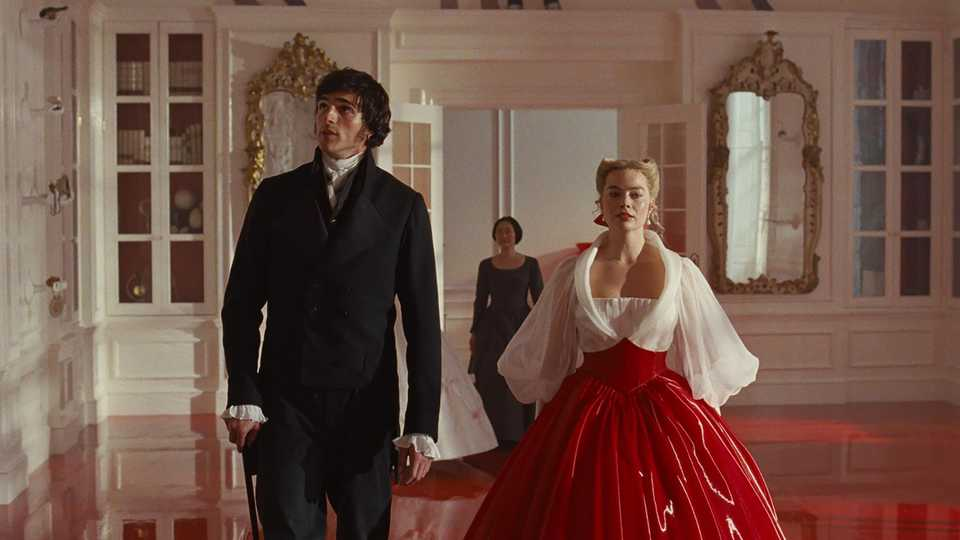
Cathy first walks to the Grange because she is annoyed at having to walk in pig’s blood, which is staining her gingham blue skirt, and marks her for death. The Heights is creeping into her, but not in ways she cares for. Whereas when she starts becoming one with the floor of the Grange, it’s more willing (though still creepy). Cathy and the library become an extension of each other in the way her skirt merges with the floor. The walls of the corridor leading to her bedroom are red, which is a great visual backdrop to heartbroken Heathcliff in his black outfit [insert Stendahl joke], and so is the staircase where she cries upon learning that Heathcliff and Isabella got married.
Edgar sleeps in a green bedroom and wears an amazing green robe – red and green are complementary colours, plus green is the colour of envy and jealousy. Heathcliff wears earthy tones before his departure, and then when he comes back, he is in navy and black and clean white shirts. Isabella is in pastel colours that make her look younger than Cathy – primrose yellow, light pinks. There are a lot of ribbons on her dresses because ribbons are her main source of entertainment, but also because she is artistic and crafty. She built a dollhouse and makes creepy dolls of the household; she also collages, draws, and makes phallic-themed embroidery. When Heathcliff sort of proposes to her, he unknots the ribbons on her dress, because women get unwrapped by men (see Cathy’s cellophane-like dress for her wedding night with Edgar).
The hand motif
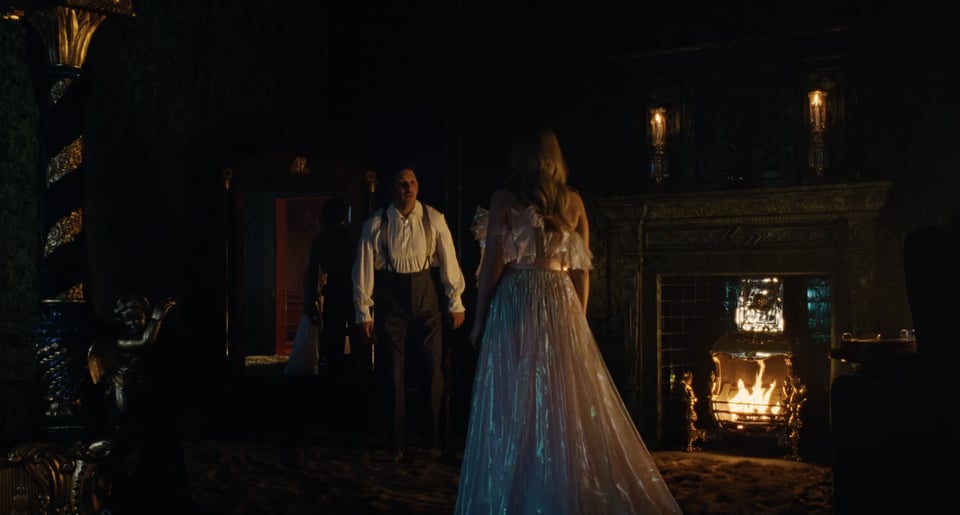
Neither the Earnshaws nor the Lintons are aristocracy. The Earnshaws are landed gentry and have been at Wuthering Heights since 1500, something Cathy is particularly proud of, but they are not titled. The Lintons made their money in textiles and, therefore, are not “top drawer”. But if the Lintons had heraldry, it would be hands. There are hands everywhere in the Grange set.
The mantel above the chimney looks like a sculpture of interlinked hands reaching out from hell and ready to drag the inhabitant down with them. They made me think of William Blake’s work. There are hands at the tops of bookcases, holding candles. There is an embroidered hand on a servant’s apron when she brings sick Cathy a lunch she won’t eat. Linton made his money from the work of working-class people’s hands, but they’re not people whose story we often tell. In a scene that gave me the same ick as the nail scene in Black Swan, Isabella digs the palm of her hand bloody with a needle when a jealous Cathy announces they shouldn’t receive Heathcliff anymore.
Cathy grabs – dresses, jewellery, food, Linton’s wealth, but at the same time, she does little with her own hands. Unseen servants fasten jewellery on her. Back at the Heights, she refused to do her tapestry of St George, which made me think of the warning in Dracula that “evil things in the world will have full sway”. The Earnshaws are poor, but Cathy doesn’t know how to do anything. Her hands are idle, so when she uses them, it’s important and mostly linked to Heathcliff. It’s Cathy masturbating on the moor and Heathcliff reaching for her hand at her father’s funeral. A key hand placement comes from Heathcliff, when he shuns Cathy’s eyes and mouth so she can’t see the servants having kinky sex in the stables. Later, Cathy asks her husband to copy the same hand placement when they are having sex, but weirdly, that loop never closes in the Heathcliff-and-Cathy having sex montage. On the other hand, as she is dying and reminisces about their childhood, Cathy feels the ghost of Heathcliff’s hand on her ankle from under the bed, mirroring an early scene.
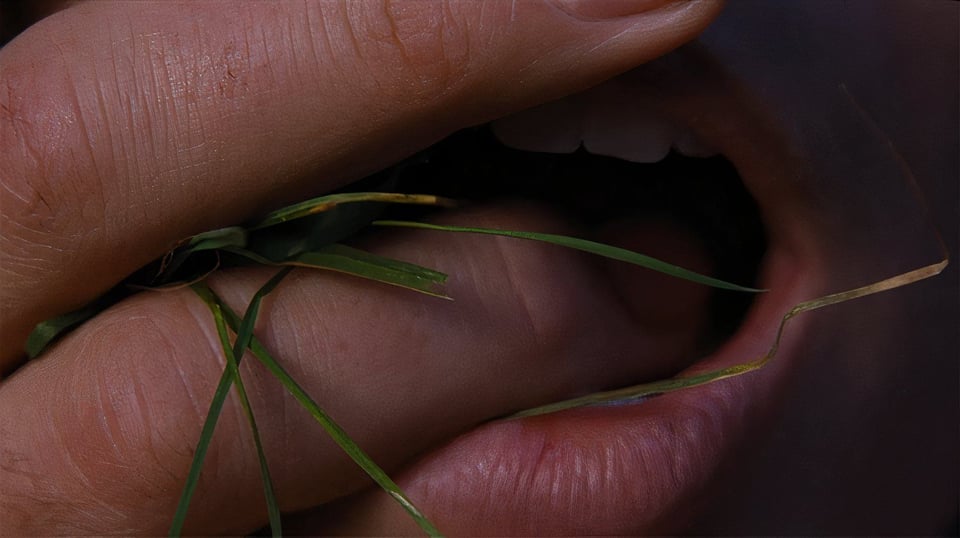
Heathcliff’s heraldry would be a tongue btw, because this man spends a lot of the movie licking.
All the references
There is no ghost in this movie, yet it is haunted by all the cinematic references Fennell draws on. Fennel’s references are not subtle, and sometimes they feel like references for their own sake, but they are fun to look for.
In her first scene, Isabella gives Edgar “a thorough precis” of Romeo and Juliette, where she declares she hates the nurse, who is the real villain of the story – of course, here Nelly is the nurse-like character who burns Heathcliff’s letters to Cathy, deepening her depression. It also foreshadows Heathcliff’s mad ride through the moors to reach Cathy’s deathbed.
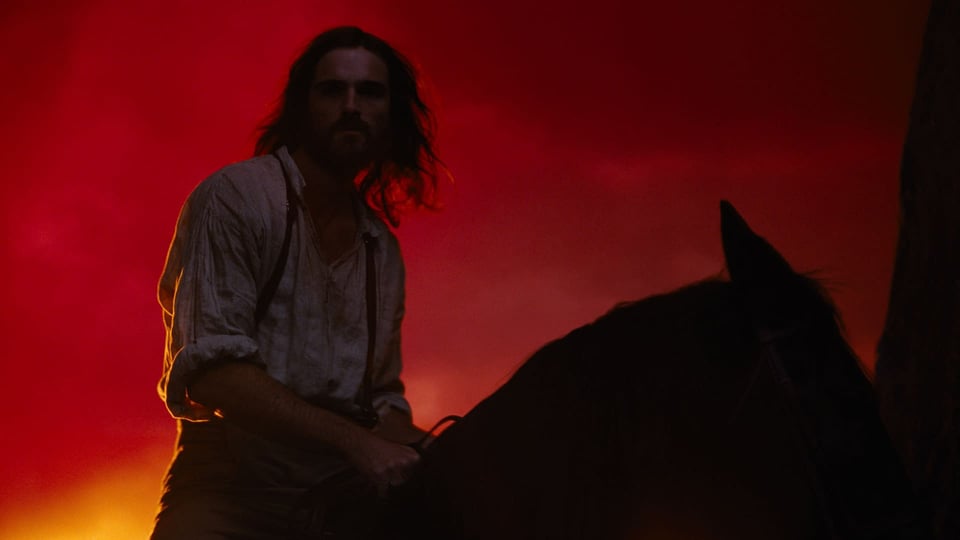
Gone with the Wind was obvious from the moment the poster was released. Heathcliff leaves the Heights on a red sky that is both reminiscent of bodice ripper covers and the Atlanta skies. The scene of Nelly lacing up Cathy’s bridal corset is another parallel.
Les Liaisons Dangereuses and Cruel Intentions. There is a scene in the blue parlour, after Heathcliff's return, where Cathy is jealous of Isabella and cruel towards her (that whole scene is about jealousy, as Edgar makes a point of really kissing Cathy in front of Heathcliff). In her crushed velvet-embroidered gown and (I am pretty sure) Chanel vintage costume jewellery, Cathy humiliates Isabella, who told her that Heathcliff was the most handsome man she had ever met. Heathcliff is at first amused but then tells Cathy, plainly, that he will pursue Isabella if she wishes to make her jealous. It’s very Valmont and Merteuil. Cruel intention might be why some people are reading sapphic undertones between Cathy and Isabella – personally, I just read it as the way younger women can be fascinated with slightly older women.
Pride and Prejudice, especially the Joe Wright version. Both have a rich neighbour taking over the big house as a motivator. Earnshaw is a Mrs Bennett-lite who forbids Heathcliff from picking up Cathy from the Grange when she sprains her ankle. The Cathy/Heathcliff reunion also recalls Darcy and Elisabeth walking towards each other in the midst, minus the sunrise. Then there are soaked through kissing/proposal scenes and the hand motive.
Little Women. Like Amy March, Cathy thinks of marriage as an economic proposal. And when Heathcliff said she could have waited for him rather than marry Linton, all I could think of was Emma Watson as Meg Brooke, complaining she is tired of being poor. A marriage between her and Heathcliff before he became rich wouldn’t have lasted. You can’t, as the French say, live on love and fresh water.
Madame Bovary is more of a stretch, but I could see Emma reading Wuthering Heights and loving it, though Bovary was published earlier than the first French translation. Before the movie's release, there was a theory that it was playing out in the imagination of a Victorian woman, and Emma would have been a great candidate for it (I think there is a fun double adaptation to make there). The Bovary reference is mostly because “WH” is a cheating plot more than a revenge plot, and Cathy seems bored.
###
As soon as I got off the phone with my parents, who told me our grandmother had died on 22 February, I booked a ticket for an 11:15 am viewing, my fifth. I went back this afternoon for fact-checking, but in between, it kept popping into my head. Just yesterday, I was wondering what Heathcliff’s motivation for buying Wuthering Heights is in that version. Reclaiming his childhood with Cathy, maybe?