Issue № 19 - Swiss Summer Session
Exploring my visit to Typorama in Bischofszell, Switzerland — home to the world’s largest working collection of hot-metal typesetting machines

Issue № 19 - Swiss Summer Session
Hopefully by now, we all know to not believe everything you see on social media. The always-smiling faces and perfect vacations are not reality and this applies to my project as well. Although I am extremely thankful to be supported in researching all over the world, it’s not always a bed of roses when a record-breaking heat wave engulfs all of Europe…
The “Glamor” of Researching
I flew from London Heathrow the evening after my first week of summer course at the University of Reading and honestly, I was mentally exhausted and not in the mood to travel anywhere. Due to horrible traffic — and British bus schedules being mainly a shrug emoji — I had to sprint to my departure gate with only a couple minutes to spare.
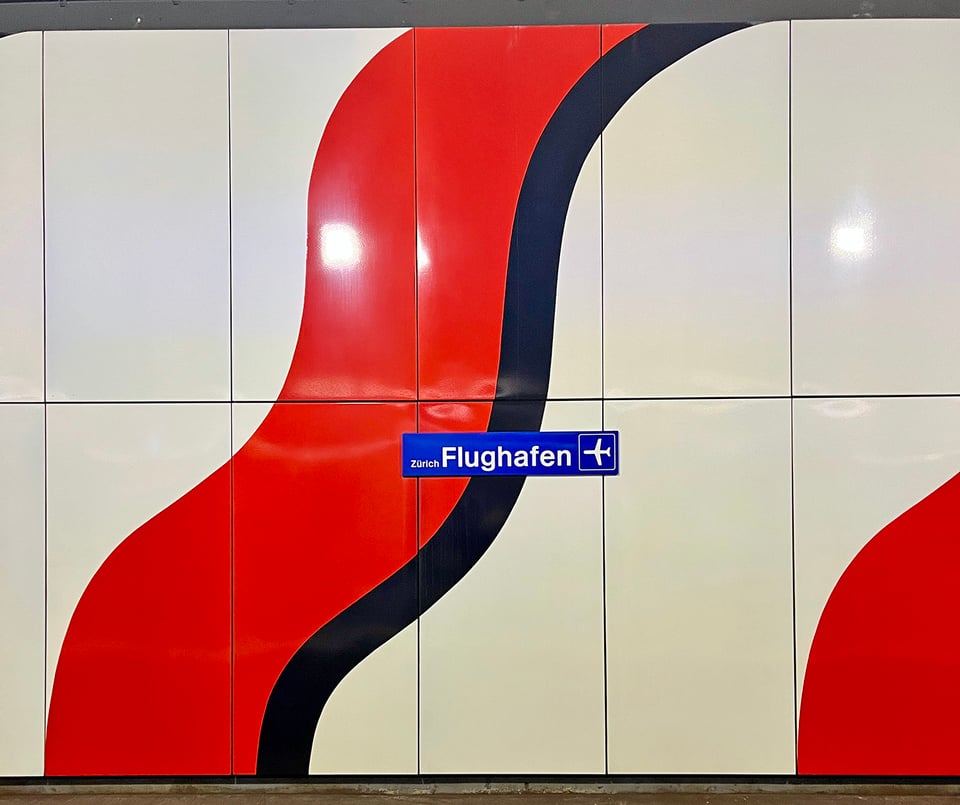
When I landed in Zürich, there was a giant line at immigration due to Brexit, which meant by the time I got to the hotel I went to bed hungry and sweating because Europeans don’t believe in air conditioning. I’m embarrassed to admit: I was feeling a bit sorry for myself.
However, the next morning promised the pleasure of riding a Swiss train which lifted my spirits, so made my way to the bahnhof and headed to Typorama, which was just over an hour away from Zürich.
A Typical Swiss Town
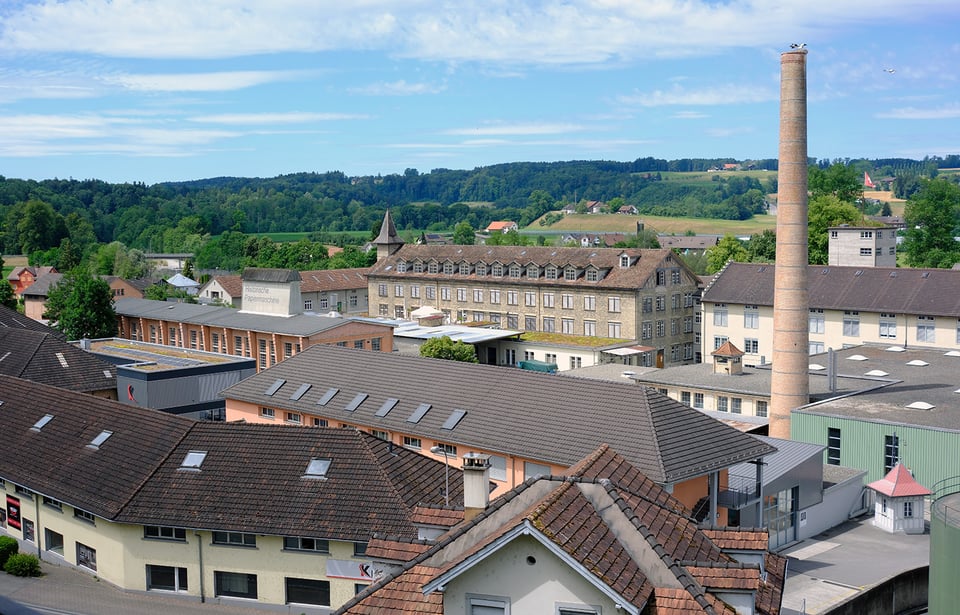
The town of Bischofszell is exactly what you imagine if you’ve ever imagined a quintessential town in Switzerland. It may be difficult to pronounce but it’s lovely to visit. The buildings all are in a style that I can only describe as “Swiss-looking” architecture. Although it’s not close to the Alps, I can just make them out far away in the hot summer haze.
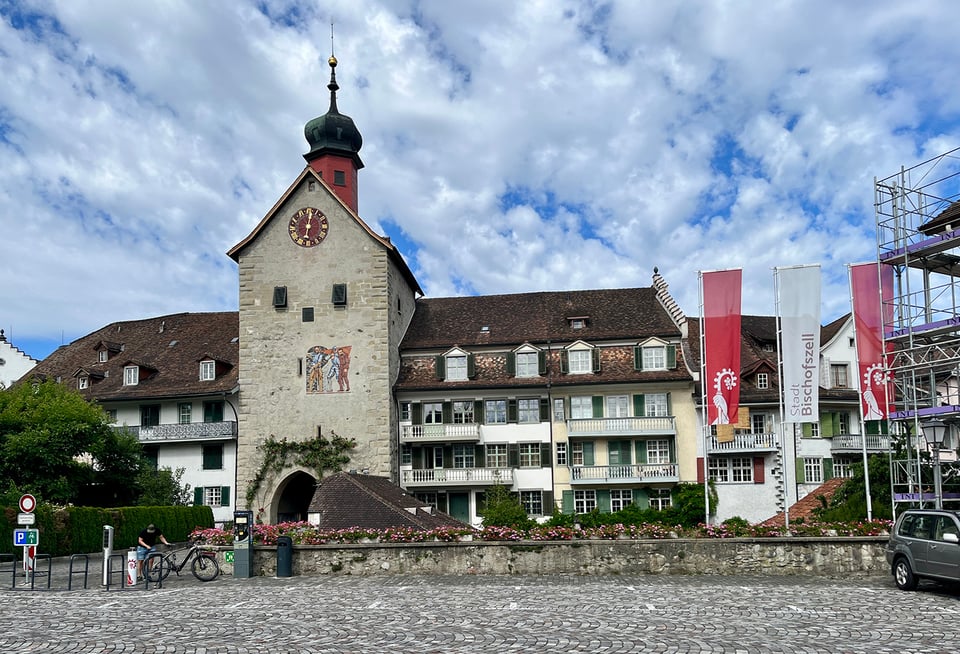
As I exited the train, the sound of the 11:00 AM church bells rang out. A short walk from the station is the city center where cobblestone streets made my suitcase wheels create the loudest possible racket ricocheting off the buildings.
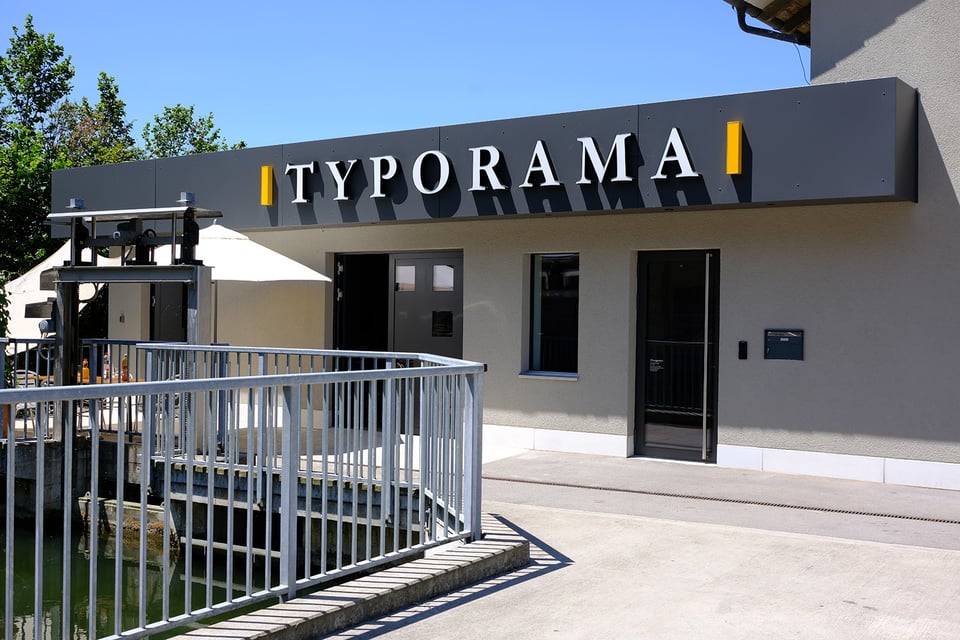
The center of Bischofszell sits on a hill above the river Thur. The Typorama building is below the center, near the river and a famous medieval bridge which crosses it. It sits next to a canal, which in another lifetime powered two giant paper mills. Sweating profusely, I walked 15 minutes from the center to the museum where I was greeted by two people who were thrilled to see me.
I immediately spent the next 12 hours talking about the Linotype (insert smiling/melting emoji here) and ended up learning so much new information which could not have been found anywhere else in the world.
Typorama
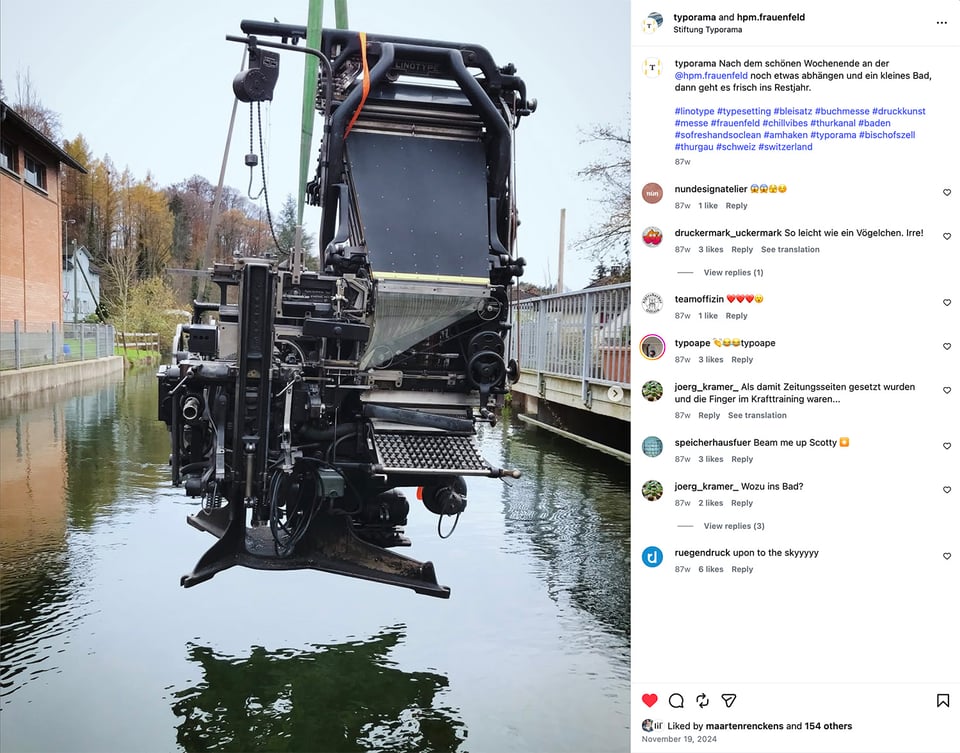
I first became aware of Typorama (pronounced TEE-PO-RAMA for us Americans) on social media from a striking photo of a Linotype hovering just half a meter above water (the previously-mentioned canal), dangling by heavy-duty straps. This is how they move machines in and out of the building sometimes, and it certainly caught my eye.
Typorama is an incredibly special place. As best I know, it has the largest collection of working hot-metal typecasting machines in the world (10–15 machines). And what a collection it has: very early German Linotypes, very late German Linotypes, a Linotype that runs on TTS tape, an Intertype C4, a Monotype, a Typograph machine, an American Elektron, one of those monster-sized German Universa models, and even a Soviet Linotype (more on this below).
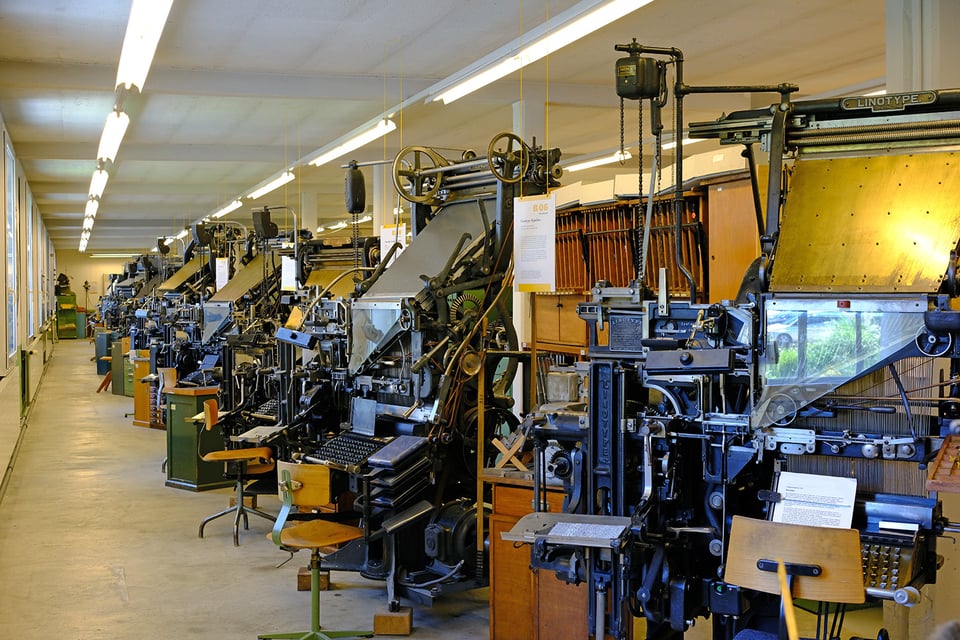
Additionally, the museum has a huge collection of handset type and hand-composition space along with a printing room with dozens of working presses and a bunch of book binding machinery. As might be expected from a Swiss shop, this is one of the cleanest print shops I have visited over the last 15+ years, but it still smells the same as any print shop around the world.
New Friends in New Places
I’ve made arrangements with Percy Penzel, the Geschäftsführer (museum director) at Typorama. He moved to Bischofszell from northern Germany in 2015 and has been running the place while Paul Wirth — the original collector and founder of the museum in 1978 — slowly taught him everything he knew about the “black art” of printing, typesetting, and repairing machines.
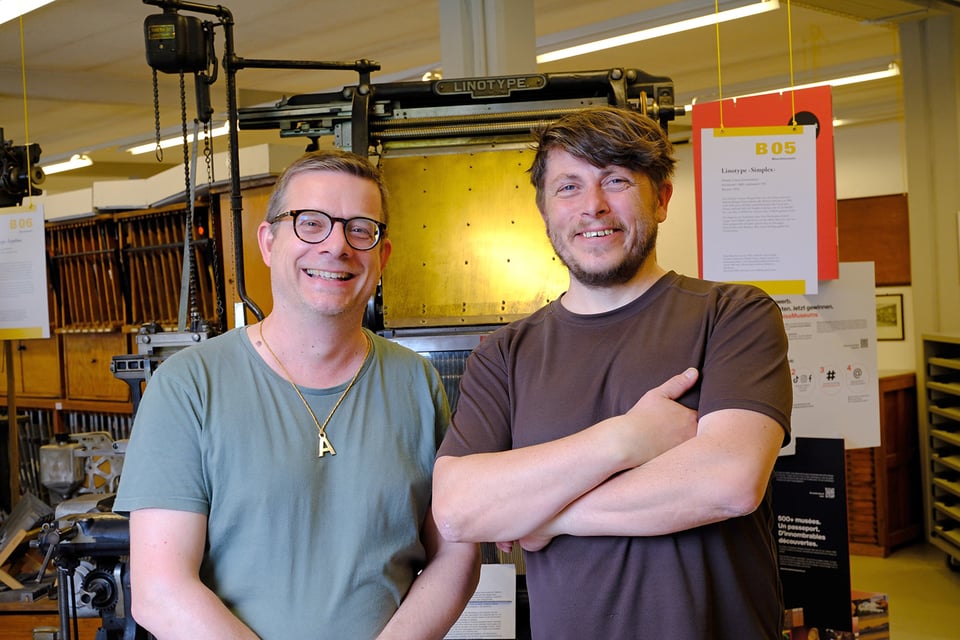
Also meeting me is Franz Hennies who is visiting from Sweden, though he is originally from Hamburg, Germany. He is a physicist who is also into hot-metal machines (sure, why not?) and helps run The Hot Type Network in Europe who are working to connect and share knowledge in order to keep hot-metal typesetting alive across the continent.
Franz volunteers at the Grafiska Museet in Helsingborg, Sweden which is the largest Nordic museum dedicated to printing. This is only his second visit to Typorama, but he seems completely at home surrounded by all of these machines.
Great Stories & Soviet Machines
Percy loves these machines — there is no way you would spend a decade dealing with stubborn, old machines if love wasn’t involved. Of course, every machine has a story but I would wager to say the Soviet РОССИЯ (which simply means “Russia”) machine is more connected to global and political history than most. The story goes like this:
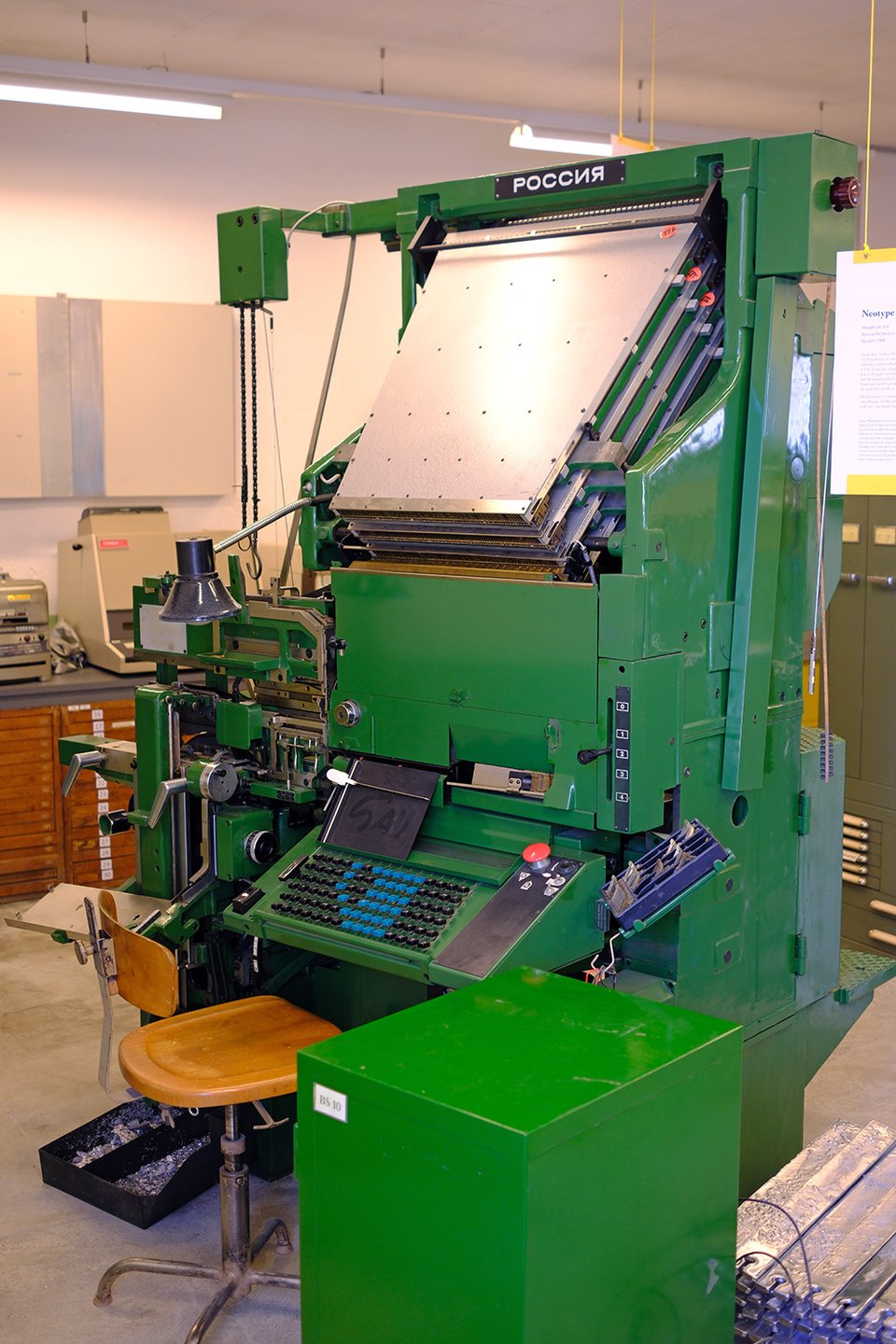
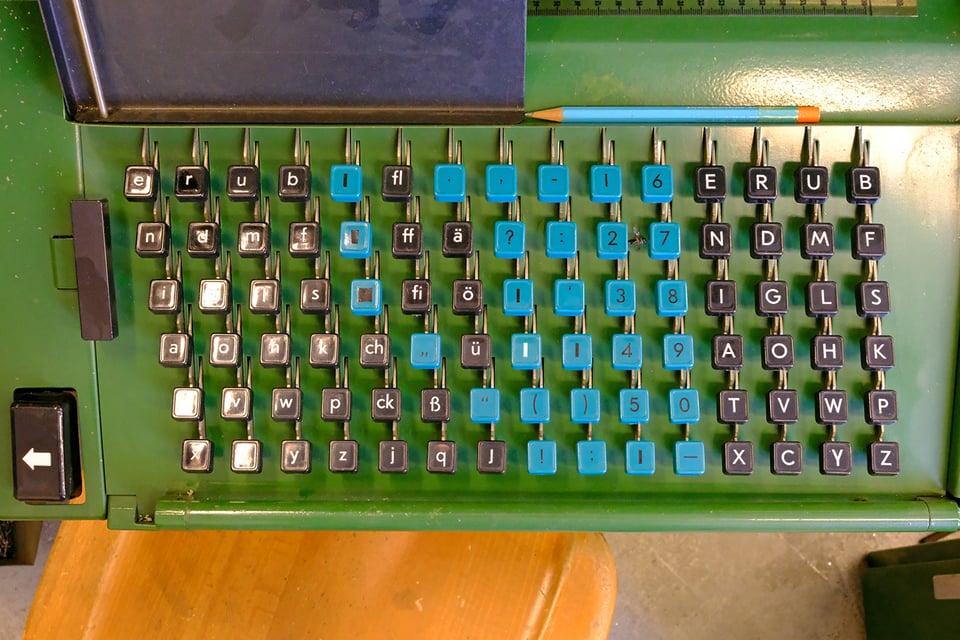
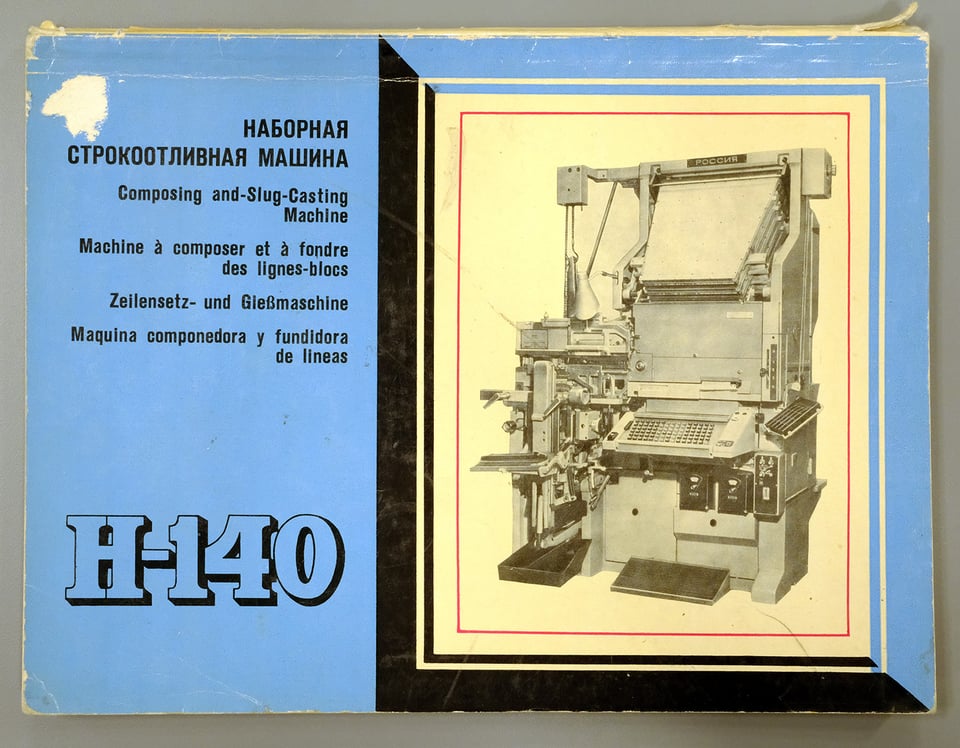
This machine was built in 1989 and shipped to Karl-Marx-Stadt in East Germany (only named that from 1953–1990, before/since named Chemnitz). It is a model 2H-140 (“Neotype” was the brand name used outside of Warsaw Pact countries) that was meant for the state printer in East Germany. It was delivered in the summer of 1989 and apparently sat in its crate on a dock, protected from the elements, for several months.
Keen students of history will know that something else happened in 1989 between East and West Germany — this was when the Berlin Wall, the physical manifestation of the “Iron Curtain,” finally fell, reuniting East and West Berlin and signifying the end of 40 years of separation.
Due to the collapse of East Germany, this machine was never unpacked and sometime in the 1990s, Paul Wirth purchased the machine and had it shipped to Switzerland. Eventually in 2003, it was set up and continues to be a practically-brand-new Neotype in good working order. What a pleasure it was to see it running.
“Made Possible by Contributions from Viewers Like You”
If it isn’t obvious by now, I hope some of you consider visiting Typorama in person in the near future and tell them that I sent you! I promise it will be worth your time and effort — I know it was for me.
This trip only happened because of the generosity of paid subscriptions to this newsletter. Even though I purposely have zero difference of content between the paid and unpaid newsletters, a select few have entrusted me with hard currency to make this project a reality. When some of you signed up three years ago, you probably didn’t think you’d still be paying for emails three years on, but please know you helped make this happen.
You helped pay for the flights and hotels. You’ve supported me as the scope of my research has increased year over year. And you’re the one that helps defray the costs of sending this very newsletter where I showcase some of my favorite finds.
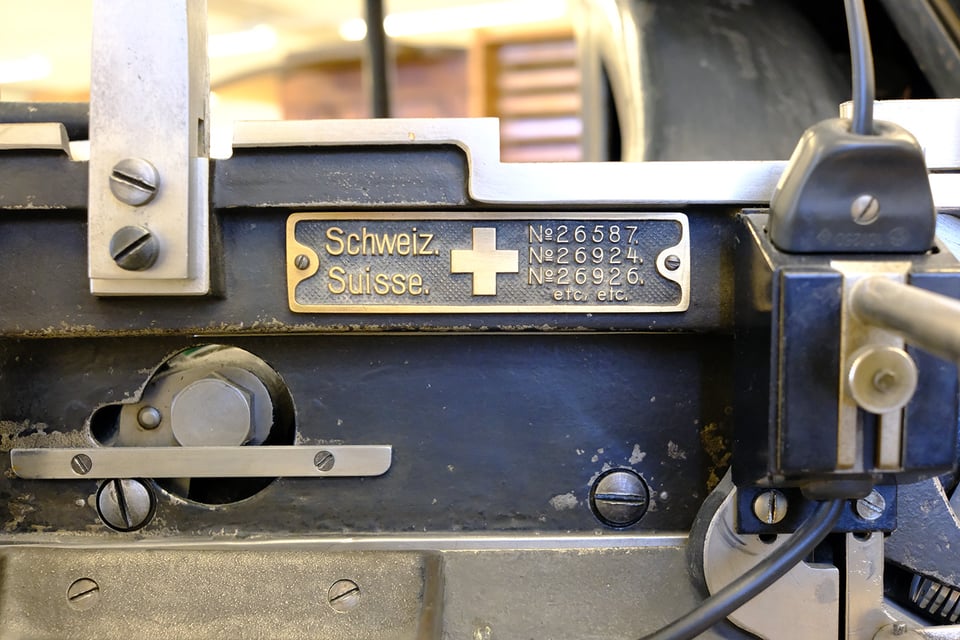
In some tiny way, you’re alongside me, sweating as I walk back up the hill from Typorama to the train station with new information, new research photos, and new friends.
Please know that it means the world to me that you’re interested and willing to support me. Thank you.
More to Come
This dispatch from Switzerland is just one of three newsletters which will be coming out of my three-week summer trip to the UK and CH. Be on the lookout for more from the University of Reading and the Manchester Science + Industry soon.
Same bat-time, same bat-channel,

Doug

