
LLTT Newsletter - June 2026 - It Needs To Be Noticed First

LLTT Newsletter - June 2026
Things Need to Be Noticed Before They Can Be Remembered
It is tempting, when progress feels slow, to go looking for the big fix; a new practice method, a different textbook, a change of approach. And sometimes that is the right call. But often the things that make the most difference are smaller than that. A slight adjustment to how you arrange your materials. A habit you build almost without noticing. Small things, applied consistently, that accumulate into something real.
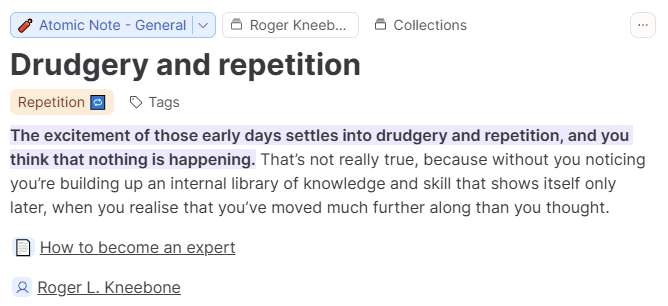
Before anything can be remembered, it first has to be noticed. This sounds almost too obvious to be worth saying. But let’s follow it through, and see if it changes how you think about the way you study.
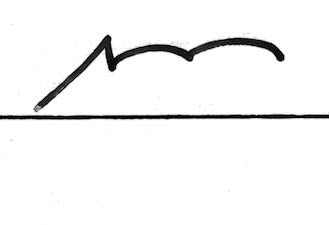
When two related pieces of information are kept close together, people learn the connection between them far more effectively than when those same pieces are separated.
Close together on the page. Close together in time.
It is a simple finding, and it has direct consequences for how you arrange your study materials.
We all know the mild frustration of reading something on one page and having to refer to a note somewhere else. By the time you get there, something has already been lost. In shorthand learning, that frustration has a real cost.
The problem with "see the key at the back"
Think about what happens when you are working through a passage and come across an outline you do not recognise. You note it down. You finish the exercise. You turn to the back of the book to look it up. By the time you find it, the outline (the shape of it, the context it sat in, the sentence it belonged to) has already started to fade. You copy the answer. You move on. Three days later, you cannot recall it.
Think about the last time you came across a word you didn't fully know while reading. Did you stop and look it up online, or in a dictionary? Many of us don’t. We make a reasonable guess from context and carry on. Sometimes that's fine. In shorthand, however, it is rarely fine, because the outline and its meaning need to be properly linked, not approximately remembered.
This is how working memory operates. We have a limited capacity for holding information in mind whilst simultaneously searching for something else. When the two things you need to connect, the Teeline outline and its longhand equivalent, are physically separated, the brain has to do extra work just to bring them together. That work crowds out the actual learning. Nothing has been learned, because nothing was properly noticed.
Put the two things side by side, and the problem largely dissolves. The eye takes them in together. The connection is made in the moment.
What you can do about it
You do not need any particular set of materials to apply this principle. You need only to think about how you are arranging what you already have. And if something you have been doing for a while does not seem to be working, that is worth paying attention to.
In short: the arrangement of your materials might be the thing to look at before anything else.
When transcribing from your own notes, try writing the longhand immediately beneath each line of Teeline, rather than producing a separate transcript. Keep the two things physically close. It is a small adjustment, but it does quiet and consistent work over time.
When you encounter an unfamiliar outline mid-exercise, resist the urge to press on and look it up later. Stop, find the answer, and bring it back to the exact point where the outline appeared. Re-read the sentence with both pieces of information present. Then move on. The few seconds this takes are not lost time. They are the learning.
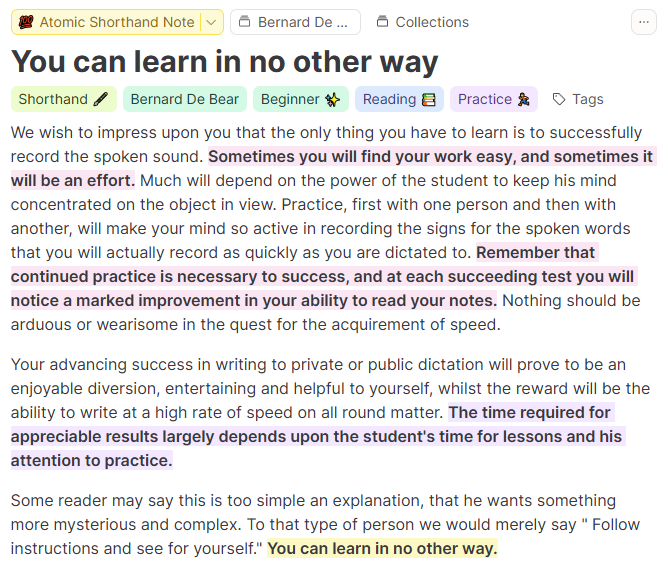
A word of context here: Bernard De Bear, writing over a century ago, recommended making a mark in the margin when unsure of an outline during reading practice, and returning to it afterwards rather than breaking your flow. That is good advice in its own context: a reading session aimed at building fluency, where keeping moving has its own value. Stopping to resolve the gap immediately, as suggested above, is better suited to study mode, when flow matters less than making the connection properly. The principle underneath both approaches is the same: make sure the connection gets made. How and when you pause to make it depends on what you are trying to achieve.
If you make your own study sheets or revision materials, think carefully about where you position things. You want it close. It is the same thinking that sits behind the parallel text format we use in LLTT+, and it applies just as well to whatever materials you already have.
Keep in mind: You cannot remember what you have not noticed. Moreover, you cannot easily notice what has been tucked away on a different page.
None of this will produce an overnight transformation. The benefit is cumulative: small adjustments, applied consistently, add up over weeks rather than days. But that is precisely how shorthand progress works in general. Keep related things together. Make the connection easy to see. Then make it again.
As always, if you have suggestions or topics you'd like to see covered in future newsletters, please contact us:
https://www.letsloveteelinetogether.com/contact-us
If you find this newsletter helpful, please help us spread the word and forward it to a friend!
A Parting Thought
Be sure to visit us at the LLTT Website, YouTube, Facebook, Instagram, Quizlet and Soundcloud.
Looking to build speed, sharpen your reading skills, and improve your Teeline shorthand without hours of aimless dictation practice?
Here's what LLTT+ can do for you:
Spend less time practising and make more progress — because every session is focussed, not accidental
See outlines you've been avoiding finally click into place, so you stop hesitating at the exact moments it matters most
Build reading fluency alongside writing speed — the most overlooked skill in shorthand, and the one that holds most learners back
Experience greater confidence walking into a dictation knowing you've genuinely prepared, and not just hoped for the best
Master word groupings and special outlines that experienced writers use
Stop wasting time on material you've already mastered; work instead on the specific outlines that are slowing you down
Identify your bottlenecks — because your overall speed is only as fast as your slowest outlines
Develop the kind of automatic, fluent responses that come from practising the right things, not just practising more
LLTT+ grows alongside you, from early stages through to exam standards and beyond.
Find out more at letsloveteelinetogether.com/llttplus



Add a comment: