Idaho-Eastern Oregon Jumbos $2.00 Above Washington on 50-lb Sacks
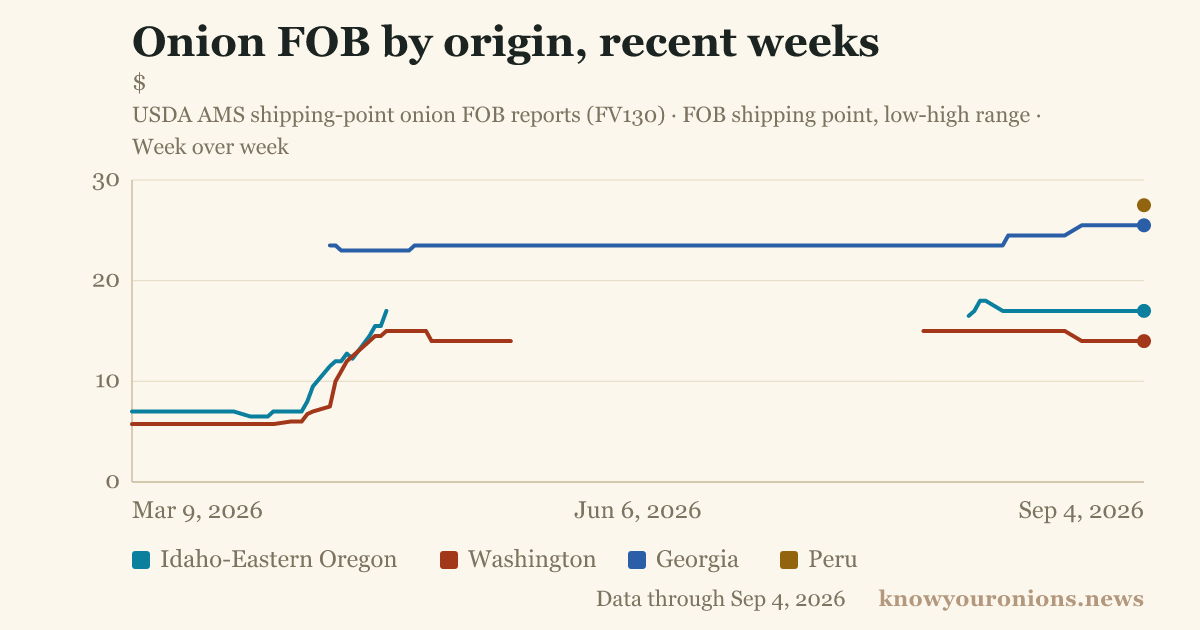
Idaho-Eastern Oregon yellow jumbos hold mostly $16.00 and Washington yellow jumbos mostly $14.00, both on 50-lb sacks, per USDA shipping-point reports dated September 4. Neither moved week over week. The $2.00 spread on the same pack between these two Northwest storage-crop origins is the active FOB differential as Oregon's trailing 28-day shipment total runs 100% above the five-year median.
- Oregon domestic shipments: 3,457 units (10,000-lb units) over the past 28 days, up 47,581% compared to the prior 28-day window and 100% above the five-year median of trailing 28-day totals, per USDA movement reports.
- Canada onion imports: 72 units (10,000-lb units), week of September 3, up 136% week over week and 228% above the five-year median, per USDA movement reports.
- Utah shipments: 400 units (10,000-lb units), 213% above the three-year median, per USDA movement reports.
- Colorado shipments: 13 units (10,000-lb units), down 96.8% week over week and 94% below the four-year median, per USDA movement reports.
- Washington exports: 130 units (10,000-lb units), up 28% week over week and 102% above the five-year median, per USDA movement reports.
- Peru yellow jumbos: mostly $27.00-28.00, 40-lb cartons, per USDA shipping-point reports dated September 4.
Idaho-Eastern Oregon runs 52% above the five-year median on 50-lb jumbos and Washington 56% above, per USDA shipping-point data.
Markon reported September 3 that fresh-run onions are available in Idaho, Oregon, Washington and Utah, with new-crop harvests continuing across multiple regions and markets steady.
Data note: Georgia, New Mexico, Michigan and Wisconsin series have not updated in over two weeks. The Georgia yellow jumbo quote of mostly $25.00-26.00, 40-lb cartons, carries that caveat.
Know Your Onions reports public USDA Agricultural Marketing Service shipping-point, movement, terminal-market and retail-ad data. It is not trading, contracting, legal, or financial advice. FOB prices are reported as USDA publishes them, as a mostly or low-high range with the pack named; we do not forecast prices, movement, or crop transitions.